An Analysis of Animals in Speculative Zoos in the United State

Oh, that’s a mistake. I must have forgotten to edit it out from the echidna template. However, like @birdsandbats said, they have been listed in the pet trade after searching it online though I personally believe this is false
 
Arboreal Vertebrates: Galah (Eolophus roseicapilla), Gouldian Finch (Chloebia gouldiae), Woylie (Bettongia penicillata)
This was posted in relation to Koala exhibits. Woylie are not arboreal, and are found in Western Australia whereas the Koala is found on the East coast. Not are you likely to encounter Gouldian Finches with Koala.
Southern Hairy-Nosed Wombat - Lasiorhinus latifrons
These wombats are near threatend, being the state animal of Australia.

This animal is the state animal of South Australia.

In relation to both species of wombats, these animals spend much of the evening digging and enclosures need to be secure or they may dig their way out. Having said that, they need plenty of opportunities to dig. And a smallish enclosure - say 5 metres by 5 metres - in a short space of time will be devoid of any grass or plant life as they completely turn over the substrate.

You've said for both that "Wombats are highly alert so they could be stressed by territorial animals. ".

I would suggest that any territorial animals in an enclosure with wombats would be the stressed individuals as wombats can be notoriously stubborn and even aggressive if disturbed or provoked. Something to keep in mind when designing an exhibit for them and ensuring keeper safety.

:p

Hix
 
Due to @Great Argus 's and @Hix 's helpful comments, here is an updated post for Koalas

Koalas - Family Phascolarctidae (1 species)
Koala - Phascolarctos cinereus
The well-known Aussie speciesm often nicknamed "koala bears" is either monotypic or has two subspecies based on their northern and southern populations but there haven't been any major studies proving any side.
full

Image Credit to @Valentinoamor, At San Diego Zoo

AZA Abundance: Uncommon
Non-AZA Abundance: Not Present
Overall Abundance: Uncommon

Though it's the poster child of the dangers that Australian wildfires are causing (more recently), koalas haven't really changed that much in terms of holding but a bit in popularity in AZA zoos with some temporary exhibitions in the past (like at Stone Zoo).

Koalas are only found in the South and Eastern coastal areas of Australia. In captivity, it's often housed outside with easy access to indoor housing, often being housed in tropical or temperate zoos. If you recognize that there are 2 subspecies, there is the Queensland (northern) and the Victoria (southern) populations with all of the koalas (AZA zoos) in the US being Queensland subspecies, owned by the Australian government.

Captive breeding programs have been successful though they are sensitive to stress and diet changes. They survive 12-15 years in captivity with Midori in Japan being the oldest (25+). They are solitary species in the wild but are sometimes in small groups to prevent territorial aggression though in the wild, they do tolerate overlapping territories if the forests are big enough.

Some possible exhibits with this species could be an Australia exhibit, East Australia exhibit, Eucalyptus ecosystems, Dry Forest exhibit, etc. In zoos, this species is often in mixed species exhibits.

Terrestrial Vertebrates: Bare-nosed Wombat (Vombatus ursinus), Parma Wallaby (Notamacropus parma), Red-necked Wallaby (Notamacropus rufogriseus), Short-beaked Echidna (Tachyglossus aculeatus), Western Grey Kangaroo (Macropus fuliginosus)
Arboreal Vertebrates: Galah (Eolophus roseicapilla)

If it wasn't obvious, not all of these species are compatible together but individually as a species, each are compatible. A good enclosure for Koalas should have multiple climbing spots (hopefully trees), live plants, and large-ish space. Having multiple enclosure can be helpful due to their flexible social housing. Indoor enclosures are also typically connected in case of weather changes.

Overall Feasibility for Spec Zoo Usage: Plausible as they are present in AZA-accredited American zoos. They haven't had any major changes in American captivity in the past couple years. However, the AZA had Victorian Koalas on the Phase Out list (Marsupial & Monotreme TAG from 2012) though they aren't found in American captivity.

This animal is the state animal of South Australia.
Oh, I forgot to add the South. It was late when I posted it so I didn't really read over what I said. Though wombats are less commonly in mixed species enclosure rather then just with their species.

This was posted in relation to Koala exhibits. Woylie are not arboreal, and are found in Western Australia whereas the Koala is found on the East coast. Not are you likely to encounter Gouldian Finches with Koala.
Aren't woylies present, albeit rare in the same places Koalas are (South central-ish) though for both species, it isn't their main range. Also, in the US, there are only western woylies which aren't found where Koalas are but subspecies are occasionally placeholders for their subspecies if they aren't easily accesible

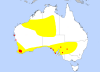
Woylie Distribution Map (top)
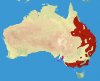
Koala Distribution Map (bottom)
Distribution_Map_Bettongia_penicillata_AUS_(2).png 360px-Koala_Range.jpg
 

Attachments

  • Distribution_Map_Bettongia_penicillata_AUS_(2).png
    Distribution_Map_Bettongia_penicillata_AUS_(2).png
    78.4 KB · Views: 136
  • 360px-Koala_Range.jpg
    360px-Koala_Range.jpg
    25.2 KB · Views: 127
Arboreal Vertebrates: Galah (Eolophus roseicapilla), Gouldian Finch (Chloebia gouldiae), Woylie (Bettongia penicillata)
I came to make the same point about Woylie not being arboreal which @Hix already made.
In AZA-accredited zoos, it's only held in 5 of them with San Diego Zoo being the only other American AZA zoo in the past decade having them.
My local zoo, Toronto, has a pair of Southern Hairy-nosed Wombats, so it's another AZA-accredited location alongside San Diego with the species.
 
I came to make the same point about Woylie not being arboreal which @Hix already made.

My local zoo, Toronto, has a pair of Southern Hairy-nosed Wombats, so it's another AZA-accredited location alongside San Diego with the species.
I mean for American (United States) AZA-accredited zoos as this is what the thread is about. I also forgot to edit that woylies aren’t arboreal
 
Aren't woylies present, albeit rare in the same places Koalas are (South central-ish) though for both species, it isn't their main range. Also, in the US, there are only western woylies which aren't found where Koalas are but subspecies are occasionally placeholders for their subspecies if they aren't easily accesible

Woylie Distribution Map (top)
Koala Distribution Map (bottom)

The yellow area on the Woylie map indicates historical range, the species is now seriously endangered with only three wild populations left in southwestern Western Australia. I'm guessing the red squares indicate captive populations in predator free sanctuaries.

I've only known Woylies as being found in WA, hence my comment. However, 200 years ago when Australia was colonised they were still found in South Australia and Western NSW, so your idea to mix them with Koalas is a valid one. I get annoyed when zoos display things in environments that aren't really natural which is why I mentioned it. Of course, it's your zoo - you could put armadillos and aye-aye's in with the Koalas if you want, I really have no say in it.

Incidentally, while koalas would be in the same habitats as Western Grey Kangaroos in South Australia, (and the introduced population on Kangaroo Island would see Kangaroo Island Kangaroos), the vast majority of the koalas range overlaps with the Eastern Grey Kangaroo.

:p

Hix
 
The yellow area on the Woylie map indicates historical range, the species is now seriously endangered with only three wild populations left in southwestern Western Australia. I'm guessing the red squares indicate captive populations in predator free sanctuaries.

I've only known them as being found in WA, hence my comment. However, 200 years ago when Australia was colonised they were still found in South Australia and Western NSW, so your idea to mix them with Koalas is a valid one. I get annoyed when zoos display things in environments that aren't really natural which is why I mentioned it. Of course, it's your zoo - you could put armadillos and aye-aye's in with the Koalas if you want, I really have no say in it.

Incidentally, while koalas would be in the same habitats as Western Grey Kangaroos in South Australia, (and the introduced population on Kangaroo Island would see Kangaroo Island Kangaroos), the vast majority of the koalas range overlaps with the Eastern Grey Kangaroo.

:p

Hix
[/QUOTE]
Though like a mentioned in the spec Zoo perspective part, I said that I had no interest in having koala anymore
 
Superfamily Phalangeroidea
32 species across 2 families
1 species kept currently (3.125%)


Cuscuses, Brushtail Possums, and Relatives - Family Phalangeridae (27 species)

Sulawesi Bear Cuscus - Ailurops urisnus
Asian marsupials aren't featured in most zoos due to lack of interest and rarity despite their conservation status
full

Image Credit to @Fat-tailed dwarf lemur at Berlin Tierpark because all photos at Memphis Zoo are blurry

AZA Abundance: Extremely Rare
Non-AZA Abundance: Not Present
Overall Abundance: Extremely Rare

These phalangers aren't common in the world with only one holding in the United States, a single male named Shemp, however there is a somewhat presence in the pet trade though it's rare.

Sulawesi Bear Cuscueses are found in the tropical forests of Sulawesi and adjacent islands. In captivity, the Memphis Zoo houses them indoors as they are sensitive to moisture.

Captive breeding programs have been successful with the first captive-bred individual being born in 2018 at Wroclaw Zoo. The lifespan isn't that observed as they aren't commonly housed in captivity though they tend to survive for at least 6 years. They are somewhat social species in the wild, tending to be in monogamous or bachelor pairs with pouch young often staying with it's mother until mature.

Some possible exhibits with this species could be a tropical forest dome, Sulawesi exhibit, Australasia exhibit, Indonesia exhibit, Deforestation Awareness exhibit, , etc. In zoos in the world, this species aren't in mixed species exhibits often due to their shy behavior and stress levels though they have been housed with Javan Mouse-deer at Pairi Daiza though that species isn't present in the United States

Overall Feasibility for Spec Zoo Usage: Barely plausible as it's barely present in the world in captivity even though there have been breeding in Europe as there isn't any significant appeal despite being vulnerable.

Common Brushtail Possum (Trichosurus vulpecula), Common Spotted Cuscus (Spilocuscus maculatus), and Ground Cuscus (Phalanger gymnotis)
These species aren't found in American captivity anymore... but they were in the United States in this century, being present in European captivity so they aren't out of the realm of possibility. Brushtail possums and spotted possums were on the AZA Phase in species (Marsupial & Monotreme TAG from 2012) though Brushtail possum left American captivity in 2019 at Aquarium of the Pacific so I don't believe they are phase-in species anymore. Both species aren't likely to be imported to the United States as they isn't any appeal with Brushtail possums being extremely common and cuscuses not being that popular in captivity anymore. Due to them being on the phase in species list 13 years ago, there is a little plausibility.
Overall Feasibility for Spec Zoo Usage: Barely Plausible

Family Burramyidae, Ailurops melanotis, Phalanger spp., Trichosurus spp., and Wyulda squamicaudata
These species haven't been found in American captivity in history with no significant need and/or appeal for importations.
Overall Feasibility for Spec Zoo Usage: Implausible

Spec Zoo Perspective: Recently, I theorized on having common brushtail possums as ambassador animals for the East Billabong section but there isn't any conservational benefits.

Next week (probably in the weekend or on Friday), I will post the superfamily Petauroidea (gliders and possums) which will likely be one post due to most species not being in American captivity. For now, feel free to identify any mistakes, things you noticed, feedback, criticism (with evidence), etc.
 
I think this statement may be inaccurate, however I don't know if the animal in question is publicly known so I'm going to leave it at that.
From my research, Busch Gardens Tampa had a geriatric individual (like 5 years ago) and San Diego Zoo had at least one individual but they were held behind the scenes and there hasn't been any news about them that I could find (recently) so I doubt that they are at Busch Gardens anymore but knowing San Diego Zoo, they probably still have it (or have a new individual)
 
@MOG2012 regarding the Busch Gardens specimen, I second your statement in that they no longer have the species; for the past four times I visited the park since 2020, they were not present. Which is indeed a shame, as they were one of the very few rarities that the park displayed at the time.
 
Superfamily Petauroidea
~32 species across 2 families
2 species kept currently (6.25%)


Sugar Glider - Petaurus breviceps species complex
Recent research has shown that most, if not all American "sugar gliders" are actually from West Papua where Krefft's gliders supposedly live but the Papuan populations haven't been extensively researched yet
full

Image Credit to @Zoological Point at San Diego Zoo Safari Park

AZA Abundance: Uncommon
Non-AZA Abundance: Abundant
Overall Abundance: Abundant

Sugar gliders are extremely common in non-AZA zoos, being very common in the pet trade. The number of sugar gliders in AZA zoos isn't likely that accurate as they are mostly kept as animal ambassadors so there is likely several zoos that have them behind-the-scenes but aren't reported that much.

The sugar glider species complex are found in Australia, Papua New Guinea, and adjacent islands in forests and grasslands. They breed readily in captivity as long as they are properly cared for, having an average lifespan of 10-14 years.They are highly social species in the wild, often living in family groups of 3-10 individuals in the wild.

Some possible exhibits with this species could be a animal ambassador area, Australia exhibit, Australasia exhibit, Papua New Guinea exhibit, Nocturnal house, etc.

Overall Feasibility for Spec Zoo Usage: Extremely plausible as they are found everywhere in captivity from zoos to pets.

Narrow-toed Feather-tailed Glider - Acrobates pygmaeus
full

Image Credit to @Moebelle at Cincinnati Zoo & Botanical Garden

AZA Abundance: Extremely Rare
Non-AZA Abundance: Not Present
Overall Abundance: Not Present

The narrow-toed feather tailed glider is the smallest gliding mammal, and is found in eastern Australia. Breeding was first possible at Taronga Zoo with breeding somewhat common. They are highly social species in the wild, often living in family groups of up to 5-12 individuals in the wild. Some possible exhibits with this species could be a pollinator exhibit, Australia zone, nocturnal house, Billabong, Eastern Australia exhibit, etc.

Overall Feasibility for Spec Zoo Usage: Somewhat Plausible as they are found in some AZA zoos but they aren't that common in American captivity.

Pseudocheridae spp., Other Petauridae spp., Tarsipes rostratus, Other Acrobatidae spp., and Distoechurus pennatus
These species aren't found in captivity in the United States. Western ring-tailed possums, striped possums, and Squirrel possums were in the United States in the 20th century with the striped possum being a phase out species in the AZA Regional Collection Plan for Marsupials and Monotremes TAG (2013).

Overall Feasibility for Spec Zoo Usage: Implausible

Spec Zoo Perspective:
I'm going to have narrow-toed feather tailed gliders in the Billabong zone but I won't describe the exhibit until next week due to lack of enough time. However, I'm going to post the entrance area of this section of the Zoo soon.

What do you think? I have a shorter format right now due to less appreciation for this thread and a bit of stress from the current situation in my country however I will post the next part (maybe Potoroidae) in the coming weeks.

Progress
7/106 families
 
Unrelated, but when did people started to use the name “Narrow-Toed Feather-Tailed Glider”? I personally think that it’s a bit of a mouthful, and I fear this will be like what happened when the “Greater One-Horned Rhino” name took off back in the day.

Personally, I’d say that a suitable alternative would to simply call it the Narrow-Tailed Glider, or, like before, as the “Feather-Tailed Glider”; though, I’m starting to prefer the former while this was written.

I know most of us will disagree, but as silly as this all sounds, certain common names for select species are becoming a bit more complicated, and I’d argue it would make for an interesting topic for a discussion thread.
 
Unrelated, but when did people start to use the name “Narrow-Toed Feather-Tailed Glider”? I personally think that it’s a bit of a mouthful, and I fear this will be like what happened when the “Greater One-Horned Rhino” name took off back in the day.

Personally, I’d say that a suitable alternative would to simply call it the Narrow-Tailed Glider, or, like before, as the “Feather-Tailed Glider”; though, I’m starting to prefer the former while this was written.

I know most of us will disagree, but as silly as this all sounds, certain common names for select species are becoming a bit more complicated, and I’d argue it would make for an interesting topic for a discussion thread.
It started getting used when the broad-toed feather tailed glider was recognized due to physical difference in the toes and the tail. I don’t know why more specifically though
 
I'm returning to this thread sometime soon but during my spec Zoo research, I wrote a list of around every mammal that I believe is realistic for an American Zoo (sustainability in mind, AZA recommendations, etc.). This doesn't include some possible rescues. It's all in the following document;
Untitled document

If you see anything I should fix, please comment
 
For what it’s worth, this is a very well-made list; and will certainly be useful for any American-based spec zoo.

However, I’m not so sure about the majority of the listed cetaceans, plus, the feasibility of the non-Fossa euplerids, bearded pigs, Vancouver Island Marmot, New England Cottontail, and the Common/Bare-Nosed Wombat; among a few others. Although, I suppose that my opinion about the inclusion of the following species isn’t necessarily worth a lengthy argument.

Also, I find it a bit odd that you left out a number of “generic”, non-specific species and subspecies; such as the atypical tigers and giraffes often associated with this particular category. Any reasons as to why that’s the case?
 
For what it’s worth, this is a very well-made list; and will certainly be useful for any American-based spec zoo.

However, I’m not so sure about the majority of the listed cetaceans, plus, the feasibility of the non-Fossa euplerids, bearded pigs, Vancouver Island Marmot, New England Cottontail, and the Common/Bare-Nosed Wombat; among a few others. Although, I suppose that my opinion about the inclusion of the following species isn’t necessarily worth a lengthy argument.

Also, I find it a bit odd that you left out a number of “generic”, non-specific species and subspecies; such as the atypical tigers and giraffes often associated with this particular category. Any reasons as to why that’s the case?
Which ones should I remove and/or add? Fanalokas have been increasing (ish) in popularity. Ring-tailed mongooses are easy to import (Bronx Zoo has them). Bearded pigs were a mistake, I was also fixing my life list for mammals when making it and I accidentally forgot to delete them from this list. The marmot is found in AZA (in Canada) and New England Cottontails are a conservation project in some New England AZA zoos. I don't know about the current situation for bare-nosed wombats.

I didn't include generic species as this was meant for a "recommended" reference for me. I used iNaturalust taxonomy and made things species-level (that's why Wild Boars are on it to represent Domestic pigs)
 
@MOG2012, from your current list, I would remove/define the following species; with the majority of these mammals having a single holder that maintains them on or off display:
  • Little/Pacific Pocket Mouse
  • New England Cottontail*
  • Vancouver Island Marmot*
  • False Killer Whale
  • Commerson’s Dolphin
  • Orca - (for any collection outside of the SeaWorld Parks)
  • Spinner Dolphin
  • Jaguarundi
  • Banded Civet*
(*not for public displays)
 
Back
Top