the Masterplan of the Las Vegas Zoological Park: A "New" Project

Islands of the World: Final Part
I posted this earlier than I thought I would. Thanks for the positive feedback @Austin the Sengi and @Van Beal .

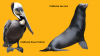
After that, there is a 750 sq. m large outdoor enclosure that’s netted and 8 m tall. Viewing is possible outside and inside with underwater viewing possible. There is a sandy beach, seawater pool, rocky outcrops, coastal trees, and several piers. The enclosure has a pod of 3.2 California Brown Pelican Pelecanus occidentalis californicus and a colony of 1.4 California Sea Lion Zalophus californianus which are non-releasable rescues from California.

full

Possible Look of Sea Lion Enclosure, Image Credit -> @felis silvestris
Screenshot 2025-02-19 5.06.11 PM.png
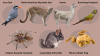
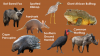
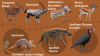
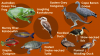
Animal Photos, Credit -> @Mr Gharial

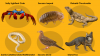
Once inside, there is a 800 cm long, 500 cm wide, and 150 cm tall enclosure. It has rocky outcrops, scattered boulders, logs, and a small tidal pool being home to a cast of 0.0.20 Sally Lightfoot Crab Grapsus grapsus.

full

Possible Look of Crab Enclosure, Image Credit -> @TheImmigrant1

Next there is a 500 cm long, 300 cm wide, and 150 cm large paludarium with a breeding group of 0.0.350 Socorro Isopod Thermosphaeroma thermophilum. There are rock formations, a spring pool, and several aquatic plants. After that, there is a 800 cm large, 500 cm wide, and 250 cm tall terrarium. It has a basking light, rocky outcrops, dead trees, and large branches. It has a breeding lounge of 1.7 Piebald Chuckwalla Sauromalus varius. The final indoor enclosure is 500 cm long, 400 cm wide, and 250 cm tall. There are lush vines, wooden platforms, rock formations, and logs. You can find a breeding rhumba of 1.3 Santa Catalina Island Rattlesnake Crotalus catalinensis.

full

Possible Look of Chuckwalla Enclosure, Image Credit -> @biggiesmalls
full

Possible Look of Rattlesnake Terrarium, Image Credit -> @Ggrarl

The first outdoor enclosure is a 6 m tall aviary that’s 600 sq. m large. There is leaf litter, plants, trees, a shallow pond, rocks, and elevated perches with a breeding bevy of 5.5 Socorro Dove Zenaida graysoni. The final enclosure in the area is 300 sq. m large and 4 m tall. It has trees, a den, rocks, plants, and logs. There is a pair of 1.1 Island Fox Urocyon littoralis living there.

full

Possible Look of Dove Aviary, Image Credit -> @KevinB
full

Possible Look of Fox Enclosure, Image Credit -> @Coelacanth18

Screenshot 2025-02-19 5.17.38 PM.png
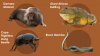
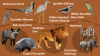
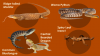
Animal Photos, Credit -> @Mr Gharial in the style of @Austin the Sengi

Mammals: 19
Birds: 42
Reptiles: 36
Amphibians: 6
Fish: 18
Invertebrates: 17
Total: 138

What do you think so far? Feel free to give feedback, criticism, suggestions, etc. I have the next section ready (Andes and the Atacama) but I won't post it today. After that area, the next area is the Pampas.

Link of the Zoo Document: Las Vegas Zoological Park
Link of the Stocklist: Las Vegas Zoological Park Stocklist
 

Attachments

  • Screenshot 2025-02-19 5.06.11 PM.png
    Screenshot 2025-02-19 5.06.11 PM.png
    355.8 KB · Views: 175
  • Screenshot 2025-02-19 5.17.38 PM.png
    Screenshot 2025-02-19 5.17.38 PM.png
    396 KB · Views: 178
Islands of the World: Final Part
I posted this earlier than I thought I would. Thanks for the positive feedback @Austin the Sengi and @Van Beal .

After that, there is a 750 sq. m large outdoor enclosure that’s netted and 8 m tall. Viewing is possible outside and inside with underwater viewing possible. There is a sandy beach, seawater pool, rocky outcrops, coastal trees, and several piers. The enclosure has a pod of 3.2 California Brown Pelican Pelecanus occidentalis californicus and a colony of 1.4 California Sea Lion Zalophus californianus which are non-releasable rescues from California.

full

Possible Look of Sea Lion Enclosure, Image Credit -> @felis silvestris
View attachment 772473
Animal Photos, Credit -> @Mr Gharial

Once inside, there is a 800 cm long, 500 cm wide, and 150 cm tall enclosure. It has rocky outcrops, scattered boulders, logs, and a small tidal pool being home to a cast of 0.0.20 Sally Lightfoot Crab Grapsus grapsus.

full

Possible Look of Crab Enclosure, Image Credit -> @TheImmigrant1

Next there is a 500 cm long, 300 cm wide, and 150 cm large paludarium with a breeding group of 0.0.350 Socorro Isopod Thermosphaeroma thermophilum. There are rock formations, a spring pool, and several aquatic plants. After that, there is a 800 cm large, 500 cm wide, and 250 cm tall terrarium. It has a basking light, rocky outcrops, dead trees, and large branches. It has a breeding lounge of 1.7 Piebald Chuckwalla Sauromalus varius. The final indoor enclosure is 500 cm long, 400 cm wide, and 250 cm tall. There are lush vines, wooden platforms, rock formations, and logs. You can find a breeding rhumba of 1.3 Santa Catalina Island Rattlesnake Crotalus catalinensis.

full

Possible Look of Chuckwalla Enclosure, Image Credit -> @biggiesmalls
full

Possible Look of Rattlesnake Terrarium, Image Credit -> @Ggrarl

The first outdoor enclosure is a 6 m tall aviary that’s 600 sq. m large. There is leaf litter, plants, trees, a shallow pond, rocks, and elevated perches with a breeding bevy of 5.5 Socorro Dove Zenaida graysoni. The final enclosure in the area is 300 sq. m large and 4 m tall. It has trees, a den, rocks, plants, and logs. There is a pair of 1.1 Island Fox Urocyon littoralis living there.

full

Possible Look of Dove Aviary, Image Credit -> @KevinB
full

Possible Look of Fox Enclosure, Image Credit -> @Coelacanth18

View attachment 772474
Animal Photos, Credit -> @Mr Gharial in the style of @Austin the Sengi

Mammals: 19
Birds: 42
Reptiles: 36
Amphibians: 6
Fish: 18
Invertebrates: 17
Total: 138

What do you think so far? Feel free to give feedback, criticism, suggestions, etc. I have the next section ready (Andes and the Atacama) but I won't post it today. After that area, the next area is the Pampas.

Link of the Zoo Document: Las Vegas Zoological Park
Link of the Stocklist: Las Vegas Zoological Park Stocklist
I changed the aviary, thanks to @Paul.Haerle ’s suggestions

The first two outdoor enclosures are 2 identical, 6 m tall aviaries that’s 150 sq. m large each. There is leaf litter, plants, trees, a shallow pond, rocks, and elevated perches with a breeding pair of 1.1 Socorro Dove Zenaida graysoni in each. Behind the scenes, there are 3 enclosures with a breeding pair of 1.1 Socorro Dove Zenaida graysoni in each one.
 
Planning the South Entrance, Land Down Under and Islands of the World: Part 1

Everytime I finish a pair of exhibits, I'm going to post a summary of how and why I created these regions. This will be lengthy so I have divided a bulky post into 3 chunks for each area.

South Entrance:
When I originally designed the Las Vegas Zoo, I only had one entrance but after looking at other famous zoos (such as my home Zoo, Franklin Park), I decided to have multiple entrances. Like I mentioned at the start of the thread, I originally had a lot of entrances (~5) but then I remembered about the employee costs so I decided to have 2 entrances which would minimize big lines/crowds while having an appropriate cost.

My original plan for my entrance animals (the one entrance) was to have nothing. Then in my second thread for this Zoo, I decided to have grey parrots which changed into having a walkthrough enclosure (sometimes having dwarf crocodiles). A couple months later, I watched
@Leaf Productions 's video on Entrance Animals (for Planet Zoo though) which made me want to have loud, popular, and moving animals.

With two entrances, I decided to make the entrances both themed with the North Entrance being based off of the Mediterranean, North Africa and the Middle East and the South Entrance being based off of islands. I decided these theming based on the first exhibits that would first appear. Instead of grey parrots, I decided to have palm cockatoos as they are a Yellow SSP in the AZA while still being charismatic.

full

Palm Cockatoo | @amur leopard

Having sub-Antarctic penguins was also a plan with King Penguins being in all iterations of my Zoo plan. Originally, they were going to be in the Aquatic Zone (based on the Las Vegas Zoological Society's plan) but I changed them into being in the Aquarium for the Life at the Poles exhibit. As Antarctica is the world's largest desert, I wanted to have it represented but having true Antarctic is hard with only Emperor and Adelie being "true" Antarctic penguins. For this version which was a more realistic version, I opted for a Penguin Cafe which was inspired by ABQ Biopark's Penguin Cafe, focusing on the Falkland Islands.

full

Penguin Cafe | @Arizona Docent

I also wanted all of the animals to be popular for all demographics with turtles being surprisingly more popular than I thought (based on observations at several zoos). While the rainbowfish, and turtles aren't loud and that active, they were conservation priority which would give a sneak preview into the conservation work the Zoo does.

full

Roti Island Snake-Necked Turtle | @biggiesmalls

Having babirusa was mainly a personal decision as I think they are a really interesting animal. Side Note: I want to thank @Austin the Sengi and @Great Argus for pointing out my mistake for the babirusa taxonomy. All of the animals for the entrance were all from the Australasia region (except for the penguins) so it would go well with the nearby exhibits (an Australian one and an island one). I thought about having komodo dragons here but I didn't really want to start off with a "too popular" animal as this was only supposed to introduce the Zoo to visitors.

full

Komodo Dragon | @SivatheriumGuy

I chose to have a different style than my original Zoo threads (which was originally very bland and not too detailed with only a couple of the posts being inspired by @Van Beal 's and @Haliaeetus 's threads) so it would be shorter and so I would be able to fit all of the images. I liked how @Mr Gharial formatted the animal photos so I decided to use their style.

For my previous concept of the zoo's entrance (I forgot to mention this earlier in the post), I had some Nevada natives, a koi pond, and animals in the gift shop. While I thought about having the turtle aquarium and possibly a stick insect terrarium in a gift shop, I decided that I shouldn't have any enclosures that weren't out in the open.

full

Stick Insect | @KevinB
 
the New World: Andes and the Atacama
I'm going to pause on my exhibit design process until later this week. This area was partially inspired by @Austin the Sengi 's helpful suggestions, @Van Beal 's spec Zoo work, and @Paul.Haerle 's suggestion.

As you start walking down the New World pathway, the first division is the Andes and the Atacama. The first enclosure is a 700 sq. m large aviary that is 6 m tall. There is a large seawater pond, a sandy beach, rocky outcrops, coastal plants, trees, and nesting platforms. It’s home to a breeding cotillion of 7.7 Inca Tern Larosterna inca. Next, there is a netted, 1200 sq. m large enclosure that's 8 m tall. Within the enclosure, there are rocky ou
tcrops, cliffs, plants, and elevated platforms with a solitary 1.0 North American Mountain Lion Puma concolor couguar which serves as a proxy for South American Mountain Lions. Viewing is possible outdoors and within an indoor viewing area via a ranch-style building.

full

Possible Look of Tern Aviary | @vogelcommando
full

Possible Look of Mountain Lion Enclosure | @snowleopard

Within the ranch-styled building, there are three enclosures. The first indoor enclosure is 100 cm long, 80 cm wide, and 60 cm tall. There are some drought-tolerant plants, smooth rocks, and weather-worn bark along with a solitary 0.0.1 Chilean Rosehair Tarantula Grammostola rosea living in it. Behind the scenes, there is another 0.0.1 Chilean Rosehair Tarantula Grammostola rosea who is an animal ambassador. The second indoor enclosure is 12 sq. m large and 2.5 m tall. There are several dust-bathing patches, rocky outcrops, branches, small logs, and live grasses. It’s home to a breeding herd of 2.3 Long-tailed Chinchilla Chinchilla lanigera with another 0.2 Long-tailed Chinchilla Chinchilla lanigera animal ambassadors behind the scenes. The final indoor enclosure is a 300 cm long, 200 cm wide, and 150 cm tall riparium. There is a small land area with most of the enclosure being a pond. There are live aquatic plants, branches, and rock formations, home to a breeding army of 4.4 Titicaca Water Frog Telmatobius culeus.

full

Possible Look of Tarantula Enclosure | @Dhole dude
full

Possible Look of Chinchilla Enclosure | @TinoPup
full

Possible Look of Frog Aquarium, Image Credit -> @Kalaw

Outside the building, there is a 1200 sq. m large paddock with wooden fencing. There are grassy slopes, rocky outcrops, trees, shrubs, and logs. There are also designated petting and feeding areas. It’s home to a bachelor herd of 3.0 Llama Llama glama. The last enclosure before the New World building is a 560 sq. m large enclosure that’s netted and 4 m tall. There are low-lying plants, vines, and trees along with elevated perches. Underground, there are several interconnected “burrows” and plants viewable from inside. You can find a flock of 6.6 Burrowing Parakeet Cyanoliseus patagonus living here.

full

Possible Look of Llama Paddock (it would be smaller) | @Philipine eagle
full

Possible Look of Parakeet Aviary | @pachyderm pro

Screenshot 2025-02-21 8.46.06 PM.png
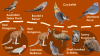
Animal Photos | @Mr Gharial , in the style of @Austin the Sengi

Mammals: 22
Birds: 44
Reptiles: 36
Amphibians: 7
Fish: 18
Invertebrates: 18
Total: 145

What do you think so far? Feel free to give feedback, criticism, suggestions, etc. The next area is the Pampas inside the New World building.

Link of the Zoo Document: Las Vegas Zoological Park
Link of the Zoo Stocklist: Las Vegas Zoological Park Stocklist

full

Teaser (make predictions) | @Julio C Castro
 

Attachments

  • Screenshot 2025-02-21 8.46.06 PM.png
    Screenshot 2025-02-21 8.46.06 PM.png
    419.9 KB · Views: 163
Planning the South Entrance, Land Down Under and Islands of the World: Part 1

the Land Down Under:
My original plan for the Australia zone was simple and boring. It was a basic area with kangaroos, emus, wallabies, lorikeets, and bearded dragons. I even had my own "Lorikeet Landing"

full

Rainbow Lorikeet | @Austin the Sengi

Then in my "revised" area, I decided to focus on the deserts of Australia. Some inspirations were @elefante 's Las Vegas Zoo, Living Deserts, and Omaha. There were several issues in my plans though. I had massive aviaries with non-compatible birds that don't even live remotely near each other. So, I decided to research for specific desert regions and I noticed that I had major flaws such as having woylies in a desert area focused on East and Central Australia.

full

Western Woylie | @Astrotom3000

I felt like this area would need a headliner other than kangaroos. Dingos were an option but then I found it. Koalas. There would be an East Australia dry forest area along with the Central Outback. For some reason, I thought koalas would be very arid-adapted which they aren't so I had them in a completely outdoor area. There wasn't any indoor areas for them at all.

full

Queensland Koala | @pachyderm pro

I had not only 2 areas for my spec Zoo but 3. There was going to be a nocturnal Daintree Rainforest area in the "Realm of Darkness" exhibit. I had crocodiles, turtles, sugar gliders, etc. but it wasn't really appealing. I also didn't like how there were animals that could've been housed outdoors so I decided to have only "purely" nocturnal animals in my nocturnal house.

full

Freshwater Crocodile | @OskarGC

Once I finished the koala section for my analysis thread, I decided that I wouldn't have any koalas. They are expensive to maintain and I decided that there would only be a Central Outback area. Having only a Central Outback Area, I decided to have a "dome" to make it stand out. There would be an extensive free-roaming collection such as birds, lizards, and even wallabies. Then, I read @Mr Gharial 's spec Zoo thread with the Billabongs. I knew that I would want to have that area as it was semi arid with wetlands which would contrast well with the outback.

full

Yellow-Footed Rock Wallaby | @SivatheriumGuy

Once I had my two areas, I researched from late December to January. I also had many sources of inspiration from the Speculative Zoo Design and Planning thread such as;
I also wanted to have the exhibits balanced, not only having mammals, birds, and reptiles but also invertebrates, fish, and amphibians. The hardest part was finding Billabongs invertebrates and Outback amphibians. I planned on having yappies for the Billabongs but I decided to not have any due to lack of space and sufficient interest. I also settled on cane toads as they would be great for education as they are incredibly invasive.

full

Yabby | @DaLilFishie
 
the New World: Patagonia and the Pampas
This area was partially inspired by @Van Beal 's spec Zoo, an animal atlas, @Austin the Sengi 's fantasy Zoo map, @Newt 's spec zoo and @Mr Gharial 's species help. Thanks for the helpful feedback and comments to; @Paul.Haerle , @Austin the Sengi , @Van Beal , and @Daktari JG. Due to @Mr Gharial 's computer issue, I won't have my usual animal photos (in one post) but I will post these for now.

Once inside the building, there is a pair of enclosures next to each other. One of them is indoors while the other is outdoors where you can view from indoors via glass panels. The indoor enclosure is 12 sq. m large, 2.5 m tall, and uses red lighting with plants. The outdoor enclosure is 48 sq. m large and 3.5 m tall with plants, boulders, and wooden platforms. A solitary 1.0 Screaming Hairy Armadillo Chaetophractus vellerosus and 0.1 Screaming Hairy Armadillo Chaetophractus vellerosus rotate between enclosures. When it’s breeding season, both individuals are housed together in the outdoor enclosure. There is an additional 1.0 Screaming Hairy Armadillo Chaetophractus vellerosus animal ambassador behind the scenes.

full

Screaming Hairy Armadillo | @Ding Lingwei
full

Possible Look of Armadillo Indoor Enclosure | @conservationistdude

Then, there is a 120 cm long, 80 cm wide, and 80 cm tall terrarium that houses a solitary 0.1 Bell's Horned Frog Ceratophrys ornata. There is leaf litter, a shallow pool, plants, hollow logs and branches. Then there is an aviary that is viewable via glass panels that is 1000 sq. m long and is 6 m tall. There are plants, rocks, trees, branches, and wooden platforms. On the ground, you can find a cast of 1.2 Northern Crested Caracara Caracara plancus cheriway. In the sky, you can find a committee of 2.3 North American Black Vulture Coragyps atratus atratus.

full

Bell's Horned Frog | @akasha
full

Possible Look of Horned Frog Terrarium | Me
full

Northern Crested Caracara | @RatioTile
full

North American Black Vulture | @TheGerenuk
full

Possible Look of Raptor Aviary | @lintworm

After that, there is a netted 1500 sq. m large walk-through enclosure that’s mesh-netted and 4.5 m tall. There is a door that opens into the enclosure from inside the building. There are plants, trees, branches, and rocks. Surrounding the pathways are 1 m tall wooden fencing. You can find a group of 2.4 Elegant Crested-Tinamou Eudromia elegans, a flock of 1.3 Greater Rhea Rhea americana, and a settlement of 3.3 Patagonian Mara Dolichotis patagonum. Behind the scenes, there is a settlement of 1.2 Patagonian Mara Dolichotis patagonum animal ambassadors. The final enclosure in the Patagonia and the Pampas enclosure is a 300 sq. m large enclosure that is 4 m tall and netted. There are simulated termite mounds, plants, rocky outcrops, trees, and a solitary 1.0 Giant Anteater Myrmecophaga tridactyla.

full

Elegant-Crested Tinamou | @Astrotom3000
full

Greater Rhea | @evilmonkey239
full

Patagonian Mara | @Julio C Castro
full

Possible Look Into Patagonia Enclosure | @MagpieGoose
full

Giant Anteater | @Giant Eland
full

Possible Look of Anteater Enclosure | @KevinB

Mammals: 25
Birds: 49
Reptiles: 36
Amphibians: 8
Fish: 18
Invertebrates: 18
Total: 154

What do you think so far? Feel free to give feedback, criticism, suggestions, etc. The next area is the humid parts of the Gran Chaco.

Link of the Zoo Document: Las Vegas Zoological Park
Link of the Stocklist: Las Vegas Zoological Park Stocklist

full

Teaser | @Bengal Tiger
 
Planning the South Entrance, Land Down Under and Islands of the World: Part 3

Islands of the World
I originally didn't intend to have an island zone. There would be a Madagascar area in the Inside Africa area, and an Indian Ocean area in the nocturnal dome. The Southwest American island endemics would just be with the other Southwestern Desert animals. Then, in my revised plan, I added the Education Center which would have more endangered island endemics but mainly focusing on conservation worldwide (Partula, cuban crocodiles, Madagascar cichlids, etc.).

full

Cuban Crocodile | @RatioTile

Finally, in my revised zoo (this thread), I decided to have an island exhibit as it's underrepresented and I wanted to diversify the species. My main inspirations for Oceania were @Aardwolf 's exhibit thread, @Mr Gharial 's spec Zoo, and @Haliaeetus 's island zoo. I wanted it to showcase all the regions of Oceania (other than Australia) while also focusing on conservation efforts (most of the species were endangered). I had Melanesia, Micronesia, and Polynesia represented along with the Pacific Ocean though I could've added an animal for Tasmania (but I didn't find any arid-adapted ones).

full

Guam Kingfisher | @splendens

Then, I had my Southeast Asian region. I was inspired by Bronx Zoo's JungleWorld along with @Van Beal 's spec Zoo but I mostly just had species that I thought were unique. My Madagascar area was mostly the same (compared to earlier plans) but I added a couple more animals (like the Paludarium) while making it less similar to the Bronx Zoo.

full

Komodo Dragon | @MagpieGoose

I had originally planned for a Galapagos Tortoise to be in the New World section but I decided it would be out of place. There wasn't exactly an easy way to showcase the Galapagos Islands so I decided to do a mix between those islands and the Caribbean Islands. I cut many species off such as Sally Lightfoot Crabs and a Galapagos fish as there were some designing issues I had. My final region was added when I almost finished the region as I wanted to showcase more conservation priority species. There were species that would be in breeding programs connected to other nearby zoos in California and Arizona.

full

Socorro Dove | @JigerofLemuria

What's Coming Soon?:
  • Humid Gran Chaco
  • Exhibit on my Spec Exhibit Thread
  • Dry Gran Chaco
 
I've been doing a lot of revisions so I decided to work my way backwards starting with the North Entrance and the revised South Entrance.

Revised Major Zones and Divisions (with changes pointed out):
  • Inside Africa - the Lion House; the Oasis; Africa Rocks [the Lion House was originally called Deserts]
  • Wild Eurasia - the Mediterranean; North Africa and the Middle East; Central Indian Plains; the Gobi Desert [Middle East was changed to include North Africa]
  • Zoo Center - Creatures of the Night; Venom vs. Poison; Intelligence [Revealed the final 2 exhibits, both are temporary]
  • the New World - the Andes and the Atacama; Patagonia and the Pampas; the Gran Chaco; Middle America [Central American scrublands were added]
  • Desert Dome of the Southwest - Baja California; California; the Chihuahuan Desert; the Mojave Desert; the Great Basin Desert; the Sonoran Desert; Texas
  • the Land Down Under [Removed the Billabongs]
  • Islands Alive - Oceania; Southeast Asia; Isles of the Indian Ocean; the Caribbean and the Galápagos [Removed Islands of the Southwest]
North Entrance: [Partly inspired by @Haliaeetus 's suggestion]
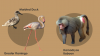
After passing the outdoor pay booths, there is a large 3500 sq. m large walkthrough aviary that goes up to 10 m tall with a breeding flamboyance of 35.35 Greater Flamingo Phoenicopterus roseus and a flock of 6.6 Marbled Duck Marmaronetta angustirostris. There is a 600 sq. m large central pond with various shallow pools and mudflats. In the central pond, there are 2 small islands. Scattered across the exhibit, there are halophytes, reeds, rushes, shrubs, small trees, and grass. Visitors can walk on a raised boardwalk if entering with misting stations scattered across.
full

Possible Look of Enclosure | @gulogulogulo
The next enclosure is 2400 sq. m large and netted with a breeding troop of 6.30 Hamadryas Baboon Papio hamadryas. Viewing is possible via fencing overlooking the enclosure and a large glass viewing window. The perimeter wall extends 1 m underground. There are rocky outcrops, stones, logs, dead trees, and various climbing structures. There is also a waterfall which flows into a 10 sq. m large pool. Across the exhibit, there are aloes, shrubs, grass, and small acacia trees. Then, the path splits into two with Inside Africa on the left side and Wild Eurasia on the right side.

full

Possible Look of Enclosure | @Jxckson

Screenshot 2025-03-23 9.11.52 AM.png
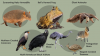
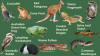
Animal Photos | @Mr Gharial , in the style of @Austin the Sengi

South Entrance:
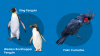
After passing the outdoor pay booths, there is a restrooms building and the Penguinarium. Once you enter the building, there is a 8 m tall gallery with a 1000 sq. m large enclosure. 60% of the enclosure is land area with rocky outcrops, nesting platforms, mosses, and grass. The remaining 40% of the enclosure is a saltwater pool with underwater viewing that slopes from 0.3 m deep to 3 m deep. Integrated with the HVAC system, there are various overhead sprinkler nozzles, which can create scheduled “snow storms.” It’s home to a breeding colony of 15.15 King Penguin Aptenodytes patagonicus and a breeding colony of 35.35 Western Rockhopper Penguin Eudyptes chrysocome chrysocome. In the building, there is also the Penguin Café with a large viewing panel into the enclosure.
full

Possible Look Into Enclosure | @SivatheriumGuy

Outside of the building, there is a 72 sq. m large, 4 m tall aviary housing a breeding pair of 1.1 Palm Cockatoo Probosciger aterrimus. Behind the scenes, there is a 6 sq. m large and 2.5 m tall indoor enclosure for nighttime. There are climbing branches, dead trees, and logs. There are also misting stations, small plants, and a vertical nesting box. There is a solitary 0.1 Palm Cockatoo Probosciger aterrimus behind the scenes which is an animal ambassador for Islands Alive while also participating in the Flight Show. Then, the path splits into two with the Land Down Under on the left side and Islands Alive on the right side.
full

Possible Look of Aviary | @WhistlingKite24

Screenshot 2025-03-23 9.11.58 AM.png
Animal Photos | @Mr Gharial , in the style of @Austin the Sengi

Mammals: 1
Birds: 5
Reptiles: 0
Amphibians: 0
Fish: 0
Invertebrates: 0
Total: 6

What do you think so far? Feel free to give feedback, criticism (with suggested improvements), predictions, suggestions, etc. The next post will be the Lion House (focusing on South African Deserts) and the revised Land Down Under (focusing on Outback) so feel free to predict what's to come now and what's coming up after.

Link of the Zoo Document: Las Vegas Zoological Park
Link of Stocklist: Las Vegas Zoological Park Stocklist

full

Teaser | @Van Beal
 

Attachments

  • Screenshot 2025-03-23 9.11.52 AM.png
    Screenshot 2025-03-23 9.11.52 AM.png
    270.4 KB · Views: 104
  • Screenshot 2025-03-23 9.11.58 AM.png
    Screenshot 2025-03-23 9.11.58 AM.png
    266 KB · Views: 105
the Lion House
This area was inspired by Bronx Zoo, Brookfield Zoo, @Van Beal 's spec zoo, @Haliaeetus 's spec zoo, etc.

The first enclosure is a 1215 sq. m large and 8 m tall walkthrough aviary. There are tall grasses, shrubs, trees, boulders, and logs. There are also artificial communal nest frames, shallow water basins, a 32 sq. m large pool, and nesting boxes. On the ground, there is a dule of 2.2 Namaqua Dove Oena capensis and a breeding pair of 1.1 Spotted Thick-Knee Burhinus capensis while in the canopy, there is a cluster of 8.8 White-throated Bee-Eater Merops albicollis. In the mid-level of the aviary, there is a colony of 30.30 Sociable Weaver Philetairus socius and a breeding pair of 1.1 White-headed Buffalo-Weaver Dinemellia dinemelli. Behind the scenes, there is a pair of 1.1 Spotted Thick-Knee Burhinus capensis which are used as animal ambassadors and also participate in the Flight Show.

The next enclosure is 600 sq. m large with a breeding pair of 1.1 Bat-eared Fox Otocyon megalotis and a breeding pair of 1.1 Cape Porcupine Hystrix africaeaustralis. There is 1 m deep fencing underground. There are rocks, logs, burrowing mounds, and branches. There is a shallow pool, shrubs, grasses, and trees. There are heated dens, and heated burrows with indoor viewing that’s red-lighted. Behind the scenes, there is a pair of 2.0 Bat-eared Fox Otocyon megalotis and a pair of 2.0 Cape Porcupine Hystrix africaeaustralis which are animal ambassadors.

full

Possible Look Into Enclosure | @pachyderm pro


Then, there is a 8000 sq. m large, netted, 5.5 m tall enclosure housing a breeding pride of 1.5 Southern Lion Panthera leo melanochaita with 1 m underground fencing. There are rocky outcrops, raised platforms, trees, shrubs, and grasses. There is also a 50 sq. m large pool with indoor viewing into parts of the enclosure.
full

Possible Look Into Enclosure | @Julio C Castro

After that, there is a 2000 sq. m large enclosure with a sounder of 0.4 Common Warthog Phacochoerus africanus and a breeding mob of 0.0.20 Meerkat Suricata suricatta. There are mud wallows, boulders, logs, and water troughs. There are also shrubs, grasses, and aloes. Behind the scenes, there is a pair of 0.2 Common Warthog Phacochoerus africanus animal ambassadors. In the adjacent Lion House, there is underground viewing for the artificial burrows, chambers, and tunnels of the meerkats.

full

Possible Look Inside Enclosure | @snowleopard

The first enclosure in the Lion House takes up a wall, being 2.5 m tall where a large plexiglass wall looks into various connected subterranean tunnels and chambers. It’s red lit with nesting chambers, main chambers, and a food chamber. It’s home to a labor of 0.0.20 Damara Molerat Fukomys damarensis. The next enclosure is a 200 cm long, 100 cm wide, and 100 cm tall terrarium housing a solitary 1.0 Giant African Bullfrog Pyxicephalus adspersus. There is seasonal rain and an ephemeral pool. There are flat stones, a partially submerged branch, hardy plants, and a half log. Behind the scenes, there is a solitary 0.1 Giant African Bullfrog Pyxicephalus adspersus animal ambassador. Between these two terrarium blocks, there is viewing into the lion enclosure.

full

Possible Look Into Molerat Enclosure | @snowleopard
full

Possible Look Into Bullfrog Enclosure | @TinoPup

Then, there is another terrarium that’s the same size as the one before. There are rocks, a branch, and plants. It has varied antelope dung that’s acquired fresh. It houses a roll of 0.0.8 Cape Flightless Dung Beetle Circellium bacchus. There is viewing into the mixed fox & porcupine enclosure where visitors can see their burrows. Finally, there is a 500 cm long, 250 cm wide and 250 cm tall terrarium, home to a solitary 0.1 Black Mamba Dendroaspis polylepis. There are hollow logs, robust branches, rock ledges, and smooth rocks. There are also plants and a shallow water dish.

full

Possible Look Into Mamba Enclosure | @NNM.

The last enclosure inside is 80 sq. m large and 4 m tall. It’s home to a solitary 0.1 Aardvark Orycteropus afer and a breeding troop of 1.3 Southern Lesser Galago Galago moholi. There are small mounds, rope vines, logs, tree trunks, trees, branches, and wooden nesting boxes with built-in cameras. It’s red-lit with a sliding ground tunnel and an over-head tunnel connected to a tree via a suspended walkway which connects to an outdoor enclosure. The outdoor enclosure is netted, 3 m tall and 150 sq. m large. There are trees, shrubs, logs, and a termite mound replica. There are also artificial burrows, a shallow pond, and rocks. Behind the scenes, there is a solitary 0.1 Aardvark Orycteropus afer animal ambassador.

full

Possible Look into Indoor Enclosure | @Dhole dude
full

Possible Look of Outdoor Enclosure (it would have more trees) | @Moebelle

Once outside, there is a 12000 sq. m large enclosure with 1 m deep underground fencing, home to a breeding clan of 4.12 Spotted Hyena Crocuta crocuta. There is a pond, rocky outcrops, large logs, trees, shrubs, and grasses. The final enclosure complex in this area starts off at a 30000 sq. m large savanna. In this section, you can find a herd of 1.4 Common Eland Tragelaphus oryx, a herd of 1.4 Gemsbok Oryx gazella and a herd of 1.7 Karoo Springbok Antidorcas marsupialis marsupialis. There is a large waterhole, logs, shallow pits, grasses, shrubs, and Acacia.

full

Possible Look into Hyena Enclosure | @MGolka
full

Possible Look of Part of Savanna Enclosure | @RonBurrgundy

Then, the enclosure transitions to a 7500 sq. m large rocky outcrops area with a breeding dazzle of 1.3 Hartmann’s Mountain Zebra Equus zebra hartmannae. There are sparse shrubs, and grasses along with a water trough. The final section is a 3500 sq. m large, netted enclosure. There are grasses, a shallow pond, trees, logs, rock clusters, and nesting boxes. It’s home to a breeding trio of 2.1 Southern Ground Hornbill Bucorvus leadbeateri. There is a pair of 0.2 Southern Ground Hornbill Bucorvus leadbeateri behind the scenes who are animal ambassadors and used in the Flight Show.

full

Possible Look into Zebra Enclosure | @AndyJ08

Screenshot 2025-03-26 8.59.22 PM.png
Screenshot 2025-03-26 8.56.12 PM.png
Screenshot 2025-03-26 8.56.15 PM.png
Animal Photos | @Mr Gharial , style to @Austin the Sengi
Screenshot 2025-03-26 8.56.19 PM.png
Animal Ambassadors

Mammals: 14
Birds: 11
Reptiles: 1
Amphibians: 1
Fish: 0
Invertebrates: 1
Total: 28

What do you think so far? Feel free to give feedback, criticism (with suggested improvements), predictions, suggestions, etc. The next post will be the revised Land Down Under (focusing on Outback) so feel free to predict what's to come now and what's coming up after.

Zoo Document: Las Vegas Zoological Park
Stocklist: Las Vegas Zoological Park Stocklist
 

Attachments

  • Screenshot 2025-03-26 8.56.19 PM.png
    Screenshot 2025-03-26 8.56.19 PM.png
    532.2 KB · Views: 98
  • Screenshot 2025-03-26 8.56.15 PM.png
    Screenshot 2025-03-26 8.56.15 PM.png
    394.1 KB · Views: 95
  • Screenshot 2025-03-26 8.56.12 PM.png
    Screenshot 2025-03-26 8.56.12 PM.png
    361 KB · Views: 95
  • Screenshot 2025-03-26 8.59.22 PM.png
    Screenshot 2025-03-26 8.59.22 PM.png
    502.7 KB · Views: 96
@AmazonianHippo , thanks for the kind feedback

the Land Down Under
While this may seem similar to the original exhibit, I changed it to only focus on the "Central Outback" using @Mr Gharial 's species help thread. It's not desert specific though as the last "half" is more wetland oriented but not quite billabongs. The group sizes are a bit iffy though so please identify mistakes and how to fix it.


As visitors start walking down the Land Down Under pathway, they are met with a 500 sq. m large walk-through aviary that’s domed up to 6 m tall. Once visitors enter, there are two shallow pools, trees, shrubs, and grasses. There are also rocks, perches, logs, and nesting boxes with infrared heaters. Visitors can see a charm of 25.25 Australian Zebra Finch Taeniopygia castanotis, a flock of 8.8 Bourke’s Parrot Neopsephotus bourkii, a flock of 4.8 Cockatiel Nymphicus hollandicus, and a flight of 8.8 Diamond Dove Geopelia cuneata. Behind the scenes, there is a flock of 0.4 Cockatiel Nymphicus hollandicus which are used as animal ambassadors and also participate in the Flight Show.

full

Possible Look | @KevinB

Then, there is a 19200 sq. m large enclosure with open-facing, shaded barns, and rocky outcrops. There are also trees, shrubs, grasses, and water troughs. It houses a breeding mob of 1.3 Common Wallaroo Osphranter robustus, a breeding trio of 1.2 Emu Dromaius novaehollandiae, and a breeding mob of 1.4 Red Kangaroo Osphranter rufus. After that, there is a 4000 sq. m large, netted enclosure with a flock of 10.10 Galah Eolophus roseicapilla and a bachelor mob of 5.0 Red Kangaroo Osphranter rufus. There are rocky outcrops, an open-facing barn, branches, and hanging ropes. There is also a shallow pool, logs, trees, shrubs and grasses with nesting boxes connected. Behind the scenes, there is a pair of 0.2 Red Kangaroo Osphranter rufus animal ambassadors.

full

Possible Look of 1stt Enclosure | @WhistlingKite24
full

Possible Look of 2nd Enclosure | @Chlidonias

Finally, there is an enclosure both outdoors and indoors adjacent and in the Land Down Under building. The outdoor area is netted, 300 sq. m large and has rocky slopes. There are logs, trees, shrubs, a small pool, and nesting boxes. It’s connected to an indoor enclosure via an overhead opening and a ground-level opening with guillotine style doors. The indoor enclosure is red-lit, 3 m tall and 40 sq. m large. There are viewable underground burrows, nesting boxes, logs, and branches. There is a breeding trio of 1.2 Short-beaked Echidna Tachyglossus aculeatus and a solitary 0.1 Tawny Frogmouth Podargus strigoides. During the frogmouth breeding season, a solitary 1.0 Tawny Frogmouth Podargus strigoides is added, being an animal ambassador for a majority of the year.

Once inside, there is a series of enclosures. The first two terrariums are 3 m long, 2 m wide and 2 m tall. The first one has rocky outcrops, thick branches, a half log, and shallow water dishes. It’s home to a solitary 0.1 Ridge-tailed Monitor Varanus acanthurus. The second one has rocks, hides, and a shallow water dish which allows it to be home to a solitary 0.1 Woma Python Aspidites ramsayi. Behind the scenes, there is an additional, solitary 0.1 Woma Python Aspidites ramsayi which is an animal ambassador.

full

Possible Look at Reptile Enclosures | @SpoonieSafari

Then, there is a 240 cm long, 150 cm wide, and 120 cm terrarium with a solitary 1.0 Central Bearded Dragon Pogona vitticeps and a solitary 1.0 Common Bluetongue Tiliqua scincoides. It has rocky outcrops, logs, caves, and plants. Behind the scenes, there is a solitary 0.1 Central Bearded Dragon Pogona vitticeps and a solitary 0.1 Common Bluetongue Tiliqua scincoides which are animal ambassadors. The next terrarium is smaller, being 80 cm long, 50 cm wide, and 120 cm tall, home to a group of 0.0.15 Spiny Leaf Insect Extatosoma tiaratum. It has a live, small eucalyptus with rocks, branches, and leaf litter surrounding it. There is a larger group of 0.0.20 Spiny Leaf Insect Extatosoma tiaratum animal ambassadors behind the scenes.

full

Possible Look of Mixed Reptile | @ralph

After, there is a more humid, 120 cm long, 75 cm wide and 140 cm tall with an army of 2.4 Australian Green Tree Frog Ranoidea caerulea. There are branches, stones, half logs, plants, and a shallow pool. Behind the scenes, there is a trio of 2.1 Australian Green Tree Frog Ranoidea caerulea animal ambassadors. The last indoor enclosure is a 3150 gallon aquarium with a trio of 1.2 Eastern Snake-necked Turtle Chelodina longicollis, a school of 0.0.20 Empire Gudgeon Hypseleotris compressa, and a school of 0.0.20 Murray River Rainbowfish Melanotaenia fluviatilis. It has driftwood pieces, large river rocks, a raised basking platform, and plants.

full

Possible Look of Frog Enclosure | @NNM.
full

Possible Look of Aquarium | @snowleopard

Once outside again, visitors are met with another walkthrough aviary which is 2100 sq. m large and 8 m tall. There are two shallow ponds, sandbanks, logs, boulders, and plants. There is a flock of 5.5 Freckled Duck Stictonetta naevosa, a flock of 8.8 Plumed Whistling-Duck Dendrocygna eytoni, and a wedge of 7.7 Straw-necked Ibis Threskiornis spinicollis. The final walkthrough aviary in the exhibit is 3500 sq. m large and 7 m tall. There are shallow ponds, logs, boulders, and plants. There is a gaggle of 2.2 Cape Barren Goose Cereopsis novaeholandiae and a breeding mob of 1.4 Eastern Grey Kangaroo Macropus giganteus. Finally, there is a 40 sq. m large and 3 m tall aviary home to a breeding pair of 1.1 Laughing Kookaburra Dacelo novaeguineae. There are branches, nesting logs, and plants. Behind the scenes, there is a solitary 1.0 Laughing Kookaburra Dacelo novaeguineae animal ambassador.

full

Possible Look of Wetlands Aviary | @WhistlingKite24

Screenshot 2025-03-29 6.03.46 PM.png
Screenshot 2025-03-29 6.03.51 PM.png
Screenshot 2025-03-29 6.03.53 PM.png
Animal Photos | @Mr Gharial , style inspired by @Austin the Sengi

Screenshot 2025-03-29 6.04.52 PM.png
Animal Ambassadors

Mammals: 19
Birds: 23
Reptiles: 6
Amphibians: 3
Fish: 2
Invertebrates: 2
Total: 55

What do you think so far? Feel free to give feedback, criticism (with suggested improvements), predictions, suggestions, etc. The next post will be Inside Africa: the Oasis so feel free to predict what's to come now and what's coming up after. Please identify any possible mistakes or errors and what I should fix.

Zoo Document: Las Vegas Zoological Park
Stocklist: Las Vegas Zoological Park Stocklist
 

Attachments

  • Screenshot 2025-03-29 6.03.53 PM.png
    Screenshot 2025-03-29 6.03.53 PM.png
    468.3 KB · Views: 81
  • Screenshot 2025-03-29 6.03.51 PM.png
    Screenshot 2025-03-29 6.03.51 PM.png
    347 KB · Views: 82
  • Screenshot 2025-03-29 6.03.46 PM.png
    Screenshot 2025-03-29 6.03.46 PM.png
    429.7 KB · Views: 82
  • Screenshot 2025-03-29 6.04.52 PM.png
    Screenshot 2025-03-29 6.04.52 PM.png
    513.8 KB · Views: 82
While I am aware of the fact that your current focus is on the animal analysis thread. Have you considered on making a brief return to at least finish Inside Africa: the Oasis at some point lately?
 
While I am aware of the fact that your current focus is on the animal analysis thread. Have you considered on making a brief return to at least finish Inside Africa: the Oasis at some point lately?
With the animal focus thread, I'm revising my entire zoo with only the North Entrance completely finished. The brainstorm process for the Lion House is over and the final version will probably be done in a week. I still have the South Entrance, the Land Down Under, Islands Alive, and parts of the New World to finish. I won't post the updated versions (it will clog the thread) but I will share the document with them. Sadly, I don't think I will post the Oasis, the Kopje, and the Gran Chaco until August (I'm not going to be able to be on Zoochat from late June to early August)
 
Back
Top