Australian Asian Elephant Population 2025

Keeper Jody has said she is unsure when Burma and Permai will bond. Sounds like they’ll still be separated when the Taronga duo arrive.
It appears the introductions are taking longer than usual but I would still hold out hope the pair will be able to integrate eventually.

It's good that Monarto are letting the elephants decide when they want to be introduced to one another. Apparently Permai's been a bit unsure in general, with a lot of progression and a lot of back tracking but hopefully she's able to get used to things asap.

Whilst it seems like it was nothing more than a dream to have these two integrated as quick as was anticipated by some, it's still possible the arrival of the two Taronga cows will further help these two girls feel more comfortable with more elephants on site.

It was never going to be easy introducing two fully grown cows, who are both now aged in their late 30's/early 40's. In the past, we have had cows successfully introduced, however these introductions involved at least one cow that was much younger which would have made introductions much easier. Ie. Anjalee at Dubbo formed a bond with young Kanlaya first, and this further helped her introductions with adults, Thong Dee and Porntip.
 
Attempts to Breed Elephants at Taronga Zoo (1985)

An interesting article on breeding attempts at Taronga Zoo in 1985:

Dorothy Parker wrote that women and elephants never forget, but Taronga Zoo's nine-tonne He-Man has apparently forgotten how to mate. Keepers put He-Man with his several times erstwhile lover, Ranee, on Thursday. Both elephants are in their mid-twenties. In the past the pair have mated successfully, but this time the assignation was unsuccessful. "He had a few attempts with Ranee and attempted to mate, but he didn't hit the spot," said the zoo's media liaison officer, Darill Clements. “We think he has the general idea, but he needs a bit of practice".

The zoo has began an ambitious program to preserve the Asiatic elephant by breeding them in captivity. It has raised $500,000 to build special facilities and is looking to the end of the year as the time when some impending happy events may be announced.

Taronga is hoping the elephants will overcome their mating problems, but if things do not happen naturally there are contingency plans for artificial insemination. But it's not easy to collect semen from an elephant and, when collected, getting it to the right spot can prove difficult. However, the zoo hopes that by the end of the year it will be able to announce the thump, thump of large feet.

Taronga's three elephants are Asiatic ones. Western Plains Zoo at Dubbo has two male and three female African elephants. "We try to keep them separate," the zoo's biologist, Gary Redcliffe, said. But he has not ruled out the possibility of mating the varieties.

Source: Sunday, January 27, 1985 (Sydney Morning Herald)
 
Attempts to Breed Elephants at Taronga Zoo (1985)

An interesting article on breeding attempts at Taronga Zoo in 1985:

Dorothy Parker wrote that women and elephants never forget, but Taronga Zoo's nine-tonne He-Man has apparently forgotten how to mate. Keepers put He-Man with his several times erstwhile lover, Ranee, on Thursday. Both elephants are in their mid-twenties. In the past the pair have mated successfully, but this time the assignation was unsuccessful. "He had a few attempts with Ranee and attempted to mate, but he didn't hit the spot," said the zoo's media liaison officer, Darill Clements. “We think he has the general idea, but he needs a bit of practice".

The zoo has began an ambitious program to preserve the Asiatic elephant by breeding them in captivity. It has raised $500,000 to build special facilities and is looking to the end of the year as the time when some impending happy events may be announced.

Taronga is hoping the elephants will overcome their mating problems, but if things do not happen naturally there are contingency plans for artificial insemination. But it's not easy to collect semen from an elephant and, when collected, getting it to the right spot can prove difficult. However, the zoo hopes that by the end of the year it will be able to announce the thump, thump of large feet.

Taronga's three elephants are Asiatic ones. Western Plains Zoo at Dubbo has two male and three female African elephants. "We try to keep them separate," the zoo's biologist, Gary Redcliffe, said. But he has not ruled out the possibility of mating the varieties.

Source: Sunday, January 27, 1985 (Sydney Morning Herald)

Discussion:

This article raises several interesting points:

I’ll start by acknowledging that while Heman was an impressive bull, his reported weight (nine tonnes) was clearly an estimate given Bong Su at Melbourne Zoo weighed just under five tonnes.

The money raised for ‘special facilities’ referred to an expansion of the elephant exhibit to three times the size (with seperate yards for the bull and cow elephants). Construction began 1985, with the opening of the expanded exhibit on 06/07/1987.

Taronga’s Asian elephants at the time were:

1.0 Heman (1956) Arrived 1963
0.1 Ranee (1955) Arrived 1962
0.1 Burma (1959) Arrived 1982

With Ranee turning 30 years old the year this article was written, her age was against her with regards to breeding (and arguably Burma, aged 26 years); but it’s interesting to know Heman at least knew how to mount females, even if this was hit and miss.

Consideration was also given to undertaking AI, which would have required Heman to be trained for AI collection. Heman was not suitable for free contact, so his transfer to Dubbo ahead of the arrival of the elephants from Thailand was inevitable; but had Gung gone to Auckland Zoo as originally intended, it’s clear a greater role would have been planned for Heman in the breeding programme. If indeed trained for AI, it’s probable he would have been used as an AI donor in place of Bong Su in 2008 to inseminate Porntip had he survived and been in good health.

I’m really surprised to hear hybridisation of the African/Asian species hadn’t been ruled out. Clearly Taronga decided against it and with a proven African elephant bull and three young cows at Dubbo, had what appeared to be a strong foundation for successful breeding.

It’s always interesting coming across historic articles expressing a zoo’s hopes at breeding the first elephant calf in the region. I’ve come across articles detailing hopes from Taronga Western Plains Zoo, Auckland Zoo, Perth Zoo and now Taronga Zoo - with the latter finally welcoming the region’s first elephant birth in 2009.
 
Tusks on Dubbo bulls:

In celebrating Pathi’s Harn’s 15th birthday this week, Taronga Western Plains Zoo have shared an update that he and Sabai spend the majority of their time together; as well as sharing a photo of the bulls.

Despite his tusks being trimmed, it’s clear Pathi Harn has grown a thick pair of tusks; while Sabai (even acknowledging his age of 8.5 years) has a notably small pair of tusks - typical of Luk Chai’s line.

1.0 Pathi Harn (10/03/2010) Bong Su x Porntip
1.0 Sabai (02/11/2016) Gung x Thong Dee

upload_2025-3-11_22-3-41.jpeg

upload_2025-3-11_22-3-54.jpeg
 

Attachments

  • upload_2025-3-11_22-3-41.jpeg
    upload_2025-3-11_22-3-41.jpeg
    65.5 KB · Views: 74
  • upload_2025-3-11_22-3-54.jpeg
    upload_2025-3-11_22-3-54.jpeg
    128.8 KB · Views: 64
And yet while other zoos in the region appear to let there bulls grow and develop large tusks. Or at least have in the past, Western plains continues with the trimming of the tusks. Neither bull appears to have an impressive set. Lets hope as they age they develop more with is typical of the species.

I prefer to see bulls with the natural, intact tusks; but trimming is common within the region. It reduces the risk of breakages and the reduces the risk of injuries to the cows. At Dubbo, all three bulls enjoy social time with the cows (when the cows aren’t cycling).

Bong Su at Melbourne had his tusks trimmed. Here’s a video of him interacting with the main herd (apologies for the childish title):

A daddy Asian Elephant that cuddles his calf
 
I prefer to see bulls with the natural, intact tusks; but trimming is common within the region. It reduces the risk of breakages and the reduces the risk of injuries to the cows. At Dubbo, all three bulls enjoy social time with the cows (when the cows aren’t cycling).

Bong Su at Melbourne had his tusks trimmed. Here’s a video of him interacting with the main herd (apologies for the childish title):

A daddy Asian Elephant that cuddles his calf

Yes, but at least his were allowed to actually grow decently. Taronga seem to hell bent on just having little nubs. Which takes away some of the majesty of the bull asian elephant. Ironically the africans were never kept that way of memory.
 
Yes, but at least his were allowed to actually grow decently. Taronga seem to hell bent on just having little nubs. Which takes away some of the majesty of the bull asian elephant. Ironically the africans were never kept that way of memory.
To be fair, there was never really risk involved with Bong Su. He wasn't the most active elephant, and also never really had another bull elephant (or other elephants in general) to interact and spar with until his later years.

Tusk brakeage is common in young bulls, so it's important to minimise the risk and therefore reduce the length of the tusks. Man Jai actually broke both of his tusks and ended up having both removed due to risk of infection. I believe it's the same with Luk Chai.
 
Taronga’s elephants now transferring late April:

The transfer of Taronga’s two elephants, which represents a phase out of this species from Taronga Zoo has been delayed until late April.

From Taronga’s socials:

Tang Mo and Pak Boon’s big move to their new home and herd has been postponed to late April. As you can imagine, moving an elephant – let alone two - is no small feat.

Asian Elephant Pak Boon has recently presented with a health concern to her right eye and our expert teams want to ensure that she is in the best health ahead of her big journey.
 
Opening of the Werribee complex:

Huge News: Werribee Elephant Trail Open For Visitors

Premier Jacinta Allan and Minister for the Environment Steve Dimopoulos today opened the 21-hectare Elephant Trail, a world-class habitat for the nine Asian elephants.

The elephants have spent the past few weeks settling into their new home after making the move to the west. But now they're ready to welcome visitors - just in time for the school holidays.
 

Attachments

  • elephant-trail-pool-werribee-open-range-zoo-1024x576.jpg
    elephant-trail-pool-werribee-open-range-zoo-1024x576.jpg
    118.1 KB · Views: 32
  • elephants-werribee.jpg
    elephants-werribee.jpg
    172.6 KB · Views: 33
  • Elephant-herd-crossing-the-overpass-3.jpg
    Elephant-herd-crossing-the-overpass-3.jpg
    140.7 KB · Views: 33
https://secretmelbourne.com/elephant-trail/

This is an interesting article highlighting the Elephant Trail, which also has some choice shots of the whole complex/the elephants using the space!

View attachment 778753 View attachment 778754 View attachment 778755
Thanks for sharing!

It's cool to know the barn appears to be open, with access for the public. Can't wait to see what the viewing experience is there.

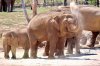
In regards to the photos, I thought I'd also ID the elephants for those interested in who's who:

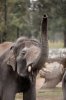
First photo (L-R): Num Oi at the back, and Kulab at the forefront (enjoying the water).
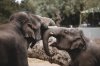
Second photo (L-R): Looks like Aiyara, next to Dokkoon, with Kulab and Num Oi then being the elephants obscured (behind Dokkoon).
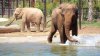
Third photo (L-R): Mali, followed by Roi Yim and then Aiyara again. And it looks like Dokkoon at the back.
 
Last edited:
I have always loved the bridges in exhibits for animals (particularly larger animals) to cross right over the walking trails, they are so cool!

In 2015, Taronga Zoo outlined plans for the following in their masteprlan:

7. Elephant Trail

A scenic path traversing the zoo where Elephants will walk.


It was my understanding this would have taken a similar format and I was disappointed it never came to fruition. It’s fantastic to see it come to life (on a much larger scale) at Werribee.

The design of Melbourne’s complex was equally forward thinking in design for its time (2003) with elephant crossings over the pathways facilitating the transfer of elephants between exhibits.
 
In 2015, Taronga Zoo outlined plans for the following in their masteprlan:

7. Elephant Trail

A scenic path traversing the zoo where Elephants will walk.


It was my understanding this would have taken a similar format and I was disappointed it never came to fruition. It’s fantastic to see it come to life (on a much larger scale) at Werribee.

The design of Melbourne’s complex was equally forward thinking in design for its time (2003) with elephant crossings over the pathways facilitating the transfer of elephants between exhibits.

That sounds like an interesting concept. Would it have been a way for the elephants to visit other zoo enclosures, like a (well-reinforced) boardwalk?
 
In 2015, Taronga Zoo outlined plans for the following in their masteprlan:

7. Elephant Trail

A scenic path traversing the zoo where Elephants will walk.


It was my understanding this would have taken a similar format and I was disappointed it never came to fruition. It’s fantastic to see it come to life (on a much larger scale) at Werribee.

The design of Melbourne’s complex was equally forward thinking in design for its time (2003) with elephant crossings over the pathways facilitating the transfer of elephants between exhibits.
I believe the plan would've been a pathway connecting the cow complex to the bull complex. This would've certainly required at least two overhead pathways for the elephants and would've created a large pathway of which would've made for a unique viewing experience around the zoo.

Whilst Melbourne's design was certainly innovative and applauded, it was often disliked by a lot of us visitors who had to a bit of back tracking every time the path was shut off due to the elephants having access across habitats. An overhead bridge is by far more efficient and effective imo!
 
That sounds like an interesting concept. Would it have been a way for the elephants to visit other zoo enclosures, like a (well-reinforced) boardwalk?
I believe the plan would've been a pathway connecting the cow complex to the bull complex. This would've certainly required at least two overhead pathways for the elephants and would've created a large pathway of which would've made for a unique viewing experience around the zoo.

Whilst Melbourne's design was certainly innovative and applauded, it was often disliked by a lot of us visitors who had to a bit of back tracking every time the path was shut off due to the elephants having access across habitats. An overhead bridge is by far more efficient and effective imo!

My understanding was the pathway would have been a mixture of overhead walkways and ground level walkways that would essentially create a walking track for the elephants.

Before the move to protected contact three years prior, the female elephants were walked through the zoo during the morning, which was a hugely enriching experience for them. This not only would have allowed them opportunities to transverse a greater distance, it would have assisted the integration of the bull with the cows (both for breeding and socialisation purposes). Following the move to protected contact, this was undertaken by truck and trailer.
 
My understanding was the pathway would have been a mixture of overhead walkways and ground level walkways that would essentially create a walking track for the elephants.

Before the move to protected contact three years prior, the female elephants were walked through the zoo during the morning, which was a hugely enriching experience for them. This not only would have allowed them opportunities to transverse a greater distance, it would have assisted the integration of the bull with the cows (both for breeding and socialisation purposes). Following the move to protected contact, this was undertaken by truck and trailer.
Yeah overhead pathways would've been required to connect a walking track to the main cow elephant complex which is surrounded on all sides by pathways/enclosures.

In my opinion the trail would've likely gone straight across the central area outside of the zoo shop (across to where the current gorilla complex is) via a large overhead bridge and then continue from there along the main trail (heading towards Backyard to Bush) before connecting back across to the bull paddock via another overhead bridge.

Had it come to fruition, it would've allowed them to travel a good distance - a couple hundred meters at least.
 
My understanding was the pathway would have been a mixture of overhead walkways and ground level walkways that would essentially create a walking track for the elephants.

Before the move to protected contact three years prior, the female elephants were walked through the zoo during the morning, which was a hugely enriching experience for them. This not only would have allowed them opportunities to transverse a greater distance, it would have assisted the integration of the bull with the cows (both for breeding and socialisation purposes). Following the move to protected contact, this was undertaken by truck and trailer.

Reminds of how Auckland Zoo used to walk their elephants through the zoo with no barriers. I suppose this would be a way to move elephants around after the move to protected contact. It sounds like a pretty good form of enrichment for elephants in medium-sized zoos. I think Sydney and Australia zoos would get a lot out of implementing these walkways. Thinking more broadly, lot of US zoos that do have elephants are larger than most Australasian city zoos, but aren't quite safari parks, so a system of walkways could be a great way to provide their elephants with more room and enrichment.
 
Reminds of how Auckland Zoo used to walk their elephants through the zoo with no barriers. I suppose this would be a way to move elephants around after the move to protected contact. It sounds like a pretty good form of enrichment for elephants in medium-sized zoos. I think Sydney and Australia zoos would get a lot out of implementing these walkways. Thinking more broadly, lot of US zoos that do have elephants are larger than most Australasian city zoos, but aren't quite safari parks, so a system of walkways could be a great way to provide their elephants with more room and enrichment.

Auckland Zoo walked their elephants through the zoo during visiting hours up until the 2000’s (I recall seeing Kashin and Burma walk through the zoo as a kid; and remember reading how the then 18 year old Ma Schwe tragically dropped dead while being walked around the zoo in 1982).

Going back further and Jamuna and Rajah were walked from the elephant house each afternoon for a swim in the adjacent elephant pool (the plaza separating the two being renamed Jamuna Plaza in her honour).

Burma was walked through the zoo outside of visiting hours up until her export, with the keepers often taking her to bush up the back of the zoo.
 
Back
Top