And how many of these two dozen mammal species and three dozen bird species will be endangered? And how many of these species will specifically depend on American zoos for their preservation?
To be clear, these numbers were just very rough estimates I threw out there. But to answer your question, it seems a frustratingly increasing number of the remaining programs are for far less endangered species. I imagine this is purely coincidental and is more to do with more common species probably having had larger imports back in the day. Of course there are still highly endangered species like Eastern Bongo, Red Wolves, and Bali Myna being pushed. For fish, the existing few SSPs I believe are already for endangered species. Lower vertebrates and inverts seem to only have SSPs for mainly endangered species.
The Bronx Zoo is a given, and so are the Nashville (South American lizards, small carnivores, etcetera) and San Diego (less so now than they used to) zoos to a lesser extent. The Brookfield Zoo has demonstrated an incredible commitment to their pangolin population, and they've acquired a few other notable species in recent years too. There are lots of zoos that have been doing what they want in terms of reptiles; among them, the Fort Worth, Sedgwick County, and Dallas zoos have also been diversifying their bird collections. Zoo Miami is still working with duikers, giant eland, and a few other species, although their hoofstock collection is clearly declining overall. The Detroit, Houston, San Antonio, and Memphis zoos are working with some species against recommendations, as well.
Along with the pangolins, Brookfield must also be highlighted for their phenomenal work with breeding Togo Slippery Frogs. It's unfortunate that few other zoos have had interest in picking up this species.
I'm a little surprised no one has mentioned Dallas World Aquarium yet. While perhaps not the most conservation-oriented zoo in the country, DWA continues to import and breed a wide variety of rare (and often endangered species) including many ramphastids, cotingas, quetzals/trogons, Cracidae, birds-of-paradise, Blue Coua, Harpy Eagle, Orinoco Crocodile, and
Atelopus and dart frog species.
The Gladys Porter Zoo must also be highlighted for their continued commitment to pangolins (just as much as Brookfield!) and some rarer hoofstock such as Gaur (they have a small herd, but they're the only other collection to breed them in recent years aside from Bronx). They also boast a fantastic reptile collection featuring many South Texas and Mexican herps rarely seen in captivity, as well as their involvement with highly endangered species such Orinoco Crocodile, Philippine Crocodile, Chiapan Beaded Lizard, Anegada Ground Iguana, Cayman Blue Iguana, Mexican Box Turtle,
microphyes giant tortoise (as a major breeder in the AZA), and
becki giant tortoise (they have worked in cooperation with a private keeper who keeps/breeds them). And of course, there is their involvement with smuggled neotropical primate species, namely Mexican Spider Monkey (which is an existing SSP taxa), but also Peruvian Spider Monkey, Guatemalan Black Howler, and Mexican Mantled Howler. These latter these are unlikely to ever result in a formal breeding program, but it's still good that the zoo works to rescue confiscated primates and provide them with homes. It is a shame that they've seemingly ceased their partnership with the sole private keeper of West African Bushbuck and will be phasing this species out when their final animals die, but the truth is this species was unlikely to ever been sustainable in the US.
One thing I do notice as we discuss the zoos that continue to push for biodiversity is that, by and large, the main area where biodiversity continues to thrive is in herptiles. This is perhaps not unexpected, as herps often require much less institutional space and commitment to keep numbers healthy. This presents a concern in its own way, however, so it means entire programs rely heavily on the whims of individual curators. What would happen if the Bronx hired a new curator that wasn't a fan of frogs and decided to end their Kihansi Spray Toad program? What would happen if Brookfield chose to give up on their aforementioned slippery toad program? How many zoos are breeding endangered North American salamanders? Indeed, how many are cooperating on the same species of North American salamanders? How many zoos are participating in the European/Mideast viper programs; three or four? How many are cooperating on non-rattlesnake Neotropical vipers? Are any zoos other than Riverbanks breeding
Uroplatus ebenaui,
alluaudi,
giganteus in numbers? When pretty much every zoo in the AZA keeps crocodilians, how come all
Crocodylus and the
Mecistops programs are struggling, with several on the verge of collapse? A few years ago, the AZA pushed
Mauremys sp., yet I hear the zoos who bred them have struggled to place offspring. Is anyone breeding
Heosemys sp. besides Tennessee and the TSA? Who's breeding the Asian and African softshells?
So many of these projects could be gone in an instant with the simple change of a curator. Look at how much damage has been done to the SDZSP in only a few years of non-direction. Just something to think about, and an example of how biodiversity ≠ sustainability in and of itself. All of the work the few zoos involved in the above herp programs is fantastic and should be praised, but there is still a lot of work to be done and a lot larger of a problem at hand in spite of these programs existence.
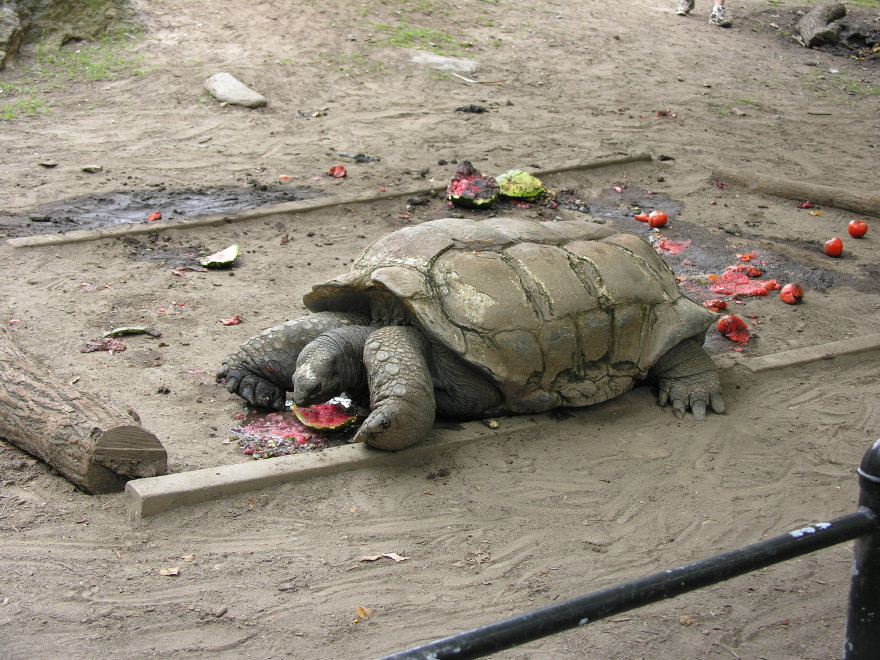
I'm going to disobey your direct orders and ask what is the issue with Aldabrachelys?

This is the topic of a whole thread of its own, and in fact I have been meaning to sit down and write up one such thread for some time now. In short, I believe the world has failed
Aldabrachelys gigantea compared to the care that has been given to its much more famous counterparts in the Galapagos. There are three remaining extant subspecies of
A. gigantea, though the zoological world seems to pretend that only the nominate, what we call the Aldabra Giant Tortoise, remains. The remaining two,
A. g. hololissa (Seychelles Giant Tortoise) and
A. g. arnoldi (Arnold's Giant Tortoise) hold on by a mere thread. There is precious little published research on these two subspecies, though they are consistently differentiated from the nominate in historic geographic distribution among the islands, morphology, and genetics. In 1995, there was a survey which identified a handful of both subspecies in zoos across the world. These tortoises were transported back to the Seychelles and there was a captive breeding program there from 1997 to 2011, when the Seychelles government disbanded it in order to develop the island that hosted it for tourism development. In 2011, the organization that ran the program was aware of 77
hololissa (including 40 captive bred tortoises) and ~133
arnoldi (including ~125 captive bred tortoises) remaining in the world. There are no official (or even unofficial) population figures for these taxa since 2011 that I can find. When the program disbanded, the majority of these animals were simply dumped onto various islands with suitable habitat, where they have been left unmonitored to survive and admix with introduced
A. g. gigantea that have been introduced to islands throughout the Seychelles from their original endemic Aldabra Atoll.
There have always been rumors that more tortoises existed in European and American zoos. For some reason, ZTL does not list
arnoldi, but there is one purported to be kept at Dresden and a few
hololissa in UK zoos. For American zoos, I've only ever heard of Philadelphia's old disfigured tortoise as being rumored to be
arnoldi, and never heard of any
hololissa being in the country. All US tortoises are considered the nominate taxa by ZTL and the AZA seems to treat them as a monotypic species.
I've never had the time, but I've always wanted to look through photos of animals across the US and compare them with the few photos of known, genetically-tested tortoises from the breeding program. Unfortunately, shell deformities make it very difficult at times to tell, especially with
hololissa. Also, females of all three look near-identical so genetic testing is really the only way to truly tell for them. And of course, potential hybridization in captivity can be deceiving. From the little I have done, I know I don't believe the Cotswold "
hololissa" to be true. They look more like deformed nominate animals to me. *Maybe* one of them could be, but it's hard to tell. I do believe one of the Blackpool animals and the rumored Paignton Zoo group (wild-caught in the Seychelles) look good for true
hololissa.
As far as North America goes, I've only ever really looked at tortoises I've personally seen. Unfortunately, what I've seen leads me to believe most of the captive-bred AZA stock are
arnoldiXgigantea crosses. Males of the
arnoldi subspecies are pretty easy to identify, even with deformities. They're the only remaining saddle-back tortoises in the Indian Ocean. From my brief photo survey, I identified four male tortoises in the USA which I believe to be
arnoldi. One is the primary breeding male at Tulsa Zoo, who I understand has sired a lot of the AZA's tortoises. A second is the rumored male that used to reside at Philadelphia. He's gone now, to where I'm not sure. The third and fourth are both at the same zoo and imagine my shock and awe when I realized they are the two males* at the Bronx Zoo.
*One of these two males used to also be at Philadelphia so at a time that zoo also held two male
arnoldi.
Tulsa's male
Philadelphia's old male
Bronx's males
For those curious, I do also believe the Zoo Dresden animal to be a legit
arnoldi.
~Thylo