A discussion on the AZA and sustainability

And how many of these two dozen mammal species and three dozen bird species will be endangered? And how many of these species will specifically depend on American zoos for their preservation?

To be clear, these numbers were just very rough estimates I threw out there. But to answer your question, it seems a frustratingly increasing number of the remaining programs are for far less endangered species. I imagine this is purely coincidental and is more to do with more common species probably having had larger imports back in the day. Of course there are still highly endangered species like Eastern Bongo, Red Wolves, and Bali Myna being pushed. For fish, the existing few SSPs I believe are already for endangered species. Lower vertebrates and inverts seem to only have SSPs for mainly endangered species.

The Bronx Zoo is a given, and so are the Nashville (South American lizards, small carnivores, etcetera) and San Diego (less so now than they used to) zoos to a lesser extent. The Brookfield Zoo has demonstrated an incredible commitment to their pangolin population, and they've acquired a few other notable species in recent years too. There are lots of zoos that have been doing what they want in terms of reptiles; among them, the Fort Worth, Sedgwick County, and Dallas zoos have also been diversifying their bird collections. Zoo Miami is still working with duikers, giant eland, and a few other species, although their hoofstock collection is clearly declining overall. The Detroit, Houston, San Antonio, and Memphis zoos are working with some species against recommendations, as well.

Along with the pangolins, Brookfield must also be highlighted for their phenomenal work with breeding Togo Slippery Frogs. It's unfortunate that few other zoos have had interest in picking up this species.

I'm a little surprised no one has mentioned Dallas World Aquarium yet. While perhaps not the most conservation-oriented zoo in the country, DWA continues to import and breed a wide variety of rare (and often endangered species) including many ramphastids, cotingas, quetzals/trogons, Cracidae, birds-of-paradise, Blue Coua, Harpy Eagle, Orinoco Crocodile, and Atelopus and dart frog species.

The Gladys Porter Zoo must also be highlighted for their continued commitment to pangolins (just as much as Brookfield!) and some rarer hoofstock such as Gaur (they have a small herd, but they're the only other collection to breed them in recent years aside from Bronx). They also boast a fantastic reptile collection featuring many South Texas and Mexican herps rarely seen in captivity, as well as their involvement with highly endangered species such Orinoco Crocodile, Philippine Crocodile, Chiapan Beaded Lizard, Anegada Ground Iguana, Cayman Blue Iguana, Mexican Box Turtle, microphyes giant tortoise (as a major breeder in the AZA), and becki giant tortoise (they have worked in cooperation with a private keeper who keeps/breeds them). And of course, there is their involvement with smuggled neotropical primate species, namely Mexican Spider Monkey (which is an existing SSP taxa), but also Peruvian Spider Monkey, Guatemalan Black Howler, and Mexican Mantled Howler. These latter these are unlikely to ever result in a formal breeding program, but it's still good that the zoo works to rescue confiscated primates and provide them with homes. It is a shame that they've seemingly ceased their partnership with the sole private keeper of West African Bushbuck and will be phasing this species out when their final animals die, but the truth is this species was unlikely to ever been sustainable in the US.

One thing I do notice as we discuss the zoos that continue to push for biodiversity is that, by and large, the main area where biodiversity continues to thrive is in herptiles. This is perhaps not unexpected, as herps often require much less institutional space and commitment to keep numbers healthy. This presents a concern in its own way, however, so it means entire programs rely heavily on the whims of individual curators. What would happen if the Bronx hired a new curator that wasn't a fan of frogs and decided to end their Kihansi Spray Toad program? What would happen if Brookfield chose to give up on their aforementioned slippery toad program? How many zoos are breeding endangered North American salamanders? Indeed, how many are cooperating on the same species of North American salamanders? How many zoos are participating in the European/Mideast viper programs; three or four? How many are cooperating on non-rattlesnake Neotropical vipers? Are any zoos other than Riverbanks breeding Uroplatus ebenaui, alluaudi, giganteus in numbers? When pretty much every zoo in the AZA keeps crocodilians, how come all Crocodylus and the Mecistops programs are struggling, with several on the verge of collapse? A few years ago, the AZA pushed Mauremys sp., yet I hear the zoos who bred them have struggled to place offspring. Is anyone breeding Heosemys sp. besides Tennessee and the TSA? Who's breeding the Asian and African softshells?

So many of these projects could be gone in an instant with the simple change of a curator. Look at how much damage has been done to the SDZSP in only a few years of non-direction. Just something to think about, and an example of how biodiversity ≠ sustainability in and of itself. All of the work the few zoos involved in the above herp programs is fantastic and should be praised, but there is still a lot of work to be done and a lot larger of a problem at hand in spite of these programs existence.

I'm going to disobey your direct orders and ask what is the issue with Aldabrachelys? :)

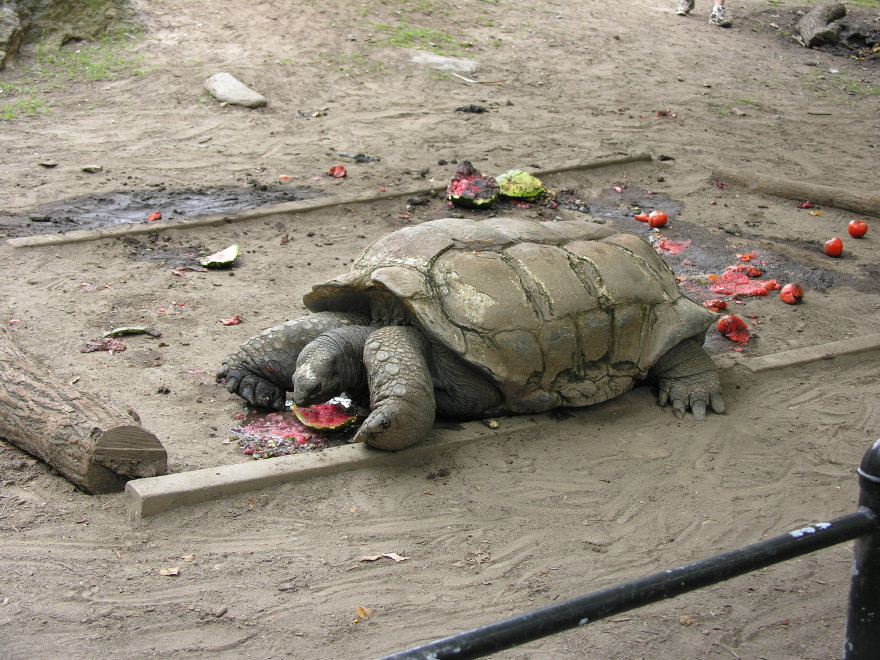
This is the topic of a whole thread of its own, and in fact I have been meaning to sit down and write up one such thread for some time now. In short, I believe the world has failed Aldabrachelys gigantea compared to the care that has been given to its much more famous counterparts in the Galapagos. There are three remaining extant subspecies of A. gigantea, though the zoological world seems to pretend that only the nominate, what we call the Aldabra Giant Tortoise, remains. The remaining two, A. g. hololissa (Seychelles Giant Tortoise) and A. g. arnoldi (Arnold's Giant Tortoise) hold on by a mere thread. There is precious little published research on these two subspecies, though they are consistently differentiated from the nominate in historic geographic distribution among the islands, morphology, and genetics. In 1995, there was a survey which identified a handful of both subspecies in zoos across the world. These tortoises were transported back to the Seychelles and there was a captive breeding program there from 1997 to 2011, when the Seychelles government disbanded it in order to develop the island that hosted it for tourism development. In 2011, the organization that ran the program was aware of 77 hololissa (including 40 captive bred tortoises) and ~133 arnoldi (including ~125 captive bred tortoises) remaining in the world. There are no official (or even unofficial) population figures for these taxa since 2011 that I can find. When the program disbanded, the majority of these animals were simply dumped onto various islands with suitable habitat, where they have been left unmonitored to survive and admix with introduced A. g. gigantea that have been introduced to islands throughout the Seychelles from their original endemic Aldabra Atoll.

There have always been rumors that more tortoises existed in European and American zoos. For some reason, ZTL does not list arnoldi, but there is one purported to be kept at Dresden and a few hololissa in UK zoos. For American zoos, I've only ever heard of Philadelphia's old disfigured tortoise as being rumored to be arnoldi, and never heard of any hololissa being in the country. All US tortoises are considered the nominate taxa by ZTL and the AZA seems to treat them as a monotypic species.

I've never had the time, but I've always wanted to look through photos of animals across the US and compare them with the few photos of known, genetically-tested tortoises from the breeding program. Unfortunately, shell deformities make it very difficult at times to tell, especially with hololissa. Also, females of all three look near-identical so genetic testing is really the only way to truly tell for them. And of course, potential hybridization in captivity can be deceiving. From the little I have done, I know I don't believe the Cotswold "hololissa" to be true. They look more like deformed nominate animals to me. *Maybe* one of them could be, but it's hard to tell. I do believe one of the Blackpool animals and the rumored Paignton Zoo group (wild-caught in the Seychelles) look good for true hololissa.

As far as North America goes, I've only ever really looked at tortoises I've personally seen. Unfortunately, what I've seen leads me to believe most of the captive-bred AZA stock are arnoldiXgigantea crosses. Males of the arnoldi subspecies are pretty easy to identify, even with deformities. They're the only remaining saddle-back tortoises in the Indian Ocean. From my brief photo survey, I identified four male tortoises in the USA which I believe to be arnoldi. One is the primary breeding male at Tulsa Zoo, who I understand has sired a lot of the AZA's tortoises. A second is the rumored male that used to reside at Philadelphia. He's gone now, to where I'm not sure. The third and fourth are both at the same zoo and imagine my shock and awe when I realized they are the two males* at the Bronx Zoo.

*One of these two males used to also be at Philadelphia so at a time that zoo also held two male arnoldi.

Tulsa's male
Aldabra_KS-3-e1581977976698.jpg

Aldabra-tortoise-01.jpg


Philadelphia's old male
07philadelphiazoo.jpg


Bronx's males
452364879_499488102573500_3265880973020529019_n.jpg

453528161_1182872239598209_5705949395944711840_n.jpg

454707205_1165624188049963_8801160853021506302_n.jpg


For those curious, I do also believe the Zoo Dresden animal to be a legit arnoldi.

dresden-germany-12th-may-2022-animal-keepers-move-dresden-zoos-three-giant-tortoises-from-their-winter-home-to-their-outdoor-enclosure-where-they-will-spend-the-summer-the-animals-named-hugo-ii-hugo-iii-and-hugo-iv-were-driven-to-their-summer-quarters-by-zoo-vehicle-and-will-then-walk-to-the-outdoor-enclosure-credit-matthias-rietscheldpa-zentralbilddpaalamy-live-news-2J82T54.jpg

stock-photo-dresden-giant-tortoises-back-in-summer-quarters-2157789423.jpg


~Thylo
 
The Japanese macaque population has also declined significantly. I know that a few holders have even temporarily halted breeding.

They have been declining for years - interest appears very limited and space is a problem. Many male macaques are castrated and while there are still plenty of viable ones, breeding is minimal due to space constraints and should the species lose a major holder or two, the population will very much be in trouble.

I'm a little surprised no one has mentioned Dallas World Aquarium yet. While perhaps not the most conservation-oriented zoo in the country, DWA continues to import and breed a wide variety of rare (and often endangered species) including many ramphastids, cotingas, quetzals/trogons, Cracidae, birds-of-paradise, Blue Coua, Harpy Eagle, Orinoco Crocodile, and Atelopus and dart frog species.

DWA gets some distaste for small exhibits and questionable imports at times (which is often relatively fair), but they prop up a large number of bird SSP's with their successful breeding. All the toucanid SSPs would almost certainly crash out if DWA quit working with them. They do a lot with cracids as well. They're not afraid to do their own thing and it's working pretty well for them.

When pretty much every zoo in the AZA keeps crocodilians, how come all Crocodylus and the Mecistops programs are struggling, with several on the verge of collapse?

Rhetorical I know, but 'cause everybody wants the overused alligator... they're tractable and more tolerant of cool temperatures. They're also now not endangered whatsoever. It's a similar situation to how we have a massive NARO population and dropped other more valuable otters. There's too much attachment to species that don't need some backup insurance. So many critical programs are managed by a select few zoos - or in some cases by non-AZA partners, if Rum Creek quit working with the AZA the Pygmy Hippo SSP would be toast...

Unfortunately, what I've seen leads me to believe most of the captive-bred AZA stock are arnoldiXgigantea crosses.

Which would unfortunately make sense, as there is no official management of any sort for Aldabra in the AZA...
 
They have been declining for years - interest appears very limited and space is a problem. Many male macaques are castrated and while there are still plenty of viable ones, breeding is minimal due to space constraints and should the species lose a major holder or two, the population will very much be in trouble.

Are we on the fast track to having no Asian monkeys in AZA zoos? It feels as though we really are.

DWA gets some distaste for small exhibits and questionable imports at times (which is often relatively fair), but they prop up a large number of bird SSP's with their successful breeding. All the toucanid SSPs would almost certainly crash out if DWA quit working with them. They do a lot with cracids as well. They're not afraid to do their own thing and it's working pretty well for them.

Indeed, DWA is not the most flashy zoo and some of their enclosures/aviaries leave a lot to be desired (I'm just glad they phased-out Jaguars!). There's also a reason I didn't include their seemingly revolving door of tanagers before... But certainly for ramphastids, quetzals, and cock-of-the-rocks, if it weren't for DWA we wouldn't have them. As for cracids, I believe DWA has the largest collection and the largest numbers of anywhere public or private in the USA!

if Rum Creek quit working with the AZA the Pygmy Hippo SSP would be toast...

And with the more recent push to move away from non-accredited partners...

I have to say I do find it somewhat ironic that with all the AZA touts about conservation--and indeed all that it does do to be fair--I do find it a little funny how it is a private individual in Rum Creek who recently sent all those Bongos back to Kenya for reintroduction.

Which would unfortunately make sense, as there is no official management of any sort for Aldabra in the AZA...

Much like the AZA took great strides in identifying known pure Galapagos tortoises and formed pure breeding groups of those in decent numbers, it would only be responsible of the AZA to do the same for the Aldabras/Seychelles tortoises. Sadly, I do not see the modern AZA doing as such, but it would be nice. I'd love to be proven wrong on this.

~Thylo
 
Are we on the fast track to having no Asian monkeys in AZA zoos? It feels as though we really are.

The last two SSPs are Japanese Macaque and Francois's Langur - both of which are provisional (yellow). Macaque is declining and langur is stable. Studbooks remain for Silvered Leaf Langur and Lion-Tailed Macaque (for now). So yeah it's not looking great long term, but I think the two SSP species won't drop off too quickly.

And with the more recent push to move away from non-accredited partners...

Yeah. It'll be interesting to see what happens... some of the partners are really critical to maintaining the populations.
 
Along with the pangolins, Brookfield must also be highlighted for their phenomenal work with breeding Togo Slippery Frogs. It's unfortunate that few other zoos have had interest in picking up this species.
I meant to bring up the slippery frogs in my initial post! Another example of the zoo making a real conservation-oriented effort with a highly obscure species (helps to have the man responsible for Detroit's national amphibian center as your lead herp curator), although I agree it's unfortunate that only two(?) other facilities have gotten on board -- that and the fact Brookfield doesn't display any of them despite expressing desire to do so previously.

I think that demonstrates a broader reason as to why Brookfield's been really good on maintaining a diverse and interesting collection. Curators seem to be given a lot of control over how they choose to manage their populations, plus several members of the executive team are real animal-oriented people. Of course, the zoo's director was previously a veterinarian. In addition however, the zoo's current VP of Animal Care is a long-time bird curator who also serves as the chair of the PACCT taxon advisory group. Since he's stepped into the role the zoo's bird collection has seen a significant and noticeable increase across the board including several choice species; I don't think that's a coincidence.
They have been declining for years - interest appears very limited and space is a problem. Many male macaques are castrated and while there are still plenty of viable ones, breeding is minimal due to space constraints and should the species lose a major holder or two, the population will very much be in trouble.
It's strange. To me at least it's felt like Japanese macaques are far more popular with zoos than they actually are. I realize now that may have to do with the fact that they are the only macaque that gets any sort of attention from the AZA at all. There was a wave of new exhibits for them opening up about a decade ago, but it's definitely been some time since they've been picked up by a new holder. An active, charismatic, sociable primate that can be exhibited outdoors year-round in cooler climates? That seems like the ideal species for most midwestern/northeastern zoos.

The state of Asian monkeys in the AZA really is unfortunate. I suspect the reason why is that they don't mix well with other primates and gibbons often take priority. However, like I alluded to previously, with these rumors of douc langurs potentially being imported to the U.S. via Khao Kheow Open Zoo, there is reason to hold out hope.
 
It's strange. To me at least it's felt like Japanese macaques are far more popular with zoos than they actually are. I realize now that may have to do with the fact that they are the only macaque that gets any sort of attention from the AZA at all. There was a wave of new exhibits for them opening up about a decade ago, but it's definitely been some time since they've been picked up by a new holder.

That could partly be too that you're from the area where they actually are somewhat prominent. However with only 11 AZA holding them and the population continuing its slow decline time will tell whether we keep or lose... Japanese Macaque has not gained an AZA holder in at least 5 years, which as you point out is strange given their temperature tolerance should make them relatively attractive. The whole deal with herpes though may just be not worth the potential hassle to some facilities.
 
[QUOTE="pachyderm pro, post: 1623485, member: 13813"and gibbons often take priority.[/QUOTE]

Yet, how many gibbons are being managed successfully? Northern White-Cheeked and generic White-Handed? Maybe Siamang? All of which are also managed in EAZA. We've abandoned Golden-Cheeked, Javan, and Pileated, and seemingly no one has been interested in hoolock.

~Thylo
 
Yet, how many gibbons are being managed successfully? Northern White-Cheeked and generic White-Handed? Maybe Siamang?

Indeed those three, although slightly flipped as Siamang is the most numerous and most stable. The other two are still considered provisional although they seem pretty well off. Certainly much more so than many primates...
 
Earlier in this thread, I mentioned how the AZA restructured the Species Survival Plan (SSP) system in 2022/2023. The restructuring made the eligibility criteria for a taxa to become an SSP significantly more strict, including firm mandates for known pedigree/genetics in the population and increased the minimum number of holders required from 3 to 15. The intention here was to make the SSPs exclusive to the most well-managed and sustainable populations. The intention was not to force the phase-out of all other species, but rather to lessen the management criteria and allow zoos who wanted to focus on other species do so without adhering to SSP requirements (namely pedigree/genetic testing and forced pairings). The major fault of this change imo is that the AZA did not come up with a new management plan, or at least formal category, for these dropped SSPs to fall into. The result has been the vast majority of animal programs being dropped from SSP eligibility, regardless of popularity and demand, and left many in the limbo that is "studbook only" or "TAG-monitored".

To highlight just how big of an impact this has had on AZA biodiversity, below is the list of ungulate programs that were killed with the reorganization:
-Barasingha SSP
-Bactrian Deer (studbook cancelled)
-Greater Malay Chevrotain SSP
-Burmese Brow-Antlered Deer SSP
-Mexican Red Brocket Deer (studbook cancelled)
-Pere David's Deer SSP
-White-Lipped Deer (studbook cancelled)
-Armenian Mouflon (studbook cancelled)
-Central Chinese Goral SSP
-Japanese Serow (studbook cancelled)
-Desert Bighorn Sheep SSP
-Kordofan Aoudad SSP
-Nubian Ibex SSP
-Rocky Mountain Goat (candidate program cancelled; this species had institutional interest growing with animals sourced from an introduced population in Washington)
-Turkmen Markhor SSP
-Transcaspian Urial SSP
-Common Eland SSP
-Lowland Nyala SSP
-Greater Kudu SSP
-Sitatunga SSP
-Roan Antelope SSP
-Sable Antelope SSP
-Impala SSP
-Eastern White-Bearded Wildebeest SSP
-Ellipsen Waterbuck SSP
-Nile Lechwe SSP
-Red-Flanked Duiker SSP
-Klipspringer SSP
-Gerenuk SSP
-Bontebok SSP
-Gemsbok SSP
-Arabian Oryx SSP
-Thomson's Gazelle SSP
-Slender-Horned Gazelle SSP
-Soemmerring's Gazelle SSP
-Speke's Gazelle SSP
-Peninsular Pronghorn SSP
-Springbok SSP
-Javan Banteng SSP
-Lowland Anoa SSP
-Plains Bison (genetically-pure; candidate program cancelled)
-North Sulawesi Babirusa SSP*
-Panay Warty Pig SSP

*Added back as a Provisional SSP in 2025.

To be abundantly clear, these changes do not inherently mean the AZA has switched these species to phase-outs, it just means their SSP programs have been cancelled. I believe all of the above taxa still have TAG-monitored studbooks for the time being unless otherwise stated. It should also be mentioned that brocket deer and serow were absolutely a dead-end anyway. The problem here lies in the fact that the mindset built-up over the past couple of decades is that, if it isn't SSP eligible, it isn't sustainable. As mentioned by myself and others in this thread, many curators and directors prioritize taxa with SSP programs over all others to the extent that some may completely overlook anything that is studbook only. Zoos love putting the little SSP symbol on their signage, it ties in with their conservation message. Species booted from the SSP will absolutely be viewed as less of a priority taxa to zoo personnel (especially those with less of an animal background) than those with that status. Equally, the AZA/TAGs will promote SSP programs over those that are simply TAG-monitored. This system of SSP vs TAG-monitored has proven detrimental to the promotion of the monitored studbooks, so why the AZA decided the solution was to increase the number of programs that fall into this category is beyond me. This is why I think a category besides "TAG-monitored" or "studbook only" is necessary and, imo, it should have been the SSP definition that remained broad and a new, more exclusive category should have been created for the more stringent requirements. Or, we should just be letting zoos manage populations and promote endangered species equally wherever possible.

Of course, individual zoos/curators can still make up their own minds and institutions can still manage studbooks no longer sponsored by the AZA/TAGs. As such, the responsibility does not lie solely with the AZA. What I see is an inherent lack of education on the part of the TAGs to properly promote these "lower priority" programs. Rather, the concept of a "lower priority" program should not exist, or should be reserved for species that are simply not endangered / can be reacquired easily. If a taxa is struggling, it seems counter-productive to me to view the solution as lowering awareness and institutional priority for said taxa.

Below is the list of continuing ungulate SSPs:
-Western Tufted Deer
-Reeves' Muntjac
-Southern Pudu
-Sichuan Takin
-Masai Giraffe
-generic giraffe
-Okapi
-Eastern Bongo
-Lesser Kudu (Provisional)
-Addax
-Scimitar-Horned Oryx
-Yellow-Backed Duiker
-Southern Blue Duiker
-Cavendish's Dik-Dik
-Addra Gazelle
-Common Hippopotamus
-Liberian Pygmy Hippopotamus
-Red River Hog
-Common Warthog
-North Sulawesi Babirusa (Provisional)
-Chacoan Peccary
-Baird's Tapir
-Malayan Tapir
-Southern White Rhinoceros
-Eastern Black Rhinoceros
-Indian Rhinoceros
-Plains Zebra
-Hartmann's Mountain Zebra
-Grevy's Zebra
-Mongolian Wild Horse

And here is the status of some species whose AZA-status didn't change with the restructure that I assume people will ask about:
-Cape Buffalo (studbook)
-Fringe-Eared Oryx (studbook)
-Persian Onager (phase-out)
-Somali Wild Ass (studbook)
-Guanaco (studbook)
-Giant Eland (institutionally managed)
-Nilgiri Tahr (institutionally managed)
-American Moose (was a candidate program to manage rescued animals, it was tossed out at some point but I don't know when)

~Thylo
 
Last edited:
Also, honestly, this thread feels anti-zoo and probably could be used by activists...

How is this thread anti-zoo? How can we expect the situation to improve if no one is allowed to have a reasonable and honest discussion about the current trends in zoos and the flaws in modern management styles?

The systemic decrease in zoo biodiversity feels more anti-zoo to me than anything said thus far in this thread.

~Thylo
 
How is this thread anti-zoo? How can we expect the situation to improve if no one is allowed to have a reasonable and honest discussion about the current trends in zoos and the flaws in modern management styles?

The systemic decrease in zoo biodiversity feels more anti-zoo to me than anything said thus far in this thread.

~Thylo
It just feels like this thread is completely ignoring all the good stuff zoos have been bringing in (as pachyderm pro has stated above.). It also is just worry on my part, as if zoochaters let all this get to them then I worry that they'll think activists are right and that zoos aren't worth it. Some of your wording has even felt anti-zoo to me.
 
Also, honestly, this thread feels anti-zoo and probably could be used by activists...
I mean, considering that animal rights activists have been featured in AZA conferences (which seems to have happened without any repercussion towards Ashe or anyone behind such decisions), then I don’t think they need to use this thread as a reference for anything.

It just feels like this thread is completely ignoring all the good stuff zoos have been bringing in (as pachyderm pro has stated above.). It also is just worry on my part, as if zoochaters let all this get to them then I worry that they'll think activists are right and that zoos aren't worth it. Some of your wording has even felt anti-zoo to me.

Call me a pessimist but I also feel like the examples pachyderm pro mentioned are exceptions, specifically done by larger zoos that could afford it (and I don’t even count Nashville since some of the carnivores they imported only have a small founding population and are wasted for tacky social media posts and animal ambassador displays). If non-major or small zoos are not encouraged to participate in non-ssp programs then these exceptions won’t be shifting the trend we are seeing within AZA zoos anytime soon.
 
It just feels like this thread is completely ignoring all the good stuff zoos have been bringing in (as pachyderm pro has stated above.). It also is just worry on my part, as if zoochaters let all this get to them then I worry that they'll think activists are right and that zoos aren't worth it. Some of your wording has even felt anti-zoo to me.
Not in the slightest. It's because we all value zoos as institutions that we want them to be the best they can be. You can't solve a problem if you don't acknowledge there is one in the first place. Criticism is a good thing when it's healthy, reasonable and constructive, which a large majority of the posts on this thread have been. As you mention, I did highlight several zoos that I think are doing well in regards to maintaining a diverse collection (which I appreciate) and so have many others, showing that credit is being given where it's due and we are not ignoring all of the positive happenings at accredited zoos (of which there are indeed many).

You worry about people's perception of zoos after reading this thread, but consider the alternative. What if a young aspiring curator reads this discussion and becomes motivated to challenge the status quo? That's how real, tangible change is made. I support the AZA and the work that they do, but blindly supporting every decision they make isn't conducive to growth as an organization. Not entirely different from the actual anti-zoo people who use misinformation, fear tactics, and half-truths to blindly discredit zoos at every turn.
 
It just feels like this thread is completely ignoring all the good stuff zoos have been bringing in (as pachyderm pro has stated above.). It also is just worry on my part, as if zoochaters let all this get to them then I worry that they'll think activists are right and that zoos aren't worth it. Some of your wording has even felt anti-zoo to me.

Responding simply because I don't want to come across as though I ignored your concern here, but @pachyderm pro already posted what my response was to be pretty much word for word so I'll just direct you to them :p

~Thylo
 
Back
Top