Trip to West Yunnan, January 2025

Ding Lingwei

Well-Known Member
10+ year member
As advertised in the title, this thread will be an account of my January trip to West Yunnan, adding to a series of Asian trip reports recently posted on this site. While in no way close to the grand expedition of Chlidonias (we spent only six days in Yunnan, five if you don't count the one day in Kunming), we did visit a few sites not covered in his trip, so I decided to write something anyway, especially given how confusing English-language information about these sites could be for non-Chinese readers.

I initially planned the trip for a sole purpose in mind: to see the only Myanmar snub-nosed monkey in captivity. However, once I realized the cost and trouble of travelling all the way from Nanjing to Yaojiaping, it seemed silly to planning the whole trip for just one species. Luckily I knew some birder friends who wanted to visit Yingjiang, a birding hotspot also located in West Yunnan. After some discussion we ended up with a six-day plan covering both destinations, with one day in Yaojiaping and four days in Yingjiang. Our itinerary goes as follows:

January 15: Kunming to Baoshan. Visiting Kunming Zoo in the afternoon. Overnight in Baoshan.
January 16: Baoshan to Lushui (Liuku). Visiting Yaojiaping Conservation Station. Overnight in Baoshan.
January 17: Baoshan to Yingjiang. Exploring Xiang'e Lake and Yingjiang Wetland Park in the afternoon. Overnight in downtown Yingjiang.
January 18: Downtown Yingjiang to Hongbenghe. Exploring the river tern site in the morning and Hornbill Valley in the afternoon. Overnight in Hongbenghe.
January 19: Exploring Hornbill Valley. Night spotlighting. Overnight in Hongbenghe.
January 20: Hongbenghe to Tengchong Airport.

Since Kunming Zoo is well reviewed in Chlidonias's report, I'll just skip this part and start with Day 2 instead.
 
A few highlights from Kunming Zoo:
 
January 16, Yaojiaping (姚家坪), Lushui, Part One

Before we get started, for those confused by the Chinese place names, there are four levels of administrative divisions in China: provincial, prefecture, county, and township. A prefecture or county could be designated as a "prefecture-level city" or "county-level city", if certain criteria about their urban population, industry output and service sector ratio are met. In the case of Lushui, for example, the county (a county-level city since 2016) is the seat of Nujiang Lisu Autonomous Prefecture, while Liuku is a township that serves as the seat of Lushui County.

I met two of my fellow travelers in Baoshan on the evening of January 15, after a 3.5-hour train from Kunming. We chose to stay in Baoshan mainly because it's the westernmost city in Yunnan served by both an airport and high-speed train station, which seemed a much more convenient choice than Lushui given our group had to arrive from three different cities. Baoshan is also a top birding destination by itself, with famous Baihualing Village located to the northwest of downtown, a site we eventually dropped from the final plan to compress the trip into just six days.

Thanks to the help of the front desk lady of our hotel, we found a local driver in advance without much trouble. We hired the driver for 850: 50 for picking up the fourth member of our group at the airport and 800 for the ride to Yaojiaping and return. More expensive than driving from Lushui for sure, but after splitting by four the price tag seemed acceptable.

As said in my previous post, our only goal in Lushui was to visit the Yaojiaping Conservation Station, which is located within the Gaoligong Mountains National Reserve. The reserve spans five counties, and the Yaojiaping Station serves as headquarter of the Lushui part of the reserve. The reserve is home to the first Mynamar snub-nosed monkey population discovered in China, one year after the discovery of the species in Northern Mynamar in March 2010. When Professor Long Yongcheng, a famous primatologist who devoted his whole career to the conservation of black snub-nosed monkey, learned from FFI that a new snub-nosed monkey species was discovered less than 50 km from the China-Burma border, he immediately realized the species might also exist in China and contacted the Forestry Bureau of Nujiang Prefecture. After some survey it was clear that, not only the species was present in China, the local Lisu people had been familiar with these monkeys long time ago, which were known as "mey-nwoah" in their language. A population of 100 individuals was found near Pianma in December 2011, and a forest ranger of the reserve took the first photo of a live Mynamar snub-nosed monkey in the wild. A second population was discovered in 2015, and a third one (60-80 individuals) was discovered in early 2025 (technically two months ago), bringing the total population in China to around 360 animals.

After a three-hour drive and three police checkpoints, we arrived Yaojiaping around 12:00. There were quite a lot of bird activities along the way as you got close to the reserve, but we didn't stop for identifications as we decided to drive straight to the conservation station first. The only two species we could confirm from the car were blue whistling thrush and white wagtail. Although I got detailed instructions from several Chinese enthusiasts who visited in the past, on the whole way a small part of me thought something would go wrong, so it was a great relieve when we just walked into those gates and saw the monkey cage. Surprisingly there were a lot of people in the station yard, mostly forest firefighters, apparently for an end-of-the-year safety check, and we were invited to join them for a nice free lunch, for which we were really grateful since the station was literally in the middle of nowhere.

 
January 16, Yaojiaping (姚家坪), Lushui, Part Two

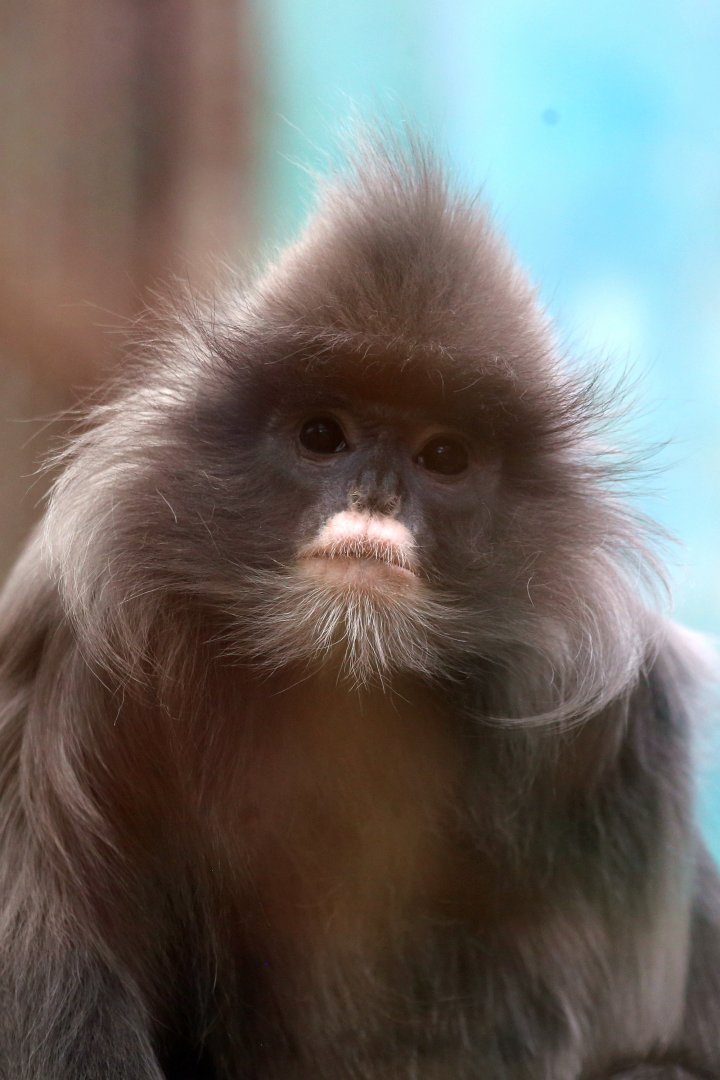
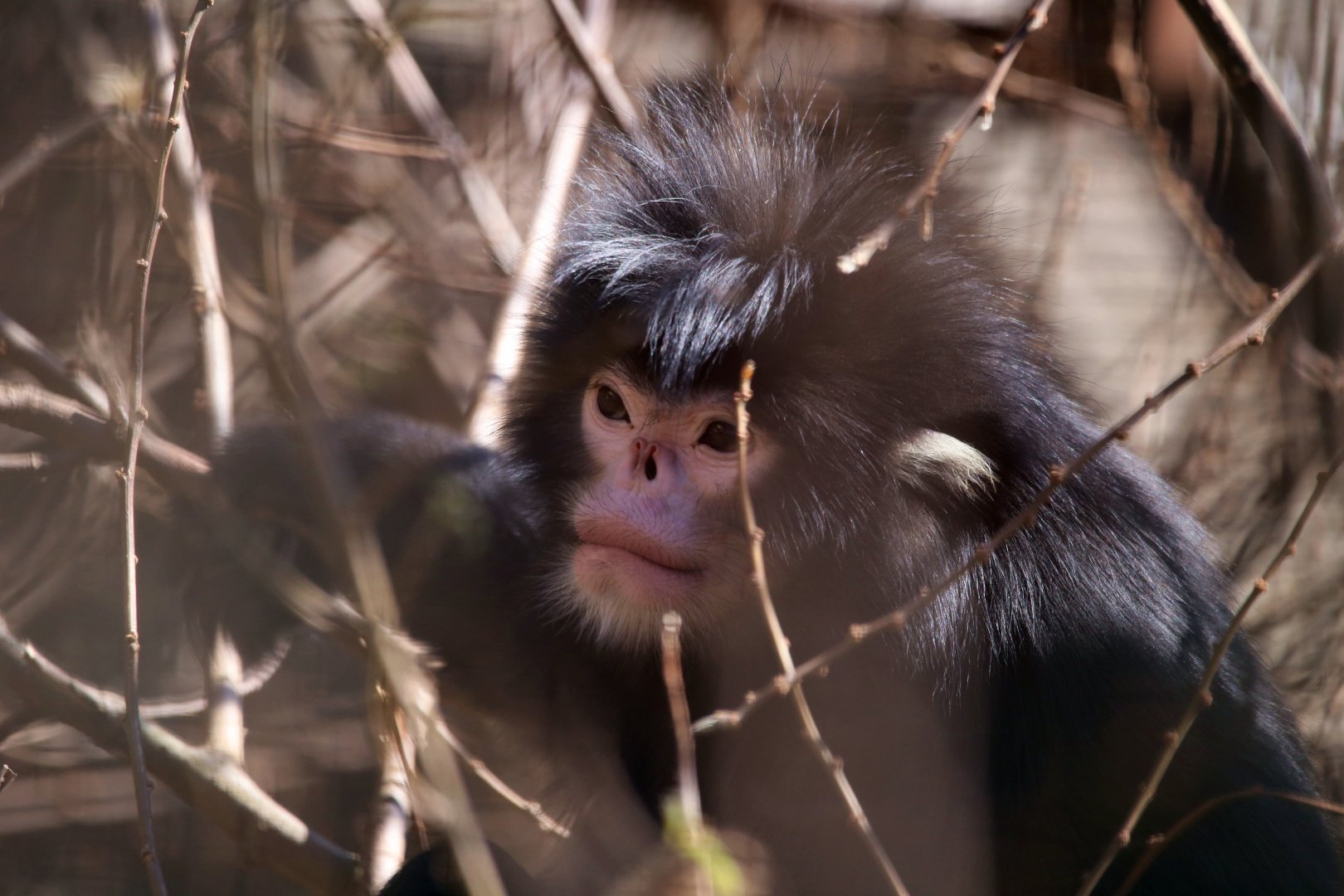
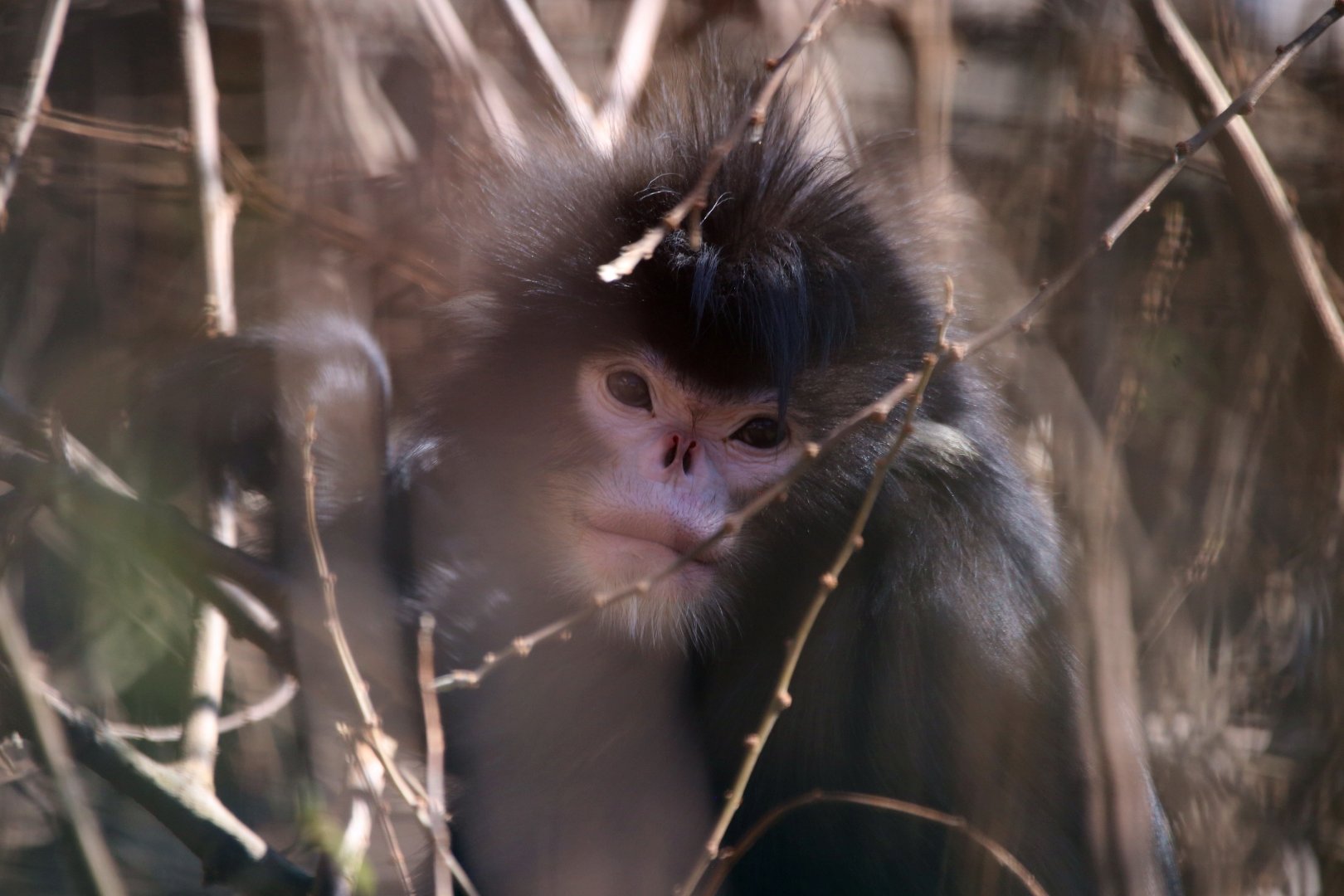
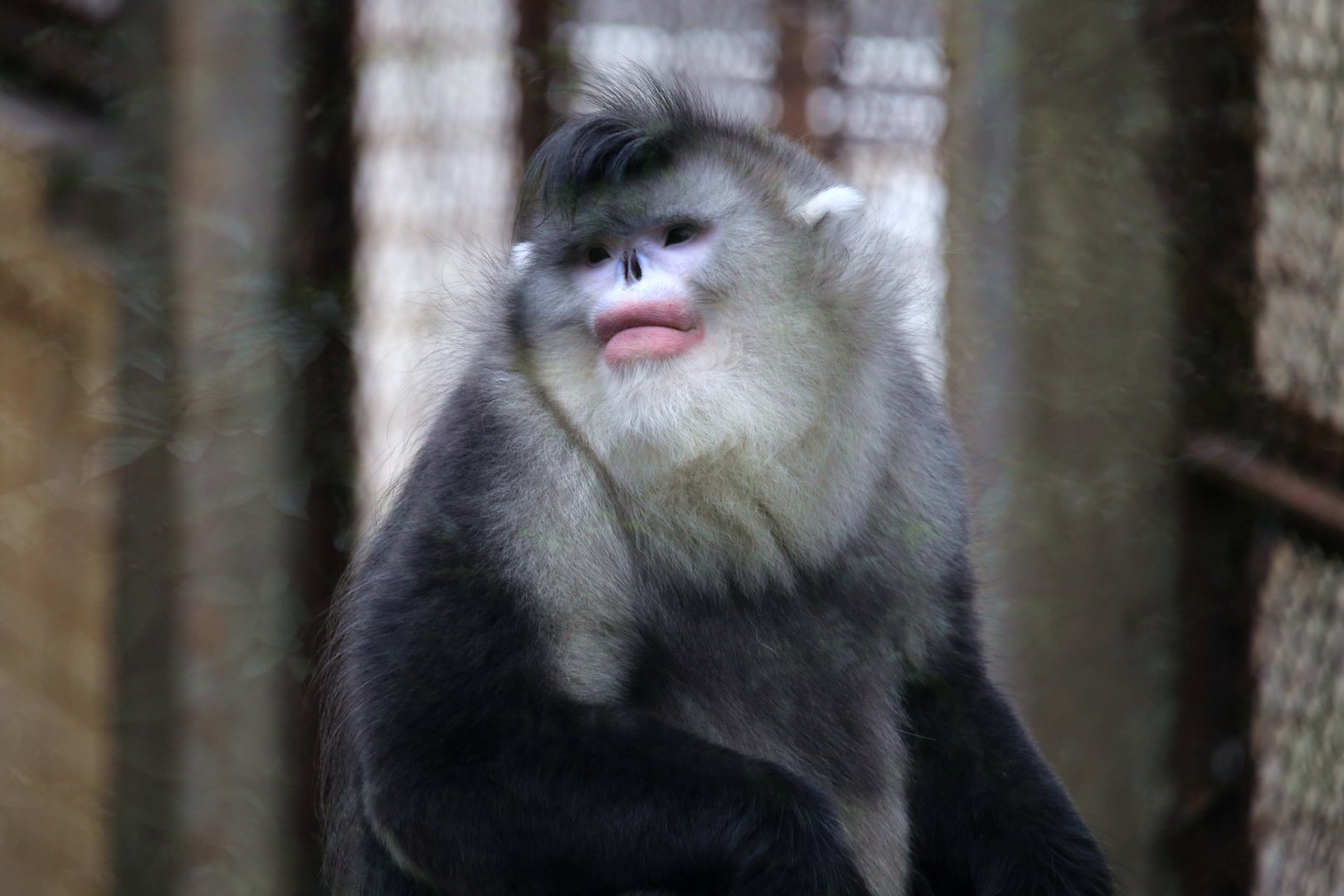
As a rescue center, the station currently keeps three species only: Mynamar snub-nosed monkey, Assamese macaques and Asian black bears. There's an empty aviary which once held silver pheasants in old trip reports. Their sole Mynamar snub-nosed monkey, a 10-year-old female named "Sisi", lives in a 2260 square feet, well-planted enclosure. She is actually the second Mynamar snub-nosed monkey kept by the station. The first one, a female named "Lili", was found injured in the wild by local villagers in 2013. She was later diagnosed with cataract and thus lived in the station until her death a few years ago, whose mounted skin is now on display in the Kunming Zoological Museum (The museum is probably the only place in the world that exhibits taxidermies of all five species of snub-nosed monkeys). Their current individual was bought by a local villager from a Burmese hunter in 2015 and came to the station as a juvenile. According to a staff she was fed with more than 20 kinds of plants, all collected locally from the reserve. The monkey was eating for the most of our two-hour visit. The leaves were placed close to the visitors, which made it really difficult to get a photo without iron bars. I finally caught a few portrait shots when she took a break from her lunch. It's probably the most expensive primate I've ever seen so far, but totally worth the cost.


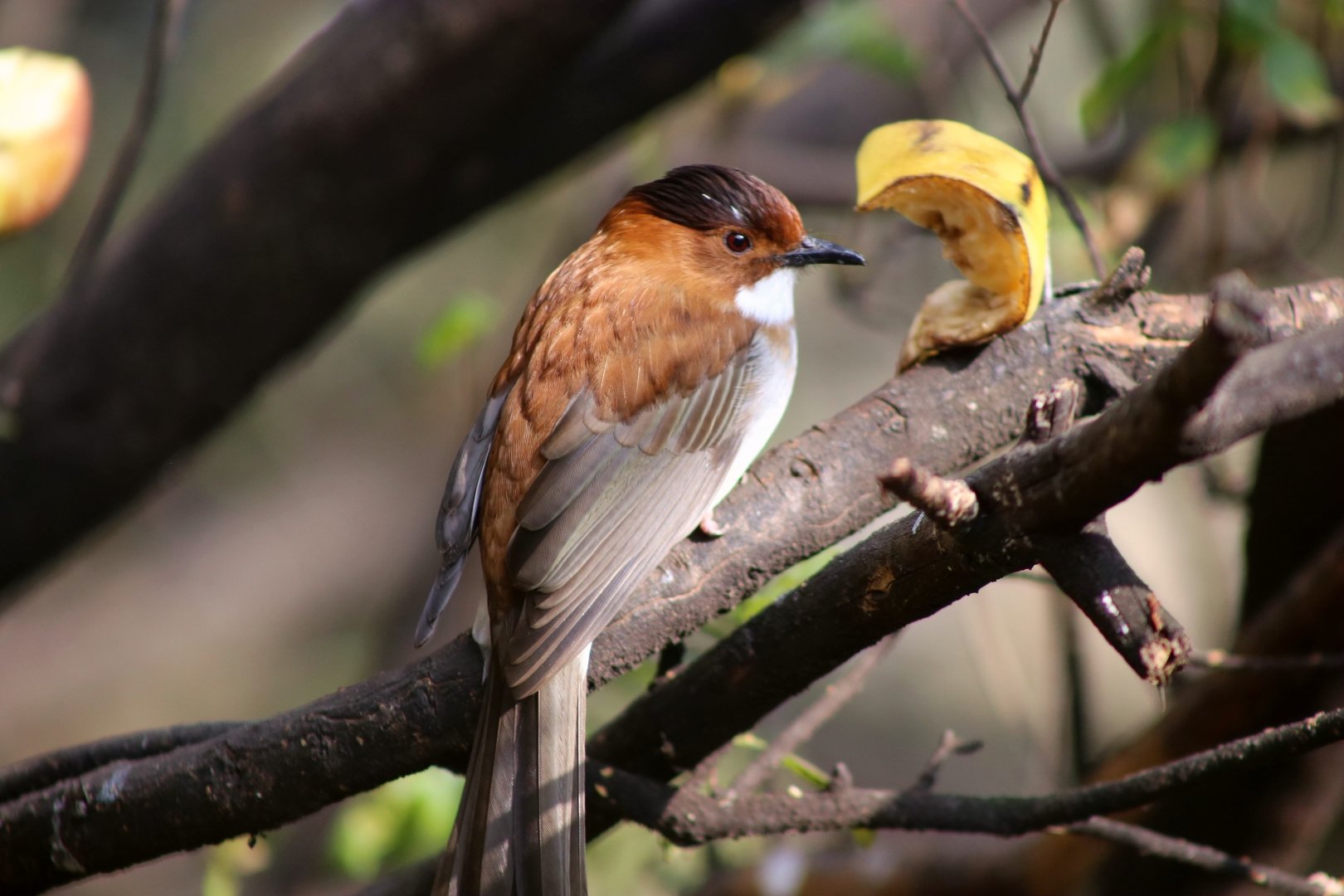
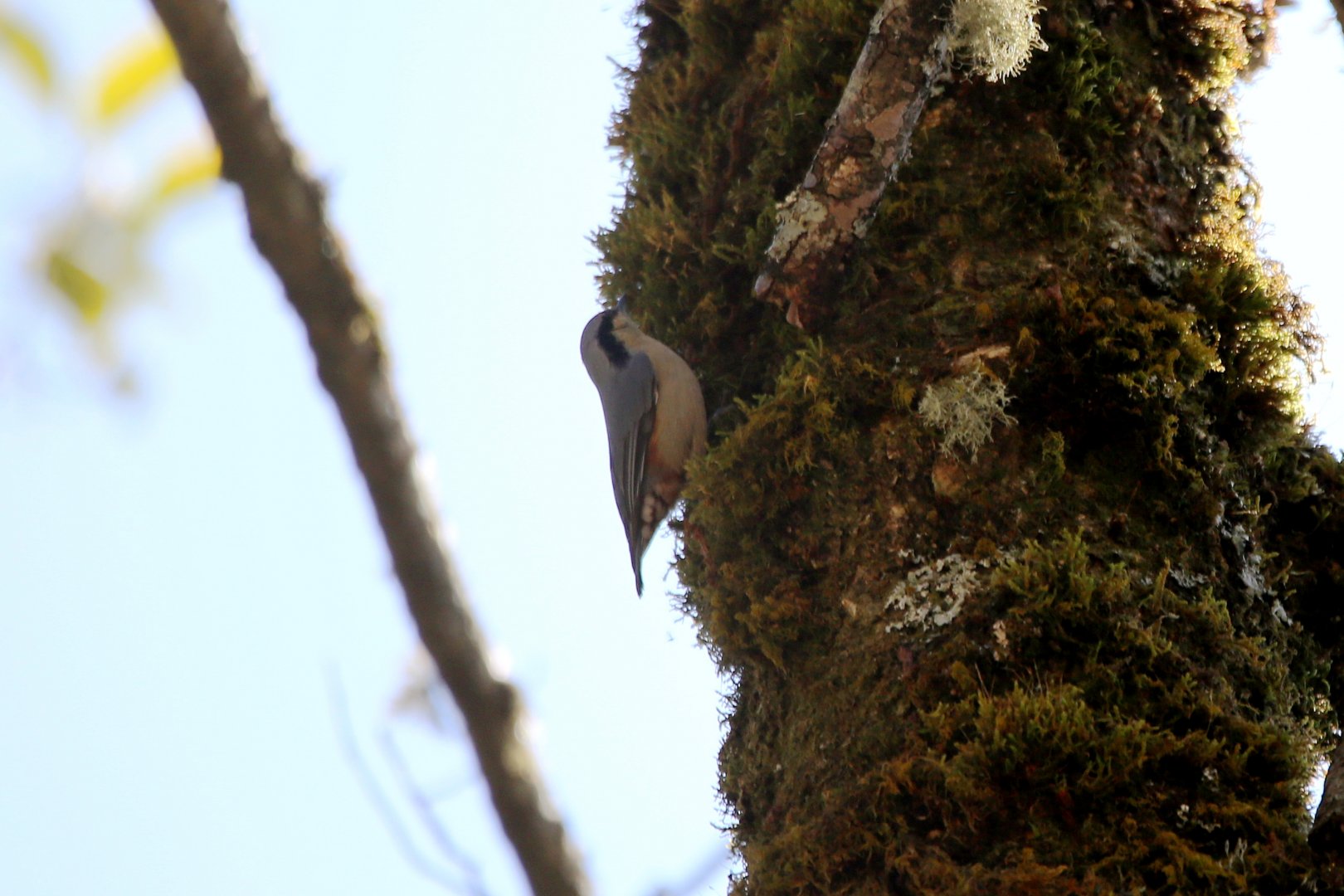
There's a 1.5 mile trail connecting the conservation station to a place called "Old Barracks". We had planned to explore the trail and hopefully do some birding, but as we spent too much time in the station, we ended up having only 30 minutes left for the trail, which was clearly not enough. Birds were here and there along the trail, but mostly hidden behind foliage and moving too quickly to get identifications. The only species we got a good view were two chestnut-vented nuthatches, a small group of black-throated tits, and more white wagtails, which were much darker than the ones seen in east China. We left the conservation station at 2 pm. On our way back we stopped at a wild persimmon tree (or something similar) about 10-minute drive from the station, which attracted crested finchbills, brown-breasted bulbuls and a mountain bulbul.


With 7 hours on a car and only 2 hours visiting, today is likely the most exhausting day of our whole Yunnan trip. Driving from Lushui would be a better choice if you don't have such a tight schedule. The area has much more to offer for wildlife enthusiasts: although the core zone of the Gaoligong Mountains is off limits for tourists, there're tours available for Dulong Gorge, Gongshan County, which is located to the north of Lushui. While mostly a birding tour (with Sclater's monal being the top priority), it also features some cool mammals such as Shortridge's langurs and Mishmi takins. Hopefully I'll return in near future for a more proper visit.
 
A few months ago, I discovered the existence of this monkey and the Yaojiaping Conservation Station, but so far I haven't been able to locate it on a map. I'm going to follow this thread with great interest. Could you tell us the exact location of this place? I've looked on Google, Google Maps... I know that due to the special political situation in China, using these tools may not be useful... I suppose the only way to get there is to hire a car, taxi, or similar...
 
A few months ago, I discovered the existence of this monkey and the Yaojiaping Conservation Station, but so far I haven't been able to locate it on a map. I'm going to follow this thread with great interest. Could you tell us the exact location of this place? I've looked on Google, Google Maps... I know that due to the special political situation in China, using these tools may not be useful... I suppose the only way to get there is to hire a car, taxi, or similar...
You can get there by taxi. I'm on a bus right now but maybe someone can link to the post in my travel thread for how to get there as a foreigner.
 
A few months ago, I discovered the existence of this monkey and the Yaojiaping Conservation Station, but so far I haven't been able to locate it on a map. I'm going to follow this thread with great interest. Could you tell us the exact location of this place? I've looked on Google, Google Maps... I know that due to the special political situation in China, using these tools may not be useful... I suppose the only way to get there is to hire a car, taxi, or similar...
You can get there by taxi. I'm on a bus right now but maybe someone can link to the post in my travel thread for how to get there as a foreigner.
This post: Chlidonias Goes To Asia, part seven: 2024-2025

Basically, I got a bus to Liuku, and the next day just found a taxi on the street to take me there.
 
A few months ago, I discovered the existence of this monkey and the Yaojiaping Conservation Station, but so far I haven't been able to locate it on a map. I'm going to follow this thread with great interest. Could you tell us the exact location of this place? I've looked on Google, Google Maps... I know that due to the special political situation in China, using these tools may not be useful... I suppose the only way to get there is to hire a car, taxi, or similar...
Thanks for your interest to this thread! The place is not shown on Google Maps, and yes you need to hire a car or taxi to get there. If the driver doesn't know where it is either, just search "泸水市姚家坪工会驿站" on Gaode Maps. It should be noted that visiting there could still be tricky for foreigners as it is close to China-Myanmar border (though it worked well for Chlidonias during his visit last December).
 
It should be noted that visiting there could still be tricky for foreigners as it is close to China-Myanmar border (though it worked well for Chlidonias during his visit last December).
This is important - in China the rules for foreigners change at the drop of a hat. You may be allowed to visit somewhere this week, and then the next week it is suddenly forbidden. Often there is no way to know this except by just turning up and either getting in or being turned away.
 
I really appreciate the advice. In the future, I'd love to explore this region. Actually, all of China is of great interest to me. I'll be paying close attention to this thread and others here.
 
January 17, Xiang'e Lake (香额湖), Yingjiang

We checked out of our hotel in the morning and caught the 9:30 bus from Baoshan to Yingjiang at Baoshan Bus Station. The border county accounts for a little more than 0.04 percent of the land area of China, but almost half of China's species of bird have been recorded there, with nearly 500 species recorded in the "Hornbill Valley" alone.

There're two types of bus tickets available from the online platform of Baoshan Bus Station: one that specifies there would be a stop at Lianghe, and one that doesn't, which we assume goes directly to Yingjiang, so we chose the latter. We had been told the trip took 3 hours. It took 4 hours instead. The bus stopped along the way to pick up more passengers after it left the station, and again stopped every five minutes to let people get off once it was approaching Lianghe. Then the driver stopped at Lianghe Bus Station and announced a 20 minute break. It seemed every bus from Baoshan to Yingjiang would stop at Lianghe, regardless what the bus ticket said, and the trip would indeed be 3 hours if you deduct the break and all the stops.

The hotel we booked was just 600 meters from Yingjiang Wetland Park. With a total of 13 villas, it was more of a resort rather than a typical hotel. It was probably the most luxurious hotel room that I've ever stayed in, and we literally had the whole villa to ourselves since there were no other guests in our building that day. It cost 180 per room, which was on the expensive side for Yunnan, but still cheaper than an average hotel room in Shanghai. We all agreed it would be nice to have a birding vacation here: going out for some casual birding at the wetland park or nearby sites and staying in the villa for the rest of the day.

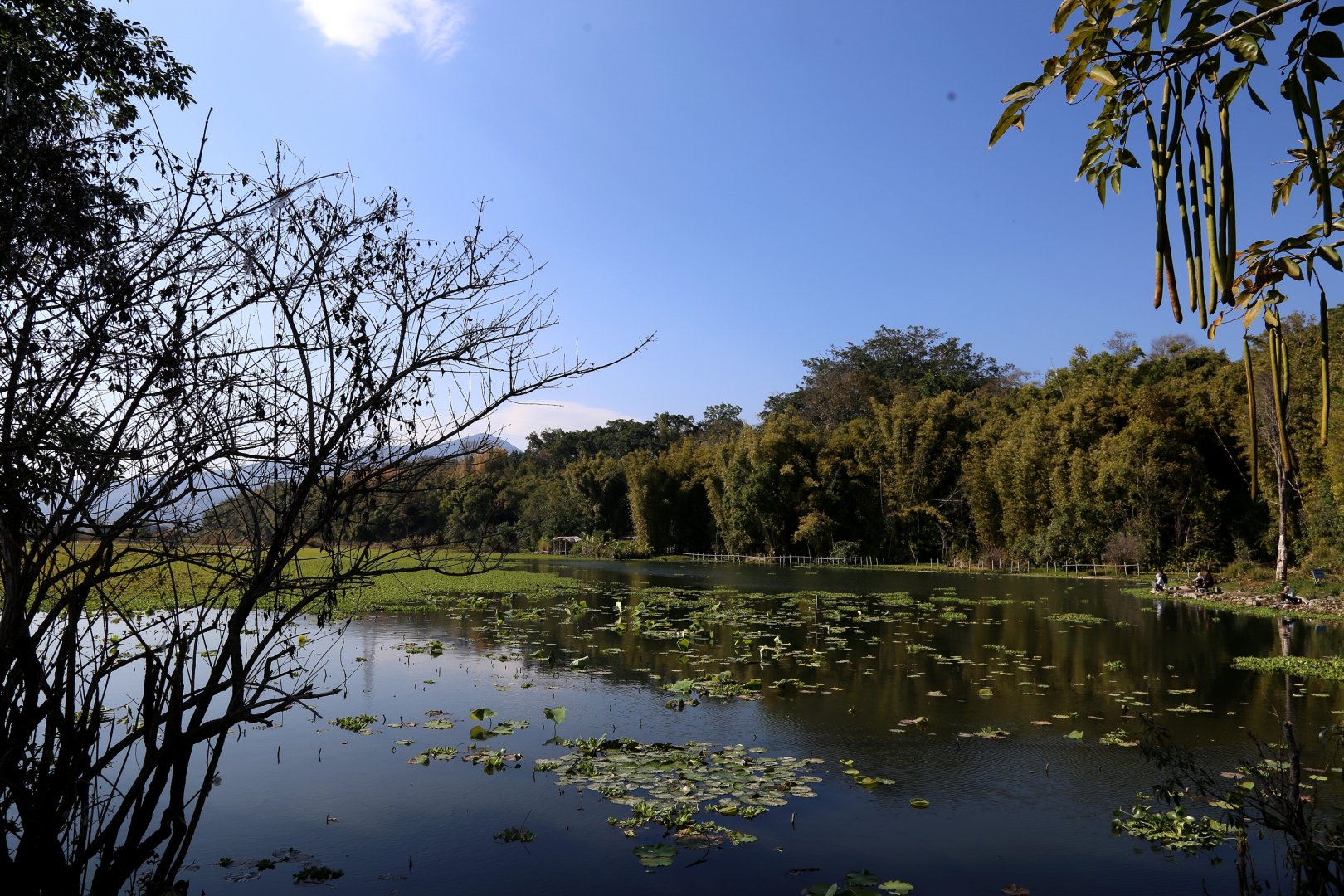
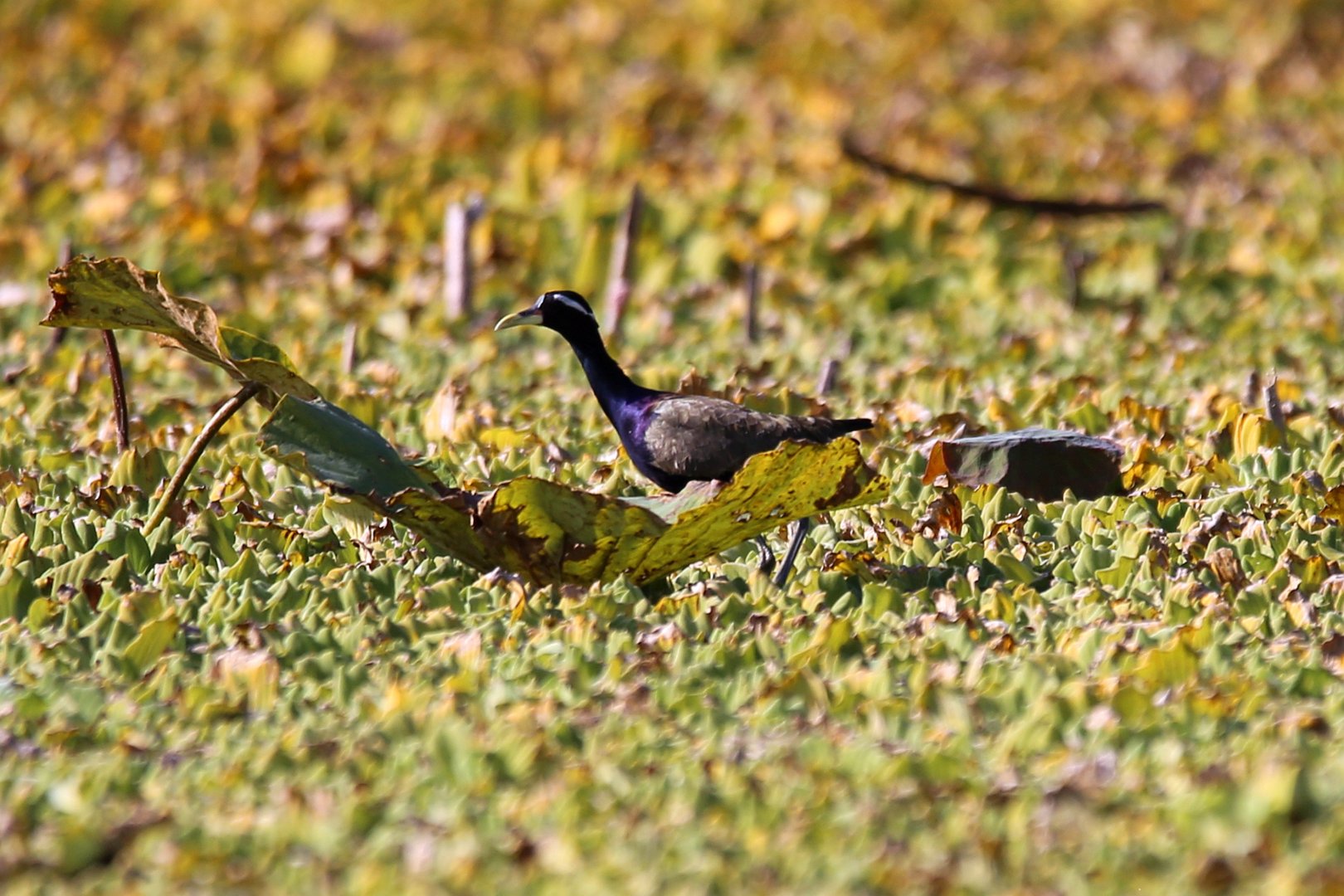
We left the hotel at 3 pm for our first site today: Xiang'e Lake, a small lake located in Jiucheng Town (旧城镇), to the northeast of downtown Yingjiang. The obscure lake shot to national fame since a bronze-winged jacana was found here last year. While widespread in South and Southeast Asia, the presence of this species in China was unknown until three specimens were collected from Jinghong, Yunnan in 1956. There were only 4-5 more jacana reports from China before 2024, the latest being a sighting from Nabang in 2013, so the bird in Xiang'e Lake not only represents another Chinese record of the species after a 10 year hiatus, but also the first and only twitchable individual in China.

It took us 30 minutes by cab to get to Jiucheng Town. The town was once the county seat of Yingjiang before the 1950s ("Jiucheng" means "old town" in Chinese), so it was no surprise that the lake looked quite "urban", surrounded by build-up areas, with pedalo boats and rafts for rent at the dock. We searched for the jacana along the shore without much luck. The lake held huge populations of little egrets, cattle egrets and common moorhens. The latter made our jacana-searching even more difficult. There were also some great cormorants, Chinese pond herons, and a few great white egrets, all common species in Eastern China, though a group of Indian spot-billed ducks flying by was a delight for us.


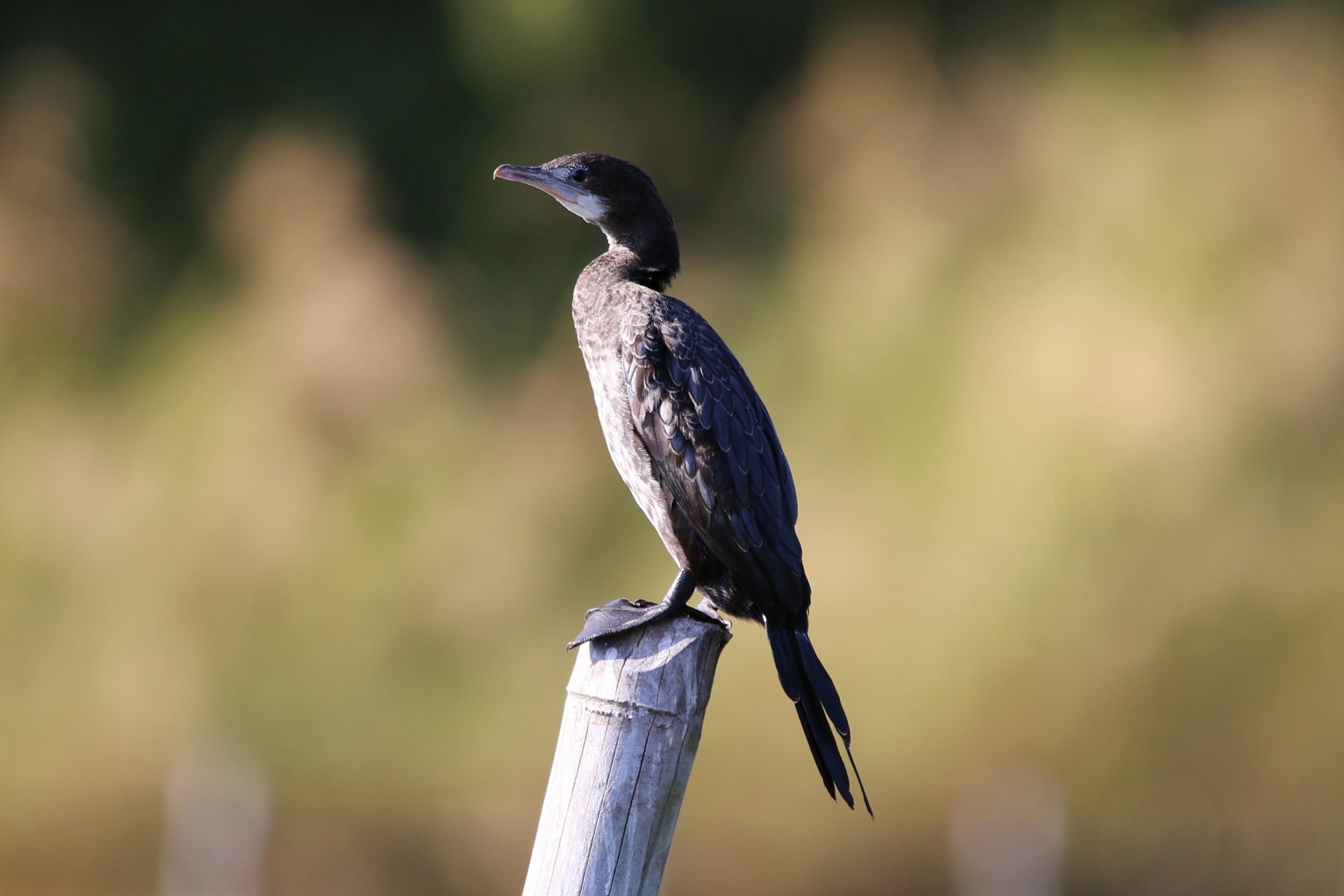
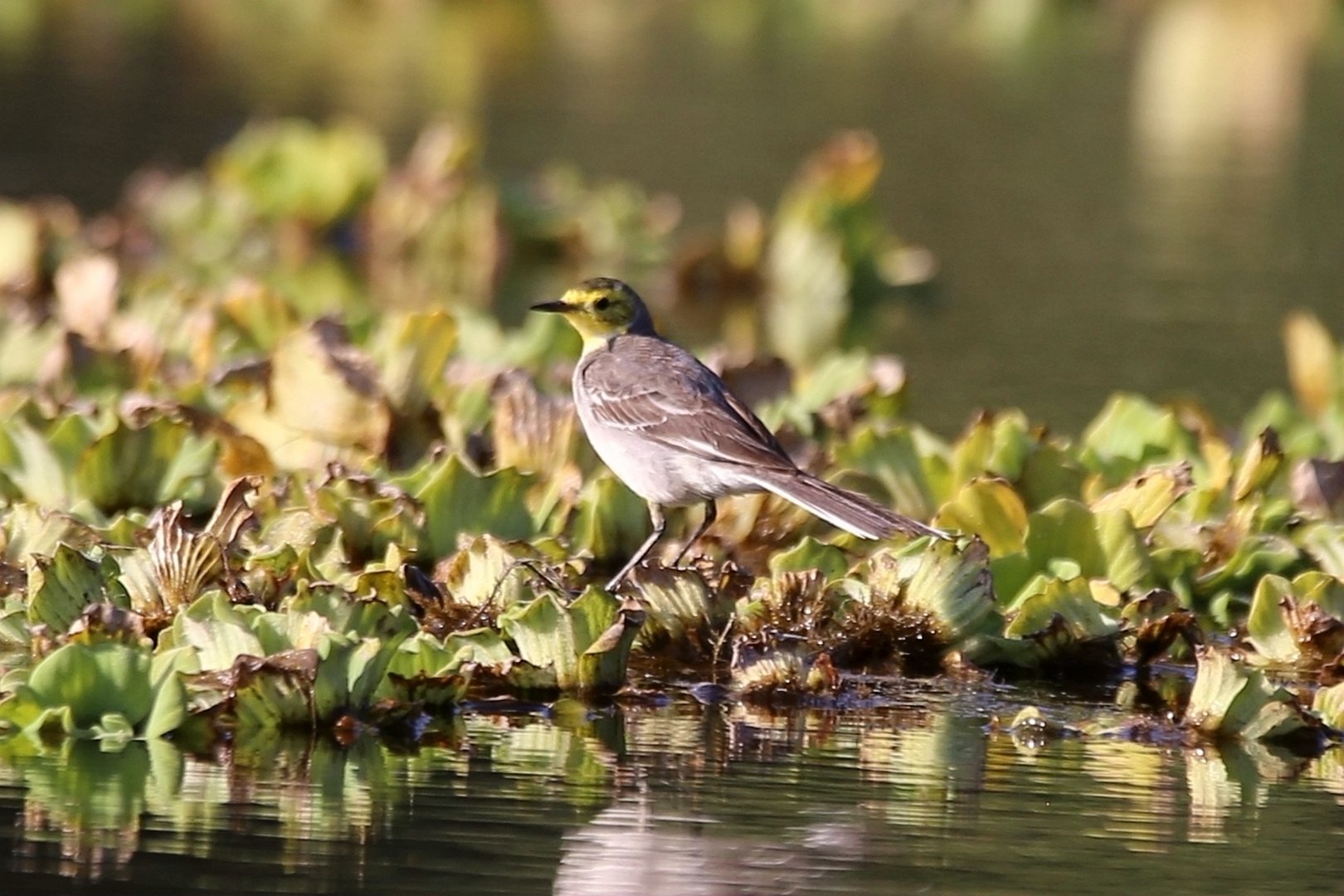
Since a large portion of the lake was only accessible by boat, after 20 minutes of searching we decided to hire a raft for a fee of 100 per hour. Apparently there were so many birders visiting these days that the boatmen knew immediately what we were looking for once he saw our binoculars and cameras. It took us another 20 minutes finding the jacana, thanks to our boatman, an old man in his sixties, who spotted the bird more than 50 meters away without binocular. Based on the location we found it, there would be no way to see the jacana from the shore unless you're extremely lucky. The boatman stopped the raft about 20 meters from the jacana, and we watched the bird quietly for the next half an hour. Along the way we saw a little cormorant, common kingfisher, white-throated kingfisher and some citrine wagtails. The little cormorant was a pleasant surprise for us as it was another species with very limited range in China. The most reliable site for the species in China is Nongmo Lake in Ruili, which was not on our schedule, so we were rather glad to see the cormorant here even though there was only one individual.

 
January 17, Yingjiang Wetland Park, Yingjiang

Going back to downtown Yingjiang turned out to be less convenient than the trip to Jiucheng. We had to call the cab driver who sent us here so he could pick us up. When we finally arrived Yingjiang Wetland Park, our second destination today, we only had about one hour left before sunset, not nearly enough to explore the park properly. The gatekeeper of the park tried to persuade us to come back the next morning as there would be more bird activities then, but after we insisted to enter he gave us some tips on the locations of Alexandrine parakeet, Asian green bee-eater and rufous-necked laughingthrush (spoiler alert: we saw none of the three).

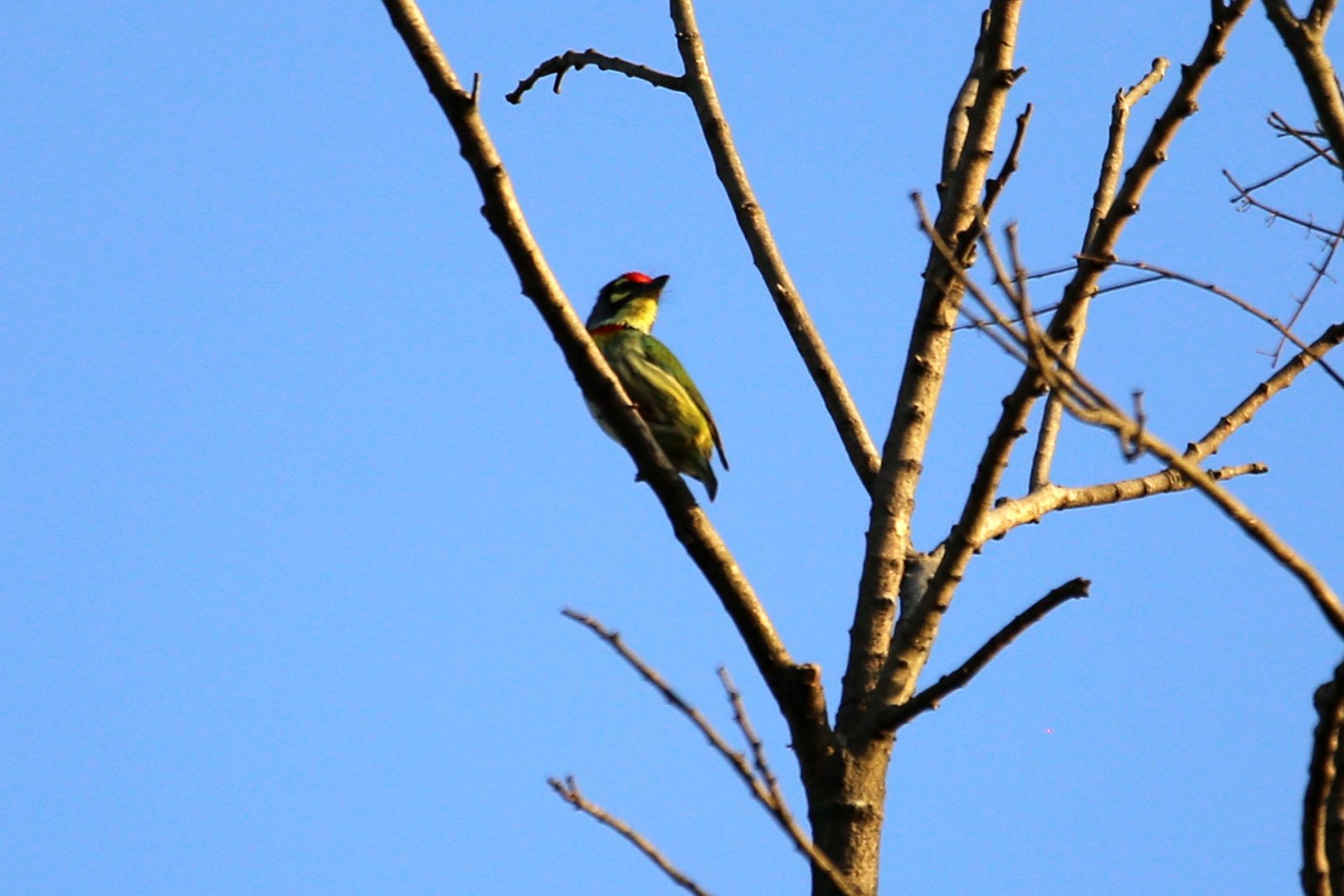
We went directly to check out the "parakeet trees" first. The trees are located in the open areas to the left near the gate, an almost guaranteed site for Alexandrine parakeets. Not today. After trying for a short while the only birds we found were a group of red-vented bulbuls, the local equivalence of light-vented bulbuls in the east. Then we headed to forest area to the right but it didn't get any better. We did find a pair of coppersmith barbets sitting near the top of a tall tree, but nothing more interesting up there.


As the light got dimmer in the forest, we decided to give up the treetop trail and instead took the metal walkway over the reed-beds which led back to the open area near the gate. There were more birds seen in this part of the park, but most were red-vented bulbuls and unidentifiable warblers, though a flock of collared mynas and a pied bushchat were lifers for me. In the viewing area alongside Daying River we managed to spot a pied kingfisher, some egrets, swallows and a group of waterfowl flying by, which we couldn't get identifiable looks in the sunset. For a site with a January list of 206 species on China Birding Record Center, the visit was nothing but a total fiasco. Two of my teammates went back for a short visit the next morning, which proved to be quite productive. I didn't join them due to some emergency data processing work from my coauthor.
 
On my last trip to Japan, I was able to speak with several travelers who commented on the differences between traveling to Japan and traveling to China, and the truth is that they left China in a pretty bad light... They talked about the need to haggle prices with taxi drivers and that the drivers always tried to charge exorbitant prices. Added to this is the fact that the cooperative nature of the Japanese seems to have nothing to do with that of the Chinese, who treat you much worse... I'm constantly talking about things they told us; I have no experience with the Chinese beyond the airport, although I must admit that they confiscated two of my batteries there and the truth is that this doesn't make me feel much sympathy for them... Is it true about haggling to agree on a price with transport?

Once again, congratulations on the excellent thread.
 
On my last trip to Japan, I was able to speak with several travelers who commented on the differences between traveling to Japan and traveling to China, and the truth is that they left China in a pretty bad light... They talked about the need to haggle prices with taxi drivers and that the drivers always tried to charge exorbitant prices. Added to this is the fact that the cooperative nature of the Japanese seems to have nothing to do with that of the Chinese, who treat you much worse... I'm constantly talking about things they told us; I have no experience with the Chinese beyond the airport, although I must admit that they confiscated two of my batteries there and the truth is that this doesn't make me feel much sympathy for them... Is it true about haggling to agree on a price with transport?

Once again, congratulations on the excellent thread.
The price of online ride-hailing is basically fixed, but it is hard to tell when you hail a taxi on site. We usually use online ride-hailing and don't bargain. Sometimes I will hail a taxi on the spot at the train station and airport, but to be honest, I haven't met a driver who would bargain in a big city for a long time. Of course, the situation in small cities is much more complicated.
 
The price of online ride-hailing is basically fixed, but it is hard to tell when you hail a taxi on site. We usually use online ride-hailing and don't bargain. Sometimes I will hail a taxi on the spot at the train station and airport, but to be honest, I haven't met a driver who would bargain in a big city for a long time. Of course, the situation in small cities is much more complicated.
The tourists I spoke to were talking about Beijing.
 
The tourists I spoke to were talking about Beijing.
In Beijing, the price of metered and online taxis cannot be easily changed. However, if the taxi is going a long distance, the driver may ask for a higher price on the spot (For example, from the airport to a specific location in the city). This situation will rarely occur with online car-hailing.
 
On my last trip to Japan, I was able to speak with several travelers who commented on the differences between traveling to Japan and traveling to China, and the truth is that they left China in a pretty bad light... They talked about the need to haggle prices with taxi drivers and that the drivers always tried to charge exorbitant prices. Added to this is the fact that the cooperative nature of the Japanese seems to have nothing to do with that of the Chinese, who treat you much worse... I'm constantly talking about things they told us; I have no experience with the Chinese beyond the airport, although I must admit that they confiscated two of my batteries there and the truth is that this doesn't make me feel much sympathy for them... Is it true about haggling to agree on a price with transport?
Almost anywhere in Asia you have to haggle for fares, just by virtue of being a rich foreigner.

Speaking as a foreigner travelling in China, I have very rarely had any trouble with taxi drivers there. In general the taxi drivers - and people in general, in my experience - in China are far more honest than in most other countries.

I never used Didi (the Chinese version of Uber) because I couldn't get it to work through Alipay, but if you use that then there is zero haggling because it is paid through the app, not to the driver. You just book it, get in the car, and then get out at the destination.

If using a taxi and are worried about haggling, just get the driver to use the meter.

If you're travelling a longer distance (e.g. to go see the Snub-nosed Monkey) then you can either bargain for the price or use the meter. But the driver normally isn't going to try to rip you off - in fact he's probably more likely to say to use the meter.
 
Back
Top