I was excited to visit Werribee's complex fully for the first time over the weekend. It was a pleasant day, relatively overcast and chilly but the sun came out in the afternoon to brighten things up a bit.
Arriving to the new Elephant Complex (which is 50 acres large), I was quite starstruck with it's overall size. Absolutely huge - it's difficult to imagine how big 50 acres is until your there, in person.
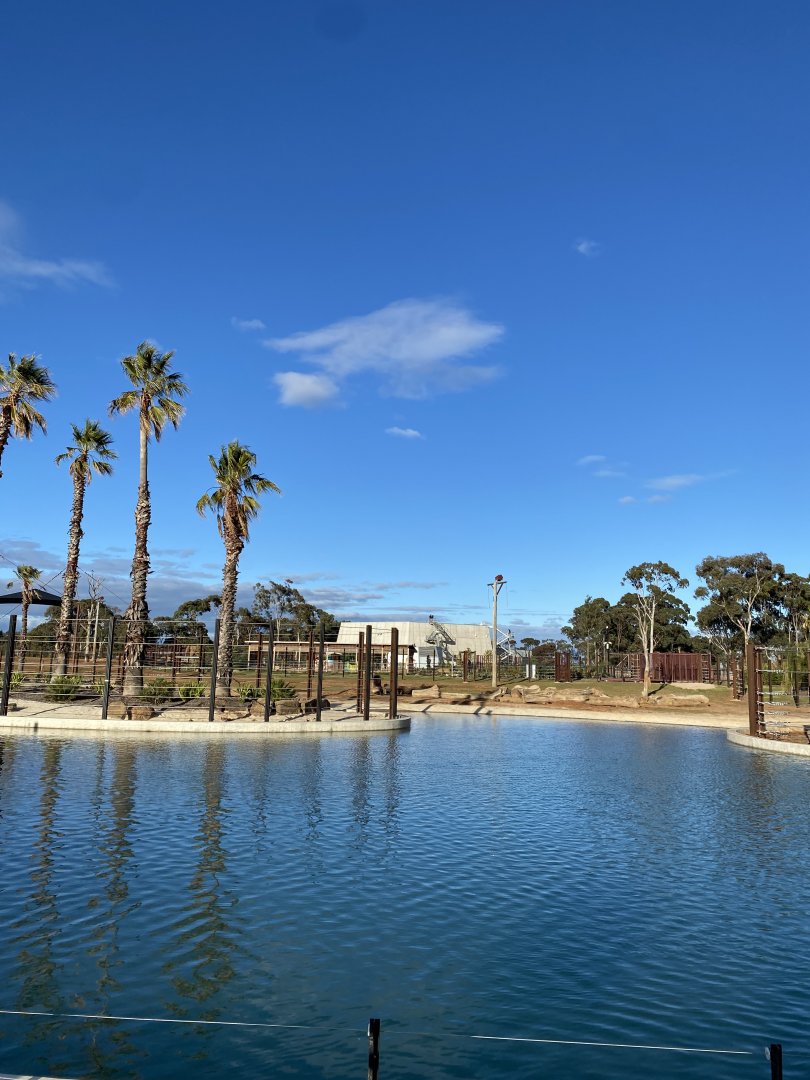
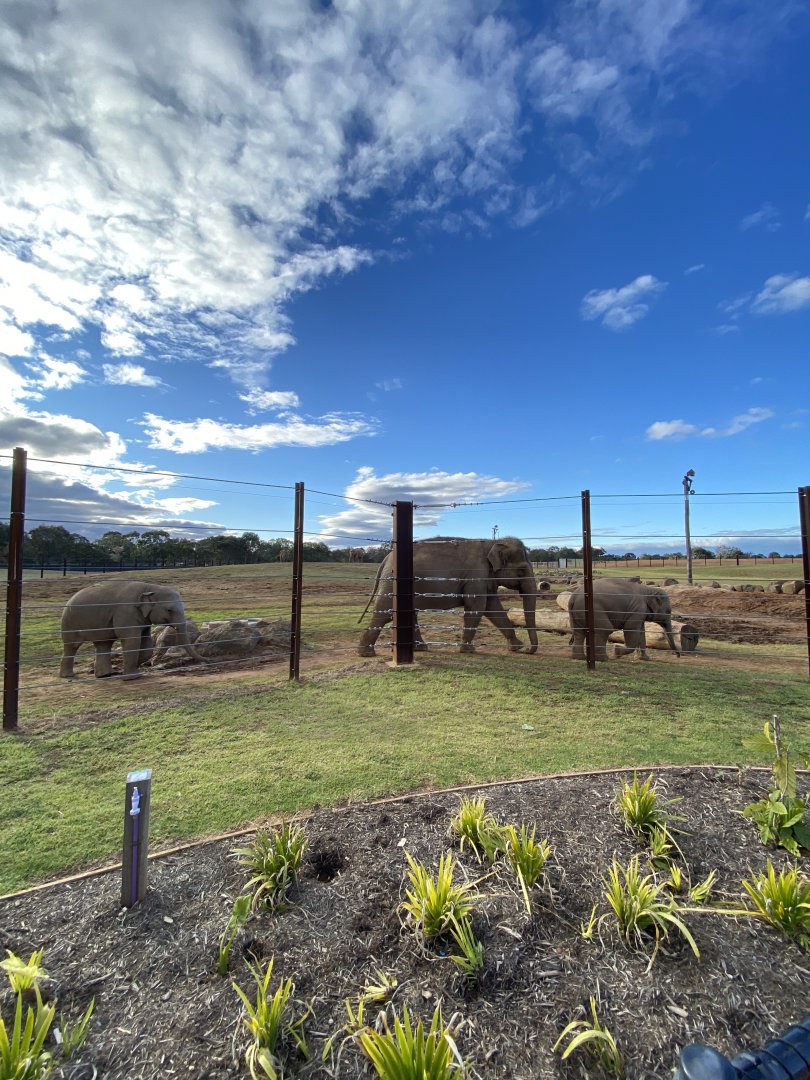
The complex as a whole did not disappoint. It features six paddocks of which are utilised in a rotational manner. It's also ingeniously designed so the enclosures can be interlinked as desired.
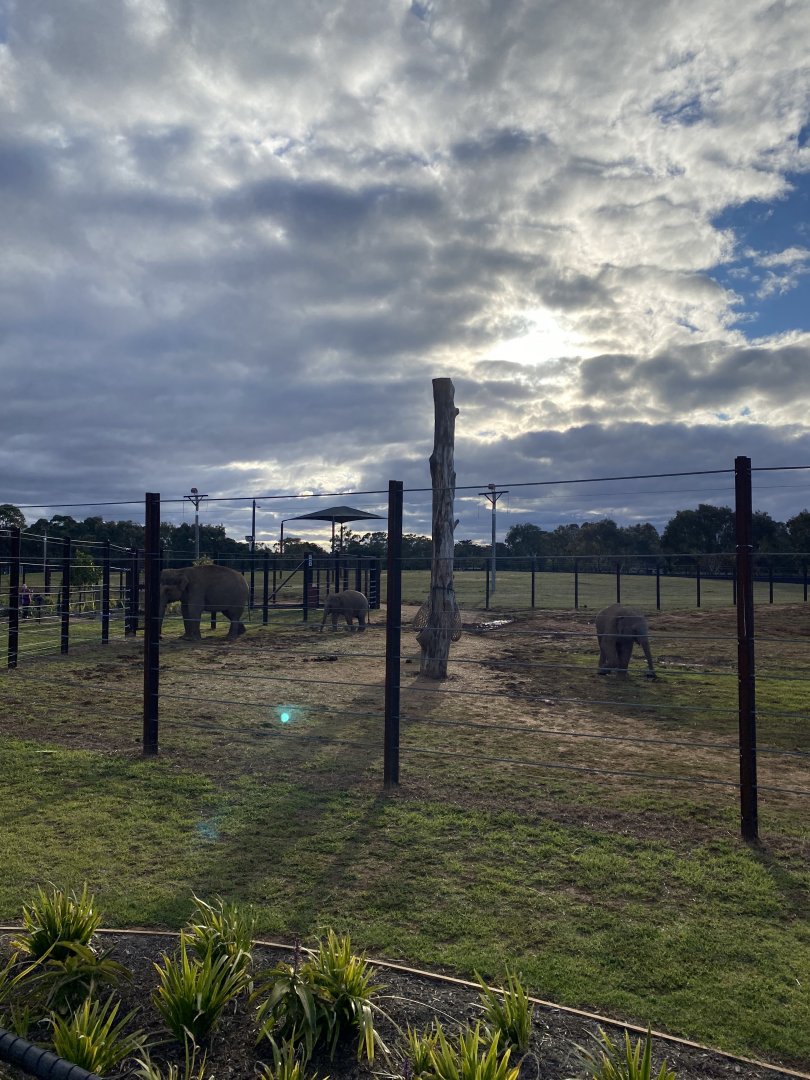
To help anyone who hasn't visited understand the layout - the path is shaped in a loop, with the 'fidget spinner exhibit' in the center. That is enclosure one, which is larger than expected. It had a lot of varying terrain which I appreciated, and a lot of enrichment strewn across the exhibit.
The beginning of the trail is the terrace area, with the Waterhole Cafe and viewing into the only two pools in the complex (in enclosure one and enclosure two). For orientation purposes: as you enter the waterhole pavilion, enclosure one and it's pool is straight ahead, with enclosure two and it's pool on your direct right. The path begins heading left, where it takes you around to enclosures five and six, which are on your left with enclosure one always being on the right of the path.
There is a single over head bridge in the complex, it connects enclosure one to enclosure six. Following on from this there's then a small viewing area that looks onto enclosure five. There's a small shelter here with elephants names ect. At this point, we're now at the 'top' of the complex, with enclosure five essentially extending along the top of the complex.
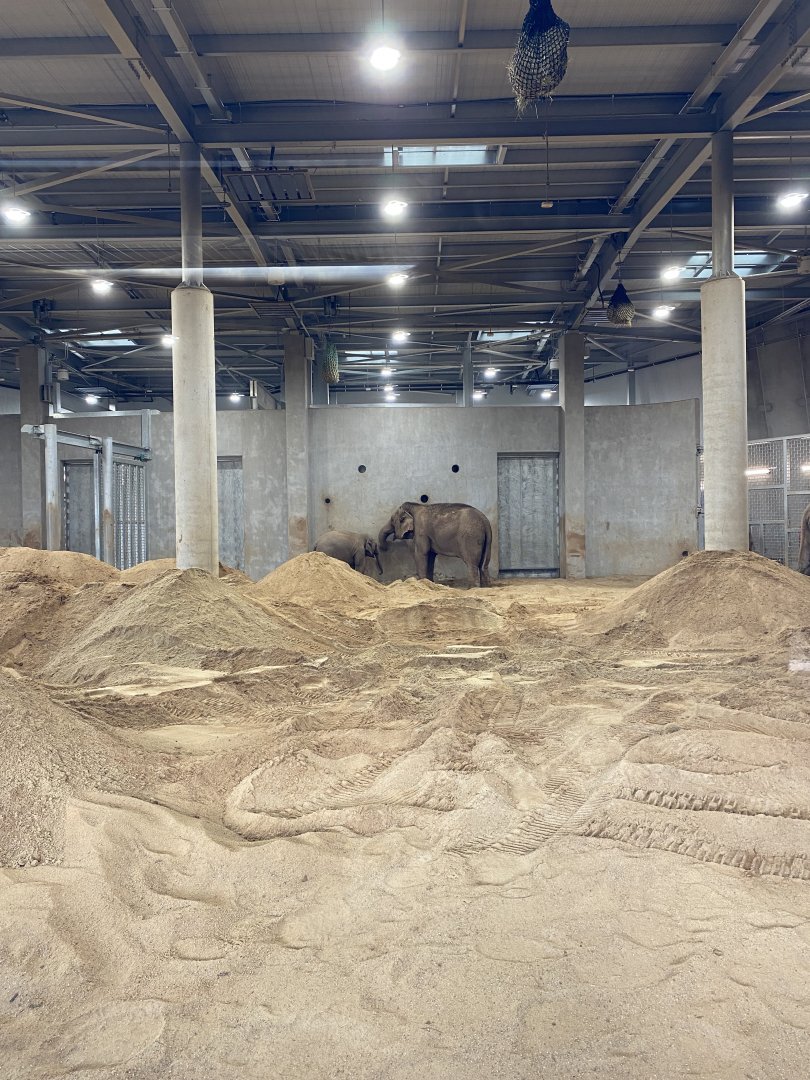
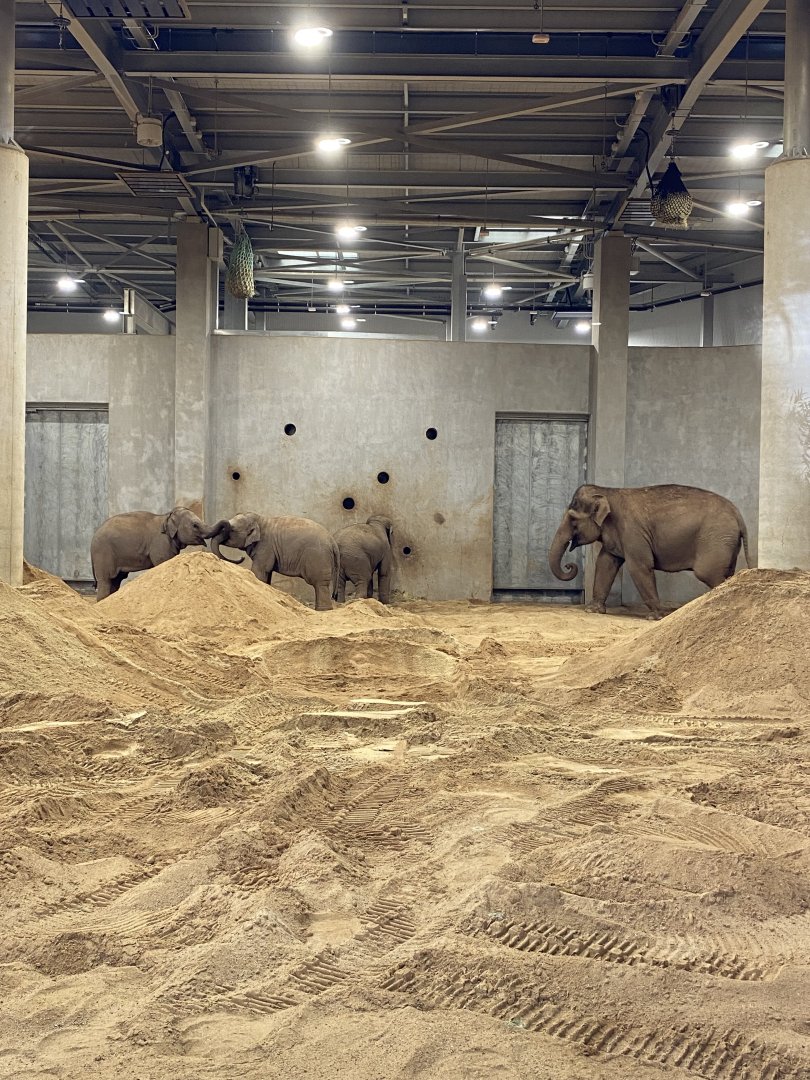
Following on from here, you then arrive at the main elephant barn which houses the matriarchal herd. It connects has two exiting doors; to a small off display yard which connects to enclosure five and another, connecting it directly to enclosure four. Enclosure four is virtually off display, it can be viewed along a small section of the path, but in this enclosure the elephants have the opportunity to be hundreds of meters away. Enclosure four looks to be the biggest - and the elephants have access here overnight.
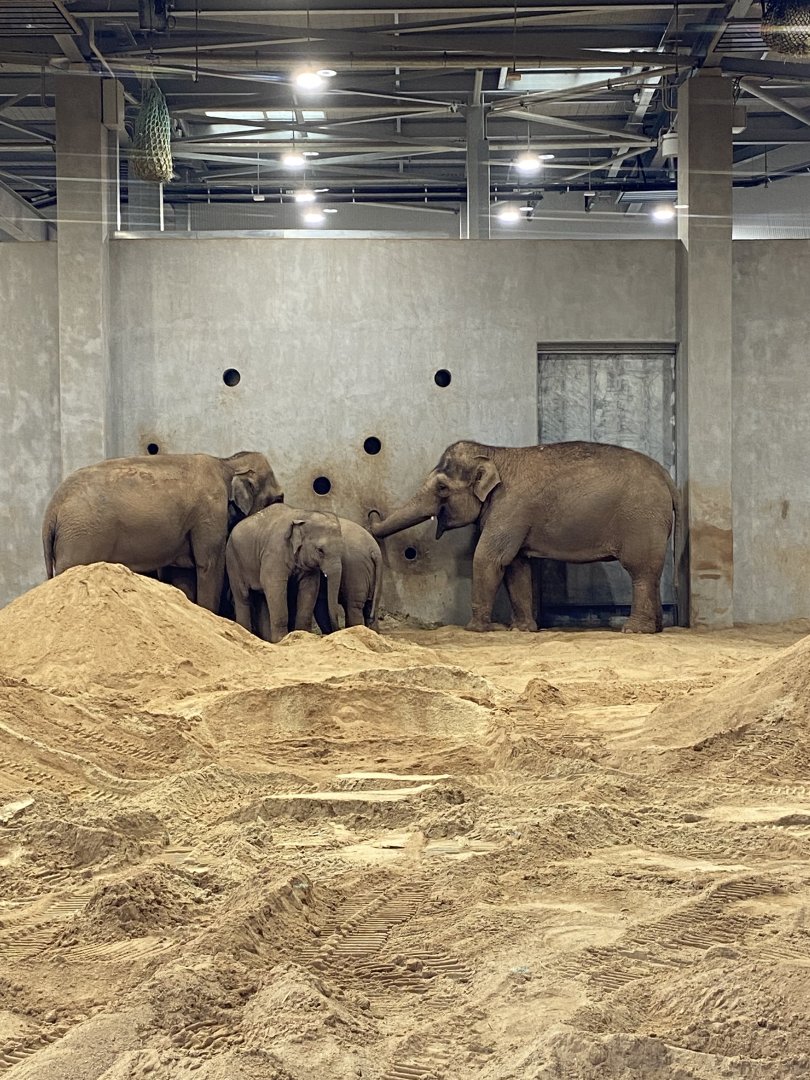
The barn is on the smaller side - which was slightly disappointing. It's designed to be a communal space, with a small section that can be separated off as desired (which is adjacent to the exit door to enclosure four). There also seems to be two smaller pens on the opposite side of the main wall in the barn - which can provide additional accommodation should that be desired. There are also 'enrichment holes' present on the back wall of the barn, which all the elephants were quite interested in. Talking to a keeper, these apparently can hold an array of items, including food, water, smells and tactile objects. The barn has a single panoramic viewing window looking in - and there's a little shelter above, but your essentially viewing the elephants from outside (unlike Melbourne's barn). Therefore the glare was a little bit of an issue for me trying to take photos.
After the barn, there's a small point along the path where you can view enclosure three, which is the off display bull enclosure. But very limited viewing - it's quite obviously been designed for this purpose, likely to accommodate the more 'rowdy' bulls during musth. At the moment, Luk Chai has access here overnight.
Following on from here is an elephant crossing, similar to the one Melbourne had where the gates are opened across the path, allowing the elephants to pass. I saw Luk Chai utilising this to in for the night. It connects enclosure one with enclosure two. The bull barn can also be seen in the far distance, connecting directly to enclosures two and three. After that, there's enclosure two, which looks to be one of the smallest. As mentioned, it has a reasonably sized pool, and is Luk Chai's usual enclosure.
~~~~~~~~~~~~~~~~~~~~~~~~~~~~~~~~~~~~~~~~
On this particular day, the cows had access to two enclosures throughout the day, as did Luk Chai the bull.
In the morning, Luk Chai was in with the cows and they had access to enclosures five and six.
The matriarchal herd had access to the same enclosures throughout the day. They spent the morning in six with Luk Chai, utilising a huge mud wallow there for a fair bit, before moving into five in the afternoon following Luk Chai's departure. Luk Chai then spent the afternoon in enclosure one (fidget spinner paddock).
On the elephants, it's interesting to see how much the calves have grown. Roi Yim is now the biggest calf and he's become quite independent. He was engaging in a lot of play with Aiyara during my visit - and he spent quite a lot of time with Kulab, who seemed to be playing 'aunty' to both him and Aiyara. Roi was following Kulab around all afternoon and it was also cool to see Kulab engaging in some rough housing with Roi, who was also doing the same with Aiyara in the barn.
At the same time mums Dokkoon and Mali seemed to be enjoying their time off mothering duties. When the rest of the herd was in the barn shortly before the trails closure, Dokkoon and Mali seemed to be enjoying a little bit of mother/daughter time together, exploring enclosure five before returning to the barn in time for dinner, which the whole herd had out in enclosure four.
Mek Kapah, Num Oi and Kati retreated into the barn quite early (it was quite chilly to be fair). Kati doesn't seem to be as independent as of yet, compared to the other calves. She seemed to be quite proactive as to where Num Oi was, and always ensured to be right by her side.
On the calves, both Roi and Kati are quite tall now too - both have quite long legs. Aiyara has much shorter legs, and she's therefore quite stocky, like her mother. Roi also has the characteristic round spine of his grandfather Bong Su. He's beginning to look a lot like Man Jai as he grows.