At the beginning of October last yearWhen did you visited Faunaland/Ancol?
At the beginning of October last yearWhen did you visited Faunaland/Ancol?

Aha, the dholes pair were still there back when I visited in February of this year. My guess is that the dhole you saw might be a off-display individual that was temporarily stored in the zoo for issues like keeper training and such, Faunaland and their affiliated facility are currently the only eks situ holders of dhole in the country, so the chances that TMII getting them from there are high.At the beginning of October last year
When I went, two dholes were on display normally, and the other one was locked in a transport cage. I saw a total of three dholes.Aha, the dholes pair were still there back when I visited in February of this year. My guess is that the dhole you saw might be a off-display individual that was temporarily stored in the zoo for issues like keeper training and such, Faunaland and their affiliated facility are currently the only eks situ holders of dhole in the country, so the chances that TMII getting them from there are high.

While this is a interesting news, it's unfortunate that this and others a lot of time came from these clowns haha
Jagat Satwa has a Chinese Alligator off-display, I don't know whether they're going to display it or not. If they do, I hope they'll display it at Dunia Air Tawar, with the caiman moving to Taman Reptil, occupying the currently vacant former New Guinea crocodile exhibit (that was formerly the albino saltwater croc exhibit)
While this is a interesting news, it's unfortunate that this and others a lot of time came from these clowns haha
I don't feel like there's any clear incentive on having them fully off-display, since breeding seems unlikely as they only have atleast an young alligator. Having them on-display would be interesting but of course the timeline wouldn't be announced most likely.

That's great! But I'm actually wishing fishing cats to be acquired by farm house lol.Farm House received a pair of ocelots from Bali Zoo, an 5 yo male named Kora and an 3 yo female named Goldy.
Tambah Keluarga Baru! Jagat Satwa Nusantara Sambut Dua Ocelot dari Bali Zoo sebagai Hibah Konservasi - Jagat Satwa Nusantara

That would great, but honestly that naming convention is not out of the ordinary with the state of newer Indonesian zoos right nowPerhaps we're not looking at one mammal area, but a complex, with "Farm House" being one of them
Fardhan Khan's echidna and pangolin were never shown in the marketing for Farm House
A "farm" with Ocelots is wild to think about


Farm House received a pair of ocelots from Bali Zoo, an 5 yo male named Kora and an 3 yo female named Goldy.
Tambah Keluarga Baru! Jagat Satwa Nusantara Sambut Dua Ocelot dari Bali Zoo sebagai Hibah Konservasi - Jagat Satwa Nusantara
Several new species has been added to the Jagat Satwa Nusantara "learning room" section on their website, which are practically their collection list (Both current and former), seemingly hinting that these species has been added and either already on-display or atleast recently acquired, as some of the mentioned reptiles has actually been on-display.
Bird
Reptile
- Rose-crowned fruit dove (Ptilinopus regina)
- Glossy-mantled manucode (Manucodia ater)
Amphibian
- Cuvier's dwarf caiman (Paleosuchus palpebrosus)
- Argentine black and white tegu (Salvator merianae)
- Northern caiman lizard (Dracaena guianensis) - Confirmed to be on-display
- Veiled chameleon (Chamaeleo calyptratus)
- Chinese crocodile lizard (Shinisaurus crocodilurus)
Fish
- Chinese giant salamander (Andrias davidianus)
- Chinese fire belly newt (Cynops orientalis)
Invertebrate
- Scleropages inscriptus
- Himantura oxyrhyncha
- Hoplias aimara
- Hydrocynus goliath
- Hydrolycus tatauaia
- Hydrolycus scomberoides
- Micropterus salmoides
- Channa marulius
- Channa aurantimaculata
- Electrophorus electricus
- Ceratoglanis scleronema
- Kryptopterus macrocephalus
- Hemiarius dioctes
- Polydactylus macrophthalmus
- Euristhmus microceps
- Pseudopimelodus bufonius
- Clarias nieuhofii
- Chaca bankanensis
- Leptosynanceia asteroblepa
- Batrachomoeus trispinosus
- Sander lucioperca
- Incisilabeo behri
- Terapon jarbua
- Sphaerichthys vaillanti
- Nandus nebulosus
- Pantodon buchholzi
- Anableps anableps
- Nomorhamphus celebensis
- Hemirhamphodon tengah
- Gymnochanda ploegi
- Gymnochanda verae
- Parosphromenus juelinae
- Parosphromenus phoenicurus
- Betta antuta
- Betta hendra
- Betta miniopinna
- Betta rubra
- Pseudomugil furcatus
- Oryzias woworae
- Rasbora brigittae
- Sundadanio axelrodi
- Paedocypris progenetica
- Stiphodon atropurpureus
- Stiphodon semoni
- Brachygobius xanthozonus
- Brachygobius nunus
- Kapuasia falaris
- Glossogobius matanensis
- Lepidocephalus spectrum
- Lepidocephalus thermalis
- Tuerkayana magnum
- Geograpsus grayi
- Parathelphusa pantherina
- Nephila pilipes
- Creobroter gemmatus
It safe to assume that Jagat Satwa Nusantara do have foreign sources, especially with how they got their Indochinese box turtles and presumebly also the Chinese alligator, as well as mormyrops anguilloides and Australian lungfish (The latter I believe are exclusively imports, as there's no farms or permanent source domestically, if considering that lungfish wasn't donated by some private owner). Those foreign species, a lot of them being practically non-existant in the captive trade here, are very likely to be directly imported. Really shows what has to be one of the few facilities managed by avid collectors in Indonesia.
- Largemouth bass and zander on the fish list, huh? I assume they will be a part of a future North American and European exhibit, and so far only largemouth bass that is available on fish stores.
- Myanmar arowana is still not readily found in Indonesian fish stores AFAIK.
- I think DAT kept Tuerkayana magnum in the past back in 2019 when they had that small section for invertebrates, reptiles and amphibians.
- CGS was in Taman Reptil, back in the early days of the reopening after its renovation. I feel it would've been better in DAT than in Taman Reptil, as it needs deeper water.
It safe to assume that Jagat Satwa Nusantara do have foreign sources, especially with how they got their Indochinese box turtles and presumebly also the Chinese alligator, as well as mormyrops anguilloides and Australian lungfish (The latter I believe are exclusively imports, as there's no farms or permanent source domestically, if considering that lungfish wasn't donated by some private owner). Those foreign species, a lot of them being practically non-existant in the captive trade here, are very likely to be directly imported. Really shows what has to be one of the few facilities managed by avid collectors in Indonesia.
I'm aware of a temporary land crab display in the past when Mr. Rian Dietra was still a staff there, though I'm honestly not particulary know much about the giant salamander in the earlier post-revitalization time. How do you know that they had Chinese giant salamander on-display at that time?


Major updates after my visit on 28/07/2025
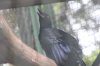
- The Bird Park has added several major addition to their collection, including officialy acquiring an glossy-mantled manucode (Manucodia ater). An single unsigned bird, housed with an Pinon's imperial pigeon (Ducula pinon).View attachment 814651
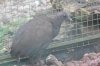
- It turns out that the Bird Park also have an megapode, not sure about the ID.View attachment 814652
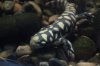
- In Museum Komodo, an barred tiger salamander has been added, replacing the previously albino variant of the salamander.View attachment 814653
- In another interesting new, the Insect Museum have added several exhibitions for live insects, collection include
- Coenobita rugosus
- Scolopendra subspinipes
- Unspecified milipede (Signed as archispirostreptus gigas)
- Pandinus imperator
- Brachypelma hamorii
- Nephila pilipes
- Chalcosoma caucasus
- Cybister sp.
- Lethocerus indicus
- Eurcynema versirubra
- Pulchriphyllium bioculatum
- Creobroter gemmatus
- Ants
- Odontomachus rixosus
- Polyrhachis dives
- Leptogenys diminuta
- Butterfly
- Euploea mulciber
- Graphium agamemnon
- Graphium sarpedon
- Hypolimnas bolina
- Pachliopta adama
- Pachliopta aristolochiae
- Papilio demoleus
- Papilion demolion
- Papilio memnon
- Papilio polytes
- Troides helena