Van Beal
Well-Known Member
Without any further delay, we arrive in the final portion of our savanna journey.
The trek across the ever-iconic acacia savannas of eastern Africa begins with a pair of habitats for spotted felines who are built for speed. In a small wedge of pathway surrounding a single wide-spanning Umbrella Thorn Acacia Vachellia tortilis, visitors can look through two decal-marked viewing windows into open grassland displays. To the left, a 3/4-acre space with an outcropping of rock central in the habitat. While the sloping areas leading up to the outcropping are shrouded by bushes, this elevated space provides a lookout point for the current inhabitants of the space, being five of the zoo's eight total South African Cheetah Acinonyx jubatus jubatus (1.4), with a mother and her three cubs living alongside an older female, while our remaining 2.1 individuals are kept off-display. Despite this lookout provided, visitors are more often going to spot the cheetahs through the brush alongside the chain-link which creates the perimeter of the habitat along the path, as they like to rest in the shade of the acacias which dot the space.
Now through the right-hand window, visitors look into a 500 sq. meter habitat. The design aspects remain the same, with the central outcropping and backdropping shade trees. However, the trio of Serval Leptailurus serval (0.3) which live on-display are much more friendly, and quite often come right close to the window. Much like the cheetahs next door, our male serval is kept off-display, with breeding not planned for this species at the moment.

Possible Look of Spotted Felid Enclosures
Image Credit -> @Cichlid

South African Cheetah
Image Credit -> @Brayden Delashmutt

Serval
Image Credit -> @KevinB
Just past the end of the cheetah habitat, having had a near-continuous look at the upcoming (and at this point probably uninspired) savanna mixed habitat, visitors are funneled into a circle of false-rock, which is the outer layer of concentric circles formed by the path and the circular habitat at the inner point of the circle, that has a series of seven glass-fronted exhibits for the majority of the area's cold-blooded species. The smallest of these is a simplistic tank, with dimensions of 60x40x40 (centimeters) containing savanna grasses and false jackal bones for a lone Straight-horned Baboon Tarantula Ceratogyrus marshalli (0.0.1). Continuing around the circle in a clockwise direction, visitors can view the remaining six tanks within the wall:

Possible Look of Tarantula Display
Image Credit -> @MOG2012
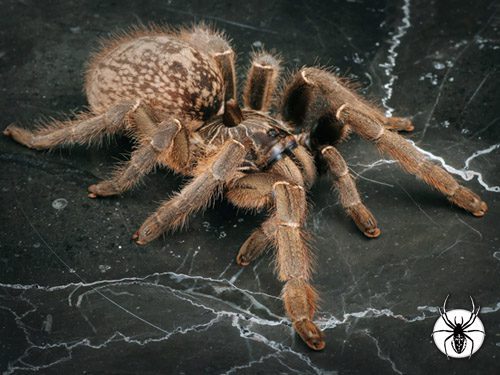
Straight-horned Baboon Tarantula
Image Source -> Ceratogyrus marshalli - The Spider Shop

Possible Look of Mamba Exhibit
Image Credit -> @NNM.


Black Mamba
Top Image -> @TheGerenuk
Bottom Image -> @LadyA91

Possible Look of Adder Exhibit
Image Credit -> @Coelacanth18

Puff Adder
Image Credit -> @Andrew_NZP

Possible Look of Rock Python Exhibit
Image Credit -> @CMP

African Rock Python
Image Credit -> @Austin the Sengi

Possible Look of Bullfrog Habitat
Image Credit -> @KevinB

African Bullfrog
Image Credit -> @CMP

Possible Look of Spray Toad Exhibit
Image Credit -> @Moebelle

Kihansi Spray Toad
Image Credit -> @RatioTile

Possible Look of Girdled Lizard Exhibit
Image Credit -> @Dhole dude

Mozambique Girdled Lizard
Image Credit -> @red river hog

Possible Look of Monitor Habitat
Image Credit -> @TheoV

White-throated Rock Monitor
Image Credit -> @Rhino00
*long sigh* With the sheer image content of this post, and the length it took me to write out what is ultimately three larger-scale habitats, and my sheer exhaustion and knowledge of another early morning tomorrow, this is where our journey will end today. But fear not, for I will be making posts both tomorrow and, as per my schedule, Thursday, meaning three consecutive days of Myrtle Beach tours, most certainly concluding the savannas, but perhaps(!) beginning the Madagascar and African Isles area as well.
For now, I leave you (without a spoiler, as that extra mamba photo has maxed the images for one post ). Stay tuned, and enjoy!
The trek across the ever-iconic acacia savannas of eastern Africa begins with a pair of habitats for spotted felines who are built for speed. In a small wedge of pathway surrounding a single wide-spanning Umbrella Thorn Acacia Vachellia tortilis, visitors can look through two decal-marked viewing windows into open grassland displays. To the left, a 3/4-acre space with an outcropping of rock central in the habitat. While the sloping areas leading up to the outcropping are shrouded by bushes, this elevated space provides a lookout point for the current inhabitants of the space, being five of the zoo's eight total South African Cheetah Acinonyx jubatus jubatus (1.4), with a mother and her three cubs living alongside an older female, while our remaining 2.1 individuals are kept off-display. Despite this lookout provided, visitors are more often going to spot the cheetahs through the brush alongside the chain-link which creates the perimeter of the habitat along the path, as they like to rest in the shade of the acacias which dot the space.
Now through the right-hand window, visitors look into a 500 sq. meter habitat. The design aspects remain the same, with the central outcropping and backdropping shade trees. However, the trio of Serval Leptailurus serval (0.3) which live on-display are much more friendly, and quite often come right close to the window. Much like the cheetahs next door, our male serval is kept off-display, with breeding not planned for this species at the moment.
Possible Look of Spotted Felid Enclosures
Image Credit -> @Cichlid
South African Cheetah
Image Credit -> @Brayden Delashmutt
Serval
Image Credit -> @KevinB
Just past the end of the cheetah habitat, having had a near-continuous look at the upcoming (and at this point probably uninspired) savanna mixed habitat, visitors are funneled into a circle of false-rock, which is the outer layer of concentric circles formed by the path and the circular habitat at the inner point of the circle, that has a series of seven glass-fronted exhibits for the majority of the area's cold-blooded species. The smallest of these is a simplistic tank, with dimensions of 60x40x40 (centimeters) containing savanna grasses and false jackal bones for a lone Straight-horned Baboon Tarantula Ceratogyrus marshalli (0.0.1). Continuing around the circle in a clockwise direction, visitors can view the remaining six tanks within the wall:
- 20 sq. meter tank, arboreal space provided by approximately 2.5m height, low-lying foliage; houses breeding pair of Black Mamba Dendroaspis polylepis (1.1)
- 3 sq. meter tank, lesser height (1m), several caves built into false-rock backdrop; houses breeding pair of Puff Adder Bitis arietans (1.1)
- 15. sq meter tank, upscaled and near-identical to adder display with twice the height (2m), larger rock displays; houses female pair of African Rock Python Python sebae (0.2)
- 1.5 sq. meter tank, sandy floor around 1/4m-deep pool; houses breeding group of African Bullfrog Pyxicephalus adspersus (1.3)
- 1 sq. meter tank, equal height to adder display, constantly misty environment with scaled-down Kihansi Gorge waterfall; houses 1:1 group of Kihansi Spray Toad Nectophrynoides asperginis (25.25)
- 1.5 sq. meter tank, rocky habitat with numerous small caves and outcroppings; rotates breeding pairs of Mozambique Girdled Lizard Smaug mossambicus (2.2)
Possible Look of Tarantula Display
Image Credit -> @MOG2012
Straight-horned Baboon Tarantula
Image Source -> Ceratogyrus marshalli - The Spider Shop
Possible Look of Mamba Exhibit
Image Credit -> @NNM.
Black Mamba
Top Image -> @TheGerenuk
Bottom Image -> @LadyA91
Possible Look of Adder Exhibit
Image Credit -> @Coelacanth18
Puff Adder
Image Credit -> @Andrew_NZP
Possible Look of Rock Python Exhibit
Image Credit -> @CMP
African Rock Python
Image Credit -> @Austin the Sengi
Possible Look of Bullfrog Habitat
Image Credit -> @KevinB
African Bullfrog
Image Credit -> @CMP
Possible Look of Spray Toad Exhibit
Image Credit -> @Moebelle
Kihansi Spray Toad
Image Credit -> @RatioTile
Possible Look of Girdled Lizard Exhibit
Image Credit -> @Dhole dude
Mozambique Girdled Lizard
Image Credit -> @red river hog
Possible Look of Monitor Habitat
Image Credit -> @TheoV
White-throated Rock Monitor
Image Credit -> @Rhino00
*long sigh* With the sheer image content of this post, and the length it took me to write out what is ultimately three larger-scale habitats, and my sheer exhaustion and knowledge of another early morning tomorrow, this is where our journey will end today. But fear not, for I will be making posts both tomorrow and, as per my schedule, Thursday, meaning three consecutive days of Myrtle Beach tours, most certainly concluding the savannas, but perhaps(!) beginning the Madagascar and African Isles area as well.
For now, I leave you (without a spoiler, as that extra mamba photo has maxed the images for one post
). Stay tuned, and enjoy!