Myrtle Beach Zoological Park - A 'New' Project

Without any further delay, we arrive in the final portion of our savanna journey.

The trek across the ever-iconic acacia savannas of eastern Africa begins with a pair of habitats for spotted felines who are built for speed. In a small wedge of pathway surrounding a single wide-spanning Umbrella Thorn Acacia Vachellia tortilis, visitors can look through two decal-marked viewing windows into open grassland displays. To the left, a 3/4-acre space with an outcropping of rock central in the habitat. While the sloping areas leading up to the outcropping are shrouded by bushes, this elevated space provides a lookout point for the current inhabitants of the space, being five of the zoo's eight total South African Cheetah Acinonyx jubatus jubatus (1.4), with a mother and her three cubs living alongside an older female, while our remaining 2.1 individuals are kept off-display. Despite this lookout provided, visitors are more often going to spot the cheetahs through the brush alongside the chain-link which creates the perimeter of the habitat along the path, as they like to rest in the shade of the acacias which dot the space.
Now through the right-hand window, visitors look into a 500 sq. meter habitat. The design aspects remain the same, with the central outcropping and backdropping shade trees. However, the trio of Serval Leptailurus serval (0.3) which live on-display are much more friendly, and quite often come right close to the window. Much like the cheetahs next door, our male serval is kept off-display, with breeding not planned for this species at the moment.

full

Possible Look of Spotted Felid Enclosures
Image Credit -> @Cichlid
full

South African Cheetah
Image Credit -> @Brayden Delashmutt
full

Serval
Image Credit -> @KevinB

Just past the end of the cheetah habitat, having had a near-continuous look at the upcoming (and at this point probably uninspired) savanna mixed habitat, visitors are funneled into a circle of false-rock, which is the outer layer of concentric circles formed by the path and the circular habitat at the inner point of the circle, that has a series of seven glass-fronted exhibits for the majority of the area's cold-blooded species. The smallest of these is a simplistic tank, with dimensions of 60x40x40 (centimeters) containing savanna grasses and false jackal bones for a lone Straight-horned Baboon Tarantula Ceratogyrus marshalli (0.0.1). Continuing around the circle in a clockwise direction, visitors can view the remaining six tanks within the wall:
  • 20 sq. meter tank, arboreal space provided by approximately 2.5m height, low-lying foliage; houses breeding pair of Black Mamba Dendroaspis polylepis (1.1)
  • 3 sq. meter tank, lesser height (1m), several caves built into false-rock backdrop; houses breeding pair of Puff Adder Bitis arietans (1.1)
  • 15. sq meter tank, upscaled and near-identical to adder display with twice the height (2m), larger rock displays; houses female pair of African Rock Python Python sebae (0.2)
  • 1.5 sq. meter tank, sandy floor around 1/4m-deep pool; houses breeding group of African Bullfrog Pyxicephalus adspersus (1.3)
  • 1 sq. meter tank, equal height to adder display, constantly misty environment with scaled-down Kihansi Gorge waterfall; houses 1:1 group of Kihansi Spray Toad Nectophrynoides asperginis (25.25)
  • 1.5 sq. meter tank, rocky habitat with numerous small caves and outcroppings; rotates breeding pairs of Mozambique Girdled Lizard Smaug mossambicus (2.2)
Now for the central habitat. At 35 sq. meters, this is the largest habitat in what could be called the herptile corner of the savanna. The kopje at the centre of the path is surrounded by sheer false-rock walls to prevent our rotating male and female White-throated Rock Monitor Varanus albigularis albigularis (1.1) from making the climb into the visitor pathway.

full

Possible Look of Tarantula Display
Image Credit -> @MOG2012
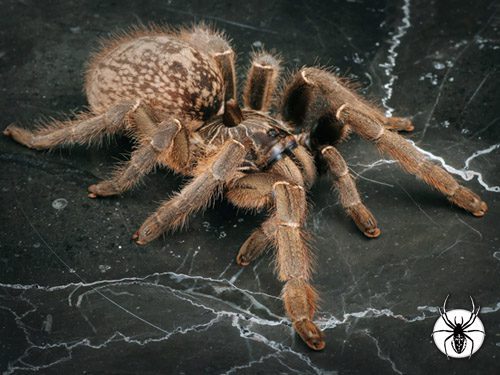
C_marsalli_A1.jpg

Straight-horned Baboon Tarantula
Image Source -> Ceratogyrus marshalli - The Spider Shop
full

Possible Look of Mamba Exhibit
Image Credit -> @NNM.
full

full

Black Mamba
Top Image -> @TheGerenuk
Bottom Image -> @LadyA91
full

Possible Look of Adder Exhibit
Image Credit -> @Coelacanth18
full

Puff Adder
Image Credit -> @Andrew_NZP
full

Possible Look of Rock Python Exhibit
Image Credit -> @CMP
full

African Rock Python
Image Credit -> @Austin the Sengi
full

Possible Look of Bullfrog Habitat
Image Credit -> @KevinB
full

African Bullfrog
Image Credit -> @CMP
full

Possible Look of Spray Toad Exhibit
Image Credit -> @Moebelle
full

Kihansi Spray Toad
Image Credit -> @RatioTile
full

Possible Look of Girdled Lizard Exhibit
Image Credit -> @Dhole dude
full

Mozambique Girdled Lizard
Image Credit -> @red river hog
full

Possible Look of Monitor Habitat
Image Credit -> @TheoV
full

White-throated Rock Monitor
Image Credit -> @Rhino00

*long sigh* With the sheer image content of this post, and the length it took me to write out what is ultimately three larger-scale habitats, and my sheer exhaustion and knowledge of another early morning tomorrow, this is where our journey will end today. But fear not, for I will be making posts both tomorrow and, as per my schedule, Thursday, meaning three consecutive days of Myrtle Beach tours, most certainly concluding the savannas, but perhaps(!) beginning the Madagascar and African Isles area as well.

For now, I leave you (without a spoiler, as that extra mamba photo has maxed the images for one post :p). Stay tuned, and enjoy!
 
From the rocky alcove home of our herptiles, visitors head to the right from the wide mouth of the little area, and head onward to viewing for our 3.5-acre mixed savanna, which runs alongside the path for most of the remaining journey through this area. Seeing as this display is just one of the many such habitats seen across the continent, I feel there is limited reasoning for going into deeper detail on the geography of the habitat. The lone detail which might vary from other savannas is the presence of an African-themed restaurant called the Maasai Munchery (yes, the old restaurant from my other thread is reborn), a two-level dining experience with a panoramic view through glass from the main floor, and a view from an open-air viewing deck with attached giraffe feeders on the top floor. The most easily-spotted of the five savanna species in this space, as already mentioned in the brief restaurant description, is the Masai Giraffe Giraffa cameleopardis tippelskirchii (1.2). Three other ungulate species of varying sizes share the space as well, being the Southern Sable Antelope Hippotragus niger niger (1.3), Greater Kudu Tragelaphus strepsiceros (1.5), and Common Impala Aepyceros melampus melampus (2.8), all of which share the space with the giraffes and the lone bird on the main yard, being an all-female flock of Southern Ground Hornbill Bucorvus leadbeateri (0.4). Roughly halfway along the savanna habitat, a region of the barrier curves inward enough to provide space enough for a 200 sq. meter aviary, centered around a single relatively bare tree. This tree provides a perch for a breeding pair of Crowned Hornbill Lophoceros alboterminatus (1.1), while the rolling landscape below hosts a breeding pair of White-bellied Bustard Eupodotis senegalensis (1.1).

full

Possible Look of Mixed Savanna
Image Credit -> @twilighter
full

Masai Giraffe
Image Credit -> @Austin the Sengi
full

Southern Sable Antelope
Image Credit -> @Prochilodus246
full

Greater Kudu
Image Credit -> @catfan
full

Common Impala
Image Credit -> @gulogulogulo
full

Southern Ground Hornbill
Image Credit -> @merlin
full

Possible Look of Mixed Bustard/Hornbill Aviary
Image Credit -> @TheImmigrant1
full

White-bellied Bustard
Image Credit -> @FunkyGibbon
full

Crowned Hornbill
Image Credit -> @FoxBat

(From here on out, images will not be included, instead being added to a [series of] media roundup post which will come tomorrow prior to the actual zoo post)

Now, between the first look at the savanna and the bustard aviary, visitors come across another mixed aviary, as well as a decently-sized habitat for another, lesser-known ungulate species. Both spaces, with the aviary at 450 sq. meters and the other habitat at 325 sq. meters, each begin the return to the wooded savanna, with both spaces having smaller acacias and long grasses. This design pairs with a small shallow stream flowing through the aviary which draws the interest of our Eastern Gray-crowned Crane Balearica regulorum gibbericeps (2.2), while the lower branches of the trees draw the attention of our pair of Black-casqued Hornbill Ceratogymna atrata (1.1). Next door to them is a much shier species, coming in the form of the Southern or Cape Grysbok Raphicerus melanotis (0.3), with the three females on display while two males are kept behind the scenes.
Upon passing the previously described bustard/hornbill mix, visitors come across a pair of smaller meshed-in habitats, the first at 250 sq. meters, and the second at 100 sq. meters. Both spaces are marked with dead trees and decently long grass, the larger space having the trees as the perching area for a flock of Northern Carmine Bee-Eater Merops nubicus (7.7), while the long grass conceals our flock of Vulturine Guineafowl Acryllium vulturinum (4.8) and a brother-sister pair of Kirk's Dik-Dik Madoqua kirkii (1.1). Next door, the trees provide climbing space, while the grass conceals hollowed logs and caves used for the privacy of our breeding pair of African Brush-tailed Porcupine Atherurus africanus (1.1), contained by a 1m-high concrete barrier painted with traditional African motifs.

As we reach the end of the mixed savanna habitat, visitors will come to three larger habitats in a row along the opposite side of the path, and a fourth directly alongside the barrier of the mixed savanna. The three habitats on the left are each three-quarters of an acre in size, with the holding building behind the habitats allowing for each of the three species to rotate between the three habitats. At the moment, visitors can find our group of Spotted Hyena Crocuta crocuta (2.3) in the first habitat, our pride of Transvaal Lion Panthera leo krugeri (1.4) in the second, and our pack of African Wild Dog Lycaon pictus (3.4) in the last.
Oh, and of course the fourth habitat. At half an acre, visitors are treated to a habitat designed similarly to the habitat for the same species at the Toronto Zoo. Backdropped by a waterfall feeding a large shallow basin, visitors get a slightly elevated view into the home of our Olive Baboon Papio anubis (5.15) troop.

In conclusion to Many Sides of Savanna, visitors walk down the middle of a row of six aviaries dedicated to African birds of prey. The details and inhabitants of each aviary space are listed below:
Left Side:
  • 700 sq. meter mixed species aviary, largely open with only a few taller trees for the elevated roosting of both species; currently home to a breeding pair of Secretarybird Sagittarius serpentarius (1.1), who breed off-display, and a flock of Marabou Stork Leptoptilos crumenifer (5.5)
  • 450 sq. meter wetland aviary, aquatic areas reaching 1.5m deep while large trees provide sightlines for the inhabiting raptors; currently housing brotherly trio of African Fish Eagle Haliaeetus vocifer (3.0)
  • 450 sq. meter aviary, generally similar to mixed aviary already seen, with more rocky patches and smaller trees; currently housing breeding pair of Palm-nut Vulture Gypohierax angolensis (1.1)
Right Side:
  • three 450 sq. meter aviaries, identical layout to mixed aviary; house respective breeding pairs of Verreaux's Eagle Aquila verreauxi, Bateleur Terathopius ecaudatus, and African Crowned Eagle Stephanoaetus coronatus (1.1 each)

And with that, we conclude the trip through the Many Sides of Savanna, and leave ourselves just a short walk from our brief stop outside the African Continental Trail, with our Madagascar and African Isles sector just visible from within the tree-line. While signage will give us the choice of going here or to the African Rainforest, our choice lies toward the islands. Given that this particular region is a) primarily indoors, and b) totally cyclical, visitors will have no need to worry about missing the rainforest, as we will return to the very fork in the path where we made this decision.

For now, I leave you, but stay tuned for probably three posts tomorrow, as we provide media roundup post(s) for the conclusion of the savannas, and then begin our journey across Madagascar and the African isles...
Stay tuned, and enjoy!
 
While I am just now realizing what I've done to make the whole bottom half of the previous post stricken-through, I am well beyond the timeframe in which I am able to fix that. While I am unsure if any of the moderators would be able to edit the above post in order to fix it, that would be grand if it were possible. Regardless, here we go with our media roundup.

Media Roundup: Pt 1
full

Possible Look of Crane and Hornbill Aviary
Image Credit -> @TheImmigrant1
full

Eastern Grey Crowned Crane
Image Credit -> @Gab_1
full

Black-casqued Hornbill
Image Credit -> @LeMandaiEnthusiast‧
full

Possible Look of Dik-Dik and Bird Aviary
Image Credit -> @KevinB
full

Northern Carmine Bee-Eater
Image Credit -> @Northwest_FIsh_Keeping
full

Vulturine Guineafowl
Image Credit -> @Macaw16
full

Kirk's Dik-Dik
Image Credit -> @Max Blundell
full

Possible Look of Grysbok Habitat
Image Credit -> @MagpieGoose
full

Southern Grysbok
Image Credit -> @Giant Eland
full

Possible Look of Porcupine Habitat
Image Credit -> @Coelacanth18
full

African Brush-tailed Porcupine
Image Credit -> @Andrew_NZP
full

full

Possible Looks of Carnivore Rotational Habitats
Top Image: @snowleopard
Bottom Image: @Gavial
full

Spotted Hyena
Image Credit -> @Brayden Delashmutt
full

Transvaal Lion
Image Credit -> @UngulateNerd92
full

African Wild Dog
Image Credit -> @catfan

Stay tuned for part 2... coming very soon (I mean like next 20-30 minutes soon)
 
Media Roundup: Pt 2
full

Possible Look of Baboon Habitat
Image Credit -> @blospz
full

Olive Baboon
Image Credit -> yours truly, @Van Beal
(I'm not sure why I feel the need to mention myself when I use my own image, but I do anyways)
full

Possible Look of Mixed Avian Predator Aviary
Image Credit -> @KevinB
full

Secretary Bird
Image Credit -> @pachyderm pro
full

Marabou Stork
Image Credit -> @captain alligator
full

Possible Look of Fish-Eagle Aviary
Image Credit -> @KevinB
full

African Fish Eagle
Image Credit -> @TheGerenuk
full

Possible Look of Remaining Raptor Aviaries
Image Credit -> @Philipine eagle
full

Palm-nut Vulture
Image Credit -> @Rizz Carlton
full

Verreaux's Eagle
Image Credit -> @Gavial
full

Bateleur
Image Credit -> @Ding Lingwei
full

African Crowned Eagle
Image Credit -> @Sicarius

And with that, I have managed to drag my currently-ill self into finishing this media roundup. Unfortunately, given that it feels like there is a group of tiny people slamming a battering ram against the inside of my skull, this will be my last post of the night. Tomorrow will not be a post day, however I do plan on making a post (albeit probably a short one) on Saturday upon returning from my trip to the Toronto Zoo.
Stay tuned, and enjoy!
 
We return (yes, I made my zoo trip; no, I didn't post like I said I would) to the entrance of the African Islands Greenhouse, which hosts the entirety of the species from Madagascar and the other islands scattered throughout the western portion of the Indian Ocean.
While we won't actually be making it inside the building today, we will be venturing down the corridors leading to the doorway of your choosing, and detailing the series of mesh-enclosed habitats which make up these corridors.
But first, lets focus on the center pair of habitats. The first, which really acts as the opening for the building, is a 250 sq. meter habitat made up predominantly of a pool ranging from 10cm deep to nearly 2m deep. What little land area there is comes in the form of a mulchy area with protruding heated rocks, all contained within a concrete basin (best word I could think of that matched what I was thinking). Much like many of the exhibits in this area, the signage around the pond discusses the many threats this species faces in the wild, such as exploitation for food and illegal export for use in traditional Asian medicines. These factors, while also impacting a number of other species in this region of the zoo, are the big reason why the Madagascan Big-headed Turtle Erymnochelys madagascariensis (6.14) are widely considered to be the world's most endangered turtle species.
Acting as a backdrop to this pond, as well as the left or right wall of the corridor (left wall if we take the right-hand corridor, right wall if we take the left-hand corridor), visitors can find a 750 sq. meter aviary dedicated to three avian species with quite striking plumage. These three particular species are kept in this display due to their territorial nature, which ultimately makes them a more high-risk inclusion for the walkthrough aviary seen inside. Dancing among the branches which span much of the aviary's 4m height, visitors can spot a breeding pair of Lesser Vasa Parrot Coracopsis nigra (1.1), two breeding pairs of Blue Coua Coua caerulea (2.2), and a flock of Madagascar or Gray-headed Lovebird Agapornis canus (5.5).

full

Possible Look of Big-headed Turtle Pond
Image Credit -> @merlin
full

Madagascan Big-headed Turtle
Image Credit -> @RatioTile
full

Possible Look of Mixed Aviary
Image Credit -> @KevinB
full

Lesser Vasa Parrot
Image Credit -> @fat_wagtail
full

Blue Coua
Image Credit -> @Ding Lingwei
full

Madagascar/Gray-headed Lovebird
Image Credit -> @gentle lemur

From this point, visitors have a bit of choice, depending on whether the visitor in question is more interested in euplerids or birds. As I am the tour guide, and my preference takes precedent in such a situation, we venture first to the left-hand corridor. Of course, when touring the facility on your own time, it is at your own discretion whether you make the same decision or not.
While the already-acknowledged parrot and coua aviary remains in view along our right-hand side, a series of three mesh-enclosed habitats can be found off to the left. The first and last of these habitats are 350 sq. meters in floor space and 3m high. The first of these habitats replicates the rugged ravines of eastern Madagascar, displaying a breeding pair of Malagasy Civet or Spotted Fanaloka Fossa fossana (1.1) who, despite also being called a civet, do not display the climbing prowess of true civets. Contrastingly, the third space replicates the humid forests also found on their island home's eastern side. With these smaller euplerids more adept among the trees, it seems fitting that our group of Eastern Ring-tailed Vontsira or Ring-tailed Mongoose Galidia elegans elegans (3.3) have plenty of space to clamber to the full height of this aviary-style enclosure. And lastly, sandwiched between the fanaloka and vontsira, visitors come to a 500 sq. meter, 4.5m-high habitat which houses a species given a household name by the animated film Madagascar. This is, of course, the largest euplerid, a species which patrols the island's perimeter, the Fossa Cryptoprocta ferox (1.1), with a male and female of the species rotating between this space and a slightly smaller 300 sq. meter indoor holding area.

full

Possible Look of Fanaloka Habitat
Image Credit -> @nedpepper
full

Possible Look of Fossa and Vontsira Habitats
Image Credit -> @RonBurrgundy
full

Spotted Fanaloka
Image Credit -> @Rhino00
full

Ring-tailed Vontsira
Image Credit -> @Andrew_NZP
full

Fossa
Image Credit -> @Rizz Carlton

And now we hop, skip, and jump past the turtle pond once again, and enter what is the right-hand corridor (and for our intents and purposes, the entrance to the greenhouse). Once again, the coua, lovebird, and vasa are visible, this time to the left, while a pair of aviaries can be seen to the right. On this right-hand side, visitors are transported to Mauritius and the Mascarene Islands. With a space between the two aviaries dedicated to telling the tale of avian extinction on these islands (the Dodo, Mascarene Parrot, Mauritius Blue Pigeon, and Mascarene Coot, to name a few), and how the two species seen to the left and right of this display are still in the fight to keep their own names off the list of extinct species which seems to grow by the day. To the right, and the first aviary you'd come to, is a 350 sq. meter and 3m high aviary home to a flock of Mauritius Pink Pigeon Nesoenas mayeri (6.6), a species which is the only one of three Mascarene pigeon species that has yet to fall extinct. Neighboring the pigeons, visitors can find the lone bird of prey still calling the island of Mauritius home: the Mauritius Kestrel Falco punctatus (1.1), darting among smaller trees and a large false-cliff backdrop. This species has already stood as close to the brink as is possible without reaching it, having their population globally drop to just six individuals, two of which were captive animals. Ultimately, this bird would become one of the greatest and best-documented bird restoration stories, and continue to be so to this day.

full

Mauritius Pink Pigeon
Image Credit -> @splendens
full

Mauritius Kestrel
Image Credit -> @gentle lemur

And with that, we conclude our exploration of the African Islands Greenhouse exterior. From here, all we can really do is head inside, for the first of a two-part journey through the building, before we ultimately pop out amidst our euplerids once again.
Until then, stay tuned and enjoy!
 
Welcome back!
Today, we step inside the African Islands Greenhouse, and make our way through the first half of what is ultimately a loop which completes itself outside at the big-headed turtle pond. Upon entering the building, a look to your left will grant visitors with a view into a 300 sq. meter moated exhibit, the second largest in the building with exclusion of the walkthrough aviary. The moat in the habitat is quite shallow, seeing as it is not used as escape prevention, but rather to provide aquatic space for the big-headed turtles, with roughly two-thirds of their group coming in here during the colder months and sharing the space with our Aldabra Giant Tortoise Aldabrachelys gigantea (0.5) bachelorette group. As it is still warm enough outside, we will only be seeing our giant tortoises in here.

*Note* From here till the walkthrough aviary, I will not be including habitat reference images, solely because there are two larger mixed habitats (one being the walkthrough aviary) that, when paired with the upcoming slew of terrarium species (and one free-flying species, though not one that is to be expected, per se), will total to hit the media cap on this post. However, I might do a media round-up with strictly the tank designs, plus the aviaries for the pink pigeon and kestrel which I forgot to provide images for. Anyways, back to the tour...
full

Aldabra Giant Tortoise
Image Credit -> @WhistlingKite24

Directly across from this first viewing area into the tortoise habitat, visitors come across four identical terrarium displays. These 2 sq. meter and 1.5m-high tanks alternate between Phelsuma and Uroplatus species, with the following groups being housed from left to right:
  • breeding pair of Mossy Leaf-tailed Gecko Uroplatus sikorae (1.1)
  • breeding pair of Standing's Day Gecko Phelsuma standingi (1.1)
  • breeding pair of Satanic Leaf-tailed Gecko Uroplatus phantasticus (1.1)
  • mixed-sex group of Peacock Day Gecko Phelsuma quadriocellata (2.6) living alongside breeding group of Powder Blue Reed Frog Heterixalus madagascariensis (4.8)
full

Mossy Leaf-tailed Gecko
Image Credit -> @lintworm
full

Standing's Day Gecko
Image Credit -> @vogelcommando
full

Satanic Leaf-tailed Gecko
Image Credit -> @Sicarius
full

Peacock Day Gecko
Image Credit -> @Kakapo
full

Powder Blue Reed Frog
Image Credit -> @nikola

From here we have three habitats, larger than those we've just seen, leading up to the entrance of the walkthrough aviary. All three habitats are on the right-hand side of the pathway, while flowering plants to the left draw the attention of the area's free-flier, being the Madagascan Sunset Moth Chrysiridia rhipheus, with roughly 50 individuals fluttering around the space. Meanwhile, the first of the three exhibits on the right can be seen now. At 8 sq. meters and 1.5m height, visitors can take a peek into the 0.5m-deep aquatic space allowing for the pair of Madagascar Giant Water Skink Amphiglossus reticulatus (1.1) to totally submerge and swim around a bit.
Continuing down the line, visitors come to the largest of these three exhibits, at 10 sq. meters and the same height. Unlike the two neighboring exhibits, however, this species is more warm-blooded. Darting amid hollow logs and pre-made burrows, visitors might be able to catch a glimpse of the ball of spines that is our Lesser Hedgehog Tenrec Echinops telfari (2.2), with the males and females alternating on and off display, with mixed-sex pairings only sharing the space if/when breeding is attempted.
Lastly in the line, visitors come to a 4 sq. meter space which again is identical heightwise. With an interior design more lush in planting like the geckos, however also features a series of rock shelves. This inhabitant is diminutive compared to its neighbors, with our pair of Madagascar Girdled Lizard Zonosaurus madagascariensis (1.1) often opting to remain hidden among the dense foliage near the back of the tank.

full

Madagascan Sunset Moth
Image Credit -> @Kakapo
full

Madagascar Giant Water Skink
Image Credit -> @biggiesmalls
full

Lesser Hedgehog Tenrec
Image Credit -> @Giant Eland
full

Madagascar Girdled Lizard
Image Credit -> @RatioTile

And with that, visitors are given entry into the building's crown jewel. Well, it's supposed to be the crown jewel. Regardless, visitors are immersed into a 2.5-acre walkthrough experience with viewing into a second habitat roughly halfway through. But first, the aviary itself. Lush with plant life, visitors are surrounded by seven total species (one of which has already been seen), with four of those species more often spotted on the ground while three others flit around the branches overhead. While this aviary is mesh, visitors will notice that even when the moths mentioned earlier do land on the mesh, they aren't at risk. This is because it is double-layered mesh, with butterfly-net-mesh keeping the moths off the main aviary structure, while the typical aviary mesh contains the birds.
The first species visitors are likely to see is given a heated area to rest and bask off to the left of the visitor path. While this particular area is cordoned off from us, we can still look in at our group of Radiated Tortoise Astrochelys radiata (3.7) when they are in their little isolated area. However, much like the six bird species they share with, they can wander the whole of this aviary, meaning more often than not, you'll see a few out and about.
Speaking of the birds, dead ahead is a central pond, lined with concrete which is painted a more muted brown-gray to inconspicuously blend the water to the dense undergrowth. Often in the center of this pond, visitors can find our half-dozen Bernier's Teal Anas bernieri (1.5), while a more striking flock watches from the shoreline or the shallows. This flock is of the green-headed Western Madagascar Crested Ibis Lophotibis cristata urschi (8.8), who might also have our Red Fody Foudia madagascariensis (12.12) darting across the branches above them. A further walk leads visitors to a small seating area outside the aviary, overlooking a second habitat (we'll be back for that shortly). In the meantime, a small grayish-brown bird with a patch of rufous feathers on its shoulders darts across the path, ducking into the undergrowth. This is likely the best view you'll get of our flock of Madagascar Buttonquail Turnix nigricollis (1.3). Meanwhile, cooing above your heads are the final two species in the aviary. First, a familiar face, being the Mauritius Pink Pigeon Nesoenas mayeri (2.2) in a smaller group, alongside a larger flock of Madagascar Blue Pigeon Alectroenas madagascariensis (3.9), an extant relative of the Mascarene blue pigeons mentioned when we first saw our pink friends.

full

Possible Look of Walkthrough Aviary
Image Credit -> @Nadchew_
full

Radiated Tortoise
Image Credit -> yours truly, @Van Beal
full

Bernier's Teal
Image Credit -> @KevinB
full

Madagascar Crested Ibis
Image Credit -> @Rhino00
full

Red Fody
Image Credit -> @ro6ca66
full

Madagascar Buttonquail
Image Credit -> @bugboiben
For image of Pink Pigeon, see previous post
full

Madagascar Blue Pigeon
Image Credit -> @FoxBat

With a quick little detour, we head back to the little isolated seating area which was just outside the aviary itself. Whether sitting on the benches or standing at the glass, visitors are provided with a look down into a 3,500 sq. meter complex dedicated to the most iconic of Madagascar's unique animal groups: the lemurs. Of course, it wouldn't be an everyday American zoo without the Ring-tailed Lemur Lemur catta (4.8) being the star of the show. However, visitors are prompted to look for two other lemur species: one which hops, and the other which has sapphire-blue eyes that pop on the black coat of the males and the reddish coat of the females. The former prompt refers to our group of Coquerel's Sifaka Propithecus coquereli (1.3), while the latter references a lesser-known species in the Blue-eyed Black Lemur Eulemur flavifrons (3.7), a species which shows that sometimes scientists decide to name things quite literally.

Potential look of lemur habitat will be provided in media dump tomorrow alongside the other omitted habitats from this post.

full

Ring-tailed Lemur
Image Credit -> @Wesley Renaud
full

Coquerel's Sifaka
Image Credit -> @pendraig_milnerae
full

Blue-eyed Black Lemur
Image Credit -> @Brayden Delashmutt

And with that, we exit the little seating area, and then the walkthrough aviary, depositing us on the second half of the greenhouse, which we will tour in the coming days (Saturday or Sunday if I'm feeling motivated, Tuesday if not). Regardless, a post will be coming with the conclusion of the greenhouse, so stay tuned, and enjoy!
 
Seeing as it has taken a little longer for my mind to become motivated enough to post my media round-up, that is what this little post will supply, while I will wrap up the second half of the African Islands Greenhouse on Tuesday.

Media Roundup
full

Possible Look of Pink Pigeon Aviary
Image Credit -> @16217
full

full

full

Top: Possible Look of Mauritius Kestrel Aviary
Middle: Possible Look of Aldabra Giant Tortoise Habitat
Bottom: Possible Look of Standing's Day Gecko and Peacock Day Gecko/Powder Blue Reed Frog Mixed Displays
Image Credit -> @merlin
full

Possible Look of Henkel's and Satanic Leaf-tailed Gecko Exhibits
Image Credit -> @gulogulogulo
full

Possible Look of Madagascar Giant Water Skink Exhibit
Image Credit -> @biggiesmalls
full

Possible Look of Lesser Hedgehog Tenrec Habitat
Image Credit -> @MagpieGoose
full

Possible Look of Madagascar Girdled Lizard Exhibit
Image Credit -> @felis silvestris
full

full

Possible Look of Mixed Lemur Habitat
Top Image Credit -> @snowleopard
Bottom Image Credit -> @Baldur
 
Our venture through the African Islands Greenhouse reached its climax with our walkthrough aviary and lemur habitat, and now comes to its down-swing (or perhaps the upswing, depending on how much you like herps, fish, and invertebrates). The first three exhibits which can be seen on this side of the walkthrough each have an 8 sq. meter footprint and 2m of height. While this might seem like overkill at first glance, the three inhabitants of these exhibits are among the larger arboreal reptiles native to the island. Off to the left, visitors can attempt to locate our female Eastern Madagascar Tree Boa Sanzinia madagascariensis madagascariensis (0.1), whose male counterpart is kept off-display. Across the path, to the right, the two remaining exhibits host the island's two largest chameleon species, with respective breeding pairs (1.1) of Parson's Calumma parsonii and Oustalet's or Malagasy Giant Chameleon Furcifer oustaleti in each exhibit.
Next door to our boa, visitors find themselves with a slight sense of deja vu, as they look into a 4 sq. meter habitat with a near-identical layout to that of our hedgehog tenrecs in the greenhouse's first half. Naturally, such a repetition in design comes with a near-repetition of species, though this one is a much rarer species in captivity. Here, a darting clump of blond-and-black fur can be seen hidden beneath the cover logs, a clump of fur which is, in fact, a breeding pair of Highland Streaked Tenrec Hemicentetes nigriceps (1.1), the lone captive representatives (in the world since between 2017 and 2020 according to ZTL, and in the US since the 1970's) of what is a critically endangered species, and a species which I totally forgot was on this species list until making this post :oops:

full

Possible Look of Boa Exhibit
Image Credit -> @snowleopard
full

Possible Look of Chameleon Exhibits
Image Credit -> @felis silvestris
full

Madagascar Tree Boa
Image Credit -> @gulogulogulo
full

Parson's Chameleon
Image Credit -> @Therabu
full

Oustalet's Chameleon
Image Credit -> @bugboiben
full

Possible Look of Tenrec Habitat
Image Credit -> @MagpieGoose
full

Highland Streaked Tenrec
Image Credit -> @Giant Eland

From here out, images will not be supplied, and will once again be included in a media roundup (seems I do those a lot... oh well).
Beyond what might be a lifer species for a lot of zoo-goers (or at least those who track that kind of thing), visitors come back across the path and look onto a set of five tanks on the right-hand wall, four of which are aquatic while the last is terrestrial. The first three aquatic tanks are 300 gallons each, and house endangered Madagascar fish species, namely the Loiselle's Malagasy Cichlid or Garaka Ptychochromis loisellei (6.6), Mangarahara Cichlid or Joba Mena Ptychochromis insolitus (6.6), and Red Madagascar Panchax Pachypanchax sakaramyi (0.0.12). The fourth aquatic display is twice the size of the others, at 600 gallons, and provides a home to one of the facility's more prolific breeders, in a pair of Black Diamond Cichlid Paratilapia polleni (1.1) which recently produced 812 healthy offspring out of a brood of nearly 1,000 eggs. Last in the row, in a 3 sq. meter and 1.5m-high tank, visitors can find a mixed colony of Halloween Elliptorhina javanica (0.0.40) and Madagascar Hissing Cockroach Gromphadorhina portentosa (0.0.60) in a space furnished with little beyond a large driftwood stump.
In the final stretch of exhibits in the building, three habitats on the left-hand wall cover what was the viewing for the giant tortoises on the opposite side, while two larger ones continue along the right-hand wall after a short break between them and the cockroach display. First we turn to the left wall, where the first two displays are near-identical 1 sq. meter and 30cm-high tanks stacked on top of one another. In the upper display, visitors can find a mix of Baron's Mantella baroni and Golden Mantella Mantella aurantiaca (5.5 of each species), while the lower display houses a small group of Sambava Tomato Frog Dyscophus guineti (1.3). Meanwhile, sharing the wall with them is a 4 sq. meter habitat for a species of quite diminutive stature, being a small group of Northern Spider Tortoise Pyxis arachnoides brygooi (2.2), living in a space with plenty of loose substrate, making it quite common for just the tops of their shells to be visible. While much smaller than their already-diminutive tankmates, visitors may also spot our group of Starry Night Reed Frog Heterixalus alboguttatus (3.9) hopping around amid the plants around the tank's perimeter.
Lastly, along the right-hand wall visitors can view respective 6 and 8 sq. meter exhibits, the former designed similarly to our boa's habitat, while the latter is more ground-focused. In the case of the former, visitors are looking in on an all-female group of Cuvier's Swift Oplurus cuvieri (0.4), darting across the branches in the tank's upper reaches, or basking on the flat rocks along the window. Contrastingly, the larger tank displays another serpent species, this one, as expected, more terrestrial by nature than the tree boa we've already seen. This is the Malagasy Giant Hognose Snake Leioheterodon madagascariensis (1.1), a pair made up of a rotating male and female, the male being the current display animal.

And with that, we emerge from the African Islands Greenhouse in the corridor of habitats which places the euplerids on our right and the coua/vasa/lovebird mixed aviary on our left. From here, we head off in the direction opposite the path returning to the Many Sides of Savanna, and begin our excursion into the African Rainforest...
Until then, stay tuned and enjoy!
 
Quick Update: While the media roundup was planned for tonight, a wave of migranes and nausea made that unable to happen. Media roundup and first portion of the African Rainforest will be up tomorrow, with the former probably being up earlier in the afternoon while the latter will be up at the usual time.
Stay tuned and enjoy!
 
Media Roundup
full

Possible Look of Malagasy Fish Tanks
Image Credit -> @HOMIN96
full

Loiselle's Cichlid/Garaka
Image Credit -> yours truly, @Van Beal
full

Magarahara Cichlid/Joba Mena
Image Credit -> @vogelcommando
full

Red Madagascar Panchax
Image Credit -> @gentle lemur
full

Black Diamond Cichlid
Image Credit -> @KevinB
full

Possible Look of Hissing Cockroach Exhibit
Image Credit -> @MOG2012
images

Halloween Hisser
Image Source -> Halloween Hissing Cockroach (Elliptorhina javanica) · iNaturalist
full

Madagascar Hissing Cockroach
Image Credit -> @biggiesmalls
full

Possible Look of Mantella and Tomato Frog Exhibits
Image Credit -> @felis silvestris
full

Baron's Mantella
Image Credit -> @Sicarius
full

Golden Mantella
Image Credit -> yours truly, @Van Beal
full

Possible Look of Spider Tortoise and Reed Frog Exhibit
Image Credit -> @Moebelle
full

full

Top: Northern Spider Tortoise
Bottom: Starry Night Reed Frog
Image Credit -> @RatioTile
full

Possible Look of Swift and Hognose Snake Exhibits
Image Credit -> @Mr Gharial
full

Cuvier's Swift
Image Credit -> @ro6ca66
full

Malagasy Giant Hognose Snake
Image Credit -> @MagpieGoose
 
Quick turnaround on the posts today. Okay, quick compared to my usual time between posts.
Regardless, our journey through the African Continental Trail resumes, after our hopscotching across Madagascar and the Mascarene Islands, with the final region on the trail: the African Rainforest, centred around the Heart of Africa Pavilion (this was named before I'd heard about Chester Zoo's Heart of Africa zone, no copying was intended).
Prior to actually seeing the pavilion, visitors begin outside. Amid the dense forest on either side of the path, visitors might here... talking? Well, this mocking tone originates from the second of two 350 sq. meter aviaries on the right side of the pathway. With dense plant life in the lower portion of the space, one might assume these spaces play host to a more terrestrial species which is capable of flight. This assumption would be wrong, with the first aviary hosting the brightly-colored Fischer's Lovebird Agapornis fischeri (2.2), and the second hosting the source of all the excited chatter, our breeding pair of Congo Gray Parrot Psittacus erithacus (1.1). The low-lying foliage is kept low so as to allow some natural greenery to grow while ensuring it doesn't reach the point where our parrots decide to shred it for simply existing.

full

Possible Look of Parrot Aviaries
Image Credit -> @TinoPup
full

Fischer's Lovebird
Image Credit -> @Tamandua56
full

African Gray Parrot
Image Credit -> @evilmonkey239

A short walk away, the trees open up on the left-hand side of the path, just enough to create a wetland glade. At 3/4 of an acre, visitors are given a lengthy walking area alongside the second-largest entirely outdoor habitat in the area. With 2/3 of the area being aquatic space (roughly half an acre), and ranging in depth from mere centimetres to 2.5m, visitors' eyes are drawn to the surface by the aquatic equivalent of a meadow, with African Lilies adorning the pool's surface. Every now and again, visitors can also spot the protruding heads of the smaller inhabitants of the space, being the African Helmeted Turtle Pelomedusa subrufa (10.20). These charismatic testudines are not alone in the space however. Whether basking on the sandy shores, or visible by just their eyes and nostrils poking above the water's surface, visitors can also find a critically endangered species, being the Slender-snouted Crocodile Mecistops cataphractus (1.4), lurking in the space.

full

Possible Look of Crocodile and Turtle Habitat
Image Credit -> @Moebelle
full

African Helmeted Turtle
Image Credit -> @ThylacineAlive
full

Slender-snouted Crocodile
Image Credit -> @ro6ca66

Prior to entering the pavilion, which is now dead ahead, visitors can look into a pair of habitats by way of elevated viewing deck. With the look down to the ground, visitors are at roughly the halfway point of each habitat's height. With each space being meshed in, signage on a large central pedestal (kinda like what you'd see the map of a zoo on at the entrance) provides lists for each habitat. On the left, a 2,450 sq. meter habitat which is roughly 1/4 aquatic space. This habitat directly connects to an indoor space (to be viewed later), allowing all the inhabitants to be inside or outside whenever they'd like. The star attraction of this space is the Western Pygmy Hippopotamus Choeropsis liberiensis liberiensis (1.1), with a mother and her male calf currently on display. Living alongside the hippos are four avian species, being the African Sacred Ibis Threskiornis aethiopicus (8.8), African Spoonbill Platalea alba (4.4), African Pygmy Goose Nettapus auritus (2.6), and Hamerkop Scopus umbretta (1.1). Opposite the hippos and their entourage of waders and waterfowl, visitors can look down into a 1,500 sq. meter habitat which is much more dense with low-lying foliage. Additionally, the indoor space provided for this habitat is accessible only to the avian species, leaving our herd of Yellow-backed Duiker Cephalophus silvicultor (1.4) as being strictly outdoor when the weather permits it. Otherwise, the duikers have access to their stables (visible at the back of the habitat), while the three avian species, being the Western Plantain-eater Crinifer piscator (1.1), Blue-naped Mousebird Urocolius macrourus (3.3), and Superb Starling Lamprotornis superbus (10.10), have their space inside the pavilion.

full

Possible Look of Pygmy Hippo Habitat
Image Credit -> @Jambo
full

Pygmy Hippopotamus
Image Credit -> @Brayden Delashmutt
full

African Sacred Ibis
Image Credit -> @gulogulogulo
full

African Spoonbill
Image Credit -> @Prochilodus246
full

African Pygmy Goose
Image Credit -> @RatioTile
full

Hamerkop
Image Credit -> @Lafone
full

Possible Look of Duiker Habitat
Image Credit -> @Maguari
full

Yellow-backed Duiker
Image Credit -> @Haliaeetus
full

Western Plantain-eater
Image Credit -> @FoxBat
full

Blue-naped Mousebird
Image Credit -> @Rayane
full

Superb Starling
Image Credit -> @PangolinLover0514

And with that, visitors can promptly enter the Heart of Africa Pavilion, a space which, with the halting of our Extremes of North and South region, saw an influx of species, and as such some species may be signed but not visible (or vice-versa) as they adapt to their new surroundings and exhibit-mates. But for now I leave...
Stay tuned, and enjoy!
 
Alright, I've taken enough time off from this, time to get back into the swing of things.
Kidding. Well, partially. I wasn't really "taking time off" intentionally, it was more a slew of other events (uni applications, my favourite baseball team starting their playoffs, and so much work) which took away the time I typically alotted to this project as well as my side project. On the other hand, I wasn't kidding about it being time to get back into the swing of things whilst anxiously awaiting university acceptance (which could come to me as early as November 1, so not that long when you think about it).

We enter the Heart of Africa Pavilion having seen the outdoor habitats for the Pygmy Hippo and Yellow-backed Duiker, each with their respective group of avian roommates. While that was the last you will be seeing of the duikers, the first portion of the pavilion is the indoor quarters for each habitat, with the 1,800 sq. meter space to the left being for the hippos, ibis, spoonbill, goose, and hamerkop, and the 800 sq. meter space to the right housing the plantain-eater, mousebird, and starling.

full

Possible Look of Hippo Indoor Space
Image Credit -> @Père Damian's Deer
full

Possible Look of Indoor Aviary
Image Credit -> @pachyderm pro

Now, visitors walk ahead through a set of sliding glass doors, and enter the main atrium. Dead ahead is an 80 sq. meter habitat with a sandy beach and a body of water roughly taking up a third of the total space. Backdropped by a large stone wall draped with hanging plants, visitors won't be hard-tasked to spot our lone male Nile Softshell Turtle Trionyx triunguis (1.0), often basking in the sunbeams which come down through the glass ceiling overhead.
While the majority of the visitors might head to the right of the softshell habitat to continue their way through the pavilion, we will make a slight detour to the left of the habitat. Here, the pathway comes to an end at a trio of terrarium displays, two larger (4 sq. meters) sandwiching one smaller (2 sq. meters). The two larger spaces are quite tall compared to the smaller space, with branches and larger logs allowing each species to display their climbing abilities, while the dense greenery allows for privacy when needed. Each of the larger displays rotates between a male and a female of the respective species which call them home, being the Meller's Chameleon Trioceros melleri (1.1) on the left and the Fire or Fernand's Skink Lepidothyris fernandi (1.1) on the right. Meanwhile, nestled between these two is a group of Togo Slippery Frog Conraua derooi (4.4), housed in a space which has less height but more length, with a design allowing for their natural habitat (flowing water in African forests) to be replicated and accentuating their near-totally aquatic lifestyle.

full

Possible Look of Softshell Habitat
Image Credit -> @animalman0341
full

Nile Softshell Turtle
Image Credit -> @TheGerenuk
full

Possible Look of Lizard Exhibits
Image Credit -> @Moebelle
full

Meller's Chameleon
Image Credit -> @StellarChaser
full

Fire Skink
Image Credit -> @Maguari
full

Possible Look of Frog Exhibit
Image Credit -> @Ituri
full

Togo Slippery Frog
Image Credit -> @DesertTortoise

Okay, now we can follow the flow of the non-Zoochatter guests and go to the right, once again passing by our softshell (who probably hasn't moved, unless we happened to arrive at feeding time). As the view becomes shrouded by tropical foliage, a series of eight terrarium displays line the opposite wall, though this is a wall which those who fear invertebrates should avoid the majority of.
The first tank on the wall, however, is not an invertebrate. Nor is it's neighbor, though the size of the latter tank may lead you to believe otherwise. The large tank, the largest on the wall by quite a margin, is just 6 sq. meters, but ranges 1.5m up from floor to ceiling. While the inhabiting male Calabar Python Calabaria reinhardtii (1.0) can't quite remain at ceiling height, he can get pretty close by scaling the large branches in the middle of the habitat, or by slithering up the shelved rock walls which make up the remaining sides of the tank. While this guy is more active and already on-display, a trio of females have also been brought in (this is one of those 'replacements' for the Extremes of North and South), but are still adapting to their new surroundings (to be seen later... kind of) and are not currently viewable. Nonetheless, our male is quite content in his space, and so is quite an attention-grabber on this wall.
Now, to that smaller non-invertebrate. Tucked away in a densely-planted tank of 0.8x0.4m floor space and 0.8m height, visitors are always quite fond of the petite size (between 5cm and 8cm on average), striking coloration, and generally adorable demeanor presented by our breeding pair of Turquoise Dwarf, Williams' Dwarf, or Electric Blue Gecko Lygodactylus williamsi (3.3), with two other breeding pairs of this endangered little gecko kept off-display but equally involved in the breeding program.
The last six exhibits in the line are all for invertebrates, with two sizewise identical to the geckos, while the other four are 0.6mx0.3m in floor space and 0.3m in height. In the larger tanks, visitors can spot the African Giant Millipede Archispirostreptus gigas (0.0.1) and Emperor Scorpion Pandinus imperator (0.0.1), while the first of the smaller tanks hosts the Red-eyed Assassin Bug Platymeris laevicollis (0.0.10), and the other three tanks feature a grab-bag of colorful beetles, coming from three species: Dicronorhina derbyana (Derby's Flower Beetle; 0.0.40), Eudicella gralli (Striped Love Beetle; 0.0.40), and Pachnoda marginata (African Sun Beetle; 0.0.50).

*the above section will have images provided in a Media Roundup which will be posted tomorrow alongside another portion of the pavilion*

The wall of terrariums shifts starkly into the mesh front wall of a 1,000 sq. meter aviary of 4m height, while the wall of plants on the other side has also given way to an aviary, this one just 3m high and 80 sq. meters of floor space. In the larger aviary, the floor of the space is nearly indeterminable beneath a carpet of low-lying shrubs and ferns, a carpet which allows the smallest and shiest of the four inhabitants, being a small flock of Black Crake Zapornia/Amaurornis flavirostra (3.3), to maintain their privacy, though they do occasionally wander up close to the mesh. While they meander amid the brush, two larger and more flamboyant species, in the Purple-crested Turaco Gallirex porphyreolophus (3.3) and Red-and-Yellow Barbet Trachyphonus erythrocephalus (1.1), sit alert among the higher branches, alongside the more toned-down Tambourine Dove Turtur tympanistria (3.3). On the other side, the smaller aviary plays host to a small passerine, with a flock of Blue-capped Cordon-bleu Uraeginthus cyanocephalus (3.7) hopping between the branches of this lower canopy. However, these little finches do not live alone. To find the other inhabitant, you have to look to the more open floor, where our pair of Black-and-Rufous Sengi Rhynchocyon petersi (1.1) can be found rooting through the leaf litter for their next snack.

full

Possible Look of Larger Aviary (upper half)
Image Credit -> @David Matos Mendes
full

Possible Look of Larger Aviary (lower half)
Image Credit -> @TinoPup
full

Black Crake
Image Credit -> @KevinB
full

Purple-crested Turaco
Image Credit -> @Gavial
full

Red-and-Yellow Barbet
Image Credit -> @Daubentoniidae
full

Tambourine Dove
Image Credit -> @RatioTile
full

Possible Look of Smaller Aviary
Image Credit -> @merlin
full

Blue-capped Cordon-bleu
Image Credit -> @geomorph
full

@Austin the Sengi - sorry I mean Black-and-Rufous Sengi :p
Image Credit -> @SivatheriumGuy

With the larger aviary to the right, the pathway begins to curve back in that direction, as a large false-rock wall emerges from behind the sengi aviary to match the curvature of the pathway. Within this rock wall is another series of tanks, with eleven total along the wall. Five of these tanks are replicate the terrestrial landscape of the rainforest, while six delve beneath the surface of the lakes and rivers in the region. In order in relation to the sengi aviary, the exhibits and their inhabitants are as follows:

Terrestrial

  • 1 sq. meter tank of 1.5m height; large, spiralling branches support vines and smaller plants, while shallow pools are dotted among the mulch and moss floor; supports a breeding population of Vermiculated or Peacock Tree Frog Leptopelis vermiculatus (5.5)
  • 2.5 sq. meter tank of 1.5m height; similar overall to chameleon and skink habitats seen previously; houses Green Keel-bellied Lizard Gastropholis prasina (1.3)
  • 3 sq. meter tank of 1m height; mimics forest floor, with fallen logs and branches atop a mulch and leaf-litter substrate; rotates solitary male and female pair of West African Gaboon Viper Bitis rhinoceros (1.2)
  • 3 sq. meter tank of 2m height; several tree stumps of varying heights connected by branches and vines, similar substrate to gaboon viper exhibit; rotates between male and female pairs of Western Green Mamba Dendroaspis viridis (2.2)
  • 3 sq. meter tank of 2m height; identical in layout to mamba exhibit; rotates male and female Boomslang Dispholidus typus (1.1)
Aquatic
  • 4 sq. meter tank of 2m height; sandy floor bare of anything but several smaller aquatic plants and a single piece of driftwood; houses lone unsexed Marbled Lungfish Protopterus aethiopicus
  • 2 sq. meter tank of 1.5m height; more planted for privacy of fish, with sand and gravel mixture used as tank substrate; houses unsexed (likely male-female) pair of Ornate Bichir Polypterus ornatipinnis (0.0.2, though likely 1.1)
  • 1 sq. meter tank of 0.75m height; predominantly sand floor covered by freshwater grasses and other plants, central branches and rock structures provide hiding spaces; hosts small group of African Clawed Frog Xenopus laevis (3.3)
  • 2.5 sq. meter tank of 1m height; predominantly taller plants on a sandy floor, single larger driftwood piece provides privacy; hosts singular unsexed Peters' Elephantnose Fish Gnathonemus petersii
  • 1.5 sq. meter tank of 1m height; rockier than previous tanks, while keeping the dominant taller plants of the elephantnose fish tank; hosts school of a half-dozen Featherfin Squeaker Catfish Synodontis eupterus (0.0.6, probable mixed-sex group)
  • 2 sq. meter tank of 1.5m height; returning to layout of elephantnose fish tank, more taller plants but a sandy substrate without the driftwood; hosts a mixed school of Yellow-tailed African Alestopetersius caudalis, Redeye Arnoldichthys spilopterus, and Congo Tetra Phenacogrammus interruptus (0.0.20 fish per species)

*the above section will have images provided in a Media Roundup which will be posted tomorrow alongside another portion of the pavilion*

And with that, as the rock wall comes to an end...
We will find out what is to come in the Heart of Africa Pavilion, but for now we put a pin in this trek, with a majority of the building's inhabitants already in the rearview mirror, but some of the most notable species still to come.
So for now I leave, but stay tuned and enjoy!
 
Media Roundup Part One: Pythons, Geckos, and Invertebrates
full

Possible Look of Exhibit for Male Calabar Python
Image Credit -> @merlin
full

Calabar Python
Image Credit -> @Andrew_NZP
full

Possible Look of Dwarf Gecko Exhibit
Image Credit -> @Moebelle
full

Turquoise Dwarf Gecko
Image Credit -> @ro6ca66
full

Possible Look of Millipede Exhibit
Image Credit -> @Dhole dude
full

Giant African Millipede
Image Credit -> @NRJMelvinT
full

Possible Look of Scorpion Exhibit
Image Credit -> @TinoPup
full

Emperor Scorpion
Image Credit -> @Mr. Bobcat
full

full

Top: Possible Look of Assassin Bug Exhibit
Bottom: Red-eyed Assassin Bug
Image Credit -> @Moebelle
full

Possible Look of Beetle Exhibits
Image Credit -> @TinoPup
full

Derby's Flower Beetle
Image Credit -> @DesertTortoise
medium.jpg

Striped Love Beetle
Image Source -> iNaturalist (Flamboyant Flower Beetle (Eudicella gralli) · iNaturalist)
full

African Sun Beetle
Image Credit -> @Kakapo
 
Media Roundup Part 2: Tree Frogs, Keel-Bellied Lizards, and Venomous Snakes
full

Possible Look of Tree Frog Exhibit
Image Credit -> @merlin
full

Vermiculated Tree Frog
Image Credit -> @ro6ca66
full

Possible Look of Keel-bellied Lizard Exhibit
Image Credit -> @felis silvestris
full

Green Keel-bellied Lizard
Image Credit -> @Daniel Sörensen
full

Possible Look of Gaboon Viper Exhibit
Image Credit -> @CMP
full

West African Gaboon Viper
Image Credit -> @Daubentoniidae
full

Possible Look of Arboreal Snake Exhibits
Image Credit -> @TinoPup
full

Western Green Mamba
Image Credit -> @Moebelle
full

Boomslang
Image Credit -> @StellarChaser
 
Media Roundup Part 3: Fishes of Many Varieties
full

Possible Look of Lungfish Tank
Image Credit -> @Philipine eagle
MarmorierterLungenfisch_ZTL.jpg

Marbled Lungfish
Image Source -> ZooTierListe
full

Possible Look of Bichir Tank
Image Credit -> @Dhole dude
Schmuckfloesselhecht%2013%20Duisburg.jpg

Ornate Bichir
Image Source -> ZooTierListe
full

Possible Look of Clawed Frog Tank
Image Credit -> @TinoPup
full

African Clawed Frog
Image Credit -> @Astrotom3000
full

Possible Look of Elephantnose Fish Tank
Image Credit -> @Cichlid
full

Peter's Elephantnose Fish
Image Credit -> @LeMandaiEnthusiast‧

*quick note: population of Peters' Elephantnose Fish has been increased from 0.0.1 to 0.0.6 (this change was made due to my realization that they were smaller than I had originally thought)

full

Possible Look of Squeaker Catfish Tank
Image Credit -> @HOMIN96
full

Featherfin Squeaker Catfish
Image Credit -> @Otorongo
full

Possible Look of Mixed Tetra Tank
Image Credit -> @ralph
Gelber%20Kongosalmler%201%20Muenchen.JPG

Yellow-tailed African Tetra
Image Source -> ZooTierListe
full

African Redeye Tetra
Image Credit -> @ro6ca66
full

Congo Tetra
Image Credit -> @Birdsage
 
We return to the tour at a bit of a junction. The path goes two directions, one off to the left with the sound of flowing water following it, and the other to the right toward fresh air. Because the latter option will ultimately force us to turn back around anyways, we'll start in that direction.
A short walk to the right, and visitors will find themselves walking a divided pathway between two 1,300 sq. meter indoor primate spaces. These indoor spaces are furnished in the typical manner, with a criss-crossing of tree limbs anchored to false tree stumps which rise to varying heights, and vines and ropes dangling from more artificial structures built into said stumps. The floor, made up of mulch, leaf litter, and topsoil, camouflages a number of staff-stocked foraging areas, where the feedings centralize, despite the food items ultimately being distributed across the exhibit space.

full

Possible Look of Indoor Primate Habitats
Image Credit -> @twilighter

Alongside each habitat, visitors might notice signage for two species. This remains true for each of the habitats along this route, including the 1,750 sq. meter outdoor habitats which follow after the indoor spaces. These outdoor habitats, open-topped islands in a contrast to the glass-enclosed spaces seen previously, provide a lush surrounding area while keeping the same rough design for the climbing structures.
Back to the dual signage. As we head down this way (assuming you did follow the signage which directed traffic to the outdoors down the right-hand lane), the two species signed, and thus rotating between the indoor and outdoor areas on this side, are the Congo Basin Wolf's Guenon Cercopithecus wolfi (3.10) and Golden-bellied Mangabey Cercocebus chrysogaster (4.9), with the former currently outside while the latter bounds about the indoor space. On the opposite side, heading back into the pavilion, visitors can view habitats which rotate Mantled Guereza Colobus guereza (2.5), currently outside, and Lesser Spot-nosed Guenon Cercopithecus petaurista (3.10), currently inside.

full

Possible Look of Outdoor Primate Islands
Image Credit -> @Maguari
full

Congo Basin Wolf's Guenon
Image Credit -> @Brayden Delashmutt
full

Golden-bellied Mangabey
Image Credit -> @MennoPebesma
full

Mantled Guereza
Image Credit -> @Fat-tailed dwarf lemur
full

Lesser Spot-nosed Guenon
Image Credit -> @hmb_zoo

After passing by the primate habitats, visitors could (if they so chose) venture back the way they came. However, we are not such visitors. Our tour continues deeper into the pavilion, walking alongside a 450 sq. meter habitat, with the pathway gradually sloping down and creating what is ultimately a 2m-deep underwater view. The land area of the habitat is densely vegetated around the perimeter, before gently transitioning to a shoreline of flat artificial rocks, which also line the floor of the aquatic space, though they are concealed by layers of leaf litter, pea gravel, and sunken branches and logs. Dancing among the branches and floating leaves, visitors will spot a species known for always grabbing the attention of even the less animal-loving visitors, being the Spotted-neck Otter Hydrictis maculicollis (1.1), with the space currently playing host to a breeding pair.

full

Possible Look of Otter Habitat
Image Credit -> @Newzooboy
full

Spotted-neck Otter
Image Credit -> @NigeW

Where the otter habitat is separated from the next habitat, a waterfall stands, fed by the flowing water of the otter habitat through a grate, which sits at the bottom of the glass panel that prevents the otters from taking a dive into the next space. This waterfall feeds a 200 sq. meter pool in the 500 sq. meter habitat at its base. With the space being a semicircle, the pathway does protrude slightly to compensate the rounded side of the habitat which allows most of the viewing. With the back wall of the habitat actually being the building's main wall, it is shrouded by a dense variety of tropical African plants which slowly creeps into the perimeter of the land area. In the water, a series of floating logs poke out among the lilies, providing a basking spot for our group of East African Black Mud Turtle Pelomedusa subniger (6.12). All the while, either basking on the sandy shores of the pool or just poking their eyes and nostrils above the pool's surface, visitors can spot a brotherly trio of Dwarf Crocodile Osteolaemus tetraspis (3.0).

full

Possible Look of Dwarf Crocodile Habitat
Image Credit -> @Mr Gharial
full

East African Black Mud Turtle
Image Credit -> @Ding Lingwei
full

Dwarf Crocodile
Image Credit -> @arcticwolf

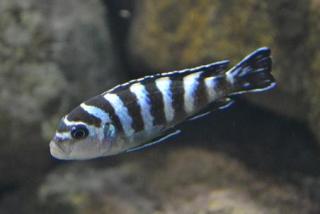
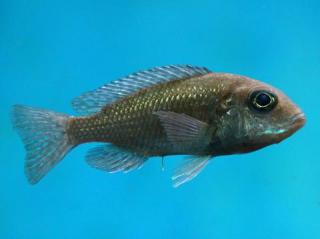
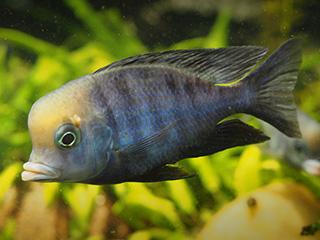
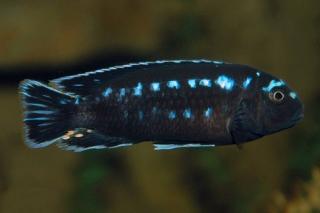
Rounding out what is a sizeable main atrium of this pavilion, visitors come to a trio of fish tanks, the two smaller tanks on the left, and the larger on the right, adjacent to the door into the building's final atrium. The two smaller tanks are roughly 1m long, 0.6m deep, and 0.8m high, while the larger tank is 4m long, 2m deep, and 2.5m high. Each of the two smaller tanks are rather lush with plant life, and respectively house schools of Ngege Oreochromis esculentus (0.0.10) and African Banded Barb Enteromius fasciolatus (0.0.20), while the larger tank boasts 11 different species which fall under the blanket term of Lake Malawi Cichlid (each specific species and their respective populations will be included alongside their images in the media roundup tomorrow preceding the final post of the pavilion).

full

Possible Look of Smaller Fish Tanks
Image Credit -> @ralph
full

Ngege
Image Credit -> @arcticwolf
Barbus%20fasciolatus.JPG

African Banded Barb
Image Source -> ZooTierListe

And with that, we conclude what is the (admittedly quite massive) main atrium of the Heart of Africa Pavilion. With just one smaller atrium to go, albeit just focused on the remaining indoor quarters and those yet-to-display female Calabar Python, we will soon be venturing back outside to complete our tour of the area and the African Continental Trail as a whole. For now, I leave you, so stay tuned and enjoy!
 
Media Roundup: Cichlids of The Rift Lakes
All images are sourced from their respective species' Zootierliste page.
All species are kept in groups of 0.0.10, totalling 110 individual fish in the tank.

035.JPG

Demason's Cichlid
Chindongo demasoni
Goldmantel-Malawibuntbarsch%201%20Koeln.JPG

Chrysonotus Cichlid or Golden-mantled Malawi Cichlid
Copadichromis chrysonotus
Beulenkopf-Maulbrueter.jpg

Humphead or Blue Dolphin Cichlid
Cyrtocara moorii
IMG_7867%20resize.jpg

Scrapermouth Mbuna
Labeotropheus trewavasae
Urlaub%20Pfalz-Saarland%20September-Oktober%202016%205382.JPG

Blue-streak Hap or Electric Yellow Cichlid
Labidochromis caeruleus
Maylandia%20aurora.JPG

Aurora Cichlid
Maylandia aurora
M-interruptus.jpg

Interruptus Cichlid or Chizumulu Bluegray Cichlid
Melanochromis interruptus
Kobalt-Zebrabuntbarsch.jpg

Cobalt Zebra or Cobalt Blue Mbuna
Metriaclima callainos
Boadzulu-Maulbrueter%201%20Dresden.JPG

Deep Water Hap
Placidochromis electra
Pseudotropheus%20crabro%20Leipzig%20Zoo%20kl.JPG

Bumblebee Cichlid
Pseudotropheus crabro
Sciaenochromis%20fryeri.JPG

Electric Blue Cichlid
Sciaenochromis fryeri
 
With the main atrium officially concluded, visitors enter the final atrium in the building, similar in size to the very first atrium in the pavilion, and serving a similar function.
To the left, visitors can look into both a 1,000 sq. meter indoor aviary and a 10 sq. meter terrarium. With the viewing into the former coming first, visitors are most often recommended to keep their eyes to the floor, rather than the trees. This stems from the fact that the aviary has a connector to a larger outdoor space which only the four avian species can access, and so are not restricted to this space unless the outdoor conditions require it. Meanwhile, plodding about on the leaf-littered floor of the space is a mixed-sex group of Home's Hingeback Tortoise Kinixys homeana (4.4). Meanwhile, when they are indoors, the four bird species flitting among the branches above the testudines' heads are flocks of Blue-bellied Roller Coracias cyanogaster (2.3), Red-crested Turaco Tauraco erythrolophus (3.7), and Bearded Barbet Lybius dubius (2.4), as well as a breeding pair of Yellow-crowned Gonolek Laniarius barbarus (1.1).
As mentioned, a 10 sq. meter terrarium stands directly adjacent to the exit of the pavilion, and directly neighbors the mixed aviary (to the right when facing the aviary). As has been previously mentioned, this space is currently blocked off, with the signage simply stating that the space cannot be viewed while the future inhabitants, being the 0.3 Calabar Python Calabaria reinhardtii, adjust to their new surroundings. Once acclimation to their habitat is successful, this atrium will be on a limited capacity while they adjust to the sights and sounds that come with the swathes of visitors.

full

Possible Look of Mixed Aviary
Image Credit -> @pachyderm pro
full

Home's Hingeback Tortoise
Image Credit -> @gentle lemur
full

Blue-bellied Roller
Image Credit -> @merlin
full

Red-crested Turaco
Image Credit -> @Astrotom3000
full

Bearded Barbet
Image Credit -> @Jakub
full

Yellow-crowned Gonolek
Image Credit -> @RatioTile

Along the opposite wall of this final atrium, visitors are given a floor-to-ceiling view into a roughly 3/4-acre indoor habitat, drawing inspirations from both Toronto and Dublin, for an icon of the African rainforest, the Western Lowland Gorilla Gorilla gorilla gorilla (4.8). With a troop made up of our silverback, six mature females, and a remaining 3.2 juvenile individuals, on any given day you will not find all 12 individuals in the same space unless they are outside. With off-display housing used primarily for quarantine but also, especially in inclement weather or during conflicts within the troops, used to ensure the indoor space isn't overcrowded, on nicer weather days these additional protocols aren't necessary. Regardless, both the on-display and off-display indoor spaces are stocked with climbing structures and other dietary and mental enrichment objects to keep these incredibly intelligent apes stimulated.
More often than not, when the troop is restricted to the indoor areas, the groups that can be viewed are either made up of the three mothers alongside the five youngsters, or the silverback and the other three females.

full

full

Possible Looks of Indoor Gorilla Habitat
Top Image -> @NNM.
Bottom Image -> @MagpieGoose

Exiting the pavilion, visitors have just four more habitats before concluding the African Continental Trail. Two of these have already been hinted to, with the right-hand side providing the first of three viewpoints into the 2.5-acre outdoor habitat for our gorillas, a space drawing from the Bronx Zoo's incredible Congo Gorilla Forest. Meanwhile, off to the left, visitors get a more shrouded view into the 2,200 sq. meter aviary which not only houses the four avian species we saw moments ago inside, but also hosts another ground-dweller, this being the Okapi Okapia johnstoni (1.2), with the two females typically on-display while the male is kept out of visitor view. The aviary itself is quite dense with foliage, and the only true views come through stalks of bamboo or the lone concealed viewing window amid the bushes, making the space more naturalistic at the slight sacrifice of animal viewing.

full

Possible Look of Gorilla Outdoor Habitat
Image Credit -> @Astrotom3000
full

Western Lowland Gorilla
Image Credit -> @USZOOfan42
full

Possible Look of Okapi Aviary
Image Credit -> @felis silvestris
full

Okapi
Image Credit -> @Max Blundell

As visitors continue deeper into the dense forest, the second viewing area into the gorilla habitat, being an elevated viewing balcony overlooking the whole space. From this perspective, visitors can also make out the third viewing area, in the mouth of a shady lowered region of the habitat, where the gorillas can often be found lazing about on hot days.
Meanwhile, the final two habitats come side by side on the opposite side of the pathway, with the first being a 1,400 sq. meter wetland aviary. With reeds shrouding the water from every angle but a dead-straight area, designated by a window replacing the mesh, visitors will most likely spot the Great Blue Turaco Corythaeola cristata (2.2) in the upper reaches of this 3m-high aviary before spotting the other two inhabitants. When finally situated in front of the window, a clear view of our Western Black-crowned Crane Balearica pavonina pavonina (2.2) comes first, before finally spotting our South African Shelduck Tadorna cana (2.6) emerging from their little nesting site, which is hidden away amongst the reeds, with a second also hidden toward the back of the aviary.
Next door to the wetland aviary is the final habitat in this area, with a 3/4-acre habitat following the shape of the visitor pathway. Separating this habitat from the path, however, is a 2m-wide moat, keeping the inhabitants away from the mesh which makes up the barrier on the front of the habitat, while solid walls anchor the mesh on the other three sides, including the 5m-long viewing window on the side furthest from where we've come. With the mesh acting more as a secondary measure of containment, a large array of climbing structures allows for the inhabiting Mandrill Mandrillus sphinx (1.5) troop to display their arboreal prowess, while the lack of a moat along the three walls allows them to come up close to the viewing window.

full

full

Top: Possible Look of Wetland Aviary
Bottom: Western Black-crowned Crane
Image Credit -> @KevinB
full

Great Blue Turaco
Image Credit -> @Nadchew_
full

South African Shelduck
Image Credit -> @merlin
full

Possible Look of Mandrill Habitat
Image Credit -> @BeardsleyZooFan
full

Mandrill
Image Credit -> @RatioTile

And with that, visitors come back around to finish the loop, and conclude the African Continental Trail, making that three trails down, and only two more to go before this tour is wrapped up.
With that in mind, I feel like giving this a more... interactive feel going forward. While those of you who do decide to get involved in the idea I have won't be directly picking species for these coming areas (the planning for the rest of the zoo is entirely done, just taking my time posting it all), but I do want to hear which species the viewers of this thread come to expect with the particular zones.
So, while there will not be another larger post tonight, I will be finalizing the updated species count and providing the numbers for the African Continental Trail and the Madagascar subzone, and then allowing you all to make heard your expectations/speculations for the first portion of the Eurasian-Oriental Trail: the Mediterranean!
For now, stay tuned, and enjoy!
 
402 total species
42 amphibians
114 birds
43 fish
47 invertebrates
80 mammals
76 reptiles
Sahara and Kalahari: 26 total species; 7 birds, 11 mammals, 8 reptiles
Highlands of North Africa: 20 total species; 9 birds, 8 mammals, 3 reptiles
Many Sides of Savanna: 51 total species; 2 amphibians, 24 birds, 1 invertebrate, 18 mammals, 6 reptiles
African Rainforest: 75 total species; 3 amphibians, 21 birds, 20 fish, 6 invertebrates, 11 mammals, 14 reptiles
AFRICAN CONTINENTAL TRAIL: 172 total species; 5 amphibians, 61 birds, 20 fish, 7 invertebrates, 48 mammals, 31 reptiles
Madagascar and the African Isles: 45 total species; 5 amphibians, 10 birds, 4 fish, 3 invertebrates, 8 mammals, 15 reptiles

Updated GRAND TOTALS
Total Species
: 619
Amphibians: 52
Birds: 185
Fish: 67
Invertebrates: 57
Mammals: 136
Reptiles: 122
 
And so it begins... our venture through what is the second and last five-section trails in the zoo, and (spoiler) the largest area by species count (with roughly half of that total being in one section). This is the Eurasian-Oriental Trail, which begins with the zoo's second smallest zone by species count (only hosting more species than the Galapagos Ecotarium). Our journey through this first zone, the Mediterranean Shores, begins outdoors, with five total outdoor spaces viewable in the leadup to the indoor area.
The outdoor region begins with a simplistic 500 sq. meter aviary replicating the shoreline ecosystems of the Mediterranean. While the region is known for being picturesque and quite warm, very few think of it as a relatively scrubby landscape. The majority of the aviary is covered by a sandy soil, larger rock formations, and low-lying shrubs and olive trees, while the remaining 100 sq. meter area is a saltwater pool, reaching depths of just under 2m as it slopes away from the sandy, reed-shrouded shoreline. Nesting along the base of the rocky outcroppings, or paddling across the pool, visitors can find our flock of Dalmatian Pelican Pelecanus crispus (5.5).
Next door, in an upscaled, 3,500 sq. meter aviary with the same general environment, visitors can view a much more diverse group of birds. While this shoreline is less obscured, it is replaced by a swathe of mud and sand, with conical nests rising up on a small raised rock shelf, out of reach of the softly rolling waves mechanically created along the surface of the 500 sq. meter, half-meter-deep pool which fronts the space. Wading across the space, or tending to any potential chicks in their notable nests, visitors can spot the highlight of the aviary, our flock of Greater Flamingo Phoenicopterus roseus (30.30). Also found wading along the shore are the zoo's small flocks of Eurasian Oystercatcher Haematopus ostralegus and Pied Avocet Recurvirostra avosetta (2.2 each). Lastly, often seen cruising along further out on the pool, our flock of Marbled Teal Marmaronetta angustirostris (3.5) tend to congregate away from the chaos of the shoreline.

full

Possible Look of Pelican Aviary
Image Credit -> @gulogulogulo
full

Dalmatian Pelican
Image Credit -> @KevinB
full

Possible Look of Shoreline Aviary
Image Credit -> @twilighter
full

Greater Flamingo
Image Credit -> @SivatheriumGuy
full

Eurasian Oystercatcher
Image Credit -> @evilmonkey239
full

Pied Avocet
Image Credit -> @Prochilodus246
full

Marbled Teal
Image Credit -> @KevinB

Heading toward the Mediterranean Aquatic Centre, the visitor path wraps around a 2,450 sq. meter habitat on both sides, ensuring that, regardless of which route around you take, you don't miss out on this habitat. The provided surface area of the space only takes into account the land area, which is on a conifer-covered island which varies in height from being 1m above the visitor pathway's height to nearly 5m above it. As such, the surrounding moat is 3m wide and also 2.5m deep, allowing for the island's inhabitants to enter the water. Unlike many primate island habitats, which this is another of, there is a 4m-high wall on the visitor side of the moat. This is because, unlike the species typically given island habitats in zoos, our troop of Barbary Macaque Macaca sylvanus (5.9) are quite strong swimmers, and so have a moated space not to remove the need for barriers, but to allow for the enrichment swimming provides them.
As you pass by the macaques, you might be asking yourself, "what is a primate doing in a Mediterranean Europe themed area?" The answer to this question is provided on signage which is identical on both sides of the path, explaining the species and its range which once extended across Europe and northern Africa, but is now restricted to the Atlas Mountains (and a small population introduced to Gibraltar).

full

Possible Look of Macaque Island
Image Credit -> @Mr Gharial
full

Barbary Macaque
Image Credit -> @Kaelio

At the entrance to the Mediterranean Aquatic Centre, visitors are presented with an interactive "Tortoise or Turtle?" sign, testing how well they can tell the difference between a tortoise and a turtle. The signs display three species, two of which are visible to either side of the entrance, and a third which we will see further down the trail. But for now, we are tasked with identifying the two species which can be seen. Can you identify them? (I don't need actual confirmation, I trust those of you who read these posts know which is which :p)

full

Mystery Species #1
Image Credit -> @Zoological Point
full

Mystery Species #2
Image Credit -> @Matt G
full

Mystery Species #3
Image Credit -> @Julio C Castro

Okay, if the guessing game isn't your style, a look to your left will reveal Mystery Species #1 as being the Mediterranean Spur-thighed Tortoise Testudo graeca graeca (3.3), visible in their 50 sq. meter home in a slice of Greece's arid landscape, complete with fruit-bearing bushes that provide dietary enrichment to our slow-moving reptiles. Opposite them, in a 200 sq. meter space replicating the beaches of the Mediterranean, is Mystery Species #2, a group of Loggerhead Sea Turtle Caretta caretta (3.5). While these individuals are rescues from American shorelines, the species can be found worldwide. These eight turtles may or may not be visible from here, as the aquatic portion of their habitat (150 of the visible 200 sq. meters) is actually a part of the larger main aquarium (to be viewed later).
*The third species is the Painted Terrapin Batagur borneoensis (viewable in the final portion of the Eurasian-Oriental Trail), and yes, the signage explains the differentiation between a terrapin and a traditional turtle.

full

Possible Look of Tortoise Habitat
Image Credit -> @SivatheriumGuy
full

Possible Look of Outdoor Sea Turtle Habitat
Image Credit -> @snowleopard

And with that, visitors (after walking around the signage) find themselves at the entrance to the Mediterranean Aquatic Centre, which leaves us at the halfway point of the first of five sections of this incredibly diverse trail. For now, I leave you, but stay tuned, and enjoy!
 
Back
Top