Semester Abroad: Pachyderm Pro Goes to Europe

I'm glad you liked Innsbruck, it is probably my favorite at Austria and imo an sometimes overlooked must see at Europe. Regarding terrariums, Austria is kind of a very lucky country. Both, the new reptile zoo at Haus der Natur Salzburg and Nockalm have a very high standard with really good terrariums. But Innsbruck is truly the cherry on the top.

@lintworm i haven't seen it by myself, but there have been some construction work at the wild boars and wisent this year. As far as i understood the wild boars have now a separate area, but can still use the wisent paddocks if they want do so. Regarding the pine vole i'm somehow confused that they couldn't fix the exhibit yet. Afaik the problems weren't that big.
 
I'm glad you liked Innsbruck, it is probably my favorite at Austria and imo an sometimes overlooked must see at Europe. Regarding terrariums, Austria is kind of a very lucky country. Both the new reptile zoo at Haus der Natur Salzburg and Nockalm have a very high standard with really good terrariums. But Innsbruck is truly the cherry on the top.
I will remember this blatant omission of WdG the next time you need a photo of my newest zoological rarity for the latest Zoofreunde photo competition...*Insert evil Frieza cackle* :D
 
Last edited:
@Batto Mea chulpa
But in my defense, I was still confused, that you labeled Welt der Gifte as a reptile house, i always thought that you see yourself more as a vivarium + museum combination :p

And second, the overall experience at Welt der Gifte outshines the single exhibits of the zoo ;)
 
Now he's trying to butter me up...;) Potius sero quam numquam. :p
I was still confused, that you labeled Welt der Gifte as a reptile house
I did not, and neither did you; I referred to your
Regarding terrariums
- which we do have quite a bunch of, and more of them are in line with Anhang 3 and 4 of the 2. Tierhaltungsverordnung than at Nockalm. ;)
 
Wow, this place looks seriously cool! It's great to see a facility so focused on Europeans species, including so many of which are scarce outside the continent. Makes you realize there'd be more than enough material for major zoos to build Alpine complexes if that were ever made the assignment, and even that it's a bit unfortunate it isn't. Of course it's fairly well-known that European species aren't kept in the United States, but I do find that a shame at times. The large aviaries and reptile exhibits are especially 'above and beyond' as is the freshwater aquarium!

Just as powerful was the semi-walkthrough ibex enclosure a bit further up the hill. I doubt the ibex actually come to the main path very often, but it was still thrilling to get so close with minimal barriers. The American mind cannot comprehend such a concept!
I'm having trouble comprehending this exhibit now - so cool! To be fair, the average American mind can probably hardly comprehend an ibex exhibit at all these days, unfortunately.

Worth noting that this marked the first zoo in Europe that I visited with others. It seemed like a good choice since it isn't massive and has a specialty that makes it more alluring to non-zoo/animal nerds. They had a pretty good time as far as I can tell, especially enjoying the bear exhibit and the coldwater aquarium. However, take a wild guess what exhibit caught their attention the most… the domestics farm area of course. After visiting so many zoological establishments in search of the most innovative exhibits and rare species, it’s easy to forget that simply making that animal-human connection is the main goal. They had so much fun feeding cows and petting sheep which made it a highlight for me in return. The farm section is actually quite nice on its own with a nice variety of cool Alpine breeds.
I know exactly what you mean. A good friend of mine who is in graduate school for biology and has visited San Diego Zoo annually was visiting earlier this year and we did Brookfield - she was really excited to pet the goats! It was infectious and made me enjoy them more as well.
 
I know exactly what you mean. A good friend of mine who is in graduate school for biology and has visited San Diego Zoo annually was visiting earlier this year and we did Brookfield - she was really excited to pet the goats! It was infectious and made me enjoy them more as well.

Honestly, I don't understand that at all. Someone with young children, okay, but who studied biology, possibly to dedicate her life to the protection of wild animals, gets a thrill from feeding a tame goat, it is beyond my understanding.
 
Honestly, I don't understand that at all. Someone with young children, okay, but who studied biology, possibly to dedicate her life to the protection of wild animals, gets a thrill from feeding a tame goat, it is beyond my understanding.
Having spent my life with all creatures great and small, I do get it.
"Teach us delight in simple things, and mirth that has no bitter springs." Rudyard Kipling
 
Honestly, I don't understand that at all. Someone with young children, okay, but who studied biology, possibly to dedicate her life to the protection of wild animals, gets a thrill from feeding a tame goat, it is beyond my understanding.
I could not resist booping a domestic rabbit's nose in Jihlava today. Just because an animal is domestic, not endangered or whatever, does not make it less valuable. Actually, I think she's lucky to be able to enjoy this kind of stuff too.
Sometimes it feels like "normal" people overlook species like Visayan warty pigs and pass them, saying they're just some pigs. But honestly, many zoochatters are doing the same thing, just with different animals :D
 
Last edited:
I could not resist booping a domestic rabbit's nose in Jihlava today. Just because an animal is domestic, not endangered or whatever, does not make it less valuable. Actually, I think she's lucky to be able to enjoy this kind of stuff too.
Sometimes it feels like "normal" people overlook species like Visayan warty pigs and pass them, saying they're just some pigs. But honestly, many zoochatters are doing the same thing, just with different animals :D

Agreed. But you are making something out of it that I did not write.
 
Zagreb Zoo

Now here’s a zoo of which I knew extraordinarily little about prior to visiting. I made a rather spontaneous overnight trip to Croatia’s capital this last weekend and while the coastal charms of Dubrovnik or Zadar were more alluring, they lacked any significant zoological attractions and Zagreb was far too easy (and cheap) to reach for me to pass up. I’ll spare you the suspense when I tell you this one was a very pleasant surprise! At just 17 acres it’s the smallest proper zoo I’ve visited thus far in Europe and doesn't have much of a reputation in the eyes of non-Europeans. Even then it isn’t brought up much to the point where I ended up literally doubling the amount of photos in the zoo’s gallery. It was nice to go into a zoo pretty much blind for a change. All I knew about Zagreb was that it had a large collection of native snakes and a few key rarities that are unheard of anywhere else.

And indeed that collection of snakes is outstanding! The Snakes of Croatia exhibit is home to an almost complete lineup of native snakes all kept in spacious and well structured terraria. Maybe it was just luck, but for whatever reason nearly every species was both visible and extremely showy. Many of them were new to me and impressive even as someone who doesn't linger at most reptile houses. Those nose-horned vipers were awesome! If there’s one category where American zoos consistently outdo their European counterparts, it’s reptile houses, particularly venomous snakes. Zagreb is the first one I’ve seen that can compete with U.S. collections in sheer volume of species. Naturally this extends beyond snakes and there is a more traditional terrarium on the first floor, though it is closed for renovations at the moment.

At the center of this hall is a Zagreb speciality – the olm. If you’re like me and didn't know what these things were until a week ago, it’s a strange little amphibious creature that’s only found in caves around the Balkan Peninsula. I was warned a few days earlier that they may be off-show due to earthquake damage sustained to their exhibit. Thankfully repairs have finished and it was exciting to see this truly bizarre animal, though of course it wasn't doing much of anything just like all salamanders. A real thing is made out of them here with tons of educational material which is easy to appreciate. Sadly Zagreb’s other non-serpant rarity in this hall – the Balkan snow vole – did not make an appearance in its awkwardly located exhibit by the stairwell.

full

Snake of Croatia Overview

full

Active Adder

full

Olm Exhibit

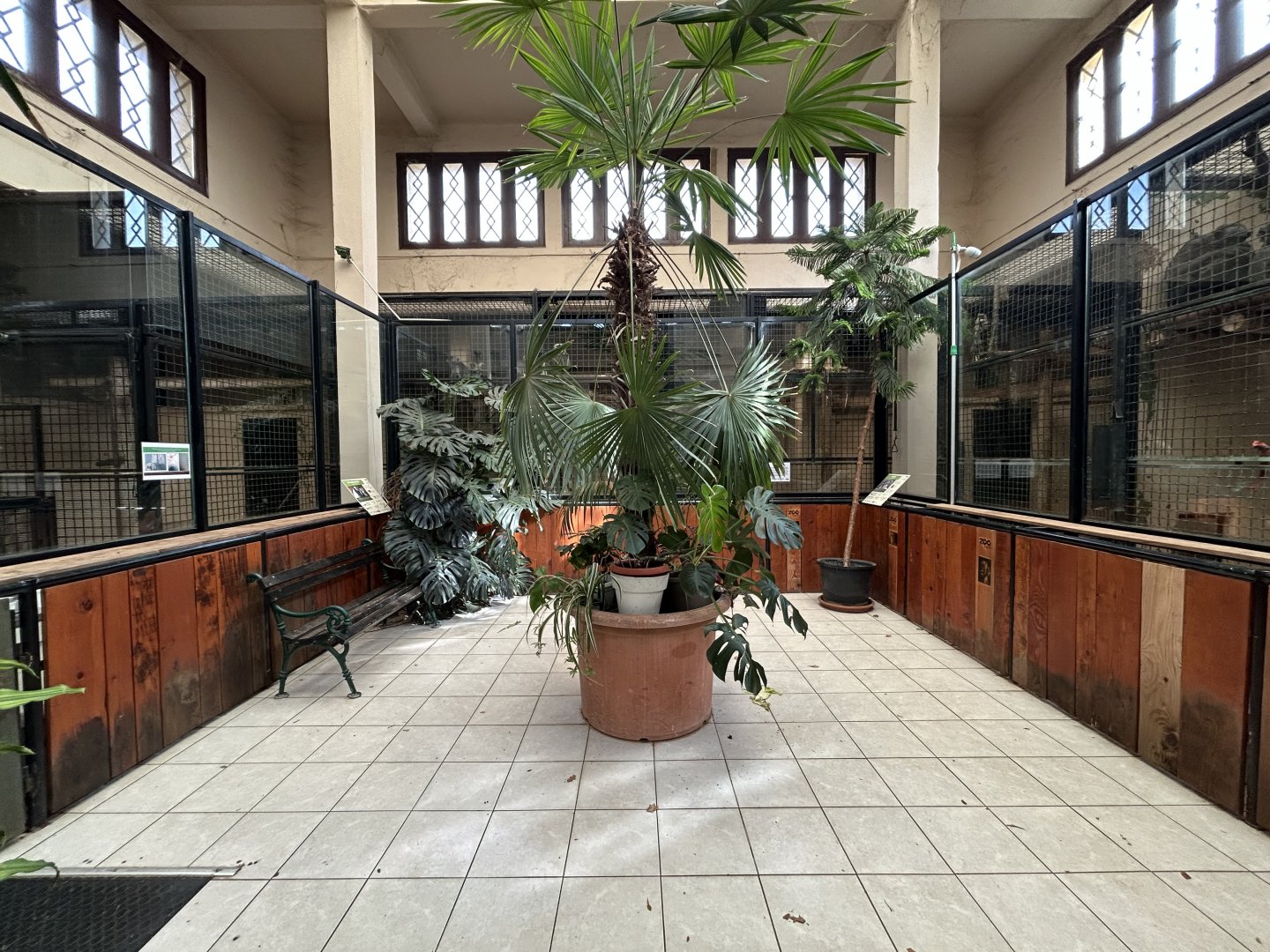
The extensive tropical house is home to a bulk of the herp collection and it’s quite a sight to behold. At first I was confused as to where everything was as the layout is kinda strange. The main hall has a cuban crocodile exhibit at its nucleus and various large displays around the perimeter, while pygmy hippos have their own wing of the building accessible nextdoor. There were a fair amount of herps to see between those two rooms, but based on the hype I was confused as to where the rest of the collection was. Turns out it was all in a third room that has an easy to miss entrance within that main hall and once I found it everything started to click. It's basically a long hall with mulch flooring that lined with dozens and dozens of terrariums on either side. I lost count of how many individual exhibits are just within this part of the building, but it has to be comparable to some modern reptile houses. Really impressive stuff!

full

Tropics House (Main Hall)

full

Tropics House (Hall of Vivaria)

Outdoors the bulk of the zoo consists of simple, no frills outdoor enclosures for smaller to medium sized species. My favorite was the capuchin/coati enclosure, a wonderful combination of species that play off of one another nicely in a well planted space. Other highlights included a spacious gibbon/outdoor exhibit, a towering walkthrough aviary for African water birds of varying sizes, and a pretty little Sichuan area with red pandas and red-billed blue magpies in a creatively designed aviary. Also worth mentioning is Microworld, a small modern building dedicated to showcasing tiny rodents, herps and invertebrates with superb educational material. More zoos with space constraints would be wise to copy exhibits like this.

full

Brown Capuchin & Coati Exhibit

full

African Water Bird Aviary

full

Microworld


There’s only about two handfuls of larger mammal species to be found here. Most of them are in perfectly good exhibits, but the showstopper is the much flashier lion exhibit. Contrasting the rest of the zoo’s relatively straightforward enclosure designs, this exhibit is filled with mockrock and thematic elements. It’s a nice size and very dynamic for both animals and visitors. The two lionesses spent most of their time in an elevated cave at the back of the yard, complete with prehistoric cave drawings depicting sabertooth cats. What’s neat is that there’s a proper bedroom below that cave along with a few small mammal and reptile enclosures for good measure. Hopefully this a good indication of what the future may hold for Zagreb even if some may prefer the more simplistic approach.

full

Lion Exhibit

full

Lioness (am I the only one who finds this photo amusing :p)

The zoo's location within a large park (where I had a pleasant stroll afterwards) isn't a unique attribute in itself, but how it’s integrated within the park is fascinating. Instead of a large fence, much of the zoo is surrounded by a water feature that separates it from the rest of the park. Not only does this make the zoo feel much more expansive as a result, but the water feature is utilized in several exhibits including the beavers, cranes, pelicans, even the bears. It intersects the zoo in a way that creates several separate "islands" connected by bridges and the execution is brilliant. Barriers are so unobtrusive that I'm surprised no bold fool has tried to swim across, but there probably are safe guards in place to prevent that and a soaking wet visitor would certainly draw suspicion quickly. I recommend checking out google earth to get a better idea of how well integrated the water feature is as it really did impress me.

full

European Beaver Exhibit

full

Pelican Exhibit

Earlier this year the zoo celebrated its centennial and history is very much alive throughout the grounds. Not very many large historic houses like Vienna or Budapest, but instead more subtle relics: old rockwork within the vulture aviary, the lion bridge crossing over the water feature, an old castle structure that once held carnivores, Egyptian pharaoh statues across from the row of hoofstock yards, etc. Less subdued is the eye-catching white rockwork used as a backdrop to an otherwise highly modern brown bear yard. This used to be a series of bear grottos that have been merged together into a smallish yet very nice enclosure.

full

Brown Bear Exhibit

full

Griffon Vulture & Waldrapp Ibis Aviary


full

Lion Bridge

The most beautiful historic building however left me immensely conflicted. The primate house has excellent character and was impressive from a distance, yet the enclosures themselves most certainly did not impress. For the monkeys it’s mostly fine though nothing special, but for the chimps it’s way too small. Indoors the space available is even tighter and I was honestly rather uncomfortable watching the chimps looking down on visitors from their tiny indoor quarters. This and the neighboring sea lion pool were easily the weakest points of the zoo. Not to play armchair zoo director, but moving out the chimps and utilizing both spaces to create a world-class monkey complex would be my utmost priority. There’s so much potential within this building which as a piece of architecture that could be adapted to modern use.

full

Primate House

full

California Sea Lion Exhibit

This is a zoo that feels like it’d be easy to recreate in Zoo Tycoon 2. Nearly all of the space is used for enclosures minus a large restaurant and gift shop and many of these enclosures are the definition of simple but effective. While it’ll never have the space to compete with the giants of the European zoo world, it does almost everything very well and the setting is beautiful, just one of the places that felt good to be at. The grounds were clean, well maintained, educational material was of a high quality, so on and so forth. As far as which U.S. zoo it reminded me of most… maybe Lincoln Park? Naturally it’s lacking the grandeur, but the zoo is also located in a lovely historic park within the city. And one last detail that warrants mention; the zoo named its pathways after prominent conservationists like Charles Darwin, Gerald Durrell, Jane Goodall, Diane Fossey and so forth. Very nice touch to this very underrated collection.
 
Indoors the space available is even tighter and I was honestly rather uncomfortable watching the chimps looking down on visitors from their tiny indoor quarters.

I've never known the interior of the house to be open to the public, so I'm rather surprised to read this portion of your review! :eek: although not at all surprised by what you observed within.
 
  • Like
Reactions: JVM
If there’s one category where American zoos consistently outdo their European counterparts, it’s reptile houses, particularly venomous snakes.
Eh; in terms of species quantity maybe, but not in regard to enclosure sizes or the species-adequate interior decoration of the tanks. Which is generally a common issue in reptile enclosures in zoos, tbh.
 
According to Zootierliste, Zagreb is one of 4 collections with an olm (Proteus anguinus),
one of 3 collections with a Balkan snow vole (Dinaromys bogdanovi) and a black tailed garden dormouse (Eliomys melanurus)
and the only collection with a western broad-toothed field mouse (Apodemus epimelas).
 
At just 17 acres it’s the smallest proper zoo I’ve visited thus far in Europe and doesn't have much of a reputation in the eyes of non-Europeans. Even then it isn’t brought up much to the point where I ended up literally doubling the amount of photos in the zoo’s gallery. It was nice to go into a zoo pretty much blind for a change. All I knew about Zagreb was that it had a large collection of native snakes and a few key rarities that are unheard of anywhere else.
It's always great to go in somewhere kind of blind, and I find a lot of zoo trips for me, the sense of discovery can really positively enhance the experience... and it of course makes plenty of sense how even a pretty solid smaller facility could get overlooked on ZooChat. ;)

At the center of this hall is a Zagreb speciality – the olm. If you’re like me and didn't know what these things were until a week ago, it’s a strange little amphibious creature that’s only found in caves around the Balkan Peninsula. I was warned a few days earlier that they may be off-show due to earthquake damage sustained to their exhibit. Thankfully repairs have finished and it was exciting to see this truly bizarre animal, though of course it wasn't doing much of anything just like all salamanders. A real thing is made out of them here with tons of educational material which is easy to appreciate. Sadly Zagreb’s other non-serpant rarity in this hall – the Balkan snow vole – did not make an appearance in its awkwardly located exhibit by the stairwell.
Glad you managed to accomplish seeing the olm and always cool to see a rarity given some appropriate focus rather than humbly tucked away... as seems to be the case with the vole!

Lioness (am I the only one who finds this photo amusing :p)
Nope! ;)

The zoo's location within a large park (where I had a pleasant stroll afterwards) isn't a unique attribute in itself, but how it’s integrated within the park is fascinating. Instead of a large fence, much of the zoo is surrounded by a water feature that separates it from the rest of the park. Not only does this make the zoo feel much more expansive as a result, but the water feature is utilized in several exhibits including the beavers, cranes, pelicans, even the bears.
This is very cool and a very different approach. Does the water feature enable some of these animals to be viewed from the park without entering the zoo? Seems like that would be a plus. I remember being charmed to spot one of London Zoo's giraffes while passing Regent Park by car.

The most beautiful historic building however left me immensely conflicted. The primate house has excellent character and was impressive from a distance, yet the enclosures themselves most certainly did not impress. For the monkeys it’s mostly fine though nothing special, but for the chimps it’s way too small. Indoors the space available is even tighter and I was honestly rather uncomfortable watching the chimps looking down on visitors from their tiny indoor quarters.
I'm sure it's not that--
Oh. Oh wow. I can see what you mean.

This is a zoo that feels like it’d be easy to recreate in Zoo Tycoon 2.
Maybe, but reptile and tropic houses can be pretty hard to build there, even with the appropriate mods, and using the "elevated paths as roofs" method can get tedious with all of the pillars to be deleted afterward... :p

As far as which U.S. zoo it reminded me of most… maybe Lincoln Park? Naturally it’s lacking the grandeur, but the zoo is also located in a lovely historic park within the city.
I thought you might be overselling the point based on this fragment, but after thinking about it -- one of Lincoln Park's big highlights is their lion enclosure, and they also have bears and pygmy hippos among their few megafauna, with a reptile building that also doubles as a tropics house, so there's some more similarity in character there, ;)
 
Apologies for letting this thread go silent for a few weeks. Recently the “study” has outweighed the “abroad” and combined with some non-zoo travels I’ve had little time to write. Today marks the halfway point of this trip and have a backlog of reports to share here from the last few weeks. The show goes on!

Tierpark Hellabrunn

At long last I’ve made it to the undisputed zoo capital of Europe; Germany! My original plans had been to take on Munich in the early weeks of my European stay by attending Oktoberfest and sneaking off to the zoo at the right moment, though logistically and financially it just didn't pan out. Ultimately I’m glad that didn't happen as it wouldn't have allowed me to give the zoo my full attention or fully appreciate the beer drinking festivities. Holding off allowed me to take things at my own pace and add on not one, but two other collections of drastically different calibers. The only real downside is the inevitable changing of the seasons. We were treated to some gorgeous sunny weather in Vienna the week leading up this one, but this Bavarian weekend was damp and dreary right to the very end. Though that seldom impacted my enjoyment of either of the major collections

Tierpark Hellabrunn is a collection that could be described in one word: consistent. Nowhere does it attempt to reinvent the wheel or come up with something world-changing; just consistently good enclosures for a wide variety of popular species. Nothing is any worse than average and many things are great. My visit immediately got off to an exciting start thanks to an assortment of active apes between the zoo's various primate houses – no less than four individual buildings with connected outdoor enclosures. The gorillas and chimps have the best of it with spacious indoor enclosures in the jungle house complete with live plants. Great stuff! But how come the African apes are treated to naturalistic dayrooms with soft substrate, while the orangutans and several other primates have sterile indoor enclosures despite being more recent developments? Some even have the iconic German bathroom tile walls synonymous with Berlin.

Regardless, this whole section was probably my personal highlight. A specific female gorilla was a blast to watch; jumping from the top of a tall stump and walking on her hind legs with fistfuls of lettuce in both hands. Out of nowhere the chimps started going ape which prompted the gorillas to all take off in opposite directions. One of the silverbacks ended up outdoors and ended up charging the glass. And that’s not all: you've heard of the barrel of monkeys, but how about the barrel of orangs? One of the red apes jumped into a barrel before his buddy came through to knock it over. I was really lucky to see some highly impressive behavior from the zoo’s half-dozen orangutans. When you get them going apes may be my favorite animals to watch in zoos. Combined with a couple lifeticks in the form of drill and mustached guenon, this was a thrilling first impression for Munich.

full

Indoor Chimpansee Exhibit (1 of 3)

full

Indoor Orangutan Exhibit


full

Gorilla Snack Break

full

Inter-species Snack Break


Excitement continued with the elephants. The impressive bull was banging on the door seemingly eager to get inside while a young individual romped around the other yard with the cows. Though lacking the artistry of Budapest’s grand elephant house, husbandry-wise this one is a significant step-up. The dayrooms are spacious for a century old building, complete with large pools, and the domed roof allows in plenty of natural light. This is the point however where I started to realize the standards for elephants in this part of Europe seems to be lower than others. Of these six enclosures I’ve seen only one has been truly great while half have been below average. Munich manages to clinch the upper half of elephant exhibits I’ve seen thus far, but the outdoor yards are still outshined by many others.

full

Asian Elephant Cow Exhibit

full

Elephant House

Speaking of species getting the short end of the stick: polar bears. Initially I was underwhelmed by a narrow, almost entirely concrete enclosure… until I kept walking and discovered the larger grassy hillside enclosure with three bears meandering around. Nevermind! Rarely am I impressed by polar bear exhibits so this was a really nice surprise. Nothing revolutionary, but still pretty dang good all things considered. The little complex for arctic foxes and snowy owls nearby was also lovely and deserves mention.

full

Polar Bear Exhibit (1 of 2)

Munich’s defining characteristic is the utilization of water moats as barriers, a concept they apparently pioneered and is a fitting theme for this simple, clean, no frills zoo experience. It makes the park feel like one interconnected environment similar to how I described Zagreb. The sprawling mhorr gazelle paddock stands out as the most impressive of the bunch even if the herd decided only to hang out at the very back of the yard. The rectangular banteng yard was another personal favorite and the large ibex exhibit was similarly sublime.

full

Mhorr Gazelle Exhibit

full

Persian Fallow Deer Exhibit

full

Javan Banteng Exhibit


Something I’ve noticed not only at Hellabrunn, but at many of the European collections I’ve covered, is the utilization of modern architecture in favor of cultural thematics. Munich’s wolf enclosure, for example, doesn't have your typical lodge themed viewing building, but instead a sleek wooden shelter with views through harp-wire. It creates the atmosphere of a museum-zoo instead of a theme park-zoo. The most prominent example at Munich would be the excellent giraffe house with its light and airy interior. Many zoos in the U.S. could follow this example as it really doesn't create a far more calming and professional atmosphere. Not every piece of architecture here is a masterpiece though -- the rhino house is one of the most alien-looking zoo houses I'll ever see and didn't win me over.

full

Giraffe House

full

Wolf Viewing Shelter


Admittedly the cold was starting to wear me down during the second half of my visit and combined with the fact that many of the exhibits started to feel a little samey, I moved at a quicker pace than beforehand, so I’ll pick up the pace here as well and list some remaining highlights: Excellent lion enclosure that felt like a super-sized version of Zagreb’s. Gorgeous hilly enclosure for chamois. The large walkthrough aviary was closed, which is a shame because the structure looks truly impressive. I struck out on all of the inhabitants of the mouse house but loved the concept and execution. And lastly, one of the tigers appeared for five seconds, aura farmed long enough for me snag a cool photo, and disappeared. For a zoo of this size and popularity it feels like there should be more to discuss, but writing this one up has been more difficult than it should be and perhaps it has to do with the zoo itself.

full

Lion Exhibit

full

Mouse House

full

Chamois

full

Amur Tiger


Munich is exactly what the average person expects when they visit a zoo. If I had to recommend any one zoo to a family who simply wants to see popular animals in attractive spaces and nothing more, it would be my top choice. It’s no surprise that this is one of the most popular zoos in the country when it comes to annual attendance. It does everything pretty well, yet doesn't excel in any one category. Detroit came to mind when considering the largely homogeneous series of (mostly hoofstock) enclosures at each respective zoo. At the same time though Detroit has several genuine knockouts even by international standards. Munich simply doesn't and based on their new master plan it will likely remain that way for the foreseeable future. Joe public won’t care, but as a zoo enthusiast who seeks out unique features between collections, nothing left me in shock and awe or provided a new found appreciation for a given species. It’s a zoo that’s best not defined by one specific area, rather as a complete whole – a highly pleasant and satisfying whole must I reiterate.
 
I really enjoyed your review of Hellabrunn. When I first visited Hellabrunn, at the start of my year-long stay in Munich, I was underwhelmed because of the small size of the reptile area of the aquarium, the lack of a proper bird house for tropical birds, and the god-awful rhinoceros house. As the year passed by I have grown to appreciate and be thankful for having Hellabrunn as my local zoo (especially after I returned to Turkey T-T). I realized that having an average zoo as a local zoo is better than what I was subjected to during my childhood, even if it doesn’t have its own iteration “World of Birds” or “Grzimekhaus”.

The gorillas and chimps have the best of it with spacious indoor enclosures in the jungle house complete with live plants.
Are there only gorillas and chimpanzees left in terms of primates in the jungle house? Before they were moved to red-capped mangabey enclosure, they used to live in the enclosure across the black and rufous elephant shrews along with rock hyraxes. Was that enclosure empty on your visit?


full

Javan Banteng Exhibit

When I first saw this enclosure I took it as just another moated ungulate enclosure. But on a summer day I was able to notice that the rhinoceros enclosure and the banteng enclosure were aligned to each other. It almost looked like the rhinoceros was standing right behind the herd of cattle. I am thankful that I was able to experience that before the future inevitable conversion of the rhinoceros house to a South America enclosure.
 
I really enjoyed your review of Hellabrunn. When I first visited Hellabrunn, at the start of my year-long stay in Munich, I was underwhelmed because of the small size of the reptile area of the aquarium, the lack of a proper bird house for tropical birds, and the god-awful rhinoceros house. As the year passed by I have grown to appreciate and be thankful for having Hellabrunn as my local zoo (especially after I returned to Turkey T-T). I realized that having an average zoo as a local zoo is better than what I was subjected to during my childhood, even if it doesn’t have its own iteration “World of Birds” or “Grzimekhaus”.
Munich feels like a good local zoo. There may not be any particular standouts in the exhibitry department, but taken holistically it's among the highest quality zoos out there without any real dodgy areas. Popping in for a couple hours every month to just hang out and go for an aimless stroll sounds lovely. You're right that the rhino house is quite odd though and the indoor space is among the very smallest I've seen personally. Hopefully the conversion into a South America pavilion happens earlier on in the master plan.
Are there only gorillas and chimpanzees left in terms of primates in the jungle house? Before they were moved to red-capped mangabey enclosure, they used to live in the enclosure across the black and rufous elephant shrews along with rock hyraxes. Was that enclosure empty on your visit?
Yes, just the apes. That enclosure at the end is now a third chimpanzee dayroom.
 
Tiergarten Nuremberg

Whereas Munich started off strong and remained largely consistent throughout, my visit to Nuremberg the following day went the exact opposite direction. Things got off to an inconvenient start that preceded a series of unfortunate events. You see, several years ago I started collecting magnets from every new zoo I visit, a way to commemorate each new addition to my life list. My goal is always to grab one that depicts an animal that has significance to the given zoo when available (red panda at Knoxville, olm at Zagreb, etc) and when my eyes gravitated towards the yellow-throated marten magnet it was an easy pick. That’s when I learned none of the gift shops took card and with no cash on me I had to settle for the lower quality offerings in the main restaurant. I still got a magnet so that in itself was easy enough to get over, but that misfortune ended up being dramatic foreshadowing for a much greater disappointment later on…

Not only did I not get my marten magnet; I didn't get the marten. Turns out the zoo literally just sent their lone individual to another facility for breeding purposes, like no later than several weeks prior. This is/was surely the greatest marten enclosure in all of Europe and with a smaller separation enclosure next door, I’m baffled as to why another marten wasn't just moved to Nuremberg instead of it being the other way around. I’ve seen enough zoos to where I’m never too bummed when a certain species or exhibit isn't visible. I’d be lying if I said this one didn't sting considering the notoriety of this particular enclosure.

Admittedly I picked a slightly unfortunate time to visit Nuremberg in general. The giraffe house is being renovated and the dolphin lagoon is undergoing maintenance work, so I had to settle watching the dolphins in the much older, smaller, less interesting stadium building. The famed Mediterranean mixed-species enclosure was out of commission with all of the inhabitants in hibernation. Plus a bulk of the bird collection was off-show due to bird flu concerns. Fair enough, but the policy was applied inconsistently. Emus and pelicans were still out in their open-topped enclosures, while the condors and owls were on-show in their aviaries. The walkthrough ibis aviary was open to visitors, but the gorgeous bearded vulture (and company) aviary was closed with all of the residents off-display… What's the logic there?

full

Yellow-throated Marten-less Exhibit, now Eurasian Lynx

full

Bearded Vulture (and others) Aviary

full

Mediterraneaum (6 species: ground squirrels, lizards, turtles, etc)

So while several major highlights weren't seen at their best during this visit, thankfully it wasn’t a bust, far from it actually. Because Nuremberg just has too many highlights for a few closed ones to dampen my spirit.

The Desert House was my most anticipated part of the zoo and immediately lived up to the hype. For those unfamiliar, this is an old hippo house that’s been transformed into a Saharan desert themed walkthrough with dung beetles as the stars. Though there were only a handful of beetles out and about so the fat sand rats ended up being the highlight. It’s amazing how well habituated they are to humans. I was crouching down to look into a burrow, then one jumped out and scurried right between my legs. It’s pretty remarkable that nobody's accidentally stepped on considering their boldness but it was absolutely delightful. The ornate mastigures and eye-dap lizards were busy huddled together on the rocks, once again close enough to touch, while a variety of small finches danced around the building This house encourages real exploration and makes it immensely satisfying to find each inhabitant. It’s a reminder of why exhibitry is so much more important in my eyes than collection. If these same species were in traditional small mammal/reptile house glass boxes I probably would have glossed over them entirely. Combining them all together in a “free-roaming” room creates a genuinely fun exhibit where several repeat visits were made. The late great Bill Conway would be proud...

full

Desert House Overview

full

Fat Sand Rat

full

Ornate Mastigure


With the dolphins stuck indoors, it was the adjacent marine mammal attraction that received all of my attention. The manatee house first felt like a better than usual butterfly house, complete with smaller birds and some springily active bats in an attractive setting. Then you look into the canals and the manatees emerge from overgrowth in spectacular fashion. At first the space looked a bit small -- though nothing compared to the absurdly small former accommodation in the tapir house -- until I found the underwater viewing pavilion which reveals a much better impression. It was somewhat amusing that many visitors ignored the manatees entirely and instead chose to gaze into the empty dolphin enclosure for some reason, more interested in the crystal clear blue water.

full

Manatee House

full

Blue Saloon (Underwater Viewing for the Marine Mammals)

Before the more recent investments into smaller things, hoofstock were the park's original bread and butter. Like Munich much of the grounds are filled with spacious ungulate paddocks of an immensely high quality. Across the path from the desert house are a pair of tastefully themed yards for addax and a rowdy herd of Somali wild ass. The equids were chasing each other around and their vocalizations echoed through the grounds. In that same area is a massive and gorgeous enclosure for Dybowski's sika deer that might just be my favorite deer exhibit of all time. Can't say why exactly, it had a real je ne sais quoi about it, but it also happened to have a large herd of active animals which never hurts. Watching animals of any variety sprint through their yard at full speed is always satisfying.

full

Addax Exhibit

full

Dybowski's Sika Deer Exhibit

Other highlights in the ungulate department included the gorgeous sandstone ibex mountain, a cape buffalo and eland attempting to spar between the iron fence, and an amazingly well structured enclosure for mishmi takin and bharial. There was an adorable warty piglet munching on some grub with its parents right next to a full grown rhino. Observing this tiny little piglet completely unbothered next to a creature 100 times its size was a sight to behold. While they haven't been highlighted in more recent projects, Nuremberg still excels in this category and is one of if not the best hoofstock zoo I've seen in Europe, only rivaled by Prague. Munich's hoofstock yards are lovely, but Nuremberg's are much less uniform and feel individually tailored to their inhabitants' needs. The whole zoo feels like a walk through a forest preserve with these kinds of enclosures built into the forest. Pretty sure I actually missed a few yards as a result of being tucked so deep into the landscape.

full

Alpine Ibex Exhibit

full

Mishmi Takin and Bharial Exhibit

full

Cape buffalo and Common Eland post-sparring session

The gorilla house was a weird one. The main yard is fine by itself, even if the viewing is highly awkward, but there's also a series of small cages behind the building that might be out-of-use? Not sure but they certainly didn't look appropriate for great apes. Beyond the gorillas themselves this house also features a little bit of this and a little bit of that with an unfocused assortment of gibbons, macaws, fish, and amphibians in some not particularly notable exhibits. Certainly not the most inspired part of the grounds, though this muddled lineup did include the bizarrely cool Lake Patzcuaro salamander which was a new one.

full

Gorilla House

full

Lake Patzcuaro Salamander

To conclude, I want to circle back to one of the zoo's greatest strengths. Large carnivores are mostly well off (lion, tiger, polar bear) all in enclosures that make use of the signature sandstone cliffs. Super cool vistas that enhance the scenery greatly. I finally got to see an active maned wolf which was long overdue and the aquapark felt like a better version of Munich's similar exhibit complex. However, it's small carnivores that win out the biggest here. I already harped on the famous former marten/current lynx exhibit and won't whine about that swap any longer, as it's only one of about a half-dozen exceptional enclosures that continuously knocked my socks off. Small cats do exceptionally well with a massive hillside lynx enclosure and similarly spacious fishing cat exhibit near the large felines, apparently the largest in Europe. Although they weren't visible, striped polecats have a pair of sublime yards attached to the desert house that I adored. Near the entrance is a massive, hugely impressive meerkat/yellow mongoose exhibit that wowed me literally right out the gate. Once again, exhibitry > collection any day of the week. Take it to the bank!

full

Lion Exhibit

full

Eurasian Lynx Exhibit

full

Meerkat and Yellow Mongoose Exhibit

full

Maned Wolf

The fact that I enjoyed this zoo so much despite it not being in prime condition speaks volumes to just how good it is. While the fall weather didn't play to my advantage species-wise, it did make for a gorgeous setting, one so vast that for long stretches of time it felt like I had the place to myself. Mammals and large birds are done so very well, but ectotherms were noticeably lacking. I nearly missed the tiny reptile (plus mongoose/hornbill) building near the entrance and only ran through it just as it was closing, but there couldn't have been more than a dozen species in there and a zoo of this stature deserves better. I’m not yet set on where Nuremberg will place when I rank all of the (traditional) zoos at this thread's end, but no matter where it’ll land in my final ranking, it currently ranks at #1 when it comes to places I’m eager to revisit one day. Hopefully it’ll be a day where martens are once again running through their spacious enclosure, dolphins are swimming with sea lions in their outdoor pools, and bearded vultures are flying through their superb walkthrough aviary.
 
Nürnberg zoo and its uniqueness really does make up for the fact that Bavaria is not a region chock full of medium to large zoos. It does deserve to be called the best zoo in Bavaria.

Emus and pelicans were still out in their open-topped enclosures, while the condors and owls were on-show in their aviaries. The walkthrough ibis aviary was open to visitors, but the gorgeous bearded vulture (and company) aviary was closed with all of the residents off-display… What's the logic there?
I assume that the zoo doesn’t want to compromise the breeding and rewilding plans for the bearded vultures, which I assume isn’t a big deal for birds that are kept and bred for captivity, even the rare ones.


The gorilla house was a weird one. The main yard is fine by itself, even if the viewing is highly awkward, but there's also a series of small cages behind the building that might be out-of-use? Not sure but they certainly didn't look appropriate for great apes. Beyond the gorillas themselves this house also features a little bit of this and a little bit of that with an unfocused assortment of gibbons, macaws, fish, and amphibians in some not particularly notable exhibits. Certainly not the most inspired part of the grounds, though this muddled lineup did include the bizarrely cool Lake Patzcuaro salamander which was a new one.
I find the gorilla yard confusing because when I went to Nürnberg last year I saw Barbary macaques in the gorilla yard instead of the big apes themselves. I assume the simians get shifted into the gorilla house instead of being mixed together. On the other hand I loved the awkward shape of the gorilla yard because you can actually see part of the gorilla enclosure by the baboon enclosure (which is how I noticed the macaques)
 
Vogelpark Olching

Now that the famed Bavarian duo has been checked off, I’ve already visited every major collection within five hours of Vienna by train. Now it was time for a not-so major one. In the town of Olching on the outskirts of Munich lies this tiny specialist collection only open on weekends from April to November. I wavering on if it was worth visiting, but ultimately made the trip over after sufficiently exploring Munich’s old town. Now I’ve checked an obscure German bird park off my life list – a niche variety of zoo, but a notable one nonetheless. It was a little confusing to actually find the entrance to the place, which is down a rather off-beat gravel path past a few smaller aviaries before the main entry area. Once again moving around cashless came back to haunt me when the man at the register told me they didn't take card. No matter, it was only a 10 minute jog to the nearest ATM and gave me a nice impression of this pleasant little town. I’ll rattle off my thoughts briefly as there isn't too much to dwell on.

Nearly all of the park consists of basic, functional wood-wire aviaries. Approximately 100 species are on-show between them. Shortly before the main entrance is an excellent water bird aviary which features a striking flock of common eiders among others. One of those species that really grabs ones attention by themselves. Throughout the park there were other highlights including my first proper look at a Himalayan monal, a variety of interesting raptors I've never seen before, a lovely aviary for Southeast Asian birds, and even New Zealand zoos don’t have a flock of kea as large as Olching. There are a few large birds as well: emu, white stork, white pelican… your typical lineup. Some cranes or another stork would be nice.

And that’s pretty much it. Naturally there isn't a ton more to say and 45 minutes was more than enough. It was time well spent though and I’d recommend it to any in the area anyway. I’m sure someone who has a more specialized interest in birds can better point out any notable rarities and I recognize this isn't the most detailed overview. When it comes to birds larger ones are of greatest interest to me and so there are things I most likely didn't appreciate to the fullest. We shall get to Walsrode one day, but Olching will scratch that avian itch for now.

full

General Overview

full

Water Bird Aviary

full

Raptor Aviaires

full

Himalayan Monal Aviary

full

White Stork Exhibit

full

Striated Caracara
 
Back
Top