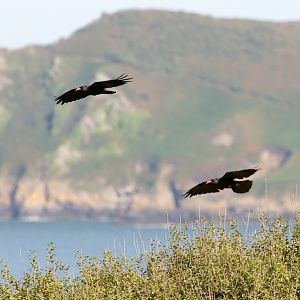
I don't know if anyone on the forum is a statistician with a keen interest in birds, but I have a feeling that unusual birds suffer very high rates of predation. On the one hand, a hunter's eye is drawn to the unusual; on the other, a bird unfamiliar with its surroundings is liable to make mistakes.
I don't know if anyone on the forum is a statistician with a keen interest in birds, but I have a feeling that unusual birds suffer very high rates of predation. On the one hand, a hunter's eye is drawn to the unusual; on the other, a bird unfamiliar with its surroundings is liable to make mistakes.
The people in charge of the release (Dr. H. Glyn Young for instance) are truly respected scientists, and are working with 'soft release' principles that effectively began with Prof. Carl Jones MBE and Gerald Durrell, with the reintroduction of captive bred (in Jersey) Mauritius kestrels. The techniques of familiarising the birds, supplementary feeding and gradually - over years - reducing dependance, are well established and generally pretty effective.
There is obviously some expectation that birds may be lost, but this is modeled into the cohort sizes, establishment beforehand of bonded pairs and 'community' (the aviary birds were stressed by the absence of the older two on this occasion) and recall training.
You may be right though, it's far from predictable, which is why nature is so fantastic!
There is obviously some expectation that birds may be lost, but this is modeled into the cohort sizes, establishment beforehand of bonded pairs and 'community'
I'd just like to emphasise that I was in no way criticising the operation of this scheme. I had just been reading some excerpts from the Rare Birds Breeding Panel, and noticed what a high proportion of breeding attempts seemed to have ended with predation.
As an example, there have been five known nesting attempts by Little Gull, and all of them ended with a predator taking eggs or killing the incubating adult, or both.
I'd just like to emphasise that I was in no way criticising the operation of this scheme. I had just been reading some excerpts from the Rare Birds Breeding Panel, and noticed what a high proportion of breeding attempts seemed to have ended with predation.
As an example, there have been five known nesting attempts by Little Gull, and all of them ended with a predator taking eggs or killing the incubating adult, or both.
Hi Ian, my apologies, I didn't read your post as critical of the scheme at all, just thought I'd offer some reassurance. Sorry if it seemed combative, I am sneakily typing responses in the middle of work!You are, of course, completely correct to mention the risks involved, which are possibly beyond any amount of forethought.
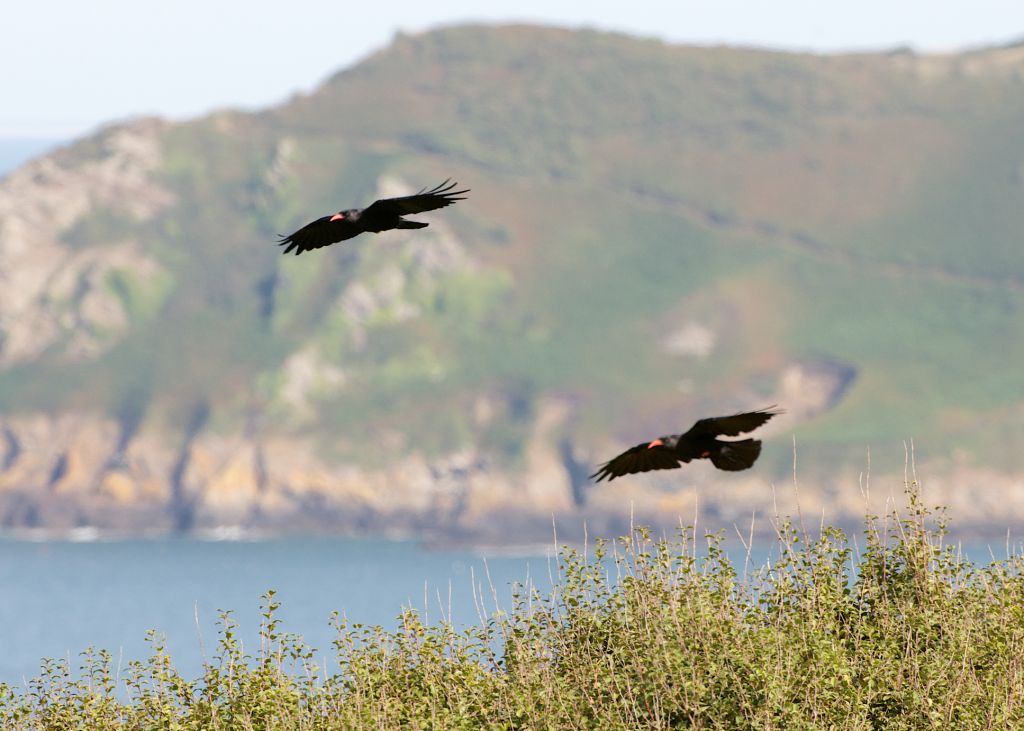
I was thinking about the Peregrine attack which happened so soon after the 2nd year pair 'eloped' from the release aviary. Its possible it was simply interested in this 'new' species suddenly sharing its air-space, and went into attack as a form of testing them out, rather than with prey in mind(or foremost anyway).
Yes. and there will be other losses. I wonder if the rate of loss to be anticipated from re-introduction programmes would be tolerated these days in establishing a captive breeding programme?
I hope they have taken precautionary measures with any cattle troughs in the area. At least one of the 6 birds in the original Paradise Park (where these birds came from) trial release in Cornwall some years ago drowned in one. I'm sure they are aware of that though.
Its tough to lose two birds so early on, but its a difficult transitionary period while they learn to forage successfully for themselves while still needing supplementary feeding, and it sounds like a spell of bad weather at the wrong time might have played a part too. Odd that two should perish while the others- so far- seem to be making it through this initial period. But they do seem very individualistic birds, not all behaving the same way or exactly to plan.