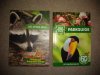
A Guidebook Library: TLD's year-long randomised walkthrough of zoo guides

Day 91: Taronga Zoo (1944) - Official Illustrated Guide to Taronga Park Zoo and Aquarium

full

full


Page count: 84 pages
Photographs: 78 black-and-white photographs
Illustrations/diagrams: N/A
Layout: General introduction to the collection, followed by photographic walkthrough showing various species and exhibits throughout the zoo.
Map: Located within main body of guidebook.


Another rather interesting one today, from a collection which I have not discussed within this thread up until now; as it happens, this was also the first guidebook from Taronga Zoo to have entered my personal collection, having been purchased from AbeBooks several years ago, although I have subsequently expanded my collection of Taronga guidebooks by a fairly significant margin. As I will hopefully demonstrate within the main body of this post, although this guidebook is rather sparse on detail and information in several regards, it nonetheless contains much of value, providing an important glimpse at the status of the collection during WWII.

full

full


The guidebook opens with a handful of pages providing background information on the history of Taronga Zoo, along with details of the various trustees and senior staff members at the collection; as I have remarked several times in the past, information of this sort is incredibly valuable when found within a guidebook, both at the time of publication and when viewed in retrospect, and should be cherished when found within a given item. This section of the guidebook also contains general introductory material relating to the current-day zoo, providing key information for visitors - including emergency contact details, details on how to access the collection by public transportation, rules of admission, information on amenities and refreshments, and feeding times for specific species at the zoo. The final text portion of these introductory pages comprises a brief discussion of the aquarium building at the zoo and its history.

full


These introductory pages also contain a rather excellent map of the collection, as can be seen above; the size, shape and position of exhibits in relation to the visitor footpaths is clearly-presented, with copious and methodical labelling throughout. Moreover, those areas of the collection which contain gardens and botanical displays are clearly differentiated from those containing lawns and open areas; something which is always useful when trying to visualise the appearance and "feel" of a collection when reading a guidebook from several decades ago!

full

full

full


The main body of the guidebook comprises a compilation of black-and-white photographs depicting various of the species and exhibits present at Taronga Zoo at the time of publication, supplemented by short captions providing information such as the wild range, habitat and diet of the species depicted, or in some cases details relating to the specific individuals held at the zoo. Given the fact that this de-facto photographic walkthrough of the collection covers all but the first eight pages of the guidebook, with these comprising the vast bulk of the written content within as already discussed, one could make the argument that this is more a photographic accompaniment to Taronga Zoo rather than a guide *to* the zoo. However, although the written content here is very sparse, the information conveyed is surprisingly detailed and interesting; moreover, as one can imagine, the various photographs of exhibits, houses and paddocks are very interesting from a historical point of view, providing as they do a valuable insight into what the collection looked like at the time of publication.

As such, it occurs to me that rather than posting images showing some of the pages relating to animals displayed at the zoo - which would largely look very much akin to any other black-and-white photographs of the species in question, and potentially say little-to-nothing which would be novel to those reading this thread - the best course of action is to focus attention on photographs showing exhibits, houses and other items of historical note. Even so, there are rather more photographs of this nature than would be appropriate to present here, and as such I have selected six images in particular; images of the upper and lower entrances to the zoo, the aquarium building, the elephant house, the exhibit for entellus monkeys, and a photograph taken during an official state visit by Eleanor Roosevelt, the then-current First Lady of the USA. The lattermost of these is particularly useful for the purposes of working out the publication date of this guidebook, as the aforementioned visit is known to have taken place in September 1943.

Of course, if there is sufficient interest I will happily provide further images in a supplementary post!

full

full

full


In conclusion, this is an interesting and rather high-quality guidebook,, which very effectively serves the twin purposes of providing key information about Taronga Zoo to those visiting the collection at the time of publication, and moreover serving as a souvenir of said visit. However, for the purposes of the modern-day guidebook collector, this item holds far greater value and interest as a primary historical resource; this is also achieved rather well, due to the aesthetically-pleasing and well-presented map of the collection within, alongside the variety of photographs depicting the zoo as it existed at the time of publication and the brief historical account relating to the early years of the collection. In my experience, this is also one of the most commonplace guidebooks to Taronga Zoo on the secondary market - cropping up semi-regularly even within the UK and continental Europe - and as such it is thoroughly-recommended to anyone interested in the collection.
 
I didn't realize Taronga used to have an aquarium; do you or any of the Australians know when it closed and why?
 
I didn't realize Taronga used to have an aquarium; do you or any of the Australians know when it closed and why?

Many of our regional zoos used to have aquariums, which subsequently closed. The reason was often they were expensive to maintain and restock; combined with the fact they did little to enhance visitor numbers as dedicated aquariums opened up across the region’s main cities.

This article from 1939 details Nurse sharks and other species held at Taronga’s aquarium:

Apart from the spectacular exhibit of sharks, there are many beautiful fish contained in the building, which have been received at different times from Honolulu, Suva, and other tropical isles, as well as New Guinea and Northern Australia.

In addition to foreign species, there is also a nice display of Australian
fishes, both salt and fresh water, while there is also a very good display of coral and other attractive marine growths.

Taronga Park Aquarium - Daily Advertiser (Wagga Wagga, NSW : 1911 - 1954) - 28 Nov 1939
 
Note that the species cited in that article (and, indeed, photographed within the guidebook) is the "Grey Nurse Shark", which is better known as the Sand Tiger (Carcharias taurus) and as such is not a true nurse shark.
 
I didn't realize Taronga used to have an aquarium; do you or any of the Australians know when it closed and why?
The aquarium was opened in two stages, the first stage completed in July 1927 and the second stage in March 1929. There were approximately sixty tanks in the building when it was completed. Its closure was basically due to deterioration of the building, and it had (mostly) closed by about 1973 although a small part of the upper level remained as an exhibit until at least the start of the 1980s.
 
I visited the aquarium in 1991. It wasn't big but I remember the wobbegong.
Oh interesting - I didn't realise it was still in use that late. It was the same building too (the upper level, as mentioned). It is labelled on the 1990 map of the zoo but gone on the 1999 map.
 
Day 92: Zoo Warszawa (1963) - Young Tiger

full


Page count: 12 pages (including front and rear covers)
Photographs: 10 black-and-white photographs
Illustrations/diagrams: N/A
Layout: Introduction to collection and its history, followed by discussion of major attractions for adults and children, feeding time information and rules for visitors.
Map: Located on rear cover.


Today, we shall be taking a look at another of those little oddities which demonstrates how hazy and unclear the divisions between a zoo brochure, a zoo map, a zoo guide, and a zoo guidebook can sometimes be. In a similar vein to the Birmingham Nature Centre guide which I recently discussed within this thread, the item which I will be discussing here comprises a single folded sheet; as such, this is the sort of publication which *could* easily be dismissed as a mere brochure or map, but which for several reasons - which I shall relate anon - I feel does qualify as a zoo guide. This is also one of the most recent additions to my personal collection, having been purchased a few weeks ago via an eBay seller who specialises in zoo memorabilia and publications (being a semi-retired zoo professional themselves) and regularly receives my custom; given my interest in zoo history, and the age of this particular item, I was extremely interested when this one came up for sale and - to my surprise - was able to purchase it for only a pound!

Having been all-but-destroyed during WWII, with more-or-less the entire animal collection having been killed over the course of the war or plundered for display within German collections such as Zoo Berlin and Tierpark Hellabrunn, Zoo Warszawa re-opened in 1948; as far as I have been able to discover, the item we are discussing here was one of the first publications to come from the collection after this point in time, and depicts a collection which has one again established itself as a thriving and successful zoo. Here, it seems prudent to return to the issue of whether this truly is a zoo guide or a "mere" brochure or map for the collection to which it pertains. On one hand, it *does* comprise a single folded sheet rather than a bound or stapled collection of pages; there are some in the guidebook community who would argue that this automatically bars it from consideration as a zoo guide, but my sentiment on the matter is more nuanced. Certainly it would be inaccurate to call it a guidebook, as it is plainly not a book by any stretch of the imagination, but in my opinion there are other factors which have a bearing on the matter at hand; the focus of a given publication, the presence of more in-depth discussion relating to a collection (particularly historical material), and any indication that it was being sold "as" the guidebook for the collection at the time of publication. As I hope to demonstrate within this post, this item certainly qualifies under these criteria and therefore can be regarded as a zoo guide; given the historical significance of the item, its overall brevity, and the level of interest which I suspect it may elicit, I have elected to scan the entire document for the purposes of this thread. Through the use of Google Translate, I have been able to parse the contents of the text and can therefore provide explanatory remarks where required.

full


The main body of the text opens, as can be seen above, with a general introduction to the collection followed by a relatively-brief but detailed account of the history of Zoo Warszawa, the events of WWII and how they impacted the zoo, and the growth of the collection over the 15 years which elapsed between the zoo re-opening in 1948 and the publication of this item in the early 1960s. This historical account is accompanied by translated versions in both Russian and English on the following pages; this is one of the details which strikes me as an indication that this was indeed intended to serve as a guide to the zoo aimed at a wider audience, rather than a mere promotional leaflet. Given the geopolitical situation at the time, the zoo - and indeed Warsaw as a whole - was highly unlikely to attract tourism from Anglophone visitors; as such, it would be rather superfluous to provide English-language content within a publication intended to attract visitors to the collection (as a promotional leaflet would be), but I feel that it would be less out-of-place within an item sold within the collection itself and intended to provide further information to visitors. Interestingly, some of the historical content within the Russian and English-language text (such as the discussion of previous zoological collections to be located within Warsaw and nearby regions) is omitted from the Polish-language historical account.

full

full


As can be seen above, one of the following pages contains detailed information relating to the publication of this guide, noting details such as where it was published, the author of the text and the source of the photographs within, and the size of the print run; these are all details which one would expect to be provided within a guidebook or similar item, but which would be rather unusual in a disposable leaflet or brochure. Moreover, a price is cited. These factors all provide further substantiation for the idea that this publication was sold "as" a guide to the collection and can therefore be regarded as a zoo guide. The other pages visible in the above scan discuss the attractions available at the zoo for children and adults, beyond the animal exhibits themselves. These include the following:

  • Education activities for schoolchildren with the intention of training them in the breeding and captive husbandry of animals.
  • Pony and donkey rides.
  • Photographic opportunities with young animals.
  • Sale of aquarium fish and advice on their correct care.
  • Monthly lectures on nature and the activities of the zoo.
  • Educational material relating to scientific and breeding work undertaken by the zoo.

The first of the pages presented below contains a summary of the feeding times for various animals held within the zoo, along with a rather interesting section listing the average annual quantity of fodder, meat and fish, eggs and milk which the zoo fed to the animals present within the collection. The latter is precisely the sort of detailed and specialist information which adds a great amount of value to a guidebook or similar publication, in my opinion, although it is increasingly uncommon to find such information present. The second of the pages below comprises a list of important rules and regulations for visitors to the collection; as one can imagine, these largely follow the general outline which one would expect, covering injunctions not to molest or feed the animals, to act with decorum and to dispose of litter correctly among several other points, but amusingly-enough the final rule listed appears to translate to an instruction to the visitor not to limit themselves to a single visit!

full

full


The final pair of pages within this guide comprise the above map and accompanying key; these are attractive and well-presented, providing a large amount of detailed information in a simple and easily-accessible fashion. Along with the historical accounts which open the main body of the text, this is perhaps the aspect of this zoo guide which will be of particular interest and value in the eyes of a modern-day zoo enthusiast, considering the insight which it grants into what Zoo Warszawa was like in the early years of the 1960s.

Overall, I feel that this is one of the most interesting and historically-significant items to enter my collection over the last few months; my deep interest in zoo history, particularly where it intersects with socio-economic and geopolitical history, is no secret at this point and therefore this sentiment probably comes as little-to-no surprise! Given the fact I have provided the entirety of this item for perusal, I hope that those reading this thread find this zoo guide as interesting as I do, and perhaps that it serves as a jumping-off point for deeper discussion!
 
Fascinating to see how some enclosure stand mostly unchanged, with even the same inhabitants as 60 years ago. Looking at the map quite some native/domestic animals seem to have been replaced by more exotic species, but so much is still familiar!
 
Day 93: Zoo Berlin (1910) - Führer durch den Berliner Zoologischen Garten

full

full


Page count: 128 pages (including photographic plates)
Photographs: 32 black-and-white photographs
Illustrations/diagrams: c.42 black-and-white drawings
Layout: Comprehensive walkthrough account of collection.
Map: Fold-out at rear of guidebook


We once again return to the subject of the rather excellent guidebooks which were published by Zoo Berlin throughout the early decades of the 20th century; as I have noted in the past, I have spent much of the last few years gradually seeking copies of these out and adding them to my collection, with a rather satisfying level of success. This particular edition is one of several which I obtained towards the early months of the pandemic in spring 2020; given the money I was managing to save due to a combination of working from home and no longer travelling on public transport, I felt comfortable in purchasing a number of Zoo Berlin guidebooks which I had been watching on AbeBooks for some time. The first thing that should be noted is that given the extreme age of this guidebook, my copy is in remarkably pristine condition; whilst some of the other guidebooks in my collection of similar age and provenance have suffered damage to their spines, mild foxing and generally display signs of how old they are, this particular item displays none of these imperfections, and seems as physically-robust as it was on publication. As a result, this is one of the early Berlin guidebooks which (as far as is currently possible given the oft-bemoaned typeface issues inherent to this period) I most often find myself attempting to read and understand.

full


On first opening the guidebook, one will note that the interior cover - rather than being blank, or containing advertisement material of some form, as has been usual thus far for the early 20th century guidebooks published by Zoo Berlin - contains a brief explanation of the route throughout the collection which the walkthrough account within the main body of the text takes, how to follow it on the map provided within the guidebook, and moreover the location of the various restaurants and cafes within the collection. These orientation passages are not novel to this particular edition - however, they usually occur within the guidebook itself, after the title page and the historical accounts which follow, and as such their location here is somewhat unusual. As can be seen above, the title page itself resembles that found within the 1908 edition, barring some minor textual alterations; something which I omitted to point out during my discussion of said edition, but which remains the case here, is that the authorship of the guidebook continues to be credited to both Ludwig Heck (the director of the zoo, as previously discussed) and Oskar Heinroth.

The historical account of the zoo which opens the guidebook itself remains as lengthy and detailed as has been the case in prior editions; although I remain unable to parse much of the text at any speed beyond a slow crawl, given the oft-bemoaned typeface used within the Zoo Berlin guidebooks at this time, my skills *are* gradually improving (doubtless helped by exposure and practice) and therefore I can discern that the text within this section *is* being revised and updated over time; something also demonstrated by the fact that the historical account now covers around 14 pages in total, somewhat longer than had previously been the case. My aim to refine my skills at reading this old-fashioned German typeface and translate the information presented within these sections remains unabated, it goes without saying; considering my interest both in zoo history, the wider sociological history of pre-war Germany and the preservation of historical records, this is a task I feel will be both fulfilling and worthwhile.

full

full


The general layout of the walkthrough account within the main body of the guidebook is broadly similar to that found within the previous editions which I have discussed here, comprising an exhibit-by-exhibit discussion listing the major species displayed within the collection at the time of publication; these are supplemented by a large number of very attractive illustrations showing various of the structures and species discussed within the text. Many of these illustrations have been replicated from the 1908 edition which I discussed some time ago; however, several are entirely novel to this particular edition, and other illustrations which had been present across multiple prior editions have now been replaced. The accounts themselves - as best as I can glean given my limited ability to interpret the typeface used - are fairly comprehensive, providing a wide amount of information regarding both the exhibits and houses in general, and the species displayed within.

As has been the case throughout the Zoo Berlin guidebooks discussed within this thread thus far, taxonomic names are printed in a significantly more straightforward and legible typeface; as a result, it is fairly easy to understand which species are being discussed within the accounts, with the only major difficulty being presented by outdated or incorrect taxonomic terminology. In fact, in many ways the fact that these taxonomic names are presented in a legible fashion provides something of a "Rosetta Stone" for my understanding of the more old-fashioned typeface used elsewhere; once I know the identity of a species, I am often able to work out what the German-language name for the species is liable to be (where I do not already know this information) and can therefore learn the way particular letters and combinations of letters are presented within this typeface. Much as was the case within prior editions of this guidebook, many of the species cited within the text hold particular interest or significance for modern-day zoo enthusiasts and those interested in zoological history in general; along with extinct taxa such as the Somali Black Rhinoceros, Caspian Tiger and Javan Tiger, there are also a wide range of species cited which are now vanishingly-rare in captive collections, and still others which have only recently become commonplace once again. Perhaps the most unusual animal cited within the text is a hybrid between a Kulan stallion and a Somali Wild Ass mare, noted to resemble a midpoint between both parents in build and basic colouring but with a strongly-striped body atypical for either.

full

full


Unfortunately, whilst a hybrid between a Mountain Zebra and Shetland Pony also mentioned within the text *is* depicted within the photographic plates at the rear of the guidebook - as can be seen above - I have been unable to find any photographs online depicting the aforementioned wild ass hybrid; as usual, these photographic plates depict a wide variety of the species displayed within the collection at the time of publication. Interestingly, although the male Schomburgk's Deer which had been held within the collection since 1899 - and was depicted within the photographic plates of all guidebooks subsequent to this date - was still present at the time of publication, the photograph in question is no longer present here. However, there are nonetheless a wide range of oddities present within this section, including the aforementioned zebroid, a Somali Black Rhinoceros and one of several Aye-Aye individuals to be imported into German zoological collections around this time.

The fold-out map located within the interior rear cover is - as always - one of the highlights of the guidebook as a whole; not only is it highly-attractive in design and appearance, with clear and concise labelling complementing the use of colour and shape in depicting the layout of the collection, but it moreover represents an incredibly-valuable item of historical primary evidence for the development and expansion of Zoo Berlin over the opening years of the 20th century. As I have observed previously, the fact that the maps provided within these guidebooks follow the same general style and layout - minus minor alterations in the use of colour - enhances the ability of the modern-day reader to compare them across editions and make note of those aspects which have changed. In this particular case, it is immediately apparent that in the two years which had followed the publication of the last Zoo Berlin guidebook to be discussed within this thread, a remarkably high number of structural changes had taken place. These include, but are not limited to, the following:

  • A large area of the southeastern end of the zoo is now the site of a new restaurant complex (containing, as the main body of the text notes, a winter concert hall) - this area occupies the site of playing fields which were highlighted by @MRJ during a previous discussion, along with adjacent exhibits and houses for wild horses, birds of prey and owls, a greenhouse veranda and the Zoo Director's personal residence.
  • Per the above, a new Director's House has been constructed on the site of a bear exhibit close to the Kurfürstendamm entrance to the zoo.
  • The overall footprint of the zoo has extended further north into the Tiergarten, with the Swine House which exists to this day now visible on the map; the lack of any paths leading to this exhibit or the other structures in this area suggests that at the time of publication they were still under construction.
  • The previous location of the horse tramway terminus - which was disused but still present on the 1908 map - now shows the presence of a house for zebra and other hoofstock; this is another structure which exists to this day, as I have discussed previously within this thread.
It goes without saying that there are several other noteworthy developments - hopefully this may provide an avenue for further discussion!

full


Lest I sound like the proverbial broken record, I shall omit the bulk of my usual argument that this guidebook - along with all of the other guidebooks published by Zoo Berlin across the early decades of the 20th century - is one of the very best that can be found within the wider canon of zoological literature; quite apart from anything else, I hope that I have more than proven this point over the past few months! It need only be said that this is an incredibly interesting and aesthetically-attractive item, and valuable on several different levels - this particular edition is somewhat scarce, and tends to sell for relatively large amounts of money, but nonetheless I do urge anyone with the money, inclination and interest in zoological history to seize the chance if it arises.

As usual, I hope that this post provokes interest in those reading this thread; there is certainly a wide number of avenues for discussion, and I am always happy to answer any questions and receive any feedback!
 
How much I would have liked if the original ostrich and wader bird houses would still be among us. Especially the ostrich house, which was basically a copy of Antwerp's Egyptian temple would have been something to behold!
 
  • A large area of the southeastern end of the zoo is now the site of a new restaurant complex (containing, as the main body of the text notes, a winter concert hall) - this area occupies the site of playing fields which were highlighted by @MRJ during a previous discussion, along with adjacent exhibits and houses for wild horses, birds of prey and owls, a greenhouse veranda and the Zoo Director's personal residence.
I wonder if there were any protests, replacing playing fields and the games they hosted with a commercial restaurant?
 
Day 94: Zoo Berlin (1912) - Führer durch den Berliner Zoologischen Garten

full

full


Page count: 128 pages (including photographic plates)
Photographs: 32 black-and-white photographs
Illustrations/diagrams: 38 black-and-white drawings
Layout: Comprehensive walkthrough account of collection.
Map: Fold-out at rear of guidebook


Unlike the immediately-preceding edition, this particular guidebook is one of the newest additions to my collection - for whatever reason, the 1912 Zoo Berlin guidebook seems to be relatively scarce on the secondary market, with the copy which entered my possession via eBay three or four months ago being only the second such copy I have seen for sale online; however, I was fortunate enough to obtain my copy for a relatively low price (around £25 plus postage from the continent) as a result of the fact that it has sustained minor water damage to the front cover alongside several other minor age-related imperfections. As with the 1910 edition, the front cover of this guidebook is decorated with a simple but rather attractive painting of an African Elephant whilst the rear cover contains an advertisement for a taxidermist operating close to Zoo Berlin; interestingly, there are subtle visual differences between the two advertisements, although one cannot discern what - if any - reason there may be for this.

One will note that the orientation passages of which I previously remarked have once again been removed from the interior front cover, opposite the title page; these are once again located prior to the historical accounts within the introduction to the guidebook, as has been the case for the majority of the Zoo Berlin guidebooks discussed within this thread. Broadly speaking, the interior contents of this guidebook are generally similar to those found within the 1910 edition, comprising a lengthy historical account followed by an exhibit-by-exhibit walkthrough of the collection at the time of publication; one imagines that once I am able to satisfactorily parse the old-fashioned typeface used within these guidebooks it will be possible to notice several differences between the text here and that which has preceded, but at the present time my ability in this regard is more-or-less restricted to hesitant skimming of the text seeking passages which are recognisable or for which I can make educated guesses regarding their content.

full

full


Interestingly, there are marginally fewer illustrations within this guidebook than was the case for the 1910 edition which immediately preceded it; as far as I can tell, this is not due to the removal of any exhibit accounts or the omission of the illustrations depicting the houses and exhibits in question but rather the removal of some "incidental" illustrations showing given animals. These, as I will discuss anon, have doubtless been removed in order to make more space for advertisement material. Otherwise, the species/exhibit accounts are broadly similar to those occurring within the preceding edition, barring those edits required in order to reflect those species no longer present within the collection (for instance the Schomburgk's Deer stag of which I have spoken previously) and those which had arrived within the two years prior to the publication of this guidebook. As such, I have elected to provide images above and below which give an insight into the appearance, content and layout of the accounts relating to the Neues Vogelhaus and deer paddocks; given the fact I selected different accounts for illustration within the preceding post, these can be taken together to gain a better understanding of the two guidebooks as a single entity.

full

full


As alluded above, a noticeable difference between this guidebook and the 1910 edition is the presence of a significantly higher amount of advertisement material; although adverts for various products and services *were* present within the preceding edition, sometimes covering the entirety of a given page, these were nevertheless relatively unobtrusive and few in number. Conversely, not only are there rather more advertisements (both partial and full-page) present within this edition, but each odd-numbered page contains a text advertisement within the footer; these comprise the same three advertisements repeated throughout the guidebook, all pertaining to a single business. One assumes that this business - which appears to have sold pianos and brass instruments - was a specific sponsor for this edition of the guidebook. The advertisements within both guidebooks cover a rather wide spectrum, from the aforementioned adverts for taxidermists and musical instruments, to importers of live animals, food stockists, cafes and restaurants, baby food manufacturers and bathroom fittings. An interesting side-effect of the footer advertisements is that the page numbering within this guidebook is located within the header, whereas the numbering for the 1910 edition is located within the footer of each page; although the date of the guidebook *is* provided within the title page, this key difference would be one of the quickest and easiest ways to work out when a particular guidebook was published if one were to stumble across a copy where the title page was missing.

full


As with the preceding edition, the map located within the rear of this guidebook is a thing of beauty; as I have remarked before, on an aesthetic level I feel that the maps published by Zoo Berlin in the opening decades of the 20th century qualify not only as excellent historical and zoological records, but also genuine works of artistic merit. There are few - if any - major differences between this particular map and the one located within the 1910 edition; this is actually somewhat surprising, but indicates some interesting things about the developments at Zoo Berlin in the years that would immediately follow. First, consider the fact that the Swine House and adjacent exhibits are already present on the map despite the fact they were still under construction at the time of publication; as such, one would reasonably assume that other structures being constructed at the time of publication would be present. However, despite the fact that the Zoo-Aquarium located at the entrance to the collection first opened only a year after the publication of this guidebook, it is entirely absent from the map; moreover, the location of the aquarium is still labelled as containing machinery yards. As such, this suggests that the construction of the Zoo-Aquarium was remarkably rapid considering the scale of the building in question!

full


Overall, this is once again a fascinating and highly-interesting item, and along with the other guidebooks published at Zoo Berlin throughout the 20th century a keystone of my personal collection; it is not only a high-quality guidebook for the collection to which it pertains, but also a valuable historical resource on zoological, sociological and cultural grounds.

Given the fact that I will be visiting the continent over the next few days - revisiting Walsrode and potentially following up on the tip-off by @Arek that Wildpark Schwarze-Berge is now selling a new guidebook - the thread will have a few days to breathe; hopefully this will allow people time to ask questions, discuss the guidebooks I have posted about in recent days/weeks, and provide feedback on any improvements I could make regarding the thread as a whole!
 
Having returned from my little continental trip, posts shall be resuming anon - as far as the subject of this thread goes, it was fairly productive as I not only added the latest Schwarze-Berge guidebook to my collection, but also (as mentioned elsewhere on the forum) a new 2022 edition of the Walsrode guidebook!

286517747_542528600699669_1573110701529408564_n.jpg
 

Attachments

  • 286517747_542528600699669_1573110701529408564_n.jpg
    286517747_542528600699669_1573110701529408564_n.jpg
    126.4 KB · Views: 46
Day 95: Zoo Plock (2012) - Red Panda (English Edition)

full

full


Page count: 58 pages
Photographs: 126 photographs (6 black-and-white)
Illustrations/diagrams: N/A
Layout: Introduction and historical account, followed by exhibit-by-exhibit walkthrough and assorted discussions relating to zoological collections.
Map: Fold-out at rear of guidebook


Today, we shall be looking at a rather interesting guidebook from a Polish collection which is discussed less often on this forum when one compares it to places such as Poznan, Wroclaw or Warsaw; as such, much of what I know about Zoo Płock derives directly from this guidebook. This particular item fell into my possession during a meeting of the IZES (International Zoo Enthusiasts Society) which took place at Hamerton Zoo in 2018, and where several zoo enthusiasts and guidebook collectors were trading and selling a variety of items; this was one of several guidebooks I purchased on said occasion, with the specific intention of filling a gap both in my guidebook collection and my knowledge of Central European zoological collections. The fact that this edition was published in an English-language version was, of course, a distinct bonus point given that this has allowed me to fully appreciate the content of the guidebook.

full


The guidebook opens with three short introductory segments, as follows; a brief discussion of the city of Płock itself, a general introduction to the collection written by Aleksandr Niwelinski, the director at the time of publication, and several pages detailing the history of Zoo Płock and relaying a timeline of key events across the decades. As one can imagine given my oft-discussed interests and biases where zoological guidebooks are concerned, I find the lattermost of these sections particularly interesting; it is likely that very few (if any) English-language sources have published the information within, and as such this represents an important primary resource for those interested in the history of zoological collections. Moreover, the quality and quantity of the information presented is consistently high, and is supplemented with a handful of black-and-white photographs and images of news clippings.

full

full


The main body of the guidebook comprises a walkthrough account of the collection, discussing the species and exhibits located throughout in the rough order that they would be encountered by a visitor making their way through the zoo. The information presented within these accounts is fairly detailed, relaying a wide amount of information about the species held within the collection - both general remarks about their habitat, diet, behaviour and wild conservation status, and discussion relating to the specific individuals at Płock - along with the exhibits within which they are located. Of particular note are the discussions relating to the elderly female American Alligator at the collection - the oldest in Europe, and potentially the world - and the breeding pair of Andean Condors, the female of which was born at the zoo and represented the first captive breeding of the species within a European collection. Moreover, the accounts are supplemented by a large number of attractive colour photographs depicting the exhibits and species discussed within the text.

full


The walkthrough accounts are followed by a series of discussions relating to Zoo Płock as a whole; the first of these, as can be seen above, is a behind-the-scenes look at the variety of food which the collection was feeding to their livestock on a daily basis. This, as I have discussed previously, is precisely the sort of information which I feel is valuable within a zoological guidebook, giving an interesting insight into the logistics and resources required for the successful upkeep and operation of a zoo; one suspects that if more zoological collections published guidebooks containing information of this sort, making it easily-accessible to enthusiasts, the general quality of the speculative zoo posts on this forum would be significantly higher!

This discussion is followed by short segments relating to the education activities undertaken by the zoo, along with various other visitor amenities and activities, and discussion of the gardens and botanical displays located throughout the zoo; however, the most important of these passages is certainly the double-page spread relating to zoological collections in the 21st century, highlighting the important role they play in conservation and education, and discussing the conservation programmes and other work undertaken by Zoo Płock in particular. This discussion is followed by a three-page glossary providing further information relating to key terms and organisations cited within, such as EAZE, CITES, EEP and IUCN. Given the spread of anti-zoo sentiment in popular media - especially in recent years - the presence of a comprehensive rebuttal to many of the tired arguments which the anti-zoo lobby releases materially increases the overall value of this guidebook as a means of educating the zoo-visiting public.

full

full


The guidebook closes with a rather attractive map of the collection; this is, unfortunately, one of the weaker aspects of the guidebook as a whole despite the fact that it is aesthetically-pleasing, given the fact that it is more-or-less completely unlabelled, the paths are difficult to interpret and differentiate from the surrounding exhibits and vegetation, and those animal images which are present feel a little cluttered. As such, although appealing to look at, its utility as a map of the collection is somewhat reduced.

This is, however, one of the few real negative points I can make relating to this guidebook - other than my dislike for the ring-bound format used here, of which I have spoken at length previously - and overall I feel it is a highly-interesting and attractive item, which is equally informative to the casual visitor and the zoo enthusiast. It is likely, of course, that given the relatively obscure nature of the collection in question, the fact this particular edition is an English-language translation of the Polish-language original suggests that the intended audience *is* more strongly-weighted towards the zoo enthusiast!

As usual, I am happy to answer any-and-all questions about this guidebook or any previously discussed within this thread, and naturally feedback, criticism and other such remarks are also very welcome - given the abject damp squib of the last guidebook post (despite the prolonged break which I hoped would allow space for discussion and feedback) and a distinct reduction in engagement lately, I would definitely like to know if there is anything I can improve or do differently!
 
Day 96: Edinburgh Zoo (1977) - Orang-utan, Giraffe, Tiger etc

full


Page count: 58 pages (including interior front and rear covers, and photographic plates)
Photographs: 23 photographs (12 black-and-white)
Illustrations/diagrams: 35 drawings showing various animals in collection
Layout: General introduction to collection, followed by walkthrough account and discussion of species held.
Map: Located within central pages of guidebook.


Today, we will be looking at an item from Edinburgh Zoo, a collection which - to be honest - I am somewhat surprised has not come up in the random selection process already, considering the fact that its publications are quite densely represented within my guidebook collection. As is the case with several other guidebooks from Edinburgh and Highland Wildlife Park located within my personal collection, I picked this item up around a year ago via eBay; an antiquarian bookseller on the site was breaking up a large job-lot of memorabilia from the two zoological collections in question which had come into their possession via the estate of a deceased collector of zoo memorabilia, allowing me to pick up quite a few interesting oddities in the process. As I intend to demonstrate, this particular edition of the Edinburgh Zoo guidebook is a rather interesting and high-quality item, and one which is a valuable resource both to the casual enthusiast and the more dedicated collector of guidebooks.

full


After a very brief introduction - more or less comprising a few paragraphs introducing the zoo and the Royal Zoological Society of Scotland, and promoting the animal adoption scheme operated by the zoo - the guidebook opens immediately with a detailed walkthrough account of the collection at the time of publication. The account divides the zoo itself into five distinct "zones" - south, central, east, north and west - and discusses each in the rough order that the visitor to the collection would be liable to encounter them; within each section, a variety of detailed discussions relate to the species and exhibits located within the zone in question, covering subjects such as the wild behaviour, diet, range and conservation status of the species held, the history, design and dimensions of a given exhibit or house, details relating to particular individuals within the animal collection, and wider discussion of future plans for Edinburgh Zoo where appropriate.

One aspect of this guidebook which I particularly like, and which definitely enhances the overall "feel" presented within, is the copious use of illustrations to show some of the animals and exhibits discussed within the text; barring those pages which are devoted to photographic plates, the collection map or supplementary information about the collection - all of which I will discuss further anon - an attractive and well-executed drawing is located at the base of every single page within the main body of the text. These complement the information located within the walkthrough accounts, and increase the aesthetic appeal of the guidebook as a whole. For instance, as can be seen within the segments of the guidebook which I have elected to scan for the purposes of illustrating this review, the accounts relating to the sealion pool located close to the zoo entrance and the nearby pheasantry are accompanied by drawings showing California Sealion and various species of pheasant located within the collection, with similar drawings being found at the foot of pages which discuss European Brown Bear and Lynx, the giraffe house, and the large collection of Antarctic penguin species which had been located at the zoo for decades.

full

full


Within the walkthrough account, there are a handful of pages which provide important supplementary information for visitors to the collection; most notably, these include a list of the scheduled feeding times for various species held within the collection at the time of publication, and a collection of rules/regulations for the attention of the public, with further information relating to transport to the zoo, opening hours, visitor amenities and emergency contact details, specific opening hours for given houses and exhibits, and other such odds and ends located on the inner rear cover of the guidebook. Interestingly, these are not included within the pagination of the guidebook as a whole, and nor are the photographic plates which occur within the walkthrough account in two distinct sections.

These plates comprise a mixture of colour and black-and-white photographs depicting a variety of the species held within the collection at the time of publication; satisfyingly, the captions for each photograph provide page references allowing the reader of the guidebook to cross-reference the images to the portion of the walkthrough accounts pertaining to the species in question, something which allows the photographs to be collected together in a tidy, well-formatted and attractive presentation style whilst retaining the advantages inherent to providing photographic material within the main body of the text. One other advantage of this approach, of course, is that it prevents the photographs and illustrations from "clashing" with one another and overloading the text.

The quality of the information presented within the walkthrough accounts, as I briefly alluded above, maintains a consistently high standard in my opinion; the content is detailed and informative enough to provide much of note to the more devoted zoo-enthusiast and those interested in the wider history of Edinburgh Zoo, whilst also being accessible and appeallingly-presented for the casual visitor to the collection - who will, of course, have been the primary audience for this guidebook at the time of publication. As noted previously, some of the most interesting portions of these accounts are those dealing with specific details about the animal collection and the houses and exhibits within which it is located; for instance, several paragraphs are devoted to discussing the origins of the free-roaming breeding population of Night Herons which (at the time of publication, and indeed until the last decade or so) was present both at the zoo and the surrounding regions of suburban Edinburgh, noting details such as the fact that research had been undertaken into the movement patterns of the heron population, the fact that they represented the North American subspecies rather than that native to western Europe, and the fact that they had been recorded as far as 30km from the zoo. This information is very valuable to zoo historians, given the fact that it is likely to have been published in few locations outside this and other guidebooks to the collection.

full


Here, it is appropriate to note the fact that the central pages of this guidebook contain a highly-detailed and aesthetically-attractive map of the collection, with the various "zones" of the zoo discussed within the main body of the text colour-coded here for ease of reference. I suspect that it is highly likely that similar maps to the collection will have been present throughout the zoo, and perhaps also available to the visitor as stand-alone documents; however, even without these it would be fairly easy for the zoo visitor to consult the map alongside the main body of the text, and use them together as a literal walkthrough guide around the collection. The use of colour to make the location of animal houses, restaurants and other zoo structures - as opposed to exhibits and paddocks - and the footpaths throughout the collection immediately distinct from the surroundings is another particularly good choice; for whatever reason, many of the guidebooks I have encountered published in the UK during the late 1960s and 1970s had a tendency to show footpaths and houses in the exact same colour as the background, and often in glaringly mismatching colour at that!

full


Overall, then, this is an extremely interesting and informative guidebook to Edinburgh Zoo, both for the lay visitor and the enthusiast, moreover, it is also an attractive and well-presented book in its own right, and a valuable record for anyone interested in a more detailed look at the history of the collection. As I may have the opportunity to discuss further in the future, Edinburgh Zoo was one of the UK collections which displayed the strongest record for high-quality and attractive guidebooks - fittingly so, considering how prominent the zoo itself was for many decades - and this particular guidebook (although published relatively late in the collection's history of guidebook publication) is an excellent example of said.
 
Day 97: Tierpark Berlin (2009) - Tiere mit steinernem Herzen und bronzener Haut

full


Page count: 82 pages (including interior front and rear covers)
Photographs: 105 colour photographs
Illustrations/diagrams: N/A
Layout: General introduction, followed by comprehensive walkthrough of the statues, mosaics and other artwork found throughout collection.
Map: Interior rear cover and adjacent page


As I have discussed on several occasions in the past, the use of statues, mosaics and other physical ornamentation throughout a zoological collection - whether this is for the purposes of education, depicting some of the species displayed within a given area, or as decoration intended to enhance the aesthetic beauty of a collection and as such primarily a work of art - is one of the more subtle aspects which I would tend to highlight as a major factor influencing how I feel about a given collection. Perhaps one of the most densely-decorated and aesthetically-pleasing zoological collections in this regard is Tierpark Berlin; I have spoken about my deep love of this collection on several occasions both within this thread and elsewhere on the forum, of course, and in my original 2014 walkthrough account of my first visit to the Tierpark I spoke at length about the statues and artwork I encountered there.

During my visit, I purchased the rather excellent guidebook which we shall be discussing today, the full title of which translates to "Animals with hearts of stone and skin of bronze: the artistic adornment of Tierpark Berlin"; not a true guidebook to the zoo itself, per se, but rather a guidebook specifically focusing on this particular aspect of the collection. At the time, I was unaware that it was, in effect, a comprehensive update of a prior volume published in the 1980s written by the first director of the collection, Dr Heinrich Dathe, which was published in 2009 to mark the 55th anniversary of the Tierpark first opening to the public; I have subsequently tracked down a copy of the older guidebook, but discussion of said volume will have to wait for the time when/if it is randomly selected for coverage within this thread.

full


This particular guidebook was written and edited by one Enrico Matthies, who was (as far as I have been able to discern) a member of the keeping staff at the time of publication; however, a foreword introducing the guidebook and written by Dr Bernhard Blaszkiewitz, the director of the Tierpark, does precede the main body of the text. Here, Blaszkiewitz discusses the long history of artistic adornment within zoological collections - not merely sculptures, statues and such items, but also ornamentation incorporated within the design of houses and exhibits themselves - and moreover the important role that busts/statues depicting figures relevant to zoological history plays within this tradition, noting that his predecessor Heinrich Dathe had emphasised this latter factor particularly strongly within the first edition of this guidebook and that Dathe would have been gratified by the fact that a statue depicting him was now part of the overall artistic landscape of the Tierpark.

Beyond here, a further introduction written by Matthies goes into further detail about the changes which had taken place at Tierpark Berlin over the decades following the publication of the Dathe iteration of this guidebook, both in terms of the statues and artwork cited within the first edition which had been removed due to damage, and those which had been added to the Tierpark in the intervening years. After highlighting particularly noteworthy losses and their original location, Matthies also discusses the general format of the guidebook going forward; a series of numbered photographs showing the various statues, mosaics and other items of artwork, accompanied by full credits detailing the medium in which they were created, the date they were added to the Tierpark and the individual responsible for creating them, alongside biographies of the artists and sculptors in question.

full


Given the sheer number of items depicted within the main body of the text, and the wide range of style, material and design which they represent, it would be more-or-less impossible to adequately convey the contents of this guidebook without either reproducing it verbatim, or physically visiting Tierpark Berlin in order to view the artworks for oneself. However, I feel that presenting a selection of scanned images from this guidebook is nonetheless very much worthwhile; a general impression both of the contents of this item and the wider artistic and aesthetic charms of Tierpark Berlin which they depict is better than no impression at all!

As such, I will provide a few brief remarks on the following, which I have selected on the basis of artistic style, medium used, and my own personal preferences for specific items which I have encountered at the Tierpark.

full


The images above and below depict the following:

  • "Die Sinnende" - a bronze statue located in front of the paddocks for Congo Buffalo and Cape Buffalo, which was installed in 1998.
  • "Sprea" - a marble statue named for the Spree river which flows through Berlin; this is one of the oldest statues in the Tierpark having been originally created in 1895 and displayed at the Rotes Rathaus (the main city hall of Berlin, located near Alexanderplatz). The statue was severely damaged during WWII and - after being repaired - was donated to the Tierpark in 1955. It has been located near the camel meadows since this time.
  • "Graukraniche" - a bronze statue depicting a pair of Common Crane, which had been installed in 1995 near the Sun Bear house and adjacent exhibits for a variety of crane species; given the closure of this area of the Tierpark in recent years, this may well be one of the many statues and artworks which have been removed since the publication of this guidebook at the direction of the current administration.
  • "Steinbock" - a bronze statue depicting an Alpine Ibex, which was first created in 1959 and installed near the Wisent exhibit near the entrance to the Tierpark; however, it was moved to the newly-opened Mountain exhibit complex in 2004 where it remained until recent years. I am not at all certain whether it is still present, given the complete overhaul of this area into a themed Himalayan complex; I very much hope it is, as this is one of my favourite statues at the Tierpark and it would be a great shame if it were lost to view.

full

full


The images above and below depict the following:

  • "Mantelpavian" - a dolerite statue of a Hamadryas Baboon located next to the Barbary Macaque exhibit, which was first installed in 1979.
  • "Die Entwicklungsgeschichte der Rüsseltiere" - perhaps one of the most famous and attractive artworks at Tierpark Berlin, this 76m² stone-and-plaster mosaic depicting the evolution of the Proboscidea was located within the Pachyderm House at Tierpark from 1989 onwards; to the distinct relief of many zoo-enthusiasts who feared that the ongoing comprehensive demolition and refurbishment of this exhibit would spell the end for the mosaic, it has been confirmed that it is being preserved in-situ and will be present within the house when it re-opens.
  • "Moschusochsenherde" - a clinker statue depicting a herd of Musk Ox, replicating an identical statue which Dr Heinrich Dathe encountered at Zoo Rostock in the 1950s, later commissioning the sculptor to produce the copy at Tierpark Berlin. This, another of my particular favourites at the collection, is located close to the Przewalski Horse and Kiang exhibits.
  • "Alfred-Brehm-Büste" - a bronze bust of Alfred Brehm, which has been located in the eponymous Alfred Brehm Haus at Tierpark Berlin since 1963; I do not know if it is still present subsequent to the recent re-opening of the building after several years of closure for renovation.
  • "Stehende" - a bronze statue located close to the paddocks for various domestic cattle breeds, including Zebu, Gayal and Watusi.

full

full


The images above and below depict the following:

  • "Auskeilendes Eselfohlen" - a bronze statue depicting a kicking donkey foal, which was installed between the camel meadows and the nearby wolf exhibit in 1963.
  • "Lageplan des Tierparks" - a highly-attractive stone mosaic located at the main entrance to the Tierpark, which was installed in 1973 and reproduces the collection map which was available at that time; although I was fortunate enough to see this mosaic at the time of my first visit to the Tierpark in 2014, I am sadly given to understand this is one of the artworks which has subsequently been destroyed.
  • "Athene - Griechische Göttin der Weisheit" - a marble statue depicting Athene, the Greek goddess of wisdom, which was installed in the late 1980s as part of the renovation of the northern terraces of Schloss Friedrichsfelde; this statue is a reproduction of an 18th century statue which was located in the gardens of Schloss Schwedt, on the modern-day border between Poland and the German state of Brandenburg, until it was destroyed during WWII.
  • "Meleager - Königssohn mit kalydonischem Eber" - a marble statue depicting Meleager, the Greek prince and Argonaut, holding the head of the Calydonian Boar; this statue was installed alongside the Athene statue and shares the same origins.
  • "Flora - Römische Blumengöttin" - a marble statue depicting Flora, the Roman goddess of spring and flowers; this statue was installed alongside the Athene statue and shares the same origins.
  • "Urania - Muse der Himmelskunde" - a marble statue depicting Urania, the Greek Muse of astronomy; this statue was installed alongside the Athene statue and shares the same origins.
full


After a brief references section, the guidebook concludes with a map of the collection; this is, more or less, replicated from the map used within the "main" guidebook for the Tierpark at the time of publication, and as such is equally attractive and well-designed, but has been edited to include the presence of numbered labels. Each number, as one can imagine, corresponds to the number of a given statue/artwork which is featured within the main body of the text, and as such this map provides an easy and readily-accessible means of cross-referencing the location of a given item within the wider collection, whilst also being entirely functional as a map to the Tierpark itself given the retention of labels for the species displayed in given exhibits.

full


This is, then, a highly-interesting and attractive guidebook to one of the more specialist subjects relating to Tierpark Berlin - but one which, I suspect, will be of great interest to many zoo enthusiasts given the high quality of both the artworks, sculptures and statues depicted within the guidebook, and the production standards, design and layout of the guidebook itself. It is rather bittersweet to note, in the introductory pages of this guidebook, the remark that (much as many statues and works of art had been installed since the publication of the first guidebook relating to this topic in 1980, and still others had been removed) an updated version would doubtless be necessary within a few more decades to reflect the additions and losses which took place subsequent to 2019; given the apparent disdain which the current management has towards artwork of this sort, with numerous pieces having disappeared since 2014 with few (if any) taking their place, and the open antipathy displayed towards the concept of published guidebooks or supplementary material, one fears that such a volume will never come, and that little would remain to be featured if it ever did.
 
Day 98: Hamerton Zoo (1995) - Gallinule, Sloth and Geoffroy's Cat

full

full


Page count: 14 pages (including interior front and rear covers)
Photographs: 16 black-and-white photographs
Illustrations/diagrams: N/A
Layout: General introduction, followed by discussion of the species held within the collection and visitor information.
Map: Within central pages of guidebook.


An interesting one today; this is one of the earliest guidebooks published by Hamerton Zoo, with the collection having opened in 1990, and as such provides a valuable insight into the first few years of the collection in question; given how popular Hamerton has become in recent years among the UK contingent of zoo-enthusiasts, I suspect that there may well be a fair number of Zoochatters reading this thread who find this post particularly informative. Per the information available on the Bartlett Society master list of UK guidebooks, this is the third variant released of this particular edition of the guidebook - the two preceding variants having been released in 1992 and 1993 respectively, with amendments to the map being the primary difference - and broadly speaking the second guidebook published by the collection overall. From memory, this is one of several guidebooks which I have stumbled across through the patchily-reliable method of scouring second-hand bookshops and charity shops - especially in more recent years, this tactic is less-fruitful than it once was, and I have been explicitly told at one chain of charity shops (with a focus on the protection of animals) that policy from above is to destroy donated zoo guides, but it nonetheless still occasionally bears fruit!

full


The guidebook opens with a brief introduction to Hamerton Zoo, providing a "mission statement" of sorts describing the direction towards which the collection intended to develop over the coming years, discussing some of the progress which had already been made to that end, and giving a very abbreviated account of the events which led to the collection first opening to the public having operated as a private collection for several years beforehand. As can be seen above, this introduction is accompanied by a foreword provided by the Prime Minister of the time, John Major, who had officially opened the collection in his capacity as the MP for Huntingdon shortly before coming to power. Given the all-but-overt anti-zoo sentiment of the current government, the stark difference is quite interesting!

full


The main body of the guidebook comprises a fairly comprehensive discussion of the various species held within the collection at the time of publication - although it should be noted that given various context clues, notably the presence of multiple references to future developments which were planned for 1993, it is clear that the text itself was not updated from the initial release of this guidebook in 1992. Although these accounts lack use of scientific names - something which (as I have noted in the past) I feel is somewhat important in a zoological guidebook given the variability of common names - they are otherwise rather detailed and high-quality, providing a large amount of information both about the species and animal groups to which they pertain and the specific individuals held at Hamerton Zoo. For instance, many of the species accounts cite the zoological collections from which Hamerton originally obtained the animals in question; most significantly for anyone interested in the history and development of Hamerton Zoo, the attentive reader will notice that Guernsey Zoo is mentioned a number of times in this context, and recall that when the latter collection closed in 1991, many of the species formerly held there were sent to Hamerton, representing a noteworthy means through which the collection was able to expand and develop in the years immediately after it first opened to the public. The text is accompanied by a handful of black-and-white photographs depicting several of the species displayed within the collection at the time of publication.

Even at this early stage in the history of Hamerton Zoo, there are more than a few noteworthy oddities mentioned within the species accounts; however, it may come as some surprise to anyone not familiar with the background to the collection that remarkably few of these lie within the mammal collection, with Indian Desert Cat and Green Acouchy some of the exceptions. Rather, many of the oddities cited within the text are avian - as one would expect given the fact that before opening to the public, the private collection which became Hamerton Zoo was heavily focused on the captive breeding and husbandry of gamebirds. As such, the section of the guidebook pertaining to this group represents a fairly rich seam of material relating to species which are now seldom (and in some cases never) found within European public collections; these include taxa such as Natal Crested Guineafowl, Himalayan Snowcock, Javan Junglefowl and Little Chachalaca.

The guidebook concludes with a short segment conveying a variety of key visitor information, including opening times, amenities and emergency information, alongside the standard assortment of rules and regulations pertaining to admission.

full


Unfortunately, despite the high-quality, detailed and interesting content within the guidebook as a whole, it must be noted that the hand-drawn map located within the central pages is somewhat "homespun" and awkward to use; none of the species or enclosures present on the map are labelled, barring cartoon images of the inhabitants in some cases, and I strongly suspect that if I were not familiar with the collection myself (even several decades removed from the publication of this guidebook) I would be entirely unable to orientate my mental picture of the zoo and through my knowledge of those enclosures and structures which are still standing interpret the contents of this map. As a work of art, however, it is quite charming in general appearance and will have doubtless appealed to children consulting the map when visiting the collection at the time of publication, which is doubtless the intended aim and purpose... and therefore I should be careful not to judge this map too harshly in retrospect. Nonetheless, given the fact that the Bartlett Society master list indicates that the main difference between this guidebook and those which preceded in 1992 and 1993 is the fact that the map here is 3D rather than 2D, I would be interested to see whether these are more effective and functional in appearance.

full


Overall, then, this is an interesting, well-written and attractively-presented guidebook, and one which - as I noted in the opening paragraphs of this post - provides a valuable insight into the early years of the collection to which it pertains. Given the status of this guidebook as a very early entry in the "canon" of Hamerton guidebooks, it is satisfying to note that a high standard had been set early - in my experience, Hamerton Zoo is one of the most consistent UK collections in this regard. In fact, I believe that the latest edition of the Hamerton Zoo guidebook has been published within the last week or so, having been written and designed by two of our own number (the same team responsible for recent publications from Hamerton, Exmoor and Dublin, along with a much-discussed book on the subject of British zoological collections) and as such it is quite likely that this will be added to my personal collection in the near future. If this does indeed occur, I would be interested to hear if anyone would like said guidebook to be covered within this thread as a specially-selected item skipping random selection, thereby allowing direct comparison with *this* guidebook.

In the meantime, any questions, feedback and remarks are (as always) very much welcome, and much-desired!
 
Back
Top