A Guidebook Library: TLD's year-long randomised walkthrough of zoo guides

Day 29: Beogradski Zoološki Vrt (2011) - Assorted Animals (Russian Edition)

full


Page count: 160
Photographs: 228 colour photographs (including 5 full-page images)
Illustrations/diagrams: N/A
Layout: Short introduction and zoo history, followed by comprehensive account of species held in collection, and montages of photographs taken in and around the zoo.
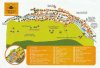
Map: N/A


Quite a big oddity today, and one which I hope is of significant interest to those reading this thread; for anyone having trouble interpreting the title of this post, this is a guidebook for Belgrade Zoo in Serbia, a collection which is seldom discussed on the forum, and (I suspect) even more rarely visited. From memory, the only regular member of the forum who has visited is @Grant Rhino ; given the fact that this guidebook is in Russian - not only a language I do not understand but one in Cyrillic, an alphabet I cannot read - the contents of this post will be fairly scanty when compared to prior posts, and I therefore hope Grant has an opportunity to pop into this thread to add any thoughts, recollections and so forth, to supplement what I have written!

Fortunately, despite the fact that I cannot read the vast majority of this guidebook there is still a reasonable amount that can be said; not only is it very attractive on an aesthetic level, due to the vast number of large colour photographs illustrating the text throughout, but it is also rather well-designed in terms of the way it presents the information within in a clear and methodical fashion. The only major intrinsic problem with this item- as far as my personal preferences are concerned, in any case - is the fact that this represents yet another example of a ring-bound guidebook, something which as I have noted in the past is difficult to store or shelve satisfactorily, is unattractive to the eye and unpleasant on a tactile level, and is prone to increasing wear-and-tear. Fortunately, as with the majority of previous examples of ring-bound items within this thread, the guidebook is otherwise high-quality and attractive enough to ameliorate this issue.

Before I start to discuss the main body of the text, it is worth noting here that although there is no map included within this guidebook, the interior front and back covers *do* include a very attractive feature which in some regards compensates for this omission; to wit, they are illustrated by a total of 36 photographs showing animal mosaics which (per the photographic translation tool on my phone) adorn the entrance to Belgrade Zoo. These are truly beautiful and are something one would expect to find at a zoological collection in a major city such as Berlin, Vienna or Prague, rather than a seldom-discussed collection in the Balkans; this really does illustrate the importance of not overlooking "obscure" collections and presuming that they have no surprises in store for the enthusiast, I reckon! As such, I present these images below in full:

full

full


Beyond here, the guidebook is divided roughly into six overall segments; firstly, after a general introduction to Belgrade and the zoo written by the city mayor, and a more in-depth introduction to the zoo itself from Vuk Bojović, the director of the zoo at the time of publication - and who passed away not long afterwards, I believe - the main body of the text starts by presenting a short history of Belgrade Zoo, discussing the opening of the zoo in 1936, its near-total destruction less than a decade later during the Second World War, and the slow process of rebuilding which - after stagnating for many years - had recently resumed in the decade following the end of the Yugoslav Wars. This is accompanied by a discussion of the various captive breeding and conservation programmes with which the zoo is involved, and an overview of the CITES treaty.

full


The next three segments of the guidebook - comprising the bulk of the overall text - present a complete account of the species present within the collection at the time of publication, divided into sections for mammals, birds and reptiles. Each section is preceded by a full-page colour montage of photographs depicting various of the species discussed within; for instance, the following comprises the introduction to the mammal species accounts.

full


Each of the individual species accounts follows the same general format; the common name of the species is given alongside the scientific name (with the latter being in the Latin alphabet, something which significantly assists with the overall interpretation of the text in the cases where a more unusual species is listed), followed by a large colour photograph and one or two paragraphs giving a short summary about the species in question. Furthermore, a small text box is provided, presenting the following key facts; the family within which the species is classified; the wild distribution; the general habitat of the species; lifespan; and where appropriate, the CITES classification of the species. As such, the quantity and quality of information presented appears to reach a relatively high level, especially when one considers that this is maintained throughout the entirety of the species accounts, with each and every taxon discussed given this treatment. In order to give a general impression of this section of the guidebook, the following three scans show double-page spreads from the mammal, bird and reptile sections respectively.

full

full

full


Beyond the species accounts, a pair of shorter segments conclude the main body of the guidebook; firstly, a section comprising a variety of colour photographs depicting the volunteers and staff who worked at the collection at the time of publication, posing with assorted animals. This is followed by a gallery of photographs taken throughout the zoo itself, showing various enclosures, statues, and other images intended to give a general impression of the collection. I suspect that the second of these segments will be of significantly more interest to those reading this thread, and to the wider forum populace given how seldom Belgrade Zoo has been discussed or depicted on Zoochat - as such, I have reproduced this section in full:

full

full

full


However, possibly one of the most interesting aspects of this guidebook - as far as providing a useful resource for the wider forum is concerned - is the index which is located across the final pages; given the general format of the species accounts which occur throughout the main body of the text, for all intents and purposes this comprises a complete stocklist for Belgrade Zoo at the time of publication. Given the fact that this saves me the effort of transcribing the scientific names of each and every species mentioned within the guidebook, in order to produce such a resource myself, I have elected to also reproduce this section of the guidebook in full.

full


Overall, then, this guidebook is something of a hidden treasure - although the language barrier prevents me assessing the quality of the information provided within to my full satisfaction, it appears to be fairly comprehensive, and alongside the lavish photographic illustration both of the species held within the collection and the zoo itself, and the sections on zoo history and conservation which open the guidebook, I feel fairly confident in stating that this is an item of high value both to the casual visitor to the zoo, and the dedicated zoo enthusiast and guidebook collector.

As usual, I would value your thoughts and feedback - as noted, I particularly hope that @Grant Rhino may have something to contribute here, but naturally the floor is open to anyone and everyone, no matter how familiar they are with this collection!
The mosaics are really well done! Just a question on the criteria what species they choose for the mosaic, because some of those are definitely not present in the collection (tarsier and giant panda)
 
Day 29: Beogradski Zoološki Vrt (2011) - Assorted Animals (Russian Edition)

full


Page count: 160
Photographs: 228 colour photographs (including 5 full-page images)
Illustrations/diagrams: N/A
Layout: Short introduction and zoo history, followed by comprehensive account of species held in collection, and montages of photographs taken in and around the zoo.
Map: N/A


Quite a big oddity today, and one which I hope is of significant interest to those reading this thread; for anyone having trouble interpreting the title of this post, this is a guidebook for Belgrade Zoo in Serbia, a collection which is seldom discussed on the forum, and (I suspect) even more rarely visited. From memory, the only regular member of the forum who has visited is @Grant Rhino ; given the fact that this guidebook is in Russian - not only a language I do not understand but one in Cyrillic, an alphabet I cannot read - the contents of this post will be fairly scanty when compared to prior posts, and I therefore hope Grant has an opportunity to pop into this thread to add any thoughts, recollections and so forth, to supplement what I have written!

Fortunately, despite the fact that I cannot read the vast majority of this guidebook there is still a reasonable amount that can be said; not only is it very attractive on an aesthetic level, due to the vast number of large colour photographs illustrating the text throughout, but it is also rather well-designed in terms of the way it presents the information within in a clear and methodical fashion. The only major intrinsic problem with this item- as far as my personal preferences are concerned, in any case - is the fact that this represents yet another example of a ring-bound guidebook, something which as I have noted in the past is difficult to store or shelve satisfactorily, is unattractive to the eye and unpleasant on a tactile level, and is prone to increasing wear-and-tear. Fortunately, as with the majority of previous examples of ring-bound items within this thread, the guidebook is otherwise high-quality and attractive enough to ameliorate this issue.

Before I start to discuss the main body of the text, it is worth noting here that although there is no map included within this guidebook, the interior front and back covers *do* include a very attractive feature which in some regards compensates for this omission; to wit, they are illustrated by a total of 36 photographs showing animal mosaics which (per the photographic translation tool on my phone) adorn the entrance to Belgrade Zoo. These are truly beautiful and are something one would expect to find at a zoological collection in a major city such as Berlin, Vienna or Prague, rather than a seldom-discussed collection in the Balkans; this really does illustrate the importance of not overlooking "obscure" collections and presuming that they have no surprises in store for the enthusiast, I reckon! As such, I present these images below in full:

full

full


Beyond here, the guidebook is divided roughly into six overall segments; firstly, after a general introduction to Belgrade and the zoo written by the city mayor, and a more in-depth introduction to the zoo itself from Vuk Bojović, the director of the zoo at the time of publication - and who passed away not long afterwards, I believe - the main body of the text starts by presenting a short history of Belgrade Zoo, discussing the opening of the zoo in 1936, its near-total destruction less than a decade later during the Second World War, and the slow process of rebuilding which - after stagnating for many years - had recently resumed in the decade following the end of the Yugoslav Wars. This is accompanied by a discussion of the various captive breeding and conservation programmes with which the zoo is involved, and an overview of the CITES treaty.

full


The next three segments of the guidebook - comprising the bulk of the overall text - present a complete account of the species present within the collection at the time of publication, divided into sections for mammals, birds and reptiles. Each section is preceded by a full-page colour montage of photographs depicting various of the species discussed within; for instance, the following comprises the introduction to the mammal species accounts.

full


Each of the individual species accounts follows the same general format; the common name of the species is given alongside the scientific name (with the latter being in the Latin alphabet, something which significantly assists with the overall interpretation of the text in the cases where a more unusual species is listed), followed by a large colour photograph and one or two paragraphs giving a short summary about the species in question. Furthermore, a small text box is provided, presenting the following key facts; the family within which the species is classified; the wild distribution; the general habitat of the species; lifespan; and where appropriate, the CITES classification of the species. As such, the quantity and quality of information presented appears to reach a relatively high level, especially when one considers that this is maintained throughout the entirety of the species accounts, with each and every taxon discussed given this treatment. In order to give a general impression of this section of the guidebook, the following three scans show double-page spreads from the mammal, bird and reptile sections respectively.

full

full

full


Beyond the species accounts, a pair of shorter segments conclude the main body of the guidebook; firstly, a section comprising a variety of colour photographs depicting the volunteers and staff who worked at the collection at the time of publication, posing with assorted animals. This is followed by a gallery of photographs taken throughout the zoo itself, showing various enclosures, statues, and other images intended to give a general impression of the collection. I suspect that the second of these segments will be of significantly more interest to those reading this thread, and to the wider forum populace given how seldom Belgrade Zoo has been discussed or depicted on Zoochat - as such, I have reproduced this section in full:

full

full

full


However, possibly one of the most interesting aspects of this guidebook - as far as providing a useful resource for the wider forum is concerned - is the index which is located across the final pages; given the general format of the species accounts which occur throughout the main body of the text, for all intents and purposes this comprises a complete stocklist for Belgrade Zoo at the time of publication. Given the fact that this saves me the effort of transcribing the scientific names of each and every species mentioned within the guidebook, in order to produce such a resource myself, I have elected to also reproduce this section of the guidebook in full.

full


Overall, then, this guidebook is something of a hidden treasure - although the language barrier prevents me assessing the quality of the information provided within to my full satisfaction, it appears to be fairly comprehensive, and alongside the lavish photographic illustration both of the species held within the collection and the zoo itself, and the sections on zoo history and conservation which open the guidebook, I feel fairly confident in stating that this is an item of high value both to the casual visitor to the zoo, and the dedicated zoo enthusiast and guidebook collector.

As usual, I would value your thoughts and feedback - as noted, I particularly hope that @Grant Rhino may have something to contribute here, but naturally the floor is open to anyone and everyone, no matter how familiar they are with this collection!

Another guide that was also published in the English language.
 

Attachments

  • Screenshot_20220202-203820.png
    Screenshot_20220202-203820.png
    702.5 KB · Views: 5
Another guide that was also published in the English language.

Ah, excellent :) any interesting tidbits in your copy worth mentioning, which I may have missed in mine due to the language barrier?
 
Day 29: Beogradski Zoološki Vrt (2011) - Assorted Animals (Russian Edition)

full


Page count: 160
Photographs: 228 colour photographs (including 5 full-page images)
Illustrations/diagrams: N/A
Layout: Short introduction and zoo history, followed by comprehensive account of species held in collection, and montages of photographs taken in and around the zoo.
Map: N/A


Quite a big oddity today, and one which I hope is of significant interest to those reading this thread; for anyone having trouble interpreting the title of this post, this is a guidebook for Belgrade Zoo in Serbia, a collection which is seldom discussed on the forum, and (I suspect) even more rarely visited. From memory, the only regular member of the forum who has visited is @Grant Rhino ; given the fact that this guidebook is in Russian - not only a language I do not understand but one in Cyrillic, an alphabet I cannot read - the contents of this post will be fairly scanty when compared to prior posts, and I therefore hope Grant has an opportunity to pop into this thread to add any thoughts, recollections and so forth, to supplement what I have written!

Fortunately, despite the fact that I cannot read the vast majority of this guidebook there is still a reasonable amount that can be said; not only is it very attractive on an aesthetic level, due to the vast number of large colour photographs illustrating the text throughout, but it is also rather well-designed in terms of the way it presents the information within in a clear and methodical fashion. The only major intrinsic problem with this item- as far as my personal preferences are concerned, in any case - is the fact that this represents yet another example of a ring-bound guidebook, something which as I have noted in the past is difficult to store or shelve satisfactorily, is unattractive to the eye and unpleasant on a tactile level, and is prone to increasing wear-and-tear. Fortunately, as with the majority of previous examples of ring-bound items within this thread, the guidebook is otherwise high-quality and attractive enough to ameliorate this issue.

Before I start to discuss the main body of the text, it is worth noting here that although there is no map included within this guidebook, the interior front and back covers *do* include a very attractive feature which in some regards compensates for this omission; to wit, they are illustrated by a total of 36 photographs showing animal mosaics which (per the photographic translation tool on my phone) adorn the entrance to Belgrade Zoo. These are truly beautiful and are something one would expect to find at a zoological collection in a major city such as Berlin, Vienna or Prague, rather than a seldom-discussed collection in the Balkans; this really does illustrate the importance of not overlooking "obscure" collections and presuming that they have no surprises in store for the enthusiast, I reckon! As such, I present these images below in full:

full

full


Beyond here, the guidebook is divided roughly into six overall segments; firstly, after a general introduction to Belgrade and the zoo written by the city mayor, and a more in-depth introduction to the zoo itself from Vuk Bojović, the director of the zoo at the time of publication - and who passed away not long afterwards, I believe - the main body of the text starts by presenting a short history of Belgrade Zoo, discussing the opening of the zoo in 1936, its near-total destruction less than a decade later during the Second World War, and the slow process of rebuilding which - after stagnating for many years - had recently resumed in the decade following the end of the Yugoslav Wars. This is accompanied by a discussion of the various captive breeding and conservation programmes with which the zoo is involved, and an overview of the CITES treaty.

full


The next three segments of the guidebook - comprising the bulk of the overall text - present a complete account of the species present within the collection at the time of publication, divided into sections for mammals, birds and reptiles. Each section is preceded by a full-page colour montage of photographs depicting various of the species discussed within; for instance, the following comprises the introduction to the mammal species accounts.

full


Each of the individual species accounts follows the same general format; the common name of the species is given alongside the scientific name (with the latter being in the Latin alphabet, something which significantly assists with the overall interpretation of the text in the cases where a more unusual species is listed), followed by a large colour photograph and one or two paragraphs giving a short summary about the species in question. Furthermore, a small text box is provided, presenting the following key facts; the family within which the species is classified; the wild distribution; the general habitat of the species; lifespan; and where appropriate, the CITES classification of the species. As such, the quantity and quality of information presented appears to reach a relatively high level, especially when one considers that this is maintained throughout the entirety of the species accounts, with each and every taxon discussed given this treatment. In order to give a general impression of this section of the guidebook, the following three scans show double-page spreads from the mammal, bird and reptile sections respectively.

full

full

full


Beyond the species accounts, a pair of shorter segments conclude the main body of the guidebook; firstly, a section comprising a variety of colour photographs depicting the volunteers and staff who worked at the collection at the time of publication, posing with assorted animals. This is followed by a gallery of photographs taken throughout the zoo itself, showing various enclosures, statues, and other images intended to give a general impression of the collection. I suspect that the second of these segments will be of significantly more interest to those reading this thread, and to the wider forum populace given how seldom Belgrade Zoo has been discussed or depicted on Zoochat - as such, I have reproduced this section in full:

full

full

full


However, possibly one of the most interesting aspects of this guidebook - as far as providing a useful resource for the wider forum is concerned - is the index which is located across the final pages; given the general format of the species accounts which occur throughout the main body of the text, for all intents and purposes this comprises a complete stocklist for Belgrade Zoo at the time of publication. Given the fact that this saves me the effort of transcribing the scientific names of each and every species mentioned within the guidebook, in order to produce such a resource myself, I have elected to also reproduce this section of the guidebook in full.

full


Overall, then, this guidebook is something of a hidden treasure - although the language barrier prevents me assessing the quality of the information provided within to my full satisfaction, it appears to be fairly comprehensive, and alongside the lavish photographic illustration both of the species held within the collection and the zoo itself, and the sections on zoo history and conservation which open the guidebook, I feel fairly confident in stating that this is an item of high value both to the casual visitor to the zoo, and the dedicated zoo enthusiast and guidebook collector.

As usual, I would value your thoughts and feedback - as noted, I particularly hope that @Grant Rhino may have something to contribute here, but naturally the floor is open to anyone and everyone, no matter how familiar they are with this collection!

What a gorgeous book, minus the photoshop of the cover lion's eyes :D It looks like it contains tons of information, possibly because information like this is harder to find in cyrillic. The mosaics are beautiful and make for lovely pages (minus the very fat, or hopefully pregnant, cheetah).

It's a bit frustrating that a place like this can have jaguarundi, while they're basically non-existent in a country they're native to!
 
It's a bit frustrating that a place like this can have jaguarundi, while they're basically non-existent in a country they're native to!

I think it's meant to be a cougar on the mosaic as opposed to a jaguarundi - but your point still stands - it does seem odd that this species is so plentiful on this side of the pond yet almost unheard of in the US. Could just be a greater demand for small cat species in Europe (as we seem to have greater numbers of all small cats other than bobcat, canada lynx and black-footed cat)?
 
Hi TeaLovingDave (and others)

I don't have time to have a long look at this right now but I will have a good look later. From what I can see it looks brilliant though!

I will say one thing though - you've mentioned Berlin, Vienna and Prague and alluded to Belgrade and the Balkans as being a bit of a backwater.

Belgrade is actually a very big city and a very significant one historically. Remember it was the capital of Yugoslavia - a fiercely independent and neutral European country during the Cold War era (despite being communist). Under Tito, Yugoslavia was enormously significant not only in Europe (where is acted as a bit of a buffer zone between the Capitalist West and Soviet East) but also in its role as unofficial leader of the Non-Aligned Movement - along with countries such as India, Egypt and others. Its role during that era was huge for a country its size. A country like that is always going to have a fairly good zoo in its capital as part of what it showcases to the world.

While it's fair to say that since the breakup of Yugoslavia Belgrade has become less "important" through the eyes of most of the world's population, culturally it still has a tradition of "being important" and having a relatively good zoo is a small part of this. Having a good zoo makes the population of a city proud - and the people of Belgrade are proud people who love their city. This is part of showcasing what is still a pretty big city and still a very interesting one.

I'm not surprised by the quality of this guidebook - and I can't wait to have a good look later tonight when I'm not so busy.
 
I will say one thing though - you've mentioned Berlin, Vienna and Prague and alluded to Belgrade and the Balkans as being a bit of a backwater.......while it's fair to say that since the breakup of Yugoslavia Belgrade has become less "important" through the eyes of most of the world's population, culturally it still has a tradition of "being important" and having a relatively good zoo is a small part of this.

Indeed; as someone whose original area of study - even if I don't actually use my university qualifications professionally - is the medieval history of the Balkans and Middle East, I'm definitely aware of the historical significance of Belgrade and the Balkans in general :) I think I somewhat failed to make it clear I was talking about "major cities" as they are perceived by the hypothetical zoo-enthusiast hive-mind (that is to say, the cities that "everyone knows" are major zoo cities) rather than the relative importance of a city in-and-of itself :p

I definitely want to get to that general part of the world sometime soon; more for my history-nerd side than my zoo-nerd side, although the latter would definitely find avenues of interest too!
 
Indeed; as someone whose original area of study - even if I don't actually use my university qualifications professionally - is the medieval history of the Balkans and Middle East, I'm definitely aware of the historical significance of Belgrade and the Balkans in general :) I think I somewhat failed to make it clear I was talking about "major cities" as they are perceived by the hypothetical zoo-enthusiast hive-mind (that is to say, the cities that "everyone knows" are major zoo cities) rather than the relative importance of a city in-and-of itself :p

I definitely want to get to that general part of the world sometime soon; more for my history-nerd side than my zoo-nerd side, although the latter would definitely find avenues of interest too!

I know what you mean about not using uni qualifications! I completed my PhD and still don't use it (or even my previous uni qualifications) in my work! That said I'm glad I completed them.

I also know what you mean about the main point though - while it's an important city historically, Belgrade isn't a significant place when it comes to zoos and zoo enthusiasts. That said, if things go in the right direction then this zoo can be a serious showpiece for that city. I think that this zoo has great potential!

Longer and better thought-out response will come later today.

Cheers, Grant
 
Ah, excellent :) any interesting tidbits in your copy worth mentioning, which I may have missed in mine due to the language barrier?

Not really. By far the most interesting page is the potted history of the zoo (scan attached). While many zoos have expanded their footprint over time, it's hard to think of many (any?) others that have seen a significant (50%) reduction in size.

The individual species texts are rather perfunctory and some of the English translations are odd. On giraffes, for example: These animals are considered to be dumb, but it is also established that, when they get scared, they release some kind of voices that look like silent gurgle.
 

Attachments

  • BelgradeHistory.jpg
    BelgradeHistory.jpg
    123.8 KB · Views: 1
Day 30: Chestnut Centre Otter, Owl and Wildlife Park (2004) - Owl, Marten and Otters

full


full


Page count: 22 (including interior of front and rear covers)
Photographs: c.40 colour images
Illustrations/diagrams: N/A
Layout: Introduction to collection, general overview of species held, and discussion of education.
Map: Located in centre pages of guidebook


A nice little item this time round, and the one to which I referred towards the beginning of this thread when I mentioned a guidebook I purchased in 2021 which nearly killed me due to the condition it arrived it :p @Skukuza , to whom I was replying, thought I was being hyperbolic and referring to anger or dismay..... but nope. When the envelope containing this guidebook arrived, I found that (presumably due to another parcel being damaged whilst in close proximity to mine during the postal process) it was significantly soaked in some form of perfume or aftershave; on opening the envelope even the guidebook itself was visibly stained and soaked across perhaps a quarter of the total surface area. Due to my lifelong asthma - for which strong perfumes, aftershave and deodorants are a definite trigger - I promptly went into a fairly bad asthma attack, thankfully ameliorated by Helly helping me to get outside in the fresh air and take my inhaler. We subsequently placed the guidebook deep within a sealed plastic tub full of powdered sodium bicarbonate, which I use to get rid of the smell of strong cigarette smoke (another of my triggers) from guidebooks I obtain, and left it there for several months - occasionally changing the powder within. I have now been left with a guidebook which is no longer visibly stained, and which (although still strong-smelling enough I don't like to be around it for too long) I can tolerate being in my presence.

full


In any case, onto the guidebook itself! The Chestnut Centre is a collection which I hold a definite fondness for, and which I managed to visit a few times before it ultimately closed down in late 2017 due to the retirement of the owners; I rather suspect that it was held in similar affections by many UK zoo enthusiasts, as although it was somewhat small and out-of-the-way, it definitely punched above its weight in terms of the exhibit quality found there, the species displayed and the breeding successes they experienced. This guidebook is also best described as "small but choice" I reckon, not being the longest or most detailed item in my collection but being very pleasant on an aesthetic level, and doing a pretty good job of conveying key information to the reader. The opening page comprises a short introduction to the collection, discussing its origins and briefly describing the setting of the zoo. Beyond here, the main body of the guidebook discusses the various species displayed at the collection at the time of publication; the list is not comprehensive, and some species are discussed in rather more depth than others, but as I shall demonstrate this section is nonetheless very informative and attractively laid-out.

full


full


As one can imagine given the background to the collection, as discussed in the introduction, a fairly significant portion of the guidebook is devoted to discussing the otters held at the Chestnut Centre, and the conservation of otters in general. A selection of some pages from this section can be seen above; it is immediately apparent that the descriptions and discussions of the species in question pay a lot of attention to their wild status and conservation, with general information about their diet, distribution and behaviour also provided to a fairly high level of detail. Strangely enough, despite the fact that the species had been within the collection for over a decade at the time of publication, and the other otter species at the collection are discussed at length, the only reference to Giant Otter within the text is the short segment on the in-situ conservation projects working with the species in Guyana with which Chestnut was involved. Given the fact that (as far as I am aware) this was the final guidebook released by the collection before it closed 13 years after publication, this means that no mention of the subsequent first UK breeding of Giant Otter can be found in literature published by the collection.

The following pages discuss a variety of mammal species native to the UK which were displayed at the collection at the time of publication - Pine Marten, European Polecat, European Badger, Red Fox, Scottish Wildcat and Harvest Mouse - alongside the large free-roaming group of Fallow Deer which occupied the deer park covering the vast majority of the collection footprint; as the map which is contained within the central pages of the guidebook - and which I shall discuss further at the end of this account - demonstrates, the various owl, otter and UK mammal exhibits at the collection were located within a narrow, wooded gorge, with the remainder of the collection comprising a large open area of mixed trees and meadow. Each of these accounts follows roughly the same style and format as the previously-discussed otter accounts, as do the several pages discussing owl and bird of prey species at the collection which follow the map.

full


This portion of the guidebook - although covering several pages, as was the case with the otter discussion - is another example of the fact that these species accounts are obviously intended to give a general overview of the collection, rather than providing a full and comprehensive walkthrough of the species held within; despite the fact that a total of 15 owl taxa are discussed to varying lengths here, there are at least two or three species omitted which I know to have been present at the time of publication. However, this should not be taken as a critique of the content; as already discussed, I think this guidebook is both aesthetically appealing and provides a decent level of information about the collection, which are the key purposes of a zoo guidebook.

The guidebook concludes with a short discussion of the school education activities and animal adoptions which the collection provided; given the reasonably-remote location of the Chestnut Centre, its focus on UK native wildlife and the conservation of the species concerned, and the fact that at the time of publication there were few zoological collections in the general area, I rather suspect that school activities and educational trips will have played a fairly major role in the day-to-day activities of the collection.

As previously noted, the centre pages of this guidebook contain a map of the collection - given the somewhat awkward format and layout, the map was somewhat unwieldy to scan and therefore it has been necessary for me to present it in two segments viewed vertically, as was the case for the 1989 Tierpark Berlin and 1995 Zoo Basel guidebook maps discussed previously within this thread. I have a more up-to-date map of the collection in a significantly smaller format which I obtained at the time of my final visit, in November 2017 shortly before the collection closed for the last time, but for the purposes of "purity of content" I will upload this as an attachment in a separate post.

full

full


So, a rather nice little item from a collection which is sorely-missed; I definitely feel that there was a great deal of potential lost when Chestnut Centre closed, although the reasons why it closed are fairly easy to understand. Given the quality of this guidebook - and earlier guidebooks which I may well discuss at some point in the coming year - it is a great pity that (as far as the Bartlett Society has been able to discern) no further editions were published, especially when one considers the achievements which were to come for the collection.

And now, I shall put the guidebook back into its bicarbonate sarcophagus, in the hope that eventually it will become sufficiently odour-free for me to store it alongside the other items in my collection, and to handle for more prolonged periods!
 
have to agree re the frustrations of strong cigarette smoke, have never considered quarantining them in a bicarb safe as you have but might have to give that a try!
 
Just been catching up. I love the Wroclaw and Belgrade guidebooks; I can easily see why the first would be a gold standard with the wealth of information it provides, and the Belgrade book is very comprehensive with both the full species list and profiles as well as an array of photos showing the overall aesthetic and landscape of the zoo.

The fact this item is ring-bound is only the slightest negative point!

I've seen you mention this a few times now. I'd imagine the ring-binding is a cost-related decision for a lot of zoos, if it really does fall apart more quickly?

We subsequently placed the guidebook deep within a sealed plastic tub full of powdered sodium bicarbonate, which I use to get rid of the smell of strong cigarette smoke (another of my triggers) from guidebooks I obtain, and left it there for several months - occasionally changing the powder within.
have to agree re the frustrations of strong cigarette smoke, have never considered quarantining them in a bicarb safe as you have but might have to give that a try!

(Baking soda, in case any of the Americans were unclear ;))

Pretty ingenious method. I'm a little surprised that you've had an issue with multiple guidebooks smelling of cigarette smoke, but I know Europeans tend to smoke very often so I guess I shouldn't be. It does raise a question somewhat off topic: to what extent is smoking allowed in European zoos, both in the UK and on the continent? In most zoos over here it is restricted to a small number of designated locations and it would be hard to imagine a book being imbued with the smell unless it was in the collection of an avid chain-smoker.

So, a rather nice little item from a collection which is sorely-missed; I definitely feel that there was a great deal of potential lost when Chestnut Centre closed, although the reasons why it closed are fairly easy to understand.

It does look like a very unfortunate loss for the zoo community. At least from my perspective, it seems like zoo closures are a fairly regular occurrence in the UK... does this stem from the abundance of privately-owned zoos or is there a lot more to it than that?
 
That's very nice to see, as Chestnut is a 'one that got away' for me. Its not too far away, was always on my list to do one day, then it closed down and I was too late. A bit of a shame, because I can tell I'd have really liked it.
 
I have a more up-to-date map of the collection in a significantly smaller format which I obtained at the time of my final visit, in November 2017 shortly before the collection closed for the last time, but for the purposes of "purity of content" I will upload this as an attachment in a separate post.

That's very nice to see, as Chestnut is a 'one that got away' for me. Its not too far away, was always on my list to do one day, then it closed down and I was too late. A bit of a shame, because I can tell I'd have really liked it.

As promised, here is the collection map as of Autumn 2017:

IMG_20220204_0001.jpg

I've seen you mention this a few times now. I'd imagine the ring-binding is a cost-related decision for a lot of zoos, if it really does fall apart more quickly?

To clarify, I've not had any ring-bound guidebooks actually *fall apart* per se, they merely get battered and worn a lot quicker due to the action of metal/plastic spirals rubbing against the pages!

It does raise a question somewhat off topic: to what extent is smoking allowed in European zoos, both in the UK and on the continent? In most zoos over here it is restricted to a small number of designated locations and it would be hard to imagine a book being imbued with the smell unless it was in the collection of an avid chain-smoker.

Smoking is still permitted in a few collections, although increasingly only in designated areas, and the trend is definitely towards total prohibition - I've visited one or two collections on the continent where it was permitted throughout the collection, however.

As regards contamination of guidebooks, the primary reason is simply that one of the major routes through which they become available on the secondary market is second-hand booksellers who may have obtained them via the estate of a deceased individual (whether an actual collector, or merely a member of the public who happens to have visited a handful of zoological collections) - as smoking is more commonplace in the older sector of the population, this also means that older guidebooks have a higher chance of having passed through the hands *of* a smoker.

At least from my perspective, it seems like zoo closures are a fairly regular occurrence in the UK... does this stem from the abundance of privately-owned zoos or is there a lot more to it than that?

I couldn't comment offhand on whether this is a factor or not, or whether it *is* a regular occurrence at all; however, I imagine another factor is that, because of the higher UK forum population, a higher percentage of the small, less well-known collections particularly vulnerable to closure are subject to regular discussion on Zoochat. Conversely, any number of smaller collections in the USA might close without any North American zoo enthusiasts having occasion to notice or remark upon it for some time.
 

Attachments

  • IMG_20220204_0001.jpg
    IMG_20220204_0001.jpg
    164.4 KB · Views: 45
Day 31: Scottish Owl Centre (2013) - Great Grey Owl

full


Page count: 24
Photographs: c.50 colour images
Illustrations/diagrams: N/A
Layout: Discussion of collection history and aims, general information and trivia on owl species both in collection and wild, overview of daily keeper routine, and puzzles/games for children.
Map: Located on first page of guidebook


This time, something from a collection which (as the readers of this thread will likely be aware) I have a fairly large soft spot for, given the high standards of exhibit quality, massive variety of species on display within - Scottish Owl Centre comprising the world's largest collection of owl species in a public collection - and my strong interest in owls in general. This guidebook was released a year or so after the SOC re-opened at its current site in central Scotland, having previously been located in the (very) remote Kintyre Peninsula to the west, and at present is the only guidebook which has been published by the collection - a pity, given how the zoo has developed over the past decade and become much more well-known amongst the UK zoo enthusiast community. As with many of the guidebooks released in the UK in recent years, this item is very much aimed towards families and children, rather than the significantly-smaller and more specialist market which people such as ourselves represent :p but there is still much to recommend here, as I shall demonstrate.

full


After the above map of the collection, the guidebook opens with a brief but rather well-presented introductory segment, discussing the overall aims of the Scottish Owl Centre and going into some detail about the events leading to the opening of the original site of the centre, and the subsequent relocation to a more central and accessible location; as I have noted in the past, this is the sort of thing I always like to see in a guidebook, and which is often omitted in these more family/child oriented items. As such, the presence of this section is a definite point in the favour of this guidebook.

full


Beyond here, a light-hearted double-page spread introduces some of the individual named owls which were used in the regular flight displays and shows at the time of publication, with a colour photograph and a handful of "likes" and "dislikes" provided for each; for instance we are told that Bruce the Boobook likes nibbling fingers and is a "happy chappy" who dislikes nothing, and that Hosking the Tawny Owl likes hearing his name and dislikes Eagle Owls; however, this section is followed by several pages which are presented at a more serious and informative level, whilst still being accessible to the causal audience for whom the guidebook is intended. The first of these comprises a double-page spread discussing the various owl species native to Scotland - slightly stretching the definition of native, admittedly, as it includes Snowy Owl on the grounds that this species formerly bred in the Shetland Islands and still occasionally occurs in the far north as a vagrant - immediately-followed by a section discussing the breeding populations of European Eagle Owl present sporadically throughout the UK; here, the argument (which I am inclined to agree with) is made that these represent not only captive escapees as is their "official" status, but also natural arrivals from the now-thriving population on the continent. The final of these sections comprises a short selection of frequently-asked questions and trivia items about owls - both those held at the collection and in general, and spanning a range of subjects from the more light-hearted to the serious.

full


This section is followed by a compilation of photographs taken around the Centre, showing various of the owls displayed within, along with images of staff and visitors, which occupies the central pages of the guidebook. Beyond here, sections discussing the daily routine of the keeping staff at the collection and the small tropical house containing various owl species which would otherwise be ill-suited to the vagaries of the Scottish climate conclude the main body of the guidebook as far as material of interest to the readers of this thread is concerned; the first of these is particularly interesting, given the fact that it provides an insight into something which many zoo guidebooks tend to skate over, but which would be of interest both to enthusiasts and the casual reader. However, it should be noted that several more pages *do* follow which are aimed squarely at the family/child audience for whom this guidebook is actually intended; the first of these comprises a range of owl-themed puns and jokes, of the sort that one would expect @Dassie rat to post on a regular basis on Zoochat :p so perhaps this segment would *also* be of interest to some on this forum! Beyond here, however, the various crosswords, spot-the-difference puzzles, wordsearches and so forth are most certainly material for a younger demographic than ourselves. The guidebook concludes with a short summary of ways in which the visitor to the collection can support the Centre; mentioning adoptions, owl encounters, donations and so forth.

full


This, then, is a pleasant little item which does not try to be anything more than what it is - a souvenir for families visiting the collection to read and enjoy, and hopefully learn something from in the process. Sometimes, guidebooks aiming for this demographic end up completely neglecting the opportunity to provide detailed and interesting information, and simply present a throwaway dumbed-down booklet; this is most certainly not the case here, even if this guidebook is a completely different animal from anything we have covered so far. Definitely worth picking up if one ever visits the collection in question, in any case.
 
Day 32: Scottish Deer Centre (c.1990) - Young Girl with Red Deer

full


full


Page count: 16
Photographs: c.35 colour images
Illustrations/diagrams: 5
Layout: Discussion of various subjects relating to deer in Scotland, and summary of species held in collection.
Map: Located on inner rear cover


From one Scottish collection to another; today's guidebook is probably one of the more unusual items in my collection, having been discovered in a charity shop in Edinburgh some years ago. At the time this entered my collection, the fact that the Scottish Deer Centre had *ever* released a guidebook was entirely unknown to the Bartlett Society, and no further copies have been unearthed to the best of my knowledge; as such I am the sole known holder of a Scottish Deer Centre guidebook on the master-list of UK guidebooks curated by the Society. This, along with the fact that the guidebook itself is undated, has left it somewhat difficult to work out precisely *when* it was published; context clues within (as I will relate anon) suggest that it was published not long after the collection first opened to the public in 1988.

The first thing that should be mentioned is that the contents of this guidebook place it squarely in the early years of the collection, when for all intents and purposes it was a working deer farm open to the public, with a farm shop and restaurant, guided tours of the farm paddocks, an indoor play area and other such features provided for the entertainment of visitors, with the various "farm" deer displayed alongside a very limited collection of exotic deer species. As such it strikes me as something of a pity that no guidebooks seem to have been published by the collection after it developed into a true zoological collection, although given how seldom it is visited by zoo enthusiasts it is entirely possible that further guidebooks *were* released and have merely not come to the attention of the community!

full


As noted previously, the collection did hold a small number of exotic species - Hog Deer and Pere David's Deer - to supplement the Red Deer, Sika Deer, Fallow Deer, Reindeer and Roe Deer which formed the backbone of the working farm, with all seven of these species discussed in passing within a segment of the guidebook intended to highlight the occupants of the Scottish Deer Centre; an excerpt from this double-page spread can be seen above. However, the vast majority of the guidebook comprises a more general discussion of various subjects relating to deer in Scotland, ranging from the historical interactions between deer and mankind, the modern day stalking and culling of deer, the farming of Red Deer and other species, and aspects of their life cycle and anatomy.

full


full


There are also sections relating more specifically to the Scottish Deer Centre itself, highlighting the "Interpretive Centre" located at the collection at this time, which appears to have comprised a museum containing various interpretive material relating to the subject of the co-existence of man and deer in Scotland, extending from the Neolithic to the present day, with an "audio-visual film show" being the centrepiece of this exhibition; these sections also promote the aforementioned indoor play area, restaurant and farm shop.

full


The guidebook concludes with a small map of the collection, the details of which further strengthen the impression that at the time of publication, the Scottish Deer Centre was more a theme park of sorts, centred around the aforementioned working deer farm, rather than the zoological collection which it would ultimately become. Despite the fact that I have yet to reach the collection in question, and therefore have never seen it "in the flesh", I think it is safe to say that it will now be completely unrecognisable from the time documented within this guidebook. As such, whether or not any further guidebooks from later points in the development of the Deer Centre await discovery in a second-hand bookshop or charity shop, or lurk in a dusty attic waiting to be auctioned off on eBay, this particular guidebook represents an important document in terms of zoo history.... even if, to be honest, it is fairly uninteresting in its own right :p
 
I think it is safe to say that it will now be completely unrecognisable from the time documented within this guidebook.

Honestly, not as different as you'd think, I'd say (at least not when I was there in 2016). All the layout shown here is basically still there, just extra things have been added around it. Fun little place.
 
Today's post (which will discuss Vogelpark Walsrode, incidentally) is coming along a little slower than I'd like, so just in case I can't get it polished off to my satisfaction over the course of this afternoon, I thought I would make use of some photographs I already have to hand in order to provide a general talking point and focus for questions and discussion :)

The following are images showing my collection of post-WWII German-language guidebooks from Zoo Berlin; they were originally uploaded to Facebook a year ago as part of a larger post highlighting the entirety of my Zoo Berlin collection, made within a group for the discussion of zoo guidebooks and maps started by Leszek Solski (the previously-discussed zoo historian based at Wroclaw). As I have added several guidebooks to my pre-1945 collection in the intervening time (including the two guidebooks which we have discussed within this thread), along with a substantial number of English-language guidebooks, the relevant images are now significantly out-of-date and therefore I am omitting them from *this* post. Conversely, as the post-WWII German collection was near-complete at the time I took these photographs, with only a single guidebook from 2011 missing, those images are worth highlighting here. The 2011 guidebook in question *has* now entered my collection, incidentally, so when I have an opportunity I intend to re-take the photograph concerned.

full


full


full


Hopefully the above will provide material of interest and discussion, and supplement my prior post highlighting my collection of Tierpark Berlin guidebooks, whilst I get the next daily post finished!
 
Back
Top