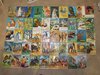
A Guidebook Library: TLD's year-long randomised walkthrough of zoo guides

Day 138: Parc Safari Hemmingford (1972) - Lion Head

full

full


Page count: 18 pages (including interior covers)
Photographs: c.42 colour photographs
Illustrations/diagrams: N/A
Layout: Brief introduction to collection, followed by discussion of species on exhibit, visitor information, and an account of one of the expeditions to capture stock for the Chipperfield parks.
Map: Within introductory passage.


Today, we reach an interesting milestone; the first guidebook from a Canadian collection to be discussed within this thread! Given the number of guidebooks I own from collections located in the USA, it may surprise some reading this thread to learn that my personal collection of zoological guidebooks contains very little material from Canada, with only three other zoological collections from the country being represented in total; for whatever reason, guidebooks from the country are significantly more scarce on the secondary market than is the case for its neighbour to the south.

I stumbled across this particular item by pure happenstance relatively recently, and my attention was instantly captured by the front cover image and the accompanying use of colour, typeface and layout; the image is one which was used as general illustration throughout several of the earlier guidebooks for Chipperfield collections here in the United Kingdom, and therefore coming across a Canadian guidebook using the image as a front cover would have taken me by surprise in any case given the fact that I was unaware that Jimmy Chipperfield's influence had extended across to North America in such a direct fashion. However, those reading this thread may recall that the image was used as the front-cover image for another guidebook within my personal collection, along with a typeface identical in style and colour - the first published by Lambton Lion Park, here in the northeast of England, which I discussed some months ago. Naturally, my curiosity was piqued at this discovery; was the similarity due to a shared Chipperfield background, or had Parc Safari decided to plagiarise an existing guidebook and selected a highly-obscure English collection to maximise the chances of escaping detection? Moreover, if the similarity was indeed due to Jimmy Chipperfield being involved in the creation of the collection, I was curious to learn how the "usual" style of guidebook produced by his collections at the time of publication may have been adapted for the bilingual Quebecois visitors to Parc Safari itself.

full


The guidebook opens with a short introduction, presented in both Québécois French and English, which makes clear that the collection was the joint brainchild of Colonel Gordon Dailley (a former ice hockey player who was a member of the gold-medal team for Great Britain at the 1936 Winter Olympics before serving in the Canadian Army during WWII and the Korean War) and Jimmy Chipperfield, with further direct involvement from their respective sons; as such, it is apparent that the general similarity in design and use of images between this guidebook and the aforementioned Lambton Lion Park guide was indeed deliberate and officially-condoned. As I shall discuss anon, on reading through this guidebook when it first arrived I noticed several other significant similarities between the two guidebooks, both in terms of the photographic images used and replication of large segments of text.

The introductory pages also contain a simplified and somewhat garishly-coloured map of the collection, with each major area of the safari park colour-coded to reflect the differing inhabitants within the various segments of the drive-through reserve; unfortunately, the use of colour renders the map somewhat awkward to use and interpret, particularly given the fact that the predominant colour used outside the main reserve is a bright yellow which drowns out the roads and paths labelled within those areas. However, as far as I can tell the map *does* reflect the layout of the collection at the time of publication fairly well; although Parc Safari has expanded and changed somewhat in the following decades, looking at the modern-day zoo on Google Maps I can see significant portions of the drive-through roads remain recognisable now.

full


Naturally, the biggest difference between this guidebook and the previously-discussed Lambton guide is the fact that the text is fully bilingual throughout; the French-language content on each page is presented prior to the English-language translation, as one would expect from a guidebook published in Quebec, but as far as I can tell the content itself is identical across the two iterations. The fact that the main body of the text has, therefore, been more-or-less doubled in length is perhaps one reason why this guidebook is somewhat longer than the Lambton guidebook (or indeed other Chipperfield guidebooks I have encountered from this timespan) despite being printed in a significantly larger format overall - large enough that each page is marginally too large to scan fully, in fact! However, this has produced the opportunity for a significant increase in the overall quantity and (due to the larger scale) print quality of the various colour photographs used throughout the guidebook as illustration. The vast majority of these have, it must be noted, occurred in various other Chipperfield guidebooks; however, they definitely seem to be reproduced in higher resolution and better colour than is usually the case.

The guidebook discusses the various segments of the drive-through reserve in a fairly generalised fashion, as one would expect given the fact that this guidebook was - as the introduction makes clear - written and produced prior to the collection actually opening to the public for the first time; however, a relatively large amount of interesting and high-quality information is provided nonetheless. These passages include details relating to the wild diet, behaviour and range of those animals held within the collection, aspirations for successful captive breeding of elephant, white rhinoceros, lion and other taxa, and general information and safety advice for visitors driving through the lion and baboon reserves. Interestingly, two species cited on the map - crowned crane and an unspecified zebra taxon - are entirely unmentioned within the main body of the text, which may well be due to the aforementioned need to finalise the guidebook prior to the collection opening. The five species/reserve accounts are presented in the order which a visitor to the collection would encounter them as they drove through the safari exhibit complex; a large mixed exhibit for African Elephant, White Rhinoceros, Crowned Crane, Zebra and Ostrich; an exhibit for Cheetah; a pair of exhibits for African Lion; and a large mixed exhibit for Hamadryas, Olive, Yellow and Chacma Baboon. Given how freely baboon taxa tend to interbreed when given the opportunity, one would tend to suspect that if these species were indeed present at the time of publication, immediately after the collection first opened, they will have degenerated into a complex hybrid swarm within two or three generations!

The general walkthrough account of the collection concludes with a brief segment relating to the "Pets Corner" located beyond the drive-through reserve, which appears to have contained a variety of domestic livestock, cats, rabbits, unspecified deer and (more unusually) lion cubs and wallabies; this segment also contains promotion of the snack bar and souvenir shop.

full

full


Beyond here, the guidebook provides a pair of interesting supplementary accounts, which I have reproduced above and below:

  • Further information relating to key species displayed within the collection and discussed previously within the main body of the text, including range maps, scientific names and physical descriptions
  • A detailed account of an expedition to Uganda, during which Richard Chipperfield sought out elephants for capture and export; this has been reproduced almost verbatim from a similar account located within the previously-discussed Lambton guidebook, with minor edits where required to substitute "Canada" for "England", "Hemmingford" for "Lambton" and so forth, and translation of the text into Quebecois French. As such, although the actual content of this segment is no less interesting and informative than it was when previously discussed, one could make a definite argument that the main value of this section to a modern-day guidebook enthusiast lies in the clear example of how the various Chipperfield guidebooks recycled content at this time.

full


Overall, this is a very interesting guidebook, and one which gives a valuable insight into the early days of the zoological collection to which it pertains; moreover, as a primary document of zoological history, and more specifically the history of the various collections which opened throughout the late-1960s and early-1970s following the Chipperfield "safari park" model (and often with his direct involvement) it is a particularly unusual and valuable example. As always, I would be very interested in any feedback and comments which those more familiar with the modern-day collection may be able to provide; I know from the gallery that @TheGerenuk has visited relatively recently, but perhaps @snowleopard or @TZDugong might have useful insights too?

Did you already forget I was there a few weeks ago? :P The map is particularly interesting to me, since they didn't yet have any of the walk-through zoo. As @TheGerenuk shared, most of the species are still there, with the biggest change being no baboons at all (though another Quebec zoo still mixes two species, and has hybrids).

I've noticed the same lack of Canadian guides, as well. My recent gift shop visits were a real hodgepodge of items, with no consistency among brands or items except for Papo figures. In some ways it was a nice change from US ones, which often all have the same merch with only the place's name changed, but it also meant I had no idea what I was going to find and sometimes that meant next to nothing that worked as a zoo souvenir. Parc Safari was one of the worst offenders, despite having the largest shop.

This would never be allowed in the US. I knew some foreign collections did it but I had no idea it was a common practice anywhere.

It was allowed in the USA, as recently as the late 1990s, possibly into the early 2000s.
 
Last edited by a moderator:
Did you already forget I was there a few weeks ago? :p

I had :p although to be fair, my knowledge of Canadian collections and recollection of their names more or less merges into a general hodge-podge barring a few well-known outliers!

I've noticed the same lack of Canadian guides, as well.

Well, these days that can be extended to the vast majority of North American collections full-stop; barring the San Diego collections, Monterey Bay, Smithsonian and the various iterations of Seaworld, I think pretty much everywhere in North America has ceased to produce guidebooks.

The curious point is that older guidebooks from the days when Canadian collections *were* producing material of that sort seem to seldom ever turn up second-hand; for instance, Toronto Zoo produced 26 guidebooks between 1976 and 2006 and yet I've never even *seen* one, let alone managed to obtain one!

This would never be allowed in the US. I knew some foreign collections did it but I had no idea it was a common practice anywhere.

It was allowed in the USA, as recently as the late 1990s, possibly into the early 2000s.

As a matter of fact, I'm pretty sure I have at least one guidebook in my personal collection from a place in the USA which did indeed have drive-through areas containing large macropredators! I may have to root it out and bump it up to the top of the "to scan" list......
 
I had :p although to be fair, my knowledge of Canadian collections and recollection of their names more or less merges into a general hodge-podge barring a few well-known outliers!


Well, these days that can be extended to the vast majority of North American collections full-stop; barring the San Diego collections, Monterey Bay, Smithsonian and the various iterations of Seaworld, I think pretty much everywhere in North America has ceased to produce guidebooks.

The curious point is that older guidebooks from the days when Canadian collections *were* producing material of that sort seem to seldom ever turn up second-hand; for instance, Toronto Zoo produced 26 guidebooks between 1976 and 2006 and yet I've never even *seen* one, let alone managed to obtain one!


As a matter of fact, I'm pretty sure I have at least one guidebook in my personal collection from a place in the USA which did indeed have drive-through areas containing large macropredators! I may have to root it out and bump it up to the top of the "to scan" list......

If it's in Quebec, I probably went to it, haha. Except Granby, which closes at the beginning of September.

I meant in general, mostly in the past. I know they're woefully lacking new guides everywhere these days. I've never come across a Toronto one, either. It's oddly random places that seem to still occasionally do them, ones you'd never find on ebay.

I know Six Flags and the lion safari both did until the new millennium. I've heard several stories about lion safari from random people I talk to in zoos, usually ones with a few decades on me. They always talk about it like it was super recent, too :)
 
Day 137: Guernsey Zoo (1976) - Flamingo and Asiatic Black Bear

full


Page count: 14 pages (including interior front and rear covers)
Photographs: 8 colour photographs
Illustrations/diagrams: 7 animal drawings
Layout: Introduction, followed by general overview of species held within collection, visitor information and details of annual food consumption.
Map: Two; map of collection located within introductory pages, and map of island showing location of the zoo on rear cover.


When one considers the fact that the last post dealt with a guidebook from the Isle of Man, it feels somewhat fitting that the random number generator has thrown up another guidebook from one of the three Crown Dependencies of the United Kingdom - and once again, we shall be discussing a zoological collection which has since closed down. This post will be rather shorter than the preceding one, however, both because of the brevity of the guidebook and my relative lack of knowledge about the collection in question. This said, given the fact that the eventual closure of Guernsey Zoo in 1991 resulted in many of the animal inhabitants being sent to the newly-opened Hamerton Zoo - which, as I have discussed in a previous guidebook post, provided a significant boost to the fledgling collection - I feel that there is a definite element of interest in looking at material from Guernsey Zoo during its heyday.

full


The guidebook opens with a general introduction to the collection, discussing plans to convert the zoo into a Trust and otherwise extend the involvement of the collection in education and captive breeding programmes, and the increase in finances that these plans would require; given my general lack of knowledge about Guernsey Zoo and its history, I do not know whether any of these plans were successful in the short term. Certainly the collection survived for 15 years beyond the publication of this guidebook, and therefore I can only assume that if the zoo encountered financial difficulties as a result of these plans this came some time later. One minor point which is worth mentioning about this introductory segment is the fact that - doubtless due to the fact that Guernsey is located only around 30 miles from the coastline of Normandy, and therefore it can be reasonably assumed the zoo experienced a relatively high number of visitors from France - it is entirely reproduced in French-language, although this is not continued throughout the main body of the guidebook.

The introduction is accompanied by a small and fairly simple map of the collection at the time of publication, with an accompanying numbered key listing the various exhibits and their inhabitants; as can be seen above, a rather larger and more detailed map of Guernsey itself, showing the location of the zoo in relation to the major settlements and roads throughout the island, is provided on the rear cover of the guidebook.

full


The main body of the guidebook comprises a broad discussion of the animal collection located at Guernsey Zoo, divided into rough taxonomic groups; although these accounts are well-illustrated with a combination of attractive colour photographs and line drawings depicting various of the species held within the collection at the time of publication, they are fairly sparse on actual information about these species. Rather, the accounts tend to discuss the taxonomic groups in question in more general terms, describing their diet, range and behaviour whilst not citing which species were held within Guernsey Zoo itself; even when specific taxa are mentioned by name, they are often species which were certainly *not* held at the collection at the time of publication nor any other time - such as Kaka and Emperor Penguin!

As a result, although I do not doubt that most - if not all - of the rough taxonomic groups highlighted were indeed present within the animal collection at Guernsey Zoo, the precise taxa concerned are very unclear, with the only direct references to animals at Guernsey itself being a mention that a colony of Parma Wallaby was planned for the future, and that the bird collection ranged from "tiny seed-eating Finches, through the Glossy Starlings from Africa and Mynahs of India to some of the more exotic species of Jays, Crows and Pies".

full


However, the guidebook does contain a few points of more specific interest, and which provide a valuable insight both into Guernsey Zoo itself and the natural setting within which it was located, as follows:

  • A segment, visible above, relating to the approximate quantity of animal feed which Guernsey Zoo used on an annual basis, discussing the variety of food, vitamins and fodder given to the animals within the zoo and the rough cost of this feed.
  • A short discussion about the wildlife found on the island of Guernsey itself, paying particular attention to the most significant reptile, amphibian and insect inhabitants, and the endemic Guernsey Vole (a subspecies of Microtus arvalis).
  • A variety of visitor information within the interior rear cover, discussing the opening times during summer and winter, public transport links to the zoo, and general rules and guidelines for admission. This section contains the noteworthy observation that at the time of publication, the zoo was staffed only by the owner James Thomas and one other individual!

full


In conclusion, although the species accounts leave something to be desired - being well-written and interesting, but providing little specific information about Guernsey Zoo itself - this is an interesting and attractively-illustrated guidebook to a closed collection which I suspect few on the forum now remember from direct experience.... although I would love it if anyone reading this thread who *did* visit the collection was able to provide their insights, feedback and memories!
I am sure I read somewhere (maybe in one of Darrell’s books) that they had a Tasmanian devil at one point, which subsequently escaped.
 
Day 139: Zoo Dvůr Králové (2020) - Animal Heads

full

full


Page count: 112 pages
Photographs: N/A
Illustrations/diagrams: 242 drawings/illustrations of animals.
Layout: Brief introduction, index and key to interpreting species accounts, followed by comprehensive summary of all species held within collection at time of publication.
Map: Two; map of walk-around zoo within interior front page, and map of drive-through reserve within interior rear page.


As I have bemoaned several times over the course of this thread, there has been a distinct trend in recent years whereby zoological collections with a strong history of publishing high-quality guidebooks have ceased to do so (for instance, Zoo Berlin and Tierpark Berlin) and other collections which continue to produce such material do so patchily, and with a definite reduction in quality and rather more commercialised focus. However, there *are* definite outliers; collections such as Walsrode and Alpenzoo Innsbruck are some of the most noteworthy German-language examples, with Hamerton and Exmoor providing a strong positive example where English-language material is concerned. This having been said, I think that when one looks at a more widespread scale, the "heartland" of high-quality zoological guidebooks now lies further east, in Poland and Czechia - I have already discussed and highly praised recent publications from Prague, Wroclaw, Jihlava and Ostrava, and today we shall be taking a look at a guidebook which (not to get too far ahead of myself) represents similar heights of quality.

To the best of my knowledge, this guidebook is the current edition sold at Dvůr Králové, having been published several months after my first (and thus far only) visit to the collection in September 2019; prior to this point, it had been some years since the last full-scale guidebook to the collection had been published, although shorter guides to the safari reserve have been produced (and distributed for free) on a more-or-less annual basis. Unfortunately, bad weather during my recent trip to Central Europe meant that a planned return visit to Dvůr Králové had to be scrapped at the last minute - as such, it is entirely possible that this guidebook *has* since been superseded by another edition.

full


The guidebook comprises a comprehensive species-by-species description of the entire on-display animal collection at Zoo Dvůr Králové, divided into key taxonomic groups and preceded by a short introduction and a full alphabetic index of all species cited within the text.

Given the more-or-less pocket size format of the guidebook, and (as I shall discuss at greater lengths anon) the general layout and contents within, it is very much apparent that the intention behind the publication of this item was specifically to provide material which the visitor to the collection could readily consult as they make their way around the collection, cross-referencing the information presented within and the exhibits/species encountered in both the walk-around zoo and drive-through safari reserve. Although (as I have bemoaned in the past) I have a distinct dislike of the ring-bound format when applied to zoological guidebooks, I have to admit that it works rather better here than is usually the case; the ring-binding is located on the short edge of the guidebook, and therefore is rather easier to store and shelve, and moreover would increase ease-of-use when used "on the move" during a visit to the zoological collection in question.

Along with the aforementioned complete index, another key feature within the opening pages of this guidebook which massively increases the ease-of-reference and overall quality of the contents (especially when considered as a literal guide to the collection, to be used during the course of a visit) is the presence of an interpretation key breaking down the way in which the species accounts are presented, and explaining the various points of information provided within each account; these include vital statistics relating to a species diet, size and weight, a map showing their wild range and habitat, their taxonomic name and IUCN status, and a range of further information relating to the history of the species at Zoo Dvůr Králové.

full


The longest and most in-depth section of the guidebook, covering around fifty pages in total, covers the various mammal species displayed within the collection at the time of publication, divided into segments covering primates, carnivores, artiodactyls, perissodactyls, afrotheres, rodents and other small mammals. This length is not so much due to the number of species discussed, and more a result of the fact that each page is devoted at two species at most - with many pages discussing a single species at greater length, with the discussion of Southern White Rhinoceros and the historical presence of Northern White Rhinoceros at Zoo Dvůr Králové covering two pages in total - and therefore the density of information provided is correspondingly higher. Each species account is illustrated with brightly-coloured and highly attractive colour drawings/paintings of the taxa in question, which complements the text and accompanying range map in an aesthetically-pleasing fashion.

Moreover, as far as I can tell, the guidebook genuinely does highlight every single mammalian species which was on-display to the public at the time of publication, with even more obscure and less crowd-pleasing taxa such as springhare, greater galago and lesser hedgehog tenrec discussed in rather greater depth than one would find "ABC" species granted in many other zoological guidebooks

full

full


The accounts which follow for birds, reptiles and fish are somewhat more succinct, with the majority of the pages in question covering three taxa each; however, the density and quality of information provided remains very high, with key information relating to the size, diet, range and status of species being retained in full alongside the range maps, taxonomic details and attractive illustrations. Rather, the main way in which accounts have been reduced in length to allow additional taxa to be discussed on each page is simply in a reduction in the accompanying prose, and smaller overall size of illustrations. Again, as far as I can tell comparing the contents of this guidebook to my experience visiting the collection a few months prior to publication, it appears that every species belonging to the taxonomic groups in question which was on-display at the time has been presented here.

The comprehensive nature of these species accounts is only compromised in two ways; firstly, the on-display invertebrate collection is highlighted only in passing, on a single page following the end of the species accounts relating to fish, with the inclusion of images depicting six taxa accompanied by their common and scientific names only. This is, to be honest, not all that surprising given the fact that the invertebrate house at Dvůr Králové is somewhat obscure and easily-missed (being located within a museum displaying the remains of historical inhabitants of the zoo, in the basement of the zoo office building) and contains a total of 45 taxa per the notes I took at the time! More surprisingly, the half-dozen species of amphibians held and displayed within the collection are neither mentioned nor illustrated whatsoever!

full

full


Along with the high quality content within the main body of the text, another aspect of this guidebook which elevates it to the upper echelons of modern-day zoological publications in my opinion is the presence of multiple extremely-attractive maps of the collection within the interior cover pages. The interior front cover, as can be seen above, contains a full-colour map of the walk-through portion of the collection; although no key is provided, the paths around the zoo are very clearly visible and easy-to-interpret, with the primary inhabitants of houses and enclosures represented with small but highly-detailed colour illustrations showing their location in relation to one another. The one major text label on the map (barring one showing the zoo entrance) shows the point at which visitors to the collection could board the Afrika Trucks for the safari reserve.

Similarly, the rear interior cover - and the adjacent final page of the guidebook proper - contains a large and attractive map of the main drive-through safari reserve, along with the extension footpath leading from the main zoo, through a series of animal exhibits and paddocks on the margins of the reserve, to a bus stop for the Safaribus through the reserve; similarly to the preceding map, this is highly detailed, colourful and marks the location of the various species displayed within the reserve through the use of illustrations depicting these taxa.

full


Overall, I hope I have managed to convey something of the high quality (both in terms of content and production standards) present within this guidebook, and the value it represents both as a useful tool for the visitor to the collection, a resource for the zoo enthusiast with an interest in learning more about the species held within Zoo Dvůr Králové at the time of publication, and an important record for the guidebook enthusiast who dearly wishes that more such material of this standard was commonplace in modern-day zoological collections.
 
What a beautiful guide!
Day 139: Zoo Dvůr Králové (2020) - Animal Heads

full

full


Page count: 112 pages
Photographs: N/A
Illustrations/diagrams: 242 drawings/illustrations of animals.
Layout: Brief introduction, index and key to interpreting species accounts, followed by comprehensive summary of all species held within collection at time of publication.
Map: Two; map of walk-around zoo within interior front page, and map of drive-through reserve within interior rear page.


As I have bemoaned several times over the course of this thread, there has been a distinct trend in recent years whereby zoological collections with a strong history of publishing high-quality guidebooks have ceased to do so (for instance, Zoo Berlin and Tierpark Berlin) and other collections which continue to produce such material do so patchily, and with a definite reduction in quality and rather more commercialised focus. However, there *are* definite outliers; collections such as Walsrode and Alpenzoo Innsbruck are some of the most noteworthy German-language examples, with Hamerton and Exmoor providing a strong positive example where English-language material is concerned. This having been said, I think that when one looks at a more widespread scale, the "heartland" of high-quality zoological guidebooks now lies further east, in Poland and Czechia - I have already discussed and highly praised recent publications from Prague, Wroclaw, Jihlava and Ostrava, and today we shall be taking a look at a guidebook which (not to get too far ahead of myself) represents similar heights of quality.

To the best of my knowledge, this guidebook is the current edition sold at Dvůr Králové, having been published several months after my first (and thus far only) visit to the collection in September 2019; prior to this point, it had been some years since the last full-scale guidebook to the collection had been published, although shorter guides to the safari reserve have been produced (and distributed for free) on a more-or-less annual basis. Unfortunately, bad weather during my recent trip to Central Europe meant that a planned return visit to Dvůr Králové had to be scrapped at the last minute - as such, it is entirely possible that this guidebook *has* since been superseded by another edition.

full


The guidebook comprises a comprehensive species-by-species description of the entire on-display animal collection at Zoo Dvůr Králové, divided into key taxonomic groups and preceded by a short introduction and a full alphabetic index of all species cited within the text.

Given the more-or-less pocket size format of the guidebook, and (as I shall discuss at greater lengths anon) the general layout and contents within, it is very much apparent that the intention behind the publication of this item was specifically to provide material which the visitor to the collection could readily consult as they make their way around the collection, cross-referencing the information presented within and the exhibits/species encountered in both the walk-around zoo and drive-through safari reserve. Although (as I have bemoaned in the past) I have a distinct dislike of the ring-bound format when applied to zoological guidebooks, I have to admit that it works rather better here than is usually the case; the ring-binding is located on the short edge of the guidebook, and therefore is rather easier to store and shelve, and moreover would increase ease-of-use when used "on the move" during a visit to the zoological collection in question.

Along with the aforementioned complete index, another key feature within the opening pages of this guidebook which massively increases the ease-of-reference and overall quality of the contents (especially when considered as a literal guide to the collection, to be used during the course of a visit) is the presence of an interpretation key breaking down the way in which the species accounts are presented, and explaining the various points of information provided within each account; these include vital statistics relating to a species diet, size and weight, a map showing their wild range and habitat, their taxonomic name and IUCN status, and a range of further information relating to the history of the species at Zoo Dvůr Králové.

full


The longest and most in-depth section of the guidebook, covering around fifty pages in total, covers the various mammal species displayed within the collection at the time of publication, divided into segments covering primates, carnivores, artiodactyls, perissodactyls, afrotheres, rodents and other small mammals. This length is not so much due to the number of species discussed, and more a result of the fact that each page is devoted at two species at most - with many pages discussing a single species at greater length, with the discussion of Southern White Rhinoceros and the historical presence of Northern White Rhinoceros at Zoo Dvůr Králové covering two pages in total - and therefore the density of information provided is correspondingly higher. Each species account is illustrated with brightly-coloured and highly attractive colour drawings/paintings of the taxa in question, which complements the text and accompanying range map in an aesthetically-pleasing fashion.

Moreover, as far as I can tell, the guidebook genuinely does highlight every single mammalian species which was on-display to the public at the time of publication, with even more obscure and less crowd-pleasing taxa such as springhare, greater galago and lesser hedgehog tenrec discussed in rather greater depth than one would find "ABC" species granted in many other zoological guidebooks

full

full


The accounts which follow for birds, reptiles and fish are somewhat more succinct, with the majority of the pages in question covering three taxa each; however, the density and quality of information provided remains very high, with key information relating to the size, diet, range and status of species being retained in full alongside the range maps, taxonomic details and attractive illustrations. Rather, the main way in which accounts have been reduced in length to allow additional taxa to be discussed on each page is simply in a reduction in the accompanying prose, and smaller overall size of illustrations. Again, as far as I can tell comparing the contents of this guidebook to my experience visiting the collection a few months prior to publication, it appears that every species belonging to the taxonomic groups in question which was on-display at the time has been presented here.

The comprehensive nature of these species accounts is only compromised in two ways; firstly, the on-display invertebrate collection is highlighted only in passing, on a single page following the end of the species accounts relating to fish, with the inclusion of images depicting six taxa accompanied by their common and scientific names only. This is, to be honest, not all that surprising given the fact that the invertebrate house at Dvůr Králové is somewhat obscure and easily-missed (being located within a museum displaying the remains of historical inhabitants of the zoo, in the basement of the zoo office building) and contains a total of 45 taxa per the notes I took at the time! More surprisingly, the half-dozen species of amphibians held and displayed within the collection are neither mentioned nor illustrated whatsoever!

full

full


Along with the high quality content within the main body of the text, another aspect of this guidebook which elevates it to the upper echelons of modern-day zoological publications in my opinion is the presence of multiple extremely-attractive maps of the collection within the interior cover pages. The interior front cover, as can be seen above, contains a full-colour map of the walk-through portion of the collection; although no key is provided, the paths around the zoo are very clearly visible and easy-to-interpret, with the primary inhabitants of houses and enclosures represented with small but highly-detailed colour illustrations showing their location in relation to one another. The one major text label on the map (barring one showing the zoo entrance) shows the point at which visitors to the collection could board the Afrika Trucks for the safari reserve.

Similarly, the rear interior cover - and the adjacent final page of the guidebook proper - contains a large and attractive map of the main drive-through safari reserve, along with the extension footpath leading from the main zoo, through a series of animal exhibits and paddocks on the margins of the reserve, to a bus stop for the Safaribus through the reserve; similarly to the preceding map, this is highly detailed, colourful and marks the location of the various species displayed within the reserve through the use of illustrations depicting these taxa.

full


Overall, I hope I have managed to convey something of the high quality (both in terms of content and production standards) present within this guidebook, and the value it represents both as a useful tool for the visitor to the collection, a resource for the zoo enthusiast with an interest in learning more about the species held within Zoo Dvůr Králové at the time of publication, and an important record for the guidebook enthusiast who dearly wishes that more such material of this standard was commonplace in modern-day zoological collections.
 
Have to say this is the first time I see a guidebook presented like this where the pages are more verticle with a ring binder!
Do you know if this is a rare thing in guidebooks or if more, perhaps in your own collection, have this?
 
Day 139: Zoo Dvůr Králové (2020) - Animal Heads

full

full


Page count: 112 pages
Photographs: N/A
Illustrations/diagrams: 242 drawings/illustrations of animals.
Layout: Brief introduction, index and key to interpreting species accounts, followed by comprehensive summary of all species held within collection at time of publication.
Map: Two; map of walk-around zoo within interior front page, and map of drive-through reserve within interior rear page.


As I have bemoaned several times over the course of this thread, there has been a distinct trend in recent years whereby zoological collections with a strong history of publishing high-quality guidebooks have ceased to do so (for instance, Zoo Berlin and Tierpark Berlin) and other collections which continue to produce such material do so patchily, and with a definite reduction in quality and rather more commercialised focus. However, there *are* definite outliers; collections such as Walsrode and Alpenzoo Innsbruck are some of the most noteworthy German-language examples, with Hamerton and Exmoor providing a strong positive example where English-language material is concerned. This having been said, I think that when one looks at a more widespread scale, the "heartland" of high-quality zoological guidebooks now lies further east, in Poland and Czechia - I have already discussed and highly praised recent publications from Prague, Wroclaw, Jihlava and Ostrava, and today we shall be taking a look at a guidebook which (not to get too far ahead of myself) represents similar heights of quality.

To the best of my knowledge, this guidebook is the current edition sold at Dvůr Králové, having been published several months after my first (and thus far only) visit to the collection in September 2019; prior to this point, it had been some years since the last full-scale guidebook to the collection had been published, although shorter guides to the safari reserve have been produced (and distributed for free) on a more-or-less annual basis. Unfortunately, bad weather during my recent trip to Central Europe meant that a planned return visit to Dvůr Králové had to be scrapped at the last minute - as such, it is entirely possible that this guidebook *has* since been superseded by another edition.

full


The guidebook comprises a comprehensive species-by-species description of the entire on-display animal collection at Zoo Dvůr Králové, divided into key taxonomic groups and preceded by a short introduction and a full alphabetic index of all species cited within the text.

Given the more-or-less pocket size format of the guidebook, and (as I shall discuss at greater lengths anon) the general layout and contents within, it is very much apparent that the intention behind the publication of this item was specifically to provide material which the visitor to the collection could readily consult as they make their way around the collection, cross-referencing the information presented within and the exhibits/species encountered in both the walk-around zoo and drive-through safari reserve. Although (as I have bemoaned in the past) I have a distinct dislike of the ring-bound format when applied to zoological guidebooks, I have to admit that it works rather better here than is usually the case; the ring-binding is located on the short edge of the guidebook, and therefore is rather easier to store and shelve, and moreover would increase ease-of-use when used "on the move" during a visit to the zoological collection in question.

Along with the aforementioned complete index, another key feature within the opening pages of this guidebook which massively increases the ease-of-reference and overall quality of the contents (especially when considered as a literal guide to the collection, to be used during the course of a visit) is the presence of an interpretation key breaking down the way in which the species accounts are presented, and explaining the various points of information provided within each account; these include vital statistics relating to a species diet, size and weight, a map showing their wild range and habitat, their taxonomic name and IUCN status, and a range of further information relating to the history of the species at Zoo Dvůr Králové.

full


The longest and most in-depth section of the guidebook, covering around fifty pages in total, covers the various mammal species displayed within the collection at the time of publication, divided into segments covering primates, carnivores, artiodactyls, perissodactyls, afrotheres, rodents and other small mammals. This length is not so much due to the number of species discussed, and more a result of the fact that each page is devoted at two species at most - with many pages discussing a single species at greater length, with the discussion of Southern White Rhinoceros and the historical presence of Northern White Rhinoceros at Zoo Dvůr Králové covering two pages in total - and therefore the density of information provided is correspondingly higher. Each species account is illustrated with brightly-coloured and highly attractive colour drawings/paintings of the taxa in question, which complements the text and accompanying range map in an aesthetically-pleasing fashion.

Moreover, as far as I can tell, the guidebook genuinely does highlight every single mammalian species which was on-display to the public at the time of publication, with even more obscure and less crowd-pleasing taxa such as springhare, greater galago and lesser hedgehog tenrec discussed in rather greater depth than one would find "ABC" species granted in many other zoological guidebooks

full

full


The accounts which follow for birds, reptiles and fish are somewhat more succinct, with the majority of the pages in question covering three taxa each; however, the density and quality of information provided remains very high, with key information relating to the size, diet, range and status of species being retained in full alongside the range maps, taxonomic details and attractive illustrations. Rather, the main way in which accounts have been reduced in length to allow additional taxa to be discussed on each page is simply in a reduction in the accompanying prose, and smaller overall size of illustrations. Again, as far as I can tell comparing the contents of this guidebook to my experience visiting the collection a few months prior to publication, it appears that every species belonging to the taxonomic groups in question which was on-display at the time has been presented here.

The comprehensive nature of these species accounts is only compromised in two ways; firstly, the on-display invertebrate collection is highlighted only in passing, on a single page following the end of the species accounts relating to fish, with the inclusion of images depicting six taxa accompanied by their common and scientific names only. This is, to be honest, not all that surprising given the fact that the invertebrate house at Dvůr Králové is somewhat obscure and easily-missed (being located within a museum displaying the remains of historical inhabitants of the zoo, in the basement of the zoo office building) and contains a total of 45 taxa per the notes I took at the time! More surprisingly, the half-dozen species of amphibians held and displayed within the collection are neither mentioned nor illustrated whatsoever!

full

full


Along with the high quality content within the main body of the text, another aspect of this guidebook which elevates it to the upper echelons of modern-day zoological publications in my opinion is the presence of multiple extremely-attractive maps of the collection within the interior cover pages. The interior front cover, as can be seen above, contains a full-colour map of the walk-through portion of the collection; although no key is provided, the paths around the zoo are very clearly visible and easy-to-interpret, with the primary inhabitants of houses and enclosures represented with small but highly-detailed colour illustrations showing their location in relation to one another. The one major text label on the map (barring one showing the zoo entrance) shows the point at which visitors to the collection could board the Afrika Trucks for the safari reserve.

Similarly, the rear interior cover - and the adjacent final page of the guidebook proper - contains a large and attractive map of the main drive-through safari reserve, along with the extension footpath leading from the main zoo, through a series of animal exhibits and paddocks on the margins of the reserve, to a bus stop for the Safaribus through the reserve; similarly to the preceding map, this is highly detailed, colourful and marks the location of the various species displayed within the reserve through the use of illustrations depicting these taxa.

full


Overall, I hope I have managed to convey something of the high quality (both in terms of content and production standards) present within this guidebook, and the value it represents both as a useful tool for the visitor to the collection, a resource for the zoo enthusiast with an interest in learning more about the species held within Zoo Dvůr Králové at the time of publication, and an important record for the guidebook enthusiast who dearly wishes that more such material of this standard was commonplace in modern-day zoological collections.
I really do like the checkboxes by the animals. It reminds me of the stamp rally I did at Tennoji zoo. I bring up the stamp rally because a checklist could be really engaging for younger visitors or even older enthusiasts who may feel more fulfilled checking off a checklist rather than just see and pass by the animals.

Also Mrr. @TeaLovingDave do you have any other zoo guidebooks from Japan? Particularly from Ueno?
 
What a beautiful guide!

It really is, isn't it :) I'm pleased to see that so many people agree with me!

Have to say this is the first time I see a guidebook presented like this where the pages are more verticle with a ring binder!
Do you know if this is a rare thing in guidebooks or if more, perhaps in your own collection, have this?

I'm pretty certain this is the only example of a vertically ring-bound guidebook in my personal collection, at any rate :) though there could well be any number of guidebooks in the format I am unaware of!

Also, Berlin zoos used to employ a talented animal painter for their guidebooks and info plates.

As I've remarked in the past, the cover art found on the entire run of Tierpark Berlin guides (barring the very first edition) is one of my favourite aspects of these guidebooks too; these, of course, were produced by several different artists.

16819487_10155850441957571_4038376695060275917_o.jpg

The artist responsible for the highly-attractive cover art on the guidebooks published by Zoo Berlin between the mid-1950s and German reunification remained constant, however - Wilhelm Eigener (1904-1982) produced artwork used for the cover art of guidebooks published by several collections, as a matter of fact, including a number highlighted within this thread:

full


full


full


full


@TeaLovingDave Do you have anything from Zoo de Doué? If you do I'd love to see it.

Also Mrr. @TeaLovingDave do you have any other zoo guidebooks from Japan? Particularly from Ueno?

I'll get these two requests added to the "to scan" list :)
 

Attachments

  • 16819487_10155850441957571_4038376695060275917_o.jpg
    16819487_10155850441957571_4038376695060275917_o.jpg
    210.2 KB · Views: 78
The artist responsible for the highly-attractive cover art on the guidebooks published by Zoo Berlin between the mid-1950s and German reunification remained constant, however - Wilhelm Eigener (1904-1982) produced artwork used for the cover art of guidebooks published by several collections, as a matter of fact, including a number highlighted within this thread:

There are (or were) several very good paintings in Berlin Zoo and Tierpark in the same style. In the zoo there was a poster of Tropical Asian birds and some labels of big cats. In the Tierpark, there were posters of monkeys in African habitats together with a number of other animal species. I wonder if there are any photos of them in the gallery?
 
Have to say this is the first time I see a guidebook presented like this where the pages are more verticle with a ring binder!
Do you know if this is a rare thing in guidebooks or if more, perhaps in your own collection, have this?

I'm pretty certain this is the only example of a vertically ring-bound guidebook in my personal collection, at any rate :) though there could well be any number of guidebooks in the format I am unaware of!

A minor update on this point - one of my latest acquisitions which arrived in the post this morning was *also* presented in a vertical ring-bound format!

6zg1n3.jpg
 

Attachments

  • 6zg1n3.jpg
    6zg1n3.jpg
    69.4 KB · Views: 48
Day 140: Zoopark Moscow (2004) - Elephant (English Edition)

full


Page count: 18 pages
Photographs: 46 colour photographs
Illustrations/diagrams: N/A
Layout: Brief introduction and historical discussion, followed by an alphabetical summary of notable species within collection, and information for visitors.
Map: Two fold-out maps within interior rear cover of guidebook; showing the "old" and "new" segments of the zoo.


Today, we shall be taking a look at a fairly brief but nonetheless interesting item, one of the various guidebooks I obtained during the most recent Zoohistoria at Prague Zoo; although my personal collection of guidebooks contains a number of items from Moscow Zoo, until recently none were English-language editions and as such my ability to interpret their contents was somewhat limited. As such, when the opportunity to obtain an English-language guidebook from the collection arose at Zoohistorica I seized my opportunity at once. Given the relative brevity of the guidebook, and the fact I'm feeling a little under the weather, this is liable to be a fairly succinct post compared to some of my prior extended monologues - but I feel there is nonetheless plenty of interesting information to be gleaned from discussion of this guidebook!

full


The guidebook opens with a very brief introductory passage noting the fact that the zoo had undergone significant redevelopment in the years immediately preceding publication, listing the major donors and patrons who helped to fund this work, before providing a more general introduction to the zoo itself written by Vladimir Spitsin, the director of the zoo at the time; this latter passage contains a wide variety of historical information pertaining to the zoo and its growth over the centuries, including discussion of the fact that Moscow Zoo is one of the oldest zoological collections in Europe, the expansion of the animal collection from 294 individual animals in 1863 (the year the zoo opened ) to over 6000 animals comprising c.1000 species at the time of publication, and the physical expansion of the zoo in 1926. These introductory passages also provide information about the format and content of the main body of the text, and the intended purpose of the guidebook as a resource to be consulted during the course of a visit.

full


Beyond here, the main body of the guidebook comprises an "Animal A to Z" discussing some of the major species displayed within the collection at the time of publication, providing a wide variety of information about their habitat, diet, wild range and behaviour, along with more specific information relating to the individual animals at Moscow Zoo and the location of their exhibits. Whilst some of the species accounts pertain to particular taxa, such as caracal, springhare and snow leopard, others cover taxonomic groups in a more general fashion; for instance, the entry for "Antelopes" provides information about several taxa held within the zoo at the time of publication, whilst the entry for "Macaws" is even more generalised and makes few references to the precise taxa which a visitor to the zoo would encounter.

The quality and overall quantity of this information is rather good, as is the standard of the translation into English (barring a few noteworthy errors) and the overall layout and presentation of the guidebook as a whole; this latter aspect is enhanced by the presence of several colourful and attractive photographs depicting many of the taxa under discussion. Alongside this photographic material, each entry is supplemented by an alphanumeric map reference allowing cross-reference between the species accounts and the maps located elsewhere within the guidebook; this aspect makes it even more apparent that the overall intention of this guidebook is to create a resource which could be consulted and referred-to throughout a visit to Moscow Zoo.

Beyond the species accounts, the main body of the text concludes with a short segment covering the major rules of admission - fairly standard material, relating to prohibitions on feeding animals, causing excessive noise, crossing enclosure barriers and otherwise molesting the animals, and as such not particularly remarkable - followed by key visitor information relating to the seasonal opening hours, the fact that the zoo was closed each Monday, and the postal address of the collection.

full

full


However, perhaps the most valuable resource within the guidebook as a whole (rivalled only by the historical accounts in the introductory passages) is located within the interior rear pages, beyond the species accounts and visitor rules/information; a pair of highly-attractive and interesting maps of the collection, comprising one map for the original 1863 area of Moscow Zoo and another for the extension which opened in 1926. As previously noted, these contain alphanumeric references which (when used alongside the species accounts within the guidebook) allow the visitor to the collection to accurately locate a given species or taxonomic group; ease-of-reference is further enhanced by the use of aesthetically-appealing silhouette images of major species, clearly-marked differences between paths, areas of vegetation and animal exhibits/houses, and a variety of numbers and symbols which can be used alongside an accompanying key to locate key animal exhibits and visitor amenities. In my opinion, although the guidebook itself is fairly brief and succinct, these maps provide a highly-valuable resource for several different audiences; visitors to the collection, those interested in the design, layout and contents of Moscow Zoo on a more theoretical level, and those with a deeper interest in zoological history and the preservation of resources relevant to this area.

full


I think it is reasonable to assert that, given the high quality of the maps provided, they easily elevate a good (if fairly standard) guidebook to an extremely interesting resource; a resource which, in my opinion, is well-worth the effort it may require for anyone reading this thread who has an interest in Moscow Zoo, its history and general layout, and moreover likes to collect zoological guidebooks, to seek their own copies out. As usual, I'm more than happy to provide further information about the contents of this guidebook on request, and would be very interested to hear any feedback, thoughts or criticisms!
 
However, perhaps the most valuable resource within the guidebook as a whole (rivalled only by the historical accounts in the introductory passages) is located within the interior rear pages, beyond the species accounts and visitor rules/information; a pair of highly-attractive and interesting maps of the collection, comprising one map for the original 1863 area of Moscow Zoo and another for the extension which opened in 1926.
I couldn't agree more - some beautiful maps! They are simplistic, yet very detailed, which I appreciate. They're not too in your face either which is a mistake made by many zoos these days.
 
Day 141: Ueno Zoological Gardens (2014) - Assorted Animals, Monorail and Pagoda.

full


Page count: 78 pages
Photographs: c.220 photographs, all but four in colour.
Illustrations/diagrams: 8 illustrations and tables within Q&A segment
Layout: Brief introduction, followed by a detailed photographic walkthrough of all major species and exhibits, general questions and answers about the zoo, a historical timeline, and a full index of all species cited within the text.
Map: Fold-out located within introductory passages, with large annotated excerpts from the map reproduced throughout the walkthrough account.


Today, we shall take a look at a very interesting and high-quality guidebook which was recently requested by @PossumRoach ; as a matter of fact, it is entirely thanks to him that this particular item was added to my personal collection of guidebooks, as he was kind enough to send me the guidebook which he purchased when visiting Ueno Zoo several years ago, hoping that I would be able to appreciate the guidebook at a deeper level than he had been able to manage. Once it arrived, I rapidly realised that I had obtained something rather special - as such, I let him know that I would be happy to share my thoughts and observations about the guidebook within this thread, and would do so on request. The only major issue which the task has presented is a recurring one; the size and format of the guidebook as a whole has proved non-conductive to the scanning of sample pages without losing the edges of pages and (sometimes) segments of text and imagery, and as such I have found it necessary to resort to photographing those pages I wished to highlight. The exceptions were the front cover, the introduction and the collection map, for which I was able to obtain decent scans with careful cropping and editing. I beg the understanding and forgiveness of those reading this thread for any omission of detail or information which results from this method of illustrating the post - naturally if anyone wants clarification or further information, they need only ask!

full


The guidebook opens with a short introduction to the collection, along with visitor information and advice relating to features such as guided tours, animal demonstration and feeding times, keeper talks and the children's petting zoo; these passages are accompanied by a contents section for the guidebook as a whole. This information is provided both in Japanese and an English-language translation; as I will discuss at greater length throughout this review, the bulk of the main body of the guidebook is solely presented in Japanese, but double-page spreads of bilingual content are scattered throughout - generally whenever a new segment of the zoo is highlighted for discussion within the walkthrough and photographic species accounts - allowing the Anglophone reader to gain a pretty strong insight into the zoo, its contents and layout nonetheless.

full


The central focus of the guidebook - as noted - comprises a fairly comprehensive walkthrough of the zoo, supplemented by detailed species accounts for the key species displayed within each exhibit area under discussion; these are divided into two major segments relating to the East Garden and the West Garden within the zoo, connected by a short central passage giving further information on the division between the two halves of the zoo and the means by which visitors can cross between them, with further exhibit subdivisions within the East/West accounts. Given the length and detail of the guidebook as a whole, I feel it would be best to discuss a particular segment from each of the accounts, along with the aforementioned central connecting discussion, as a general illustration of the content, tone and presentation style used within the main body of the text.

The account pertaining to the East Garden covers the following areas of the zoo:

  • Main Gate & Panda Area
  • Crane & Bear Area
  • Gorilla & Tiger Area
  • Elephant & Monkey Area

Needless to say, each of these area discussions covers rather more than the names given here suggests, and follow the same general format; an introductory double-page spread provides a general overview of the exhibits and enclosures present within the area in question, supplemented by an enlarged excerpt from the collection map/plan provided elsewhere in the guidebook, and more detailed accounts relating to key architectural and historical features depicted in large and attractive colour photographs. Beyond here, several pages provide extensive photographs of the various species displayed within the area in question, supplemented by detailed text providing information relating to the range, habitat, diet and behaviour of these taxa in the wild, along with further information relating to the individual animals displayed at the zoo itself. These photographic species accounts also contain, on occasion, deeper discussion of key exhibits accompanied by photographic material showing the layout and appearance of these areas.

For instance, in the "Crane & Bear Area" segment of the guidebook, the introductory passages include discussion of the following; a mid-19th century tea ceremony house which had been located in Ueno Park prior to the founding of the zoo, and which has been fully restored as a historical monument; an old bird cage; and the old main gate to the zoo, constructed in the Versailles style in the opening years of the 20th century. These introductory segments are presented in both Japanese and English-language translation, whilst the photographic species accounts which follow are solely Japanese-language barring English name labels; given the wide range of attractive and brightly-coloured photographs provided throughout the species accounts, allowing the non-Japanese reader to get a pretty good sense of the overall collection at Ueno, and the fact that key historical and architectural information relating to the exhibit area under discussion *is* provided in a bilingual format, I feel that this represents no impediment to full enjoyment and appreciation of the walkthrough accounts within this guidebook.

full


The two major segments of the walkthrough and species accounts are connected by a double-page segment discussing the key features located in the narrow strip of land between the East Garden and West Garden of the zoo; a sculpture garden; the "Aesop Footbridge" which visitors to the collection could use to pass between the two areas, and a monorail which (at the time of publication) could be used for a similar purpose. This latter feature is significant both in zoological and historical terms, as when it opened in 1957 it was not only the first monorail in Japan as a whole, but also the first monorail to be located within a zoological collection anywhere in the world. Unfortunately, I am given to understand that it has recently ceased operation due to financial and maintenance concerns.

full

full


The segment of the guidebook pertaining to the West Garden covers the following areas of the zoo:

  • Shinobazu Pond Area
  • Children's Zoo Area
  • Giraffe & Hippopotamus Area (with further subdivisions discussing the Aye-aye Forest and Small Mammal House)
  • Amphibian & Reptile Area

It is here worth noting that, as one can imagine, the walkthrough and species accounts contain detailed discussion and photographic images pertaining to several species which the Anglophone zoo enthusiast would find particularly interesting to read about, alongside numerous others which - although not unknown in the West - represent notable oddities; given the high quality of these accounts as a whole both in terms of aesthetics, information content and style, I would be more than happy to provide further screenshots and images for any particular species which those reading this thread would be interested in seeing. As such, I will provide a post-script to this post listing some of the key oddities cited within the text.

full

full


Beyond the walkthrough and photographic species accounts which one would generally classify as the "main body" of the guidebook, there are several further segments which are very much worthy of discussion - and which enhance the overall value of the guidebook as a tool for education and entertainment, as well as an important primary resource for anyone interested in the history, development and modern-day status of Ueno Zoo.

The first of these comprises a pair of double-page spreads providing a general Q&A relating to a wide variety of interesting subjects relating to the zoo, its day-to-day operation and the important role which zoological collections play; these are illustrated with cartoon images and informational tables and diagrams, and appear to be generally intended for the consumption of a younger audience overall. Unfortunately, the information here is presented in Japanese-language only; however, thanks to the Google Translate tool on my phone camera I have been able to determine that the following subjects are discussed:

  • The origin of zoo animals, and the important role of captive breeding programmes.
  • The sleeping and off-display housing for the animals displayed at the zoo.
  • The day-to-day activities of the zookeepers working at Ueno Zoo.
  • The veterinary work required to maintain animal welfare.
  • The various themes and traditions revolving around the names given to individual animals at the zoo - with specific focus on the Japanese Macaque group.
  • The territorial and scent-marking activity of specific taxa at the zoo.
  • The taxonomic classification used within the zoo, and displayed on informational signage.
  • The countermeasures taken to prevent escapes, and curtail them when they occur.

The following segment comprises a highly-detailed timeline of major events taking place at Ueno Zoo between 1882 (when the zoo opened to the public) and the publication of this guidebook in 2012. As one can imagine, given my oft-discussed interest in the preservation of historical information relating to zoological collections, and my strongly-held belief that zoo guidebooks should provide material of this sort significantly more often (and in greater density) than is often the case, I feel this is one of the greatest strengths of this guidebook as a whole. Moreover, unlike the preceding Q&A a full English-translation of the information within has been provided - naturally, I have reproduced this in its entirety below in the hope that it provides as much interest and value to those reading this post as it did for me.

full

full


Beyond here, the guidebook concludes with another extremely interesting and valuable resource - a complete index of all animal taxa cited within the previously-discussed walkthrough and species accounts, coming to a total of 115 species in total, and presented within a simple and easy-to-interpret table containing the following information; the common name of the species in Japanese; the common name of the species in English; the taxonomic name of the species; the taxonomic grouping within which the species in question is classified, listed in Japanese-language only; and a page reference pertaining to the precise location within the species accounts where the taxon is discussed or illustrated. Although not a complete inventory of the species collection within Ueno Zoo at the time of publication, this nonetheless represents a deeply-interesting source of information which increases the overall value of the guidebook as a whole, and moreover improves the accessibility of the contents for those unfamiliar with Japanese-language text.

The final major aspect of this guidebook which I have yet to discuss, representing yet another valuable zoological resource on several levels, is the detailed and attractive fold-out collection map which is located within the introductory passages; in my opinion, the quality and quantity of information presented, the clarity of design and format, and the aesthetically-attractive appearance of the map itself all combine to form an excellent example of the heights which material of this sort can reach. The map itself is clearly annotated with both Japanese and English-language text, along with a range of illustrations, photographs and symbols which all serve an important purpose in clarifying and explaining features presented within; as such, it provides an easy-to-interpret resource both for the Japanese-speaking "hub" of the audience for this guidebook, and the fringe contingent of Anglophone zoo enthusiasts who may encounter this item.

full

full


Overall, I hope I have done this guidebook justice; it is highly interesting, extremely attractive and contains a wide range of information which is valuable not only to those visiting the zoological collection in question, but also those with a broader interest in the history of Ueno Zoo or Japanese collections in general, and those who merely wish to learn more about the wide spectrum of zoological collections across the world. As usual, I welcome any and all questions, feedback and comments - and as previously noted, once I have a chance to decompress from writing this post I shall provide a brief postscript highlighting some of the particularly unusual taxa cited within. In the meantime, the scanned image showing a segment of the index should provide a jumping-off point for any requests for further content!
 
Absolutely beautiful lay-out of the guidebook, indeed a very attractive design!
Does this guidebook only go in-depth on the animals and history of the zoo or also various guest ammenities that are of note, besides the monorail?
 
Day 142: Zoo Wuppertal (1992) - Black-footed Cat

full


Page count: 122 pages
Photographs: 38 colour photographs
Illustrations/diagrams: N/A
Layout: Introduction including historical accounts and discussion of the responsibilities of a modern zoological collection, followed by comprehensive walkthrough accounts and up-to-date animal inventory.
Map: Located within body of guidebook

A relatively short and sweet review today, although it pertains to a guidebook which (as I shall discuss anon) is both detailed and fairly long, given the fact that I'm still not feeling 100% where mental and physical energy is concerned and have struggled to get anything written for the best part of a week; fortunately, the item in question is one which I feel provides plenty of scope for further questions and remarks which may help to direct subsequent discussion, and hence give me something to aim towards.

The various guidebooks published by Zoo Wuppertal over the years are, in my opinion, some of the best and most consistent produced by a German collection during the latter half of the 20th century, when one discounts the "big three" of Zoo Berlin, Tierpark Berlin and Vogelpark Walsrode; as a result, Wuppertal is rather well-represented within my personal collection of guidebook. At the time of writing I own nine guidebooks from the collection, covering a period of time extending from 1975 to 2017; given the fact that Zoo Wuppertal first opened in 1881 and published guidebooks on a very regular basis until relatively recently, there is plenty of scope for additions to my personal collection. The edition we will be looking at today was obtained during a silent auction of various guidebooks, zoo maps and annual reports during the oft-mentioned Zoohistorica held at Bristol Zoo in 2013; as such, it is not only the first guidebook from Zoo Wuppertal to fall into my hands, but also one of the foundational guidebooks within my collection. As one may guess, my decision to bid on this particular edition was largely based on the appealing cover artwork, depicting one of the (literally) dozens of Black-footed Cat kittens born at the collection over the course of the 1980s and early 1990s, rather than any prior knowledge about Zoo Wuppertal itself or the quality of the guidebooks published there.

full


The guidebook opens with a short segment providing a variety of visitor information, including the opening times in summer and winter, where any feeding times and talks would be advertised within the zoo, educational programmes provided for school groups, and the most pertinent rules of admissions - for instance, the policy relating to private photography and filming, and a ban on feeding or disturbing the animals.

This is followed by a pair of fairly brief but extremely interesting essays, the first of these relates to the history of the zoo, discussing the growth of the collection in the half-century prior to WWII, the fact that Zoo Wuppertal suffered relatively little damage during the war and as a result was able to thrive, expand and modernise in the subsequent years with little need for rebuilding and repairs, and the key developments and construction projects which had occurred at the zoo over the course of the post-war years up to the time of publication. The second - and longer -essay comprises a discussion of the role and responsibilities of zoological collections in general, and their continued relevance and importance in the modern world; this essay makes the argument that a modern-day zoological collection should aim to provide entertainment and education to the public, participate in conservation projects both close to home and abroad, and engage in scientific research into the behaviour, diet, taxonomy and biology of the animals displayed. Each of these points is accompanied by explicit and detailed examples of how Zoo Wuppertal worked towards meeting these requirements, along with discussion of noteworthy conservation and captive breeding successes which had been achieved both there and by the zoological community as a whole.

As I have discussed numerous times throughout the course of this thread, these are both subjects which I feel should be present within more zoological guidebooks and other related publications than generally seems to be the case; the history of a zoological collection is something which needs to be recorded for posterity and utilised as an educational tool in order for the visitor to fully appreciate where it has come from and where it may be headed in the future, and discussions about the important role that zoological collections can (and do) play in modern society serve as an important nucleus around which opposition to ill-informed anti-zoo arguments can be focused.

full

full


The main body of the guidebook comprises a comprehensive walkthrough account of the species and exhibits within Zoo Wuppertal at the time of publication; these are numbered and presented in the order which the visitor to the collection would encounter them when following the optimum route throughout the zoo, per the map provided within the guidebook.

Each segment of the species/exhibit walkthrough provides a large amount of detailed and interesting information about the behaviour, diet, conservation status and wild range of the taxa discussed within the text, as is commonplace within such accounts; however, the greatest strength of these passages is (without a shadow of a doubt) the high quality and quantity of information provided relating specifically to the individual animals displayed at the time of publication, the history of the taxa in question at Zoo Wuppertal, and the wider context of ongoing conservation and captive breeding programmes within which they should be viewed. As I have discussed elsewhere in the past, this is precisely the sort of information which I believe a guidebook to a zoological collection should aim to provide within passages of this nature, given the fact that it allows an insight into the historical, present-day and future work of the collection in question, and differentiates the content from that found within other zoo guidebooks discussing the same (or similar) species. In my experience, those guidebooks published by Zoo Wuppertal are among the best in this regard.

The quality of this content is enhanced further by three key aspects; firstly, it is presented in an easy-to-interpret and aesthetically pleasing fashion, with the only major fault being the near-total omission of any taxonomic names within the species accounts. I have discussed the reason why I feel that omission of this information tends to be a negative factor overall on a number of occasions in the past; in this case, however, the fact that (as I will discuss anon) a full taxonomic species inventory for the animal collection at the time of publication is provided within the index negates this issue. Secondly, the text is lavishly illustrated by numerous colourful and attractive photographs depicting a wide variety of the species discussed within the main body of the text. Finally, although ABC species such as great apes, bears and elephants are discussed at great length within the guidebook with a full accompaniment of photographic illustrations, a wide variety of rarities, oddities and other species which were more unique to Zoo Wuppertal at the time of publication are given just as much attention.

As a result, this guidebook provides a large amount of information which is seldom found in other publications of this sort, and highlights particular achievements of Zoo Wuppertal where these oddities are concerned. For instance, the segment of the text relating to the Small Cat House makes specific note of the fact that the collection had enjoyed significant levels of captive breeding success with Black-footed Cat, with over 100 births in the 15 years prior to the publication of this guidebook.

full

full


This success is also reflected within the aforementioned species inventory provided within the index of this guidebook, with a total of 10,8,2 Black-footed Cat held at Zoo Wuppertal at the time of publication; a rather bittersweet fact to look back upon, given the fact that the European captive population of the species would subsequently crash to the point of complete annihilation over the course of the late 1990s and 2000s. The inventory provides precise demographic figures for every single vertebrate taxon (fish, amphibian, reptile, bird and mammal alike) held at Zoo Wuppertal in April 1992, with each cited both under their common name and taxonomic name, and as such represents a highly-valuable primary resource for those interested in the history both of the zoo and the captive population of the taxa held within the collection.

The guidebook concludes with an attractive and highly-detailed map of the zoo, providing a clear and easy-to-interpret view of the various key aspects of the collection - footpaths, animal houses and exhibits, and visitor amenities - in relation to one another, and in relation to the large expanses of mature woodland within which Zoo Wuppertal is located. This map is accompanied by a comprehensive key, with each numbered feature on the map corresponding both to a label within the key, and to a segment of the walkthrough account within the main body of the guidebook.

full


No long-winded conclusion this time, as I suspect my feelings about this guidebook are rather clear and my spoons are entirely depleted now :p and as usual, I welcome any-and-all questions, comments, critiques or other input aimed towards this post..... or indeed any preceding guidebook review!
 
Day 136: Port Erin Aquarium (1951) - Guide to the Aquarium, and to the Natural History of Port Erin and its neighbourhood

Page count: 64 pages
Photographs: 3 black-and-white photographs
Illustrations/diagrams: 13 illustrated plates depicting typical species found in the aquarium
Layout: Introduction, followed by essays on the marine and geological history of Port Erin and the Irish Sea, the Manx fishing industry, and a general overview of the marine species typically found within the coastline of the Isle of Man, with particular focus on those taxa usually found in the aquarium.
Map: Five maps, depicting the following; physical geography of Port Erin and surrounding area; tidal patterns of the northern Irish Sea; Great Britain and Ireland during the formation of the Manx Slate; Great Britain and Ireland during the formation of the Manx Limestone; and Great Britain and Ireland immediately after the last glacial period.


One of the fringe benefits of collecting zoological guidebooks is that, on occasion, it leads to the discovery of material from a collection which you were hitherto entirely unaware of; the Kano Zoo guidebook which I discussed in the early days of this thread was perhaps the most notable example of this phenomenon, but the latest item selected for discussion is another rather interesting case. The Port Erin Marine Biological Station and Aquarium was located in the small village of the same name on the southwest coastline of the Isle of Man, and until I encountered this guidebook and purchased it several weeks ago, it was completely unknown to me. Given the fact that the zoological collection in question (as I shall discuss anon) appears to have closed to the general public not long after the publication of this guidebook, and the fact that after a half-century of subsequent private operation as a location for study and research undertaken by students of the University of Liverpool it ceased to exist in 2006, it is perhaps unsurprising that my knowledge of the collection is limited to the information contained within this guidebook, and what little scraps are available online.... the latter largely pertaining to the ultimate closure and partial demolition of the Biological Station, and news articles discussing various abortive plans for redevelopment of the remaining structures (which still stand today, albeit fire-damaged). . . .


In conclusion, this is an interesting and highly-valuable resource on several grounds; as a primary record of zoo-history pertaining to a closed collection, and similarly as a primary record of socio-economic history; as a resource for those interested in the geological and palaeontological record of the Isle of Man and surrounding areas; and as a source of education about the marine natural history of the Irish Sea. As such, I am extremely glad to have stumbled across this guidebook, and that (despite not recognising the original source) I took a gamble and purchased it.

As always, I open the floor to any questions, feedback or criticisms - I feel like I have given the guidebook far less attention than it probably deserves, so any prompts for further information would be more than appreciated!
I don't know how I missed this post before and I am sorry that I did so. My family went on holiday to Port St Mary, the village next to Port Erin, every year in the 1960s and early '70s, although I did not go with them after 1967 (if I remember correctly). I remember visiting this aquarium several times, but I don't recall ever seeing a guidebook. The Aquarium had few frills and only exhibited native marine fishes, so I suppose that the stock varied depending on local catches and the species under study. I remember the amazing colours of the male cuckoo wrasses and information signs about flatfish development. I think that flatfishes were important research subjects at the station with particular emphasis on the aquaculture of turbot and halibut.
After a little work on Google, I find that the research station was run by the Ministry of Fisheries and Food (MAFF) in the '70s and closed in 1977, although I think that the public aquarium closed in the late '60s.
 
Last edited:
Back
Top