All About Beetles: Yoshistar888's guide to the Beetles of the Zoochat gallery

Yoshistar888

Well-Known Member
5+ year member
As teased in my salictidae thread, all about beetles, as it's name implies is a thread dedicated to the beetle species of the Zoochat gallery. It may seem over ambitious, and as with the Salictidae thread will never truly be completed, but I wish to give it a go and conjure up something.

For those wondering this thread's format is the same as the Salictidae one.

This thread will start with a bang, a truly formidable beetle of the desert.

Entry 1

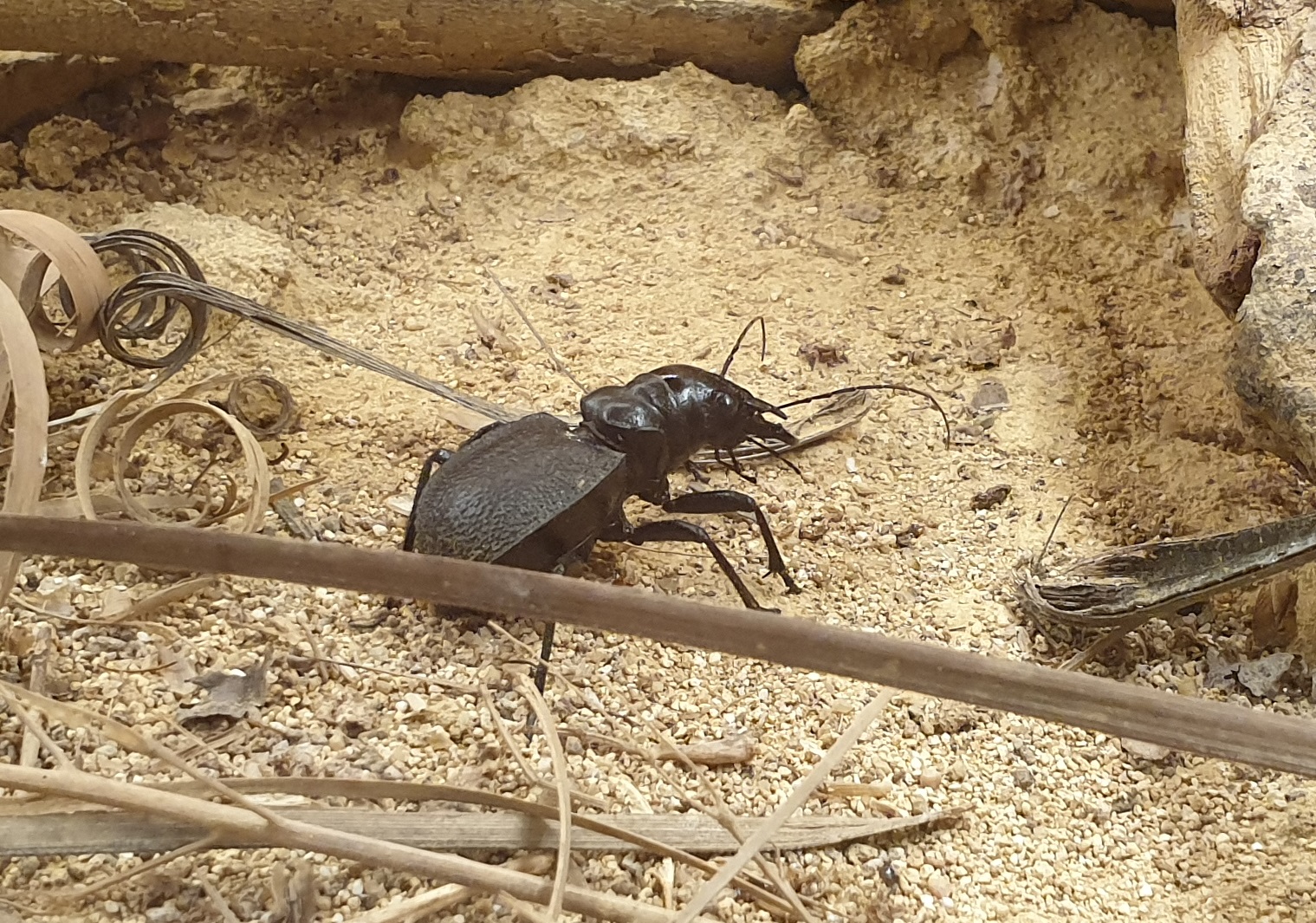
Kalahari Tiger Beetle (Manticora scabra)

The Kalahari Tiger Beetle inhabits the Kalahari desert hence it's name. It is located in the countries of Mozambique, Zimbabwe, Malawai, South Africa, Botswana, Namibia and other nearby nations. It has large mandibles to grip it's prey and is aggressive giving it, it's alternate common name the Monster Tiger Beetle. I cannot find any size data for this species. It is widely kept in captivity although it has been facing a decline in recent years due to overcollection.

Photo by @vogelcommando


The next entry was meant to be the Tricolour Soilder Beetle however for some reason it's gone missing from the gallery.


Anyways thats it for now!

 
Last edited:
Entry 2

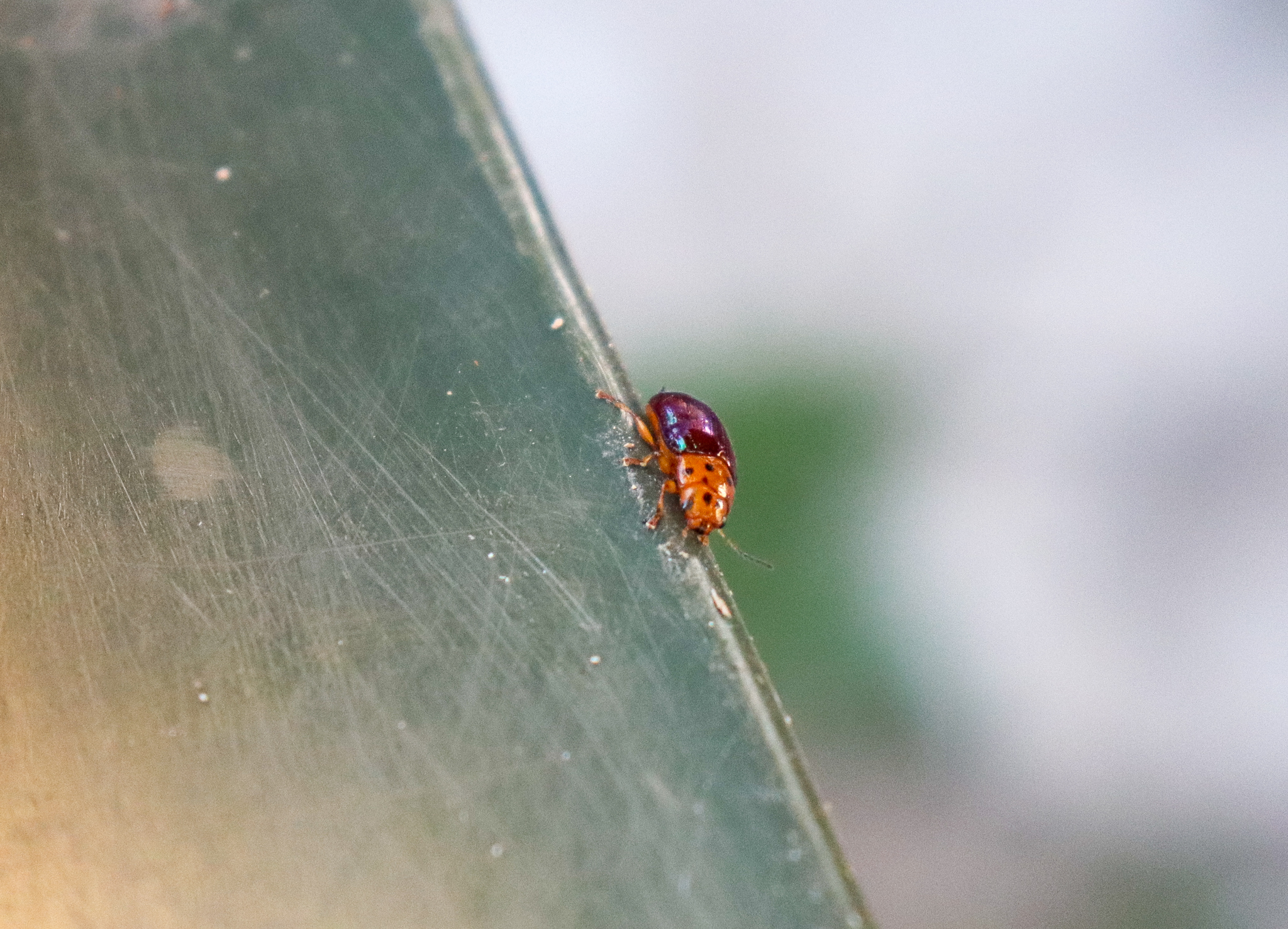
Dotted-Head Acacia Beetle (Calomela maculicollis)

This species of beetle is found throughout Australia, It has a shiny carpace ranging from metallic green to maroon brown and has an orange head with dots giving it the name of
dotted head. It is commonly found feeding on Acacia giving it the second portion of it's name acacia beetle. Specimens are about 6-8mm.

Photo by @WhistlingKite24


Entry 3

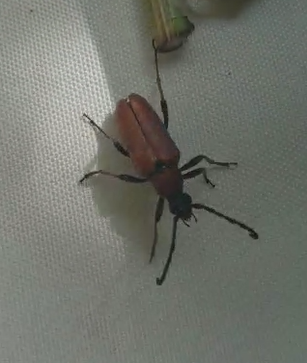
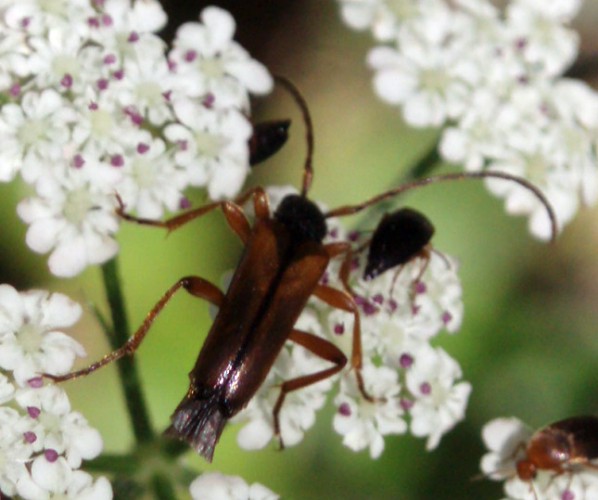
Red-Brown Longhorn Beetle (Stictoleptura rubra)

This species is found all over Europe including the British isles, it's range also seeps into North Africa and Turkey. This species shows sexual dimorphism as males are a light brown colour, whereas females have a deep red colouration. It has four subspecies being S.rubra dichroa, S.rubra numidica, S.rubra rubra (nominate) and S.rubra succedanea. It grows anywhere from 10-20mm in length. The picture below is clearly a female as noted by the deep red colouration, red pronotum and black head. (Males have a black head and a black pronotum)

Photo by @vogelcommando

 
Last edited:
It's big, it's green and it's beautiful

Entry 4

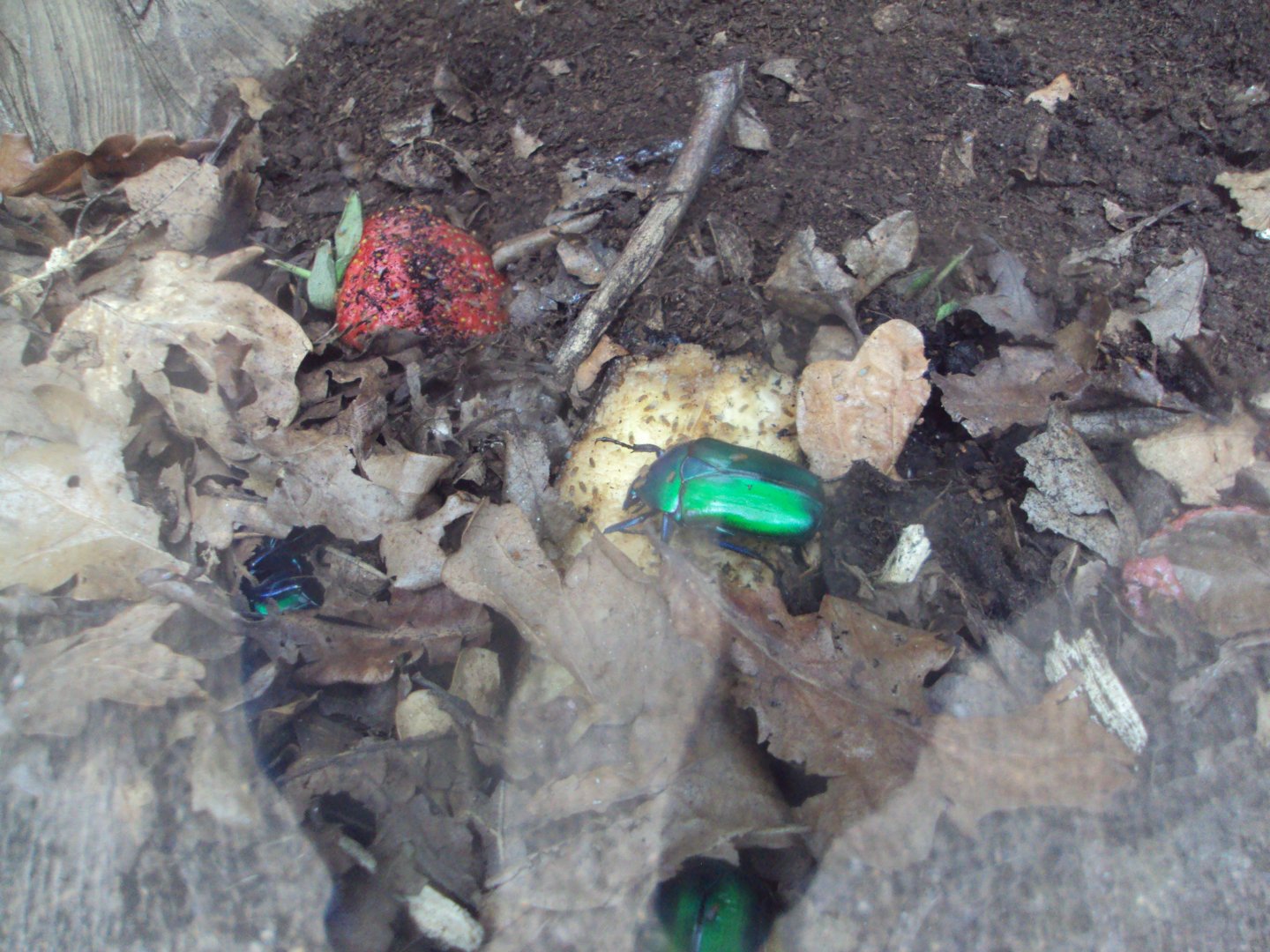
Giant Malaysian Jewel Beetle (Rhomborhina gigantea)

Now this is a beauty! Hailing from Malaysia although I cannot find it's exact range this species has a beautiful green, jewel like sheen. It hunts on the forest floor. It is around 3cm in length which is quite large. As said earlier I cannot find much information on this species.

Photo by @zoogiraffe who I cannot tag properly for some reason.


Entry 5

Deerhorn Stag Beetle (Rhaetulus didieri)

Another large beetle species this time 6-6.5cm in length which is massive! Also found in Malaysia this species has large mandibles, it is known as the deer horn stag beetle due to it's horns curving like deer antlers. It is found at around 750m above sea level in rainforests.

Photo by @geomorph

 
Entry 6

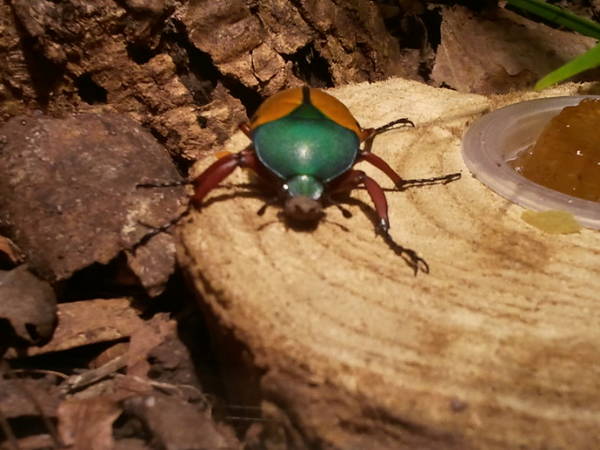
Jade Headed Buffalo Beetle (Eudicella smithii)

This species of beetle is found throughout South East Africa, it's large and forages for fruit and tree sap which it feeds on. It's name comes from it's beautiful jade coloured head which makes it a popular beetle for bug houses. It has a lifespan of around six months.

Photo by @Moebelle


Entry 7

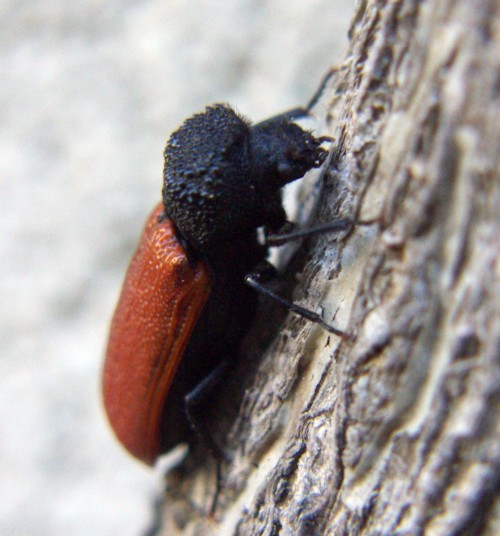
Capuchin Beetle (Bostrichus capucinus)

This beetle has a serious hair-do! Aside from the jokes, this beetle is known as the capuchin beetle for a very obvious reason having a head shape sort of similar to one. It is found throughout all of Europe into Eastern Asia. It has a red carapace and black head.

Photo by @Kakapo

 
Time for some more beetles.

Entry 8

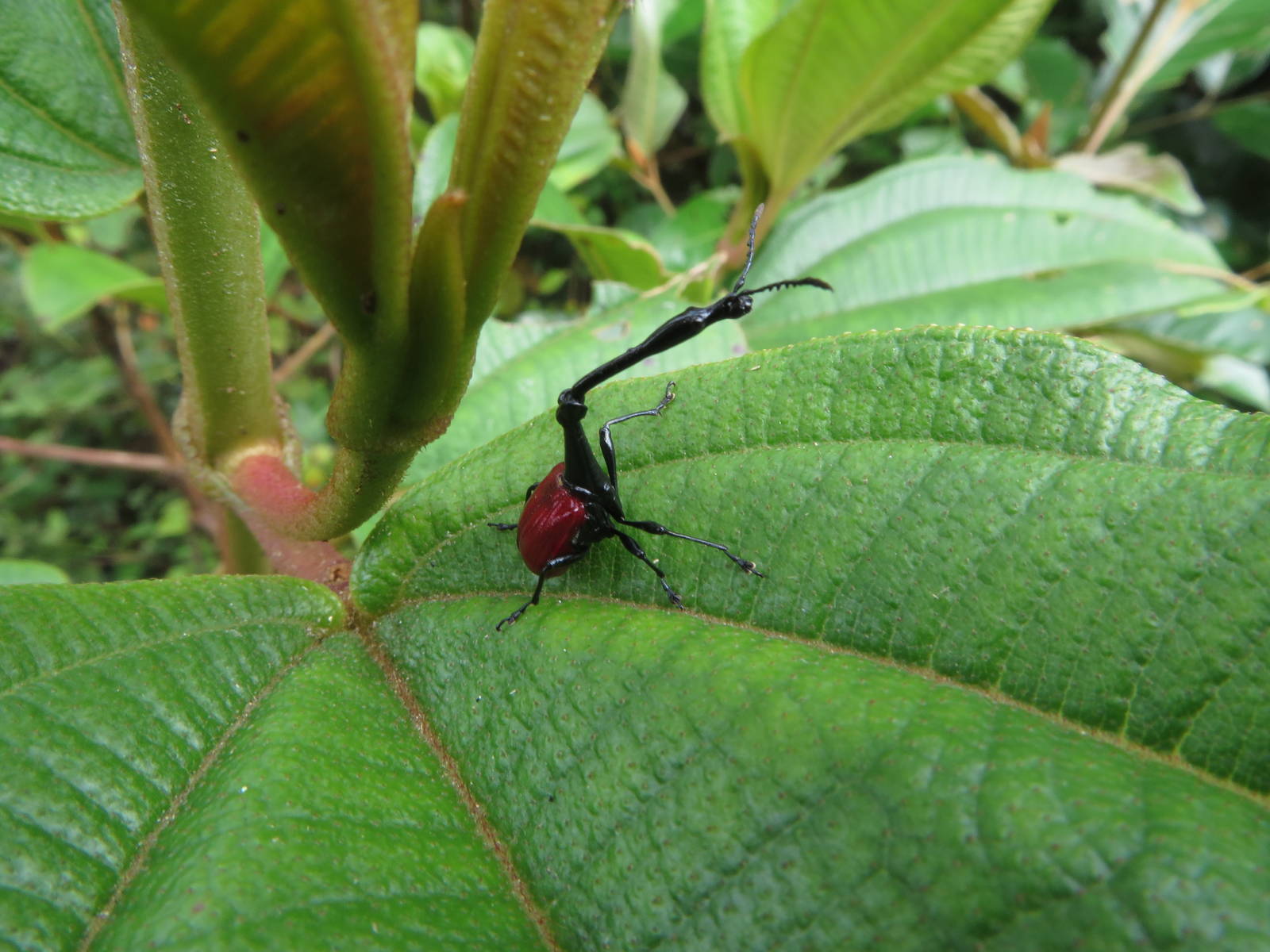
Giraffe Weevil (Trachelophorus giraffa)

One of Madagascars most famous ectotherms, the Giraffe weevil has a long extended neck just like it's namesake, the Giraffe. It is sexual dimorphic with the males having much longer necks and more vibrant red and black colouration, whereas females have shorter necks and are more bland. Body length is around 2.5cm (25mm).

Photo in the wild by @lintworm


Entry 9

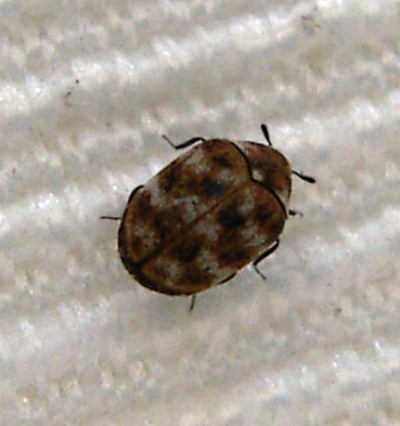
Varied Carpet Beetle (Anthrenus verbasci)

A very common species of beetle now found all over the world due to accidental introductions through shipments of goods, this species can cause serious damage to musical instruments, furniture, blankets, clothing and any other wooden or woolen item. They are around 1-2 mm in length and live for a year which is a lot for a beetle of their size.

Photo by @Kakapo


Entry 10

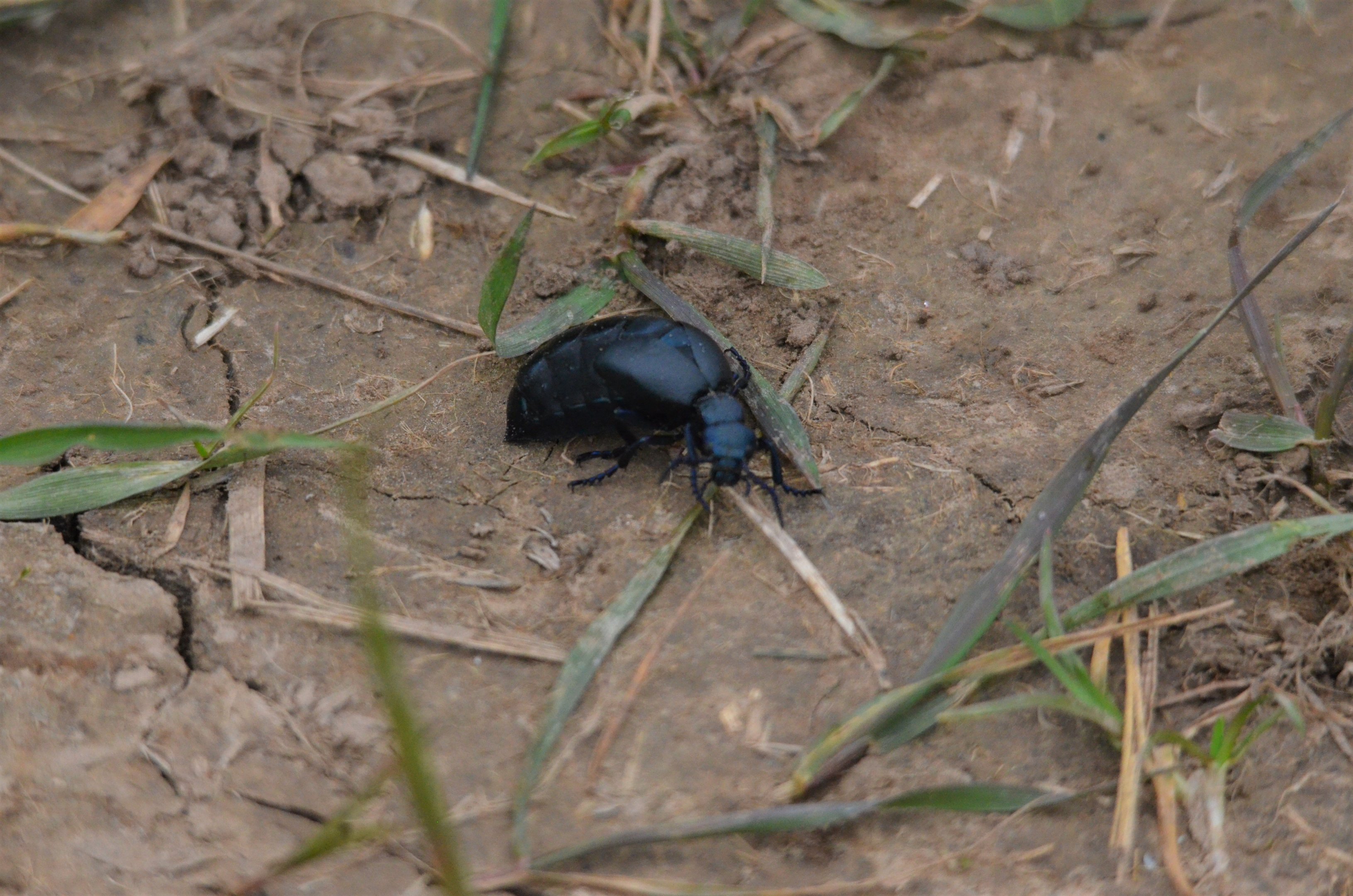
Violet Oil Beetle (Meloe violaceus)

Found throughout the European continent including the British Isles, this species exhibits a textbook example of hypermetamorphisis meaning that this species has extra stages in life with unique lifestyles other than just the usual larva, pupae, adults. The larval form of this species is entirely parasitic, the eggs hatch inside a honey bees nest and eat the eggs from their nest. A fascinating but creepy species of beetle.

Photo by @Maguari


Entry 11

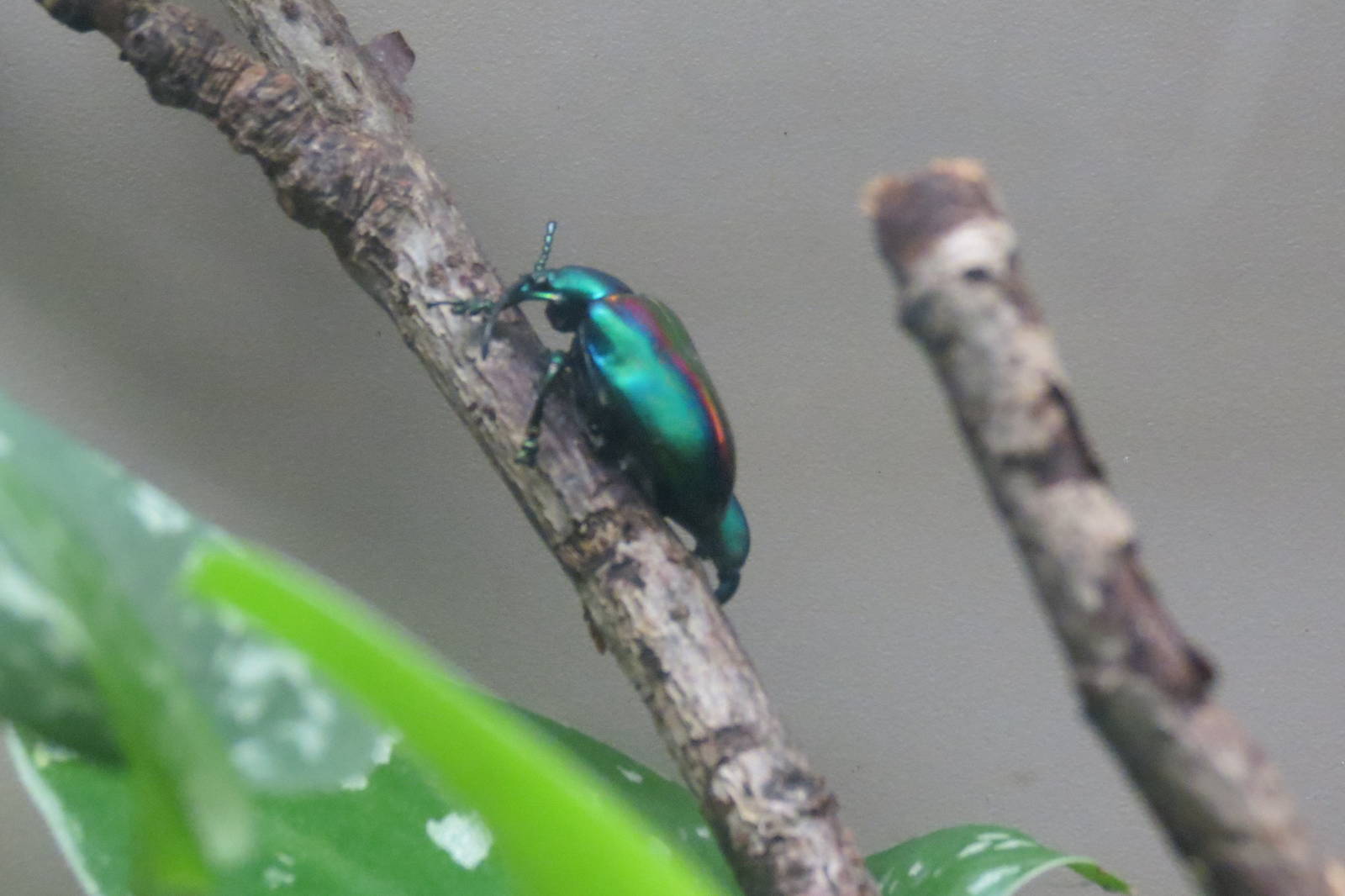
Frog Legged Leaf Beetle (Sagra buqueti)

Native to Thailand, Malaysia and parts of Indonesia, this species has large hind legs which allow it to jump with great height and speed giving it the name 'frog beetle'. It is around 2.5-5cm in length which is impressive. It is also known as the Jeweled Frog Beetle but that also applies to other species of the genus Sagra as well. Fun Fact: Zoo Berlin has raised this species entirely on Sweet Potato.

Photo by @bigfoot410

 
Last edited:
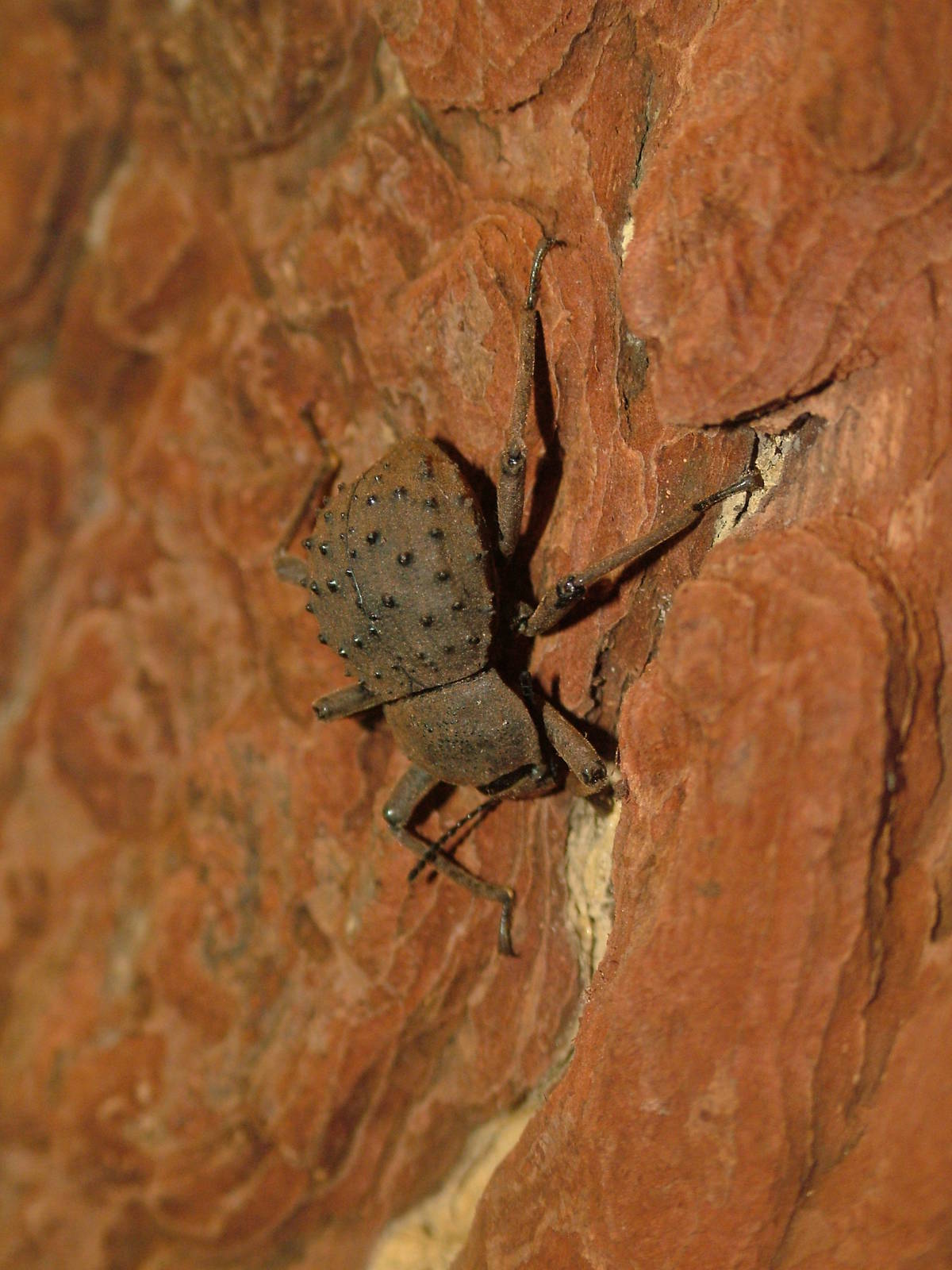
Before entry 12, i'd like to mention that the Pachnoda genus of chafer beetles is really really annoying due to taxonomy issues. I willl be treating each as their own species but feel free to follow any taxonomic resource you like.

Entry 12

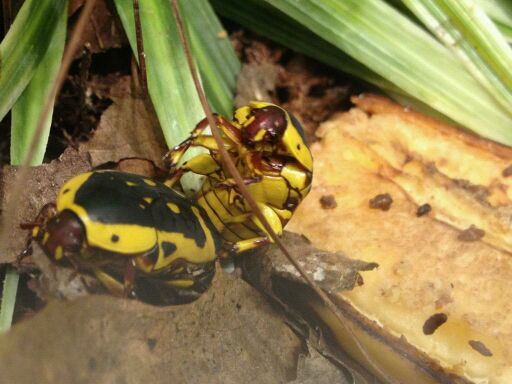
Yellow-Bellied Beetle (Pachnoda flaviventris)

Sometimes treated as a subspecies of the Brown and Yellow Fruit Chafer, this species is found throughout the Southern end of Africa in South Africa, Botswana, Namibia etc. It has a yellow underside giving it the common name of Yellow Bellied Beetle. It has a lifespan of around one year, and feeds on fruit and flowers.

Photo by @Moebelle


Entry 13 will be the last entry of the day.

Entry 13

Tobacco Coloured Longhorn Beetle (Alosterna tabacicolor)

This ones a smoker! Puns aside, this is a small beetle species native to the palearctic (British isles and Western Europe), it's antenna are double the size of it's body. It get's it's name from it's brown colouration not dissimilar to that of tobacco. Also say the word tabacicolor five times fast. I guarantee you'll enjoy it.

Photo by @Kakapo

 
As teased in my salictidae thread, all about beetles, as it's name implies is a thread dedicated to the beetle species of the Zoochat gallery. It may seem over ambitious, and as with the Salictidae thread will never truly be completed, but I wish to give it a go and conjure up something.

For those wondering this thread's format is the same as the Salictidae one.

This thread will start with a bang, a truly formidable beetle of the desert.

Entry 1

Kalahari Tiger Beetle (Manticora scabra)

The Kalahari Tiger Beetle inhabits the Kalahari desert hence it's name. It is located in the countries of Mozambique, Zimbabwe, Malawai, South Africa, Botswana, Namibia and other nearby nations. It has large mandibles to grip it's prey and is aggressive giving it, it's alternate common name the Monster Tiger Beetle. I cannot find any size data for this species. It is widely kept in captivity although it has been facing a decline in recent years due to overcollection.

Photo by @vogelcommando


The next entry was meant to be the Tricolour Soilder Beetle however for some reason it's gone missing from the gallery.


Anyways thats it for now!

The tiger beetle looks like a beast, I'm not familiar with this insect but I bet it is a voracious little predator.
 
Entry 14

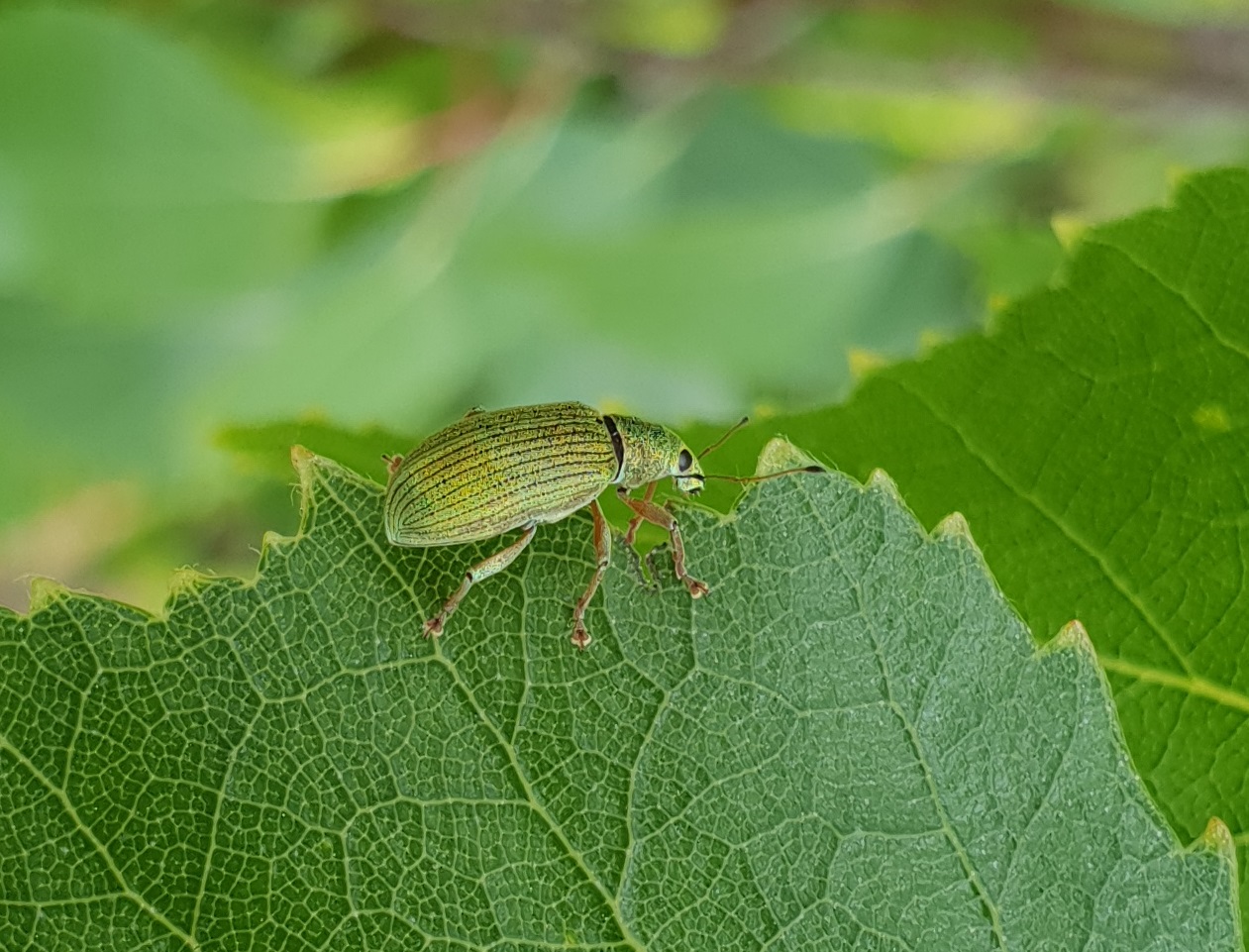
Emerald Broad Nosed Weevil (Polydrusus formosus)

This weevil species has a wide range across the Northern Hemisphere including most of the Nearctic (North America) and Western Palearctic (Central-Western Europe). They are most commonly encountered during the Spring where they feed on fruit trees and are considered a pest species. They grow to around 5-6mm in length.

Photo by @vogelcommando

 
Entry 14

Emerald Broad Nosed Weevil (Polydrusus formosus)

This weevil species has a wide range across the Northern Hemisphere including most of the Nearctic (North America) and Western Palearctic (Central-Western Europe). They are most commonly encountered during the Spring where they feed on fruit trees and are considered a pest species. They grow to around 5-6mm in length.

Photo by @vogelcommando

I have always known this species at the Green Immigrant Leaf Weevil.
 
Probably because of those huge and vicious looking mandibles, the compactness and the fact that it comes from a desert habitat the Kalahari tiger beetle sort of reminded me of one of those WW2 LDRG vehicles with mounted machine guns that were used so effectively by the SAS.
 
Entry 15

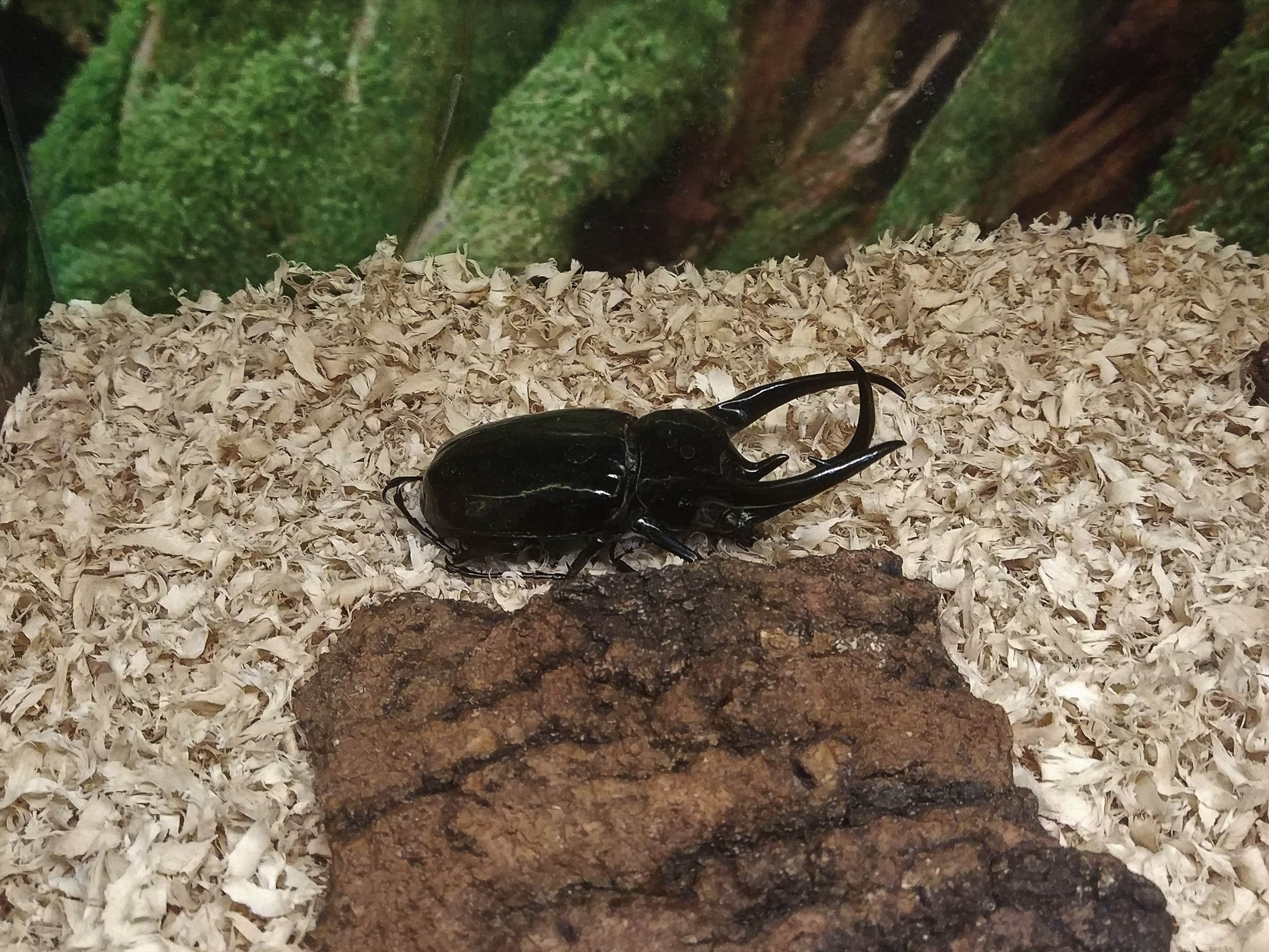
Atlas Beetle (Chalcosoma atlas)

This species of beetle is big, I mean really big, growing to around 13cm in length. It's found in South East Asia, has four horns, three large ones and a smaller one. It has seven subspecies. The females are smaller than the males, only growing to around 6cm.

Photo by @FunkyGibbon

 
It's been a long wait but I decided to make another entry for the thread, detailing a new species to the gallery by @David Matos Mendes We currently lack a lot of South American fauna (particuarly reptiles, amphibians, fish and inverts) in the gallery so it's great to see new species.

Without further ado I present Entry 16

Entry 16

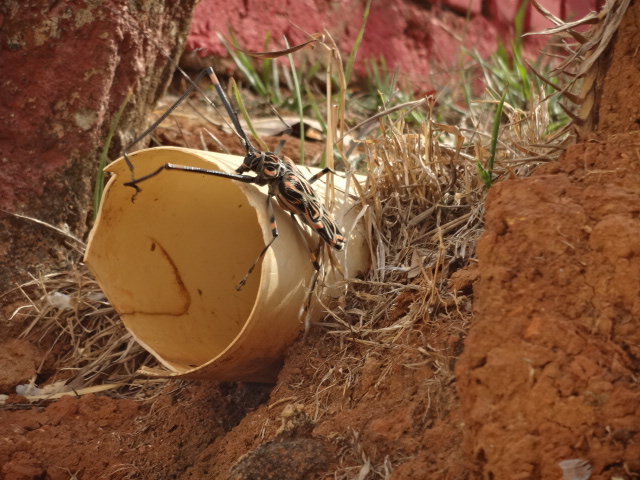
Harlequin Beetle (Acrocinus longimanus)

This is a very large species of Long Horned Beetle growing to around 76mm in length, it is found from Mexico all the way through Central and South America down south to Uruguay. It's common name comes from it's patterning and colouration with large amounts of variation in each individual.

Here's the picture by @David Matos Mendes


Entry 17

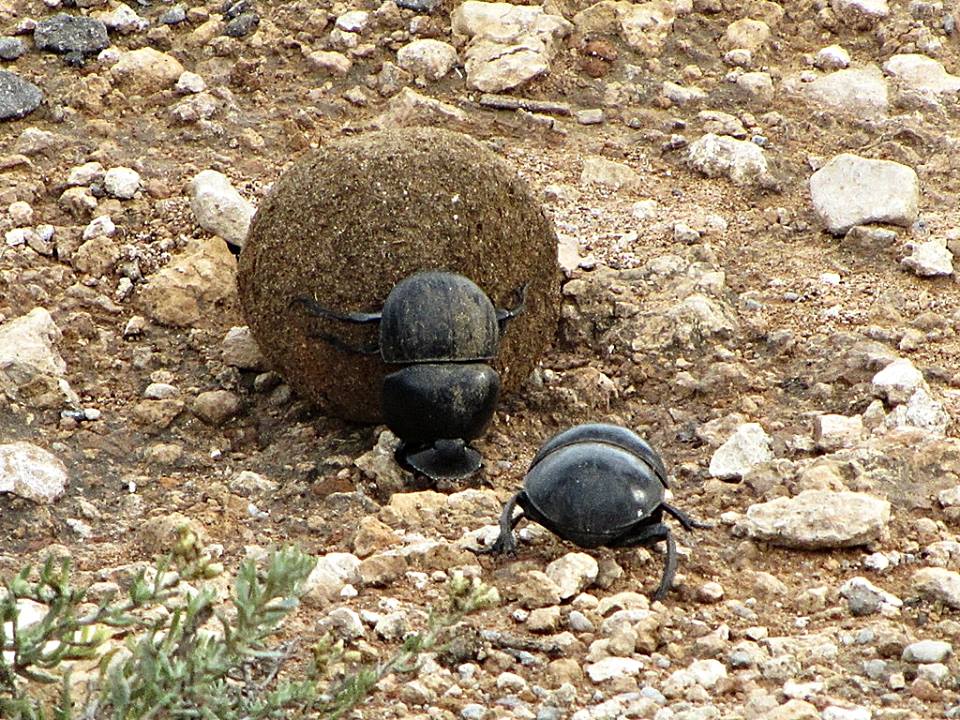
Flightless Dung Beetle (Circellium bacchus)

This species of dung beetle is listed as Vulnerable on the IUCN red list, it used to be widespread in Southern Africa but now is restricted to a few wild areas such as the Addo Elephant park where these individuals were photographed. As it's common name suggests it's completely flightless, although it gains a C02 storage tank below the elytra allowing it to store water. It is the only member of the genus Circellium. They feed on the dung of large game animals such as Buffalo.

Here is a photo of two dung beetles preforming their namesake, by @Kudu21

 
Thanks for sharing my pic, @Yoshistar888 ! :D:D Glad you found it a good representation! This beetle was a huge surprise for me, as it was gigantic indeed. At the time, I was lucky I had a camera with me. An uncommon sight for sure, specially in urban areas like Belo Horizonte metropolis.
Great thread by the way. Gonna keep in touch with it. It always lacked me enough knowledge about invertebrates, and this is surely the time and opportunity for me to update a little of my learning about these incredible creatures.
 
It's been a long wait but I decided to make another entry for the thread, detailing a new species to the gallery by @David Matos Mendes We currently lack a lot of South American fauna (particuarly reptiles, amphibians, fish and inverts) in the gallery so it's great to see new species.

Without further ado I present Entry 16

Entry 16

Harlequin Beetle (Acrocinus longimanus)

This is a very large species of Long Horned Beetle growing to around 76mm in length, it is found from Mexico all the way through Central and South America down south to Uruguay. It's common name comes from it's patterning and colouration with large amounts of variation in each individual.

Here's the picture by @David Matos Mendes


Entry 17

Flightless Dung Beetle (Circellium bacchus)

This species of dung beetle is listed as Vulnerable on the IUCN red list, it used to be widespread in Southern Africa but now is restricted to a few wild areas such as the Addo Elephant park where these individuals were photographed. As it's common name suggests it's completely flightless, although it gains a C02 storage tank below the elytra allowing it to store water. It is the only member of the genus Circellium. They feed on the dung of large game animals such as Buffalo.

Here is a photo of two dung beetles preforming their namesake, by @Kudu21


After a long wait, I'm happy to return to this thread with a special triple feature of three iconic beetle species, since this thread was last active there has been a number of beetle species uploaded to the gallery and along with the already large amount pre-existing there will be plenty of content to cover for this thread. Additionally I'll try and get some photos of some of my local beetle species of acceptable quality when spring rolls around.

Entry 18

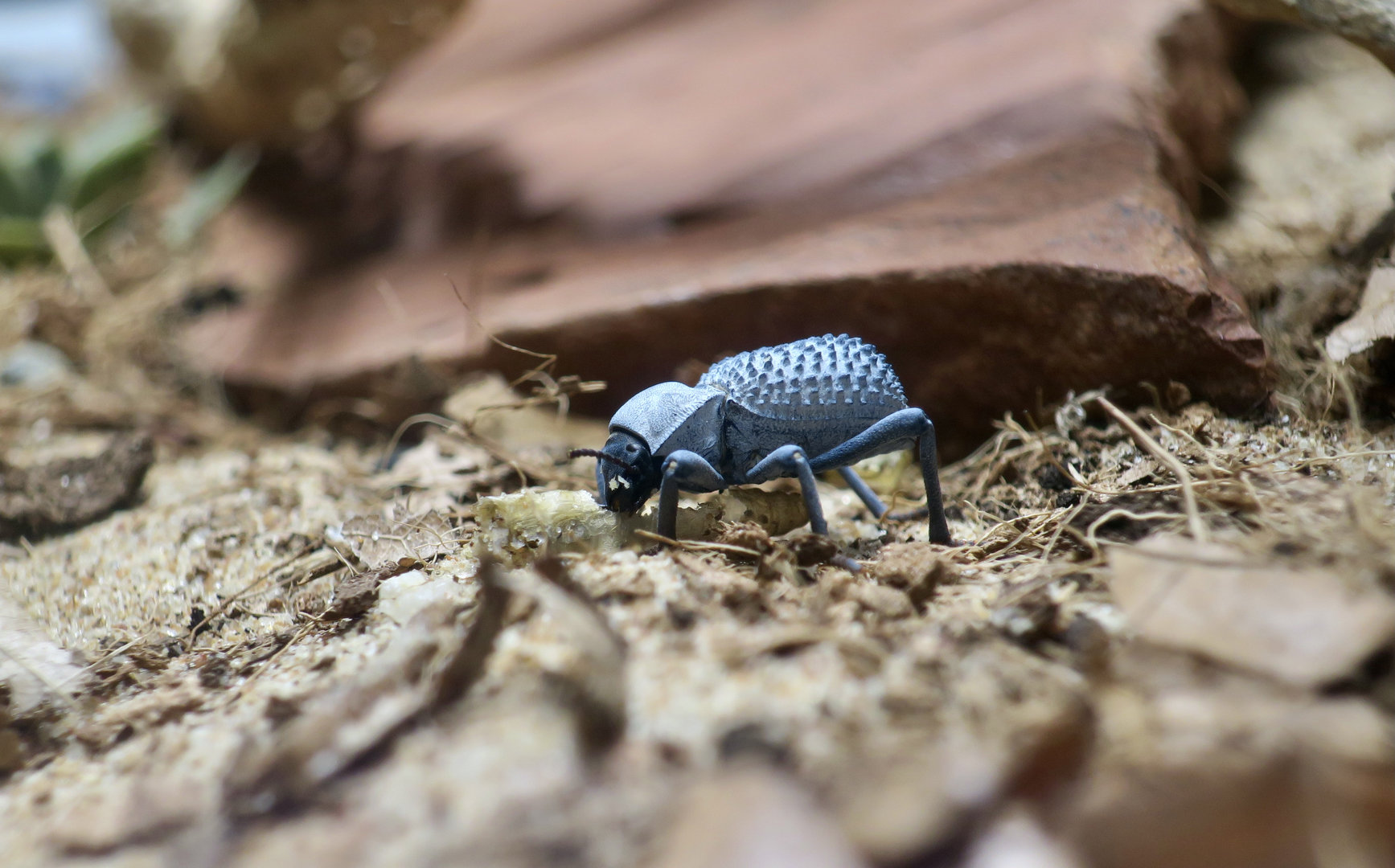
Blue Death-Feigning Beetle (Asbolus verrucosus)

One of the most common beetle species in zoos, particularly in the United States. These are a species of Darkling Beetle (Tenebrionidae) that lives in desert and other arid habitat types in the Southwest United States and Northern Mexico. They grow to approximately 18-21mm in length and are opportunistic feeders consuming a wide variety of plant and animal material although are mostly herbivorous. They are crepuscular meaning they are primarily active at dawn and dusk and are most well known known for their tendency to flip onto their backside when threatened to fake their death, hence the name 'Death-Feigning Beetle'.

Photo by @RatioTile


Entry 19

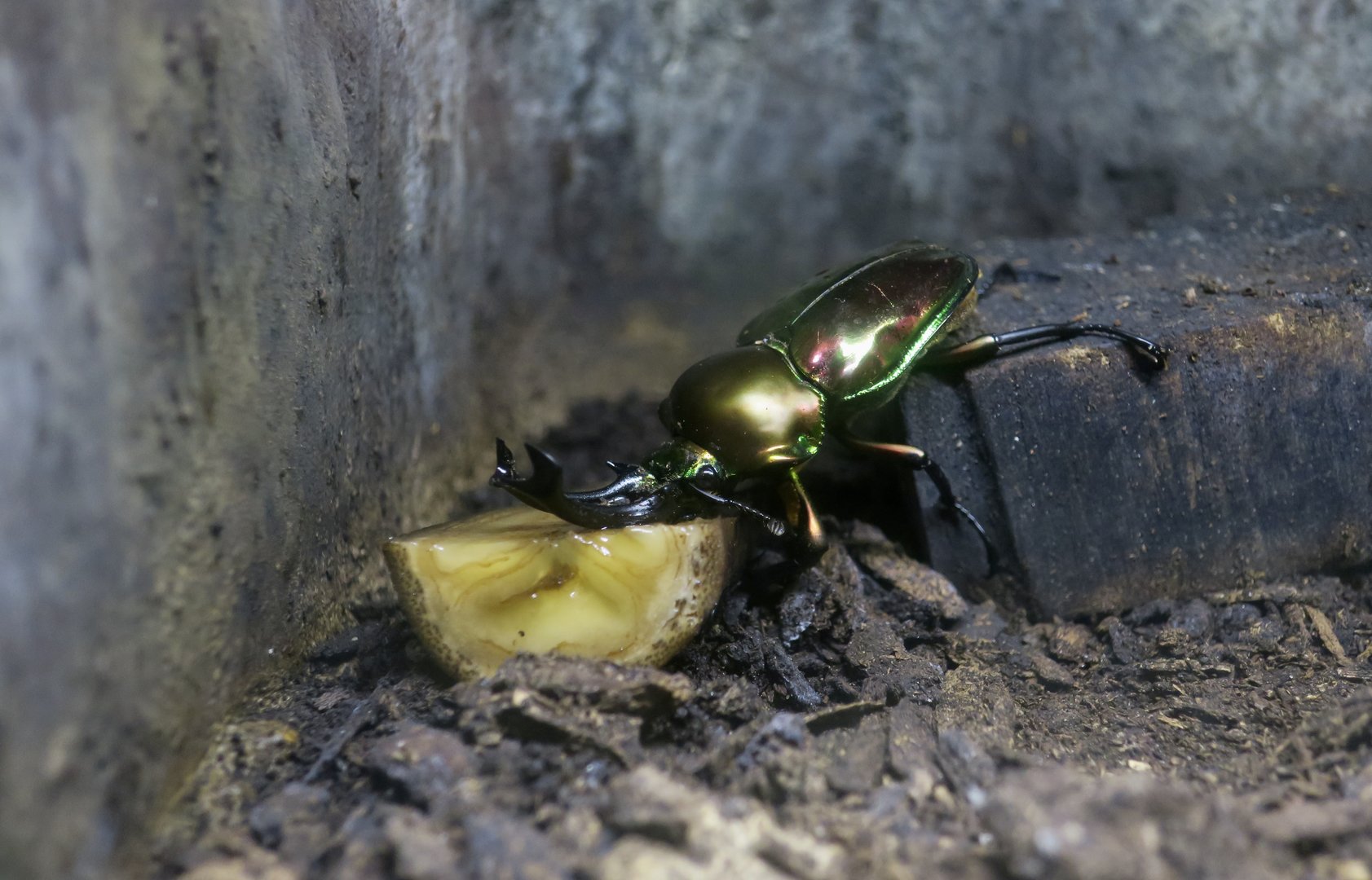
Rainbow Stag (Phalacrognathus muelleri)

A striking species part of the stag beetle family (Lucanidae), there are two subspecies, P.muelleri muelleri which is found in Far North Queensland and P.muelleri fuscomicans native to New Guinea. There is sexual dimorphism in the size of this species, males grow up to 68mm in size whereas females only grow to 46mm. They live from 12-18 months although the majority of that time is spent in a larval form that feeds on rotting wood, adults are fruit eaters. This species is successfully bred and raised in captivity.

Photo by @RatioTile


Entry 20

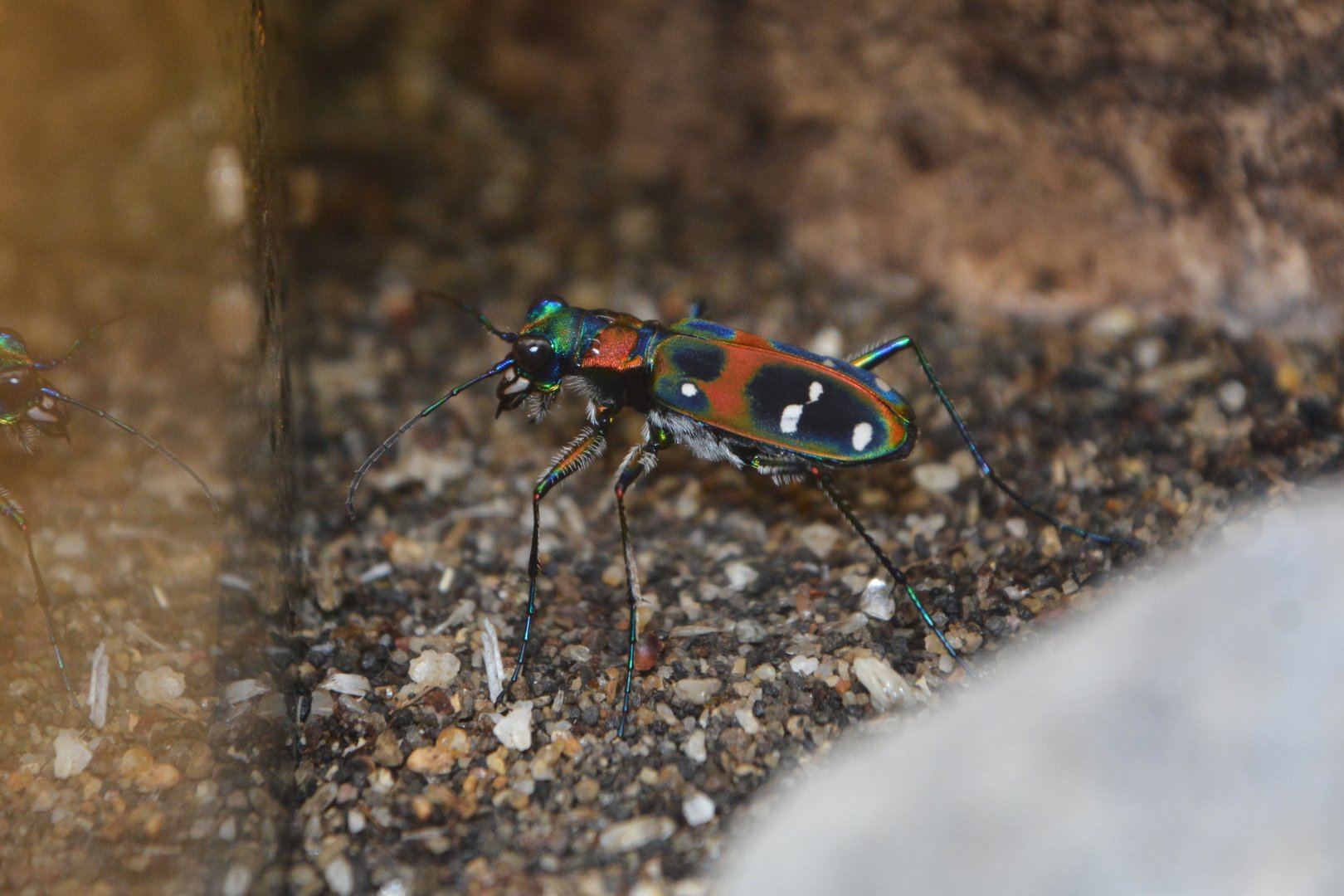
Japanese Tiger Beetle (Sophiodela japonica)


Recently split from the Chinese Tiger Beetle (Sophiodela chinensis), adult Japanese Tiger Beetles are ferocious predators that consume a large variety of invertebrate prey such as spiders, caterpillars, grasshoppers and smaller beetles. They have very attractive colours and markings of green, black, red and white, and long skinny legs that are used to jump prey.

Photo by @Sicarius

 
Interesting thread! You might find a few more interesting beetle species in my gallery. I have uploaded a few more now, taken in the last few weeks.

It is widely kept in captivity although it has been facing a decline in recent years due to overcollection.
This is actually not true. Manticora was never abundant in captivity, especially now (a few years after your original post), I think they are almost all gone. I don't recall the last import from the range where this species lives, but it must have been a while ago.
 
Interesting thread! You might find a few more interesting beetle species in my gallery. I have uploaded a few more now, taken in the last few weeks.


This is actually not true. Manticora was never abundant in captivity, especially now (a few years after your original post), I think they are almost all gone. I don't recall the last import from the range where this species lives, but it must have been a while ago.

Thanks for the update, more accurate information is always a good thing!

Thanks for uploading more beetles, prior to your upload there’s about 60-70 more beetle species in the gallery, there’s two that I can photograph fairly easily (Red-spotted Rose Chafer at Melbourne Zoo and Egyptian Beetle at Melbourne Museum) that would be new plus a bunch of wild species that I could find once the weather warms up. Might even go buy a macro lens.
 
Fantastic thread @Yoshistar888 I cannot believe I've only just come across it now. It is nice to see the invertebrates are getting some representation here on Zoochat. I can hopefully provide quite a few species for this thread as I've got lots of beetle species in my photo albums from captivity as well as most being wild individuals.
 
Fantastic thread @Yoshistar888 I cannot believe I've only just come across it now. It is nice to see the invertebrates are getting some representation here on Zoochat. I can hopefully provide quite a few species for this thread as I've got lots of beetle species in my photo albums from captivity as well as most being wild individuals.
Not that surprising because this thread was only updated yesterday after not being updated since November 2020 - a year before you joined this forum. :p
It is also probably the reason I don’t recall ever coming across it either.
 
After a long wait, I'm happy to return to this thread with a special triple feature of three iconic beetle species, since this thread was last active there has been a number of beetle species uploaded to the gallery and along with the already large amount pre-existing there will be plenty of content to cover for this thread. Additionally I'll try and get some photos of some of my local beetle species of acceptable quality when spring rolls around.

Entry 18

Blue Death-Feigning Beetle (Asbolus verrucosus)

One of the most common beetle species in zoos, particularly in the United States. These are a species of Darkling Beetle (Tenebrionidae) that lives in desert and other arid habitat types in the Southwest United States and Northern Mexico. They grow to approximately 18-21mm in length and are opportunistic feeders consuming a wide variety of plant and animal material although are mostly herbivorous. They are crepuscular meaning they are primarily active at dawn and dusk and are most well known known for their tendency to flip onto their backside when threatened to fake their death, hence the name 'Death-Feigning Beetle'.

Photo by @RatioTile


Entry 19

Rainbow Stag (Phalacrognathus muelleri)

A striking species part of the stag beetle family (Lucanidae), there are two subspecies, P.muelleri muelleri which is found in Far North Queensland and P.muelleri fuscomicans native to New Guinea. There is sexual dimorphism in the size of this species, males grow up to 68mm in size whereas females only grow to 46mm. They live from 12-18 months although the majority of that time is spent in a larval form that feeds on rotting wood, adults are fruit eaters. This species is successfully bred and raised in captivity.

Photo by @RatioTile


Entry 20

Japanese Tiger Beetle (Sophiodela japonica)


Recently split from the Chinese Tiger Beetle (Sophiodela chinensis), adult Japanese Tiger Beetles are ferocious predators that consume a large variety of invertebrate prey such as spiders, caterpillars, grasshoppers and smaller beetles. They have very attractive colours and markings of green, black, red and white, and long skinny legs that are used to jump prey.

Photo by @Sicarius


Entry 21

Fregate Island Giant Beetle (Polposipus herculeanus)

Endemic to Fregate Island in the Seychelles, this species was once listed as Critically Endangered by the IUCN after rats were introduced to Fregate Island in 1995 but thanks to extermination efforts it was later listed as Vulnerable in 2013. ZSL and a few other zoological societies run captive breeding programs for this species. Despite their common name 'Giant Beetle, length is only 20-30mm, they are arboreal and adept at climbing trees and consume fruit, leaves and decaying matter.

Photo by @Maguari


Entry 22

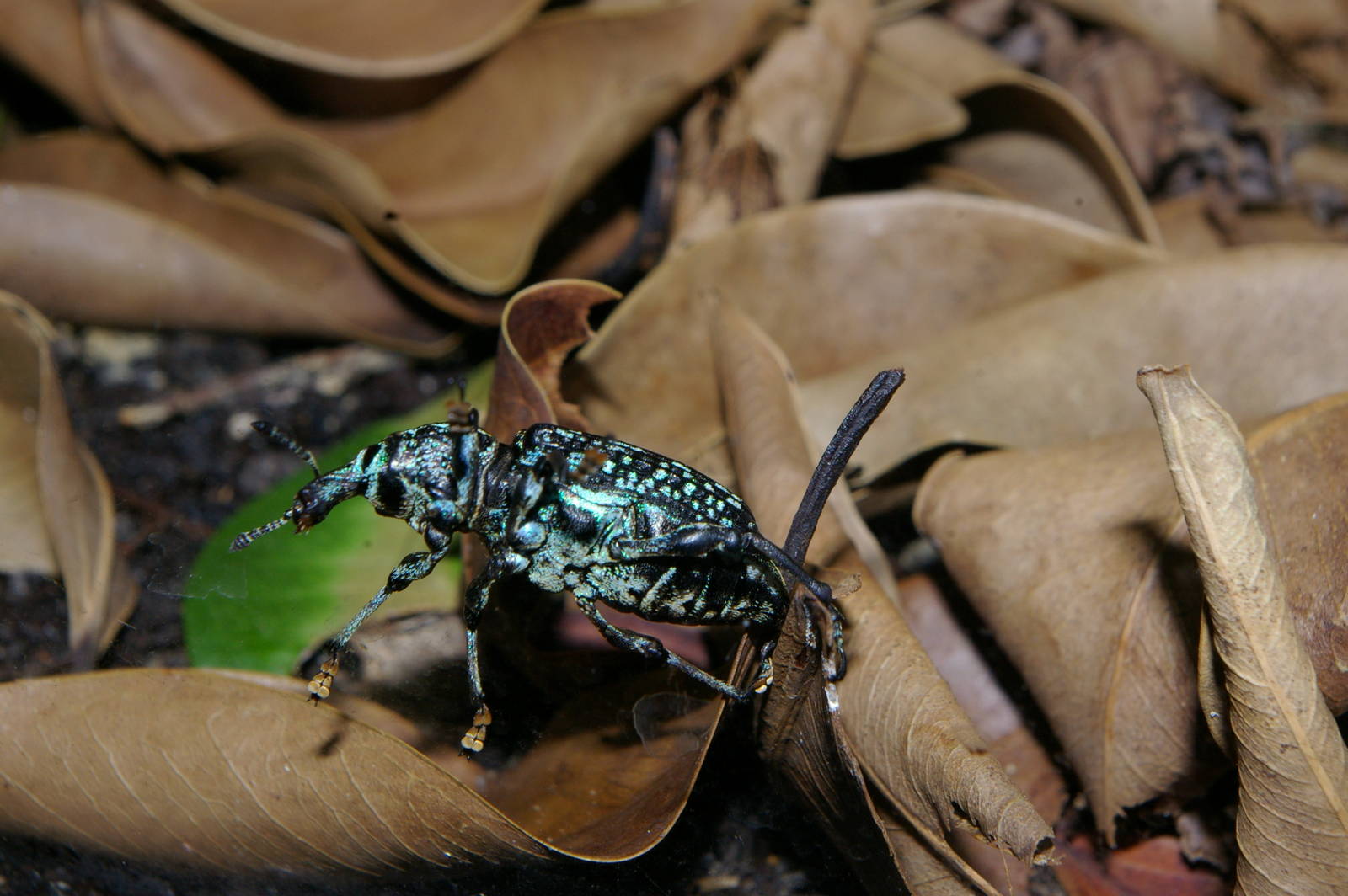
Botany Bay Weevil (Chrysolopus spectabilis)

Also known as the Diamond Beetle, this spectacularly coloured species of weevil found in eastern Australia, they feed exclusively on plants in the genus Acacia and are generally considered common, even on the outskirts of Sydney. They grow to 25mm in length and it was one of the first insect species to be scientifically described from Australia.

Photo by @Chlidonias

 
Entry 21

Fregate Island Giant Beetle (Polposipus herculeanus)

Endemic to Fregate Island in the Seychelles, this species was once listed as Critically Endangered by the IUCN after rats were introduced to Fregate Island in 1995 but thanks to extermination efforts it was later listed as Vulnerable in 2013. ZSL and a few other zoological societies run captive breeding programs for this species. Despite their common name 'Giant Beetle, length is only 20-30mm, they are arboreal and adept at climbing trees and consume fruit, leaves and decaying matter.

Photo by @Maguari


Entry 22

Botany Bay Weevil (Chrysolopus spectabilis)

Also known as the Diamond Beetle, this spectacularly coloured species of weevil found in eastern Australia, they feed exclusively on plants in the genus Acacia and are generally considered common, even on the outskirts of Sydney. They grow to 25mm in length and it was one of the first insect species to be scientifically described from Australia.

Photo by @Chlidonias


Entry 23

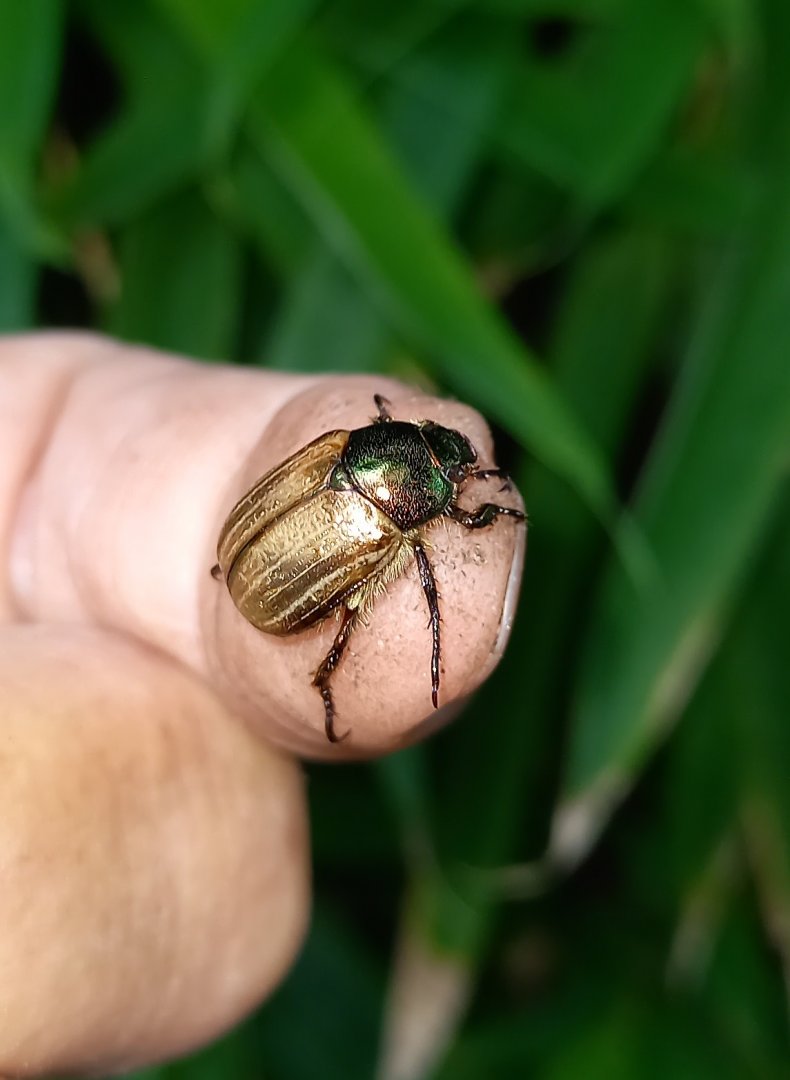
European June Beetle (Amphimallon solstitiale)


Also known as the Summer Chafer, it is native to Europe and parts of Asia, and an introduced population is present in North America. They are particularly active at dusk and at night and can often be seen near artificial light. The larvae are considered important agricultural pests feeding on crops such as potatoes and legumes. They grow to 20mm in length.


Photo by @vogelcommando


Entry 24


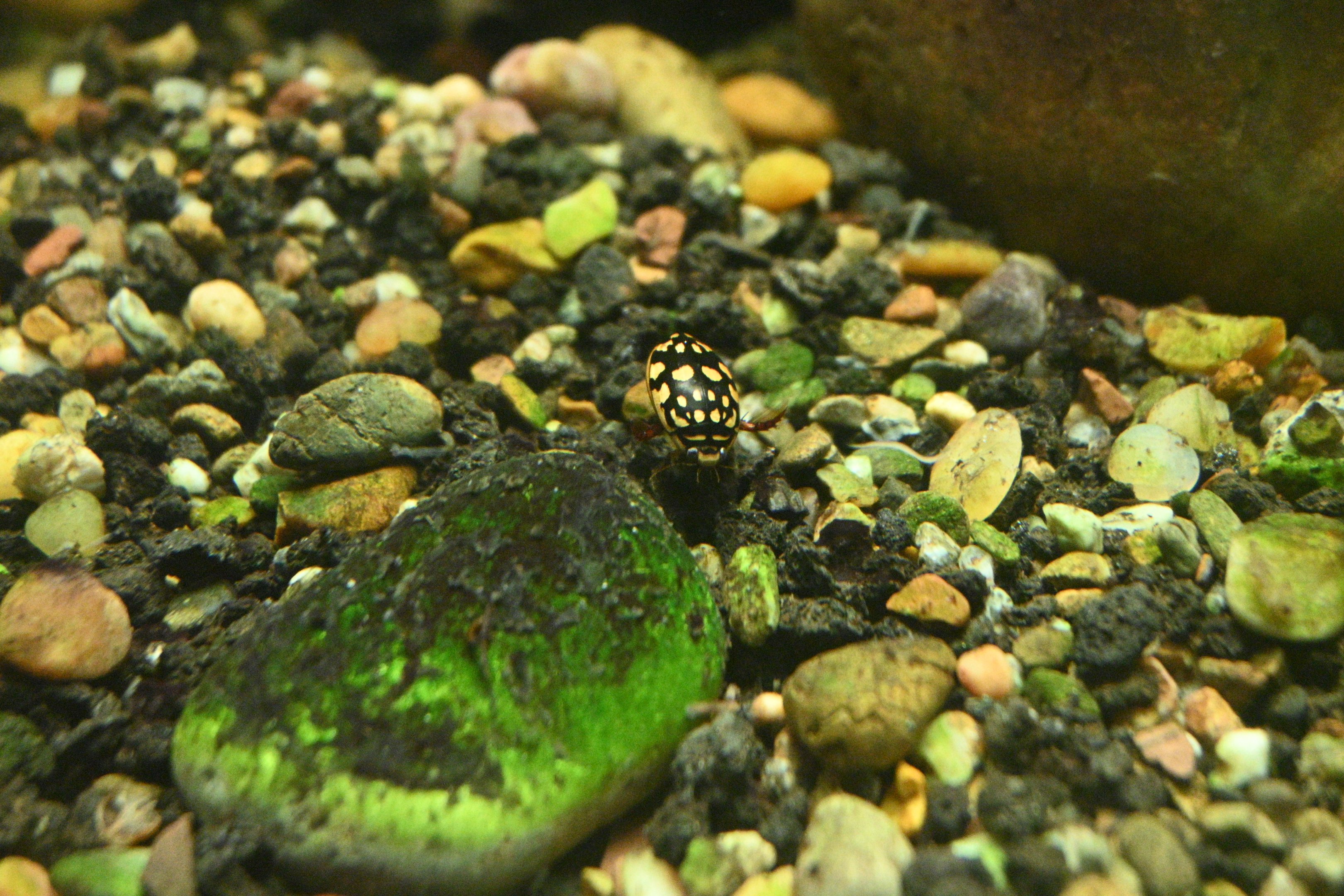
Sunburst Diving Beetle (Thermonectus marmoratus)


This is a very colourful species found in the Southwest United States and Mexico and is common in American zoos. They have attractive yellow spots that give them another common name of Yellow-spotted Diving Beetle. This species grows to 15mm and is well adapted to life in shallow temporary pools as it can fly to a new pool once the water dries up, they hunt small prey such as mosquito larvae, other aquatic insects and even small tadpoles and fish.


Photo by @Julio C Castro


Back
Top