Family Viperidae – Vipers
The biggest group yet; roughly
115 species were found by the survey, the most of any reptile or amphibian family. Lots of zoos are great places to see a variety of viper species: rattlesnakes are abundant across the country (though especially in the Southwest), while Dallas, Fort Worth, Toledo, Los Angeles, and San Antonio are just five examples of major zoos with many other types of vipers. This is in contrast to Europe, where (similar to the elapids) most vipers are found primarily or even exclusively in reptile specialist zoos rather than traditional zoos.
Vipers are fairly easy to distinguish as a group; mostly thick-bodied snakes with triangular heads. Telling all of the species apart can be a challenge, though, especially given how many there are. Remember that signage and Latin names are your friends

As with colubrids there are too many species to cover them all individually, so a lot of this will be done largely by genus. We'll kick off with the less numerous subfamily, Viperinae - the "true" or pitless vipers.
Bitis – African Adders
Found mostly across Sub-Saharan Africa, these are very stout snakes. They're also called puff adders, thanks to their ability to inflate their bodies and loudly hiss to ward off predators. I wouldn’t recommend being one of those predators, as all of these species have dangerous venom – and can strike
very fast, belying their sluggish appearance! We have 4 or 5 species in US collections, all of which are found in several places.
Gaboon Vipers (B. rhinoceros and
gabonica)
Status in US Zoos: Abundant
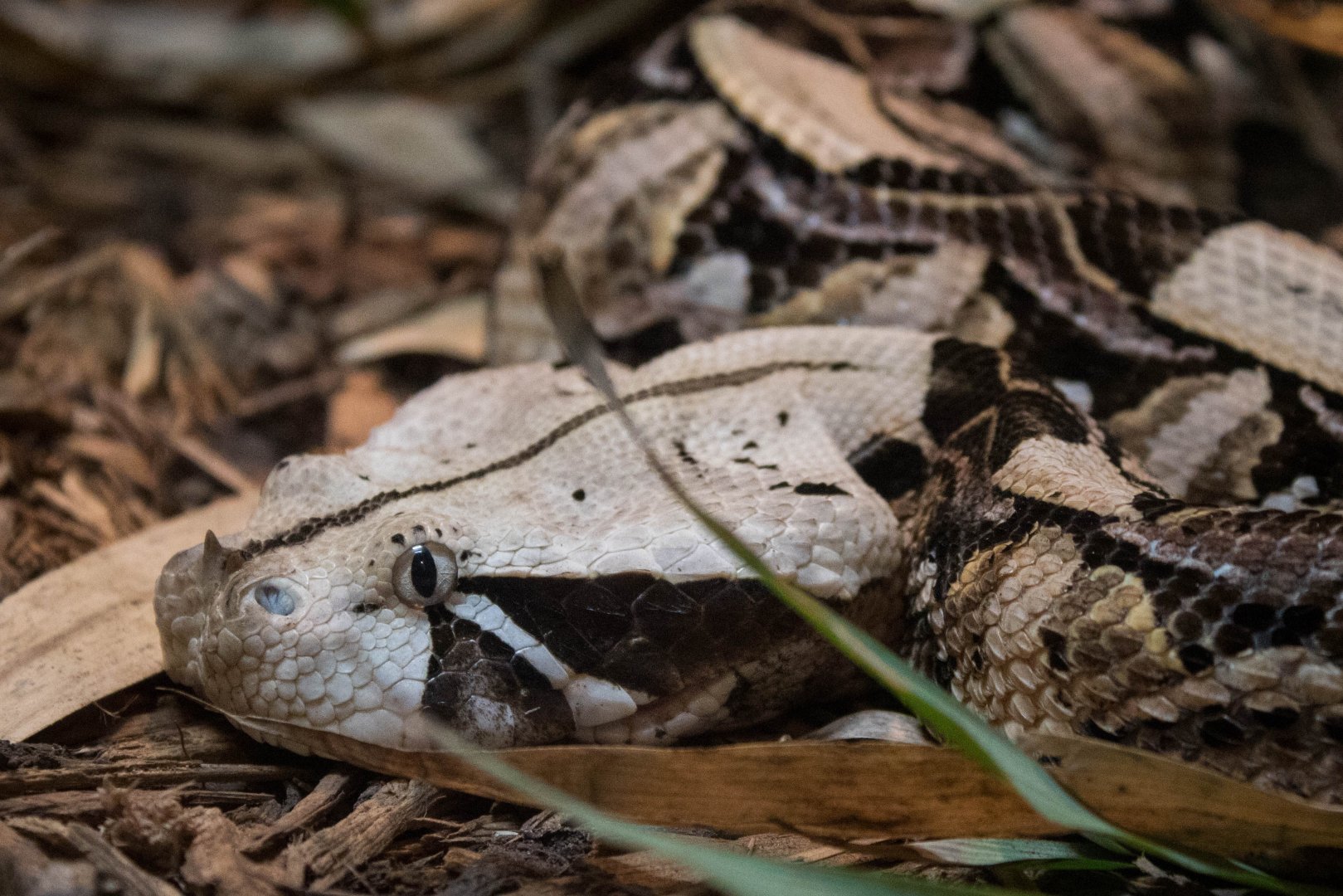
Collectively, Gaboon Vipers are the most common exotic viper in US zoos with ~45 holders minimum. Comically large snakes with leaf camouflage coloration, they are far more common than the other
Bitis species – making them a good frame of reference in case you see another member of the genus. They are quite large and most superlative snakes: one of the heaviest hots in the world, possessing the largest fangs (2 in) of any snake, the highest quantity of venom, and one of the fastest striking snakes on the planet.
The two Gaboon Vipers were split into a West African (
rhinoceros) and a Central African (
gabonica) about 20 years ago; they can be told apart by their snout, as the West African species has two small nose horns that
gabonica lacks. Going off photos, it seems that most zoos who sign their vipers as
gabonica actually have
rhinoceros; this is true to such an extent that I’m not even certain whether we have true
gabonica, although it’s certainly possible. Any information on this would be welcome.
Gaboon Viper (signed
B. gabonica, visually
B. rhinoceros)
Taken at the Smithsonian National Zoo by
@Andrew_NZP
Rhinoceros Viper (B. nasicornis) – Prevalent
Not to be confused with
B. rhinoceros, which confusingly refers not to Rhinoceros Viper but to West African Gaboon Viper. The coloration on these snakes is more vibrant, and the nose horn more elaborate; think of it as a Gucci-style jungle adder.
Taken at the Cincinnati Zoo by
@Ding Lingwei
Puff Adder (B. arietans) – Prevalent
This species is found throughout the savannas and grasslands of Africa and into the Middle East. Their coloration also matches what you’d expect for camouflage in that environment. They are the leading cause of snakebite deaths on humanity’s home continent, for a variety of reasons ranging from their abundance, long fangs, potent venom, and habit of quietly basking right next to footpaths. See, this is why North Americans attached baby toys to the tails of their venomous snakes

Taken at the Central Florida Zoo by
@ThylacineAlive
Ethiopian Mountain Adder (B. parviocula) – Uncommon
An endangered, mint-green adder only found in a few localities of the Ethiopian highlands. Little else is known about it, and there is only one well-documented case of a person being envenomated (who survived, fortunately). On a darker note, this species appears to only be in captivity today as a result of illegal (or at least legally dubious) exportation from its home country by reptile dealers in the 2000's; these snakes were then captive-bred and some of their descendants are now in zoos.*
Taken at Zoo Knoxville by
@Coelacanth18
*For anyone interested in knowing more about this story and other instances of US reptile smuggling, I recommend
Stolen World: A Tale of Reptiles, Smugglers and Skulduggery by Jennie Erin Smith which was the primary source for that information.