Austin the Sengi’s Exhibit Showcase

6. Wild Caribbean: - (10 exhibits)

To begin our trip to the islands, we will first walk past a billboard-like sign that welcomes travelers to what lies ahead. Which from there, after turning to your left. We are soon greeted with a colorful set of doors that invite you to step inside and enter through the recreated tropics. Once inside, you are already greeted with the sounds of free-flying birds like the Bananaquit, along with several hidden sound speakers that play an atmospheric steel drum melody that further enhances the experience.

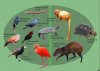
In addition to the free-flying birds, don’t forget to look around for within this 13,000 square-foot complex is where you’ll find free-roaming butterflies and Rhinoceros Iguanas that roam among visitors, as seen in the image below:

IMG_3626.jpeg

Quite notably, all but one of these animals are given the freedom to freely roam among the visitors throughout this section of the dome. Natural light provided by the roof of the 40-ft-tall glass dome above compliments the artificial heat lamps that are also provided for the free-roaming iguanas. Separately from the free-roaming animals, is an exhibit within an exhibit; for displayed inside of a 3,000 sq ft sectioned off side of the walkthrough are a pair of the critically endangered Cuban Crocodiles (which the zoo have great success with regarding conservation efforts). Now behind this main exhibit is a smaller extension of the main building that not only serves as the crocodiles’ night quarters; but is also connected to a separate enclosure of slightly larger proportions (just note that this outdoor space is not accessible for public viewing).

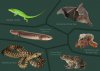
Past the crocodiles and into the next part of the building, you will first go through a double door system before giving way to a rope curtain. Which from there, guests are led into a darkened hallway themed to an underground cavern; and throughout this hall, there are six total enclosures convincingly designed to be “built” into the cave walls. Of these enclosures, five are sizable terrariums positioned on the left side of the hall, closest to the entrance. While on the opposite wall is a large, dimly lit room that contains a thriving colony of Jamaican Fruit Bats, which are among the following animals seen in the image below:

IMG_3628.jpeg

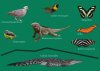
Further down the hall from the previous enclosures, straight ahead is a floor-to-ceiling saltwater tank that brightly shines within this otherwise nocturnal-themed space. As for the aquarium itself, it is meant to resemble a typical Caribbean reef; more specifically a coral reef from the Bahamas that the zoo has helped to support and restore. I should also mention that the building uses physical signage to help guests identify certain species of fish, as seen with the images below:

IMG_3629.jpeg
IMG_3630.jpeg

Once you’ve identified which fish is what, and admired the efforts that the zoo strives to achieve; we are soon led outside to a large aviary adjacent to the exit, which itself covers a footprint that’s nearly as big as the entire dome. The aviary of question is a semi-walkthrough and is designed to replicate the shallow-water ecosystems of several Caribbean islands. While it may not be the flashiest of modern aviaries, it certainly helps to showcase animals as flamboyant as the American Flamingo to better distract us from the aviary’s otherwise basic design; as shown with the image below:

IMG_3631.jpeg

From this point on the tour, the path loops around from the flamingo viewing area and leads us back towards the same billboard sign that greeted us earlier, which from there, our adventures through the wildest parts of the Caribbean islands have now reached their final destination.
 

Attachments

  • IMG_3626.jpeg
    IMG_3626.jpeg
    82.8 KB · Views: 367
  • IMG_3628.jpeg
    IMG_3628.jpeg
    91.2 KB · Views: 366
  • IMG_3629.jpeg
    IMG_3629.jpeg
    92.5 KB · Views: 383
  • IMG_3630.jpeg
    IMG_3630.jpeg
    91.6 KB · Views: 367
  • IMG_3631.jpeg
    IMG_3631.jpeg
    51.9 KB · Views: 366
Additionally, to those that may have been familiar with the challenge threads that were once common on this forum. Some of you might remember that I once participated in such a thread and was asked to come up with an exhibit similar to what you’ve just read in the post above. This first attempt would end up being two separate subsections for a far larger complex that was once referred to as the “Islands of the Caribbean”. Eventually, these said submissions would later become the basic foundation for the final product; which reflects the changes that were specifically made to modernize this past idea.
 
6. Wild Caribbean: - (10 exhibits)

To begin our trip to the islands, we will first walk past a billboard-like sign that welcomes travelers to what lies ahead. Which from there, after turning to your left. We are soon greeted with a colorful set of doors that invite you to step inside and enter through the recreated tropics. Once inside, you are already greeted with the sounds of free-flying birds like the Bananaquit, along with several hidden sound speakers that play an atmospheric steel drum melody that further enhances the experience.

In addition to the free-flying birds, don’t forget to look around for within this 13,000 square-foot complex is where you’ll find free-roaming butterflies and Rhinoceros Iguanas that roam among visitors, as seen in the image below:

View attachment 699170

Quite notably, all but one of these animals are given the freedom to freely roam among the visitors throughout this section of the dome. Natural light provided by the roof of the 40-ft-tall glass dome above compliments the artificial heat lamps that are also provided for the free-roaming iguanas. Separately from the free-roaming animals, is an exhibit within an exhibit; for displayed inside of a 3,000 sq ft sectioned off side of the walkthrough are a pair of the critically endangered Cuban Crocodiles (which the zoo have great success with regarding conservation efforts). Now behind this main exhibit is a smaller extension of the main building that not only serves as the crocodiles’ night quarters; but is also connected to a separate enclosure of slightly larger proportions (just note that this outdoor space is not accessible for public viewing).

Past the crocodiles and into the next part of the building, you will first go through a double door system before giving way to a rope curtain. Which from there, guests are led into a darkened hallway themed to an underground cavern; and throughout this hall, there are six total enclosures convincingly designed to be “built” into the cave walls. Of these enclosures, five are sizable terrariums positioned on the left side of the hall, closest to the entrance. While on the opposite wall is a large, dimly lit room that contains a thriving colony of Jamaican Fruit Bats, which are among the following animals seen in the image below:

View attachment 699171

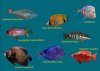
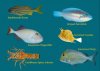
Further down the hall from the previous enclosures, straight ahead is a floor-to-ceiling saltwater tank that brightly shines within this otherwise nocturnal-themed space. As for the aquarium itself, it is meant to resemble a typical Caribbean reef; more specifically a coral reef from the Bahamas that the zoo has helped to support and restore. I should also mention that the building uses physical signage to help guests identify certain species of fish, as seen with the images below:

View attachment 699172
View attachment 699173

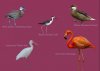
Once you’ve identified which fish is what, and admired the efforts that the zoo strives to achieve; we are soon led outside to a large aviary adjacent to the exit, which itself covers a footprint that’s nearly as big as the entire dome. The aviary of question is a semi-walkthrough and is designed to replicate the shallow-water ecosystems of several Caribbean islands. While it may not be the flashiest of modern aviaries, it certainly helps to showcase animals as flamboyant as the American Flamingo to better distract us from the aviary’s otherwise basic design; as shown with the image below:

View attachment 699174

From this point on the tour, the path loops around from the flamingo viewing area and leads us back towards the same billboard sign that greeted us earlier, which from there, our adventures through the wildest parts of the Caribbean islands have now reached their final destination.
Wow your Wild Caribbean exhibit just gave me a great idea if I were to open my own zoo and the exhibit gave me the idea of creating an exhibit that’s just like this exhibit but instead of animals from one of the Caribbean islands it would focus on animals from all of them and examples of animals would be Hutias, Iguanas, Solendons and many others.
 
For some time, I wasn’t too certain if I wanted to continue putting the time and effort into creating additional ideas for the thread. But throughout this summer, such investment is no longer viable for me to commit; and when combined with my first years at college and a personal lack of interest for this thread. I have decided that the best solution is to close the thread, and to look back at the released ideas as a source of inspiration for those who are interested.

That being said, it doesn’t mean that I am giving up on investing in the spec zoo forum; for I will occasionally give commentary and, perhaps, even create some new threads in the near future. But for now, I am glad that many of us have enjoyed these past six ideas; and I hope that threads like these will continue to inspire us far beyond their initial relevancy.

(To the moderators, if you can read this, please close this thread whenever possible)
 
Wow! What’s this? A new entry for Austin’s exhibit showcase?!

Yes, yes, it is, for quite a while, I did have a clear vision to end all of my progress, following the debut of the previous entry. Since then, I’ve made up my mind and will now continue progress with this thread after all. Just note that any future entry will now be posted on my own time without having to feel rushed in meeting any deadline.


7. Jungle Journey: - (16 exhibits)

Now before we truly begin, I want to give a shoutout to @RandomZooVisitorYT, whose initial idea of more Indian-themed exhibits in zoos sparked an inspiration impactful enough to return to this thread. With that being said, we can now begin with this next entry!

As soon as you approach the exhibit’s entrance, right away you are greeted with an archway replicating some temple ruins (don’t worry, this is the only time we’ll run across this type of theming). Straight ahead, a meshed-in enclosure for the notorious Honey Badger is present to our left. This begins the first part of the complex, which features some of the more charismatic mammals of India. Further ahead, we then approach the Royal Court, which consists of two rotational enclosures fit for some of India’s most iconic predators which, like the badgers before, are meshed-in, akin to London Zoo’s Tiger Territory. In the first enclosure, you will find a pride of Asiatic Lions, while in the space next door, there is currently a Malayan Tiger, which, for logistical (and genetic) reasons, is a more feasible substitute for their Bengal counterparts.

After passing by the court, we are then led to the next two enclosures via, a curved viewing area that overlooks an acre-large exhibit that currently mixes two herds of Nilgai and Chital (Axis Deer) with a female Indian Rhino. At the very edge of the paddock, you will notice a small, themed kiosk which, when functional, serves as the place to feed our one and only rhino. For an extra fee, visitors can go behind the scenes to safely interact with the rhino up-close, which includes touching, photo, and feeding opportunities, which is further emphasized with this next sentence:

This 20-minute session allows a limited number of participants to spend time with one of our keepers alongside the mixed habitat. While there, you will learn about how we care for our rhino, get a closer look at the beautiful “armor-plated” appearance that the Indian Rhino is well-known for, and enjoy a unique photo opportunity while you’re at it.

Across from the kiosk, a densely planted, moated island for a family troop of Lion-Tailed Macaques can be seen from a distance, which later convinces us to continue on our way through the forested parts of the sector.

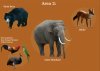
Species List for Area 1:
IMG_6392.jpeg

Deeper into these woods we go, the next part of the complex commences with an exhibit for Sloth Bears. Interestingly, the bears are cleverly separated from their neighbors by a hidden moat, which, as we will soon find out, will occasionally attack them in their native range. Additionally, when compared to the equally spacious enclosures for the lions and tiger, its impressively large, which, coupled with the integration of native vegetation, allows the bears the choice to hide from the sight of the visitors if necessary.

Across this moat and the indoor area for the bears is a rather peculiar exhibit for an equally peculiar pack of Dholes, which, to those who are curious, are one of my personal favorite canids. Like their neighbors, the main exhibit is a spacious, enclosed patch of native forest, although, in their case, the exhibit provides more opportunities for the so-called “Red Dogs” to hide.

While there are many known “facts” about these otherwise unknown animals, some of them, as fellow member @Pantheraman likes to point out, aren’t exactly true. To better inform our guests, the respective signage is dedicated to help debunk these common misconceptions. Past the dholes and turning towards to our right, we have now reached the apex area of this journey, for up ahead is where the largest animals in this sector are displayed.

This cornerstone complex features the zoo's bachelor herd of Asian Elephants, which includes the Elephant Building, a 7,000 sq. ft, multi-story indoor space with separate holding quarters for the animals, as well as a cultural education area for curious visitors. The elephants also have access to two outdoor habitats, both of which feature pools for the bulls to swim, and a visitor overpass that spans from the building’s exit to over one of the exhibits high above the ground.

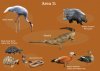
Once we reach the end of the overpass, straight ahead is the first of two large aviaries dedicated to an avian ensemble. On the ground level and understory of the aviary, you can see flocks of Indian Peafowl and Red Junglefowl respectively, while up in the canopy, you will find a rescued flock of Rose-Ringed Parakeets; of which, they arrived as surrendered pets. Given how all three species have a low conservation risk, most of the birds in this aviary consist of non-breeding flocks, with the exception of the peafowl, which had previously bred when they were mixed with the ungulates. Since their move, however, no breeding behaviors has been observed, although one might occasionally find an unfertilized egg every now and then.

Species List for Area 2:
IMG_6393.jpeg

Stepping into the last half of this expansive complex, we are soon greeted with a simplistic aviary for a proven pair of Sarus Cranes, while an equally simple enclosure to observe a pair of Indian Crested Porcupines can be seen nearby.

Now before we continue towards the next exhibit, I wanted to give another shoutout to the one and only @Mr Gharial, who I’ve used these animal images with his permission; and this time around, in honor of our little partnership, I present to you… Mr Gharial’s Gharial Grotto!

As self-explanatory as it sounds, this next enclosure is home to our lovely group of Gharials, for which, we currently have four individuals. If you can imagine it, the entire complex could be based around the dedication to gharial conservation efforts, but coming back to reality, this is your typical outdoor enclosure for a more-than-average crocodilian. While it's easy enough to view the animals from their spacious land area, our journey briefly goes indoors to an extensive underwater viewing area for the aforementioned gharials, with the crocodilians being treated with a heated, eight-foot-deep pool. ;)

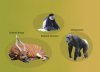
Turning over to the opposite end of the underwater viewing area, we are greeted by three enclosed terrariums for the following reptiles, some of which, whether their perception is negative or not, have a significant importance to the people of India:
  • Terrarium 1 > Indian Star Tortoise (Gechelone elegans)
  • Terrarium 2 > Black Pond Turtle (Geoclemys hamiltonii)
  • Terrarium 3 > Spectacled Cobra (Naja naja)
Walking back up to the surface level, we will soon reach the final exhibit on this journey, which, continuing the semi-aquatic theme, is a 10,763 sq. foot (1,000 sq. m) aviary for a non-breeding pair of Ruddy Shelducks and a single-sex flock of (female) Indian Spot-Billed Ducks. After admiring the last animals we’ll see on this journey; the pathway spanning from this aviary serves as the attraction’s exit. Which, from there, marks the conclusion of this latest adventure into India.

Species List for Area 3:
IMG_6394.jpeg
 

Attachments

  • IMG_6392.jpeg
    IMG_6392.jpeg
    79.9 KB · Views: 256
  • IMG_6393.jpeg
    IMG_6393.jpeg
    68 KB · Views: 243
  • IMG_6394.jpeg
    IMG_6394.jpeg
    88.8 KB · Views: 243
Last edited:
Wow! What’s this? A new entry for Austin’s exhibit showcase?!

Yes, yes, it is, for quite a while, I did have a clear vision to end all of my progress, following the debut of the previous entry. Since then, I’ve made up my mind and will now continue progress with this thread after all. Just note that any future entry will now be posted on my own time without having to feel rushed in meeting any deadline.


7. Jungle Journey: - (16 exhibits)

Now before we truly begin, I want to give a shoutout to @RandomZooVisitorYT, whose initial idea of more Indian-themed exhibits in zoos sparked an inspiration impactful enough to return to this thread. With that being said, we can now begin with this next entry!

As soon as you approach the exhibit’s entrance, right away you are greeted with an archway replicating some temple ruins (don’t worry, this is the only time we’ll run across this type of theming). Straight ahead, a meshed-in enclosure for the notorious Honey Badger is present to our left. This begins the first part of the complex, which features some of the more charismatic mammals of India. Further ahead, we then approach the Royal Court, which consists of two rotational enclosures fit for some of India’s most iconic predators which, like the badgers before, are meshed-in, akin to London Zoo’s Tiger Territory. In the first enclosure, you will find a pride of Asiatic Lions, while in the space next door, there is currently a Malayan Tiger, which, for logistical (and genetic) reasons, is a more feasible substitute for their Bengal counterparts.

After passing by the court, we are then led to the next two enclosures via, a curved viewing area that overlooks an acre-large exhibit that currently mixes two herds of Nilgai and Chital (Axis Deer) with a female Indian Rhino. At the very edge of the paddock, you will notice a small, themed kiosk which, when functional, serves as the place to feed our one and only rhino. For an extra fee, visitors can go behind the scenes to safely interact with the rhino up-close, which includes touching, photo, and feeding opportunities, which is further emphasized with this next sentence:

This 20-minute session allows a limited number of participants to spend time with one of our keepers alongside the mixed habitat. While there, you will learn about how we care for our rhino, get a closer look at the beautiful “armor-plated” appearance that the Indian Rhino is well-known for, and enjoy a unique photo opportunity while you’re at it.

Across from the kiosk, a densely planted, moated island for a family troop of Lion-Tailed Macaques can be seen from a distance, which later convinces us to continue on our way through the forested parts of the sector.

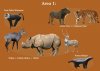
Species List for Area 1:
View attachment 765415

Deeper into these woods we go, the next part of the complex commences with an exhibit for Sloth Bears. Interestingly, the bears are cleverly separated from their neighbors by a hidden moat, which, as we will soon find out, will occasionally attack them in their native range. Additionally, when compared to the equally spacious enclosures for the lions and tiger, its impressively large, which, coupled with the integration of native vegetation, allows the bears the choice to hide from the sight of the visitors if necessary.

Across this moat and the indoor area for the bears is a rather peculiar exhibit for an equally peculiar pack of Dholes, which, to those who are curious, are one of my personal favorite canids. Like their neighbors, the main exhibit is a spacious, enclosed patch of native forest, although, in their case, the exhibit provides more opportunities for the so-called “Red Dogs” to hide.

While there are many known “facts” about these otherwise unknown animals, some of them, as fellow member @Pantheraman likes to point out, aren’t exactly true. To better inform our guests, the respective signage is dedicated to help debunk these common misconceptions. Past the dholes and turning towards to our right, we have now reached the apex area of this journey, for up ahead is where the largest animals in this sector are displayed.

This cornerstone complex features the zoo's bachelor herd of Asian Elephants, which includes the Elephant Building, a 7,000 sq. ft, multi-story indoor space with separate holding quarters for the animals, as well as a cultural education area for curious visitors. The elephants also have access to two outdoor habitats, both of which feature pools for the bulls to swim, and a visitor overpass that spans from the building’s exit to over one of the exhibits high above the ground.

Once we reach the end of the overpass, straight ahead is the first of two large aviaries dedicated to an avian ensemble. On the ground level and understory of the aviary, you can see flocks of Indian Peafowl and Red Junglefowl respectively, while up in the canopy, you will find a rescued flock of Rose-Ringed Parakeets; of which, they arrived as surrendered pets. Given how all three species have a low conservation risk, most of the birds in this aviary consist of non-breeding flocks, with the exception of the peafowl, which had previously bred when they were mixed with the ungulates. Since their move, however, no breeding behaviors has been observed, although one might occasionally find an unfertilized egg every now and then.

Species List for Area 2:
View attachment 765416

Stepping into the last half of this expansive complex, we are soon greeted with a simplistic aviary for a proven pair of Sarus Cranes, while an equally simple enclosure to observe a pair of Indian Crested Porcupines can be seen nearby.

Now before we continue towards the next exhibit, I wanted to give another shoutout to the one and only @Mr Gharial, who I’ve used these animal images with his permission; and this time around, in honor of our little partnership, I present to you… Mr Gharial’s Gharial Grotto!

As self-explanatory as it sounds, this next enclosure is home to our lovely group of Gharials, for which, we currently have four individuals. If you can imagine it, the entire complex could be based around the dedication to gharial conservation efforts, but coming back to reality, this is your typical outdoor enclosure for a more-than-average crocodilian. While it's easy enough to view the animals from their spacious land area, our journey briefly goes indoors to an extensive underwater viewing area for the aforementioned gharials, with the crocodilians being treated with a heated, eight-foot-deep pool. ;)

Turning over to the opposite end of the underwater viewing area, we are greeted by three enclosed terrariums for the following reptiles, some of which, whether their perception is negative or not, have a significant importance to the people of India:
  • Terrarium 1 > Indian Star Tortoise (Gechelone elegans)
  • Terrarium 2 > Black Pond Turtle (Geoclemys hamiltonii)
  • Terrarium 3 > Spectacled Cobra (Naja naja)
Walking back up to the surface level, we will soon reach the final exhibit on this journey, which, continuing the semi-aquatic theme, is a 10,763 sq. foot (1,000 sq. m) aviary for a non-breeding pair of Ruddy Shelducks and a single-sex flock of (female) Indian Spot-Billed Ducks. After admiring the last animals we’ll see on this journey; the pathway spanning from this aviary serves as the attraction’s exit. Which, from there, marks the conclusion of this latest adventure into India.

Species List for Area 3:
View attachment 765417
This is cool, especially if you added a leopard space, would have to substitute though.
 
The elephants also have access to two outdoor habitats, both of which feature pools for the bulls to swim, and a visitor overpass that spans from the building’s exit to over one of the exhibits high above the ground.
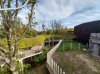
Originally, when I first wrote this brief description, I had pictured a bridge similar to that the Smithsonian National Zoo’s, which also goes over one of their exhibits for elephants. However, I recently came across the following image, and looking back, this new discovery describes my original view of the quoted description more accurately.

IMG_9582.jpeg
Photo Credit: @Philipine eagle

For those who are interested in where this is located in real life, you can find this exact bridge at the Lodz Zoo in Poland.

As for what’s to come regarding future entries, I won’t give away too many details regarding the next two ideas. Just note that the only hint I’ll provide for now is that these entries might be posted simultaneously.
 

Attachments

  • IMG_9582.jpeg
    IMG_9582.jpeg
    176.2 KB · Views: 177
Last edited:
@Mr Gharial, @Pantheraman, @RandomZooVisitorYT, thank you all for the feedback regarding the previous entry, it really means a lot. With that being said, here is an entry whose design preceded the written elements of this complex.


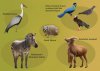
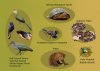
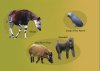
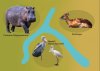
8. Atypical Africa: - (20 exhibits)

When we first enter Atypical Africa proper, the first object you may notice is a wooden sign shaped to match the continent of Africa. While the sign itself is a darker shade of brown, there are simplified, yet colorful shapes that are meant to depict the focused biomes of this recreated Africa. These biomes will be better covered as we make our way through, but this sign is the first we’ll see that highlights the intended concept.

Past this sign is the first of three enclosures that make up the subsection Kiboko Cove, which is based around the rivers, lakes, and wetlands of sub-Saharan Africa. Looking ahead, a spacious, marshy habitat for a breeding herd of Sitatunga can be seen, with the guest-facing barrier being a bamboo fence designed to match the varying heights of the surrounding foliage. Next door towards our right, visitors will soon encounter a large aviary that may look familiar to those who have been to ZooTampa, which has a similar setup for the same species. Inside of this aviary, from the relatively secluded viewing shelter that is the main way for visitors to view the following, be on the lookout for a mix between African Spoonbills and the one and only Shoebills.

Normally, I mainly design these entries for the showcase from a realistic, American-based perspective, with little to no rarities whatsoever. However, this will likely be one of the biggest exceptions on this thread, for shoebills are one of my all-time favorite birds, and are always a blessing to photograph whenever I visit ZooTampa.

Despite their worldwide rarity, I’ve always wanted to find a way to represent these birds to be represented anywhere in my spec zoo threads, especially since my other active project The Wilder Zoo follows my usual, minimal-rarity principle.

With these reasons in mind, the shoebill aviary itself isn’t as elaborate as one might come to expect and is again on-par with what can be seen at Tampa. Although, in our case, this aviary would be three times larger in size, and features a more impressive (albeit, man-made) body of water.

Rounding the corner from the viewing shelter and back towards the main path of this complex, the route meanders for a moment before finally reaching one of the largest exhibits in the area’s entirety. Uniquely, this next exhibit is technically two separate exhibits labeled as one massive enclosure; with the first being a water-heavy habitat complete with an underwater viewing akin to those of St. Louis and Cincinnati respectively. While the other has a smaller, shallower pool that is connected to the first habitat’s pool via hidden pipes that are completely submerged. When combined, both of these habitats can comfortably house a small-to-medium bloat of Common Hippopotami, which are the biggest animals present in this entire complex.

Being the namesake animal of this subsection, it was important to maintain such a charismatic mammal in a modern, yet naturalistic facility that can meet the up-to-date demands of the AZA and their ever-changing requirements of hippo husbandry.

IMG_6808.jpeg
Provided by yours truly, Austin the Sengi

After exiting out of the underwater viewing area for the hippos, the open waterways of the wetlands give way to a denser, well-shaded trail that takes direct inspiration from the tropical forests of Central Africa. While this patch of woodland is far from the Bronx Zoo’s Congo Gorilla Forest in terms of immersion, the trees and other foliage that surround us still evoke a sense of mystery and exploration as we enter the Colorful Congo, the second subsection we’ll encounter on our travels.

Serving as a transition from Kiboko to Congo, an open-topped enclosure complete with a water-filled moat beckons us to keep an eye out for a mix between a troop of Mandrills and a Red River Hog sounder. Past the mandrill’s moat to our left, a smaller meshed aviary can be found nearby. At the moment, the aviary contains a flamboyant flock of Congo Grey Parrots, which continue the colorful theme through the contrasting greys, reds, and whites in their feathers.

From the aviary, which is relatively bare from the parrots’ destructive nature, we then make a sharp turn to our right before coming across the largest exhibit in this subsection. Further ahead, a lushly green paddock for a rotating pair of Okapis can be seen, with a separate, smaller paddock being accessible to them behind-the-scenes. Much like the shoebills, the viewing shelters for the main okapi area were strategically located in certain corners to avoid guest cross-viewing and to better improve animal welfare for the enclosure’s inhabitants.

IMG_6812.jpeg
Provided by yours truly, Austin the Sengi

By reaching these viewing areas, one might think that we have now reached the end of the Colorful Congo, but as we will soon find out, that is only true for the outdoor portion of this subsection. For across the path from the last okapi viewing area lies the entrance to a medium-sized replication of a rustic research station. Once indoors, the atrium of this station is filled with a study area filled to the brim with artifacts, alongside four spacious terrariums for an assembly of Congo creatures, which are all listed as follows (top-to-bottom):

  • Terrarium 1 > African Helmeted Turtle
  • Terrarium 2 > Common Emperor Scorpion
  • Terrarium 3 > Gaboon Viper
  • Terrarium 4 > Jade-Headed Buffalo Beetle
In addition to these terrariums, there also lies a darkened corridor with a one-way route that takes you in and out to the main atrium. While the majority of the research station is entirely lit; the following corridor is significantly darker, with the building’s sole nocturnal display being lit by nocturnal-grade red lighting. As for what is contained inside of this next enclosure, you might be lucky enough to see at least a single Potto, which is another exception of my design principle that I couldn't help but include.

Along the same wall as the exit of this research station, a bird-friendly pane of glass that spans from the building’s floor serves as a viewing area for an outdoor aviary that contains the following birds (see image below). Seeing that we can view the same aviary from the outside, there won’t be much to cover without repeating the same features.

IMG_6811.jpeg
Provided by yours truly, Austin the Sengi

Once we return outside, the framing of the Colorful Congo’s aviary meanders with the adjacent pathway, which now gives us a better look as to where we can find the resident birds. This aviary in particular is far more planted when compared to previous larger aviary, and much like the former, it too is a mixed species setup.

As the aviary marks the end of the Colorful Congo, the trees beyond begin to space apart; and for a moment, the landscaping around us begin to feel rockier and the terrain feeling steeper. For this is the transition into the third subsection, aka, the African Highlands, which takes inspiration from the mountainous regions of Ethiopia and Namibia.

The first enclosure we will encounter in these highlands is an open-topped enclosure with significantly tall mesh fencing. Will this not be the most photographer-friendly exhibit on this tour? Admittedly, yes, but thankfully, this is the only enclosure I can say for certain that has this issue. After all, not every zoo exhibit is supposed to be well-designed, but it seems that the Wattled Cranes that inhabit this space don't seem to mind this issue all that much. With that being said, the exhibit is at least, well-furnished with a slightly elevated landscape meant to replicate a small slice of the Ethiopian Highlands, a place where their wild counterparts often congregate.

If we make a slight turn to our right from the cranes, we will run into two larger paddocks that share a similar, moated design (ala, Zoo Miami). The first and rockier of the two contains a series of artificial “mountains” and sloping hills of dirt, which helps to make the resident herd of Kordofan Aoudad feel right at home. In the opposite yard, however, the following is larger in size, and the altered terrain is not as extreme. While some may argue that this exhibit may feel like a massive dustbowl when it comes to the vegetation, I’d argue it is more in line with the natural habitat of the Hartmann’s Mountain Zebra, for which a breeding herd call this paddock their home. In between the two ungulate paddocks on the opposite side of the main path, a quaint, yet spacious meshed exhibit for Rock Hyraxes can be seen. This next enclosure is fully enclosed with mesh, glass, and faux rocks to prevent possible escapes, and provides a sheltered space for the hyraxes to safely thrive.

Further down the pathway left from the aoudads, a spacious meshed aviary with a similar design to that of the hyraxes can be seen just ahead. While the two exhibits share many structural traits, the general size and the species they contain differ greatly, with this larger aviary being a mixed setup for the following species of bird (see image below).

IMG_6810.jpeg
Provided by yours truly, Austin the Sengi

Rounding from the highlands, the imaginative transition back into the forested parts of the complex begin to symbolize the end of our adventures. However, there is still one more subsection that is left to be covered; and as the trees and bamboo begin to thicken on the route ahead, we have now reached the Sokwe Sanctuary. The following subsection is unique when it comes to the habitat it represents, for the landscaping and choice of species harken of the bamboo stands of East Africa; a habitat that is often associated with China and surrounding nations.

To symbolize our entry into the sanctuary, the first enclosure we run into is a spacious, forested paddock not unlike the one we saw for the okapis. This time, however, the following is home to instead, a small but stable herd of Eastern Bongos, which have had some previous success when it comes to breeding this endangered subspecies.

Now if you happen to turn around from the bongos and look up, you might notice an overhead trail system for a peculiar primate, for that is because the main exhibit for this next species is not too far away from the end of this system. As we walk closer to this next enclosure, keep an ear out for the distinctive calls of the Mantled Guereza and the striking black-and-white fur that this species is often known for. Regarding the guerezas, there are two major viewing areas located on the opposite ends of the main exhibit; with both being sheltered to keep visitors dry when the weather becomes awry.

Last, but certainly not least, as you gradually leave the guerezas to head back on towards a meandering main path. You will be rewarded with the grand finale of the not just the entire complex, but also the namesake species of the Sokwe Sanctuary. For you see, the word “sokwe” translates to Chimpanzee in Swahili, and rather appropriately, the last habitat on this adventure concludes with a spacious enclosure that is not only well-protected to avoid any escapes (a personal phobia, I must confess), but is also as naturalistic as you can make for this species. While it may be far from the greatest, the chimpanzees that reside here are a worthy species to end off this incredible complex; for once you decide to view (then leave) the chimps at their dedicated viewing area. The final stretches of the main path are not too far away, and from there, our adventures through the atypical habitats of Africa have now reached their ultimate conclusion.

IMG_6809.jpeg
Provided by yours truly, Austin the Sengi

Atypical Africa was and has always been a creative interpretation of redefining a typical African-themed exhibit, with @Van Beal’s thread Making African Sections More Unique being one of many inspirations during its initial design phase. Otherwise, I hope that anyone who reads this can gain some new appreciation for some of the habitats represented in this entry, and the animals that call said habitats their home.
 

Attachments

  • IMG_6809.jpeg
    IMG_6809.jpeg
    53.3 KB · Views: 167
  • IMG_6810.jpeg
    IMG_6810.jpeg
    77.7 KB · Views: 169
  • IMG_6811.jpeg
    IMG_6811.jpeg
    87 KB · Views: 166
  • IMG_6812.jpeg
    IMG_6812.jpeg
    58.3 KB · Views: 170
  • IMG_6808.jpeg
    IMG_6808.jpeg
    64.6 KB · Views: 170
In what will likely be one of the last few ideas themed to Africa, or at least, that is planned for the moment. For the time being, I am proud to present the following attraction, which is dedicated to the wonderfully weird superorder Afrotheria!


9. The Afrotherium: - (4 exhibits)

As the name suggests, the Afrotherium highlights the living (and non-living) members of this diverse superorder; with the building at present displaying four species that belong to this taxonomic group.

Once inside the building, you will soon enter the main rotunda, which serves as the gateway toward the surrounding exhibits. However, before we can venture into what lies ahead. One must also appreciate and admire the skeletons of the following species, which demonstrates the diversity and distribution of some of the larger and most iconic Afrotherians.
  • Woolly Mammoth (Mammuthus primigenius) - {extinct}
  • West Indian Manatee (Trichechus manatus)
Assembled on the platform where the skeletons are based, interactive and interpretive elements that educate guests on the biology, threats, and places in geologic time of the respective animals are also of note. With the mammoth, in particular, being the most notable for their sudden extinction and the active efforts to bring them back; and how we should strive to protect their living relatives.

Now why exactly are these skeletons here in the first place, you might ask? Well, to answer that question, it simply came down to logistics, which obviously did not fit the ever-changing stands for housing manatees and elephants respectively.

Turning left from the main rotunda, we soon enter through another set of sliding doors that leads us into a separate room; which from there, brings us to the first exhibits.

By proceeding forward, you are met with two naturalistic enclosures that vary dramatically in size. In between these exhibits, the main pathway is widened to allow for efficient visitor flow, just in case if certain visitors are dedicated to see one species over another (which, preferably, you shouldn't). Looking to your left, we encounter a rather familiar face on this thread, with this being the third time we have encountered the Rock Hyrax. Being a versatile species to design for, this all-indoor enclosure is most notable for featuring an impressive overhead skylight; which allows these hyraxes to experience some form of natural sunlight.

IMG_6988.jpeg
Photo Credit: @gulogulogulo

Opposite of the hyraxes, which have an open-fronted, near-barrierless exhibit; the following exhibit across the widened path displays a species that is very dear to my heart, and one of the reasons why I based my ZooChat identity around this very animal. To summarize, if you know anything about my username and avatar, you would already know that the animal I am trying to describe is the one and only, Black-and-Rufous Sengi.

Being the only representative of the order Macroscelidea in North American collections. It’s about time that I finally talk about an exhibit dedicated to this underrated, yet charming little creature. Yet funnily enough, the sengi enclosure’s description actually precedes the existence of this complex, let alone the entire thread!

IMG_6989.jpeg
Photo Credit: @EmperorTamarin

As for the actual exhibit for the building’s resident sengis. The following enclosure was largely based on the real-life exhibit for this species at the Rotterdam Zoo; albeit, with a few differences, which includes being slightly larger in size.

For us visitors, the opportunity to look into the enclosure from two, non-identical vantage points allows for a unique viewing experience. The first of which is a large, plexiglass viewing window that curves in a circular direction. To most visitors, especially children, this would be the ideal place to view the species; and to enhance animal welfare, the window is given a one-way tint, which allows us to view the sengis, while also allowing the animals to not see us. As for the other viewing point, it is a more traditional, non-curved viewing section that uses a wall of secure, thin-wire mesh… not much else to say about this one. Now while the two viewing areas do have their differences, one feature that they each have in common is a low safety barrier that helps protect them from the multitude of potentially unruly visitors.
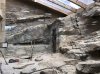
Once you were able to (hopefully) see a sengi or two, we can now move along towards the building’s next room; which also happens to be the smallest in the entire building. In this room, which is dimly-lit when compared to the previous ones, a centered education board is prominently displayed, and is the only notable feature in this otherwise empty room.

IMG_6990.jpeg
Photo Credit: @HOMIN96

Whether or not this board would be identical to the one above is open to interpretation; but since we have other sights to see ahead, you may already have a basic idea as to what this education board has to offer.

As the light in the next room transitions into darkness, visitors will soon enter the building’s nocturnal section, which includes the largest gallery in the entire structure. When compared to the previous, diurnal-focused room. The pathway in this gallery starts out as a narrow corridor; which gradually expands into a wider pathway by the time we reach the grand finale.

Looking to our right, we encounter the smaller exhibit in this room, which is roughly a third of the size of the previous exhibit. However, when you look hard enough into the following enclosure; you might be lucky to find at least one Lesser Hedgehog Tenrec. Since the enclosure for tenrecs is relatively simple in terms of its design, there isn't much else to describe that hasn't been said already with the sengi exhibit moments ago.

IMG_6987.jpeg
Photo Credit: @gulogulogulo; albeit, ours would be more dimly-lit.

Past the tenrecs and through the first of two sets of darkened drapes. Visitors will soon encounter and even walk over the last and largest exhibit in this building; which, appropriately, contains a single Aardvark, who just so happens to be the largest animal that we’ll encounter on this tour.

IMG_6986.jpeg
Photo Credit: @StoppableSan; depicting the exhibit’s “savanna” side

Interestingly, the aardvark can choose to spend their time on one side of this spacious enclosure by going through a hidden tunnel directly under the visitor walkway. Another notable feature of this enclosure is that either side represents a different habitat where aardvarks are frequently found in the wild. With the larger side depicting the open savannas of Africa that most zoos and visitors associate this animal with, while the smaller side depicts instead, a subtle, tropical setting that Dutch ZooChatters can best relate to (if you know, you know ;)).

When visitors reach the next set of drapes at the end of the exhibit, it also signifies the end of our time in this building; for once we pass through these very drapes. We now return to where we first began in the main rotunda, which from there, concludes our tour through the Afrotherium.

IMG_6890.jpeg
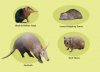
Species List for The Afrotherium:
Provided by yours truly, Austin the Sengi
 

Attachments

  • IMG_6988.jpeg
    IMG_6988.jpeg
    195.5 KB · Views: 145
  • IMG_6989.jpeg
    IMG_6989.jpeg
    204.8 KB · Views: 148
  • IMG_6990.jpeg
    IMG_6990.jpeg
    138.7 KB · Views: 149
  • IMG_6987.jpeg
    IMG_6987.jpeg
    111.3 KB · Views: 151
  • IMG_6986.jpeg
    IMG_6986.jpeg
    82.6 KB · Views: 146
  • IMG_6890.jpeg
    IMG_6890.jpeg
    63 KB · Views: 148
Last edited:
10. Lagoa do Sul: - (3 exhibits)

When translating the exhibit’s name into English, this “Lagoon of the South” (in Brazilian Portuguese) signifies the water-based experiences that you are about to experience in a moment’s notice…

Contrary to the other entries I have featured thus far, there is no formal entrance and exit to begin nor leave from. Rather, all of the exhibits follow a single, winding pathway that simply passes through as both a border and an access point for visitors; with a large, man-made lake that borders the opposite end.

First along this trail, which also happens to be the newest of the three, is a large, hybrid enclosure for Giant Otters that features more than one body of water. With only a secure fence disguised as a cluster of metallic reeds serving as an obstacle; there is no other barrier that separates the animals from the aforementioned lake. In this case, the otters can only access this fenced portion of the lake, meaning that they won't have to gain full control of its source without having to terrorize visitors whatsoever.

In order for these changes to happen, the hypothetical zoo where this attraction is located had to phase out a boat tour which used to pass by the entire attraction. This was all done for the sake of animal welfare, since there were initial concerns of the otters being exposed to the type of fuel that the boats required to operate at the time.
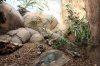
Past the otters, and towards the original lagoon for where the attraction gains its name; it is technically divided into two separate sections, with the only species having full access to both sides being a school of Red-Tailed Catfish. Now while the deepest points in the lagoon are relatively deep enough for the catfish to safely hide away when necessary (4 ft); it is far from deep enough when compared to the lake beyond (14 ft).

From the visitor side of the lagoon, the attraction was designed with a seamless look out onto the lake; which serves as a spectacular backdrop for all three exhibits. In the case of the first section, which also maintains the larger of the lagoon’s two islands; you should expect to make out for both Black Howler Monkeys and Common Squirrel Monkeys, which are mixed together on the same island. This particular island is especially noteworthy, as it features both artificial climbing frames and a multitude of fruit-bearing trees, which were carefully chosen for having fruits and leaves that are safe for the monkeys to easily digest. In front of the island is a low fence made of the same secure materials used to contain the otters next door. Originally, this fence was made out of wooden poles that were coated in a waterproof garnish; however, the fence was ultimately replaced around the same time construction was being done for the otter expansion, which brings us to the fence that’s around to this day.

Opposite of the primates and across the fence that separates them, an assortment of South American waterfowl are based around a simpler, sandbar-type of island; with the following birds being listed below:
  • Black-Necked Swan
  • Brazilian Teal
  • Rosy-Billed Pochard
  • Fulvous Whistling Duck
  • Orinoco Goose
Periodically, the island’s avian residents have to be removed for pre-cautioned reasons in direct response to the dreaded Avian Influenza; but once the risks associated from this disease are lower, most visitors would be agree in being happy to see the return of the lagoon’s signature birds as intended. Although, as the disease becomes increasingly more unpredictable in the years to come, we are actively considering fully enclosing this side of the lagoon within an aviary-type setting. While some may be concerned that may ruin the illusion the exhibit was designed around; just remember that this decision is not fully finalized and is not guaranteed that such a change will be given the green-light.

By this point on the tour, the waterfowl side of the lagoon signifies the end of this sector, which from there concludes our time along this stretch of the zoo’s hypothetical lake; but first, to properly close out this entry, I should also mention that like Islands of the Caribbean, this is not the first time I have posted this idea. Originally, on a separate thread in the spec zoo forums, I had posted the original design of this attraction on a separate thread several years ago; and quite notably, the initial version was the second speculative exhibit that I ever made for ZooChat. In the nearly five years since that post, I figured it would be worth bringing this original idea back from obscurity; and lo and behold, came this final result that you just read above.

IMG_6881.jpeg
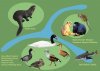
Species List for Lagoa do Sul:
Provided by yours truly, Austin the Sengi
 

Attachments

  • IMG_6881.jpeg
    IMG_6881.jpeg
    75.4 KB · Views: 135
Last edited:
I should also mention that since it will be quite some time until I get around the next few projects. I have plans to add two sets of my signature “species collage” that were previously missing from the thread’s first two entries.

Stay tuned!
 
1. Beringia: Past and Present: - (9 exhibits)

To begin our time-traveling journey, you’ll first enter *Beringia: Past and Present* through a 65 foot long replication of a permafrost tunnel. Placed throughout the tunnel’s walls are graphic panels that orient visitors to the ideas behind Beringia; and defines a transition zone from the Zoo’s present day setting to that of the Bering Land Bridge during the Pleistocene.

Beyond the tunnel’s end, you’ll step into a small plaza featuring a life-sized pair of Woolly Mammoth statues that guests can interact with. Also, near the second statue is a sign that helps to connect and compare these prehistoric pachyderms with their modern day relatives. If you walk past these statues, the general vista opens up onto a sprawling, 89,559 sq ft paddock that currently displays 0.4.0 Bactrian Camels and 1.5.4 Siberian Reindeer. As seen from a sign towards your left, the sign tells you that sometimes, on select days of the week; this enclosure might be home to a different animal while the camels and reindeer are displayed elsewhere. This means that the inhabitants of each paddock are on a scheduled rotation to better improve the animals’ welfare, in addition to make things more unpredictable and exciting for zoo visitors.

In a separate, 900 sq ft enclosure lowered beneath the first paddock, not unlike the watering hole at the Columbus Zoo and Aquarium; contains a lively scurry of 6.6.0 Arctic Ground Squirrels. Visitors can passively watch the playful squirrels while the rotating ungulates look down from above, giving us a good sense on how impressive the megafauna truly are. The path then curves towards the right, to which you can already notice the man-made mud walls towering above as you continue to head straight. Shortly afterward, you encounter a sliding door that leads you into an air-conditioned viewing gallery concealed with strategically-planted grasses and the aforementioned mudbanks.

Once inside and directly towards your right, is a large, floor-to-ceiling angled glass window that looks out into the lair of the zoo’s mighty 1.3.0 African Lions. Now some of you might be puzzled as to why there are lions in an ice age-themed exhibit. Well, in the case of both them and several other animals in this complex; they are described as a “living example” of an extinct animal that was closely related to them. Which in this case, is the Beringian Cave Lion, which once prowled Beringia’s ancient steppe on the pursuit of potential prey.

Adjacent to this habitat are more graphic panels that provide visitors with additional information of both species of lion; as well as a cast replica of a cave lion skull, that shows us how big these cats truly were. But it’s not just the lions that visitors will pay attention to, for on the opposite end of the building is yet another angled window that overlooks a smaller habitat for a relatively small predator. It is here that one could find our dozing pair of 0.2.0. Arctic Foxes; where they have 1,392 sq ft of room to spread out and explore. Another unique feature of this otherwise simple habitat is that the foxes are able to look out towards one of the three rotational paddocks; which we’ll see momentarily. But first, we must exit, since there is another sliding door that directly leads you out of the building. Towards the right of this exit, is a panoramic outdoor viewing area that overlooks the lion enclosure; which, in contrast to what we have seen indoors, is that the amount of space for the zoo’s pride of four is much larger than how it first appears, especially since this enclosure alone is an impressive 28,400 sq ft in size.

Facing left, the path continues to meander through a series of man-made hills and rocky terrain; which makes for the perfect setting for a 4,000 sq ft aviary. At the moment, this aviary contains a single 0.1.0 Golden Eagle, along with a flock of Common Ravens that have kept her company, after the eagle lost her partner many years ago. Regardless of its size, the aviary itself is still spacious enough for the birds to occasionally spread their wings; to which the eagle especially takes full advantage of.

Passing by a few more rock formations and looking out to your left once more; straight ahead is the largest enclosure in the entire complex. An impressive, 120,899 sq ft grassy paddock with panoramic vistas as far as the eye can see. This is the same paddock that guests can view from the Arctic Fox habitat, which just comes to show on how enormous this paddock truly is. Currently inhabiting this paddock, and serving as the modern representatives of their Steppe Bison relatives, are the zoo’s aging herd of 1.2.0 American Bison. While the 0.5.0 Persian Onagers that share the same space as them represent the Yukon Horses that were once present on the ancient steppe. Through the use of nearby interpretative signs, guests are informed of how Beringia was once a vast patchwork of steppe and mesic tundra; and how the region’s herbivorous megafauna were each an important keystone species in their respective ecosystem. This is further compared to the conservation success story of the American Bison, and it shows how the bison of today are a modern example of a keystone species.
Past the second paddock and after walking a short distance straight. Up ahead is an immersive, 37,070 sq ft enclosure that is the next to be encountered. Similar to the lions and foxes, the zoo’s 2.0.0 Alaskan Brown Bears are primarily viewed from an indoor viewing gallery; but contrary to the first building, the glass viewing windows here are curved in shape. The bear exhibit itself is also much larger in size than it first appears; with the enclosure being a vast, grassy meadow with the occasional boulder or log being scattered throughout.

Upon entering and exiting out of the same sliding doors; to your right is a far smaller, outdoor viewing area for the bears we saw moments ago. While to your left, is the third and final rotational paddock in the complex. At an approximate size of 76,600 sq ft, it is also the smallest of the three, although it might not appear that way at first glance, since this is still a very large enclosure. Rather than representing an extinct relative, the herd of 0.4.0 Musk Oxen that currently inhabit this paddock are a stellar example of a living Ice Age survivor.

Backtracking the path from the musk ox paddock, and after making a right past the brown bears. Directly up ahead is a spacious, 35,150 sq ft portion of enclosed native forest; which is considerably larger than what is typically expected for the following species. That is, if you are lucky enough to catch a glimpse of the zoo’s pair of 1.1.0 Wolverines. Carried on from the musk oxen sign, the graphics in front of this habitat also tell you how wolverines are another great example of surviving the warming era that ended the Ice Age; and how they too, are in risk of extinction today.

The graphic signs also inform you that as the megafauna began to die out, and sea levels began to rise. Beringia as we have seen it so far would never be the same ever again. From here, the mostly straight path takes you deeper and deeper into the more wooded areas of the zoo; which marks it as the official conclusion of today’s journey.

But until next time, do feel free to discuss, and let me know on what you think of the current design of this first exhibit.
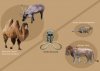
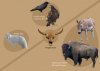
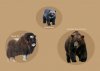
As it was teased before, provided below are three images that represent the depicted fauna of Beringia: Past and Present. At the time, this wasn’t an artistic technique that I considered when the exhibit’s description first came out. However, since that time, I made the decision to bring back a new-found appreciation for this first idea, which has now led to the creation of this very post:

IMG_7075.jpeg
IMG_7078.jpeg
IMG_7076.jpeg
Species List for Beringia: Past and Present:
Provided by yours truly, Austin the Sengi
 

Attachments

  • IMG_7075.jpeg
    IMG_7075.jpeg
    64.4 KB · Views: 118
  • IMG_7078.jpeg
    IMG_7078.jpeg
    64.5 KB · Views: 118
  • IMG_7076.jpeg
    IMG_7076.jpeg
    49.5 KB · Views: 117
2. Tswalu Trek: - (7/8 exhibits)

Meerkats, whether you like them or not, these charismatic members of the mongoose family have, and always will be popular with the general public, even if most ZooChatters tend to personally distain this iconic animal. What is interesting however, is that in most cases, meerkats are almost always chosen as a popular filler species for African-themed sections; and even if the location is not specifically themed to Africa, they are still popular enough to attract a decent crowd. However, in the case of this exhibit, it is not just meerkats that will draw your attention, but rather, the recreated environment of the Tswalu Kalahari Reserve, and the creatures that dwell within it:

From the moment you first enter the complex, you will already feel immersed into this dry Kalahari landscape; mostly in part from the foliage and faux rockwork that surrounds you throughout. To your right is a small, circular plaza which wraps around some life-sized statues of meerkats atop an artificial termite mound; directly behind these statues is a relatively small enclosure that is currently empty, along with an enclosed mesh tunnel that connects it to what lies ahead. The tunnel itself takes great inspiration from the Philadelphia Zoo’s Meerkat Maze, with the main difference being that the length of this tunnel is significantly longer than the one in Philadelphia.

While walking towards the next portion of the complex, you will also walk over a portion of the tunnel, via, a pedestrian bridge; directly ahead of this bridge is a larger termite mound, which has an interior accessible to small children. On your right from the mound is a loosely themed restroom building, while straight ahead is the first of two large enclosures dedicated for the titular Meerkat. At the moment, the zoo’s population of meerkats are divided into two separate family mobs, with one group per enclosure. In both cases, each of the two groups are mixed with a different species; with the first containing Yellow Mongoose, while the other contains a pair of Cape Porcupines. Once you’ve finished backtracking down the same path from before, and after making a short right from this path; ahead on your left is an average-sized, walk-in aviary that contains a breeding pair of the endangered Bateleur Eagle (which have been known to prey on meerkats).

While inside of the eagle viewing area, you’ll notice that throughout this small building, there are several forms of graphic signage, along with a series of speakers that play a variety of meerkat vocalizations from the push of a button. To the right of this aviary, is a simple plaza that encompasses a dry garden; with a single oak tree pruned to resemble a Kalahari-native camel thorn tree being the gardens most notable plant. Ahead to your right is a small, semi-outdoor building that directly looks into a trio of terrariums, with each one containing a species of snake that are also known to prey on meerkats; with those snakes being the Cape Cobra, the Puff Adder, and the Boomslang.

To the left of the snakes is a single double door entry that takes you in and out of a large, walkthrough aviary that contains a good variety of birdlife native to the region as you can see below:

• - Leopard Tortoise
• - Cape Thick-Knee
• - Namaqua Dove
• - Burchell’s Starling
• - Green Woodhoopoe
• - Sociable Weaver


Once you made your exit out of the aviary, the path then leads you back into the dry garden plaza, before making a right towards the exhibit’s exit, which from there, concludes our tour through the Tswalu Trek.

Huh? Has it really been that long since the last reply?!… Anyways…

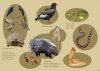
Exactly like the post above, the following image highlights the once-missing media for depicting the fauna of Tswalu Trek. Just before I plan to show you all the next two exhibits planned for the showcase, so stay tuned until then: ;)

IMG_8028.jpeg
Species List for the Tswalu Trek:
Provided by yours truly, Austin the Sengi
 

Attachments

  • IMG_8028.jpeg
    IMG_8028.jpeg
    100.7 KB · Views: 81
11. Carnivora Conservation Center: - (9 exhibits)

Similar to the ninth entry of this thread, the following complex represents a mostly-indoor complex dedicated to a taxonomic order. This time, however (as the name wasn't already a dead giveaway), the following attraction is dedicated to some of the rarer members of the order Carnivora, allowing us to highlight a fraction of its taxonomic diversity, all while playing into the modern aspects as a hub for active breeding programs.

Similar to how the previously-featured Afrotherium serves a modern template for a historic pachyderm house, the same is true for this conservation center. Historically, in some of the enclosures we will notice in a moment, they initially had larger carnivorans in these very spaces. An obvious reminder of how animal husbandry changed over the decades since its inception, and how we retrofitted these species for smaller mammals that fit into these spaces more appropriately.

With this in mind as we enter through the historic building’s doors, indoor enclosures for seven total species are visibly laid out, all from a rounded pathway that wraps around the edges of these displays. Something that is not too dissimilar to what is seen in older buildings like the Fauverie of Paris’ Jardin des Plantes, for example:

IMG_4050.jpeg
Photo Credit: @lintworm

In the case of the conservation center, however, the enclosures themselves maintain a more “natural” aesthetic to them. For within each enclosure is a variation of faux rocks, live plants, strategically placed branches and logs, a painted backdrop meant to reflect each animal’s respective environment; natural substrate across each floor, skylights across the entirety of the ceiling, and (in some cases), a that does break some aspects of the intended illusion.

Since each of the following enclosures incorporate most of these elements, I am only going to mention these aspects here, and allow the enclosure’s general size and their inhabitants to be the main focus going forward.

Beginning with the indoor areas on the west (right) side of the building, five large enclosures that once held lions, tigers, various bears (oh my!), and wolves (among others) are nowadays home to representative individuals of the following species.

At the moment, the largest two enclosures of this row periodically rotate a male and female Mainland Clouded Leopard. With the male inhabiting the south-facing enclosure, while his partner currently inhabits the opposite-facing exhibit. Both leopards have access to two outdoor enclosures that are off-limits to the public to provide additional privacy; although, there are talks about converting the indoor/outdoor enclosures closest to the female’s into a third exhibit for the leopards. With the difference being that this proposed new exhibit will be public-facing from the outside as well as indoors. In the meantime, said enclosure is currently occupied by a male Chinese Red Panda, whom the zoo is planning to transfer to another zoo once an SSP-related match has been made.

In the enclosure closest to the male leopard’s, a breeding pack of a Bush Dogs frequent their time between their indoor and outdoor spaces; with the latter receiving some notable barrier modifications over the course of the past few years. So far, the bush dogs have been the most successful of our carnivores when it comes to breeding; with the pack having produced three litters since the dominant parents first arrived. Finally, directly next door to the dogs is where the smallest enclosure in this row is located. Previously home to a small pack of wolves; it would later be home to variety of smaller canids for a short while afterward, before finally becoming the retirement home to our solo Banded Palm Civet. This individual (an elderly male) is not long for this world, only making his appearances in our imaginations all the more special. In the long-term, we have proposed plans to either annex the enclosure to give the bush dogs additional room indoors; or to simply decommission the space for animals entirely, and to use it as a “diorama” of sorts to place in a statue of an extinct carnivoran. Whatever the outcome, it is abundantly clear that the animal collection within the walls of this historic building are in a constant state of change; some for the better, while others remain uncertain.

Heading down the hallway and looping towards the enclosures on the opposite side of the building. An assortment of three smaller enclosures await us to our right. Back in the early days of this building, these indoor displays once held a surprising variety of plants and animals have come and gone over the years; which included (but not exclusive to) songbirds, weasels, squirrels, tree-shrews, and even exotic plants!

Originally open-fronted to accommodate the aforementioned plants, these enclosures were given the same naturalistic treatment as the larger spaces previously described, and now have one-way, noise-reducing panels of plexiglass to improve animal welfare for the Black-Footed Ferrets and Narrow-Striped Boky-Boky that call two of these habitats home. Currently, the latter are part of an international breeding loan from another facility overseas; while the former species are represented through a single male that is currently awaiting a mate (with four additional ferrets being held bts).

Last, but certainly not least, as we move further down towards the remaining enclosure. One will notice that this exhibit is significantly larger than the previous. This was made possible by combining three smaller enclosures to make one bigger space for a pair Black-Footed Cats. Often touted as “Africa’s Deadliest Cat” (mostly for their hunting habits), the two sisters that we are caring for is a temporary solution, as we are currently awaiting a male to swap with one of our females. Once such a swap can be made, a black-footed cat breeding program will take over. Until then, these two are currently serving as ambassadors for their species, which are currently in decline as Vulnerable in the wild.

From the black-footed cats, the path loops around to where we previously started, which allows for a more uniform, looping design that was often associated with these older-style buildings. I should also mention that a short wall decked out with interpretive graphics and educational signage are what divides the right and left sides of the looping pathway.

Bookending the building’s north and south ends are two sets of automatic sliding doors that allow visitors to effectively leave in and out of the building’s occasionally-smelly interior. The framework for these doors is yet another historical element that serves its purpose to this day, with the doors themselves being a way more recent installation. With this in mind, since we entered the building from the north end of the building; we will finish off this post by exiting through the south doors. Which, from there, effectively concludes this latest project.

IMG_8029.jpeg
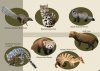
Species List for the Carnivora Conservation Center:
Provided by yours truly, Austin the Sengi*

*civet image taken (and provided) by Joel Sartore, remaining images were provided with the permission of @Mr Gharial
 

Attachments

  • IMG_4050.jpeg
    IMG_4050.jpeg
    159 KB · Views: 47
  • IMG_8029.jpeg
    IMG_8029.jpeg
    96.6 KB · Views: 48
Last edited:
12. Mata Atlantica - The Forgotten Forest: - (3 exhibits)

After our previous venture into a repurposed carnivore house. Today, we will be making a return to South America, for both this and the next entry will showcase two little-known ecoregions: with the first of these highlighting the Mata Atlántica (Atlantic Forest) of Brazil!

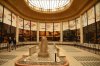
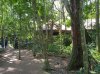
The transition from the outdoors to the tropics begins with an enclosed entryway that curves toward a set of sliding doors. Once inside, the instant feeling of the humidity, balmy temperatures, and the sights and sounds of this recreated rainforest begin to take effect; all while taking in the surrounding indoor atmosphere that we just walked into. Directly above our heads, you might’ve taken notice of the overhead domed roof not unlike those used for similar-sized tropical houses (see below).

IMG_4064.jpeg
IMG_4065.jpeg
Photo Credits: red river hog and Therabu, respectively

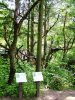
Yet, even with this roof, the natural canopy provided by various shade trees makes it so lush and dense that at times, it is almost impossible to make out where the tops of the trees end. Being a climate-controlled tropical house, the following plants all comprise of species native to the respective ecoregion (one of 15 to be precise!):
  • Trees / Palms
    • Pachira aquatica | Guiana Chestnut
    • Inga edulis | Ice-Cream Bean
    • Syagrus romanzoffiana | Queen Palm
    • Psidium cattleianum | Strawberry Guava
Shoutout to @AndyJ08 for providing this list of species

Additionally, to make extra room for the mister and support systems directly above, the canopy of each individual tree is pruned accordingly to around 10-15 ft (3-4 m) in height, which, for context, the building itself is around 20 ft (6 m) at its tallest point.

Better yet, it is important to keep looking towards the canopy, for the entire building is a singular walk-through exhibit that contains a multitude of free-roaming creatures such as tanagers, oropendolas, bush anoles, and more! Additionally, an often-overlooked aspect of this specific tropical house is that it is one giant bioactive enclosure!

“Now, Austin”, one might ask, “what exact aspects of the enclosure are bioactive?”. Well, to answer this question, it's really quite simple; for living alongside the larger free-roaming species, are hundreds (if not, thousands) of microfauna that are commonly utilized for smaller, bioactive terrariums for reptiles and amphibians; which include (but are not exclusive to) the following:
  • Bioactive Microfauna
    • Tropical Springtails
    • Isopods
    • Flightless Fruit-Flies
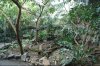
As we follow the continuous main pathway that curves around the edges of this miniature jungle; along the way are a series of “microhabitats”, which include both open and denser patches of forest, and a secluded pond not unlike the one below for a non-breeding flock of Scarlet Ibises and several Geoffroy’s Toadhead Turtles. Additionally, there are also several feeding areas for the remaining free-roaming species that are scattered at random and are never at the same spot twice!

IMG_4066.jpeg
Photo Credit: Fossa dude

From this point onward, the main pathway meanders straight towards a themed, double-door hallway; for it is through this hallway where the first walkthrough ends, and the next one begins. Continuing into what seems like an extension of the previous forest. This next walkthrough enclosure is only separated from the previous enclosure by two layers of mesh fencing, which helps to make sure none of the smaller birds ever find themselves in the grasp of tiny tamarin hands, especially as they could only belong to one of the Mata Atlantica’s most iconic mammals, the Golden Lion Tamarin. Within this walkthrough, one may run into a family troop of seven, which currently consists of a dominant breeding pair, three adult offspring from previous litters, and more recently, two pint-sized infants!

Being a symbolic, yet endangered species of the fragmentary forest; our successful breeding efforts and additional partnerships with organizations like the SOS Mata Atlantica Foundation and Save the Golden Lion Tamarin (SGLT), which are some of the ways we are actively striving to protect not just the tamarins, but as many plants and animals as humanly possible. To further enhance the awareness of our efforts, decked-out walls of interpretive signage and interactive elements geared towards general audiences are located under the roof of a small shelter themed around a rural schoolhouse.

As the pathway loops back around towards the hallway we entered earlier, a shallow pond for surplus toadhead turtles comes into view, with a small tree-covered island being present in the center. This island, which is where the tamarins can retreat to if needed, also serves as a resting place for the aforementioned turtles, with a wide stretch of sand serving as the base of this island.

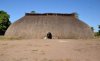
Facing to our right from the island, another themed shelter for educational elements can be found. However, unlike the previous shelter, which is mainly focused on the tamarins and modern research; this next shelter emphasizes on the indigenous peoples of the Mata Atlantica, which even influences the architecture of this very shelter, which takes inspiration from a traditional oca or oga of the Tupi-Guarani people (see below):

IMG_4063.jpeg
Photo Credit: courtesy of Escola de Cidade and Povo Kamayurá

Once inside, the educational elements have an emphasis on ecotourism, restoration efforts, and sustainable stewardship in the region, and how our zoo helps to support them in collaboration with our in-situ partners. Exiting out of the oca and back onto the main pathway, keep a close eye out for Red-Footed Tortoises and, if you're lucky, a Red-Rumped Agouti or two.

Backtracking through the hallway, yet, turning towards a separate set of doors; we briefly return to the first walkthrough habitat. However, rather than turn back towards the entrance; we will instead head straight and out through the exit doors. Similar to how we first entered, this is yet another lengthy corridor that leaves you feeling a little more appreciated for this little-known ecoregion.

At this point, we have now reached the end of the corridor, and are soon outdoors once again. However, there is still one more surprise that awaits us; for away from the main building is a 0.4 acre (2,000 sq meter) open-topped enclosure that seasonally displays the tamarin troop every once in a while (see below). In the not-so-distant past, this enclosure was once the home base for several tamarin troops whose descendants were destined to be released back into the wild. Nowadays, these reintroductions aren’t as needed as they once were. Although, we are more than prepared to use this space for that purpose once again whenever the timing is right.

IMG_4067.jpeg
Photo Credit: @Maguari

Even still, the tamarins are currently sticking to their indoor space (as we have seen); which now brings us to the conclusion of this entry.

IMG_8326.jpeg
Species List for Mata Atlantica:
Provided by yours truly, Austin the Sengi
 

Attachments

  • IMG_4064.jpeg
    IMG_4064.jpeg
    211.2 KB · Views: 41
  • IMG_4065.jpeg
    IMG_4065.jpeg
    240.9 KB · Views: 45
  • IMG_4066.jpeg
    IMG_4066.jpeg
    229 KB · Views: 41
  • IMG_4063.jpeg
    IMG_4063.jpeg
    80.4 KB · Views: 43
  • IMG_4067.jpeg
    IMG_4067.jpeg
    200.4 KB · Views: 41
  • IMG_8326.jpeg
    IMG_8326.jpeg
    85.5 KB · Views: 42
12. Mata Atlantica - The Forgotten Forest: - (3 exhibits)

After our previous venture into a repurposed carnivore house. Today, we will be making a return to South America, for both this and the next entry will showcase two little-known ecoregions: with the first of these highlighting the Mata Atlántica (Atlantic Forest) of Brazil!

The transition from the outdoors to the tropics begins with an enclosed entryway that curves toward a set of sliding doors. Once inside, the instant feeling of the humidity, balmy temperatures, and the sights and sounds of this recreated rainforest begin to take effect; all while taking in the surrounding indoor atmosphere that we just walked into. Directly above our heads, you might’ve taken notice of the overhead domed roof not unlike those used for similar-sized tropical houses (see below).

View attachment 820217
View attachment 820218
Photo Credits: red river hog and Therabu, respectively

Yet, even with this roof, the natural canopy provided by various shade trees makes it so lush and dense that at times, it is almost impossible to make out where the tops of the trees end. Being a climate-controlled tropical house, the following plants all comprise of species native to the respective ecoregion (one of 15 to be precise!):
  • Trees / Palms
    • Pachira aquatica | Guiana Chestnut
    • Inga edulis | Ice-Cream Bean
    • Syagrus romanzoffiana | Queen Palm
    • Psidium cattleianum | Strawberry Guava
Shoutout to @AndyJ08 for providing this list of species

Additionally, to make extra room for the mister and support systems directly above, the canopy of each individual tree is pruned accordingly to around 10-15 ft (3-4 m) in height, which, for context, the building itself is around 20 ft (6 m) at its tallest point.

Better yet, it is important to keep looking towards the canopy, for the entire building is a singular walk-through exhibit that contains a multitude of free-roaming creatures such as tanagers, oropendolas, bush anoles, and more! Additionally, an often-overlooked aspect of this specific tropical house is that it is one giant bioactive enclosure!

“Now, Austin”, one might ask, “what exact aspects of the enclosure are bioactive?”. Well, to answer this question, it's really quite simple; for living alongside the larger free-roaming species, are hundreds (if not, thousands) of microfauna that are commonly utilized for smaller, bioactive terrariums for reptiles and amphibians; which include (but are not exclusive to) the following:
  • Bioactive Microfauna
    • Tropical Springtails
    • Isopods
    • Flightless Fruit-Flies
As we follow the continuous main pathway that curves around the edges of this miniature jungle; along the way are a series of “microhabitats”, which include both open and denser patches of forest, and a secluded pond not unlike the one below for a non-breeding flock of Scarlet Ibises and several Geoffroy’s Toadhead Turtles. Additionally, there are also several feeding areas for the remaining free-roaming species that are scattered at random and are never at the same spot twice!

View attachment 820219
Photo Credit: Fossa dude

From this point onward, the main pathway meanders straight towards a themed, double-door hallway; for it is through this hallway where the first walkthrough ends, and the next one begins. Continuing into what seems like an extension of the previous forest. This next walkthrough enclosure is only separated from the previous enclosure by two layers of mesh fencing, which helps to make sure none of the smaller birds ever find themselves in the grasp of tiny tamarin hands, especially as they could only belong to one of the Mata Atlantica’s most iconic mammals, the Golden Lion Tamarin. Within this walkthrough, one may run into a family troop of seven, which currently consists of a dominant breeding pair, three adult offspring from previous litters, and more recently, two pint-sized infants!

Being a symbolic, yet endangered species of the fragmentary forest; our successful breeding efforts and additional partnerships with organizations like the SOS Mata Atlantica Foundation and Save the Golden Lion Tamarin (SGLT), which are some of the ways we are actively striving to protect not just the tamarins, but as many plants and animals as humanly possible. To further enhance the awareness of our efforts, decked-out walls of interpretive signage and interactive elements geared towards general audiences are located under the roof of a small shelter themed around a rural schoolhouse.

As the pathway loops back around towards the hallway we entered earlier, a shallow pond for surplus toadhead turtles comes into view, with a small tree-covered island being present in the center. This island, which is where the tamarins can retreat to if needed, also serves as a resting place for the aforementioned turtles, with a wide stretch of sand serving as the base of this island.

Facing to our right from the island, another themed shelter for educational elements can be found. However, unlike the previous shelter, which is mainly focused on the tamarins and modern research; this next shelter emphasizes on the indigenous peoples of the Mata Atlantica, which even influences the architecture of this very shelter, which takes inspiration from a traditional oca or oga of the Tupi-Guarani people (see below):

View attachment 820220
Photo Credit: courtesy of Escola de Cidade and Povo Kamayurá

Once inside, the educational elements have an emphasis on ecotourism, restoration efforts, and sustainable stewardship in the region, and how our zoo helps to support them in collaboration with our in-situ partners. Exiting out of the oca and back onto the main pathway, keep a close eye out for Red-Footed Tortoises and, if you're lucky, a Red-Rumped Agouti or two.

Backtracking through the hallway, yet, turning towards a separate set of doors; we briefly return to the first walkthrough habitat. However, rather than turn back towards the entrance; we will instead head straight and out through the exit doors. Similar to how we first entered, this is yet another lengthy corridor that leaves you feeling a little more appreciated for this little-known ecoregion.

At this point, we have now reached the end of the corridor, and are soon outdoors once again. However, there is still one more surprise that awaits us; for away from the main building is a 0.4 acre (2,000 sq meter) open-topped enclosure that seasonally displays the tamarin troop every once in a while (see below). In the not-so-distant past, this enclosure was once the home base for several tamarin troops whose descendants were destined to be released back into the wild. Nowadays, these reintroductions aren’t as needed as they once were. Although, we are more than prepared to use this space for that purpose once again whenever the timing is right.

View attachment 820221
Photo Credit: @Maguari

Even still, the tamarins are currently sticking to their indoor space (as we have seen); which now brings us to the conclusion of this entry.

View attachment 820222
Species List for Mata Atlantica:
Provided by yours truly, Austin the Sengi
The picture shows a Ruddy Ground Dove, not a Ruddy Quail Dove.
 
Back
Top