Australasian Asian Elephant Population 2024

Melbourne Zoo Elephant Documentary
https://m.youtube.com/watch?v=W1N6XGwG63Q
Trail for the upcoming documentary covering the transfer of Melbourne’s nine elephants to Werribee Open Range Zoo.

The overhead shots show the progress of the new barn, which looks phenomenal. It’ll allow the cows to give birth in the company of the entire herd, which will be of immense benefit to their welfare; and the social development of the young cows, as they learn through experience and observation.
https://m.youtube.com/watch?v=W1N6XGwG63Q
I haven't yet seen a date for when this series will premiere to those outside the region. Has a date for that been announced/where it will be available to watch?
 
I haven't yet seen a date for when this series will premiere to those outside the region. Has a date for that been announced/where it will be available to watch?

The paid screening of the documentary (held at the zoo) will be November 22, so presumably within a week of that.

I’m really excited for this documentary given Melbourne Zoo’s long standing history of producing high quality documentaries in the past - with their gorilla documentaries in the 80’s and 90’s proving a highlight. Since the dawn on the Internet age, there’s been a decline in zoo related television content (I imagine in part due to the information being available via other media and outdated by the time it screens); but it’s a major event and to see if covered comprehensively with interviews with the keepers who know the elephants best will be a doco not to be missed.
 
Burma - Auckland Zoo’s Last Elephant

In just four days time, Burma will board a plane for Monarto Safari Park in South Australia. Not only will Burma be Auckland Zoo’s last elephant; she will likely be the last elephant ever to live in a New Zealand zoo. While it’s a seismic change for Auckland Zoo, who have held elephants for 101 years since 1923, this has been a long time in the planning. The decision to phase out elephants was announced in 2020; and Burma was initially scheduled to leave a month after Anjalee in April 2022. But here we are in November 2024.

Burma was born in a logging camp in Myanmar in 1982; and imported into New Zealand as an eight year old in 1990. She lived for two years in the zoo’s Elephant House (built 1923); before moving to the current exhibit in 1992, which at the time was considered state of the art and one of the best exhibits in the region. Auckland Zoo’s history book, A Tiger by the Tail, described her as a long awaited companion for Kashin; and that was no exaggeration. Following the unexpected passing of their then 18 year old elephant Ma Schwe in 1982, Auckland Zoo imported an African elephant calf named Koru in 1983. Kashin doted on the calf and grieved heavily following her death just three months after her arrival. A seven year wait would follow until Burma’s arrival, during which there were multiple unsuccessful attempts to import a new elephant.

When Burma finally arrived, Kashin initially snubbed her, taking close to two years to warm to her. Their initial relationship was similar to that of Jamuna and Malini, with the former disinterested in the younger female, who like Burma, arrived as an adolescent. While it would be easy to attribute the lack of camaraderie to demographics, matching personalities was no less crucial; at least in the absence of building up a matriarchal herd of related females, as is now recognised as the optimum social structure for captive herds. An example would be when Kashin arrived as a four year old in 1972. She was initially overwhelmed by the friendly overtures of the then eight year old Ma Schwe, who had a confident, assertive personality. Following Ma Schwe’s death, Kashin became matriarch by default and like her predecessor, would dominate Burma by guarding access to her favourite toys. They otherwise formed a strong bond and on my childhood visits, were rarely seen apart.

Some of my earliest memories of Auckland Zoo involve seeing the pair being walked around the zoo during visitor hours, as well as being taken to explore other exhibits such as Baboon Hill. I often wondered as child why Burma led the procession around the zoo, when Kashin was the matriarch. I later learned the reason was Burma being younger and more energetic, grew impatient of waiting for Kashin, who was content to amble at a slower pace. During her youth and prime years, Burma grew into a confident and playful young elephant, a stark contrast from the more reserved Kashin, who lacked Burma’s enthusiasm for energetic pursuits.

Given the disparities in personalities detailed above, it’s to the credit of Auckland Zoo’s staff that they went to great lengths to source a new female following Kashin’s death that would match Burma’s personality. Their success in doing so was evident by Burma’s pure excitement at Anjalee’s arrival, with both females building an instant rapport. Burma’s age and seniority meant she assumed the matriarch role, though she always gave the impression of a reluctant leader. It would come as no surprise to see Burma take a back seat upon her introduction to the other cows at Monarto next year; especially in the presence of the naturally dominant Pak Boon.

Despite the effort that went in to matching Burma and Anjalee, their age difference of 24 years inevitably led to a chasm in activity levels, with the older Burma preferring to observe. I’ve always thought of Anjalee as the companion Burma needed a decade or two prior. Combined with the fact that they lacked the family ties you’d expect to see within a matrilineal herd; and Auckland Zoo’s decision to send them to separate Australian zoos was certainly understandable.

On a personal level, Burma has been one of my favourite animals to visit since my first visit to Auckland Zoo as a child in the early 2000’s. Along with Charlie and Melur the orangutans; the founders of the Greater flamingo flock; and the four adult Galapagos giant tortoise, she’s one of the few remaining animals I saw on my first visit. Since then I’ve become a father and have in turn have taken my sons to the zoo to see Burma. I can only imagine how many millions have people have visited her over the years; and how many more will to come in her new habitat at Monarto.

On 31/10/2024, I made my final trip to see Burma at Auckland Zoo. It was great to see her one last time. Though the zoo won’t be the same without her, it’s undeniably in her best interests to join Monarto’s herd and I’m excited for what the future holds for her. I wish her and keepers safe travels and look forward to to hearing of her progress over the coming months as she settles into her new home; and meets the elephants that will be joining her to form the foundations of a multigenerational herd.

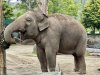
Photo of Burma from my October 31 visit:

upload_2024-11-8_20-43-10.jpeg
 

Attachments

  • upload_2024-11-8_20-43-10.jpeg
    upload_2024-11-8_20-43-10.jpeg
    285.9 KB · Views: 93
End of an Era for New Zealand

With Burma’s export this afternoon, we will gain a new/returning holder in Monarto Safari Park; while Auckland Zoo’s 101 years of keeping elephants has come to an end.

Since there are no other holders in New Zealand, this will mark the end of elephants in New Zealand. Wellington Zoo previously held elephants from 1927-1983; and in addition to Mila at Franklin Zoo (exported 2012), there have previously been circus elephants (including Mila).

Auckland Zoo - Complete Elephant History (1923-2024)

The complete records of Auckland Zoo are as follows:

0.1 Jamuna (Indian elephant)
Born in the wild (India) 00/00/1917
Arrived at Auckland Zoo 07/06/1923
Died at Auckland Zoo 02/09/1965

1.0 Rajah (Indian elephant)
Born in the wild (Myanmar) 00/00/1917
Arrived at Auckland Zoo 00/06/1930
Died at Auckland Zoo 09/03/1936

0.1 Kassala (Indian elephant)
Born in the wild (Unknown) 00/00/1945
Arrived at Auckland Zoo 01/05/1952
Sent to Bullens Circus 30/12/1957

0.1 Malini (Indian elephant)
Born in the wild (India) 00/00/1953
Arrived at Auckland Zoo 04/08/1961
Died at Auckland Zoo 27/02/1971

0.1 Ma Schwe (Indian elephant)
Born in the wild (Thailand) 00/00/1964
Arrived at Auckland Zoo 30/10/1968
Died at Auckland Zoo 02/08/1982

0.1 Kashin (Indian elephant)
Born at Dusit Zoo (Thailand) 00/00/1968
Arrived at Auckland Zoo 00/00/1972
Died at Auckland Zoo 24/08/2009

0.1 Koru (African elephant)
Born in the wild (Unknown) 00/00/1980
Arrived at Auckland Zoo 04/04/1983
Died at Auckland Zoo 26/07/1983

0.1 Burma (Indian elephant)
Born at a logging camp (Myanmar) 00/00/1982
Arrived at Auckland Zoo 18/05/1990
Sent to Monarto Safari Park 12/11/2024

0.1 Anjalee (Sri Lankan elephant)
Born at Pinnewala (Sri Lanka) 23/08/2006
Arrived at Auckland 21/06/2015
Sent to Taronga Western Plains Zoo 08/03/2022
 
End of an Era for New Zealand

The end of an era - leading to the start of a new one.

With Burma’s export this afternoon, we will gain a new/returning holder in Monarto Safari Park; while Auckland Zoo’s 101 years of keeping elephants has come to an end.

Since there are no other holders in New Zealand, this will mark the end of elephants in New Zealand. Wellington Zoo previously held elephants from 1927-1983; and in addition to Mila at Franklin Zoo (exported 2012), there have previously been circus elephants (including Mila).

Auckland Zoo - Complete Elephant History (1923-2024)

The complete records of Auckland Zoo are as follows:

0.1 Jamuna (Indian elephant)
Born in the wild (India) 00/00/1917
Arrived at Auckland Zoo 07/06/1923
Died at Auckland Zoo 02/09/1965

1.0 Rajah (Indian elephant)
Born in the wild (Myanmar) 00/00/1917
Arrived at Auckland Zoo 00/06/1930
Died at Auckland Zoo 09/03/1936

0.1 Kassala (Indian elephant)
Born in the wild (Unknown) 00/00/1945
Arrived at Auckland Zoo 01/05/1952
Sent to Bullens Circus 30/12/1957

0.1 Malini (Indian elephant)
Born in the wild (India) 00/00/1953
Arrived at Auckland Zoo 04/08/1961
Died at Auckland Zoo 27/02/1971

0.1 Ma Schwe (Indian elephant)
Born in the wild (Thailand) 00/00/1964
Arrived at Auckland Zoo 30/10/1968
Died at Auckland Zoo 02/08/1982

0.1 Kashin (Indian elephant)
Born at Dusit Zoo (Thailand) 00/00/1968
Arrived at Auckland Zoo 00/00/1972
Died at Auckland Zoo 24/08/2009

0.1 Koru (African elephant)
Born in the wild (Unknown) 00/00/1980
Arrived at Auckland Zoo 04/04/1983
Died at Auckland Zoo 26/07/1983

0.1 Burma (Indian elephant)
Born at a logging camp (Myanmar) 00/00/1982
Arrived at Auckland Zoo 18/05/1990
Sent to Monarto Safari Park 12/11/2024

0.1 Anjalee (Sri Lankan elephant)
Born at Pinnewala (Sri Lanka) 23/08/2006
Arrived at Auckland 21/06/2015
Sent to Taronga Western Plains Zoo 08/03/2022
 
Burma has landed!

Burma’s flight has arrived at Adelaide Airport.

The convoy escorting her to Monarto Safari Park will depart around 5pm according to media reports.

Welcome to Australia, Burma!

Who would have thought when Burma arrived at Auckland Zoo as an eight year old in 1990, that 34 years later, she’d find herself arriving as the first elephant of a multigenerational herd to live within a 12ha habitat at one of the world’s largest open range zoos.
 
A multigenerational herd at Monarto is still many years away. And it’s totally unsure if Burma will be part of it. I know you haven’t seen a lot of it in Australia yet, but adult female elephants often do not get along and fight for dominance.
It's very likely that the brand new exhibit/complex has enough separate encloses to take all this into account!
 
Yes I think so too. But that also means Burma may never be part of the multigenerational herd that Monarto will hopefully have in 10+ years.
I think what's most important here is that she has the chance to be apart of one.

Whilst compatibility isn't guaranteed, she has the opportunity to be introduced to three other cows (all of different personalities) and also a bull (a novelty she hasn't seen since her childhood).

Burma also has a very relaxed, submissive personality, which would also help when the time comes to be introduced to the other cows once they arrive. I imagine all of her keepers are confident she will integrate seamlessly once the time comes. That's not to say there won't be issues, there very well could be; but the keepers have hopefully planned everything out to nullify any potential negative interactions.

Obviously if two elephants don't like each other, that can't be changed, but putting them in the best situation in the beginning would certainly help!
 
I think what's most important here is that she has the chance to be apart of one.

Whilst compatibility isn't guaranteed, she has the opportunity to be introduced to three other cows (all of different personalities) and also a bull (a novelty she hasn't seen since her childhood).

Burma also has a very relaxed, submissive personality, which would also help when the time comes to be introduced to the other cows once they arrive. I imagine all of her keepers are confident she will integrate seamlessly once the time comes. That's not to say there won't be issues, there very well could be; but the keepers have hopefully planned everything out to nullify any potential negative interactions.

Obviously if two elephants don't like each other, that can't be changed, but putting them in the best situation in the beginning would certainly help!

I fully agree. This will be an endlessly enriching experience for Burma whatever the outcome. Not only will she have a 12ha habitat, she has the opportunity to assimilate into a multigenerational herd, which could take so many forms.

The ideal is a fully integrated herd comprising of the four adult cows; and long term, offspring of Pak Boon. However, even if this proves too challenging, there’s no reason Burma’s life won’t be enriched by merely living adjacent to the others (or housed in a pair with Permai, who like Burma, is not an assertive female).

I’m reminded of Dubbo’s then 62 year old Burma (popular name), who while could never be integrated with the Thai imports; greatly enjoyed chasing Sabai up and down the fence line. With a new calf in the herd, this was a great outlet for Sabai, who clearly enjoyed the interaction just as much. Similarly, positive interactions were observed at Sydney Zoo across the fence line between the elderly Saigon and the then juvenile bulls imported from Dublin Zoo.
 
Auckland Zoo - Complete Elephant History (1923-2024)

Ma Shwe arrived from the San Diego Zoo in California, USA, where she had arrived in 1965 from Thailand.

Kashin arrived from St. Paul's Como Zoo in Minnesota, USA, where she had arrived in 1971, likely from Thailand. What source do you have that she was born at the Dusit Zoo?

Koru arrived from the Los Angeles Zoo in California, USA, where she had arrived in 1982.
 
Ma Shwe arrived from the San Diego Zoo in California, USA, where she had arrived in 1965 from Thailand.

Kashin arrived from St. Paul's Como Zoo in Minnesota, USA, where she had arrived in 1971, likely from Thailand. What source do you have that she was born at the Dusit Zoo?

Koru arrived from the Los Angeles Zoo in California, USA, where she had arrived in 1982.

Thanks for those notes regarding the elephants locations prior to arriving at Auckland Zoo. They were mentioned in A Tiger by the Tail - a History of Auckland Zoo; but I chose just to record the elephant’s place of birth in making the list.

As an add on, Rajah came from the Hobart Zoo and following his capture, spent time in London; while Jamuna came from the Alipore Zoological Gardens (Calcutta Zoo), where she was trained to give rides.

Kashin was born at the Dusit Zoo according to the Elephant Database (which may be mistaken if you know otherwise). If she was indeed born there, her sire appears to have been Plai Kaeo.

Less is known about Kassala, so any info you have is appreciated.
 
Werribee Open Range Zoo Update

Last night, I had the privilege of listening to a talk for members held by Zoos Victoria regarding their elephants and the move to Werribee. I continue to be impressed by Zoos Victoria’s staff and both their passion and dedication to animal welfare. They are a true inspiration.

I thought people would be interested to hear a few of the highlights:

The elephants will be moved in the following order: Luk Chai will go first, a few days before the others; Kulab, Num Oi and Kati will go next; followed by Mek Kepah, Dokkoon, Mali, Aiyara and Roi-Yim 24 hours after them. The elephants will move at dawn, with the process taking 3-4 hours. This is first and foremost designed to tie in with the elephants natural activity levels; and allow them the whole day to adjust to their new habitat before sunset.

The Werribee habitat is weeks away from completion and the pools have now been filled. The complex will feature five large paddocks (two for bulls; three for cows); a bull pool; and a herd pool, which includes a sand pit. The two bull paddocks will include vegetation screening, which means while the bulls will be aware of each other, they won’t have direct visual contact. The ingenious of this design means they will have the stimulation of knowing there is a bull there; but not the stress of direct exposure. The terrace will be the main visitor viewing area.

The herd barn will contain a removable wall. The herd will initially be housed together; but as Roi-Yim matures, the wall will be used to manage his transition out the herd - i.e. he will still have visual and tactile contact with the herd. The barn will be temperature and humidity controlled to replicate the South East Asian climate. They really have thought of everything!

In the Werribee complex, the elephants will be environmental engineers. They will make decisions how to run their day over a 24 hour period. Elephants sleep for around 4 hours a day; and forage for around 16 hours a day. The new environment will take this into consideration; as well as allowing Mek Kepah (the matriarch) to take a pivotal role in deciding what habitats the herd will go to, whether they seek out a water source etc. The expectation is the herd will demonstrate more natural behaviour such as foraging, following the move. The keepers will have less interaction with the elephants and attempt to keep two paddocks ahead of them with regards to laying out enrichment (so the elephants associate enrichment with their environment rather than the keepers). Training is crucial for healthcare reasons and will continue following the move.

The zoo has given consideration to Tiger snakes, which are common at Werribee Open Range Zoo. The risk is believed to be low due to the lack of contact expected between the two species (versus Serval or Slender-tailed meerkat); but nonetheless, the staff have done everything they can to mitigate any risks. Ground feeders will be discontinued; and the elephants will undergo avoidance training.

Long term, the elephants will be mixed with Indian antelope. This won’t happen until the elephants have settled in.
 
Dude permai and Burma gonna be best friends fr. I can feel it

#bestbuddies4life

I’m hopeful they’ll integrate successfully. They have similar personalities and both spent a long period of time as the subordinate to a matriarch:

Burma: 1990-2009 under Kashin (died 2009)
Permai: 1992-2022 under Tricia (died 2022)

Both have spent the past two years living alone following the respective death and export of their companions Tricia and Anjalee.

Introducing unrelated adult cows is one of the more challenging introductions. From what I’ve read of Auckland Zoo’s introductions over the past century, Jamuna and Kashin (then adult cows) both initially snubbed their respective companions, Malini and Burma (who arrived as adolescents). Kashin had a very reserved personality (she was initially wary of the then eight year old Ma Schwe when she arrived as a four year old by all accounts); so that may have been a factor given Anjalee received a much warmer reception from Burma.

As cows breed and the herd expands, splits along matrilines have been observed overseas; but in this case, Burma and Permai won’t be breeding and it’ll be a long time before Pak Boon builds up a matriline beyond her and her immediate offspring.
 
With Melbourne's elephants soon to be sent to Werribee in the coming months, I thought it would be interesting to mention they actually won't be the first elephants ever in Weribee!

In fact after doing research I stumbled across a an article regarding a circus which stopped in Werribee back in 1993 (Sole Brothers). They had a female elephant who escaped after her circus wagon caught fire and fled through the streets of Werribee for 40 minutes before the circus staff were able to recapture her! Whilst unconfirmed, I do believe this female was 'Minyak' who appeared to have been sent to Perry Brothers Circus not long after, where she was retired. I was also surprised to see she died circa 2009 according to the Elephant Database.

As a result I've decided to further research the regions circus elephants as there are quite a few who were still alive and kicking less than 20 years ago. Obviously there are a lot of loose ends - and if anyone has any information it would certainly be appreciated to gain a more thorough understanding of the region's forgotten circus elephants!
 
Man that’s gonna be really fun and interesting to watch the transfer happen. Hope they do a documentary on it.

We can look forward to this documentary later this month:

Zoovie Doco night | Melbourne Zoo
https://www.zoo.org.au/melbourne/whats-on/events/zoovie-doco-night/
But with regards to a doco post-Werribee, that would indeed be fascinating. According the presentation I attended earlier this week, the staff are going to study the elephants for the next two years to monitor their activity compared to their activity in the previous exhibit. The expectation is the elephants will exhibit more natural behaviour such as foraging.
 
Back
Top