Australasian Common Chimpanzee Population

I hope Monarto undertake paternity testing soon as that would give a conclusive answer to the representation of the now deceased Tsotsi (brother of Sanda), who has one confirmed offspring (Hope); but another potential two in Zola and Happy.

It would be similarly beneficial to retrospectively ascertain whether Mike sired Shiba or Cara while those females are still alive as more descendants from these females are inevitable (especially with Alexis anticipated to sire Malika’s first infant; and Shiba’s daughters at least presumably being given an opportunity to breed in the future).

I hope long term that Hamilton Zoo can establish a larger troop. If Sanda has a third daughter at Hamilton Zoo, another way to do it could be to bring in 3.2 new chimpanzees once Luka/Lucifer pass. The two incoming females would be bonded/from the same natal troop and have each other for support; while Chiku (the eldest sister) could remain at Hamilton as a breeding female. She’d have the benefit of breeding while she has the support of her mother and sisters and by the time her sisters transfer out (and her mother may have died), she’d be well established in the troop with 2+ offspring of her own; meaning she won’t be left an outsider against the two incoming females. It wouldn’t be ideal to have three sisters all in the same troop from a genetic standpoint, so ideally they’d be split 0.1/0.2 - with the two transferring out together so they’d have each other for support. At this point in time, Sydney Zoo appears their best option.

All very good points. I hope they do determine parentage for Zola and Happy eventually - I personally do see a physical resemblance to Chiku in Zola, so there's a strong chance that at least she was sired by Tsotsi.
 
All very good points. I hope they do determine parentage for Zola and Happy eventually - I personally do see a physical resemblance to Chiku in Zola, so there's a strong chance that at least she was sired by Tsotsi.

Monarto’s troop has been such a fascinating troop to follow - representing a rare opportunity to create a troop from scratch with four males from three troops (all essentially outcasts); and four females from Europe, who were similarly low ranking chimpanzees.

There’s been conflicts and instability between the males, but the females in particular have created a culture that’s allowed Hannah (who struggled in the larger Taronga community) to find acceptance and thrive as a mother to her own offspring at Monarto. The icing on the cake would be for Lani and Galatea (especially Galatea) to finally produce surviving infants.

Since his birth, Enzi has been an obvious candidate for the alpha role and within the decade, I would be amazed if he didn’t step up to that position (no doubt with Zombi’s support). Within that same decade, we can likely expect the young females (Zuri, Hope and Zola) to transfer out. Their respective mothers each have a son and each have the potential to produce a subsequent infant if given the opportunity.

10-15 years from now and new females are a strong possibility for Monarto, but of all the troops in the region, they have the best combination of demographics and genetics.
 
Hamilton Zoo - Pregnancy Announcement

Sanda at Hamilton Zoo is pregnant, with her infant due June/July. Luka is assumed to be the sire.

I saw Sanda a month ago and from a distance, I didn’t believe she was pregnant; but a month on (and seeing her from multiple angles) and it was unmissable she’s expecting. I asked a keeper who confirmed what I’d seen (and her due date).

The birth interval between Sanda’s daughters Chiku (2016) and Kendi (2020) was 4 years and 10 months; so I’m thrilled that 4 years and 6 months after Kendi’s birth, Sanda is due to deliver again (especially considering she turned 40 in April). A health check last year ascertained she was in sufficient health to undergo another pregnancy. The regional record for oldest maternal age of a surviving chimpanzee infant is 43 years and 9 months (Lisa at Taronga Zoo).

All going well, this will be the region’s first chimpanzee infant of 2025. Congratulations to the Hamilton Zoo team and of course, fingers crossed for a female infant!

1.0 Lucifer (16/06/1988) Mike x Lucy
1.0 Luka (28/02/1993) Mike x Lucy

0.1 Lucy (24/11/1975) Unknown x Lulu
0.1 Sanda (10/04/1985) Peter x Fimi - Pregnant
0.1 Chiku (15/02/2016) Luka x Sanda
0.1 Kendi (17/12/2020) Luka x Sanda

upload_2025-6-1_17-10-40.jpeg
 

Attachments

  • upload_2025-6-1_17-10-40.jpeg
    upload_2025-6-1_17-10-40.jpeg
    134.3 KB · Views: 50
Hamilton Zoo - Pregnancy Announcement

Sanda at Hamilton Zoo is pregnant, with her infant due June/July. Luka is assumed to be the sire.

I saw Sanda a month ago and from a distance, I didn’t believe she was pregnant; but a month on (and seeing her from multiple angles) and it was unmissable she’s expecting. I asked a keeper who confirmed what I’d seen (and her due date).

The birth interval between Sanda’s daughters Chiku (2016) and Kendi (2020) was 4 years and 10 months; so I’m thrilled that 4 years and 6 months after Kendi’s birth, Sanda is due to deliver again (especially considering she turned 40 in April). A health check last year ascertained she was in sufficient health to undergo another pregnancy. The regional record for oldest maternal age of a surviving chimpanzee infant is 43 years and 9 months (Lisa at Taronga Zoo).

All going well, this will be the region’s first chimpanzee infant of 2025. Congratulations to the Hamilton Zoo team and of course, fingers crossed for a female infant!

1.0 Lucifer (16/06/1988) Mike x Lucy
1.0 Luka (28/02/1993) Mike x Lucy

0.1 Lucy (24/11/1975) Unknown x Lulu
0.1 Sanda (10/04/1985) Peter x Fimi - Pregnant
0.1 Chiku (15/02/2016) Luka x Sanda
0.1 Kendi (17/12/2020) Luka x Sanda

View attachment 796790
Wonderful news!! I too am quite surprised as Hamilton have announced the two previous pregnancies, and seemingly haven't done so this time around. Although presumably they will in the coming weeks.

I'm delighted that Sanda will have the opportunity to have three offspring within quick succession. It's really a testement to Hamilton's team that she's been able to achieve this, after arriving back in her mid 20's from Adelaide, from previously living in a troop with her mother and brother.

Sanda's a very valuable female, so it's good that she's been given the opportunity to breed again. There was really little reason not to give her the chance to do so if she was in good health.

The best hope would be for a female infant of course - especially for the future of the group.
 
Consecutive Female Births

Should Sanda produce a daughter, the benefits are obvious:

1. Increased options of where to transfer the female infant (and/or her sisters) upon reaching adolescence.

2. Increased options for Hamilton Zoo acquiring new chimpanzees in the future (once Lucifer and Luka have died).

However, one thing I thought was interesting to consider if the rarity of a female chimpanzee having three consecutive surviving female infants:

To date, no female chimpanzee in New Zealand has had three consecutive female infants (surviving or otherwise). In fact, only one female chimpanzee has given birth to more than two female offspring, which is Yoka at Wellington Zoo. She had daughters June (1960) and Bebe (1962); which were followed by Jodie (1977) and Jessie (1978) with sons inbetween.

The last time a female chimpanzee in Australia had three consecutive surviving female births was in 1991. Sutu at Taronga Zoo gave birth to Samantha (1983), Shona (1987) and Sumu (1991), all of which survived to adulthood. Prior to this, Susie (also at Taronga Zoo) had a phenomenal run of six daughters surviving daughters: Mary (1960), Swappie (1962), Lola (1964), Val (1967), Gemini (1970), Sutu (1974). Gemini had a twin (also female) who died at birth.

Other female chimpanzees in Australian zoos have had three or more consecutive female infants (Spitter, Koko etc.) but to these females, no more than two consecutive females infants survived to adulthood.
 
Wonderful news!! I too am quite surprised as Hamilton have announced the two previous pregnancies, and seemingly haven't done so this time around. Although presumably they will in the coming weeks.

I'm delighted that Sanda will have the opportunity to have three offspring within quick succession. It's really a testement to Hamilton's team that she's been able to achieve this, after arriving back in her mid 20's from Adelaide, from previously living in a troop with her mother and brother.

Sanda's a very valuable female, so it's good that she's been given the opportunity to breed again. There was really little reason not to give her the chance to do so if she was in good health.

The best hope would be for a female infant of course - especially for the future of the group.

It’s great to see a female breeding at natural birth intervals, which is a rarity within the region. The only other female to do so in recent years has been Zombi (1993) at Monarto Safari Park who produced infants in 2012, 2015 and 2019. Prior to this, there was a slight artificial extension to Shiba producing Sembe (2008) and Sudi (2014), which was followed by Safiri (2019).

The Peter/Fimi line is underrepresented compared to many founders and considering Tsotsi is now deceased, another infant from Sanda is cause for much celebration!

Though this will be the first chimpanzee infant born in an Australasian zoo in 2025, I have high hopes it won’t be the last with Malika (2010) at Wellington Zoo hopefully pregnant (she was off contraception and cycling when I visited in December 2024). Alexis (the anticipated sire of Malika’s infant) represents another underrepresented line.
 
The Future of Hamilton Zoo’s Troop (Discussion)

If Luka and Sanda’s infant is female…

If Luka and Sanda have a third daughter together, it’s my belief they would be split 2/1 in the future. As descendants of Peter and Fimi, they’re genetically valuable and so we can expect all three to be future breeding females. It would be undesirable to have all three breeding within the same troop from a genetic standpoint, so the obvious solution would be to disperse two (so they’d have each other for support); and retain one for succession of Hamilton Zoo’s troop.

Chiku is 9 years old and Kendi is 4.5 years old, so assuming the region persists with this ‘females mustn’t breed until their mid-teens’ rule, then the logical timeframe for transferring them out together would appear to be 5-6 years from now, ensuring Kendi is at the natural dispersal age and Chiku’s journey to motherhood isn’t impeded any longer than it has to be. This would appear the logical way to go if Lucifer (aged 37) and Luka (aged 32) are still alive in 5-6 years.

In the unfortunate event Lucifer and Luka were to pass within the above timeframe, then there’s greater value in retaining Chiku as Hamilton’s next breeding female. She will reach the recommended breeding age while her mother is in her mid-40’s and hopefully have 10-15 years of her support as she raises her own infants. Kendi would have the benefit of observing first her mother raise this infant; and then Chiku raise her first infant. If Sanda’s next infant is female, Kendi could transfer out with it a decade from now.

If Luka and Sanda’s infant is male…

If Luka and Sanda’s next infant is male, it will certainly throw a spanner in the works. A male infant would be near impossible to place at another facility within the region, which would all but cement Chiku and Kendi transferring out (likely working to the timeframe outlined above). Hamilton Zoo would then need to bring in more chimpanzees:

Husbandry guidelines recommend troops comprise at least three adult males and at least four adult females (with males never outnumbering females). Should Lucifer and Luka pass before the young male reaches adolescence (i.e. within the next 8-10 years), it may present a rare opportunity to bring in a couple of young males around the same age. Introducing three 7-8 year olds would certainly be within the realms of possibility and long term, offset the inevitable implications of managing a troop led by a single adult male.

Hamilton Zoo, in consultation with the species coordinator, will ultimately reach a decision at what point to acquire more females (i.e. whether to wait until Lucifer and Luka have passed before risking an introduction). Luka has mellowed considerably with age in the decade that’s passed since his fatal attack on Chima; and his aggression towards Fimi was largely due to her personality (instigating conflicts within the troop; not supporting Luka as the dominant male etc).
 
The Future of Hamilton Zoo’s Troop (Discussion)

If Luka and Sanda’s infant is female…

If Luka and Sanda have a third daughter together, it’s my belief they would be split 2/1 in the future. As descendants of Peter and Fimi, they’re genetically valuable and so we can expect all three to be future breeding females. It would be undesirable to have all three breeding within the same troop from a genetic standpoint, so the obvious solution would be to disperse two (so they’d have each other for support); and retain one for succession of Hamilton Zoo’s troop.

Chiku is 9 years old and Kendi is 4.5 years old, so assuming the region persists with this ‘females mustn’t breed until their mid-teens’ rule, then the logical timeframe for transferring them out together would appear to be 5-6 years from now, ensuring Kendi is at the natural dispersal age and Chiku’s journey to motherhood isn’t impeded any longer than it has to be. This would appear the logical way to go if Lucifer (aged 37) and Luka (aged 32) are still alive in 5-6 years.

In the unfortunate event Lucifer and Luka were to pass within the above timeframe, then there’s greater value in retaining Chiku as Hamilton’s next breeding female. She will reach the recommended breeding age while her mother is in her mid-40’s and hopefully have 10-15 years of her support as she raises her own infants. Kendi would have the benefit of observing first her mother raise this infant; and then Chiku raise her first infant. If Sanda’s next infant is female, Kendi could transfer out with it a decade from now.

If Luka and Sanda’s infant is male…

If Luka and Sanda’s next infant is male, it will certainly throw a spanner in the works. A male infant would be near impossible to place at another facility within the region, which would all but cement Chiku and Kendi transferring out (likely working to the timeframe outlined above). Hamilton Zoo would then need to bring in more chimpanzees:

Husbandry guidelines recommend troops comprise at least three adult males and at least four adult females (with males never outnumbering females). Should Lucifer and Luka pass before the young male reaches adolescence (i.e. within the next 8-10 years), it may present a rare opportunity to bring in a couple of young males around the same age. Introducing three 7-8 year olds would certainly be within the realms of possibility and long term, offset the inevitable implications of managing a troop led by a single adult male.

Hamilton Zoo, in consultation with the species coordinator, will ultimately reach a decision at what point to acquire more females (i.e. whether to wait until Lucifer and Luka have passed before risking an introduction). Luka has mellowed considerably with age in the decade that’s passed since his fatal attack on Chima; and his aggression towards Fimi was largely due to her personality (instigating conflicts within the troop; not supporting Luka as the dominant male etc).

It's wonderful news indeed that Sanda is pregnant, and I hope for an official announcement on socials soon. I myself am hoping for a third daughter for Luka and Sanda, and it is my own personal hope that Chiku is retained at Hamilton (I've always had a soft spot for her, having watched her grow from infancy).
 
It's wonderful news indeed that Sanda is pregnant, and I hope for an official announcement on socials soon. I myself am hoping for a third daughter for Luka and Sanda, and it is my own personal hope that Chiku is retained at Hamilton (I've always had a soft spot for her, having watched her grow from infancy).

The birth of Chiku was very much long awaited considering Sanda arrived in 2008, but didn’t give birth until eight years later (not through want of the zoo trying). Luka’s obsession with Sally (who cycled concurrently) was proposed as one reason for the delay.

It’s a shame Suzie and Sally never got the hang of mating. I don’t know how far the males ever got with Sally; but Suzie would allow Mike to briefly mate with her, but then pull away. It’d be fascinating to know more about Suzie’s early years as there’s every reason to believe she had no physical contact with her own species until her sister Sally was introduced to her (circa mid-70’s). Suzie was hand-raised and it seems unlikely they’d have risked introducing her to either of the adults groups (Charlie and Siss, her parents; or Bobby, Janie and Josie).
 
If the infant is a female, i honestly think they should retain all 3. Castrate the older males to help with agression, then attempt to bring in 3 subadult males. We have enough chimp troops they could get enough genetic variety to do it. Then it would give them 3 potential breeding females, there mother and another non breeding female. The troop would grow to a decent size, and it would enable a decent amount of breeding. With the potential for offspring to come from multiple males. The zoo has had unfortunate luck in the past which has led to the troop staying small without much opportunity for growth. Transferring females out, then back in with new males eventually. Just seems like a more hazardous and arduous task then simply bringing in new males.
It would also create a genetically valuable troop. Where male offspring can be kept, with new females brought in and younger ones dispersed down the track. If in the next decade or so some females transfer out, new ones are brought in and sons retained. Especially if they can manage more then one male being the one to father male ofspring like some other facilities. They could build up a half decent troop. With a decent amount of births along the way for visitation.
 
If the infant is a female, i honestly think they should retain all 3. Castrate the older males to help with agression, then attempt to bring in 3 subadult males. We have enough chimp troops they could get enough genetic variety to do it. Then it would give them 3 potential breeding females, there mother and another non breeding female. The troop would grow to a decent size, and it would enable a decent amount of breeding. With the potential for offspring to come from multiple males. The zoo has had unfortunate luck in the past which has led to the troop staying small without much opportunity for growth. Transferring females out, then back in with new males eventually. Just seems like a more hazardous and arduous task then simply bringing in new males.
It would also create a genetically valuable troop. Where male offspring can be kept, with new females brought in and younger ones dispersed down the track. If in the next decade or so some females transfer out, new ones are brought in and sons retained. Especially if they can manage more then one male being the one to father male ofspring like some other facilities. They could build up a half decent troop. With a decent amount of births along the way for visitation.

Castration in great apes is typically undertaken before sexual maturity as behaviours can otherwise become ingrained. Hamilton Zoo will need to wait for Lucifer and Luka to pass before they can bring in more males.

Hamilton Zoo has had a run of bad with females. Suzie and Sally were behavioural non-breeders; they elected to not breed from Lucy due to genetic representation and concern Luka would sire her infant, though on hindsight, allowing her to breed with Mike at Auckland prior to transfer would have been good demographically speaking. Fimi and Sanda were then imported, with Fimi well past prime breeding age and Sanda taking eight years to conceive.

Chima’s death was very unfortunate. I often wonder how things might have turned out if she’d been brought in earlier (mid-late 2000’s) with the support of her cousin Keza.
 
Castration in great apes is typically undertaken before sexual maturity as behaviours can otherwise become ingrained. Hamilton Zoo will need to wait for Lucifer and Luka to pass before they can bring in more males.

Hamilton Zoo has had a run of bad with females. Suzie and Sally were behavioural non-breeders; they elected to not breed from Lucy due to genetic representation and concern Luka would sire her infant, though on hindsight, allowing her to breed with Mike at Auckland prior to transfer would have been good demographically speaking. Fimi and Sanda were then imported, with Fimi well past prime breeding age and Sanda taking eight years to conceive.

Chima’s death was very unfortunate. I often wonder how things might have turned out if she’d been brought in earlier (mid-late 2000’s) with the support of her cousin Keza.

It's a pity Luka's attentions to Sally never came to anything, but by the time Luka matured Sally may have been post-reproductive in any case. Sally was genetically valuable, and it would have been amazing to see the "tea party" chimps legacy continue on in better circumstances.

And I do hope that Hamilton decides to retain Chiku, not only because I'm rather sentimentally attached to her, but because she seems to have the temperament to succeed Lucy as highest-ranking female in the future, laying down foundations for a cohesive troop going forward.
 
It's a pity Luka's attentions to Sally never came to anything, but by the time Luka matured Sally may have been post-reproductive in any case. Sally was genetically valuable, and it would have been amazing to see the "tea party" chimps legacy continue on in better circumstances.

And I do hope that Hamilton decides to retain Chiku, not only because I'm rather sentimentally attached to her, but because she seems to have the temperament to succeed Lucy as highest-ranking female in the future, laying down foundations for a cohesive troop going forward.

It’d be interesting to know more about how the troop was managed. Lucy has been on contraception (implants) since the mid-90’s; and I’m wondering whether at this point, Suzie and Sally were also. It was a decade after Lucy’s arrival in 1985 (intended to teach them reproductive behaviour) and these females continuing to cycle would have only incited Mike’s interest in them (leading to tensions between Mike and his sons; and creating stress for the hand-raised females due to their disinterest in mating). Johari (gorilla at Taronga) has been contracepted for this reason.

Once Auckland’s troop moved to Hamilton and they all had more space, I believe Suzie and Sally were taken off contraception as the keepers hadn’t ruled out them getting pregnant. They were 40 and 34 respectively upon arrival at Hamilton Zoo, so still of reproductive age.
 
Sally was genetically valuable, and it would have been amazing to see the "tea party" chimps legacy continue on in better circumstances.

The trajectories of Auckland and Hamilton’s colonies from the original imports couldn’t’ have been more different:

Auckland Zoo:

Founders:

1.3 arrived 1956 (tea party chimps)
2.2 arrived 1959 (tea party chimps)

Offspring:

Four infants were born to one females (two of which survived to adulthood). A second female had a miscarriage and died shortly after.

Both first generation infants were behavioural non-breeders.

Wellington Zoo:

Founders:

0.3 arrived 1956 (tea party chimps)
4.0 arrived 1957

Offspring:

All three females bred, producing 14 offspring between 1960-1979, with steps taken to limit breeding.

Three of the first generation infants bred themselves, with numerous descendants across the region.
 
Auckland Zoo - Chimpanzee History - Part 1/2 (Tea Parties)

A Tiger by the Tail (1992) details the decisions to phase out the chimpanzee tea-parties in the 1960’s. The account spans two pages, so I’ve summarised the key points below:

Auckland Zoo imported 1.3 tea party chimpanzees in 1956; and 2.2 tea party chimpanzees in 1959. Both groups came via London Zoo, where they were trained. The chimps were imported as infants/juveniles and inevitably as they grew older, becoming difficult to manage. To continue the tea-parties, replacements were needed.

The first hurdle was that the Customs Department refused the zoo a licence to import live animals as the government would not approve the use of funds for this purpose.

In 1963, the zoo administration reported to the council on the practical difficulties in reinstating the shows (the council wanted to retain them). It was advised the expense of acquiring new chimpanzees, providing suitable new accomodation and hiring staff to train them would be prohibitive.

In 1964, an additional report to the council noted the issue that as each group of chimpanzees aged and became unsuitable for performances, there became the issue of not only replacing them, but accomodating them.

In May 1964, tea-parties were conducted by a former keeper. These ceased due to the Department of Agriculture and Fisheries prohibiting outside animals being brought on to zoo premises.

Finally, the British Animals (Restriction of Importation) Act came into effect, which only allowed import of apes into the UK for breeding/display. As a result, London Zoo could no longer import chimpanzees from Africa and then re-export them to Auckland Zoo if the intention was for them to be used for entertainment.

While this is a summary of the practical challenges that led to the phase out of chimpanzee tea-parties, it was also noted that the use of animals in entertainment detracted from the image of a modern zoo. This ethos has of course only grown stronger in the 60+ years that have followed the cessation of chimpanzee tea-parties at Auckland Zoo.
 
Auckland Zoo - Chimpanzee History - Part 2/2 (Groupings/Breeding)

For context to the discussion below, the tea-party imports were as follows:

1956:

0.1 Janie (1952-2013)
0.1 Minnie (1953-1964)
0.1 Josie (1954-2000)
1.0 Bobby (1955-2004)

1959:

1.0 Nick (1957-1961)
1.0 Charlie (1957-1971)
0.1 Siss (1957-1971)
0.1 Little Jane (1957-1962)

The chimpanzees initially lived in these two groups, but evidence suggests Minnie moved across to the second group around 1963/1964 (to give the zoo two groups of 1.2). This is based on her miscarrying an infant in 1964, which appears to have been sired by Charlie (with the other male Bobby believed to have been a behavioural non-breeder).

Four infants were born to these imports:

0.1 Suzie (August 1964) Charlie x Siss
1.0 Unnamed (November 1965) Unknown x Unknown
0.1 Sally (October 1970) Charlie x Siss
1.0 Unnamed (July 1971) Charlie x Siss

The parents of the second infant are believed to have been Charlie and Siss.

1964 was an interesting year all round as A Tiger by the Tail(1992) notes the orangutans moved out of the cage block that also housed chimpanzees:

Sadly, these early orangutans never really had adequate accomodation at the zoo and Topsy and Turvey lived for many years in a section of the chimpanzee cage block.

However, in 1964, the council approved the conversion of a larger cage block to accomodate the orangutans.

The day these adult orangutans were transferred across the zoo will long remain etched in the memories of many staff members…(continues).


This implies the zoo’s capacity to hold chimpanzees increased with this move. It’s reasonable to assume the cage block initially consisted of three cages (two holding chimpanzees; one holding the pair of orangutans). It likely that Suzie (born 1964) occupied the orangutan cage (or at least one of the cages) from her juvenile years onwards after they’d moved out.

Due to the challenges of accomodating the exisiting population of chimpanzees noted above, it’s reasonable to assume that initially, Auckland Zoo didn’t make a concerted effort to breed chimpanzees. In fact, there was a nearly five year gap that followed the infant born 1965 (where Charlie and Siss could have bred again, but didn’t) - suggesting some form of contraception was used.

The zoo attempted to breed its orangutans during this time - the female gave birth to a stillborn infant in 1967; and then died herself the following year. A Tiger by the Tail (1992) made reference to the challenges in replacing these orangutans, so I’m wondering if the reduction of their orangutan population to a single male in 1968 influenced a decision to resume breeding chimpanzees, which was followed up with the births of two more infants in 1970 (Sally) and 1971 (non-surviving male).

The remaining male orangutan died in 1971 and sadly so too did the zoo’s pair of breeding chimpanzees (Charlie and Siss) and their newborn. It was a tragic turn of events given Siss had finally gotten the hang of motherhood and was rearing what was to be her final infant. Presumably housed in the adjacent cage block, it could have been an opportunity for her daughter Suzie to have observed maternal care of an infant.

As well all know, Sally was hand-reared in the house of the Head Keeper during her infancy. She was presumably introduced to her eldest sister Suzie sometime during her juvenile years.

In 1982, Auckland Zoo imported Mike (1973), who presumably occupied the third cage until he was successfully introduced to Suzie (then aged 18) and Sally (then aged 12). There’s no mention of when attempts were made to introduce the remaining trio of tea-party chimps (Bobby, Janie and Josie); but this was presumably undertaken at this time, with Mike being a nine year old adolescent newcomer (and less aggressive than you’d expect an established adult alpha male to have been).

I’d be interested to know the year the chimpanzees moved into the open air exhibit if you can recall @ApeLadyNZ. There’s footage (and accounts on here) of the troop in this exhibit in 1989; and A Tiger by the Tail (1992) describes it as new exhibit, suggesting it was late 1980’s. If so, this would mean Lucy (1975) and her newborn daughter Loanda (1985) were introduced to the others in the old cages, following their import in 1985. This could also explain the lengthy three year gap that followed Loanda’s death and Lucifer’s birth in 1988. Lucy (if not on contraception) could have produced another infant as early as 1986, so I’m wondering if they put Lucy on contraception until they could move them all across to the new exhibit. This also allowed her and Mike time to bond, ensuring Mike would be a protective force towards her next infant (rather than a threat), with his paternity of the next infant assured (his fatal attack on Loanda being attributed to him knowing the infant of the incoming female was sired by another male).
 
Auckland Zoo - Chimpanzee History - Part 2/2 (Groupings/Breeding)

For context to the discussion below, the tea-party imports were as follows:

1956:

0.1 Janie (1952-2013)
0.1 Minnie (1953-1964)
0.1 Josie (1954-2000)
1.0 Bobby (1955-2004)

1959:

1.0 Nick (1957-1961)
1.0 Charlie (1957-1971)
0.1 Siss (1957-1971)
0.1 Little Jane (1957-1962)

The chimpanzees initially lived in these two groups, but evidence suggests Minnie moved across to the second group around 1963/1964 (to give the zoo two groups of 1.2). This is based on her miscarrying an infant in 1964, which appears to have been sired by Charlie (with the other male Bobby believed to have been a behavioural non-breeder).

Four infants were born to these imports:

0.1 Suzie (August 1964) Charlie x Siss
1.0 Unnamed (November 1965) Unknown x Unknown
0.1 Sally (October 1970) Charlie x Siss
1.0 Unnamed (July 1971) Charlie x Siss

The parents of the second infant are believed to have been Charlie and Siss.

1964 was an interesting year all round as A Tiger by the Tail(1992) notes the orangutans moved out of the cage block that also housed chimpanzees:

Sadly, these early orangutans never really had adequate accomodation at the zoo and Topsy and Turvey lived for many years in a section of the chimpanzee cage block.

However, in 1964, the council approved the conversion of a larger cage block to accomodate the orangutans.

The day these adult orangutans were transferred across the zoo will long remain etched in the memories of many staff members…(continues).


This implies the zoo’s capacity to hold chimpanzees increased with this move. It’s reasonable to assume the cage block initially consisted of three cages (two holding chimpanzees; one holding the pair of orangutans). It likely that Suzie (born 1964) occupied the orangutan cage (or at least one of the cages) from her juvenile years onwards after they’d moved out.

Due to the challenges of accomodating the exisiting population of chimpanzees noted above, it’s reasonable to assume that initially, Auckland Zoo didn’t make a concerted effort to breed chimpanzees. In fact, there was a nearly five year gap that followed the infant born 1965 (where Charlie and Siss could have bred again, but didn’t) - suggesting some form of contraception was used.

The zoo attempted to breed its orangutans during this time - the female gave birth to a stillborn infant in 1967; and then died herself the following year. A Tiger by the Tail (1992) made reference to the challenges in replacing these orangutans, so I’m wondering if the reduction of their orangutan population to a single male in 1968 influenced a decision to resume breeding chimpanzees, which was followed up with the births of two more infants in 1970 (Sally) and 1971 (non-surviving male).

The remaining male orangutan died in 1971 and sadly so too did the zoo’s pair of breeding chimpanzees (Charlie and Siss) and their newborn. It was a tragic turn of events given Siss had finally gotten the hang of motherhood and was rearing what was to be her final infant. Presumably housed in the adjacent cage block, it could have been an opportunity for her daughter Suzie to have observed maternal care of an infant.

As well all know, Sally was hand-reared in the house of the Head Keeper during her infancy. She was presumably introduced to her eldest sister Suzie sometime during her juvenile years.

In 1982, Auckland Zoo imported Mike (1973), who presumably occupied the third cage until he was successfully introduced to Suzie (then aged 18) and Sally (then aged 12). There’s no mention of when attempts were made to introduce the remaining trio of tea-party chimps (Bobby, Janie and Josie); but this was presumably undertaken at this time, with Mike being a nine year old adolescent newcomer (and less aggressive than you’d expect an established adult alpha male to have been).

I’d be interested to know the year the chimpanzees moved into the open air exhibit if you can recall @ApeLadyNZ. There’s footage (and accounts on here) of the troop in this exhibit in 1989; and A Tiger by the Tail (1992) describes it as new exhibit, suggesting it was late 1980’s. If so, this would mean Lucy (1975) and her newborn daughter Loanda (1985) were introduced to the others in the old cages, following their import in 1985. This could also explain the lengthy three year gap that followed Loanda’s death and Lucifer’s birth in 1988. Lucy (if not on contraception) could have produced another infant as early as 1986, so I’m wondering if they put Lucy on contraception until they could move them all across to the new exhibit. This also allowed her and Mike time to bond, ensuring Mike would be a protective force towards her next infant (rather than a threat), with his paternity of the next infant assured (his fatal attack on Loanda being attributed to him knowing the infant of the incoming female was sired by another male).

It was very likely that the chimpanzees moved into the open-air exhibit in the late 80s although I don't remember the exact year. I do have very clear memories of the young Lucifer and baby Luka in this exhibit, and Mike's fondness for standing atop a high pole and even learning to jump and land on its narrow top part!
 
It was very likely that the chimpanzees moved into the open-air exhibit in the late 80s although I don't remember the exact year. I do have very clear memories of the young Lucifer and baby Luka in this exhibit, and Mike's fondness for standing atop a high pole and even learning to jump and land on its narrow top part!

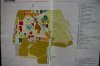
I’ve just found the 1979 map which suggests the open air chimpanzee exhibit (formerly a wolf exhibit) was already renovated by then for the chimps (I too would have guessed the late 80’s). Interestingly, it implies there was also a seperate group of chimps (which must have been the tea party chimps) held on what later became the Orangutan Park exhibit in 1987. This area was formerly the stage for the chimpanzee shows.

Tying in with what I detailed above, I believe the chimpanzees were originally (from their import in 1956) housed in a cage block adjacent to the stage they performed on; with the orangutans (who also performed) housed in an adjoining cage to them (as detailed in A Tiger by the Tail). It appeared the tea party chimps remained here until the 1980’s, moving across to the cage block they lived their remaining years in sometime prior to the construction of Orangutan Park in 1987.

So what was the tea party chimp cages formerly home to? It was clearly designed for great apes, but even by the 1990’s, looked as old as time itself. I’m wondering if this was the ‘upgraded’ cage block Tospy and Turvey the orangutans moved into in 1964?

upload_2025-6-9_21-0-56.jpeg
Photo source: @Chlidonias
 

Attachments

  • upload_2025-6-9_21-0-56.jpeg
    upload_2025-6-9_21-0-56.jpeg
    106.4 KB · Views: 30
Auckland Zoo - Chimpanzee History - Part 2/2 (Groupings/Breeding)

For context to the discussion below, the tea-party imports were as follows:

1956:

0.1 Janie (1952-2013)
0.1 Minnie (1953-1964)
0.1 Josie (1954-2000)
1.0 Bobby (1955-2004)

1959:

1.0 Nick (1957-1961)
1.0 Charlie (1957-1971)
0.1 Siss (1957-1971)
0.1 Little Jane (1957-1962)

The chimpanzees initially lived in these two groups, but evidence suggests Minnie moved across to the second group around 1963/1964 (to give the zoo two groups of 1.2). This is based on her miscarrying an infant in 1964, which appears to have been sired by Charlie (with the other male Bobby believed to have been a behavioural non-breeder).

Four infants were born to these imports:

0.1 Suzie (August 1964) Charlie x Siss
1.0 Unnamed (November 1965) Unknown x Unknown
0.1 Sally (October 1970) Charlie x Siss
1.0 Unnamed (July 1971) Charlie x Siss

The parents of the second infant are believed to have been Charlie and Siss.

1964 was an interesting year all round as A Tiger by the Tail(1992) notes the orangutans moved out of the cage block that also housed chimpanzees:

Sadly, these early orangutans never really had adequate accomodation at the zoo and Topsy and Turvey lived for many years in a section of the chimpanzee cage block.

However, in 1964, the council approved the conversion of a larger cage block to accomodate the orangutans.

The day these adult orangutans were transferred across the zoo will long remain etched in the memories of many staff members…(continues).


This implies the zoo’s capacity to hold chimpanzees increased with this move. It’s reasonable to assume the cage block initially consisted of three cages (two holding chimpanzees; one holding the pair of orangutans). It likely that Suzie (born 1964) occupied the orangutan cage (or at least one of the cages) from her juvenile years onwards after they’d moved out.

Due to the challenges of accomodating the exisiting population of chimpanzees noted above, it’s reasonable to assume that initially, Auckland Zoo didn’t make a concerted effort to breed chimpanzees. In fact, there was a nearly five year gap that followed the infant born 1965 (where Charlie and Siss could have bred again, but didn’t) - suggesting some form of contraception was used.

The zoo attempted to breed its orangutans during this time - the female gave birth to a stillborn infant in 1967; and then died herself the following year. A Tiger by the Tail (1992) made reference to the challenges in replacing these orangutans, so I’m wondering if the reduction of their orangutan population to a single male in 1968 influenced a decision to resume breeding chimpanzees, which was followed up with the births of two more infants in 1970 (Sally) and 1971 (non-surviving male).

The remaining male orangutan died in 1971 and sadly so too did the zoo’s pair of breeding chimpanzees (Charlie and Siss) and their newborn. It was a tragic turn of events given Siss had finally gotten the hang of motherhood and was rearing what was to be her final infant. Presumably housed in the adjacent cage block, it could have been an opportunity for her daughter Suzie to have observed maternal care of an infant.

As well all know, Sally was hand-reared in the house of the Head Keeper during her infancy. She was presumably introduced to her eldest sister Suzie sometime during her juvenile years.

In 1982, Auckland Zoo imported Mike (1973), who presumably occupied the third cage until he was successfully introduced to Suzie (then aged 18) and Sally (then aged 12). There’s no mention of when attempts were made to introduce the remaining trio of tea-party chimps (Bobby, Janie and Josie); but this was presumably undertaken at this time, with Mike being a nine year old adolescent newcomer (and less aggressive than you’d expect an established adult alpha male to have been).

I’d be interested to know the year the chimpanzees moved into the open air exhibit if you can recall @ApeLadyNZ. There’s footage (and accounts on here) of the troop in this exhibit in 1989; and A Tiger by the Tail (1992) describes it as new exhibit, suggesting it was late 1980’s. If so, this would mean Lucy (1975) and her newborn daughter Loanda (1985) were introduced to the others in the old cages, following their import in 1985. This could also explain the lengthy three year gap that followed Loanda’s death and Lucifer’s birth in 1988. Lucy (if not on contraception) could have produced another infant as early as 1986, so I’m wondering if they put Lucy on contraception until they could move them all across to the new exhibit. This also allowed her and Mike time to bond, ensuring Mike would be a protective force towards her next infant (rather than a threat), with his paternity of the next infant assured (his fatal attack on Loanda being attributed to him knowing the infant of the incoming female was sired by another male).
This photo appears to show the youngest quarter shortly after their arrival. What appears to be a cage block looms behind the stage.

Chimpanzees tea party, Auckland Zoo, Western Springs.
So what was the tea party chimp cages formerly home to? It was clearly designed for great apes, but even by the 1990’s, looked as old as time itself. I’m wondering if this was the ‘upgraded’ cage block Tospy and Turvey the orangutans moved into in 1964?
The 1979 map seems to indicate Parrots but that obviously means that the cages were repurposed a fair bit for the Chimps who moved across seemingly in the early 80's.
 
The 1979 map seems to indicate Parrots but that obviously means that the cages were repurposed a fair bit for the Chimps who moved across seemingly in the early 80's.

Construction of Orangutan Park began either late 1985 or early 1986 (they were at the planning stage in September 1985), so the chimpanzees had at least moved across by then. The attempted introduction of the tea party chimps with the main group occurred sometime between 1982-1985, presumably with the intention of integrating them with the others to avoid moving them across the zoo (ahead of the demolition of their old exhibit).

My guess at this point was the tea party chimp exhibit we all saw up until 2013 was the exhibit built for Topsy and Turvey in 1964. Following Turvey’s death in 1971, it was used for birds (with the dens remaining intact); with the tea party chimps moving in a decade and a bit later.
 
Back
Top