Australasian Mandrill Population

I found a Zoolex article which seems to come from the beginning of 2002 and states that Melbourne had five Mandrill at the time. Yonaton, Louise and Timbiri are obviously three of them. I'd assume Lara hadn't been born yet, so that would essentially mean that there were indeed some of the hybrids previously born at Melbourne (in the 80's?). At any rate, Melbourne were down to just the purebreds by 2010.

Lara’s DOB was 20/01/2002, so it’s possible she was included in the five; but thanks to your info, we know they had at least one hybrid still alive at that point, which is good to know. I had suspected an overlap. The exhibit had a capacity of five according to Zoolex, so that also aligns with that; perhaps with the death of the last hybrid then enabling Timbiri to get a breeding recommendation to produce Tabah in 2005.

The 1993 research article doesn’t state what year any of the eight ‘Mandrills’ were born; but I agree most were probably born in the 1970’s or 1980’s. The male acquired from Taronga Zoo had had sufficient time to sire five surviving offspring to the Melbourne born female, with what appears to have been the eldest and youngest of those five offspring being of sufficient age to have had their own infants by 1992/1993 (sired by her father).

It’d be interesting to know what year the 1.1 from Berlin Zoo arrived. Adelaide Zoo imported three Mandrill from Berlin in 1964 (of which two were discovered to be Mandrill/Drill hybrids). If their daughter was born at Melbourne Zoo circa 1970, her five offspring may have been born from the mid-70’s through to early-80’s, with two breeding with their sire to produce offspring circa mid-80’s.
 
Lara’s DOB was 20/01/2002, so it’s possible she was included in the five; but thanks to your info, we know they had at least one hybrid still alive at that point, which is good to know. I had suspected an overlap. The exhibit had a capacity of five according to Zoolex, so that also aligns with that; perhaps with the death of the last hybrid then enabling Timbiri to get a breeding recommendation to produce Tabah in 2005.

The 1993 research article doesn’t state what year any of the eight ‘Mandrills’ were born; but I agree most were probably born in the 1970’s or 1980’s. The male acquired from Taronga Zoo had had sufficient time to sire five surviving offspring to the Melbourne born female, with what appears to have been the eldest and youngest of those five offspring being of sufficient age to have had their own infants by 1992/1993 (sired by her father).

It’d be interesting to know what year the 1.1 from Berlin Zoo arrived. Adelaide Zoo imported three Mandrill from Berlin in 1964 (of which two were discovered to be Mandrill/Drill hybrids). If their daughter was born at Melbourne Zoo circa 1970, her five offspring may have been born from the mid-70’s through to early-80’s, with two breeding with their sire to produce offspring circa mid-80’s.
What's peoples views as to why this species is all but deleted from our zoo collections, Since they are a popular colourful and interesting species also a nice fit for any African rainforest exhibit of which a number of our zoos seem to have or want to have one would believe they would be a logical add to include into the African themed exhibit?
 
What's peoples views as to why this species is all but deleted from our zoo collections, Since they are a popular colourful and interesting species also a nice fit for any African rainforest exhibit of which a number of our zoos seem to have or want to have one would believe they would be a logical add to include into the African themed exhibit?
I'd guess it had something to do with a lack of interest from other regional facilities. Taronga had gotten rid of the remnants of their troop following the arrival of the gorillas, so it left just Melbourne and Adelaide essentially. Melbourne (for some reason) only had a small capacity in the former exhibit - and therefore had to cap breeding.
 
I'd guess it had something to do with a lack of interest from other regional facilities. Taronga had gotten rid of the remnants of their troop following the arrival of the gorillas, so it left just Melbourne and Adelaide essentially. Melbourne (for some reason) only had a small capacity in the former exhibit - and therefore had to cap breeding.
I wonder if any were ever offered to smaller regional zoos!
 
What's peoples views as to why this species is all but deleted from our zoo collections, Since they are a popular colourful and interesting species also a nice fit for any African rainforest exhibit of which a number of our zoos seem to have or want to have one would believe they would be a logical add to include into the African themed exhibit?
I'd guess it had something to do with a lack of interest from other regional facilities. Taronga had gotten rid of the remnants of their troop following the arrival of the gorillas, so it left just Melbourne and Adelaide essentially. Melbourne (for some reason) only had a small capacity in the former exhibit - and therefore had to cap breeding.

In 1991, a total of 10.14.1 Mandrill were held across the Taronga, Melbourne, Adelaide and Perth zoos (bear in mind some of these were the aforementioned hybrids). At the time, there was plans for Auckland Zoo to phase out Chacma baboon and acquire them; but this never happened and Auckland’s Chacma baboon were later replaced by Hamadryas baboon.

The remnants of Taronga’s breeding troop were bachelor males. They were afflicted by a virus in the 1990’s and the survivors were supposedly sent to a private facility in the 2000’s (I don’t know further information to substantiate this). However, Tasmania arose as a new holder within that timeframe and were useful in acquiring surplus stock from Melbourne and Adelaide.

It would be great to see Mandrill return to the region. They’re immensely charismatic in my opinion and clearly a hit with the visitors. Adelaide’s exhibit is tiny. It astounds me they used to have a decent sized troop.
 
. At the time, there was plans for Auckland Zoo to phase out Chacma baboon and acquire them; but this never happened and Auckland’s Chacma baboon were later replaced by Hamadryas baboon.

Do you happen to know where the Chacma baboons went to? I vaguely remember seeing this species when I was in NZ, it is very rare in Europe which is I think why I noticed them, but I might be dreaming it...
 
Do you happen to know where the Chacma baboons went to? I vaguely remember seeing this species when I was in NZ, it is very rare in Europe which is I think why I noticed them, but I might be dreaming it...

They stayed at Auckland Zoo (i.e. they never went ahead with the phase out). They ceased breeding and by 2002, the troop had dwindled to 4.3 baboons (the last of which died in 2008). During this time, a single male was brought in, who died at Auckland Zoo in 2011.

Auckland Zoo acquired Hamadryas baboon in 2009, who rotated being on exhibit with the remaining male Chacma. The Hamadryas troop remain in this exhibit to this day.

If you visited Auckland Zoo between 1999-2011, you would have seen the Chacma baboon in this exhibit:

upload_2025-10-19_23-4-11.jpeg
 

Attachments

  • upload_2025-10-19_23-4-11.jpeg
    upload_2025-10-19_23-4-11.jpeg
    292.2 KB · Views: 38
Melbourne's capacity was about four or five Mandrill, and their exhibit is not much bigger than Adelaide's (if not smaller). Neither was ever going to have enough space to maintain a successful program between them.

When you factor in the moat on Adelaide Zoo’s Mandrill exhibit, I’d say it’s comparable in size to Melbourne Zoo’s exhibit. Both are small by today’s standards; but a massive improvement on the outdated accomodation they occupied at these zoos prior to these exhibits opening.

Here’s a video of Adelaide Zoo from 1986, which shows the Mandrill cage from 25.12 through to 27.07:


It would have been good if some privately owned regional zoos had been given the opportunity to come on board with Mandrill; but what would have been the ultimate is if one of the open range zoos had opened an exhibit capable of housing a medium to large troop. Even a founder base of 1.2 Mandrill could have quickly populated such an exhibit, with birth intervals as short as 13 months and females producing their first offspring at 4-5 years of age.
 
They stayed at Auckland Zoo (i.e. they never went ahead with the phase out). They ceased breeding and by 2002, the troop had dwindled to 4.3 baboons (the last of which died in 2008). During this time, a single male was brought in, who died at Auckland Zoo in 2011.

Auckland Zoo acquired Hamadryas baboon in 2009, who rotated being on exhibit with the remaining male Chacma. The Hamadryas troop remain in this exhibit to this day.

If you visited Auckland Zoo between 1999-2011, you would have seen the Chacma baboon in this exhibit:

View attachment 835077

No it was earlier than that. Circa 1990-92. But I guess it still must have been Auckland I saw them at.
 
No it was earlier than that. Circa 1990-92. But I guess it still must have been Auckland I saw them at.

Wellington Zoo held Chacma baboon also. Auckland and Wellington held a combined 20 Chacma baboons in 1991 (8 at Auckland Zoo and 12 at Wellington Zoo).

@CarLarchameleon posted this photo of Auckland’s Chacma baboon exhibit from circa 1996 (it was adjacent to a Jaguar cage). This was their exhibit until 1999.

upload_2025-10-20_1-0-21.png
 

Attachments

  • upload_2025-10-20_1-0-21.png
    upload_2025-10-20_1-0-21.png
    714.2 KB · Views: 43
Wellington Zoo held Chacma baboon also. Auckland and Wellington held a combined 20 Chacma baboons in 1991 (8 at Auckland Zoo and 12 at Wellington Zoo).

@CarLarchameleon posted this photo of Auckland’s Chacma baboon exhibit from circa 1996 (it was adjacent to a Jaguar cage). This was their exhibit until 1999.

View attachment 835089

That looks very like what I remember. Though I also went to Wellington Zoo more than once too. But I think probably that Auckland cage. Despite other grass baboons being very common in European zoos, or they used to be anyway, Chacmas are not. That greyish colour was very unfamiliar asI had only ever seen them once before. Thanks for responding to the digression!
 
When you factor in the moat on Adelaide Zoo’s Mandrill exhibit, I’d say it’s comparable in size to Melbourne Zoo’s exhibit. Both are small by today’s standards; but a massive improvement on the outdated accomodation they occupied at these zoos prior to these exhibits opening.
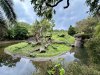
Indeed, Melbourne's actually has the illusion of looking far larger than it actually is. The exhibit doesn't actually extend that far back, and the large tree (which I for the longest time thought was in the exhibit); is actually on the other side of a hidden moat. Gives you a good idea as to how small the exhibit actually is.
 
I could name at least 4 privately owned and independent zoos that would house Mandrills right now if ZAA were to endorse an import. That is unlikely to happen.

I believe that this species is on a long term WEN program list.

The ambition of the privately owned zoos (in particular Darling Downs Zoo, Altina Wildlife Park, Mogo Wildlife Park and Tasmania Zoo) has been inspiring. I can only imagine what could potentially be undertaken with Mandrill within Australia.

It’s difficult to say what interest the main zoos would have in this species over the decades to come, but I’d hope at least a couple would recognise them as an asset to their collection. Orana Wildlife Park could one day consider them as an alternative to a second troop of gorillas for example.
 
I could name at least 4 privately owned and independent zoos that would house Mandrills right now if ZAA were to endorse an import. That is unlikely to happen.
I take it the ZAA are never supportive of such ventures unless at least one (or a few) of the big players are interested as well.

Fingers crossed the WEN program comes to fruition in the future; but you guys do have a lot of other species that are priorities in the meantime.
 
I take it the ZAA are never supportive of such ventures unless at least one (or a few) of the big players are interested as well.

Fingers crossed the WEN program comes to fruition in the future; but you guys do have a lot of other species that are priorities in the meantime.
It can appear the the ZAA are almost entire focus is about the big payers ;)
 
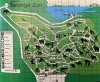
@snowleopard uploaded this map from 1983, which shows them housed adjacent to African wild dogs (see far right on this map):

View attachment 836418

Its really interesting seeing that map again, thanks.

Yeah there were some exhibits between the African wild dogs and the Mandrills too that didnt make it onto most of the maps. @ Hix mentioned:

''..In late 70's there were five (If I remember correctly) cages there, the first couple housed African Hunting Dogs (called Cape Hunting Dogs at the time), a couple with Dingos and the last one, grassed and open-topped, held New Guinea Singing Dogs (in 1978 it temporarily held a pair of Cheetahs for WPZ).

There was a keeper access walkway about two metres wide and then another bank of cages of a different design, much higher and more sturdy construction. The first very large cage housed Mandrills. The second and third cages were much narrower, only about three or four metres wide but probably 10 to 15 metres deep - the first held Ring-tailed Lemurs and the second had the Squirrel Monkeys. Next to the Squirrel Monkeys was an open-topped, grassy enclosure consisting of a low brick wall that housed Golden Agoutis.

Opposite all these enclosures, between the Lion and Tiger pits (which were only open to the public in the African Waterhole) and the Himalayan Tahr was a group of four wooden cages holding "small cats". Three small cages housing a pair of Servals, a pair of Jaguarundi and a pair of Caracals, and a much larger enclosure housing three Mountain Lion
... ''

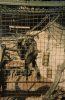
(edit) and Ali the black Jaguar moved into that exhibit when the Mandrills were moved out, c.late 1992 think, around the time Jacunda the Jaguar was sent to Adelaide.

Was heaps surprised learning that the last of Taronga's male mandrill group died in 2005 and had been living off public display for about thirteen years (because they're so striking and memorable to see, having them still at the zoo b.t.s until then just found surprising, makes sense they sent one of their males to Melbourne hey you mentioned.
 
Last edited:
Back
Top