Australian and ( NZ) Elephants news and discussion

Taronga Western Plains Zoo - Elephant Update:

Taronga Western Plains Zoo recently posted a video on their Facebook page about their younger Asian elephants. The keeper in the video mentions that their young males Luk Chai (2009) and Sabai (2016) are now living together. They are also in the process of introducing the more dominant Pathi Harn (2010) to form a bachelor herd. Interestingly Luk Chai has been the smallest calf at birth to date at 96 kilograms.

Source: Taronga Western Plains Zoo’s Facebook page
Security Check
 
Taronga Western Plains Zoo - Elephant Update:

Taronga Western Plains Zoo recently posted a video on their Facebook page about their younger Asian elephants. The keeper in the video mentions that their young males Luk Chai (2009) and Sabai (2016) are now living together. They are also in the process of introducing the more dominant Pathi Harn (2010) to form a bachelor herd. Interestingly Luk Chai has been the smallest calf at birth to date at 96 kilograms.

Source: Taronga Western Plains Zoo’s Facebook page
Security Check

Thanks for posting @WhistlingKite24. It was good to have an update.

I complied this list when Jai Dee was born in 2017, and have added in the one birth since then (Kanlaya):

Birth Weights of Elephant Calves in Australian Zoos

Gung’s Calves:

1.0 Luk Chai born 2009 (Thong Dee): 96kg
0.1 Tukta born 2010 (Pak Boon): 120kg
1.0 Sabai born 2016 (Thong Dee): 101kg
1.0 Jai Dee born 2017 (Pak Boon): 130kg

Bong Su’s Calves:

0.1 Mali born 2010 (Dokoon): 111kg
1.0 Pathi Harn born 2010 (Porntip): 116kg
1.0 Ongard born 2010 (Kulab): 142 kg
1.0 Man Jai born 2013 (Dokoon): 131kg
1.0 Sanook born 2013 (Num Oi): 131kg

Putra Mas’ Calves:

0.1 Willow born 2016 (Num Oi): 103kg
0.1 Kanlaya born 2018 (Porntip): 120kg

Observations:

In 4/5 cows that have given birth to two calves, the second calf was heavier than the first (Num Oi’s calves are the exception).

The three heaviest calves were males sired by Bong Su.

The two lightest calves were males who share the same parents - Gung and Thong Dee.
 
Thanks for posting @WhistlingKite24. It was good to have an update.

I complied this list when Jai Dee was born in 2017, and have added in the one birth since then (Kanlaya):

Birth Weights of Elephant Calves in Australian Zoos

Gung’s Calves:

1.0 Luk Chai born 2009 (Thong Dee): 96kg
0.1 Tukta born 2010 (Pak Boon): 120kg
1.0 Sabai born 2016 (Thong Dee): 101kg
1.0 Jai Dee born 2017 (Pak Boon): 130kg

Bong Su’s Calves:

0.1 Mali born 2010 (Dokoon): 111kg
1.0 Pathi Harn born 2010 (Porntip): 116kg
1.0 Ongard born 2010 (Kulab): 142 kg
1.0 Man Jai born 2013 (Dokoon): 131kg
1.0 Sanook born 2013 (Num Oi): 131kg

Putra Mas’ Calves:

0.1 Willow born 2016 (Num Oi): 103kg
0.1 Kanlaya born 2018 (Porntip): 120kg

Observations:

In 4/5 cows that have given birth to two calves, the second calf was heavier than the first (Num Oi’s calves are the exception).

The three heaviest calves were males sired by Bong Su.

The two lightest calves were males who share the same parents - Gung and Thong Dee.
Very interesting. But all calves are very heavy. In Europe, only few calves weigh more than 100 kg.

But I think we can expect Thong Dee to be pregnant. I don't know when this zoo announces it, but since Sabai is already separated, it means that he's probably trying to pregnant her again.
 
Taronga Western Plains Zoo - Elephant Update:

Taronga Western Plains Zoo recently posted a video on their Facebook page about their younger Asian elephants. The keeper in the video mentions that their young males Luk Chai (2009) and Sabai (2016) are now living together. They are also in the process of introducing the more dominant Pathi Harn (2010) to form a bachelor herd. Interestingly Luk Chai has been the smallest calf at birth to date at 96 kilograms.

Source: Taronga Western Plains Zoo’s Facebook page
Security Check

Update on Pathi Harn (2010)

An update on Pathi Harn (2010). He has been introduced to their other young bulls, Luk Chai (2009) and Sabai (2016). He also spends time with Gung (2000), and the females. It’s great to see Pathi Harn’s growing tusks! He looks a lot like Bong Su.

Does anyone know if Luk Chai’s tusks were trimmed, or if they have just not grown yet?

 
Very interesting. But all calves are very heavy. In Europe, only few calves weigh more than 100 kg.

But I think we can expect Thong Dee to be pregnant. I don't know when this zoo announces it, but since Sabai is already separated, it means that he's probably trying to pregnant her again.

It would be great for Thong Dee to get pregnant again. In the past, Taronga Zoo have had their females bred with gaps of 6-7 years, so it would be great to see a good sized herd, with females giving birth at natural intervals, rather than artificial intervals. Gung, the bull, is being put in with the girls on some occasions, though I don’t know if it’s for breeding or not, but fingers crossed he does what he’s done before. ;)
 
But I think we can expect Thong Dee to be pregnant. I don't know when this zoo announces it, but since Sabai is already separated, it means that he's probably trying to pregnant her again.

It would be great for Thong Dee to get pregnant again. In the past, Taronga Zoo have had their females bred with gaps of 6-7 years, so it would be great to see a good sized herd, with females giving birth at natural intervals, rather than artificial intervals. Gung, the bull, is being put in with the girls on some occasions, though I don’t know if it’s for breeding or not, but fingers crossed he does what he’s done before. ;)

I think Taronga Zoo will delay Thong Dee conceiving her third calf so they can align it with Porntip having her third calf. There was 19 months between their second calves and it wasn’t an ideal age gap. Porntip had to limit access to her newborn from a rambunctious young bull, who was constantly at a different stage in development.

Compare this to Luk Chai and Pathi Harn, who were eight months apart in age and have grown up together - mutually benefiting from sparring sessions etc. they can both participate in.

There was six years between Pak Boon’s two calves; seven years between Thong Dee’s two calves; and eight years between Porntip’s two calves. Assuming they want to continue this trend, they could aim for an eight year gap between Thong Dee’s second and third calf; and a six year gap between Porntip’s second and third calf. This would see both calves born in 2024.

An added benefit of delaying Thong Dee from breeding a couple more years means that Kanlaya would be six; as oppose to four when the calf was born. Not only would she retain more of the experience for her own future births; but she would be of an age to offer practical assistance as an ‘auntie.’
 
History of Taronga Zoo’s Elephants:

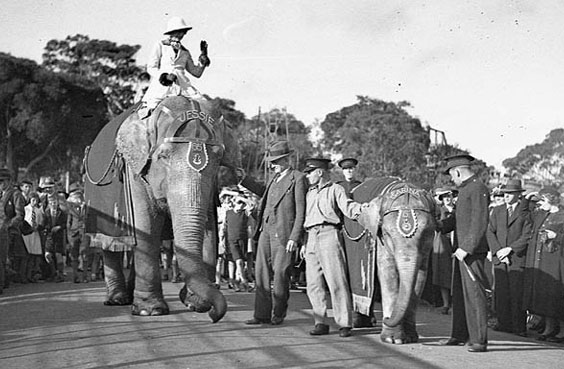
Jessie (F)
Born in the wild 00/00/1875
Arrived at Taronga 00/00/1916
Died at Taronga Zoo 26/09/1939

Dundry (Jumbo) (M)
Born in the wild 00/00/1875
Arrived at Taronga 00/00/1918
Died at Taronga 14/05/1923

Chinni (F)
Born in the wild 00/00/1917
Arrived at Taronga 15/05/1922
Died at Taronga 22/05/1922

Jenny (F)
Born in the wild 00/00/1917
Arrived at Taronga 15/05/1922
Died at Taronga 22/05/1922

Jill (F)
Born at the Rangoon Zoo 00/00/1913
Arrived at Taronga 25/11/1935
Died at Taronga 28/02/1977

Sarina (F)
Born in the wild, Singapore, 00/00/1933
Arrived at Taronga 04/12/1938
Died at Taronga 06/06/1971

Ranee I (F)
Born in the wild, India, 00/00/1909
Arrived at Taronga 08/11/1938 Calcutta Zoo
Died at Taronga 06/07/1971

Unknown (F)
Born 00/00/00?
Arrived at Taronga 22/04/1947
Died at Taronga 04/07/1956

Nellie (F)
Born 00/00/00? India
Arrived at Taronga 16/08/1948
Died at Taronga 21/05/1949

Gandhi (M)
Born in the wild 00/00/1912
Arrived at Taronga 15/05/1950
Died at Taronga 19/04/1968

Cauveri (F)
Born 00/00/1955
Arrived at Taronga 04/09/1958
Died at Taronga 16/11/1958

Ranee II (F)
Born in the wild 00/00/1955
Arrived at Taronga 01/11/1962
Died at Taronga 29/11/1998

Joan (F)
Born in the wild 00/00/1958
Arrived at Taronga 01/11/1962
Died at Taronga 10/07/1976

Heman (M)
Born in the wild 00/00/1956
Arrived at Taronga 01/02/1963
Exported to Taronga Western Plains Zoo 05/11/2005

Betty (F)
Born 00/00/00?
Arrived at Taronga 14/05/1963
Died at Taronga 28/05/1963

Burma (F)
Born in the wild 00/00/1959
Arrived at Taronga 09/12/1982
Exported to Taronga Western Plains Zoo 18/05/2005

Gung (M)
Born in the wild 00/00/2000
Arrived at Taronga 05/11/2006
Exported to Taronga Western Plains Zoo 30/01/2018

Thong Dee (F)
Born in the wild 00/00/1997
Arrived at Taronga 02/11/2006
Exported to Taronga Western Plains Zoo 30/04/2015

Tang Mo (F)
Born in the wild 00/00/1999
Arrived at Taronga 02/11/2006
Still at Taronga

Porntip (F)
Born in the wild 00/00/1992
Arrived at Taronga 02/11/2006
Exported to Taronga Western Plains Zoo 24/04/2015

Pak Boon (F)
Born in the wild 00/00/1992
Arrived at Taronga 02/11/2006
Still at Taronga

Luk Chai (M) Gung x Thong Dee
Born at Taronga 04/07/2009
Exported to Taronga Western Plains Zoo 30/04/2015

Pathi Harn (M) Bong Su x Porntip
Born at Taronga 10/03/2010
Exported to Taronga Western Plains Zoo 24/04/2015

Tukta (F) Gung x Pak Boon
Born at Taronga 02/11/2010
Died at Taronga 03/09/2018

Jai Dee (M) Gung x Tukta
Born at Taronga 26/05/2017
Still at Taronga

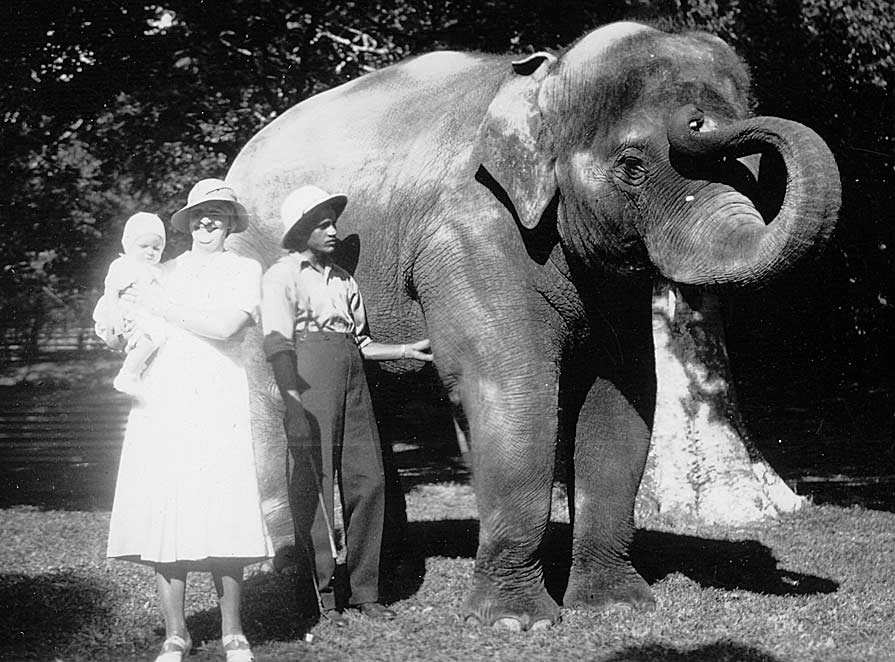
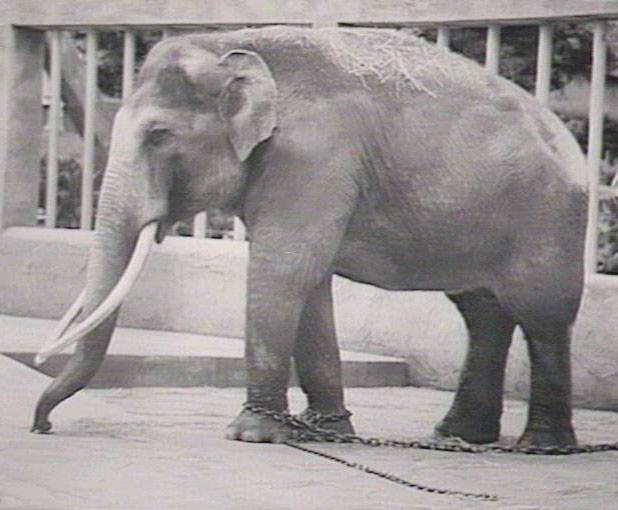
Historic Photographs of Taronga’s Elephants:

Taronga_jessie.jpg

Jessie and Sarina

Mitchell_park_nellie.jpg

Nellie

Western_Plains_Heeman.jpg

Heman
 
History of Taronga Western Plain’s Elephants:

African Elephants:

David (M)

Born in the wild 00/00/1968
Arrived at Taronga Western Plains Zoo 12/12/1977
Died at Taronga Western Plains Zoo 30/06/1987

Yum Yum (F)
Born in the wild 00/00/1969
Arrived at Taronga Western Plains Zoo 12/12/1977
Died at Taronga Western Plains 03/10/2010

Cuddles (F)
Born in the wild 00/00/1973
Arrived at Taronga Western Plains Zoo 12/12/1977
Died at Taronga Western Plains Zoo 22/03/2017

Cherie (F)
Born in the wild 00/00/1974
Arrived at Taronga Western Plains Zoo 12/12/1977
Died at Taronga Western Plains Zoo 10/06/2007

Congo (M)
Born in the wild 00/00/1958
Arrived at Taronga Western Plains Zoo 10/02/1983
Died at Taronga Western Plains Zoo 10/11/2000

Toto (F)
Born in the wild 00/00/1968
Arrived at Taronga Western Plains Zoo 10/02/1983
Died at Taronga Western Plains Zoo 14/10/1984

Asian Elephants:

Heman (M)
Born in the wild 00/00/1956
Arrived at Taronga Western Plains Zoo 05/11/2005
Died at Taronga Western Plains Zoo 28/12/2006

Burma (F)
Born in the wild 00/00/1959
Arrived at Taronga Western Plains Zoo 18/05/2005
Still at Taronga Western Plains Zoo

Gigi (F)
Born in the wild 00/00/1958
Arrived at Taronga Western Plains Zoo 14/01/2008
Died at Taronga Western Plains Zoo 26/02/2019

Arna (F)
Born in the wild 00/00/1955
Arrived at Taronga Western Plains Zoo 14/01/2008
Died at Taronga Western Plains Zoo 14/09/2012

Porntip (F)
Born in the wild 00/00/1992
Arrived at Taronga Western Plains Zoo 24/04/2015
Still at Taronga Western Plains Zoo

Pathi Harn (M) Bong Su x Porntip
Born at Taronga Zoo 10/03/2010
Arrived at Taronga Western Plains Zoo 24/04/2015
Still at Taronga Western Plains Zoo

Thong Dee (F)
Born in the wild 00/00/1997
Arrived at Taronga Western Plains Zoo 30/04/2015
Still at Taronga Western Plains Zoo

Luk Chai (M) Gung x Thong Dee
Born at Taronga Zoo 04/07/2009
Arrived at Taronga Western Plains Zoo 30/04/2015
Still at Taronga Western Plains Zoo

Sabai (M) Gung x Thong Dee
Born at Taronga Western Plains Zoo 02/11/2016
Still at Taronga Western Plains Zoo

Kanlaya (F) Putra Mas x Porntip
Born at Taronga Western Plains Zoo 14/06/2018
Still at Taronga Western Plains Zoo

Gung (M)
Born in the wild 00/00/2000
Arrived at Taronga Western Plains Zoo 30/01/2018
Still at Taronga Western Plains Zoo

Historic Photographs of Taronga Western Plains Zoo’s Elephants:

wp_cuddles_arrival_1977.jpg

Cuddles

WesternPlainsZoo_YumYum_Brogan_2008.jpg

Yum Yum and Cuddles

WesternPlainsZoo_Gigi_Brogan_2008.JPG

Gigi
 
Perth Zoo Elephant History:

Jumbaroo (M)

Born in the wild, Malaysia, 00/00/1907
Arrived at Perth Zoo 30/05/1920
Died at Perth Zoo 00/00/00?

Ranee (F)
Born in the wild 00/00/1903
Arrived at Perth Zoo 00/00/1923
Died at Perth Zoo 24/12/1961

Chandra (F)
Born in the wild, India, 00/00/1926
Arrived at Perth Zoo 00/12/1931
Left to ‘a circus’ 00/00/00?

Betty (F)
Born in the wild 00/00/00?
Arrived at Perth Zoo 00/00/1935
Left to Soles Brothers Circus 00/00/00?

Dolly (F)
Born in the wild 00/00/00?
Arrived at Perth Zoo 00/00/1935
Left to Soles Brothers Circus 00/00/00? *died in transit

Shusheela (F)
Born in the wild, India, 00/00/1928
Arrived at Perth Zoo 12/05/1936
Died at Perth Zoo 00/00/00?

Tricia (F)
Born in the wild 00/00/1957
Arrived at Perth Zoo 23/01/1963
Still at Perth Zoo

Tania (F)

Born in the wild 00/00/1957
Arrived at Perth Zoo 23/01/1963
Exported to Ashton’s Circus 01/07/1971

Tara (F)
Born in the wild 00/00/1958
Arrived at Perth Zoo 00/00/1963
Exported to Sole Brothers Circus 24/12/1965

Putra Mas (M)
Born in the wild, Malaysia, 00/00/1989
Arrived at Perth Zoo 15/12/1992
Still at Perth Zoo

Chepam (Teduh) (F)

Born in the wild, Malaysia, 00/00/1990
Arrived at Perth Zoo 15/12/1992
Died at Perth Zoo 00/05/2007

Permai (F)

Born in the wild, Malaysia, 00/00/1989
Arrived at Perth Zoo 15/12/1992
Still at Perth Zoo

Historic Photographs of Perth Zoo’s Elephants:

perth_Tricia_Tanya_Joseph_Noble.jpg

Tricia and Tania
 
History of Taronga Zoo’s Elephants:

Jessie (F)
Born in the wild 00/00/1875
Arrived at Taronga 00/00/1916
Died at Taronga Zoo 26/09/1939

Dundry (Jumbo) (M)
Born in the wild 00/00/1875
Arrived at Taronga 00/00/1918
Died at Taronga 14/05/1923

Chinni (F)
Born in the wild 00/00/1917
Arrived at Taronga 15/05/1922
Died at Taronga 22/05/1922

Jenny (F)
Born in the wild 00/00/1917
Arrived at Taronga 15/05/1922
Died at Taronga 22/05/1922

Jill (F)
Born at the Rangoon Zoo 00/00/1913
Arrived at Taronga 25/11/1935
Died at Taronga 28/02/1977

Sarina (F)
Born in the wild, Singapore, 00/00/1933
Arrived at Taronga 04/12/1938
Died at Taronga 06/06/1971

Ranee I (F)
Born in the wild, India, 00/00/1909
Arrived at Taronga 08/11/1938 Calcutta Zoo
Died at Taronga 06/07/1971

Unknown (F)
Born 00/00/00?
Arrived at Taronga 22/04/1947
Died at Taronga 04/07/1956

Nellie (F)
Born 00/00/00? India
Arrived at Taronga 16/08/1948
Died at Taronga 21/05/1949

Gandhi (M)
Born in the wild 00/00/1912
Arrived at Taronga 15/05/1950
Died at Taronga 19/04/1968

Cauveri (F)
Born 00/00/1955
Arrived at Taronga 04/09/1958
Died at Taronga 16/11/1958

Ranee II (F)
Born in the wild 00/00/1955
Arrived at Taronga 01/11/1962
Died at Taronga 29/11/1998

Joan (F)
Born in the wild 00/00/1958
Arrived at Taronga 01/11/1962
Died at Taronga 10/07/1976

Heman (M)
Born in the wild 00/00/1956
Arrived at Taronga 01/02/1963
Exported to Taronga Western Plains Zoo 05/11/2005

Betty (F)
Born 00/00/00?
Arrived at Taronga 14/05/1963
Died at Taronga 28/05/1963

Burma (F)
Born in the wild 00/00/1959
Arrived at Taronga 09/12/1982
Exported to Taronga Western Plains Zoo 18/05/2005

Gung (M)
Born in the wild 00/00/2000
Arrived at Taronga 05/11/2006
Exported to Taronga Western Plains Zoo 30/01/2018

Thong Dee (F)
Born in the wild 00/00/1997
Arrived at Taronga 02/11/2006
Exported to Taronga Western Plains Zoo 30/04/2015

Tang Mo (F)
Born in the wild 00/00/1999
Arrived at Taronga 02/11/2006
Still at Taronga

Porntip (F)
Born in the wild 00/00/1992
Arrived at Taronga 02/11/2006
Exported to Taronga Western Plains Zoo 24/04/2015

Pak Boon (F)
Born in the wild 00/00/1992
Arrived at Taronga 02/11/2006
Still at Taronga

Luk Chai (M) Gung x Thong Dee
Born at Taronga 04/07/2009
Exported to Taronga Western Plains Zoo 30/04/2015

Pathi Harn (M) Bong Su x Porntip
Born at Taronga 10/03/2010
Exported to Taronga Western Plains Zoo 24/04/2015

Tukta (F) Gung x Pak Boon
Born at Taronga 02/11/2010
Died at Taronga 03/09/2018

Jai Dee (M) Gung x Tukta
Born at Taronga 26/05/2017
Still at Taronga

Historic Photographs of Taronga’s Elephants:

Taronga_jessie.jpg

Jessie and Sarina

Mitchell_park_nellie.jpg

Nellie

Western_Plains_Heeman.jpg

Heman

African Elephants at Taronga Zoo

There was also at least three African elephants held at Taronga Zoo:

The first was a male named Dumbo. He was the first African elephant in Australia. He was born 1940 in the wild and arrived at Taronga Zoo in January 1947. He died of a congenital health issue in July 1947.

The second was a female named Chori. She arrived in July 1947 and died 18/04/1979 at Taronga Zoo of acute heart failure. This followed a fall, during an attempt to crate her for transport to Taronga Western Plains Zoo.

The third was a female named Cheena. A newspaper article from 1949 mentions her as being an African elephant and three years old, but offers no further details on her. I assume she died young, as there is very little mention of her online from there on after.

There’s a compilation of articles on Dumbo (1940-1947) here: Dumbo Australias First African Elephant | Elephant | Zoo
 
Taronga Western Plains Zoo Elephants:

None of these are really newsworthy, but it’s good to have these updates on TWPZ’s Asian Elephants.

Update on Burma


Taronga Western Plains Zoo recently posted an update on their ageing female Asian Elephant, Burma, who is estimated to be in her mid 60’s, making her one of the oldest Asian Elephants in Australasia.

It’s great to know she’s doing well, and let’s hope she can be there for many years to come!


Elephant Bath Routine:

This video was interesting to watch, and features Thong Dee, Porntip and predominantly, Kanlaya! It’s great to have an update on all three girls, and especially Kanlaya, who’s growing up quickly! :)

 
Last edited:
Update on Kanlaya:

Recently TWPZ posted a video on their FB page, which includes an update on their youngest, Asian Elephant, Kanlaya, who recently turned 2.

https://m.facebook.com/TarongaWesternPlainsZoo/videos/251044142892558/?refsrc=https://m.facebook.com/pg/TarongaWesternPlainsZoo/posts/?ref=page_internal&ref=page_internal&_rdr

There is also an article on Kanlaya, from their website. It’s really interesting, and talks about how Kanlaya was conceived, via Artificial Insemination. She was born at 3:07 am on the morning of June 14 2018, after a gestation of 645 days.

The story of Kanlaya

Article:

Our youngest calf at Taronga Western Plains Zoo is Kanlaya she is two on 14 June 2020. Kanlaya was the second calf born here in Dubbo and our first female calf. A lot of planning and preparation goes in to any birth and Kanlaya’s was no exception.

Back track to September 2016, we were training Porntip for Artificial Insemination (AI) and taking regular blood samples from her to track her progesterone levels. By measuring her progesterone levels, we can actually determine the exact day that she will ovulate and time the AI for that day. This requires a lot of planning and preparation, particularly because Kanlaya’s dad does not live in Dubbo, he lives at Perth Zoo in Western Australia. So we organised all the logistics and then a team of specialist elephant reproductive vets flew to Perth to be ready. We took blood on the morning of the 7 September 2016 and the results confirmed ovulation. The team in Perth collected the semen sample straight away and then flew to Dubbo, via Sydney and arrived early that evening. We did the artificial insemination at 8.30pm and the vets were fairly confident because the semen sample was great, 90% motility, and they could see on ultrasound that Porntip had just ovulated. We did a second artificial insemination procedure the following morning to be sure.

We then had to wait approximately three months (the length of an elephant cycle) before we could confirm that Porntip was pregnant and it was at this point we found out it was a success! And then we started the long 22 months wait until our little calf would arrive.

Kanlaya was born on the 14 June 2018 at 3.07am after a short and easy labour. Her name means ‘beautiful lady’. She is a very confident, playful and energetic calf. Kanlaya spends her the day with the herd and often leads the way out on to exhibit. She loves receiving attention and her training is coming along nicely.

Her Mum is Porntip and is 28 years old. She has a laid back and easy going personality and is very maternal. Porntip is a great mother and aunty to the other calves in the herd.

Kanlaya’s dad Putra Mas lives at Perth Zoo with two other female elephants. Kanlaya is the first calf he has sired. Putra Mas is exceptionally smart and seeks out attention from keepers to do activities, vocalizing to call them over. Keepers at Perth Zoo say he is a perfectionist and learns new behaviours quickly. Putra Mas is a big burley boy, is destructive and loves to play with his toys. If he can break it, he will.

As Kanlaya grwos and develops it is nice to see her personality coming out and the different traits she gets from her parents. It is a real pleasure to watch her grow and develop.

By Elephant keeper, Bec O’Riordan


Asian_Elephant_herd__Rick_Stevens_21_05_2019_11_50_30__1591845091_17497.jpg

Kanlaya and Sabai
Asian_Elephant_calf_Kanlaya_Rick_Stevens_23_07_2018__1591844924_29528.jpg

Kanlaya at one day old
Asian_Elephant_herd__Rick_Stevens_21_05_2019_11_19_25__1591845037_86423.jpg

Kanlaya on exhibit
Kanlaya_image__1591845623_99898.jpg

Kanlaya at two years old
 
Update on Kanlaya:

Recently TWPZ posted a video on their FB page, which includes an update on their youngest, Asian Elephant, Kanlaya, who recently turned 2.

https://m.facebook.com/TarongaWesternPlainsZoo/videos/251044142892558/?refsrc=https://m.facebook.com/pg/TarongaWesternPlainsZoo/posts/?ref=page_internal&ref=page_internal&_rdr

There is also an article on Kanlaya, from their website. It’s really interesting, and talks about how Kanlaya was conceived, via Artificial Insemination. She was born at 3:07 am on the morning of June 14 2018, after a gestation of 645 days.

The story of Kanlaya

Article:

Our youngest calf at Taronga Western Plains Zoo is Kanlaya she is two on 14 June 2020. Kanlaya was the second calf born here in Dubbo and our first female calf. A lot of planning and preparation goes in to any birth and Kanlaya’s was no exception.

Back track to September 2016, we were training Porntip for Artificial Insemination (AI) and taking regular blood samples from her to track her progesterone levels. By measuring her progesterone levels, we can actually determine the exact day that she will ovulate and time the AI for that day. This requires a lot of planning and preparation, particularly because Kanlaya’s dad does not live in Dubbo, he lives at Perth Zoo in Western Australia. So we organised all the logistics and then a team of specialist elephant reproductive vets flew to Perth to be ready. We took blood on the morning of the 7 September 2016 and the results confirmed ovulation. The team in Perth collected the semen sample straight away and then flew to Dubbo, via Sydney and arrived early that evening. We did the artificial insemination at 8.30pm and the vets were fairly confident because the semen sample was great, 90% motility, and they could see on ultrasound that Porntip had just ovulated. We did a second artificial insemination procedure the following morning to be sure.

We then had to wait approximately three months (the length of an elephant cycle) before we could confirm that Porntip was pregnant and it was at this point we found out it was a success! And then we started the long 22 months wait until our little calf would arrive.

Kanlaya was born on the 14 June 2018 at 3.07am after a short and easy labour. Her name means ‘beautiful lady’. She is a very confident, playful and energetic calf. Kanlaya spends her the day with the herd and often leads the way out on to exhibit. She loves receiving attention and her training is coming along nicely.

Her Mum is Porntip and is 28 years old. She has a laid back and easy going personality and is very maternal. Porntip is a great mother and aunty to the other calves in the herd.

Kanlaya’s dad Putra Mas lives at Perth Zoo with two other female elephants. Kanlaya is the first calf he has sired. Putra Mas is exceptionally smart and seeks out attention from keepers to do activities, vocalizing to call them over. Keepers at Perth Zoo say he is a perfectionist and learns new behaviours quickly. Putra Mas is a big burley boy, is destructive and loves to play with his toys. If he can break it, he will.

As Kanlaya grwos and develops it is nice to see her personality coming out and the different traits she gets from her parents. It is a real pleasure to watch her grow and develop.

By Elephant keeper, Bec O’Riordan


Asian_Elephant_herd__Rick_Stevens_21_05_2019_11_50_30__1591845091_17497.jpg

Kanlaya and Sabai
Asian_Elephant_calf_Kanlaya_Rick_Stevens_23_07_2018__1591844924_29528.jpg

Kanlaya at one day old
Asian_Elephant_herd__Rick_Stevens_21_05_2019_11_19_25__1591845037_86423.jpg

Kanlaya on exhibit
Kanlaya_image__1591845623_99898.jpg

Kanlaya at two years old

It’s impossible to underestimate the value of this female as she’s the first step towards Taronga Western Plains Zoo establishing a multigenerational herd - something which will ultimately have taken them decades to have achieved. While valuable nonetheless, the male calves before her were destined to add nothing to the herd long term by virtue of elephants having a matriarchal social structure. With interbirth intervals of seven/eight years; and the devastating loss of Tukta at Taronga, progress has been slow. They now have:

Porntip (1992) > Kanlaya (2018)

Thong Dee (1997)

Here’s hoping for a subsequent female calf from Porntip; and the first female calf from Thong Dee within the next few years; and a decade from now - Kanlaya welcoming the first member of the second generation of Asian elephants in Taronga’s herd.

PS. A small mistake in the article. The first calf sired by Putra Mas was not Kanlaya in 2018; it was Willow, who was born and died at Melbourne Zoo in 2016.
 
Auckland Zoo - Rajah the Indian Elephant (1917-1936)

Rajah was Auckland Zoo's first and only bull elephant. He arrived in 1930 and was shot in 1936 after he became unmanageable. Following his death, Rajah was stuffed and can be viewed at the Auckland War Memorial Museum.

There's an account of his life here (click link for full story): Wild Child

Around a century ago a male elephant was born somewhere in the deep forests of Burma, now Myanmar, and along with his maternal herd was caught in a wild elephant drive. Sold on to international animal dealer George Bruce Chapman, by 1924 the young Asian Elephant appeared with fourteen others in the Burma Section of the Indian Court, as part of the British Empire Exhibition held at Wembley in London, England.

When the exhibition ended in 1925, the young elephant was swapped for some thylacines and a Bennetts Wallaby in a deal between the Beaumaris Zoo in Hobart, Tasmania, Australia and Chapman. From the day a nameless elephant stepped into a transport crate at the London docks and was loaded onboard the SS Curtis for the long sea voyage to Tasmania’s shores the animal’s fate was sealed.

By late 1930 things had become difficult for Beaumaris Zoo — the elephant had become uneconomic to keep and thus a decision was to be made about his future. Hobart City Council sent a letter to the Auckland City Council offering them the elephant for £150. Auckland City Council offered £125; which the Hobart City Council duly accepted.

The elephant was sent on his way to Auckland Zoo arriving on 11 November 1930; where it was hoped he would be both a companion for Jamuna the female elephant and earn his keep by giving visitors rides around the Zoo.

Less than a month later, the now named ‘Rajah’ attacked his keeper causing a serious injury, and things went downhill from there for the then new resident at the zoo. After Curator Griffin’s passing in 1935, Colonel Sawyer took over as zoo curator and in his first report to Auckland City Council noted Rajah was a serious liability, spitting at visitors and striking out at them with his trunk. Sawyer also warned that the elephant was close to approaching maturity and would soon become extremely dangerous. It’s possible Rajah was already experiencing early musth — a periodic condition in male elephants, characterised by highly aggressive behaviour and accompanied by a large rise in reproductive hormones. Sawyer made the recommendation to destroy Rajah as soon as possible.

So it was that on 9 March 1936, the 19 year-old Rajah was taken to an isolated part of the zoo and destroyed. His flesh was fed to the zoo carnivores and body was donated to Auckland Museum, as was the practice at the time, to be turned into the exhibit that we know to this day.


Photos of Rajah and Jamuna (photo source: Auckland War Memorial Museum - Tāmaki Paenga Hira):

View media item 490640View media item 490639View media item 490638


Back
Top