I had read many years ago that a keeper at the Blackpool zoo? (I think) got very sick and I believe he may of passed away (not sure if it was a bull or cow) and the elephant became unmanageable so I seem to recall they did the unthinkable!It is a personal decision too. He may have family to consider.
You are using an out of date browser. It may not display this or other websites correctly.
You should upgrade or use an alternative browser.
You should upgrade or use an alternative browser.
Australian Asian Elephant Population 2025
- Thread starter Zoofan15
- Start date

I was just wondering how good is their aim
It’s astonishing how far all aspects of elephant husbandry has evolved over the last century, but particularly with how bulls are managed. Musth cycles are now a well recognised phenomenon, with each zoo having protocols on how the elephants are managed during this time.
Compare this to Rajah (1917-1936), who was shot at Auckland Zoo almost 90 years ago because he was ‘unmanageable’. It’s entirely possible he was a normal bull elephant entering musth.
And yet European zoos have a long history of not only keeping of elephants but breeding them for decadesIt’s astonishing how far all aspects of elephant husbandry has evolved over the last century, but particularly with how bulls are managed. Musth cycles are now a well recognised phenomenon, with each zoo having protocols on how the elephants are managed during this time.
Compare this to Rajah (1917-1936), who was shot at Auckland Zoo almost 90 years ago because he was ‘unmanageable’. It’s entirely possible he was a normal bull elephant entering musth.
And yet European zoos have a long history of not only keeping of elephants but breeding them decades ago
Yes the Australasian region took a long time to catch up. It didn’t help that so few zoos held small numbers of elephants, which in turn deprived young elephants of the opportunity to learn reproductive behaviours.
Furthermore, many zoos simply put unrelated females together; whereas now it’s well recognised they live in matrilineal multigenerational herds.
Absolutely yes. And we may have to consider that a few bulls over the years were kept by circuses in Europe also handled them along with the cows and I believe some bredYes the Australasian region took a long time to catch up. It didn’t help that so few zoos held small numbers of elephants, which in turn deprived young elephants of the opportunity to learn reproductive behaviours.
Absolutely yes. And we may have to consider that a few bulls over the years were kept by circuses in Europe also handled them along with the cows and I believe some bredYes the Australasian region took a long time to catch up. It didn’t help that so few zoos held small numbers of elephants, which in turn deprived young elephants of the opportunity to learn reproductive behaviours.
Absolutely yes. And we may have to consider that a few bulls over the years were kept by circuses in Europe also handled them along with the cows and I believe some bred
Circus elephants also bred in the US prior to the birth of Pachy in 1962 (the first birth in North American in 44 years), with both Europe and North American facilties breeding consistently over the decades that followed. The United Kingdom’s first birth was in 1977 at Chester Zoo, with other births following in due course.
Rotterdam, Zurich, Wuppertal, Chester and Whipsnade have been some of the European powerhouses in elephant breeding.
I believe one can add Copenhagen to that listCircus elephants also bred in the US prior to the birth of Pachy in 1962 (the first birth in North American in 44 years), with both Europe and North American facilties breeding consistently over the decades that followed. The United Kingdom’s first birth was in 1977 at Chester Zoo, with other births following in due course.
Rotterdam, Zurich, Wuppertal, Chester and Whipsnade have been some of the European powerhouses in elephant breeding.
There is a short video of Permai on Monarto zoos Facebook site feeding out of a food tube.
I would say with elephant keepers from 3 different zoos on site currently there would be some interesting conversations going on!
Definitely. The keepers literally have decades of experience amongst them. I’ve had the privilege of meeting many amazing keepers across different zoos, but there’s something particularly special about elephant keepers. Their passion is second to none.
In one of the Zoos Victoria documentaries, it was mentioned some members of Melbourne’s elephant team had to be told to go home some evenings and having met their team, I have no doubt that’s true. Compare that to almost any other workplace where 5pm comes and it’s like a stampede on the Serengeti.

Here’s the video you mentioned:
It's not just Melbourne's elephant keepers that are like that!!!it was mentioned some members of Melbourne’s elephant team had to be told to go home some evenings
It's not just Melbourne's elephant keepers that are like that!!!
I can imagine. Even if it’s not known to be a well paid career (and some people would say that’s an understatement), it’s must be rewarding in so many other ways. We as the public are excited for achievements and milestones in breeding etc. I can only say imagine the feeling for those who have directly contributed to that successful outcome (and on the flip side, the inevitable lows that also come with the job).
it’s not known to be a well paid career (and some people would say that’s an understatement),
The pay for a keeper these days is not too shabby at all. Several of our keepers have bought their own homes locally and most of them drive better vehicles than I do!!
a
are they reading zoochat and talking about us too? Lol.
The pay for a keeper these days is not too shabby at all. Several of our keepers have bought their own homes locally and most of them drive better vehicles than I do!!
are they reading zoochat and talking about us too? Lol.
a
are they reading zoochat and talking about us too? Lol.
They don't need to read ZC to do that!


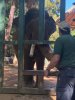
He looks quite the beast!Quick pick of Putra Mas from the other day before his training. Keeper says he’s doing well.
looking forward to seeing permais reaction when he arrives.
View attachment 795565
Quick pick of Putra Mas from the other day before his training. Keeper says he’s doing well.
looking forward to seeing permais reaction when he arrives.
View attachment 795565
It’s great that he’s been able to keep both tusks when you consider how so many city bulls lost their tusks - Heman (one tusk); Luk Chai (both tusks); Ongard (one tusk); Man Jai (both tusks).
I’m anticipating all four cows will be very excited by his arrival.

Nile Hippo Expert
Well-Known Member
When did Herman lose his tusk, (I know he died in 2006)?It’s great that he’s been able to keep both tusks when you consider how so many city bulls lost their tusks - Heman (one tusk); Luk Chai (both tusks); Ongard (one tusk); Man Jai (both tusks).
I’m anticipating all four cows will be very excited by his arrival.
When did Herman lose his tusk, (I know he died in 2006)?
@Zorro mentioned seeing him in 1977 and he had only one tusk, so he would have lost it sometime between his arrival in 1963 and then. He was born 1956, so I’d hazard a guess in his adolescence once the tusks had grown through sufficiently to break off upon impact (he fell into the dry moat).