Best enclosure / exhibit design for lesser known smaller mammals.

Well, I think everyone on zoochat can all say that Aye-Ayes are not demonic monsters. I am just particularly annoyed at all the people who think Aye-Ayes are bloodthirsty omans of evil, I just really wish people would find them fascinating and get to know them a little more before jumping to conclusions.
But yes, back to enclosures.

Yes, but this is precisely my point. The same view towards a species will never be the same across cultures.

In species conservation this is a challenge when there are situations when the socio-cultural context and belief systems of local peoples may not be favourable towards a certain species.

All you can do is tread carefully and respectfully but at the same time try to effect change and offer other viewpoints and narratives but with cultural sensitivity.

Yep, back to enclosures.
 
Yes, but this is precisely my point. The same view towards a species will never be the same across cultures.

In conservation this is a challenge when there are situations when the socio-cultural context and belief systems of local peoples may not be favourable towards a certain species.

All you can do is tread carefully and respectfully but at the same time try to effect change and offer other viewpoints but with cultural sensitivity.

Yep, back to enclosures.
Yet we keep saying that, but something else always comes up. :p
 
While maybe not a lesser-known species, I think Detroit's Red Panda area is pretty excellent and definitely the best I've personally seen. There's two separate enclosures, both are quite large and have multiple tall trees for the pandas to climb.

Here's a couple photos of one of the exhibits:

full


full
 
Columbus's Red panda exhibit is also pretty good, with adequate climbing structures and some nice lush foliage to pull it together, and while not overly humongous, it crams a lot of essentials into a smaller space.
Credit once again to Moebelle.
full

Notice the red panda perched way up high in the tree, enjoying a snooze.
 
While maybe not a lesser-known species, I think Detroit's Red Panda area is pretty excellent and definitely the best I've personally seen. There's two separate enclosures, both are quite large and have multiple tall trees for the pandas to climb.

Here's a couple photos of one of the exhibits:

full


full

Thanks for the comment @TZDugong !

Wow! Those enclosures look huge and I'm sure the red pandas appreciate that amount of space to roam around in.

A couple more trees would make the enclosure look even better but I agree that this is an impressive amount of space for the occupants.

How many are kept here ?
 
Here's a few:


Edit: Two nice old ones from snowleopard:


These are all just corners/sections of the whole place.

Thanks for the comment @TinoPup !

That is an impressive amount of space given for these species indeed, I totally agree..

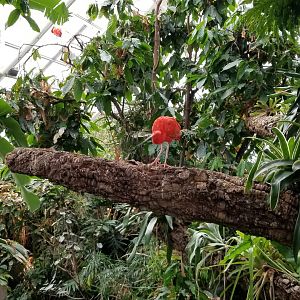
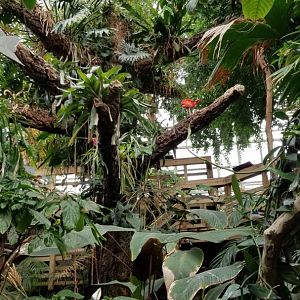
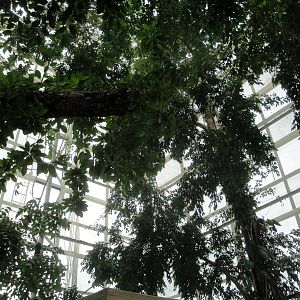
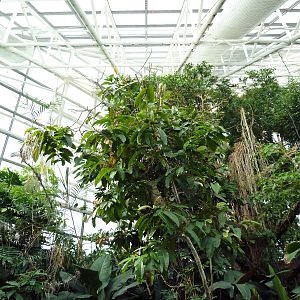
I love how well planted it is with live plants too.

Actually many of these plants look to be species native to the Atlantic rainforest, the ecosystem that these species inhabit here in Brazil, which is briliant !

In one of the pictures there looks like there is a bird, perhaps a scarlet ibis ?
 
Columbus's Red panda exhibit is also pretty good, with adequate climbing structures and some nice lush foliage to pull it together, and while not overly humongous, it crams a lot of essentials into a smaller space.
Credit once again to Moebelle.
full

Notice the red panda perched way up high in the tree, enjoying a snooze.

Great to see these animals being able to use the trees to climb and rest in. :)


Have to thank @twilighter for bringing this one up.

I've used the excellent photos of zoochatters @Maguari and @lintworm in this comment to highlight why I find these enclosures brilliant. I hope they don't mind my use of them to illustrate the points nor find it disrespectful.

Fishing cat enclosure at Tiergarten Nürnberg

I've never seen this enclosure except in the zoochat gallery and on a couple of youtube videos but it is probably the most impressive enclosure I've seen for a small cat species (even slightly better than those at Parc des Felins which take some beating).

When I first saw the pictures of the enclosure my jaw dropped at the space given to this small cat which is so unusual considering that at most zoos small felids play second fiddle to their larger relatives like tigers and lions in terms of enclosure design.

full

This is a large moated "bear pit" / "island enclosure" of the style / kind that were popular in zoos to use for ursids, big cats and primates from the mid- 20th century onwards. This is apparently a former spectacled bear enclosure that was repurposed for the current fishing cat occupants.
full

In my opinion it must have made a pretty mediocre enclosure for bears but is just such a better fit for the fishing cat in everyway. It actually really makes me wonder how many old big cat and bear enclosures at zoos could be reused effectively for small cats and whether other zoos would follow the progressive example that Nürnberg sets in this regard.

The enclosure is very well planted with terrestrial shrubs and aquatic reed plants and furnished with dead trees (artificial ones?) and fallen trees / logs which these cats can choose to hide amongst if they wish. Enrichment seems to be used in the enclosure with hanging scratch posts and feeding devices suspended from branches.
full

This must make seeing them a bit challenging sometimes for visitors but is brilliant for the occupants I imagine (for example, try to spot the fishing cat in the picture above).
full

The moat is evidently utilized well by the cats and according to some of the comments on the photo these aquatic felines even practice natural hunting behaviour and catch live fish. It must be excellent for their wellbeing.
full


All I can say is that these must be the happiest zoo fishing cats in the world.

full

So I found out a bit more about the fishing cats that currently occupy this excellent enclosure.

The male is called Ratu (his name is of Indian origin and means "heavenly ganges river" in Sanskrit) and he originally came from the Berlin zoo.

The female is called Singha (her name is Thai origin and means "lion") and came from France. However, the zoo or facility she came from in France is not specified.

The two have been together in this massive enclosure since 2016 but I don't know if there has been any breeding.

Apparently Ratu is an excellent hunter and even managed to ambush and kill an unfortunate gray heron that had landed in the enclosure.

Here is either Ratu or Singha receiving enrichment in the form of a delicious white rat.

 
Last edited:
Thanks for the comment @TinoPup !

That is an impressive amount of space given for these species indeed, I totally agree..

I love how well planted it is with live plants too.

Actually many of these plants look to be species native to the Atlantic rainforest, the ecosystem that these species inhabit here in Brazil, which is briliant !

In one of the pictures there looks like there is a bird, perhaps a scarlet ibis ?

They've put a lot of work into it over the years!

Yes, that one's a scarlet ibis. Bird species list, from signs:
Silver-beaked tanager
Green-and-gold tanager
Blue-grey tanager
Turquoise tanager
Bay-headed tanager
Golden-bellied grosbeak
Blue-crowned motmot
Sun conure
Screaming piha
Red-capped cardinal
White-tailed trogon
Boat-billed heron
Yellow-crowned Amazon parrot
Blue-headed parrot
Sunbittern

There's two water features:
-an open-top tank with red-bellied piranha, marbled headstander, and bucktooth tetra
-a "stream" near the exit has spot-bellied side-necked turtle

There's also a few land tortoise areas, with yellow-footed tortoise and central american wood turtle.

Plants with signs:
Swiss cheese plant
Yellow alder
Vanilla
Trumpet tree
Cacao
Annatto
 
They've put a lot of work into it over the years!

Yes, that one's a scarlet ibis. Bird species list, from signs:
Silver-beaked tanager
Green-and-gold tanager
Blue-grey tanager
Turquoise tanager
Bay-headed tanager
Golden-bellied grosbeak
Blue-crowned motmot
Sun conure
Screaming piha
Red-capped cardinal
White-tailed trogon
Boat-billed heron
Yellow-crowned Amazon parrot
Blue-headed parrot
Sunbittern

There's two water features:
-an open-top tank with red-bellied piranha, marbled headstander, and bucktooth tetra
-a "stream" near the exit has spot-bellied side-necked turtle

There's also a few land tortoise areas, with yellow-footed tortoise and central american wood turtle.

Plants with signs:
Swiss cheese plant
Yellow alder
Vanilla
Trumpet tree
Cacao
Annatto


Thank you for the further information on this exhibit @TinoPup , much appreciated!

I really like that all of the birds kept in this enclosure are from the Americas and most of them can be found in the Atlantic rainforest where the tamarins and sloth are from.

The turtle and fish are also South or Central American which is really a great attention paid to detail in terms of keeping with the Neotropical theme.

Similarly the plants are all Neotropical which again is excellent consistency with the theme.
 
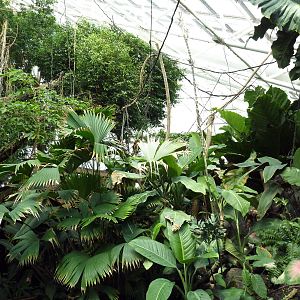
At National Aquarium in Baltimore, the 3 sloths and couple of golden lion tamarins have access to the entire upland rain forest. In this photo from wikipedia, the rainforest is the entire glass pyramid at the top of the right-hand building. View attachment 467512
Similarly, the pyramid on the left is their Australia: Wild Extremes exhibit which is themed as an Australian river gorge and has many tanks with large turtles, many of which are the only of their species outside of Australia, and fish. There are also lots of free flying birds and a colony of 4 or 5 Gray-headed Flying Foxes.
P1000677.JPG
Here's a view of the beginning.
 

Attachments

  • P1000677.JPG
    P1000677.JPG
    236.8 KB · Views: 39
Similarly, the pyramid on the left is their Australia: Wild Extremes exhibit which is themed as an Australian river gorge and has many tanks with large turtles, many of which are the only of their species outside of Australia, and fish. There are also lots of free flying birds and a colony of 4 or 5 Gray-headed Flying Foxes.
View attachment 467516
Here's a view of the beginning.

It looks like a really immersive style exhibit, do you know what turtle species are kept?
 
It looks like a really immersive style exhibit, do you know what turtle species are kept?
There's lots:
Irwin's Turtle (Elseya irwini)
Northern Snapping Turtle (Elseya dentata)
Mary River Turtle (Elusor macrurus)
Pig-nosed Turtle (Carettochelys insculpulata)
Broad-shelled River Turtle (Chelodina expansa)
Northern Red-faced Turtle (Emydura australis)
Yellow-faced Turtle (Emydura tanybaraga)
Red-bellied Short-necked Turtle (Emydura subglobosa)
Red-faced Turtle (Emydura victoriae)
Saw-shelled Turtle (Myuchelys latisternum)
Kimberly Long-neck Turtle (Chelodina wallyarrina)
Krefft's Turtle (Emydura macquarii kreffti)
 
There's lots:
Irwin's Turtle (Elseya irwini)
Northern Snapping Turtle (Elseya dentata)
Mary River Turtle (Elusor macrurus)
Pig-nosed Turtle (Carettochelys insculpulata)
Broad-shelled River Turtle (Chelodina expansa)
Northern Red-faced Turtle (Emydura australis)
Yellow-faced Turtle (Emydura tanybaraga)
Red-bellied Short-necked Turtle (Emydura subglobosa)
Red-faced Turtle (Emydura victoriae)
Saw-shelled Turtle (Myuchelys latisternum)
Kimberly Long-neck Turtle (Chelodina wallyarrina)
Krefft's Turtle (Emydura macquarii kreffti)

That is an impressive list of species, two of them are endangered too.

I recently created this thread about collections with rare / endangered freshwater turtles.

Zoos with the rarest / most endangered freshwater turtles

If you like add this or any other collections you know that have rare and endangered freshwater turtles that are seldom seen in captivity.
 
I've always liked that rainforest. There aren't a lot of animals - you won't see most of the bird species unless you hang out for a long time, and even the keepers often have to spend most of the day looking for the sloths - but most of the plants are real, and as you said, he species all go together. After you leave the forest, there's a small room with a bunch of different dart frog species and one or two snakes, before you go on to the winding shark/ocean fishes.

They no longer have the bats in the Australia part.
 
Now for a small marsupial enclosure which caught my eye on zoochat some time ago.

I've used the excellent photos of zoochatters @Goura, @LaughingDove and @Hix in this comment to highlight why I find these enclosures brilliant. I hope they don't mind my use of them to illustrate the points nor find it disrespectful.

Perth zoo numbat enclosure

This is an enclosure and exhibit design that really caught my attention when I saw it recently because of the way that it showcases and champions an obscure and endangered small mammal species, the numbat.

Perth zoo maintains a number of these animals (seldom kept by zoos in Australia and never outside of the continent), successfully breeds them, has reintroduced them back into the wild and assists in-situ conservation efforts for the numbat. This is all incredibly impressive work for me to read about.
full

The enclosure appears to be large and naturalistic with sandy substrate and leaf litter which is similar to that found in the semi-arid natural habitat of sand dunes and woodland of the numbat. The enclosure is planted with numerous native plant species like eucalyptus, shrubs and spinifex grasses allowing the animal plenty of cover to hide away if it feels stressed.
full

Logs and branches are littered around so that the animal can have enrichment through climbing and fully utilize the enclosure as it would with its natural habitat. I think the dead wood also probably attracts termites and other insects which also must help a great deal in keeping these little animals enriched as they hunt their prey.
full

The viewing area itself is pretty impressive as it is covered / roofed and gives the visitor a panorama of the enclosure so that they can watch the animal as it moves around. The area is even provided with benches so that visitors can sit and watch numbats.
full

A visitor centre / hut is close to the viewing area and enclosure where visitors can go to find out more information pertaining to the species. The permanent exhibition inside is called "Numbats under threat" straight, the point and unpretentious in good Aussie fashion.
full

A screen inside plays a looped film about the numbat and narrates information to the visitor about its ecology, conservation situation in the wild. I imagine that part of the film also discusses the ex-situ / in-situ role of the zoo in its conservation and this therefore highlights the importance of zoos as centres of conservation in the 21st century. A very impressive use of an audio-visual display at a zoo being put to use for raising awareness of species conservation with the general public.
full

The signage around the enclosure is also very impressive and really highlight the importance of this animal and therefore make it iconic and memorable for the public.
full

This is an animal that clearly has been made to have a regional importance in Western Australia and it is a very interesting and admirable conservation marketing strategy.
full

By linking the numbat with the regional cultural identity of Western Australia this therefore hopefully helps people from the area to feel much more engaged with the plight of the species and supportive of the ongoing effort to conserve the numbat.
full

Information signs are impressive in their content giving information about the ecology of the species such as its diet of termites, natural habitat and some unique features of this marsupial. The signs are straight to the point and uncluttered with information, maybe even minimalistic in some ways, but this ultimately is good as it encourages visitors to read them and not be intimidated by scientific sounding words / jargon.
full

The signage boards that display information about the conservation situation of the numbat and the threats it faces from habitat loss and invasive species such as cats and red foxes are very good too and really hit the message home by appealing to the visitors empathy.
full

The role of the zoo in the ex-situ and in-situ work to save the species is constantly reinforced to the visitor through the signage and is conveyed very effectively.
full

There is even some numbat themed artwork like this wooden sculpture of a numbat on display which once again highlights this animal to the public and makes it iconic, quirky and memorable.
full

All in all this is an excellent enclosure and exhibit in both husbandry and conservation terms and in educational value for visitors. I really think that other zoos around the world could learn from Perth zoo a lesson in how to showcase a small endemic and endangered mammal species.

I think what this shows is that small mammals can be made to be just as charismatic by a zoo as a lion or elephant it just entails breaking the boring "ABC" mould and a trick or two in creative and intelligent marketing.
full
 
Last edited:
Back
Top