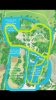
I visited Graslands/Heart of Africa yesterday and I was impressed.
First exhibit is Meerkats (Suricata suricatta), so if you ask me, things can only get better.

Next to meerkats is thwe former pelican aviary housing
Greater Flamingo (Phoenicopterus roseus)
East African Crowned Crane (Balearica regulorum gibbericeps)
Baer's Pocthard (Aythya baeri)
NOT AFRICAN
Cape Teal (Anas capensis)
Purple Swamphen (Porphyrio porphyrio porphyrio)
Red-billed Teal (Anas erythorhyncha)
Ruddy Shelduck (Tadorna ferruginea)
African White-bakced Duck (Thalassornis leuconotus leuconotus)
White-faced Whistling Duck (Dendrocygna viduata)
White-headed Duck (Oxyura leucocephala)
NOT AFRICAN
access to Bembe Kitchen is opposite the flamingo aviary.
Next to flamingos is Tsavo Aviary
Blacksmith Lapwing (Vanellus armatus)
Blue-billed Teal (Spatula hottentota)
Hsmerkop (Scopus umbretta)
Maccoa Duck (Oxyura maccoa)
Bruce's Green Pigeon (Treron waalia)
Purple Glossy Starling (Lamprotornis purpuerus)
Snowy-crowned Robin Chat (Cossypha niveicapilla)
*I think I've missed some birds off this list* Anyway all I saw was a gardener spraying weedkiller. Which makes me wonder if any birds are in there yet.
there is a choice of routes next, recommended is to turn left, but people can also head straight on if they so chose.
Vulture aviary
African White-backed Vulture (Gyps africanus)
White-headed Vulture (Trigonoceps occipitalis)
Hooded Vulture (Necrosyrtes monachus)
There are three nesting platforms in this aviary, but the first two species are one male bird only.
Lovebird aviary
Black-cheeked Lovebird (Agapornis nigrigensis)
Common Waxbill (Estrida astrild)
Yellow-crowned Bishop (Euplectes afra)
opposite Kirk's Dik-Dik (Madoqua kirkii)
Verreaux's Eagle Owl (Ketupa lactea)
Common Warthog (Phacochoerus africanus)
main enclosure
Common Ostrich (Struthio camelus)
Roan Antelope (Hippotragus equinus)
Grevy's Zebra (Equus grevyi)
Rothschild's Giraffe (Giraffa camelopardalis rothschildi)
The zoo now calls the giraffes Nubian Giraffes (G.c.camelopardalis)
now a choice of two routes, left for the dogs , ahead for restaurant Pagona Village. I wnent left and found myself in familiar surroundoings
Yellow Mongoose ((Cynictis penicillata) in old aardvark exhibit
African Wild Dog (Lycaon pictus)
in the tunnel is a new feature. A replica of a research laboratort where some of the zoo's scientific researc is described.
Cape Rock Hyrax (Procavia capensis capensis)
Aardvark (Orycopterus africanus)
Across the paty is the Giant Pangolin Project display, I did not see anyone with a puppet pangolin
The next part is the one I most looked forward to, the small animals house. There was a wait of about 5 minutes to enter.
on the right is the Desert Locust (Schistocera gregaria) exhibit, thgere was a queue of small children waiting patiently to enter the Land Rover for an immersive experience. I didn'tt join it.
On the left had side is a series of small vivaria.
Ethiopian Mountain Adder (Bitis parviocula)
African Bullfrog (Pyxiecephals adsersus)
Keyserling's Wonder Gecko (Teratoscincus keyserlingii)
Cat-eyed Mantis (Heterochaeta orientalis) and Plum Dung Beetle (Chalconotus convexus)
Acacia Rat (Thallomys paedulcus)
next is an open-topped desert habitat
Gorongosa girdled Lizard (Smaug mossambicus)
Pancake Tortoise (Malacochersus tornieri)
Oustalet's Chameleon (Furcifer oustaleti)
NOT AFRICAN
Short-toed Rock Agama (Laudakia vulgaris brachydactyla)
Geyr's Spiny-tailed Lizard (Uromastyx geyri)
the final animals are opposite the desert reptiles, and are mainly rodents
Barbary Striped Grass Mouse (Lemniscomys barbarus)
South African Spiny Mouse (Acomys spinosissimus)
African Pygmy Mouse (Mus minutoides)
Round-eared Elephant Shrew (Macroscelides proboscideus)
Naked Mole Rat (Heterocephalus glaber)
I'm not sure if all of these are hosed together. Mole Rats is a seperate enclosure.
Outside is a small play area Maasai Olympics.
Eastern Black Rhinoceros (Diceros bicornis michaeli)
A feature much appreciated by visitors was a grass picnic lawn. I don't know if this is permanent.
Pagona Village houses a wide choice of food, childrens' play area and Cape Porcupine (Hystrix africaeaustralis), they have a large outisde enclosure, also visible from the upper level path.
In other news a new Blue-throated Piping Guan is in the tropical Realm.
Brown Wood Owls are in the Nissan Hut aviary, their own aviary is being refurbished.
At least one Siamese White-crested Laughing Thrush is in the Vietnamese Pheasant aviary.
What sounded like a hornbill could be heard in the vicinity of the parrot breeding centre.
I failed to see a Warty Frogfish again, I wonder if the zoo still has them as they are not easily missed.
A lot of visitors were heard commenting on how expensive the zoo is.
The zoo fairground has a large carousel, helter skelter and a carousel for smaller children. A new feature is a climbing wall.