@Chlidonias is this the first time this trip you hit all your target species?
You are using an out of date browser. It may not display this or other websites correctly.
You should upgrade or use an alternative browser.
You should upgrade or use an alternative browser.
Chlidonias Goes To Asia, part seven: 2024-2025
- Thread starter Chlidonias
- Start date

I don't know. I guess it depends on scale. I mean, at Bukit Fraser I think my only target was Malayan Laughing Thrush, which I saw. In China, I went to Mangshi specifically for Shan State Langur and Chongzuo was specifically for White-headed Langurs and I saw them, so that was all my targets for those places.@Chlidonias is this the first time this trip you hit all your target species?
Mostly I don't really have a dedicated list of target species, even if I'm talking about this or that "target species". There are the ones I really want to see, the ones I'd like to see, the ones that I know are there and if I see them that's great. Sometimes my "target species" are ones I know are pretty much impossible, sometimes they are easy-peasy ones.
The problem with targets is that it feels worse when you can't find them...

SeaOtterHQ
Well-Known Member
The Okinawa Churaumi Aquarium was easily the best aquarium I've been to in Japan. It has excellent signage, with lots of information about the scientific research the aquarium does. This isn't just a "look at the pretty fish" aquarium.
There is a Whale Shark here - the third Aquarium I've been to with this species. It is a big specimen which has been here for thirty years! The tank it is in has, according to the sign, over seventy species of fish in it, including two species each of manta and devilfish. Even though I had visited the shark-filled Aquarium at Oarai in Honshu which had almost forty species on display, there were still a number of sharks here which were new for me - Blacktip Shark, Silvertip Shark, Sandbar Shark, Silky Shark, and Spot-tailed Shark.
Kuroshio Sea tank
There is a great display of little tanks for deepsea invertebrates, and another for interesting little inhabitants of coral reefs which included the inch-long Pigmy Squid. At the end is an exhibit dedicated to endemic and invasive species of Okinawa.
Some of the deepsea invertebrates. That spiky thing in the middle is a worm! The thing on the right is a coral!
And then there is this, not a snake but a sea cucumber. It is, cleverly enough, called a Snake Sea Cucumber.
Interestingly, the pools for manatees, sea turtles, Bottlenose Dolphins and False Killer Whales are all outside in the public park so anybody can see all of those for free. According to their signage they breed several species of sea turtles every year and release the babies. They had five or so of the False Killer Whales, the first I've ever seen. They are such peculiar-looking beasts!
After almost four hours at the aquarium I looked at my watch and it was 12.15pm. The bus, I thought, was at 12.30 so I better get going. Just as I reached the short path to the bus stop, a bus went past. It looked like a tour bus rather than passenger bus. But when I looked at the timetable at the stop it said 12.23. It was now 12.25. Just missed it! It was over an hour to the next one. I was about to go back to the aquarium - there were food stands in the park there - but then I considered that the road was lined up with cars for the aquarium so, despite the punctuality of Japan's public transport systems, maybe the bus was just held up. I waited a few minutes and sure enough along it came.
The Okinawa Churaumi Aquarium is definitely a facility that would be discussed a lot more among zoonerds if it weren't in such a remote location. It boasts a wide array of rare species (spanning the gamut from marine mammals to endemic herps to deep sea invertebrates), cutting-edge research, and solid exhibits.
Even zoonerds who aren't planning a trip to Japan should take note of it since Okinawa Churaumi shares its research and breeding successes with major Western facilities such as Monterey Bay, Shedd, Georgia Aquarium, and Oceanografic Valencia. Our elasmobranch nerds such as @Local_Shark would also be interested in the collection. I'm fairly certain it supplied Oceanografic with bowmouth guitarfish and I believe Okinawa has succeeded at breeding two species of Mobula - the devil fish (Mobula mobular) and the reef manta (Mobula alfredi). It would be great to see these endangered species at more Western zoos/aquaria.
I've enjoyed your thread thus far and plan on writing up some more comments once I have the time, especially regarding your trip to Hokkaido!
ISHIGAKI AND IRIOMOTE:
The southernmost islands I would be visiting in Japan were Ishigaki and Iriomote, which are very close to Taiwan. Originally I was going to end my Japan trip here, flying to Taiwan from Ishigaki, but that's not possible any more. You can still get flights on that route - there were a lot going from the Ishigaki airport when I was there - but they aren't direct, they all go via Okinawa, so I had just got two separate flights instead (Ishigaki to Okinawa and then Okinawa to Taiwan) so that I had some extra days in between to visit the Okinawa Zoo and anything else.
There used to be a ferry between Ishigaki and Taiwan as well, but not any more.
There also used to be ferries between Ishigaki and Okinawa but those don't run any more either, hence the flying.
Ishigaki and Iriomote are both small islands and have only one endemic bird, the Iriomote Tit which is a recent split from the Varied Tit and which occurs on both islands. There are quite a few endemic ectotherms, including lizards and a box turtle, which are either restricted to these two islands or to the general Yayaema group.
The "main" animal the islands are known for is the Iriomote Cat, found only on that one small island. I find it really odd, actually, that Japan doesn't have any native wild cats on the main islands. There is the Iriomote Cat on this island in the very far south, and the Tsushima Leopard Cat on a small island which lies close to South Korea, but that's it. Japan has most of the other "mainland" mammals - black and brown bears, foxes and raccoon dogs, badgers and martens and weasels, there used to be otters and even wolves (both now extinct), then there are the deer and pigs and squirrels and so forth. But no cats. It's weird.
I flew into Ishigaki in the late afternoon and caught the bus to the main town, which is very close. There are several bus routes around the island but the airport bus is the only regular one. I saw a feral Peacock on the way - these and Ring-necked Pheasants are common all over the island, with their calls being near-constant in any place that's not a town.
I had only booked two nights on Ishigaki and had left Iriomote open because I had read that the ferries between the two islands get cancelled frequently due to weather, and I didn't want to book a hotel there in advance (i.e. without seeing what the weather was doing) and then not be able to make it. This proved to be a big error of judgement.
The Hotel Peace Island was a bit awkward to find at first because the English name wasn't on the front. I walked past without realising that it was a hotel, turned back, looked at the map on my phone, went round the back (where the map pin was) and went into a different hotel where they pointed me in the right direction. It's pretty run down but perfectly adequate, there's a FamilyMart right next door, and it's a short walk from the bus and ferry terminals.
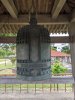
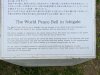
Ishigaki is the self-titled Peace Island, hence the hotel name. There's a park nearby called Shinei Park which has the World Peace Bell on display (I'll put a photo of it and the sign at the end of this post).
There are lots of white tourists everywhere here, on both islands, far more than I was expecting.
In the morning after the excellent breakfast which was included in the room rate, I walked to the Hiratabaru rice fields half an hour up the road on the west edge of town. This is a fairly small, but not too small, area of rice fields (obviously, given the name) which were a mix of dry and flooded, bare and planted, criss-crossed with paths, and with scrubby areas surrounding them. The Shinkawa River, which is more of a creek, runs past the fields and just a couple of blocks south meets the sea.
When I arrived there were several photographers hovering around the bridge over that river, and it turned out there was a Collared Kingfisher somewhere around, a rare species for Japan. I didn't see it, but I've seen them lots of times in other countries.
I did see thirty other bird species, eight of which were new for the year and the trip (but not for my life list - in terms of southeast Asian birds they were all very common species). There were quite a lot of waders, including Wood, Marsh, Sharp-tailed, and Common Sandpipers, Little Ringed Plovers and Common Snipe. I was hoping for Watercock and Painted Snipe, which had both been recently reported on eBird, but none were to be seen. The Painted Snipe in particular kept getting reported on lists either side of days I was visiting the rice fields, but not on my days, which was annoying because that one would have been a lifer.

Great Egrets and Grey Herons at the Hiratabaru rice fields

Black-winged Stilts at the Hiratabaru rice fields
I then spent the afternoon trying to work out a schedule for Iriomote - the problem was that literally nothing on the booking site was available for the Saturday night, which was right in the middle of my stay. Also everything was very expensive. Some places were priced at over NZ$1000 per night! I had to settle for just two nights on the island, at the Moriya Iriomote Hotel which was roughly NZ$115 per night (including breakfast) - going across on the Thursday, staying that night and Friday night, and coming back to Ishigaki on the Saturday for the three nights before I flew back to Okinawa. So I basically only had one full day on Iriomote, and the part-days either side. Chances of seeing Iriomote Cat were slim!
Then I had the problem of trying to find somewhere to book on Ishigaki n my return there. There were more hotels overall, but most places were still fully-booked on that Saturday night. I think local tourists must fly down for weekend holidays from Okinawa or somewhere. The hotel I was currently in was about NZ$80 for the two nights I'd booked in advance - but when I checked that for the return to Ishigaki the price was now NZ$187 per night! I ended up booking the Guesthouse Churayado for about NZ$84 per night, where I was in a bunk bed.
The following morning I made an early visit back to the rice fields before breakfast. I didn't see as many birds but there were some different ones, like a Chinese Pond Heron and a couple of Temminck's Stints. Then I was off to Iriomote.
There are lots of ferries each day going to Ohara in the south of Iriomote but only four to Uehara in the north, which is where my hotel was. The first one was at 8am and the next at 11am, so I caught the 11am one. Tickets can be just bought on the day. Ohara would have been a better place to stay I think, being in the middle of the bus route down the east coast and also closer to some good birding locations.
The ferry takes an hour, and the hotel was about five minutes walk from the terminal - Uehara isn't exactly a big place! However, as usual, they were sticklers for the book-in time (which was 3pm). I left my pack in their office and went off for a walk up the road to see what birds I could see. First birds were a pair of Ryukyu Green Pigeons on a powerline right outside the hotel. I tried for some photos but they were just silhouettes.
The forecast today was for rain. It had hammered down right as the ferry docked at Uehara but that only lasted a few minutes luckily, so I could walk to the hotel without getting wet. While I was walking up the road now, it was spitting and drizzling a bit. There were a few Brown-eared Bulbuls about (a different - and decidedly browner - subspecies to that on the islands further north), lots of White-breasted Waterhens but very skittish, and I saw a Greater Sand Plover on the beach.
 Brown-eared Bulbul (this one was photographed on Ishigaki)
I reached some pineapple fields about a kilometre to the south of Uehara, and then the rain suddenly came in with a vengeance, thunder and lightning, the road pretty much instantly flooding. My umbrella couldn't do much in the face of the rain's ferocity and I ended up soaked. I tried waiting it out under some trees, which I think just made me wetter, but eventually decided to walk back. Just as I reached the village again, the rain lessened dramatically. I still had an hour before check-in, so I waited in the ferry terminal. At 3pm I went back to the hotel to check-in, and literally right when I got there the rain suddenly stopped completely and the sun came out!
Something I had realised when I arrived was that there wasn't really anywhere to eat in Uehara. The hotel booking included breakfast - which turned out to just be a couple of little filled rolls which they give you the day before in a takeaway box - but there aren't really any restaurants. I saw a couple of cafes and that seemed to be it. So I went to the single supermarket here and bought a bunch of noodles and such.
Because the sun was now out the green pigeons on the powerlines were actually green, but I didn't have my camera because I was just rushing to the shop before the rain came back. Outside the ferry terminal there was a Crested Serpent-Eagle perched on a powerpole, but I didn't have my camera. When I got back from the shop there was a Yellow-margined Box Turtle on the side of the road, but I didn't have my camera - at least for that one I could grab a couple of quick snaps with my phone before he scampered back into the undergrowth (and while scampering may not sound very turtley, he was indeed very quick on his feet!).
Back at my room, I dumped my bag of food on the floor inside the door, grabbed my camera and went back. The green pigeons I'd seen first were gone, but the eagle was still there sunning itself. Photos taken.

There was another green pigeon which I'd seen opposite the supermarket and that one was still there. Photos taken. Back round by the hotel again the first green pigeons were back. Photos taken.

Even the box turtle had come back out to sun itself. Photos taken.

Then the rain came back.
Next morning the rain had disappeared. There is only one bus route on the island, going from Shirahama on the west coast up and then down the east coast to Toyohara, and it only runs four times a day. I took the first bus south to Otomi at 9am because there was an eBird pin near there (for the cross-island trailhead) which had Iriomote Tit and Ryukyu Flycatcher listed. A juvenile serpent-eagle was seen from the bus.
From the bus stop in Otomi it was only a twenty minute walk north to the junction leading to the trailhead. A Purple Heron was seen in the fields along the way. Based on the location of the eBird pin I was expecting a bit of a walk from this junction but just a minute or two along the road was a group of shrines and graves and then the trail started into the forest. I thought the pin must be misplaced because this seemed to be the trailhead, but in fact after walking for a bit through the forest I came to a signboard which marked the "actual" start of the trail.
It was very hot - I mean, the temperature was around 25C but the humidity is so high that it feels so much hotter. I remembered why I don't like being in the tropics!
The sun was out, and sunbathing lizards kept darting off from the side of the trail. Even though they were constant I only saw one, a huge copper-orange skink which ran across the trail, with all the others simply being known by the sound and movement of the trailside vegetation. Later in the day I found a name for the skink I saw, the Kishinoue's Giant Skink Plestiodon kishinouyei, endemic to the southern Ryukyu Islands.

Painting of a Kishinoue's Giant Skink at the Iriomote Wildlife Conservation Center.
Twice I saw Iriomote Wild Pigs as well, but only as brief glimpses as they rushed off
into the forest.

Likewise, photographed at the Iriomote Wildlife Conservation Center.
What I didn't see were any Iriomote Tits or Ryukyu Flycatchers. Both species are also found on Ishigaki (and the flycatcher further north as well), but I was hoping to see them here so I wouldn't have to worry about not finding them on Ishigaki when I returned there! Also it's better to see an Iriomote Tit on Iriomote itself, given that is the island it is named after.
I wanted to visit the Iriomote Wildlife Conservation Center, which was on the bus route back to Uehara, so after my allotted time was up I returned to the bus stop. I had to catch the second-to-last bus going north (at 1.27pm) so that I could still catch the last bus back to Uehara afterwards (which would be at 4.01pm at the Wildlife Conservation Center).
The centre was really good. It's free and has great displays of the local wildlife, with brilliant habitat paintings covering the walls, and mounted and preserved specimens of native species. It even had some live animals (Black Weevils and a Cane Toad).

The specimens of most interest in here are the Iriomote Cats, of which they have a number resulting from road-killed animals. With such a small population on such a small island each road-killed cat is a tragedy. During the covid years when nobody was coming to the island there were zero cats killed on the roads, but as soon as tourists came back cats starting getting hit by cars again. This year zero cats had been killed so far, which is good news.


One of the Iriomote Cat specimens here is an animal which was kept at the centre from 1996 to 2011. He was never on public display but it's a shame I was a decade too late to try and see him alive. The centre still receives injured cats periodically, which are released again after rehabilitation.

I went out in the evening around the fields behind Uehara. I saw a Ryukyu Flying Fox and a lot of frogs. No cats, unsurprisingly. There seemed no reason why the cats shouldn't be around the village area, especially with the numbers of frogs in the rice fields which are one of the cats' main prey items. And in fact the next morning on the bus just north of Uehara I saw one of the mobile cat-crossing signs which are placed where cats have been reported to warn drivers to be careful. I wish I'd seen that earlier and I'd have gone up that way instead during the night!
If a person had a car I think there's actually quite a high chance of seeing an Iriomote Cat, especially if you have the time to spend multiple nights driving around the island. On foot the probability is much less because you can't travel far and there's no bus services at night to get back if at a distance. But I think with a good stretch of time you'd still have a better than average chance. The Iriomote Wildlife Conservation Center has a map with pins for all the reported sightings of cats and there are mobile road-signs marking reported crossing points, so those would be good places to concentrate on, although the pins are marked quite generally rather than at very specific points, and obviously a cat having been seen at one point on a road doesn't mean it will cross at that point any time after that. Just as a note of interest, there were pins on the main road at the centre's entrance road, and I saw cat faeces right there beside the road in two stages of age (I don't know how old but I'm guessing one was within the last few days and the other maybe the previous week just based on how sun-dried they looked).
I was going back to Ishigaki the next afternoon. In the morning I caught the bus around to Sonai on the west coast where an eBird pin had the Iriomote Tit and Ryukyu Flycatcher located. The bus was at 9.02am and took 23 minutes, so a better option than going south to Otomi which took almost an hour. I'd have about three hours to look for the birds because I had to catch the 12.55 bus back in order to catch the 2.30pm ferry. I didn't know exactly where to go in Sonai but I had looked on a Google map and seen a road leading into what looked like forest and labelled as a park, so that was my plan.
This road was just a few minutes walk from the Sonai bus stop, and led up into some good-looking mixed broadleaf and pine forest.
There were lots of Brown-eared Bulbuls and Large-billed Crows here. I've already mentioned how the bulbuls are very different in appearance to the ones further north in "mainland" Japan, but the crows also look noticeably different - much smaller and slimmer. Just like on Okinawa the crows are very prominent inside the forest. Every time I stopped, one or two would fly up and perch nearby. I'm not sure if they were expecting food, or were just making sure I didn't see any tits.

It's not as obvious in a photo but in real life the Large-billed Crows of the southern islands are much smaller and slimmer than those of the "mainland" islands of Japan in the north. This one was photographed on Ishigaki.
The paved road through the forest turned into a dirt trail after a while, which I followed to the end at a power station on top of the hill. I saw another Kishinoue's Giant Skink along the way and, pleasingly, a Sakishima Green Lizard which is an endangered endemic and of which I got some photos.

Apart for the bulbuls and crows there were precious few birds seen. As at Otomi the day before, the big black and red swallowtail butterflies which are common in the forest kept tricking me into thinking they were small birds initially as they flew between the branches.
It took almost three hours - which was almost my entire time-frame before I had to catch the bus back - but I finally saw a pair of Iriomote Tits. It was very brief, with the birds flying across the road at canopy height into a pine, flitting from branch to branch, and then disappearing. They were actually very different-looking (and, seemingly, different-acting from what I briefly saw) than the Varied Tits so I'm not surprised they have been split as a full species.
I've really been getting some disappointing looks at life-birds recently, with this and the Okinawa Rail and the Copper Pheasant at Izumi! But at least I'm seeing them, and honestly the bad-view birds are in the minority of the life-birds I see.
The southernmost islands I would be visiting in Japan were Ishigaki and Iriomote, which are very close to Taiwan. Originally I was going to end my Japan trip here, flying to Taiwan from Ishigaki, but that's not possible any more. You can still get flights on that route - there were a lot going from the Ishigaki airport when I was there - but they aren't direct, they all go via Okinawa, so I had just got two separate flights instead (Ishigaki to Okinawa and then Okinawa to Taiwan) so that I had some extra days in between to visit the Okinawa Zoo and anything else.
There used to be a ferry between Ishigaki and Taiwan as well, but not any more.
There also used to be ferries between Ishigaki and Okinawa but those don't run any more either, hence the flying.
Ishigaki and Iriomote are both small islands and have only one endemic bird, the Iriomote Tit which is a recent split from the Varied Tit and which occurs on both islands. There are quite a few endemic ectotherms, including lizards and a box turtle, which are either restricted to these two islands or to the general Yayaema group.
The "main" animal the islands are known for is the Iriomote Cat, found only on that one small island. I find it really odd, actually, that Japan doesn't have any native wild cats on the main islands. There is the Iriomote Cat on this island in the very far south, and the Tsushima Leopard Cat on a small island which lies close to South Korea, but that's it. Japan has most of the other "mainland" mammals - black and brown bears, foxes and raccoon dogs, badgers and martens and weasels, there used to be otters and even wolves (both now extinct), then there are the deer and pigs and squirrels and so forth. But no cats. It's weird.
I flew into Ishigaki in the late afternoon and caught the bus to the main town, which is very close. There are several bus routes around the island but the airport bus is the only regular one. I saw a feral Peacock on the way - these and Ring-necked Pheasants are common all over the island, with their calls being near-constant in any place that's not a town.
I had only booked two nights on Ishigaki and had left Iriomote open because I had read that the ferries between the two islands get cancelled frequently due to weather, and I didn't want to book a hotel there in advance (i.e. without seeing what the weather was doing) and then not be able to make it. This proved to be a big error of judgement.
The Hotel Peace Island was a bit awkward to find at first because the English name wasn't on the front. I walked past without realising that it was a hotel, turned back, looked at the map on my phone, went round the back (where the map pin was) and went into a different hotel where they pointed me in the right direction. It's pretty run down but perfectly adequate, there's a FamilyMart right next door, and it's a short walk from the bus and ferry terminals.
Ishigaki is the self-titled Peace Island, hence the hotel name. There's a park nearby called Shinei Park which has the World Peace Bell on display (I'll put a photo of it and the sign at the end of this post).
There are lots of white tourists everywhere here, on both islands, far more than I was expecting.
In the morning after the excellent breakfast which was included in the room rate, I walked to the Hiratabaru rice fields half an hour up the road on the west edge of town. This is a fairly small, but not too small, area of rice fields (obviously, given the name) which were a mix of dry and flooded, bare and planted, criss-crossed with paths, and with scrubby areas surrounding them. The Shinkawa River, which is more of a creek, runs past the fields and just a couple of blocks south meets the sea.
When I arrived there were several photographers hovering around the bridge over that river, and it turned out there was a Collared Kingfisher somewhere around, a rare species for Japan. I didn't see it, but I've seen them lots of times in other countries.
I did see thirty other bird species, eight of which were new for the year and the trip (but not for my life list - in terms of southeast Asian birds they were all very common species). There were quite a lot of waders, including Wood, Marsh, Sharp-tailed, and Common Sandpipers, Little Ringed Plovers and Common Snipe. I was hoping for Watercock and Painted Snipe, which had both been recently reported on eBird, but none were to be seen. The Painted Snipe in particular kept getting reported on lists either side of days I was visiting the rice fields, but not on my days, which was annoying because that one would have been a lifer.
Great Egrets and Grey Herons at the Hiratabaru rice fields
Black-winged Stilts at the Hiratabaru rice fields
I then spent the afternoon trying to work out a schedule for Iriomote - the problem was that literally nothing on the booking site was available for the Saturday night, which was right in the middle of my stay. Also everything was very expensive. Some places were priced at over NZ$1000 per night! I had to settle for just two nights on the island, at the Moriya Iriomote Hotel which was roughly NZ$115 per night (including breakfast) - going across on the Thursday, staying that night and Friday night, and coming back to Ishigaki on the Saturday for the three nights before I flew back to Okinawa. So I basically only had one full day on Iriomote, and the part-days either side. Chances of seeing Iriomote Cat were slim!
Then I had the problem of trying to find somewhere to book on Ishigaki n my return there. There were more hotels overall, but most places were still fully-booked on that Saturday night. I think local tourists must fly down for weekend holidays from Okinawa or somewhere. The hotel I was currently in was about NZ$80 for the two nights I'd booked in advance - but when I checked that for the return to Ishigaki the price was now NZ$187 per night! I ended up booking the Guesthouse Churayado for about NZ$84 per night, where I was in a bunk bed.
The following morning I made an early visit back to the rice fields before breakfast. I didn't see as many birds but there were some different ones, like a Chinese Pond Heron and a couple of Temminck's Stints. Then I was off to Iriomote.
There are lots of ferries each day going to Ohara in the south of Iriomote but only four to Uehara in the north, which is where my hotel was. The first one was at 8am and the next at 11am, so I caught the 11am one. Tickets can be just bought on the day. Ohara would have been a better place to stay I think, being in the middle of the bus route down the east coast and also closer to some good birding locations.
The ferry takes an hour, and the hotel was about five minutes walk from the terminal - Uehara isn't exactly a big place! However, as usual, they were sticklers for the book-in time (which was 3pm). I left my pack in their office and went off for a walk up the road to see what birds I could see. First birds were a pair of Ryukyu Green Pigeons on a powerline right outside the hotel. I tried for some photos but they were just silhouettes.
The forecast today was for rain. It had hammered down right as the ferry docked at Uehara but that only lasted a few minutes luckily, so I could walk to the hotel without getting wet. While I was walking up the road now, it was spitting and drizzling a bit. There were a few Brown-eared Bulbuls about (a different - and decidedly browner - subspecies to that on the islands further north), lots of White-breasted Waterhens but very skittish, and I saw a Greater Sand Plover on the beach.
I reached some pineapple fields about a kilometre to the south of Uehara, and then the rain suddenly came in with a vengeance, thunder and lightning, the road pretty much instantly flooding. My umbrella couldn't do much in the face of the rain's ferocity and I ended up soaked. I tried waiting it out under some trees, which I think just made me wetter, but eventually decided to walk back. Just as I reached the village again, the rain lessened dramatically. I still had an hour before check-in, so I waited in the ferry terminal. At 3pm I went back to the hotel to check-in, and literally right when I got there the rain suddenly stopped completely and the sun came out!
Something I had realised when I arrived was that there wasn't really anywhere to eat in Uehara. The hotel booking included breakfast - which turned out to just be a couple of little filled rolls which they give you the day before in a takeaway box - but there aren't really any restaurants. I saw a couple of cafes and that seemed to be it. So I went to the single supermarket here and bought a bunch of noodles and such.
Because the sun was now out the green pigeons on the powerlines were actually green, but I didn't have my camera because I was just rushing to the shop before the rain came back. Outside the ferry terminal there was a Crested Serpent-Eagle perched on a powerpole, but I didn't have my camera. When I got back from the shop there was a Yellow-margined Box Turtle on the side of the road, but I didn't have my camera - at least for that one I could grab a couple of quick snaps with my phone before he scampered back into the undergrowth (and while scampering may not sound very turtley, he was indeed very quick on his feet!).
Back at my room, I dumped my bag of food on the floor inside the door, grabbed my camera and went back. The green pigeons I'd seen first were gone, but the eagle was still there sunning itself. Photos taken.
There was another green pigeon which I'd seen opposite the supermarket and that one was still there. Photos taken. Back round by the hotel again the first green pigeons were back. Photos taken.
Even the box turtle had come back out to sun itself. Photos taken.
Then the rain came back.
Next morning the rain had disappeared. There is only one bus route on the island, going from Shirahama on the west coast up and then down the east coast to Toyohara, and it only runs four times a day. I took the first bus south to Otomi at 9am because there was an eBird pin near there (for the cross-island trailhead) which had Iriomote Tit and Ryukyu Flycatcher listed. A juvenile serpent-eagle was seen from the bus.
From the bus stop in Otomi it was only a twenty minute walk north to the junction leading to the trailhead. A Purple Heron was seen in the fields along the way. Based on the location of the eBird pin I was expecting a bit of a walk from this junction but just a minute or two along the road was a group of shrines and graves and then the trail started into the forest. I thought the pin must be misplaced because this seemed to be the trailhead, but in fact after walking for a bit through the forest I came to a signboard which marked the "actual" start of the trail.
It was very hot - I mean, the temperature was around 25C but the humidity is so high that it feels so much hotter. I remembered why I don't like being in the tropics!
The sun was out, and sunbathing lizards kept darting off from the side of the trail. Even though they were constant I only saw one, a huge copper-orange skink which ran across the trail, with all the others simply being known by the sound and movement of the trailside vegetation. Later in the day I found a name for the skink I saw, the Kishinoue's Giant Skink Plestiodon kishinouyei, endemic to the southern Ryukyu Islands.
Painting of a Kishinoue's Giant Skink at the Iriomote Wildlife Conservation Center.
Twice I saw Iriomote Wild Pigs as well, but only as brief glimpses as they rushed off
into the forest.
Likewise, photographed at the Iriomote Wildlife Conservation Center.
What I didn't see were any Iriomote Tits or Ryukyu Flycatchers. Both species are also found on Ishigaki (and the flycatcher further north as well), but I was hoping to see them here so I wouldn't have to worry about not finding them on Ishigaki when I returned there! Also it's better to see an Iriomote Tit on Iriomote itself, given that is the island it is named after.
I wanted to visit the Iriomote Wildlife Conservation Center, which was on the bus route back to Uehara, so after my allotted time was up I returned to the bus stop. I had to catch the second-to-last bus going north (at 1.27pm) so that I could still catch the last bus back to Uehara afterwards (which would be at 4.01pm at the Wildlife Conservation Center).
The centre was really good. It's free and has great displays of the local wildlife, with brilliant habitat paintings covering the walls, and mounted and preserved specimens of native species. It even had some live animals (Black Weevils and a Cane Toad).
The specimens of most interest in here are the Iriomote Cats, of which they have a number resulting from road-killed animals. With such a small population on such a small island each road-killed cat is a tragedy. During the covid years when nobody was coming to the island there were zero cats killed on the roads, but as soon as tourists came back cats starting getting hit by cars again. This year zero cats had been killed so far, which is good news.
One of the Iriomote Cat specimens here is an animal which was kept at the centre from 1996 to 2011. He was never on public display but it's a shame I was a decade too late to try and see him alive. The centre still receives injured cats periodically, which are released again after rehabilitation.
I went out in the evening around the fields behind Uehara. I saw a Ryukyu Flying Fox and a lot of frogs. No cats, unsurprisingly. There seemed no reason why the cats shouldn't be around the village area, especially with the numbers of frogs in the rice fields which are one of the cats' main prey items. And in fact the next morning on the bus just north of Uehara I saw one of the mobile cat-crossing signs which are placed where cats have been reported to warn drivers to be careful. I wish I'd seen that earlier and I'd have gone up that way instead during the night!
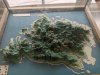
If a person had a car I think there's actually quite a high chance of seeing an Iriomote Cat, especially if you have the time to spend multiple nights driving around the island. On foot the probability is much less because you can't travel far and there's no bus services at night to get back if at a distance. But I think with a good stretch of time you'd still have a better than average chance. The Iriomote Wildlife Conservation Center has a map with pins for all the reported sightings of cats and there are mobile road-signs marking reported crossing points, so those would be good places to concentrate on, although the pins are marked quite generally rather than at very specific points, and obviously a cat having been seen at one point on a road doesn't mean it will cross at that point any time after that. Just as a note of interest, there were pins on the main road at the centre's entrance road, and I saw cat faeces right there beside the road in two stages of age (I don't know how old but I'm guessing one was within the last few days and the other maybe the previous week just based on how sun-dried they looked).
I was going back to Ishigaki the next afternoon. In the morning I caught the bus around to Sonai on the west coast where an eBird pin had the Iriomote Tit and Ryukyu Flycatcher located. The bus was at 9.02am and took 23 minutes, so a better option than going south to Otomi which took almost an hour. I'd have about three hours to look for the birds because I had to catch the 12.55 bus back in order to catch the 2.30pm ferry. I didn't know exactly where to go in Sonai but I had looked on a Google map and seen a road leading into what looked like forest and labelled as a park, so that was my plan.
This road was just a few minutes walk from the Sonai bus stop, and led up into some good-looking mixed broadleaf and pine forest.
There were lots of Brown-eared Bulbuls and Large-billed Crows here. I've already mentioned how the bulbuls are very different in appearance to the ones further north in "mainland" Japan, but the crows also look noticeably different - much smaller and slimmer. Just like on Okinawa the crows are very prominent inside the forest. Every time I stopped, one or two would fly up and perch nearby. I'm not sure if they were expecting food, or were just making sure I didn't see any tits.
It's not as obvious in a photo but in real life the Large-billed Crows of the southern islands are much smaller and slimmer than those of the "mainland" islands of Japan in the north. This one was photographed on Ishigaki.
The paved road through the forest turned into a dirt trail after a while, which I followed to the end at a power station on top of the hill. I saw another Kishinoue's Giant Skink along the way and, pleasingly, a Sakishima Green Lizard which is an endangered endemic and of which I got some photos.
Apart for the bulbuls and crows there were precious few birds seen. As at Otomi the day before, the big black and red swallowtail butterflies which are common in the forest kept tricking me into thinking they were small birds initially as they flew between the branches.
It took almost three hours - which was almost my entire time-frame before I had to catch the bus back - but I finally saw a pair of Iriomote Tits. It was very brief, with the birds flying across the road at canopy height into a pine, flitting from branch to branch, and then disappearing. They were actually very different-looking (and, seemingly, different-acting from what I briefly saw) than the Varied Tits so I'm not surprised they have been split as a full species.
I've really been getting some disappointing looks at life-birds recently, with this and the Okinawa Rail and the Copper Pheasant at Izumi! But at least I'm seeing them, and honestly the bad-view birds are in the minority of the life-birds I see.
Last edited:






ISHIGAKI again
Back in Ishigaki I found my hostel (eventually!) and then got on a bus to the Furusutobaru castle ruins, which had some recent eBird lists which included Malayan Night Herons. Furusutobaru is only 18 minutes ride north on the airport bus, getting off at the Ohama bus stop and then walking for a further ten minutes or so.
There is a bus pass for Ishigaki which costs 1000 Yen for one day, or 2000 Yen for five days. This is very good value - the bus to the airport (for my final day) was 550 Yen, and all the other bus rides I took were 250 Yen each way, so I saved a bit over the next three days. When I left I gave the pass to someone arriving at the airport because it still had two days of use on it.
On arrival at Furusutobaru there is a narrow road leading along a canal overhung with dense trees on the other side. I saw a Black-crowned Night Heron in the canal. The road passes under a huge fig tree above a shrine, and then leads on to a car parking area where there is a sign about the ruins and a small cave entrance. I stopped to have a look at the sign, looked to my left, and there was a Malayan Night Heron sitting on the edge of the lawn! Photos weren't sharp because it was the end of the day and the heron was under the trees.

The next morning it was raining heavily so I stayed inside until that passed, and around 10am went back to the Hiratabaru rice fields on the edge of town. I first swung by a little park near the ferry terminal called Shinei Park, which consists of a central lawn with a ring of trees around it, because there was an eBird listing for Asian Glossy Starlings there. However today was a Sunday and the park was the hub for a triathlon, so it was extremely busy. I didn't realise until I got there, but Shinei Park turned out to be the same park I had passed a few days before which had the World Peace Bell.
The weather was nice for me today - it was overcast and breezy so was cooler than the other days.
There wasn't anything new from the rice fields, so I walked down to the mouth of the Shinkawa River where it was low tide. There were a few waders scuttling about - Kentish and Greater Sand Plovers, Common Sandpipers, a Common Greenshank, and a Grey-tailed Tattler - the first and last being new for the year list.
In the afternoon I returned to the Furusutobaru castle ruins. No night herons were seen - there was a family with several small running-around children (although yesterday a small running-around dog hadn't bothered the heron). I spent time wandering around the roads through the surrounding fields. In the evening I tried to look for Ryukyu Scops Owls which I heard but did not see, as usual.
These two visits I had also been looking out for roosting flying foxes which I figured should be here, but I hadn't seen any. This evening though I heard bats squealing as I passed under the big fig tree above the shrine. I looked up and found a bat colony - they had been silent every other time I had passed by during daylight hours. They really are noticeably smaller than the Okinawa subspecies.

For my last day on Ishigaki I had selected Banna Park as my birding destination. It was a location for Ryukyu Flycatcher on eBird, and is only 13 minutes north of town by bus. Three buses go north past Banna Park each day, but only two come back. This is common in smaller places around Japan. There might be three or four buses in one direction, and only one or two coming back. Is there some sort of bus demon to which they need to sacrifice a couple of buses each day?
The park is really big and has areas which are forest and areas which are landscaped. I took the main road which leads up and over a steep hill through forest. Part way along, when coming down the other side, is an egg-shaped bird-watching tower which has photo signs for various birds found there like the Ryukyu Flycatcher. As usual, 99% of the birds I saw were Large-billed Crows, Brown-eared Bulbuls, and Japanese White-eyes. No flycatchers seen.

Japanese White-eye
When I got to the other side at the North Gate I decided to walk along a bit further to the Ishigaki Dam. As I was about to go down that path I spotted a little bird on a distant tree. Not a bulbul, maybe a Blue Rock Thrush? It turned out to be a Waxwing! Or, rather, four Waxwings! My first ones ever. I couldn't tell which species from where I was - you distinguish them mainly by the colour of the waxy tips on their wings and tail - so walked across the lawn hoping they would stay put. They not only stayed put, but I managed to get photos which I thought would be silhouettes (they were all at the top of the tree against the sky) but because of the sun shining on them they turned out okay. Good decision to come here today! I might not have seen the Ryukyu Flycatcher but it's "just a flycatcher" whereas Waxwings are in their own family and I've never seen one before.

Japanese Waxwing, distinguished by the red tail tips
There was nothing at the dam except a few Spot-billed Ducks, Little Grebes, and Common Moorhens.
I walked back to my start point by going around the base of the hill rather than over the top - it's about the same distance but flat instead of upwards. I saw a japalure (tree lizard) and got photos of one of the feral peacocks which are common on the island.


Ishigaki Tree Lizard
Back in town, I dropped by Shinei Park again but still no Glossy Starlings there. Then I caught the bus out to Furusutobaru for the third time. I wanted to try and get some photos of the flying foxes by daylight. I had some taken with flash the night before, but day photos are more pleasing. However, even though I knew there was a big colony in the fig tree - and I could hear some screeching - I couldn't see any! In the end I saw maybe ten animals in total, eventually, but all of them were high up and mostly obscured by leaves and branches. I got a handful of photos of one animal in the sun.

At the grassy parking area there was a Malayan Night Heron again. This time I noticed a sign with an aerial photo of the site with arrowed route markers, and I realised that I was actually at the wrong place. I mean, I was technically at the right place, just on the wrong side of the right place. I didn't mind Google having sent me to the car park because it meant I'd seen the night herons and flying foxes, but now I could see that there was a track straight through the forest to where the ruins were - I had been wondering exactly where these were, but had assumed they must be so old that only traces remained.
To get there, I continued walking up the road I'd come in on, to where it met the main road, and then turned left. I'd been here the evening before, but had crossed the main road and carried on up another road on the other side. This time, after a short walk along the main road I came to a track into the forest marked with a small wooden "historic site" sign on either side. That track lead to an open grassy area where the ruins (stone walls) were. There were some information signs dotted about. I went over to one about pottery which had been found at the site, and after I had finished looking at the pictures (not reading, because it was all in Japanese), I looked up and directly ahead at the edge of the forest was another Malayan Night Heron. I guess the key to finding Malayan Night Herons is to look around signs.
There wasn't much else here - the usual crows and bulbuls - but I wandered about the area until dark and then came back to the forest track where I immediately saw a Northern Boobook. There were lots of boobooks calling, and some scops owls but I still couldn't find any of the latter. Lots of flying foxes about as well of course.
The next day I was flying back to Okinawa. First thing in the morning I went over to Shinei Park, reasoning that maybe the starlings are only there to roost. Once I got halfway round the park's perimeter I could hear starlings. I tracked them down in their tree, a good-sized flock of White-shouldered Starlings. There were no Asian Glossy Starlings amongst them, but after a while five of those turned up, all immature birds with streaky bellies.
The funny thing is that while I had been trying to find the Glossy Starlings just because they would be new for my Japanese bird list (I have seen them in several other countries in southeast Asia), the White-shouldered Starlings were actually a lifer for me. I knew the Glossy Starlings were associating with the White-shouldered Starling from the information on the eBird lists, but there are several very similar starling species and I thought the White-shouldered were one of the ones I'd already seen this year!
Back in Ishigaki I found my hostel (eventually!) and then got on a bus to the Furusutobaru castle ruins, which had some recent eBird lists which included Malayan Night Herons. Furusutobaru is only 18 minutes ride north on the airport bus, getting off at the Ohama bus stop and then walking for a further ten minutes or so.
There is a bus pass for Ishigaki which costs 1000 Yen for one day, or 2000 Yen for five days. This is very good value - the bus to the airport (for my final day) was 550 Yen, and all the other bus rides I took were 250 Yen each way, so I saved a bit over the next three days. When I left I gave the pass to someone arriving at the airport because it still had two days of use on it.
On arrival at Furusutobaru there is a narrow road leading along a canal overhung with dense trees on the other side. I saw a Black-crowned Night Heron in the canal. The road passes under a huge fig tree above a shrine, and then leads on to a car parking area where there is a sign about the ruins and a small cave entrance. I stopped to have a look at the sign, looked to my left, and there was a Malayan Night Heron sitting on the edge of the lawn! Photos weren't sharp because it was the end of the day and the heron was under the trees.
The next morning it was raining heavily so I stayed inside until that passed, and around 10am went back to the Hiratabaru rice fields on the edge of town. I first swung by a little park near the ferry terminal called Shinei Park, which consists of a central lawn with a ring of trees around it, because there was an eBird listing for Asian Glossy Starlings there. However today was a Sunday and the park was the hub for a triathlon, so it was extremely busy. I didn't realise until I got there, but Shinei Park turned out to be the same park I had passed a few days before which had the World Peace Bell.
The weather was nice for me today - it was overcast and breezy so was cooler than the other days.
There wasn't anything new from the rice fields, so I walked down to the mouth of the Shinkawa River where it was low tide. There were a few waders scuttling about - Kentish and Greater Sand Plovers, Common Sandpipers, a Common Greenshank, and a Grey-tailed Tattler - the first and last being new for the year list.
In the afternoon I returned to the Furusutobaru castle ruins. No night herons were seen - there was a family with several small running-around children (although yesterday a small running-around dog hadn't bothered the heron). I spent time wandering around the roads through the surrounding fields. In the evening I tried to look for Ryukyu Scops Owls which I heard but did not see, as usual.
These two visits I had also been looking out for roosting flying foxes which I figured should be here, but I hadn't seen any. This evening though I heard bats squealing as I passed under the big fig tree above the shrine. I looked up and found a bat colony - they had been silent every other time I had passed by during daylight hours. They really are noticeably smaller than the Okinawa subspecies.
For my last day on Ishigaki I had selected Banna Park as my birding destination. It was a location for Ryukyu Flycatcher on eBird, and is only 13 minutes north of town by bus. Three buses go north past Banna Park each day, but only two come back. This is common in smaller places around Japan. There might be three or four buses in one direction, and only one or two coming back. Is there some sort of bus demon to which they need to sacrifice a couple of buses each day?
The park is really big and has areas which are forest and areas which are landscaped. I took the main road which leads up and over a steep hill through forest. Part way along, when coming down the other side, is an egg-shaped bird-watching tower which has photo signs for various birds found there like the Ryukyu Flycatcher. As usual, 99% of the birds I saw were Large-billed Crows, Brown-eared Bulbuls, and Japanese White-eyes. No flycatchers seen.
Japanese White-eye
When I got to the other side at the North Gate I decided to walk along a bit further to the Ishigaki Dam. As I was about to go down that path I spotted a little bird on a distant tree. Not a bulbul, maybe a Blue Rock Thrush? It turned out to be a Waxwing! Or, rather, four Waxwings! My first ones ever. I couldn't tell which species from where I was - you distinguish them mainly by the colour of the waxy tips on their wings and tail - so walked across the lawn hoping they would stay put. They not only stayed put, but I managed to get photos which I thought would be silhouettes (they were all at the top of the tree against the sky) but because of the sun shining on them they turned out okay. Good decision to come here today! I might not have seen the Ryukyu Flycatcher but it's "just a flycatcher" whereas Waxwings are in their own family and I've never seen one before.
Japanese Waxwing, distinguished by the red tail tips
There was nothing at the dam except a few Spot-billed Ducks, Little Grebes, and Common Moorhens.
I walked back to my start point by going around the base of the hill rather than over the top - it's about the same distance but flat instead of upwards. I saw a japalure (tree lizard) and got photos of one of the feral peacocks which are common on the island.
Ishigaki Tree Lizard
Back in town, I dropped by Shinei Park again but still no Glossy Starlings there. Then I caught the bus out to Furusutobaru for the third time. I wanted to try and get some photos of the flying foxes by daylight. I had some taken with flash the night before, but day photos are more pleasing. However, even though I knew there was a big colony in the fig tree - and I could hear some screeching - I couldn't see any! In the end I saw maybe ten animals in total, eventually, but all of them were high up and mostly obscured by leaves and branches. I got a handful of photos of one animal in the sun.
At the grassy parking area there was a Malayan Night Heron again. This time I noticed a sign with an aerial photo of the site with arrowed route markers, and I realised that I was actually at the wrong place. I mean, I was technically at the right place, just on the wrong side of the right place. I didn't mind Google having sent me to the car park because it meant I'd seen the night herons and flying foxes, but now I could see that there was a track straight through the forest to where the ruins were - I had been wondering exactly where these were, but had assumed they must be so old that only traces remained.
To get there, I continued walking up the road I'd come in on, to where it met the main road, and then turned left. I'd been here the evening before, but had crossed the main road and carried on up another road on the other side. This time, after a short walk along the main road I came to a track into the forest marked with a small wooden "historic site" sign on either side. That track lead to an open grassy area where the ruins (stone walls) were. There were some information signs dotted about. I went over to one about pottery which had been found at the site, and after I had finished looking at the pictures (not reading, because it was all in Japanese), I looked up and directly ahead at the edge of the forest was another Malayan Night Heron. I guess the key to finding Malayan Night Herons is to look around signs.
There wasn't much else here - the usual crows and bulbuls - but I wandered about the area until dark and then came back to the forest track where I immediately saw a Northern Boobook. There were lots of boobooks calling, and some scops owls but I still couldn't find any of the latter. Lots of flying foxes about as well of course.
The next day I was flying back to Okinawa. First thing in the morning I went over to Shinei Park, reasoning that maybe the starlings are only there to roost. Once I got halfway round the park's perimeter I could hear starlings. I tracked them down in their tree, a good-sized flock of White-shouldered Starlings. There were no Asian Glossy Starlings amongst them, but after a while five of those turned up, all immature birds with streaky bellies.
The funny thing is that while I had been trying to find the Glossy Starlings just because they would be new for my Japanese bird list (I have seen them in several other countries in southeast Asia), the White-shouldered Starlings were actually a lifer for me. I knew the Glossy Starlings were associating with the White-shouldered Starling from the information on the eBird lists, but there are several very similar starling species and I thought the White-shouldered were one of the ones I'd already seen this year!
Photos from Banna Park:

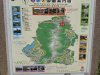
Map of the park

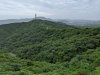
Forest from a watch-tower

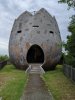
The egg-shaped bird-watching tower, although it actually looks more like a baby Groot now I think about it...

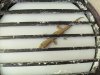
A gecko in lizard jail
Map of the park
Forest from a watch-tower
The egg-shaped bird-watching tower, although it actually looks more like a baby Groot now I think about it...
A gecko in lizard jail
Attachments



I thought that was a tulip before reading you likening it to an egg or Groot
The egg-shaped bird-watching tower, although it actually looks more like a baby Groot now I think about it...

If a person had a car I think there's actually quite a high chance of seeing an Iriomote Cat, especially if you have the time to spend multiple nights driving around the island. .
Do you have any sense from MammalWatching or iNaturalist, etc. how often people actually see the cats? Are there no nature tours that take people looking for the cats?
My experience with cats in California is that I have lived in mountain lion and bobcat habitat for almost 30 years and have seen bobcats four times, all randomly, and mountain lions zero times (and never expect to see one, but live in hope always). Small cats especially seem like they are almost impossible to see unless you are with people who have some special knowledge of where they are.
I know one that goes by the name “Iriomote Island Night tour Service Asante”, and it does seem to have success finding wildcats. The guide Daiki Horii has experience seeing the species multiple times and even has wrote a book documenting the flora and fauna of Iriomote island.Do you have any sense from MammalWatching or iNaturalist, etc. how often people actually see the cats? Are there no nature tours that take people looking for the cats?
Last edited:

Notice the odd facial skin color and pattern on that peacock, as well as the blue in the wing - this is a Spalding Peafowl, an Indian x Green Peafowl hybrid.ISHIGAKI again
Back in Ishigaki I found my hostel (eventually!) and then got on a bus to the Furusutobaru castle ruins, which had some recent eBird lists which included Malayan Night Herons. Furusutobaru is only 18 minutes ride north on the airport bus, getting off at the Ohama bus stop and then walking for a further ten minutes or so.
There is a bus pass for Ishigaki which costs 1000 Yen for one day, or 2000 Yen for five days. This is very good value - the bus to the airport (for my final day) was 550 Yen, and all the other bus rides I took were 250 Yen each way, so I saved a bit over the next three days. When I left I gave the pass to someone arriving at the airport because it still had two days of use on it.
On arrival at Furusutobaru there is a narrow road leading along a canal overhung with dense trees on the other side. I saw a Black-crowned Night Heron in the canal. The road passes under a huge fig tree above a shrine, and then leads on to a car parking area where there is a sign about the ruins and a small cave entrance. I stopped to have a look at the sign, looked to my left, and there was a Malayan Night Heron sitting on the edge of the lawn! Photos weren't sharp because it was the end of the day and the heron was under the trees.
The next morning it was raining heavily so I stayed inside until that passed, and around 10am went back to the Hiratabaru rice fields on the edge of town. I first swung by a little park near the ferry terminal called Shinei Park, which consists of a central lawn with a ring of trees around it, because there was an eBird listing for Asian Glossy Starlings there. However today was a Sunday and the park was the hub for a triathlon, so it was extremely busy. I didn't realise until I got there, but Shinei Park turned out to be the same park I had passed a few days before which had the World Peace Bell.
The weather was nice for me today - it was overcast and breezy so was cooler than the other days.
There wasn't anything new from the rice fields, so I walked down to the mouth of the Shinkawa River where it was low tide. There were a few waders scuttling about - Kentish and Greater Sand Plovers, Common Sandpipers, a Common Greenshank, and a Grey-tailed Tattler - the first and last being new for the year list.
In the afternoon I returned to the Furusutobaru castle ruins. No night herons were seen - there was a family with several small running-around children (although yesterday a small running-around dog hadn't bothered the heron). I spent time wandering around the roads through the surrounding fields. In the evening I tried to look for Ryukyu Scops Owls which I heard but did not see, as usual.
These two visits I had also been looking out for roosting flying foxes which I figured should be here, but I hadn't seen any. This evening though I heard bats squealing as I passed under the big fig tree above the shrine. I looked up and found a bat colony - they had been silent every other time I had passed by during daylight hours. They really are noticeably smaller than the Okinawa subspecies.
For my last day on Ishigaki I had selected Banna Park as my birding destination. It was a location for Ryukyu Flycatcher on eBird, and is only 13 minutes north of town by bus. Three buses go north past Banna Park each day, but only two come back. This is common in smaller places around Japan. There might be three or four buses in one direction, and only one or two coming back. Is there some sort of bus demon to which they need to sacrifice a couple of buses each day?
The park is really big and has areas which are forest and areas which are landscaped. I took the main road which leads up and over a steep hill through forest. Part way along, when coming down the other side, is an egg-shaped bird-watching tower which has photo signs for various birds found there like the Ryukyu Flycatcher. As usual, 99% of the birds I saw were Large-billed Crows, Brown-eared Bulbuls, and Japanese White-eyes. No flycatchers seen.
Japanese White-eye
When I got to the other side at the North Gate I decided to walk along a bit further to the Ishigaki Dam. As I was about to go down that path I spotted a little bird on a distant tree. Not a bulbul, maybe a Blue Rock Thrush? It turned out to be a Waxwing! Or, rather, four Waxwings! My first ones ever. I couldn't tell which species from where I was - you distinguish them mainly by the colour of the waxy tips on their wings and tail - so walked across the lawn hoping they would stay put. They not only stayed put, but I managed to get photos which I thought would be silhouettes (they were all at the top of the tree against the sky) but because of the sun shining on them they turned out okay. Good decision to come here today! I might not have seen the Ryukyu Flycatcher but it's "just a flycatcher" whereas Waxwings are in their own family and I've never seen one before.
Japanese Waxwing, distinguished by the red tail tips
There was nothing at the dam except a few Spot-billed Ducks, Little Grebes, and Common Moorhens.
I walked back to my start point by going around the base of the hill rather than over the top - it's about the same distance but flat instead of upwards. I saw a japalure (tree lizard) and got photos of one of the feral peacocks which are common on the island.
Ishigaki Tree Lizard
Back in town, I dropped by Shinei Park again but still no Glossy Starlings there. Then I caught the bus out to Furusutobaru for the third time. I wanted to try and get some photos of the flying foxes by daylight. I had some taken with flash the night before, but day photos are more pleasing. However, even though I knew there was a big colony in the fig tree - and I could hear some screeching - I couldn't see any! In the end I saw maybe ten animals in total, eventually, but all of them were high up and mostly obscured by leaves and branches. I got a handful of photos of one animal in the sun.
At the grassy parking area there was a Malayan Night Heron again. This time I noticed a sign with an aerial photo of the site with arrowed route markers, and I realised that I was actually at the wrong place. I mean, I was technically at the right place, just on the wrong side of the right place. I didn't mind Google having sent me to the car park because it meant I'd seen the night herons and flying foxes, but now I could see that there was a track straight through the forest to where the ruins were - I had been wondering exactly where these were, but had assumed they must be so old that only traces remained.
To get there, I continued walking up the road I'd come in on, to where it met the main road, and then turned left. I'd been here the evening before, but had crossed the main road and carried on up another road on the other side. This time, after a short walk along the main road I came to a track into the forest marked with a small wooden "historic site" sign on either side. That track lead to an open grassy area where the ruins (stone walls) were. There were some information signs dotted about. I went over to one about pottery which had been found at the site, and after I had finished looking at the pictures (not reading, because it was all in Japanese), I looked up and directly ahead at the edge of the forest was another Malayan Night Heron. I guess the key to finding Malayan Night Herons is to look around signs.
There wasn't much else here - the usual crows and bulbuls - but I wandered about the area until dark and then came back to the forest track where I immediately saw a Northern Boobook. There were lots of boobooks calling, and some scops owls but I still couldn't find any of the latter. Lots of flying foxes about as well of course.
The next day I was flying back to Okinawa. First thing in the morning I went over to Shinei Park, reasoning that maybe the starlings are only there to roost. Once I got halfway round the park's perimeter I could hear starlings. I tracked them down in their tree, a good-sized flock of White-shouldered Starlings. There were no Asian Glossy Starlings amongst them, but after a while five of those turned up, all immature birds with streaky bellies.
The funny thing is that while I had been trying to find the Glossy Starlings just because they would be new for my Japanese bird list (I have seen them in several other countries in southeast Asia), the White-shouldered Starlings were actually a lifer for me. I knew the Glossy Starlings were associating with the White-shouldered Starling from the information on the eBird lists, but there are several very similar starling species and I thought the White-shouldered were one of the ones I'd already seen this year!
Yo it's one of the Pokemon planes! I saw the eeveelution one at O'Hare once.
Iriomote Cats are a bit different in that the island is quite small and the cats actively hunt in places like rice fields and mangroves which are around the coastal lowlands, and they also scavenge on road-killed animals like frogs and land crabs, so they do get seen quite "frequently" along the main road which encircles the island. I think the chances of seeing a cat while driving at night one time would be extremely low, but with a concentrated effort over several nights probably reasonably high.Do you have any sense from MammalWatching or iNaturalist, etc. how often people actually see the cats? Are there no nature tours that take people looking for the cats?
My experience with cats in California is that I have lived in mountain lion and bobcat habitat for almost 30 years and have seen bobcats four times, all randomly, and mountain lions zero times (and never expect to see one, but live in hope always). Small cats especially seem like they are almost impossible to see unless you are with people who have some special knowledge of where they are.
There are a bunch of night tours on the island, but if they mention the cats they phrase it in "might even see" terms. There is even a tour which advertises looking for tracks rather than the cat itself. The only tour I found which claims to specialise in seeing Iriomote Cats is the one @PossumRoach mentioned, but that was one I also found referenced as - let's say - not ethical so I didn't even try to contact them.
I did think it looked odd when I saw it, but thought it must just be from domestic genes. I wonder if all the peafowl on Ishigaki are hybrid then, or if there are just some. I've seen a photo of a white peacock on Ishigaki, so there are (presumably) more recent releases or escapes of individual birds as well.Notice the odd facial skin color and pattern on that peacock, as well as the blue in the wing - this is a Spalding Peafowl, an Indian x Green Peafowl hybrid.
Does the lack of Asante’s ethics you mentioned refer to the ties to the Horii zoo, or does it pertain inappropriate tracking methods or harming the environment as well?The only tour I found which claims to specialise in seeing Iriomote Cats is the one @PossumRoach mentioned, but that was one I also found referenced as - let's say - not ethical so I didn't even try to contact them.
Specific actions on the island regarding the cats. I can't find the references off-hand now.Does the lack of Asante’s ethics you mentioned refer to the ties to the Horii zoo, or does it pertain inappropriate tracking methods or harming the environment as well?
OKINAWA again
Final stop for Japan!
The Ishigaki airport has a tropical marine aquarium (as in, one tank) and a butterfly garden. The butterfly garden is a single glassed-in room and there were no butterflies present at that particular time as far as I could see, but still - Singapore airport better watch out!


Okinawa airport also has a marine tank, provided by the Churaumi Aquarium I think, which even had a shark in it. I saw it when I came back from Ishigaki but there were a load of little kids in front of it so I didn't take a photo. When I came back to the airport, for my flight to Taiwan, I couldn't find it again so still no photos.
I was only back in Okinawa for two days, one of which was rained out, and on the other day I went to the Okinawa Zoo. I still managed to fortuitously add two more wild mammals to my Japan list (and year list) with a Brown Rat seen in a restaurant window on my way to the hotel and a Small Indian Mongoose scurrying into the bushes while at the zoo.
.................................................
The Okinawa Zoo is situated in the island's main city of Naha, although it is quite a way north of the city centre where my hotel was. It took about an hour by bus to the Nakanomachi bus stop, followed by ten or fifteen minutes walking through some narrow streets. The entry fee is 1000 Yen.
It is a fairly big site, but the animals are all on the left side of the lake which is in the middle of the grounds. The top part, by the main entry gate, is taken up with play areas, food courts, and the Wonder Museum. I had a quick run through the museum before I left - it is aimed at kids and there are no animals in there.
The map looked pretty straightforward but in practice some back-tracking was required to see everything because several of the areas have quite convoluted pathways - one area is even named "Satoyama Labyrinth"!
This is one of those Japanese zoos which is a strange mix of extremely good exhibits and absolutely awful ones. The "Ryukyu Archipelago" zone starts off with a row of very large aviaries - two levels high - and an excellent set of terrariums for ectotherms, but then straight afterwards is a row of horrendous box-like concrete cages for monkeys. And then almost opposite those cages is a great big cage for Yakushima Macaques which is large enough to have a whole separate visitor tunnel running through the middle of it. The juxtaposition of the good-then-awful is so bizarre.
However, on the whole, the enclosures at the zoo are not terrible. The worst, after the aforementioned monkey cages, are the tiny Giant Anteater pens and the very small Hippo pen. Other than that I'd say most enclosures are fairly small but adequate.
I have posted a review and species list for the zoo here: Okinawa Zoo and Museum: review and species list, 17 April 2025

Yonaguni Keeled Rat Snake, looking like a sleeping dragon.

Okinawa Sword-tailed Newt

Okinawa Tip-nosed Frog

Miyako Toad
.................................................
I am now in Taiwan. I just have the final round-up post for Japan to do - costs, numbers, highlights, that sort of thing - and then I can get right into being weeks behind on Taiwanese blog posts instead of weeks behind on Japanese blog posts!
Final stop for Japan!
The Ishigaki airport has a tropical marine aquarium (as in, one tank) and a butterfly garden. The butterfly garden is a single glassed-in room and there were no butterflies present at that particular time as far as I could see, but still - Singapore airport better watch out!
Okinawa airport also has a marine tank, provided by the Churaumi Aquarium I think, which even had a shark in it. I saw it when I came back from Ishigaki but there were a load of little kids in front of it so I didn't take a photo. When I came back to the airport, for my flight to Taiwan, I couldn't find it again so still no photos.
I was only back in Okinawa for two days, one of which was rained out, and on the other day I went to the Okinawa Zoo. I still managed to fortuitously add two more wild mammals to my Japan list (and year list) with a Brown Rat seen in a restaurant window on my way to the hotel and a Small Indian Mongoose scurrying into the bushes while at the zoo.
.................................................
The Okinawa Zoo is situated in the island's main city of Naha, although it is quite a way north of the city centre where my hotel was. It took about an hour by bus to the Nakanomachi bus stop, followed by ten or fifteen minutes walking through some narrow streets. The entry fee is 1000 Yen.
It is a fairly big site, but the animals are all on the left side of the lake which is in the middle of the grounds. The top part, by the main entry gate, is taken up with play areas, food courts, and the Wonder Museum. I had a quick run through the museum before I left - it is aimed at kids and there are no animals in there.
The map looked pretty straightforward but in practice some back-tracking was required to see everything because several of the areas have quite convoluted pathways - one area is even named "Satoyama Labyrinth"!
This is one of those Japanese zoos which is a strange mix of extremely good exhibits and absolutely awful ones. The "Ryukyu Archipelago" zone starts off with a row of very large aviaries - two levels high - and an excellent set of terrariums for ectotherms, but then straight afterwards is a row of horrendous box-like concrete cages for monkeys. And then almost opposite those cages is a great big cage for Yakushima Macaques which is large enough to have a whole separate visitor tunnel running through the middle of it. The juxtaposition of the good-then-awful is so bizarre.
However, on the whole, the enclosures at the zoo are not terrible. The worst, after the aforementioned monkey cages, are the tiny Giant Anteater pens and the very small Hippo pen. Other than that I'd say most enclosures are fairly small but adequate.
I have posted a review and species list for the zoo here: Okinawa Zoo and Museum: review and species list, 17 April 2025
Yonaguni Keeled Rat Snake, looking like a sleeping dragon.
Okinawa Sword-tailed Newt
Okinawa Tip-nosed Frog
Miyako Toad
.................................................
I am now in Taiwan. I just have the final round-up post for Japan to do - costs, numbers, highlights, that sort of thing - and then I can get right into being weeks behind on Taiwanese blog posts instead of weeks behind on Japanese blog posts!
ISHIGAKI AND IRIOMOTE:
.
I take it the cats in the glass cases are also Iriomote Cats and that one of them therefore is an Albino?