Chlidonias presents: Bustralia

I wouldn't be so quick to say that. If anything it's getting worse as of late honestly.

You have to physically order one (which comes in the mail) or you can go to one of the customer service windows; which it appears you did at Southern Cross.


Yes you have to touch on and off even on trams. It's a bit confusing but from what I understand, if you only have a short travel ie. tap on at Flinders and get off at Southern Cross, you won't have as much money deducted. The price of your travel then goes up the further you go, so if you don't tap off, your essentially paying the full price for travel on that day.

If you touch off the tram it should read as 'touched off' on the screen. It wouldn't touch you on twice.

EDIT: I also think because you travelled to Geelong (out of Melbourne), the zoning and therefore fare prices may be different for the bus there as well.

None of this is correct. You *can* purchase cards from myki machines - when Chli was asked to ‘present his card’ it was either asking for his bank or credit card, or he had pressed the wrong button.

The only reason you are ever required to both touch on and off a tram is if you are travelling entirely within zone 2, which Chli was not. He was given at best confusing and probably flat wrong advice by the staff member.

Travelling to Geelong would only have incurred the daily fare cap, which as he notes is about $11.

My best guess for the “missing” $6 is that Chli paid a total of $20 for the card, and it wasn’t communicated to him that the card itself costs $6. So in essence, he had purchased a card and loaded it with $14.

The tram to Bundoora was not free - because he has not touched off, it has not yet been debited from the myki card, but it will do the next time he touches on with that myki.
 
You have to physically order one (which comes in the mail) or you can go to one of the customer service windows; which it appears you did at Southern Cross.
You can buy them from the machines - it just didn't work for me.
https://transport.vic.gov.au/tickets-and-myki/myki/buy-a-myki

EDIT: I also think because you travelled to Geelong (out of Melbourne), the zoning and therefore fare prices may be different for the bus there as well.
I asked about that at the Geelong Station because that train was a regional train and I was worried I might have misunderstood the $11 cap, but I was told that it is capped at $11 for anywhere in Victoria (which if true would be awesome).

My best guess for the “missing” $6 is that Chli paid a total of $20 for the card, and it wasn’t communicated to him that the card itself costs $6. So in essence, he had purchased a card and loaded it with $14.
No, I paid $26 - $6 for the card and $20 for the funds loaded onto it.
 
Did you use it at all on Sunday night?
Nope. I just took the Skybus to Southern Cross and it was after dark by then. I only used the Myki card for the first time when I caught the train to Geelong.
 
None of this is correct. You *can* purchase cards from myki machines - when Chli was asked to ‘present his card’ it was either asking for his bank or credit card, or he had pressed the wrong button.

The only reason you are ever required to both touch on and off a tram is if you are travelling entirely within zone 2, which Chli was not. He was given at best confusing and probably flat wrong advice by the staff member.

Travelling to Geelong would only have incurred the daily fare cap, which as he notes is about $11.

My best guess for the “missing” $6 is that Chli paid a total of $20 for the card, and it wasn’t communicated to him that the card itself costs $6. So in essence, he had purchased a card and loaded it with $14.

The tram to Bundoora was not free - because he has not touched off, it has not yet been debited from the myki card, but it will do the next time he touches on with that myki.
To be honest I don't think anyone understands the public transport fare system here then based on what I've been told. :rolleyes: Thanks for the corrections.

Just asked my friend who works at PTV and your right - if you don't touch off you still get charged the same amount, but the money gets deducted the next time there is a touch on because the card needs that physical interaction to deduct the fare. If you check your balance in that in between period, it won't reflect that delayed fare yet.

So I'm assuming that is why it deducted the $6 the next day; and therefore didn't include it in the previous days fare total of $11.
 
Day one in Melbourne


I’m only in Melbourne for two days. The first day I had penciled in for Burrunan Dolphins and the second for some animal facilities (zoo, aquarium, museum) although I changed the second day last minute to a birding day instead.

Burrunan Dolphins are a fairly recent split (2011) from the Indo-Pacific Bottlenose Dolphin and are only found around southeast Australia. I’ve been in and out of Melbourne several times since 2011 but it was always at the wrong time of year to see them or I didn’t have enough time. This is still the wrong time of year but it’s closer to the right time than otherwise, so I thought I would try.

I did have a look at the dolphin-specific tours but they hadn’t started for the season yet, so I was using the cheaper but less-reliable version of taking the Queenscliff to Sorrento ferry from which the dolphins are often seen. I should be coming back to Melbourne at the end of this bus trip – when the timing will be better - so I figured I may as well try the cheap option now and if I had no luck I can still try again then, and even if I didn’t see dolphins I’d see some birds at least.

If you’re not familiar with Melbourne’s geography, have a look at a map and you’ll see that the city sits at the north end of Port Phillip Bay, a huge body of water with a narrow mouth at the southwestern end between two peninsulas, one of which is tipped with the town of Queenscliff and the other with the town of Sorrento. You can get to either with public transport from Melbourne, but Queenscliff is easiest – just one train and a bus – whereas Sorrento takes multiple transfers.


I caught a 6.28am train from the Southern Cross station to Geelong, an hour away. Eastern Grey Kangaroos and Brown Hares were seen from the train. Then from Geelong Station the #56 bus goes to Queenscliff, which is just over an hour. The ferries run every hour on the hour and cost $20 each way.

I got off the bus in town, a couple of stops before the ferry terminal, and walked the rest of the way along a track which follows the beachline through coastal heath. There were quite a lot of New Holland Honeyeaters flying about, and some other common birds like Brown Thornbills, Litttle Corellas and Crimson Rosellas.

full

Brown Thornbill


I tried a side-track to the beach itself where there was a jetty being used as a roost for four species of cormorants (Pied, Little Pied, Black, and Little Black – eBird has Black-faced here as well but I didn’t see any). When I came back later in the day there was also a little flock of Great Crested Terns there.


The ferry ride between Queenscliff and Sorrento is only forty minutes long. There were Australasian Gannets and Silver Gulls a-plenty, and some Great Crested Terns and cormorants, but no marine mammals.

full

Silver Gull


The Sorrento side wasn’t very interesting. I’d been going to walk to the Point Nepean National Park on the end of the peninsula but I wasn’t seeing much in the way of birds – only European Blackbird and Eastern Rosella were new for the day – so I caught the noon ferry back to Queenscliff where the birds were more accessible.

Apart for dolphins, the bay is also known for Australian Fur Seals which is a seal I haven’t seen before. I saw a poster on the return ferry which had a photo of them on a structure called the Chinaman’s Hat, which is a shipping channel marker. I saw the marker, but the ferry was nowhere near close enough to it to be able to see any seals. I think I could see some “things” on it, but they were so indiscernible that they could have even been my imagination.

However in this case my luck was in, because a short while later the ferry passed close by a line of rocks covered in fur seals! “Close” as in close enough to be able to see them easily with binoculars, not close enough for photos. There was an interesting segregation happening on these rocks, with one end being covered with seals, the middle section being covered in cormorants, and at the other end there was a flat platform covered in gannets.

Back in Queenscliff I had an hour before the next bus, so idled around the beachside heathland, seeing mostly the same birds. Additions were a Nankeen Kestrel hunting overhead – it’s been a long time since I’ve seen one of those – and a Nankeen Night Heron roosting in a pine tree.


full


full


A pair of Magpie-Larks, male in the top photo and female in the lower photo. They can be easily distinguished by the head pattern.


It’s over two hours between Queenscliff and Melbourne. By the time I got back it was about 4.30pm which was a good time to catch a tram out to St Kilda Pier to look for Little Blue Penguins and Australian Water Rats.

As I walked along the pier I saw a little pale bird floating on the sea which then disappeared under the water. Was that a penguin already? I waited for it to pop back up to the surface and got my binoculars on it. Not a penguin, a Hoary-headed Grebe. I saw five or six of them out there, which I was not expecting.

I have always recommended St Kilda as a really good place to see both Little Blue Penguins and Australian Water Rats, but I can’t do that any more. It’s still a convenient place to go because it is so easy to reach, but the layout has completely changed and is now pretty useless as a viewing site. It used to be that there was a walkway along the boulder breakwater and it was easy enough to see penguins nestled down between the rocks in the daytime if you spent some time looking, and you could quite easily see Water Rats swimming about or scuttling through the boulders as it neared dusk.

Now there is a fence totally blocking that path. There is a gate open between 9am and 5pm, but the new viewing walkway on the inside of the boulder-bank is over the water which is pointless from the aspect of seeing any penguins during the day. And in the evening when the gate is locked, the viewing area is just a short stretch of fence which results in a mass several people deep where only the ones at the front can see anything.

The changes are of course due to the sorts of idiots who try to pick up the penguins and do other stupid things, so it’s for the best, but it has ruined it for people like us who wouldn’t do those things!

I didn’t expect to see any Water Rats now – the area I used to see them was behind the locked gate – but I was to be surprised. While hanging at the tail end of the boulders, furthest from all the people, waiting to see if I’d spy any penguins as they swam in from the sea, a Water Rat snaked through the rocks directly below me! I luckily happened to glance down just as it went past, not much of a view, mostly its rump and distinctive bi-coloured tail, but then a few minutes later I saw another one (or maybe the same one) swim past along the edge of the boulders.

As for the penguins I don’t want it to sound like you can’t see them here any more, because you can and I did, but the viewing experience is dreadful, getting glimpses of a bird or two in the dark between or over the heads of all the people crammed up against the fence. Just really a disappointing situation.

Wild animal spotting totals for today: 41 bird species and 4 mammal species.
 
Day one in Melbourne


I’m only in Melbourne for two days. The first day I had penciled in for Burrunan Dolphins and the second for some animal facilities (zoo, aquarium, museum) although I changed the second day last minute to a birding day instead.

Burrunan Dolphins are a fairly recent split (2011) from the Indo-Pacific Bottlenose Dolphin and are only found around southeast Australia. I’ve been in and out of Melbourne several times since 2011 but it was always at the wrong time of year to see them or I didn’t have enough time. This is still the wrong time of year but it’s closer to the right time than otherwise, so I thought I would try.

I did have a look at the dolphin-specific tours but they hadn’t started for the season yet, so I was using the cheaper but less-reliable version of taking the Queenscliff to Sorrento ferry from which the dolphins are often seen. I should be coming back to Melbourne at the end of this bus trip – when the timing will be better - so I figured I may as well try the cheap option now and if I had no luck I can still try again then, and even if I didn’t see dolphins I’d see some birds at least.

If you’re not familiar with Melbourne’s geography, have a look at a map and you’ll see that the city sits at the north end of Port Phillip Bay, a huge body of water with a narrow mouth at the southwestern end between two peninsulas, one of which is tipped with the town of Queenscliff and the other with the town of Sorrento. You can get to either with public transport from Melbourne, but Queenscliff is easiest – just one train and a bus – whereas Sorrento takes multiple transfers.


I caught a 6.28am train from the Southern Cross station to Geelong, an hour away. Eastern Grey Kangaroos and Brown Hares were seen from the train. Then from Geelong Station the #56 bus goes to Queenscliff, which is just over an hour. The ferries run every hour on the hour and cost $20 each way.

I got off the bus in town, a couple of stops before the ferry terminal, and walked the rest of the way along a track which follows the beachline through coastal heath. There were quite a lot of New Holland Honeyeaters flying about, and some other common birds like Brown Thornbills, Litttle Corellas and Crimson Rosellas.

full

Brown Thornbill


I tried a side-track to the beach itself where there was a jetty being used as a roost for four species of cormorants (Pied, Little Pied, Black, and Little Black – eBird has Black-faced here as well but I didn’t see any). When I came back later in the day there was also a little flock of Great Crested Terns there.


The ferry ride between Queenscliff and Sorrento is only forty minutes long. There were Australasian Gannets and Silver Gulls a-plenty, and some Great Crested Terns and cormorants, but no marine mammals.

full

Silver Gull


The Sorrento side wasn’t very interesting. I’d been going to walk to the Point Nepean National Park on the end of the peninsula but I wasn’t seeing much in the way of birds – only European Blackbird and Eastern Rosella were new for the day – so I caught the noon ferry back to Queenscliff where the birds were more accessible.

Apart for dolphins, the bay is also known for Australian Fur Seals which is a seal I haven’t seen before. I saw a poster on the return ferry which had a photo of them on a structure called the Chinaman’s Hat, which is a shipping channel marker. I saw the marker, but the ferry was nowhere near close enough to it to be able to see any seals. I think I could see some “things” on it, but they were so indiscernible that they could have even been my imagination.

However in this case my luck was in, because a short while later the ferry passed close by a line of rocks covered in fur seals! “Close” as in close enough to be able to see them easily with binoculars, not close enough for photos. There was an interesting segregation happening on these rocks, with one end being covered with seals, the middle section being covered in cormorants, and at the other end there was a flat platform covered in gannets.

Back in Queenscliff I had an hour before the next bus, so idled around the beachside heathland, seeing mostly the same birds. Additions were a Nankeen Kestrel hunting overhead – it’s been a long time since I’ve seen one of those – and a Nankeen Night Heron roosting in a pine tree.


full


full


A pair of Magpie-Larks, male in the top photo and female in the lower photo. They can be easily distinguished by the head pattern.


It’s over two hours between Queenscliff and Melbourne. By the time I got back it was about 4.30pm which was a good time to catch a tram out to St Kilda Pier to look for Little Blue Penguins and Australian Water Rats.

As I walked along the pier I saw a little pale bird floating on the sea which then disappeared under the water. Was that a penguin already? I waited for it to pop back up to the surface and got my binoculars on it. Not a penguin, a Hoary-headed Grebe. I saw five or six of them out there, which I was not expecting.

I have always recommended St Kilda as a really good place to see both Little Blue Penguins and Australian Water Rats, but I can’t do that any more. It’s still a convenient place to go because it is so easy to reach, but the layout has completely changed and is now pretty useless as a viewing site. It used to be that there was a walkway along the boulder breakwater and it was easy enough to see penguins nestled down between the rocks in the daytime if you spent some time looking, and you could quite easily see Water Rats swimming about or scuttling through the boulders as it neared dusk.

Now there is a fence totally blocking that path. There is a gate open between 9am and 5pm, but the new viewing walkway on the inside of the boulder-bank is over the water which is pointless from the aspect of seeing any penguins during the day. And in the evening when the gate is locked, the viewing area is just a short stretch of fence which results in a mass several people deep where only the ones at the front can see anything.

The changes are of course due to the sorts of idiots who try to pick up the penguins and do other stupid things, so it’s for the best, but it has ruined it for people like us who wouldn’t do those things!

I didn’t expect to see any Water Rats now – the area I used to see them was behind the locked gate – but I was to be surprised. While hanging at the tail end of the boulders, furthest from all the people, waiting to see if I’d spy any penguins as they swam in from the sea, a Water Rat snaked through the rocks directly below me! I luckily happened to glance down just as it went past, not much of a view, mostly its rump and distinctive bi-coloured tail, but then a few minutes later I saw another one (or maybe the same one) swim past along the edge of the boulders.

As for the penguins I don’t want it to sound like you can’t see them here any more, because you can and I did, but the viewing experience is dreadful, getting glimpses of a bird or two in the dark between or over the heads of all the people crammed up against the fence. Just really a disappointing situation.

Wild animal spotting totals for today: 41 bird species and 4 mammal species.

A shame you didn’t have much luck in Point Nepean National Park, I’ve never found it very productive for birding, that habitat type of low coastal scrub really doesn’t have a lot of diversity but I’m surprised you didn’t at least get some Spiny-cheeked or Singing Honeyeaters. Funnily enough I have seen dolphins there but it was too far to see what species they were, it’s a good spot for seabirds though.
 
Nangak Tamboree


My second day in Melbourne was going to be a zoo day, but the La Trobe University’s wildlife reserve Nangak Tamboree was mentioned in the thread as a really good bird site and the reference to Gang-Gang Cockatoos being found there got me very interested because that is a bird I’ve wanted to see in the wild for a long time. I had a look on eBird and saw that they seemed to be reliable there, so that settled that.

It is an easy site to get to – just take tram #86 from by Southern Cross Station to Bundoora (stop #61, it takes about an hour), then it’s a few minutes walk to the gate.


As I reached the entrance I saw a cockatoo in a tree above the footpath. Was it a Gang-Gang? No, it was a Galah. But on the next branch over were three more cockatoos, and these ones were Gang-Gangs. Easy as that! Unfortunately they were against the sky so no photos. I was hoping to see more in better positions but these were the only ones for the day.

The reserve is not very large, but it’s not small either, and you could easily spend several hours here. It is eucalyptus forest with a few large ponds as well, so there is a mix of birdlife. There are mammals here as well – I saw some Eastern Grey Kangaroos, and two Brush-tailed Possums which were unexpected. The first one was asleep in the crook of a tree, just a ball of grey fur and I had to circle around the tree until I saw its face to make sure of its identity. The second possum was actively feeding in a low bush but was afflicted with some sort of mange on its face and neck.

full


full


The most common (or most obvious) birds at the reserve are Sulphur-crested Cockatoos, Red Wattlebirds, Little Ravens, Rainbow Lorikeets, Noisy Miners, and Australian Magpies. I saw Musk Lorikeets and Scaly-breasted Lorikeets a few times, a pair of King Parrots, and it took a surprisingly long time before I saw a Kookaburra.

full

Little Raven


Small birds were more difficult to come by. I’m not sure if there are few of them, if the time of year is wrong, or it was just chance. I could hear Bell Miners calling from the trees but they are tricky to see – they blend in so well amongst the leaves that you basically have to wait for them to fly to see where they are. While waiting for that to happen, I saw a Grey Fantail flitting through the high canopy, then a smaller bird popped onto a branch near the fantail – a Spotted Pardalote – followed immediately by a White-plumed Honeyeater, then a Bell Miner, and then a female Golden Whistler, one after the other and all on the same branch. A minute or two later a White-browed Scrubwren darted through the undergrowth below.

When I was leaving there was a huge group of school children arriving, so lucky escape!

I saw 35 species of birds while here, which I’ll list below (total for the day was 37 birds, including Silver Gull and Feral Pigeon in the city). And two mammals with the kangaroos and possums.


full

Australian Wood Ducks


Little Pied Cormorant, Black Duck, Grey Teal, Chestnut Teal, Australian Wood Duck, Common Coot, Dusky Moorhen, Purple Swamphen, Australian White Ibis, Common Bronzewing Pigeon, Greater Sulphur-crested Cockatoo, Galah, Gang-Gang, Rainbow Lorikeet, Scaly-breasted Lorikeet, Musk Lorikeet, King Parrot, Common Kookaburra, Welcome Swallow, Superb Fairy-Wren, White-browed Scrubwren, Grey Fantail, Golden Whistler, Spotted Pardalote, Red Wattlebird, Noisy Miner, Bell Miner, White-plumed Honeyeater, Common Mynah, Magpie-Lark, Grey Butcherbird, Pied Currawong, Black Currawong, Australian Magpie, Little Raven


full

Juvenile Grey Butcherbird
 
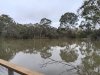
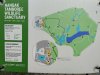
Some photos from Nangak Tamboree

IMG20250909102302.jpg IMG20250909100600.jpg IMG20250909104104.jpg IMG20250909104055.jpg
 

Attachments

  • IMG20250909102302.jpg
    IMG20250909102302.jpg
    194 KB · Views: 84
  • IMG20250909100600.jpg
    IMG20250909100600.jpg
    143.7 KB · Views: 86
  • IMG20250909104104.jpg
    IMG20250909104104.jpg
    196.2 KB · Views: 91
  • IMG20250909104055.jpg
    IMG20250909104055.jpg
    329.1 KB · Views: 82
Melbourne to Adelaide


To get between Melbourne and Adelaide there are the options of flying, train, or bus. I liked the idea of the train but it was much more expensive than the bus, and on the date I was going it had a bus replacement anyway. So bus it was, leaving Melbourne at 7.15am and arriving in Adelaide at 6.35pm, for AU$65. There is an overnight bus as well, but I wanted to look out the window in case there was anything interesting to see – which was good because I saw an echidna!

The company is called Firefly but it was a purple V/Line bus. It was really nice actually, lots of leg room and very comfortable for the 11 hour ride. The booking instructions had said to be at the Southern Cross station half an hour before departure, which everybody was – there were only six other people – but the bus didn’t arrive until 7.10.

Eight more people got on in Bendigo two hours later, and then nine more in a town called Horsham. Between those towns there was a forty minute rest-stop in St Arnaud, a pleasant little place which looked like a suburb. I went for a wander with my binoculars. It was very chilly, with a brisk wind. Most of the birds here were House Sparrows. I heard something calling from the top of one of the street trees, and tracked down the call to a Striated Pardalote.

Leaving St Arnaud, back on the main road, the bus slowed abruptly, and I was close enough to the front to see out the windscreen. I thought it was going to be a kangaroo, but it was an echidna strolling across the road.

There are some interesting town names down here, like Nhill (pronounced “nil” rather than “N-Hill”). The next one along is Kaniva, where there was a wildlife park beside the road, then Lillimur which is the last town on the Victorian side of the border. The one after the border is called Bordertown, of course, and there is another wildlife park here by the road, with white kangaroos visible as the bus drove past.

South Australia time is half an hour behind Victoria time.

The next break-stop was at Keith, at a roadhouse outside town. It was much colder here than in St Arnaud, but with no wind. No Patrick Swayze either.

I walked a sort of loop in the roads behind the roadhouse without seeing anything different, and then it started raining so I went back.

Arrival in Adelaide was just after dark. I’m staying at a hostel called Tequila Sunrise in a dorm. The place is packed with people. It’s about NZ$48 a night, but they have free breakfast and dinner every day which will save some money!

The day’s tally of birds – all seen from the bus or in the towns along the way - was thirty species, of which four were year-birds (White-winged Chough, Striated Pardalote, Australian Shelduck, and Willy Wagtail), and there were two mammals (Eastern Grey Kangaroo and Short-beaked Echidna).
 
Last edited:
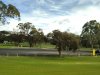
View from the bus as it passed the Bordertown Wildlife Park - there are some white kangaroos just about visible in the photo.

IMG20250910143405.jpg


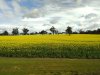
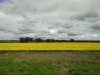
In Australia they farm the colour yellow! It doesn't look as amazing in a photo as it does in real life, stretching away to the horizon, but you can get the general idea.

IMG20250910143321.jpg

IMG20250910142551.jpg
 

Attachments

  • IMG20250910143405.jpg
    IMG20250910143405.jpg
    128.9 KB · Views: 79
  • IMG20250910143321.jpg
    IMG20250910143321.jpg
    139.1 KB · Views: 80
  • IMG20250910142551.jpg
    IMG20250910142551.jpg
    95.5 KB · Views: 75
Last edited:
Adelaide's nice but they haven't caught up to using cash as a currency yet.

I paid in a shop with a salmon and got three sardines in change. I said shouldn't that be three sardines and a goldfish, and he said no because the economy is bad.

IMG20250911081628.jpg
 

Attachments

  • IMG20250911081628.jpg
    IMG20250911081628.jpg
    172.6 KB · Views: 80
Adelaide's nice but they haven't caught up to using cash as a currency yet.

I paid in a shop with a salmon and got three sardines in change. I said shouldn't that be three sardines and a goldfish, and he said no because the economy is bad.

View attachment 822714

There’s a small handful of places around that accept bunyips as payment but personally I don’t think cryptidcurrency will ever catch on.
 
Adelaide – first day


full

Grey-headed Flying Foxes


I had been looking forward to Adelaide. I’ve never been to South Australia before, and Adelaide seemed like such a nice city. Even on a map it looks inviting. Have a look on Google Maps and you’ll see the inner city is literally surrounded by large parks.

For my first day in Adelaide I was visiting the zoo and museum because both are easy walking distance from my hostel. I needed to get a Metrocard for the buses and trains, so I figured I could just do that in the afternoon instead of trying to rush it in the morning if I’d been having to go further afield.

Adelaide’s buses and trains have set fares regardless of distance. An adult peak fare is AU$4.55 no matter if you ride for ten minutes or an hour, which is good if going longer distances. Unfortunately there isn’t a daily cap like in Melbourne.


I didn’t leave the hostel very early. The free breakfast isn’t until 7.30am so I had to wait for that, but the zoo doesn’t open until 9am anyway.

The zoo is just by the botanical gardens which of course I walked through on the way. There were the usual Australian city-garden birds here, and on the small lake under the White Ibis colony I added two new year-birds (White-eyed Duck and Australian Little Grebe). The tropical conservatory in the gardens used to have a small display of live invertebrates and some birds but this is not the case any more.

full

Australian Little Grebe

full

Noisy Miner. For non-Australians this name might be a bit confusing. Most people are probably familiar with either Common Mynahs or Hill Mynahs, which are actually tropical starlings. Noisy Miners (and the Bell Miners I mentioned the other day) are honeyeaters.


I knew that Grey-headed Flying Foxes roosted in the gardens but I hadn’t seen any yet – until I made my way to the zoo. Right outside the entrance is a massive colony of the fruit bats. Thousands of them. It was spectacular.

full


I’ll write about the zoo in a separate post so I can add in more photos, and for now I’ll jump ahead to the South Australian Museum which I visited afterwards.


The museum is free and has a variety of displays over four floors. The route between the levels isn’t well signed at all, with the staircases looking more like service stairs than visitor access. The museum appears to have changed quite a bit since the last photos in the gallery (South Australian Museum - ZooChat) which were taken by @Najade in 2018. There are no live animals any more and the taxidermies of extinct Australian animals are also no longer there. Instead all the exotic mammals are in packed display cases on the ground floor, and all the Australian specimens are in “habitat displays”. They are really nicely done, but I was hoping to see a bunch of extinct mammals.

full


full


full


Zoo related photos from the museum: the last two flamingos at Adelaide Zoo (named Greater and Chile), and the Javan Rhino is (I think) the famous one which used to live at Adelaide Zoo.


full


full


Being mainly a zoo day there was a low wild-animal tally today, only 21 bird species and one mammal (the flying foxes).
 
Last edited:
Some botanical photos:

IMG20250911085817.jpg
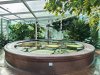
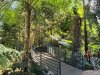
The Victoria Regia House. There are rainbowfish in the pool.

IMG20250911090228.jpg
The Simpson Shadehouse

IMG20250911090534.jpg
The Bicentennial Conservatory
 

Attachments

  • IMG20250911085817.jpg
    IMG20250911085817.jpg
    253.1 KB · Views: 62
  • IMG20250911090228.jpg
    IMG20250911090228.jpg
    356.4 KB · Views: 62
  • IMG20250911090534.jpg
    IMG20250911090534.jpg
    368.7 KB · Views: 63
Last edited:
Adelaide – first day


full

Grey-headed Flying Foxes


I had been looking forward to Adelaide. I’ve never been to South Australia before, and Adelaide seemed like such a nice city. Even on a map it looks inviting. Have a look on Google Maps and you’ll see the inner city is literally surrounded by large parks.

For my first day in Adelaide I was visiting the zoo and museum because both are easy walking distance from my hostel. I needed to get a Metrocard for the buses and trains, so I figured I could just do that in the afternoon instead of trying to rush it in the morning if I’d been having to go further afield.

Adelaide’s buses and trains have set fares regardless of distance. An adult peak fare is AU$4.55 no matter if you ride for ten minutes or an hour, which is good if going longer distances. Unfortunately there isn’t a daily cap like in Melbourne.


I didn’t leave the hostel very early. The free breakfast isn’t until 7.30am so I had to wait for that, but the zoo doesn’t open until 9am anyway.

The zoo is just by the botanical gardens which of course I walked through on the way. There were the usual Australian city-garden birds here, and on the small lake under the White Ibis colony I added two new year-birds (White-eyed Duck and Australian Little Grebe). The tropical conservatory in the gardens used to have a small display of live invertebrates and some birds but this is not the case any more.

full

Australian Little Grebe

full

Noisy Miner. For non-Australians this name might be a bit confusing. Most people are probably familiar with either Common Mynahs or Hill Mynahs, which are actually tropical starlings. Noisy Miners (and the Bell Miners I mentioned the other day) are honeyeaters.


I knew that Grey-headed Flying Foxes roosted in the gardens but I hadn’t seen any yet – until I made my way to the zoo. Right outside the entrance is a massive colony of the fruit bats. Thousands of them. It was spectacular.

full


I’ll write about the zoo in a separate post so I can add in more photos, and for now I’ll jump ahead to the South Australian Museum which I visited afterwards.


The museum is free and has a variety of displays over four floors. The route between the levels isn’t well signed at all, with the staircases looking more like service stairs than visitor access. The museum appears to have changed quite a bit since the last photos in the gallery (South Australian Museum - ZooChat) which were taken by @Najade in 2018. There are no live animals any more and the taxidermies of extinct Australian animals are also no longer there. Instead all the exotic mammals are in packed display cases on the ground floor, and all the Australian specimens are in “habitat displays”. They are really nicely done, but I was hoping to see a bunch of extinct mammals.

full


full


full


Zoo related photos from the museum: the last two flamingos at Adelaide Zoo (named Greater and Chile), and the Javan Rhino is (I think) the famous one which used to live at Adelaide Zoo.


full


full


Being mainly a zoo day today there was a low wild-animal tally, only 21 bird species and one mammal (the flying foxes).
The selection of pictures in the gallery might have been a bit misleading. I think most of the displays looked like this during my visit too. It was just that one small wall display with the extinct mammals that had this barren white vibe to it and all the live animals were in an off-shot corner. But it's a bit sad if they got rid of those displays altogether now.
 
Back
Top