Adelaide Zoo
Adelaide Zoo is the last of the four “main” zoos in Australia I have visited (the others being Melbourne, Taronga, and Perth), although it has been so long since I’ve been to the others that any comparisons would be pretty groundless. I’ve only been to Taronga and Perth once each (in 2010 and 2011 respectively) and Melbourne several times (initially in 1993) but not for years now. However I feel like Adelaide might be my favourite of the four.
It is a small zoo and very attractive with all the gardens. It opened in 1883 and you can see several old houses and enclosures dotted about, restructured for more modern sentiments. This does mean there are quite a few enclosures which are really quite small, and not everything is very successfully transitioned – the Ring-tailed Lemurs in repurposed bear grottos with horrendous mock-rock comes to mind – but overall it is a very pleasant zoo. In several places there are mesh tunnels (Red Panda, tamarins, colobus) to extend cage space.

Red Panda enclosure in two parts – the giant fig tree in the foreground and the trees in the far back (where a panda can be seen sleeping in a tree top), joined by mesh tunnels.
There are some really nice mammal enclosures otherwise, some of which are new and some older. The Dusky Langur/Malayan Tapir enclosure with its enormous fig tree is famous of course, and the deck here also overlooks the gibbon islands. The Giant Panda enclosures were eye-catching – very rocky, almost a Japanese Garden look, and not at all how most panda enclosures are constructed.

Gibbon islands as viewed from the mentioned walkway deck

Giant Panda
Birds are where Adelaide really shines. There are aviaries scattered everywhere around the zoo, all of which are well-planted and (mostly) well-signed. They seem to move birds around a lot though, judging by past reviews and species lists, and the signage doesn’t always follow. There are several fairly big walk-through aviaries, including an Australian Rainforest one, an Australian Wetlands one, and an Asian one – the last one had many fewer species signed and / or seen than other people have seen there.

Australian Rainforest aviary, with a Superb Lyrebird walking through.

Australian Wetlands aviary

Aviary for Gouldian Finches and other birds.

Walk-in aviary being prepared for Orange-bellied Parrots.

Australian Pelicans, an enclosure shared with Cape Barren Goose.
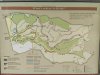
Smaller animals aren’t neglected here either, with a great Reptile House and a house called the Envirodome for invertebrates as well as a couple of species of frogs, some additional reptiles, and a few fish. The masterplan, displayed on a signboard by the giraffes, has an Aquarium on it – currently the only fish at the zoo are Archerfish and a tropical community tank in the Envirodome.
I have put a full species list for the zoo here: Adelaide Zoo species list, September 2025 [Adelaide Zoo]

Adelaide Zoo masterplan

Envirodome tanks

Envirodome tanks

Reptile House tank (this one for a Gila Monster).

Pigmy Bluetongue Skink – the best animal at the zoo
Adelaide Zoo is the last of the four “main” zoos in Australia I have visited (the others being Melbourne, Taronga, and Perth), although it has been so long since I’ve been to the others that any comparisons would be pretty groundless. I’ve only been to Taronga and Perth once each (in 2010 and 2011 respectively) and Melbourne several times (initially in 1993) but not for years now. However I feel like Adelaide might be my favourite of the four.
It is a small zoo and very attractive with all the gardens. It opened in 1883 and you can see several old houses and enclosures dotted about, restructured for more modern sentiments. This does mean there are quite a few enclosures which are really quite small, and not everything is very successfully transitioned – the Ring-tailed Lemurs in repurposed bear grottos with horrendous mock-rock comes to mind – but overall it is a very pleasant zoo. In several places there are mesh tunnels (Red Panda, tamarins, colobus) to extend cage space.
Red Panda enclosure in two parts – the giant fig tree in the foreground and the trees in the far back (where a panda can be seen sleeping in a tree top), joined by mesh tunnels.
There are some really nice mammal enclosures otherwise, some of which are new and some older. The Dusky Langur/Malayan Tapir enclosure with its enormous fig tree is famous of course, and the deck here also overlooks the gibbon islands. The Giant Panda enclosures were eye-catching – very rocky, almost a Japanese Garden look, and not at all how most panda enclosures are constructed.
Gibbon islands as viewed from the mentioned walkway deck
Giant Panda
Birds are where Adelaide really shines. There are aviaries scattered everywhere around the zoo, all of which are well-planted and (mostly) well-signed. They seem to move birds around a lot though, judging by past reviews and species lists, and the signage doesn’t always follow. There are several fairly big walk-through aviaries, including an Australian Rainforest one, an Australian Wetlands one, and an Asian one – the last one had many fewer species signed and / or seen than other people have seen there.
Australian Rainforest aviary, with a Superb Lyrebird walking through.
Australian Wetlands aviary
Aviary for Gouldian Finches and other birds.
Walk-in aviary being prepared for Orange-bellied Parrots.
Australian Pelicans, an enclosure shared with Cape Barren Goose.
Smaller animals aren’t neglected here either, with a great Reptile House and a house called the Envirodome for invertebrates as well as a couple of species of frogs, some additional reptiles, and a few fish. The masterplan, displayed on a signboard by the giraffes, has an Aquarium on it – currently the only fish at the zoo are Archerfish and a tropical community tank in the Envirodome.
I have put a full species list for the zoo here: Adelaide Zoo species list, September 2025 [Adelaide Zoo]
Adelaide Zoo masterplan
Envirodome tanks
Envirodome tanks
Reptile House tank (this one for a Gila Monster).
Pigmy Bluetongue Skink – the best animal at the zoo
Last edited: