Chlidonias presents: Bustralia

That's the smallest piece of Barra I've ever seen in a meal. And the batter is not normal either.

I regularly eat Barra and chips [every couple of weeks] and I would return that. Even the seagulls would knock that back!

I hope the chips were worth the near 20 bucks you paid for them.
I wasn't impressed - but I thought that's just what fish & chips cost in Australia.

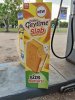
In other food news, Golden Gaytime come in slab form now!

IMG20250927174902.jpg
 

Attachments

  • IMG20250927174902.jpg
    IMG20250927174902.jpg
    119.2 KB · Views: 61
Are things just a lot pricier in the remote parts of inland Australia given the logistics, even with the road trains? Speaking of which, how many road trains have you seen on this trip so far?
There are road trains all the time, mostly double or triple, but they're just trucks so I don't think anything of them.
 
This brings back memories of my time in Alice. The dried up river bed of the Todd river. The flocks of Galahs everywhere. Glad you saw the black- footed Rock wallabies. I remember Simpsons Gap as well. The fish and chips meal looks pitiful though.
 
Alice Springs Sewage Ponds


Cooler again today, breezy without being windy, which was nice. I had been intending to go to the Desert Park today because I thought it was Friday, but it was actually Saturday and the buses run later (the first bus is 7am on weekdays, but not until 8.45am on Saturdays). Instead I walked to the sewage ponds to see what I could make of them.

As mentioned a few posts back, you used to be able to enter the Water Treatment Plant area to look for birds, once you had been inducted and were accompanied by a guide, but this has been discontinued (at least for now). The lady at the Information Centre had said the ponds can still be seen from the road – it is the same road which leads to the dump – so that was what I was going to try and do.

As the only large permanent body of water around, the sewage ponds are a haven for birds and there are a lot of resident species which you haven’t got a hope of seeing anywhere else in the immediate area. There were various birds I had really wanted to see there, some of which would have been lifers for me like Black-tailed Native Hen, White-winged Fairy-Wren, and Orange Chat. Others were just birds like the Red-necked Avocet which I have seen before but wanted to see again (in that specific case, I’ve only ever seen one single bird).

The ponds aren’t far south of town – supposedly 3km. Maybe 3km from the end of town, but not from the centre of town because it took me about an hour (I just measured it on Google Maps and it is about 5km from the centre if going direct through town along the main road, and about 2.5km from Heavitree Gap which is just south of town). There is a bus which goes to the road they’re on (the #300 or 301) but I didn’t know that until I got there and saw the bus stop, and in any case walking is better because you can look for birds along the way.


Rather than walk direct along the main road through town I walked there via a slightly longer route along the Riverside Trail, heading south past the Botanic Gardens on the east side of the Todd River. It was kind of a wasted walk. Yesterday on the Riverside Trail (heading north on the west side, to get to Telegraph Station) I had been seeing the same six or so bird species everywhere. I thought this was probably just chance, but today I realised that those few birds are almost all you’re likely to see around town.

First there are the Yellow-throated Miners, which are the inland version of the coastal cities’ Noisy Miner. Crested Pigeons and Spotted Doves are probably the next two most common birds. Magpie-Larks, Galahs and Australian Ringnecks are almost as ubiquitous, and then there are the crows (Little and Torresian). There are Australian Magpies about and you do also see Willy Wagtails and things like that here and there, but nowhere near as commonly as any of the others.

full

Yellow-throated Miner

full

Galah


A couple of interesting absences I have noticed. No House Sparrows in Alice, and no Common Mynahs in Adelaide. I was particularly surprised at the latter because I assumed mynahs would be in all the major cities in Australia.


full

Australian Ringneck of the subspecies zonarius, which is also known as the Port Lincoln Parrot. The ones I saw down by Adelaide were the subspecies barnardi, or Mallee Ringneck, which look like the one in the photo below.

full


The Heavitree Gap is at the south end of town, where the road passes between two rocky outcrops. The wind really whips through here. The Riverside Trail ends before this point but there is still a walking path continuing on south along the highway from here. Commange Road is off to the right about 1.5km further on, and this leads to the ponds at the end of that road (c.1km).

The ponds are extensive, but unfortunately what you can see from the fenceline is really limited. Basically the nearest two ponds can be seen clearly, and you can see slivers of the next ponds over, but the vast bulk of the area is invisible.

In the front ponds were some Grey Teal and Australian Little Grebes, and there were a couple of Pied Stilts, Spur-winged Plovers, and some Black-fronted Dotterels around the edges. And that was all. Way back I could make out an Australian Black Duck and a Black Swan. Black Kites were gliding in the sky (the dump is right beside the ponds), and I also saw a Black-shouldered Kite and a Nankeen Kestrel hovering above.

I walked back and forth along the short stretch of road, peering through the fence hoping a White-winged Fairy-Wren or an Orange Chat would magically appear, but of course they didn’t.


On the other side of Commange Road, just before the dump, is a section of scrubby land. I figured that if there are White-winged Fairy-Wrens and Orange Chats in the sewage ponds area then they will also be across the road, so I would go and look there.

I didn’t see a White-winged Fairy-Wren, but I did see a party of Purple-backed Fairy-Wrens which was a lifer in itself. It’s not as good as a White-winged Fairy-Wren because the male looks very similar to the Variegated Fairy-Wren (from which it was a split) whereas the White-winged Fairy-Wren has a very distinctive colouration. Better than nothing though!

I gave the ponds another try, just in case, and saw that a flock of avocets had turned up on one of the banks between the far ponds. They were distant but still close enough to see what they were, although hardly what I’d call a good view. White-eyed Ducks and Coots also got added to the list, and unexpectedly a Black-tailed Godwit feeding along the edge of one of the front ponds.


Walking back to town I saw some Fairy Martins (the first martins of this trip!), and then spent the afternoon at the Olive Pink Botanic Gardens where again I did not see much.

full

Australian Ringneck bathing at the pool behind the cafe in the Botanic Gardens.


31 bird species today, plus two mammals (Black-flanked Rock Wallaby and the Euro at the gardens):

Walking to the sewage ponds: Crested Pigeon, Spotted Dove, Galah, Australian Ringneck, Grey-crowned Babbler, Magpie-Lark, Yellow-throated Miner.

At the sewage ponds and surrounds (plus all of the above repeated): Australian Little Grebe, Black Swan, Australian Wood Duck, Australian Black Duck, Grey Teal, White-eyed Duck, Common Coot, Black-tailed Godwit, Black-fronted Dotterel, Spur-winged Plover, Pied Stilt, Red-necked Avocet, Black Kite, Black-shouldered Kite, Nankeen Kestrel, Willy Wagtail, Purple-backed Fairy-Wren, White-plumed Honeyeater, Little Crow.

At the Olive Pink Botanic Gardens: Fairy Martin (on the way there), Rainbow Bee-eater, Brown Honeyeater, Spiny-cheeked Honeyeater, Western Bowerbird.
 
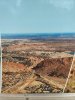
An aerial photo I saw at the Botanic Gardens looking south over Heavitree Gap (where the road goes between the two outcrops). The sewage ponds are the blue area at middle right - you can see how extensive they are, but all that is invisible from the road.

IMG20250920121346_BURST000_COVER.jpg
 

Attachments

  • IMG20250920121346_BURST000_COVER.jpg
    IMG20250920121346_BURST000_COVER.jpg
    111.2 KB · Views: 67
I've fallen behind on my posts again. I was hoping to post more or less each day as it happened but that didn't work out for Alice Springs. I've just arrived at Pine Creek, where I'll be for the next couple of days, and discovered they don't have Wifi here (at the Lazy Lizard) - I wouldn't have thought I'd ever be in any town in Australia that didn't have Wifi but here we are.

So I'll try to write up the Alice posts (on my laptop) and then they'll be ready to post when I get to my next stop...
When I was checking into the Lazy Lizard at Pine Creek the girl at reception had said there was no Wifi, I asked "nowhere?" and she said "maybe at the library". On the day I checked out I had to wait around for a while because my bus wasn't until 6.25pm, and because I was outside rather than inside my room I discovered that the hotel opposite (the Railway Resort) has free Wifi and it reached the Lazy Lizard, which is how I managed to post some things yesterday.

However, now I am in Broome. I am staying one night at the YHA in town which allows me to post a bit more, but for the next four days I will be staying at the Bird Observatory where they don't have Wifi (and apparently only a weak phone signal), so there will be another hiatus in posting. After that I am back at the YHA for three days - waiting for the next bus - so will be able to post, then in Darwin for just one night, then I fly to East Timor for a couple of weeks where I think I will again be unable to post anything.

Basically, there will be a continuing series of post-free interludes...
 
When I was checking into the Lazy Lizard at Pine Creek the girl at reception had said there was no Wifi, I asked "nowhere?" and she said "maybe at the library". On the day I checked out I had to wait around for a while because my bus wasn't until 6.25pm, and because I was outside rather than inside my room I discovered that the hotel opposite (the Railway Resort) has free Wifi and it reached the Lazy Lizard, which is how I managed to post some things yesterday.

However, now I am in Broome. I am staying one night at the YHA in town which allows me to post a bit more, but for the next four days I will be staying at the Bird Observatory where they don't have Wifi (and apparently only a weak phone signal), so there will be another hiatus in posting. After that I am back at the YHA for three days - waiting for the next bus - so will be able to post, then in Darwin for just one night, then I fly to East Timor for a couple of weeks where I think I will again be unable to post anything.

Basically, there will be a continuing series of post-free interludes...

Broome is considered the number one shorebirding spot in Australia with the Western Treatment Plant not far behind in second, it’s still a bit early in the season but shorebirds should be starting to arrive. Hope you enjoy.
 
Thank you @Chlidonias for detailing your adventures while traversing Australia in a bus. Believe it or not, it brings back a lot of nostalgic memories for me as I was in Australia in 2007. I lived in Oz for 2.5 years as a kid, exploring Western Australia between 1986 and 1988, but in 2007 my wife and I spent 6 weeks traveling the country on our honeymoon and it was a spectacular journey.

We had a full week in Sydney, 4 days in Cairns and the surrounding area in northern Queensland, several days in Darwin in the Northern Territory, a week in the Red Centre of the nation, 5 days in the Adelaide region, maybe 5 days exploring Tasmania and then we ended things off with a week in Melbourne. Our trip was jam-packed with a long list of attractions and for the next decade we gave serious consideration to moving Down Under. But 4 kids and many moons later, we are happy to remain in British Columbia, Canada.

Anyway, it's interesting to note that I too adored Adelaide, which is a city that is notable for its festivals, good-natured people, beaches and natural beauty. We visited Adelaide Zoo, Monarto Safari Park, Cleland Wildlife Park and Warrawong Wildlife Sanctuary while there, with you touring 3/4 of those places. I enjoyed reading your reviews and seeing your species lists from those attractions.

I also found it intriguing to read of your exploits in Alice Springs and the outskirts of that city. It was sad to see so many homeless people there in 2007, especially large groups of Indigenous civilians, but the charm of the rustic town seems to have remained. We hiked up to the Simpsons Gap in the West MacDonnell Ranges, saw Standley Chasm, and elsewhere in the Red Centre we spent a day hiking at Kings Canyon, had an expensive yet spectacular Sounds of Silence dinner in the Outback (very touristy!), went hot air ballooning at the crack of dawn (absolutely freezing in the desert), explored and climbed Uluru (which is now permanently banned since 2019), toured a couple of Indigenous Cultural Centres and also marveled at Kata Tjuta/The Olgas. I recall the price of groceries to be exorbitant and also for the only time in my life I had to wear netting around my face as the flies were absolutely brutal. Hiking through Kings Canyon would see me have 100 flies on my body at one time and they honestly did taint the experience a little.

I'm a bit surprised that you are using a bus to get around, as we just rented a car and then could come and go whenever we wanted, but I think maybe you don't drive? I liked reading about your visit to the Alice Springs Telegraph Station, which is an especially cool historical attraction, and I fully agree that Alice Springs Desert Park is a brilliant establishment, especially the world-class Nocturnal House. It's easily one of the biggest and best ones I've ever seen. While driving around, we saw a few Dingoes, a handful of monitor lizards, loads of Emus and macropods, and also 7 wild Dromedaries which was sort of surreal amidst the red sand. For our entire Aussie trip, although a wild Cassowary in Queensland was super neat, nowhere did we see more birds than our very long and exhausting day on a tour in Kakadu National Park far up in the Northern Territory. Birds and crocs are everywhere there.

I've never been to your next destination (Broome), but I have relatives in Perth who have used that city as a launching pad for swimming with Whale Sharks. If that's your plan, then best of luck!
 
Alice Springs - Telegraph Station area again


Today was a Sunday. There are no buses on Sundays so I decided to have another walk around the Telegraph Station trails. I had seen a few good birds on the Bradshaw Walk the other day and today I walked to the old homestead via that trail and then back via another trail called the Stuart Walk on the east side of the Todd River.

It was much hotter today than the other days and I took my time, just sort of idling along the trails rather than trying to get anywhere (which is my usual way of walking anywhere when I’m birding, but today I went especially slowly).

It wasn’t very birdy at all. I saw a pair of Brown Falcons harrassing a pair of Black Kites, which was interesting; both male and female Mistletoebirds (only a female was seen last time); a Western Bowerbird; and Splendid and Purple-backed Fairy-Wrens.

Best bird of the day was Budgerigar! A small flock went zooming past in a buzzing blur of green. It’s always fun seeing the common aviary birds from pet shops in the wild, the Zebra Finches and Budgies and others of that ilk. This was my first time seeing Budgies wild.

The Stuart Walk is on the other side of the dry bed of the Todd River, directly opposite the homestead. It is a drier - or at least less scrubby - area than the Bradshaw Walk and little was seen other than an Australian raven and a bush full of honeyeaters.


Today’s bird total was 26 species, with the usual two mammals (Black-flanked Rock Wallaby and Euro):

Spur-winged Plover, Nankeen Kestrel, Brown Falcon, Black Kite, Crested Pigeon, Galah, Australian Ringneck, Budgerigar, Rainbow Bee-eater, Black-faced Cuckoo-Shrike, Rufous Whistler, Willy Wagtail, Splendid Fairy-Wren, Purple-backed Fairy-Wren, Magpie-Lark, Zebra Finch, Mistletoebird, Brown Honeyeater, Spiny-cheeked Honeyeater, Singing Honeyeater, Yellow-throated Miner, Western Bowerbird, Australian Magpie, Little Crow, Torresian Crow, Australian Raven.


full

A pair of Black-flanked Rock Wallabies (photo taken on a different day)
 
Last edited:
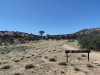
The original Alice Spring, where you ford the Todd River to reach the Stuart Walk. This is really just a granite-based depression at the side of the river which retains water for a period after the river has dried up or after it has rained heavily, but at the time of discovery was thought to be an actual spring. Hence the town being built here.

IMG20250921104613.jpg
 

Attachments

  • IMG20250921104613.jpg
    IMG20250921104613.jpg
    282.5 KB · Views: 60
The number of parrots in Australia is always staggering to me... what do desert parrots mostly feed on? Are there a large number of fruits and nuts growing in the Outback?

My next stop after Adelaide was Alice Springs, which was twenty hours away on a Greyhound bus.

I was very surprised to read this at first, not knowing that Greyhound buses were also in Australia. Turns out the US and Australia have two different companies, both operating "Greyhound" bus lines. Having ridden the US versions, I was assuming you would have the superior experience... but I've never been cold on a US Greyhound! The opposite experience, if anything.

Yes. It’s a real social inequality issue because there’s remote communities that typically only have one shop, and the price of fresh food in particular is many times what it is in coastal cities.

Reminds me of how food is priced in Alaska and Hawaii; people on social media have made videos and posts showing astronomical costs of both fresh and processed foods in those states. Does Australia have food assistance programs that help offset high costs for low-income people living inland?

The original Alice Spring, where you ford the Todd River to reach the Stuart Walk. This is really just a granite-based depression at the side of the river which retains water for a period after the river has dried up or after it has rained heavily, but at the time of discovery was thought to be an actual spring. Hence the town being built here.

Which begs the question... how does the town actually procure water?
 
The number of parrots in Australia is always staggering to me... what do desert parrots mostly feed on? Are there a large number of fruits and nuts growing in the Outback?
It seems that parrots probably evolved in Australia - or at least Gondwana. Therefore, it is not surprising they evolved to fill available niches.

When people think of deserts, they often imagine the Sahara. In fact, as Chli's photos show, there is quite a bit of vegetation around. All those plants have to have seeds or fruits of some form to reproduce.

I am involved with orange-bellied parrots, which are saltmarsh specialists, a habitat which in some ways is similar to deserts. I am amazed at the size of the tiny seeds they consume in the wild.

Arid zone parrots such as budgerigars and cockateels, have evolved to cope with their environments - extremes of heat and cold, lack of water and hard seed diets. No wonder they became the most popular of cage birds.
 
Best bird of the day was Budgerigar! A small flock went zooming past in a buzzing blur of green. It’s always fun seeing the common aviary birds from pet shops in the wild, the Zebra Finches and Budgies and others of that ilk. This was my first time seeing Budgies wild.

Like you I got very excited seeing wild Budgerigars, and Zebra finches too- these birds so well known to us in aviculture/pet situations. The budgies impressed particularly, flying in a tight green cloud wheeling and dipping around the sky, wonderful.

That's really interesting about the origin of the name 'Alice Springs' too. I didn't know that.
 
The number of parrots in Australia is always staggering to me... what do desert parrots mostly feed on? Are there a large number of fruits and nuts growing in the Outback?
I think it is principally grass seeds for the smaller species? But more than once we saw Major Mitchells cockatoos feeding at the roadside and I stopped to see what they were eating, they were small melon-like fruits that seemed to be growing in the sand.
 
I now have wifi again, for the next few days at least...

I was very surprised to read this at first, not knowing that Greyhound buses were also in Australia. Turns out the US and Australia have two different companies, both operating "Greyhound" bus lines. Having ridden the US versions, I was assuming you would have the superior experience... but I've never been cold on a US Greyhound! The opposite experience, if anything.
From what I have read of American Greyhound buses, the Australian ones are definitely superior. But the temperature they keep them at is puzzling. However, I'd rather be cold - just put on some extra clothes - than cooked.

Which begs the question... how does the town actually procure water?
The town's entire water supply comes from deep aquifers, with the bores being about 185 metres in depth to access it.

The number of parrots in Australia is always staggering to me... what do desert parrots mostly feed on? Are there a large number of fruits and nuts growing in the Outback?
As noted by others above, most Australian deserts are actually covered in grasses and bushes and trees. The idea that people overseas have (not necessarily people on this forum, but people in general) of inland Australia just being bare red sand is not accurate. There are areas somewhat like that - there is even one called the Great Sandy Desert, because Australians are nothing if not inventive - but generally there is tons of vegetation, so there are always seeds from the grasses, and much of the larger vegetation is pollinated by birds such as honeyeaters, so there is lots of pollen and nectar, and they tend to have large seeds and nuts (think of eucalyptus seed cases).
 
Alice Springs Desert Park


This morning was chilly and breezy, although it got hotter later. I was making this the Desert Park day, but I was expecting to be there for just a couple of hours and then I’d spend the rest of the day birding in the general vicinity.

If someone had told me beforehand that I would spend eight hours at the park - with just eight aviaries, a nocturnal house, and three further enclosures (for kangaroo, emu, and dingo) - I would have been doubtful. Yet I spent almost two hours just on the first three aviaries, which are clustered quite close together a couple of minutes from the entrance. I loved this park. It is brilliant. I arrived just after the 7.30am opening time and it took me until 12.45pm to do a full loop, and then I stayed further until about 3.30pm so I could catch the 3pm bird show.

The Desert Park is just on the edge of town (about 5km away) and is easy to reach on the #400 / 401 bus which runs at roughly one to one-and-a-half hour intervals (with the first bus at 7am on weekdays, and 8.45am on Saturdays). You get off at the Albrecht Oval, and just follow the shared cycle/walking path for about 900 metres. The entry fee is AU$39.50.

The local town buses in the Northern Territory are all free at the moment, including in Alice Springs and Darwin. They were made free in September last year for a month, and then they just ended up staying free.

Alice has a big problem with homeless people who have moved in from smaller settlements to take advantage of the access to alcohol. The buses themselves would be nice enough (if they were a bit cleaner – everything gets dusty quickly in the Outback!) but because they are free the passengers, seemingly, are almost solely the homeless getting from one side of town to the other without walking, and the buses stink of BO! Not just a bit whiffy, but cut-it-with-a-knife stinking. I’ve been on a lot of janky buses in Asia, but the Alice Springs buses are the only ones where I’ve genuinely been worried I’d be catching scabies or lice when riding them.

The walk from the bus stop to the Desert Park is through the natural mallee scrub and there are quite a lot of birds to be seen – on the way I saw a Western Bowerbird, Zebra Finches, and several honeyeaters including Spiny-cheeked, Singing, and White-plumed.


full

Zebra Finches, in the wild

full

White-plumed Honeyeater (photo taken at the Botanic Gardens earlier)


The wild bird total for the whole day wasn’t great (18 species) because most of the time I was looking at the captive birds and trying to photograph them. I did see a lifer bird, however, with a Red-backed Kingfisher perched high in a tree when I was walking back to the bus stop in the afternoon. The mammal for the day was House Mouse.

full

The desert-dwelling Red-backed Kingfisher


All the birds and other animals at the Desert Park are inland species, found naturally within 400km of Alice Springs apparently. This means that the birds you’re looking at mostly aren’t your usual aviary birds (although some are, because of course this is where birds like Zebra Finches and Budgerigars come from). Instead there are grasswrens and honeyeaters and thornbills and whitefaces, which explains why I was spending so long at each aviary.


full

Southern Whiteface

full

Dusky Grasswren


All the aviaries are themed around habitats. Three of them are walk-through aviaries. The other five are all of the same basic design, having a large viewing "porch" with the aviaries having windows. There isn't much issue with reflections or glare because the viewing area is covered over.


full

Golden-backed Honeyeater collecting nest material from another visitor

full

They even have an Australian Little Grebe!


It’s not just great aviaries and unusual birds here though. The Nocturnal House is fantastic, easily the best I have ever seen. I love nocturnal houses because I love odd animals, which most night animals are, but all to often the animals inside these houses are unfortunately stuck inside much too small boxes. Here, instead of tiny boxes the animals are in large to huge enclosures, belying the idea that spaces "need" to be small to enable the animals to be seen in the dark, and especially belying the idea that rodents should be in little cubes. The Greater Stick-nest Rats, for example, were running around in a giant space gathering twigs to add to their pile, while Red-tailed Phascogales skittered back and forth behind them. Almost every animal here was seen well (only two were not seen). The visitor spaces were also great - almost like a public aquarium rather than the narrow corridors of a typical nocturnal house.


full


full


Some of my favourite zoos in Australia are the ones which have a focus on native birds and which display them in interesting “habitat-style” aviaries. I’m thinking Alice Springs Desert Park, Gorge and Featherdale in particular. There are zoos which would be considered objectively better (say, Adelaide Zoo or any of the other large ones) but subjectively the bird ones are top for me.


More of a review here: Alice Springs Desert Park, September 2025 [Alice Springs Desert Park]

And photos in the gallery here: Alice Springs Desert Park - ZooChat


full

Numbat, looking like a cross between a Euplerid and a squirrel.
 
Alice Springs – walking to(wards) Simpson’s Gap


This morning was again chilly and windy, although unlike yesterday which just remained a little breezy today it became really windy later on. This wasn’t much of an issue because even though this is desert, it isn’t sand desert. The stony ground is baked hard and covered in grasses and shrubs.

I was heading today in the direction of Simpson’s Gap, which is about 25km west of town. The furthest a bus goes out that way is the one I caught yesterday to the Desert Park, which only cuts off 5km from the journey. I was just going to walk the rest, and see what I could see along the way. I didn’t really expect to make the whole distance but the end destination isn’t the point.

I caught the 7am bus to the same stop as for the Desert Park, then walked 2.5km along the shared cycle/walking path to Flynn’s Grave. This is the same path which you take to reach the Desert Park, but turn off before you get to there. At Flynn’s Grave you cross the road and you’re at the start of the path to Simpson’s Gap. That’s another 17km and it is paved the entire way so it’s easy to walk.

There was a fair bit of activity in the mallee scrub along the path to Flynn’s Grave although the wind made it tricky for me because I generally have to rely on movement to find birds, and when it’s windy everything is moving. There were the usual Zebra Finches and Splendid Fairy-Wrens and so forth, and also a nice flock of Yellow-rumped Thornbills on the service road alongside the walking path, of which I was somewhat-successfully endeavouring to take photos when a parks vehicle roared past and scattered them.

full

Yellow-rumped Thornbill - the photo may look like it was taken at night with a flash, but that's just how harsh the light is in the desert during the daytime!


The best birds without a doubt were just after this, when I noticed some Galahs flying across the trees in the company of several other pink and white cockatoos which weren’t white enough to be corellas or sulphur-crests but not pink enough to be more Galahs. I followed them with my binoculars until they landed – and thus not against the sky – and saw that they were indeed one of my most wanted Australian birds, the Pink Cockatoo.

full


I always seem to be saying that “X Bird” is my “most wanted”, and of course once you see it then some other bird becomes your most wanted, but the two Australian cockatoos I have always really wanted to see are the Gang-Gang and the Pink Cockatoo, and now I’ve seen them both on this trip.

Pink Cockatoo isn’t a particularly apt name. They are mostly a very soft pinkish-white – I mean, they are pink, but the Galah is a much more pink bird. Their other common names are Major Mitchell’s Cockatoo and Leadbeater’s Cockatoo. I vary in what I call them, but the eponymous names are falling out of favour in this modern era of not wanting birds to be named after horrible people like Major Mitchell.

The cockatoos had landed not far away, one pair actually was in a small eucalyptus tree right beside a track running off the walking path. Photographing them was not easy – they were busy feeding amongst the leaves, and that and having to point the camera into the sun didn’t make for a good combination. Luckily they were moving about a bit in the tree and I got some shots.

full


full


The Pink Cockatoos were feeding on these hard growths pictured above. I don’t know what they are, whether they are some sort of fruiting body or some sort of insect gall – I tried googling them but didn’t get anywhere – but they were breaking them open and the inside seemed to be soft and delicious.


You can probably tell how much the wind was blowing in the photo below. The wind not only caused trouble for me trying to photograph them, with the leaves constantly moving into frame, but the cockatoos didn’t like it either. This one had got sick of two little branches which kept hitting it while it was feeding, so it very deliberately bit each one off and dropped them.

full


There are bicycle rental shops in town and my initial idea had been to bike out to Simpson’s Gap, but they don’t open until 9am and walking is free. If I had rented a bicycle I wouldn’t have seen the Pink Cockatoos (I wouldn’t have been going past here until about two hours later), so walking was definitely the right choice today.


The path from Flynn’s Grave is mostly flat, and the landscape is largely pale-whitish grassland with scattered eucalyptus trees, some of them a startling contrast of pure white trunk and bright green leaves. Birdlife was patchy, but one of those patches started with Black-faced Woodswallows perched in a nearby tree which I was trying to photograph, and then suddenly turned into a swirl of dozens of woodswallows, White-winged Trillers and Crimson Chats, all of which were too fast and not close enough to photograph but fun to watch.

full

Black-faced Woodswallows


Much more numerous than the birds were the flies. As I’ve mentioned previously the flies in inland Australia are just after your sweat and they’re welcome to it, but they are so very annoying when they think they can just drink from your eye sockets instead. Most of the places I’ve been have actually been quite light on flies, but the path to Simpson’s Gap was buzzing.

The thing which makes them most annoying is the way they ride along with you when you walk. You’re not just coming across flies as you go, you are collecting flies as you go. They settle on your back and hat and bag, and whenever you stop walking they erupt up around you like a blizzard of flies. A flizzard, if you will.


I didn’t make it all the way to Simpson’s Gap. I think I got to about 15km from Flynn’s Grave, and then turned back so that I wouldn’t miss the last bus back to town. It did seem silly not to go just that extra few kilometres, but it would have been one or two hours extra (allowing for the time spent there as well). If I’d missed the last bus then the 5km more to town isn’t far in itself, but added onto the previous 40-odd kilometres it is, and I’d have then also been walking through the middle of town after dark which was generally not recommended. As it happened I got back to the bus stop two hours before I’d anticipated because I didn’t see many birds on the way back, so could have kept going anyway!


full

Juvenile Black-shouldered Kites – when I first saw them huddled up in a eucalyptus tree I thought for a moment they might be Letter-winged Kites, which are nocturnal and roost in eucalyptus, but then I saw their parents and watched them all fly so could see the wing patterning.


Bird total for the day was 26 species, and no mammals – I had been expecting to see at least some Euros on the walk, but none:

Nankeen Kestrel, Black Kite, Black-shouldered Kite, Spotted Dove, Crested Pigeon, Galah, Pink Cockatoo, Australian Ringneck, Pallid Cuckoo, White-winged Triller, Black-faced Woodswallow, Black-faced Cuckoo-Shrike, Grey-crowned Babbler, Rufous Whistler, Willy Wagtail, Hooded Robin, Yellow-rumped Thornbill, Splendid Fairy-Wren, Purple-backed Fairy-Wren, Magpie-Lark, Zebra Finch, Crimson Chat, Spiny-cheeked Honeyeater, Singing Honeyeater, Yellow-throated Miner, Pied Butcherbird.
 
Back
Top