Chlidonias presents: Bustralia

I stayed at Lee Point at the Club Tropical Resort when we visited Darwin, and absolutely loved the area, and saw heaps of birds. Did you see any other "sights" at Casaurina beach? I could make any number of jokes about the birds that might be seen at the clothing optional section of that beach!
There isn't anyone on the beaches except dog-walkers, it is far too hot. It really is like an oven here at the moment.
 
Darwin: Holmes Jungle Nature Reserve and Knuckey Lagoon


The Holmes Jungle Nature Reserve kind of sounds like the name of a wildlife park (i.e. a zoo) but it is an actual reserve which is based around an area of monsoon forest (the jungle part of the name) as well as the standard grassland and woodland. The reserve is always included in lists of best birding sites in Darwin, usually with the titbit that Grass Owls can sometimes be seen hunting over the grasslands in the early morning. Given that the last record on eBird for Grass Owls in Darwin is from 2012 that doesn’t seem like it is so much a “sometimes” as a “long ago in the distant past”.

I caught two buses to get there. First the #10 to Casuarina and then the #5 to Vanderlin Drive. Google’s directions said I then had a 25 minute walk but in fact the south end of the reserve is just a few tens of metres from the intersection where the bus stop is. There was a sign there, and a dirt road leading along the inside of the fenceline, so I just went in here instead of walking all the way up the main road to the “real” entrance where the car parking is.

The other side of that fenceline seems to be some sort of dumping ground. There was an unusual mixed flock of Magpie Geese, Little Corellas and Pied Herons scavenging around a pile of what looked like old vegetables. The geese and corellas flew into the trees at my approach. I had never associated Magpie Geese with trees before but I have regularly seen them perched in trees in Darwin, and saw them roosting in trees in the evening at the botanic gardens.

full


The Pied Herons were a lifer, something I didn’t realise until later – I’ve seen them in Australian zoos so often that I just assumed I’d seen them wild already, but in fact they are only found around northern Australia and southern New Guinea, and the one part of their range I’ve been in before is Cairns (years ago) where I guess I didn’t see them. They are the best-looking heron in Australia by far. I saw maybe a hundred or more today, with large flocks of them passing overhead regularly through the morning.

Further along the fence (still on the other side) there was a pool of some kind but it was below the ground level so I couldn’t see the surface. However there were White Ibis, Little Black Cormorants, Radjah Shelducks, Cattle Egrets, more Pied Herons, and a Black-necked Stork all milling around the edges so presumably it contained fish.


Just after this the road I was on forked, so I took the track which veered off through the middle of the woodland. There weren’t many birds along here but I arrived quickly at the “Jungle Picnic Area” beside the “Jungle Walk” which is a loop-trail through a remnant patch of monsoon forest.

I was hoping to find a Rainbow Pitta along this trail but I mostly found mosquitoes. I got one bite on my face which swelled up half my cheek. It was very quiet in there, bird-wise. A male Pacific Koel was new for the year. Although I didn’t get my pitta here I did see a pair of Grey Whistlers which were a lifer so just as good. Well, almost as good. They’re not pittas, after all.

I spent a bit of time around the picnic area which was more open with slightly fewer mosquitoes. I failed in taking photos of the Red-backed Fairy-Wrens here, just barely managed a photo of a White-throated Honeyeater, and snapped a quick one of a Rufous-banded Honeyeater which landed very briefly on a branch right above me.

full

White-throated Honeyeater

full

Rufous-banded Honeyeater


Opposite the Jungle Picnic Area is the start of the Woodland Walk which leads to the Hilltop Picnic Area. Up here by the toilet block I found a tap leaking into a bowl which is probably for dogs but is also used by the birds. There were several Rufous-banded Honeyeaters and Owl Finches visiting it. The other bird in the photo below is a Peaceful Dove.

full


I had been at the Holmes Jungle Nature Reserve for several hours and I wondered if I should continue down the road to Knuckey Lagoon or just leave it at that for the day. It was ridiculously hot, but it also seemed silly to come all the way back here on a different day when I could just walk there right now. It didn’t look far on the map – Google was telling me it was an hour’s walk which didn’t seem right. I decided to go with it. Knuckey Lagoon is one of the higher-listed spots on eBird with 201 species (Holmes Jungle has 224 species) and I decided I needed some water birds.

It took forty minutes to walk there. That doesn’t sound like long, especially because I’m writing this while sitting comfortably in an air-conditioned room (!), but I was getting a bit dizzy in the heat on the way and it felt like this was actually a bad idea after all.

I walked right past the entrance to Crocodylus Park. I’d originally been going to go there but it has an AU$46 entrance fee and they don’t have anything I haven’t seen elsewhere. It seemed like it would be a poor return for my money. I hadn’t been that happy with paying $40 for Crocosaurus Cove a couple of weeks ago but at least they had a nice reptile house with some new species for me.


The time was about quarter to dead when I arrived at the lagoon, which was more of a great big puddle. I have a sneaking suspicion that this is not the best month to visit Darwin! At least there was a picnic table there where I could sit down and try to be alive.

Ninety-nine percent of the birds at Knuckey Lagoon were Magpie Geese. The only other ducky things were Australian Black Ducks and a few Radjah Shelducks. There was a small flock of Royal Spoonbills off to one side, some Pied Herons and Plumed Egrets scattered here and there, Little Pied Cormorants fishing, and singletons of Australian Pelican and White-necked Heron. Apart for Pied Stilts there were just three or four waders, only one of which was on the nearest edge where I could see it well enough to tell it was a Wood Sandpiper (the first time I’ve seen one in Australia but I’ve seen it in six other countries including two this year).

I’m not sorry I walked there but it also wasn’t worth it in the slightest. If I’d made a special trip out here for it on a different day I would have been very unimpressed.

full


Rather than walk back the way I’d come I continued along the same road to where it joined to the Stuart Highway which took twenty minutes, and caught a bus from there to Casuarina. If I was coming specifically to Knuckey Lagoon this is where I’d catch the bus to because it is much closer. There’s also another pond directly opposite the bus stop here, which had the same birds (predominantly Magpie Geese).


I saw 51 species of birds today:

Magpie Goose, Radjah Shelduck, Australian Black Duck, Orange-footed Scrubfowl, Australian Pelican, Little Pied Cormorant, Little Black Cormorant, Great Egret, Plumed Egret, Pied Heron, White-necked (Pacific) Heron, Eastern Cattle Egret, Spur-winged Plover, Wood Sandpiper, Pied Stilt, Whiskered Tern, Royal Spoonbill, Australian White Ibis, Black-necked Stork, Black Kite, Whistling Kite, Torresian Imperial Pigeon, Bar-shouldered Dove, Peaceful Dove, Red-tailed Black Cockatoo, Greater Sulphur-crested Cockatoo, Little Corella, Red-collared Lorikeet, Pacific Koel, Forest Kingfisher, Dollarbird, Rainbow Bee-eater, White-bellied Cuckoo-Shrike, Red-backed Fairy-Wren, Grey Whistler, Lemon-bellied Flycatcher, Magpie-Lark, Mistletoebird, White-throated Honeyeater, Rufous-banded Honeyeater, White-gaped Honeyeater, Blue-faced Honeyeater, Dusky Myzomela, Little Friarbird, Silver-crowned Friarbird, Double-barred (Owl) Finch, Masked Finch, Crimson Finch, Australian Figbird, Spangled Drongo, Torresian Crow.
 
Darwin: Holmes Jungle Nature Reserve and Knuckey Lagoon
. I have a sneaking suspicion that this is not the best month to visit Darwin!

You don't say, Sherlock! For all those out there terrified by this into wiping Darwin off their travel list forever, I can recommend the month of May. Clear skies, milder temperatures, and the possibility of being picked up by a giant insect and consumed, nil. A delightful time to be there.
 
You don't say, Sherlock! For all those out there terrified by this into wiping Darwin off their travel list forever, I can recommend the month of May. Clear skies, milder temperatures, and the possibility of being picked up by a giant insect and consumed, nil. A delightful time to be there.
When I had the original concept for this trip (back during covid) it was to be mid-year, so it would be cooler in central Australia and still comfortable in Darwin and Queensland. But the trip I was going to do this year didn't happen so I switched it out for the Bustralia one because it was already basically planned and I could just go and do it. The heat is a real pain and I definitely wouldn't recommend coming here at this time of year, but it doesn't stop things in any major way - although I have to cut down the activities each day to one because it's energy-sapping. Rain might be an issue when I get to the Cairns area though.
 
When I had the original concept for this trip (back during covid) it was to be mid-year, so it would be cooler in central Australia and still comfortable in Darwin and Queensland. But the trip I was going to do this year didn't happen so I switched it out for the Bustralia one because it was already basically planned and I could just go and do it. The heat is a real pain and I definitely wouldn't recommend coming here at this time of year, but it doesn't stop things in any major way - although I have to cut down the activities each day to one because it's energy-sapping. Rain might be an issue when I get to the Cairns area though.
Rain should not be too much of an issue in Cairns right now. However, the heat will be similar. I did a Daintree River cruise in November a couple of years back and saw nothing besides a night heron and some archer fish. The guide was visibly embarrassed. When the rain does come, I understand it is worse in Darwin.

One thing you have mentioned are the insects. On my visit to Darwin - Kakado - Katherine a few years back I packed the most powerful insect repellants I could find but never used them.
 
Last edited:
Darwin: um, doing nothing


One of the downsides to doing day-by-day threads like this one is that every so often there is a day where you don’t actually do anything and there’s nothing to say.

I felt like I had done a bit too much yesterday in the heat and was going to have today as a rest day. When I got up in the morning I still liked that idea but also didn’t want to be doing absolutely nothing, so I went across the road to the Ostermann Street mangroves which I mentioned in an earlier post. Just as before the mangroves were seemingly birdless. Surely if they are such a good site for the mangrove birds I couldn’t go there twice and see no birds both times?

I’m mostly restricting my activity in Darwin to encompass just the first half of each day. Ideally it would just be morning but it usually stretches all the way to midday and sometimes beyond because I’m walking a lot. Today it was about half an hour, and then back to the hotel.


These are the only birds I saw today, all simply seen along the street outside:

Orange-footed Scrubfowl, Torresian Imperial Pigeon, Bar-shouldered Dove, Red-tailed Black Cockatoo, Red-collared Lorikeet, Little Friarbird, Double-barred (Owl) Finch, Australian Figbird.
 
Darwin: Darwin Botanic Gardens again


Round two for the Rufous Owls.

It was somewhat cooler this morning. My t-shirt was just extremely moist rather than wringable when I got back to the hotel, which was interesting because it was raining today – I was less wet after a rainy morning than from the regular non-rainy mornings. Unfortunately today being cooler did not signify a lowering of temperatures in the following days because it remained just as hot as before.

As I got off the bus at the gardens there was a thunder crack in the sky. The black clouds billowing over the trees looked ominous. I hadn’t checked the weather forecast because all this week had been the same, baking sun and blue skies. The coming week’s forecast, when I checked it later, was rain most days (although, four days later, this is still the only day on which the rain actually arrived).

Just as I neared the visitor centre the first big raindrops starting falling. I knew what was on its way and ran over to the covered area of the building just as the skies opened up and the rain came crashing down. I was hoping it was a short heavy rainstorm which would pass into light rain, which is exactly what happened, and after maybe twenty minutes I was wandering the paths again.

The rain brought out the Cane Toads in force, but seemed to have dampened the enthusiasm of the mosquitoes which were noticeably absent all morning. Six-toothed Rainbow Skinks, introduced to Darwin, also liked the rain it seems and were scuttling about everywhere.

My list of birds I’d like to find in Darwin is quite short, with only about fifteen or so species I haven’t seen before. In theory most could be found together (a bunch of them are mangrove-dwellers and a bunch are woodland/grassland-dwellers), but of course in reality at any one site I might only see one or two of them (if I'm lucky!). From the eBird list for the Botanic Gardens there were just three birds I was after - Rufous Owl, Green-backed Gerygone, and Varied Lorikeet – and I didn’t find any of them.

I walked round and round the “Rainforest” section of the gardens which the owls are supposed to frequent, staring up into the trees fruitlessly (well, owllessly). I heard a gerygone singing too but couldn’t locate it. It wasn’t a very successful morning.


I was due to be checking out of the hotel the next day but I’d barely done anything in Darwin yet so I extended my stay for another week, which they graciously gave me at the same heavily-discounted rate in the same room. The coming week is forecast for rain, so we’ll see how that goes.


The last time I went to the Botanic Gardens I saw 25 species. Today I did one better with 26 species:

Magpie Goose, Radjah Shelduck, Orange-footed Scrubfowl, Nankeen Night Heron, Spur-winged Plover, Australian White Ibis, Straw-necked Ibis, Black Kite, Torresian Imperial Pigeon, Bar-shouldered Dove, Greater Sulphur-crested Cockatoo, Little Corella, Red-collared Lorikeet, Forest Kingfisher, Dollarbird, Rainbow Bee-eater, Varied Triller, White-winged Triller, Magpie-Lark, White-gaped Honeyeater, Blue-faced Honeyeater, Dusky Myzomela, Little Friarbird, Australian Figbird, Yellow Oriole, Spangled Drongo.
 
Last edited:
Darwin: Casuarina Coastal Reserve


When I was at the Lee Point Dam the other day the birders I’d met there had said that the Casuarina Coastal Reserve was a really good birding site. It was already on my list of places to go - Rainbow Pitta was a bird noted as occurring there – and today was the day.

This is another easy site to reach. Some of the places I’m going in Darwin are near bus routes but with a fair bit of walking required from the bus stop to the site itself. Others are like this one, where it is close to bus stops but however you get there you then need to be prepared to walk (or bike) because the access for parts of it is along shared walking/cycle tracks.

In this case I caught the #4 bus from outside the hotel going north through Nightcliff and got off at Ryland Road nine minutes later. From there I just walked a couple of minutes up Rossiter Street to the end and then through the park to the Rapid Creek footbridge. From there you can walk all the way up the coast to Lee Point at the end, although I didn’t go that far (I went about 5km to Sandy Creek and then back again).

There are mangroves along Rapid Creek which I think is where the Chestnut Rails on eBird must be seen (I didn’t) and then a short walk further on the path splits. I took the right-hand path, which has grassland on one side and mangroves on the other.

So far I’d been seeing just the usual birds but while taking a side-detour on a path into the mangroves I found one of the species on my “birds to see” list, the Green-backed Gerygone which was not only a lifer but was also the last of the Australian gerygones left for me to see. Like most gerygones it was moving around frantically like a jerboa which has been drinking too much coffee. The best of the photos I got is the one below. I’ve seen Green-backed Gerygones a few times over the next few days and this is still the best shot I’ve managed.

full


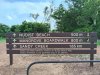
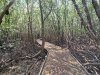
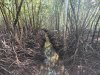
Most of this morning was actually pretty birdless. If I was going back here I would just stick with the southern end of the walk, from the Rapid Creek footbridge to maybe the Jacks Cove area (if anyone’s looking at this on a map). North of here might be better in cooler weather I guess, but on this day there was very little to be seen. I continued on past the Nude Beach, which would be kind of awkward when you’re carrying a camera and binoculars but the beaches are all deserted apart for dog walkers, until the Mangrove Boardwalk which was similarly lacking in birds but had some impressive mangrove root systems.

Just before Sandy Creek the track ends and you have to walk along the beach itself. I wasn’t really going to but I could see birds further ahead by the tide-line so I went to see what they were (mostly a mix of terns) and then headed back.

Back near Jacks Cove I spotted a Pacific Baza in a tree, which was the only other year-bird for the day after the Green-backed Gerygone. I think it was eating a stick insect.

full


I saw 42 species of birds today:

Magpie Goose, Orange-footed Scrubfowl, Australian Darter, Bush Stone-Curlew, Spur-winged Plover, Whimbrel, Silver Gull, Greater Crested Tern, Lesser Crested Tern, Australian Gull-billed Tern, Whiskered Tern, Australian White Ibis, Straw-necked Ibis, Osprey, Pacific Baza, Brahminy Kite, Whistling Kite, Torresian Imperial Pigeon, Bar-shouldered Dove, Peaceful Dove, Red-tailed Black Cockatoo, Greater Sulphur-crested Cockatoo, Little Corella, Galah, Red-collared Lorikeet, Dollarbird, Rainbow Bee-eater, White-bellied Cuckoo-Shrike, Varied Triller, Lemon-bellied Flycatcher, Shining Flycatcher, Magpie-Lark, Green-backed Gerygone, Brown Honeyeater, Rufous-banded Honeyeater, White-gaped Honeyeater, Red-headed Myzomela, Little Friarbird, White-breasted Woodswallow, Australian Figbird, Yellow Oriole, Black Butcherbird.
 
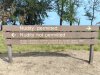
You can drive up the coast through the Casuarina Coastal Reserve for maybe 3km, then you reach this sign and have to walk. It's kind of awkward the Mangrove Boardwalk is situated after the Nudist Beach. They even have a little kid on the sign for the Mangrove Boardwalk. Won't somebody please think of the children!?

IMG20251030084330.jpg


What do you wear if you're standing in the centre?

IMG20251030084915.jpg
 

Attachments

  • IMG20251030084330.jpg
    IMG20251030084330.jpg
    267.5 KB · Views: 34
  • IMG20251030084915.jpg
    IMG20251030084915.jpg
    259.6 KB · Views: 30
Darwin: East Point Reserve


One of the main birds I wanted to find while in Darwin was the Rainbow Pitta. There are over forty species of pittas in the world, mostly in southeast Asia but with a few also in Africa and the Australasian region. They look kind of like very colourful thrushes, hence their old name of “jewel-thrush”, and they spend most of their time hopping about on the forest floor. Australia has three species of which the Rainbow Pitta is found solely in far-northern Australia, in the top parts of the Northern Territory and Western Australia. If I didn’t see it here then I wasn’t going to be seeing it anywhere.

There’s a place near Darwin called the Howard Springs Nature Park which is reputed to be the very best place to find them, guaranteed apparently, and while it can be reached by public transport from Darwin it requires two or three buses (depending on the day and time) followed by a 6km walk from the nearest stop. Normally this would be fine, but with the current heat I wasn’t going to be doing that.

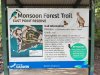
Instead I went to the second-choice site, the East Point Reserve. This is within Darwin itself, a small peninsula sticking off the coast to the west of the airport, so access is easy. I just took the #4 bus for six minutes south to Fannie Bay, and from there you walk up East Point Road which has a walking/cycle path along the coast. After about a kilometre you reach Lake Alexander, at the far end of which is a mangrove boardwalk, and maybe a kilometre past that is the Monsoon Forest Trail.


There were the usual common Darwin birds seen while walking along the East Point Road with the additions of a few shorebirds like Reef Egrets, Striated Herons and some waders.

full

Little Corellas


I was kind of hoping there might be Green Pigmy Geese on Lake Alexander (the only Australian waterfowl I have never seen are this one and the Spotted Whistling Duck) but also wasn’t surprised that there weren’t because they seem very restricted in Darwin.

What I did see at Lake Alexander was a pair of Beach Thick-knees, just standing on the grass under the trees. I have seen this species just one time before, on Komodo in 2011. They are said to be common on Darwin beaches but I hadn’t seen any here yet, and certainly didn’t expect them to be in such a park-like setting as if they were Bush Stone-Curlews.

full

Beach Thick-knee (called Beach Stone-Curlews in Australia – I alternate in what I call them)


Other birds at the lake were Magpie Geese and Radjah Shelduck (the two waterfowl present on almost any body of water in Darwin), the ubiquitous Orange-footed Scrubfowl, Shining Flycatchers which had proved to be very common all over Darwin, all sorts of honeyeaters including my favourite Rufous-banded, a Brahminy Kite, and even a few Greenshanks at the water’s edge.


I skipped the mangrove boardwalk for the moment and continued on up the road to the Monsoon Forest Trail further along the peninsula, because the pittas were the target for the day after all and they are found in the forest and not in the mangroves. The Monsoon Forest Trail is a 2.5km loop track which the entrance sign says will take 1.5 hours. That might sound excessively long for such a short distance but in fact that is how long it took me!

It’s a nice bit of forest but very dry – it’s green but not lush green – and very quiet. I actually met an elderly chap here when I returned a few days later, who said he had been walking here every day for years and the forest used to be really dense and filled with life, but for the last four years it has been dry and all the birds and butterflies have disappeared (well, not disappeared but significantly decreased).

I completed a full circuit of the loop and literally the only birds I saw were Torresian Imperial Pigeons, Orange-footed Scrubfowl, and one Spangled Drongo, as well as Agile Wallabies in some of the grassed areas on the edges. In 1.5 hours! Unbelievable.


There was nothing for it but to go round again. This time things worked in my favour. Barely a minute or two later I was looking at a Rainbow Pitta. Now, if you’ve never seen a Rainbow Pitta before then you might justifiably imagine from the name that it is extremely brightly-coloured, perhaps even like a rainbow. Instead it is largely black with a green back. There is a blue patch on the wing, red on the vent, and it has chestnut eyebrows, but the basic colour is black and green. I suspect that whoever named it suffered from severe cataracts.

full

Rainbow Pitta, named after the famously black and green rainbow.


This second walk around the trail was much more successful than the first, although the birds were still thinly spread. Of note were Grey Whistlers, Northern Fantail, a Dollarbird, and several Green-backed Gerygones which was a lifer for me just yesterday. I was trying to get better photos of the gerygones than I’d got yesterday when I realised one of them was a different species – it was a Large-billed Gerygone tailing along after the Green-backed Gerygones. This was new for the year-list but not the life-list.

Finishing off the trail was another Rainbow Pitta. It might have been the same Rainbow Pitta repeated, but it was some distance from where I saw the first one so I’m not sure. But maybe.


With the pitta in the bag, I headed back to Lake Alexander and went to the mangrove boardwalk. This was the most successful visit to any of the mangrove locations I’d been in Darwin. I do usually see a bird or two but mostly I’m just looking at trees wondering where the birds are at.

Today, at the end of the walkway where there is a viewing platform, there seemed to be a constant back and forth of birds which included a Sahul Brush Cuckoo (another lifer for me), a Little Bronze Cuckoo, Torresian Kingfishers, a Yellow Oriole, a Mangrove Gerygone (the third gerygone of the day), Northern Fantails, Lemon-bellied Flycatchers, a Broad-billed Flycatcher, and a pair of Shining Flycatchers - pictured below.

full

Male Shining Flycatcher

full

Female Shining Flycatcher


Coming back past Lake Alexander even the Magpie Geese were all sitting under trees in the shade trying to escape the heat. Most ducks merely adopted the heat but Magpie Geese were born in it, moulded by it. Yet it is even too hot for them.


I saw 51 species of birds today:

Magpie Goose, Radjah Shelduck, Orange-footed Scrubfowl, White-faced Heron, Eastern Reef Egret, Striated Heron, Beach Thick-knee, Bush Stone-Curlew, Greater Sand Plover, Spur-winged Plover, Whimbrel, Common Greenshank, Grey-tailed Tattler, Common Sandpiper, Silver Gull, Australian White Ibis, Straw-necked Ibis, Brahminy Kite, Black Kite, Whistling Kite, Torresian Imperial Pigeon, Bar-shouldered Dove, Peaceful Dove, Little Corella, Red-collared Lorikeet, Little Bronze Cuckoo, Sahul Brush Cuckoo, Torresian Kingfisher, Dollarbird, Rainbow Pitta, White-bellied Cuckoo-Shrike, Varied Triller, Grey Whistler, Lemon-bellied Flycatcher, Northern Fantail, Shining Flycatcher, Broad-billed Flycatcher, Magpie-Lark, Green-backed Gerygone, Large-billed Gerygone, Mangrove Gerygone, Brown Honeyeater, Rufous-banded Honeyeater, White-gaped Honeyeater, Blue-faced Honeyeater, Little Friarbird, White-breasted Woodswallow, Double-barred (Owl) Finch, Australian Figbird, Yellow Oriole, Spangled Drongo.
 
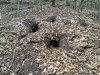
Nest-mounds of the Scrubfowl. The birds themselves are about the size of a big chicken, but the mounds are huge. In the second photo you can see that it isn't a single "nest" but rather multiple tunnels are dug down from the top in which the eggs are laid.

IMG20251031074310.jpg IMG20251031083351.jpg
 

Attachments

  • IMG20251031074310.jpg
    IMG20251031074310.jpg
    380.8 KB · Views: 30
  • IMG20251031083351.jpg
    IMG20251031083351.jpg
    414.6 KB · Views: 30
Im loving this trip, as ive been to so many of the destinations. Im not a serious birder but Im always aware of what's flitting around and recognise most aussie birds
 
Darwin: Darwin Botanic Gardens again


Round three for the Rufous Owls.

This is a short entry for the thread, with yet another morning visit to the Botanic Gardens after those pesky owls. There were records on eBird and I had been seeing recent photos on a local Facebook page of the Garden’s resident pair of owls and their well-grown chick – recent as in taken within the last few days – so I knew they were there somewhere, I just couldn’t find them.

These aren’t small owls either. It’s not like trying to find Boobooks in a forest. It is more like trying to find an Andean Condor in the back seat of a car. They should be obvious. Okay, maybe not that obvious, but they aren’t little birds.

Online I had seen a reference to a log-book for owl sightings which is kept in the visitor gift-shop at the Gardens. While waiting for the shop to open I continued looping round the paths in the rainforest areas, searching all the trees. A man walking his dogs stopped to ask what I’d seen, and when I said I was looking for owls he gave me directions to the specific tree in the main rainforest area that he said the owls preferred to roost in and in which they had been rearing their chick. Unfortunately he added that nobody had seen the owls for a week or so!

I was sure this couldn’t be right – the Facebook posts were labelled as being within the last few days, but maybe they were older cached pages or something along those lines? It was feeling like a repeat of when I went looking for Powerful Owls in Sydney’s Centennial Park in 2019 and the “always reliable” owls hadn’t been seen for several weeks.

I found the tree the man had told me about. It was a tree I’d already thought was perfect for a Rufous Owl, being tall and dark with lots of spreading branches, and which I had searched thoroughly several times over the last three visits. I nevertheless looked again through every nook and cranny on that tree, and nada.


As soon as the gift-shop opened I was there. Nobody had made an entry in the log-book for almost a month. However, at the start of October somebody had extremely helpfully given directions to the tree in which the owls and their chick were living and it wasn’t in the Rainforest section of the Gardens at all, it was in the Tiwi Wet Forest.

I had actually looked in the trees along the Tiwi path each day, but had mostly been concentrating on the trees along the Rainforest paths because that’s where the owls were “supposed” to be from what I’d read.

I immediately made a beeline for the Tiwi Wet Forest and quickly found the tree. It wasn’t a huge tree and although it had lots of branches it wasn’t particularly dense. I checked it from every angle I could. I checked the surrounding trees. I checked every other tree in the vicinity. No owls! I spent an hour in that one area and came out blank.


I didn’t know if I would give the owls a fourth attempt. I did really want to see them, but with only doing one birding location a day (because of the heat) they were taking days away from other birds.

The one saving grace of today was that I finally saw some Rose-crowned Fruit Doves, which from eBird appear to be very common around Darwin. I had just recently seen them in East Timor so they weren’t even a year-bird, but it was the first time I’d seen them in Australia.

full

Rose-crowned Fruit Dove


The first time I went to the Botanic Gardens I saw 25 species, the second time I saw 26 species, and this third time I saw 30 species:

Magpie Goose, Radjah Shelduck, Orange-footed Scrubfowl, Bush Stone-Curlew, Spur-winged Plover, Australian White Ibis, Straw-necked Ibis, Brahminy Kite, Torresian Imperial Pigeon, Rose-crowned Fruit Dove, Bar-shouldered Dove, Peaceful Dove, Red-tailed Black Cockatoo, Little Corella, Red-collared Lorikeet, Forest Kingfisher, Dollarbird, Rainbow Bee-eater, Varied Triller, Northern Fantail, Shining Flycatcher, Magpie-Lark, Green-backed Gerygone, Brown Honeyeater, White-gaped Honeyeater, Dusky Myzomela, Little Friarbird, Double-barred (Owl) Finch, Australian Figbird, Spangled Drongo.


full

Northern Water Dragon (Tropicagama temporalis)
 
Last edited:
full

Gilbert’s Dragon (with the usual caveat of “I think”)
This is a Northern water dragon (Tropicagama temporalis), supported by the larger nuchal crest on this individual and the absence of a white spot on the tympanum. There are very few records of Gilbert's dragon (Lophognathus gilberti) in Darwin, with several of the records likely to be misidentifications.
 
Last edited:
Back
Top