Chlidonias presents: Bustralia

This is a Northern water dragon (Tropicagama temporalis), supported by the larger nuchal crest on this individual and the absence of a white spot on the tympanum. There are very few records of Gilbert's dragon (Lophognathus gilberti) in Darwin, with several of the records likely to be misidentifications.
Thanks. Honestly, all the dragons look the same to me!

The one below is also from Darwin, which I've labelled as a Gilbert's Dragon.

full
 
Did you go to TWP?
No, there's no bus out there so unless you have a car you have a choice of doing a tour ($175 with Autopia, which is totally out of the question) or paying for a taxi which would be even more expensive.

I didn't do any tours - I was going to do one for Fogg Dam or Corroboree Billabong but they had finished for the year by the time I got back from East Timor. I also never got round to looking for dolphins.
 
Darwin: Leanyer Sewage Ponds area


The Leanyer Sewage Ponds are one of the higher-listing sites on eBird in Darwin. The reason I had chosen to go here today was because while skimming down the Darwin bird list on eBird checking recent locations for certain birds I saw that 45 Varied Lorikeets had been recorded in the area five days before. That was enough to lock it in.

Varied Lorikeets are a tricky one to find because they move around looking for flowering trees. They’re not sedentary like, say, Rainbow Pittas where you know they are always resident at East Point’s Monsoon Forest Trail and you just need time and luck to find them once there. They’re not even like the Red-collared Lorikeets which can be seen everywhere round Darwin. Where Varied Lorikeets are today is not necessarily where they will be tomorrow. However they do get recorded frequently at Leanyer so it was as good a place as any.

The access to the sewage ponds area isn’t intuitive when looking at the map. Around the ponds there is a series of roads coming off Fitzmaurice Drive, and all are just named as “sewage ponds” on Google Maps so I didn’t know if they were actually accessible or if they were gated service roads. I looked it up online and found a local birding website with instructions.

Rather than going in where it seems to make most sense on a map, instead you start at Hodgson Drive which is down by Leanyer School, some way south of Fitzmaurice Drive. At the end of Hodgson Drive is a dirt track which you follow until it reaches another dirt track which then runs alongside a pipeline all the way north to the sewage ponds. On eBird this is called “Pipeline approach (S of Leanyer Ponds)” - and this is where those lorikeets had been seen.

With the start-point determined I checked the bus routes and found one which stopped by Leanyer School. As with any of the areas on this side of town I had to first catch a bus from my hotel to the Casuarina interchange, from where I could then catch bus #2. This bus only runs once an hour, which turned out to be a problem because when I got to Casuarina I discovered that the stop for the #2 was not with the other buses any more (because the interchange had been closed) but on the other side of the block and hence I missed it.

I checked alternative routes and found that the #12 bus left in half an hour from the stop I was at, and I could get off at the Leanyer Woolworths. It wasn’t as close to Hodgson Drive as the #2 would be but it wasn’t far either, an easy walk. The Woolworths was also inside a little mall, so when I came back this way I had lunch at one of the takeaway places inside.


The habitat in the pipeline area is a mix of long grassland and eucalyptus woodland, scattered through with the rusting corpses of abandoned cars. I really don’t know why there are so many wrecked and abandoned cars everywhere in northern Australia. I get it when they are next to highways, but you see old cars even deep in the bush nowhere near any road like they’re being dropped out of the sky.

As you near the sewage ponds the eucalyptus are replaced by mangroves and so there are birds like Yellow White-eyes, Shining Flycatchers, and Rufous-banded Honeyeaters.

The sewage ponds themselves are entirely surrounded by fencing with razor wire around the top, but there is a narrow track right around the perimeter so it is possible to view almost the entire area. A scope would definitely come in handy here though.

A new menace appeared here with big biting flies. I don’t know if they are a sewage pond thing or a mangrove thing or just a Darwin thing. If anyone’s seen the Frank Darabont movie The Mist, they are like the big biting insects in that, except worse.

The ponds were alive with Whiskered Terns, swarming over the water like midges. A few Australian Gull-billed Terns were mixed in there as well.

There were Radjah Shelducks and Magpie Geese here, as you’d expect, and also Plumed and Wandering Whistling Ducks in great flocks. Some were quite close but most were on the bunds in the centre of the ponds where you’d need a scope to see if there were any other ducks mixed in with them. I didn’t need a scope to see the pelicans, towering over all the ducks, or to see the Black-necked Stork.

Although much smaller, the Pied Herons were also very obvious because they were so common:

full


full


After the ponds I had a look along the edge of the mangroves until the track ended at a creek, but didn’t see any of the extra mangrove birds I needed, and then spent the next couple of hours wandering around the tracks in the woodlands. I saw 58 species of birds today – I expect that at a better time of year (i.e. no so hot!) you could easily get over a hundred. Unfortunately, Varied Lorikeet was not amongst those 58 birds.

full

Golden-headed Cisticola – only the males in breeding plumage have golden heads.


The final bird of the day was a lifer. I had read that if birding here one should be sure to check the communication towers because Australian Hobbies nest on them. A hobby is a little falcon, like a miniature Peregrine Falcon. I had scanned over the towers when I arrived and seen a nest up there but no birds. When leaving I checked them again, and there was a hobby. It was bird number 300 of this Australian trip.


I saw 58 species of birds today:

Australian Little Grebe, Magpie Goose, Radjah Shelduck, Plumed Whistling Duck, Wandering Whistling Duck, Orange-footed Scrubfowl, Australian Pelican, Black-necked Stork, Plumed Egret, Little Egret, White-faced Heron, Pied Heron, Pacific Golden Plover, Spur-winged Plover, Whimbrel, Sharp-tailed Sandpiper, Common Sandpiper, Silver Gull, Australian Gull-billed Tern, Whiskered Tern, Royal Spoonbill, Australian White Ibis, Straw-necked Ibis, Brahminy Kite, Black Kite, Whistling Kite, Australian Hobby, Torresian Imperial Pigeon, Bar-shouldered Dove, Peaceful Dove, Red-tailed Black Cockatoo, Greater Sulphur-crested Cockatoo, Little Corella, Red-collared Lorikeet, Red-winged Parrot, Pheasant Coucal, Forest Kingfisher, Dollarbird, Rainbow Bee-eater, White-bellied Cuckoo-Shrike, White-winged Triller, Golden-headed Cisticola, Lemon-bellied Flycatcher, Paperback Flycatcher, Shining Flycatcher, Leaden Flycatcher, Magpie-Lark, Yellow White-eye, Brown Honeyeater, Rufous-banded Honeyeater, White-gaped Honeyeater, White-throated Honeyeater, Dusky Myzomela, Little Friarbird, Double-barred (Owl) Finch, Crimson Finch, Chestnut-breasted Mannikin, Australian Figbird.
 
Darwin: East Point again


I returned to the East Point Reserve this morning in search of the birds I hadn't seen yet. It has mangroves for the Chestnut Rail, Arafura Fantail and Golden Whistler; forest for the Arafura Shrike-Thrush; and Varied Lorikeets have been sighted there as well. The number of any of those I saw today was zero.

First stop was Lake Alexander. The pair of Beach Thick-knees I saw last time (three days ago) was in exactly the same place under the trees, and I saw another two further around. At the end of the car park between the lake and the mangrove boardwalk was a pair of Bush Stone-Curlews.

full

Bush Stone-Curlew


There were Rose-crowned Fruit Doves in the trees around the lake. As is often the case with birds, once you see your first ones (in this case, at the Botanic Gardens two days ago) you then see them everywhere. Same with the Green-backed Gerygones, which I saw for the first time five days ago and have seen almost every day since.

I see a lot of Red-tailed Black Cockatoos around Darwin too, and this morning I managed to get some photos:

full

Male Red-tailed Black Cockatoo

full

Female Red-tailed Black Cockatoo


On the mangrove boardwalk I saw almost the same birds as last time, minus the Mangrove Gerygone and Sahul Brush Cuckoo. However while leaving I came across several Little Bronze Cuckoos – at least three or four – flying about together, presumably in some sort of courtship ritual, and succeeded in getting photos of both male and female birds.

full

Male Little Bronze Cuckoo

full

Female Little Bronze Cuckoo


Having had no luck with the mangrove birds I wanted to see, I was hoping that I might fare better with other birds in the forest further into the reserve.

It started well – within a few metres of entering the Monsoon Forest Trail I saw a Rainbow Pitta and managed a more in-focus photo than last time. I think this has to be a reliable site for them. They are quite unobtrusive in general and like to freeze when they see a person, but when they are moving they aren’t quiet because they hop everywhere. You just need to listen out for the pitta patter of their feet on the leaf litter, and then try to pin-point their movement through all the clutter on the forest floor.

full

Rainbow Pitta


After that was not very much – the forest loop was once again very quiet. I saw the usual Torresian Imperial Pigeons and more Rose-crowned Fruit Doves, a few honeyeaters, Green-backed Gerygones, a Forest Kingfisher, a Yellow Oriole, and a quick Grey Whistler which at first I thought was the sought-after Arafura Shrike-Thrush.


Having seen none of my target birds, or even any year-birds, I decided to go to the Botanic Gardens and make an attempt at round four for the Rufous Owls.

It’s not actually far from East Point to the Gardens. Once back at Fannie Bay, which is about 2km from the Monsoon Forest Trail, you just continue walking south for another 2km or so along East Point Road and there they are. On the way I passed Vestey’s Lagoon which I checked out but there were no birds there.

At the Gardens I headed directly to the tree in the “Tiwi Wet Forest” area where the owls had been roosting. As soon as I reached the tree I saw an owl, plain as day, just sitting out on a branch in the open. They really are enormous. And being so big there was no way there were any owls in that tree on the other days I’d been here! I definitely would have seen them. I think even just from the photo you can tell how big they are.

full


As the old saying goes, “if at first you don’t succeed, try three more times”. The owl saved the afternoon and the only thing which soured the day was a crazy Aborigine guy threatening to kill me at the bus stop by the Gardens when I was going back to the hotel.


I saw 47 species of birds today:

Magpie Goose, Orange-footed Scrubfowl, Little Egret, White-faced Heron, Eastern Reef Egret, Striated Heron, Beach Thick-knee, Bush Stone-Curlew, Spur-winged Plover, Whimbrel, Common Greenshank, Silver Gull, Australian White Ibis, Straw-necked Ibis, Black Kite, Torresian Imperial Pigeon, Rose-crowned Fruit Dove, Bar-shouldered Dove, Peaceful Dove, Red-tailed Black Cockatoo, Greater Sulphur-crested Cockatoo, Red-collared Lorikeet, Little Bronze Cuckoo, Rufous Owl, Forest Kingfisher, Torresian Kingfisher, Rainbow Bee-eater, Rainbow Pitta, White-bellied Cuckoo-Shrike, Varied Triller, Grey Whistler, Northern Fantail, Shining Flycatcher, Broad-billed Flycatcher, Magpie-Lark, Green-backed Gerygone, Brown Honeyeater, White-gaped Honeyeater, Blue-faced Honeyeater, Red-headed Myzomela, Dusky Myzomela, Little Friarbird, Double-barred (Owl) Finch, White-breasted Woodswallow, Spangled Drongo, Yellow Oriole, Australian Figbird.
 
Thanks. Honestly, all the dragons look the same to me!

The one below is also from Darwin, which I've labelled as a Gilbert's Dragon.

full
All good. Some species are very hard to distinguish from others.

This is also a Northern Water Dragon (Tropicagama temporalis) with some particularly nice red colouration. As far as I'm aware, Gilbert's Dragon is absent from Darwin city, although there are some records from the outer suburbs.
 
Darwin: Coconut Grove mangroves


Of the birds I still wanted to find in Darwin, several were mangrove birds. I had been to the Ostermann Street mangroves just by the hotel a couple of times already and seen nothing, but while checking eBird I saw that all of my mangrove birds – even the Chestnut Rail - had been seen at the Orchard Road mangroves, some within the last few days. I had a look on the map and was surprised to see that Orchard Road was also right by the hotel. It was in fact the next street along from Ostermann Street – in other words it was exactly the same stretch of mangroves.

On the map it didn’t look like there was any track through from the end of Orchard Road, but when coming in from Ostermann Street there is a creek cutting through the mangroves which had prevented me going further in that direction. I wasn’t sure where the access was because there were no more streets after Orchard Road so I decided to try getting there from my usual entry point at Ostermann Street.

Ironically I saw a pair of Mangrove Robins in the mangroves at the end of Ostermann today. I’ve seen this species years ago in Cairns so it wasn’t a life-bird, but this was the first time I’d seen any of the “mangrove specialities” at this spot.

I had purposefully left my camera behind today on the principle that if I didn’t have it then I would definitely see birds I’d want to photograph. Working so far!

The creek I had to cross isn’t wide but it has steep banks and is edged with tangles of mangrove roots. Now that I was having a proper look I managed to find somewhere to get to the other side, where I found a section of waste-ground overgrown with long grass which was alive with finches.

Before coming to Darwin I knew Crimson Finches were found here, but I hadn’t expected them to be so common and easy to find. I think this stems from them being uncommon in aviculture compared to the other Australian waxbills, so I just assumed they would be difficult to see in the wild as well. But pretty much anywhere with rank grass and pandanus, especially near mangrove habitats, there they are. And where there are Crimson Finches there are invariably Chestnut-breasted Mannikins and Owl Finches as well. They’re not exactly “mixed flocks” because they don’t seem to interact with one another but they are always in association.

After this patch of grass the “track” goes back onto the sand and then runs the length of the mangroves all the way down (looking at the map) to the river at the top of the East Point peninsula. There don’t seem to be any tracks into the mangroves along here, so you’ve basically got a wall of mangroves on one side and scrubby forest on the land side.

I saw some mangrove-dwellers I’d already seen like Mangrove Gerygone and Shining Flycatcher but nothing else new. Looking at the photos on the eBird checklist it seems like people are on the other side of the mangroves (i.e. on the ocean side rather than the land side) but I don’t know how – presumably they walk along the beach from further down somewhere.

On the way back I found a rough track into the land-side forest and this area was very birdy. Amongst the usual things like Lemon-bellied Flycatchers and Figbirds and Rainbow Bee-eaters I spied something different, an Arafura Shrike-Thrush. Two of them, actually, an adult and what I guess was a juvenile bird because it was being fed by the other bird.

The Arafura Shrike-Thrush was one of the birds I was looking for. I didn’t expect to see it here though. It is on the eBird list for the Orchard Road mangroves but the records are scattered through the yearly bar-chart rather than being consistent. I wonder if I would have seen it if I’d had my camera with me.

Going back to the hotel I thought I’d found the access from Orchard Road, with a track leading from the mangroves around a power substation onto a narrow paved “street” which at first I thought might be Orchard itself but turned out to be just the driveway for the substation, at the end of which was a big gate. Luckily it was ajar with just enough room for me to slide through.


I saw 29 species of birds today:

Orange-footed Scrubfowl, Black Kite, Whistling Kite, Torresian Imperial Pigeon, Bar-shouldered Dove, Red-tailed Black Cockatoo, Galah, Pheasant Coucal, Forest Kingfisher, Rainbow Bee-eater, White-bellied Cuckoo-Shrike, Varied Triller, Golden-headed Cisticola, Arafura Shrike-Thrush, Mangrove Robin, Shining Flycatcher, Lemon-bellied Flycatcher, Magpie-Lark, Large-billed Gerygone, Mangrove Gerygone, Yellow White-eye, Rufous-banded Honeyeater, White-gaped Honeyeater, Red-headed Myzomela, Double-barred (Owl) Finch, Crimson Finch, Chestnut-breasted Mannikin, Australian Figbird, Black Butcherbird.
 
Darwin: Casuarina Coastal Reserve again


This was my last day in Darwin. Every morning this week my phone had been saying “severe heat ends tomorrow” but of course tomorrow never comes.

I had decided that this morning I’d go to the Casuarina Coastal Reserve for the second time. It has mangroves for Chestnut Rails and Arafura Fantails, grass for Long-tailed Finches, and forest for Varied Lorikeets. Surely I’d see at least one of them (answer: no, no I did not).

Last time I went I had taken the bus to Rossiter Street and walked from there. For today though I had seen on the map that it wasn’t all that far (about twenty minutes walk) from the hotel to the corner of Trower Road and Rapid Creek Road. This is a ways south of Rossiter Street, but starting at that corner meant that I could walk alongside the Rapid Creek mangroves for about a kilometre all the way up to the footbridge at the creek mouth. I could also have taken a bus to that corner but it was quicker to walk than wait for the next bus.

There’s not much to write about otherwise. The “most least-seen” bird that I saw along the mangrove stretch was a Brown Goshawk, and once across the footbridge into the reserve it was the usual birds there as well. When you’ve been in a town for too long you run out of ways to make looking for the same birds interesting, so I’ll just put the list below and leave it at that.


full

Australian Figbird


I saw 36 species of birds today:

Magpie Goose, Orange-footed Scrubfowl, Bush Stone-Curlew, Spur-winged Plover, Silver Gull, Australian White Ibis, Black Kite, Brown Goshawk, Torresian Imperial Pigeon, Bar-shouldered Dove, Peaceful Dove, Greater Sulphur-crested Cockatoo, Little Corella, Galah, Red-collared Lorikeet, Red-winged Parrot, Forest Kingfisher, Rainbow Bee-eater, Varied Triller, Lemon-bellied Flycatcher, Shining Flycatcher, Magpie-Lark, Large-billed Gerygone, Brown Honeyeater, Rufous-banded Honeyeater, White-gaped Honeyeater, Blue-faced Honeyeater, Red-headed Myzomela, Dusky Myzomela, Little Friarbird, Double-barred (Owl) Finch, Crimson Finch, Chestnut-breasted Mannikin, White-breasted Woodswallow, Spangled Drongo, Australian Figbird.
 
Last edited:
Darwin to Pine Creek


There was heavy rain in the morning – despite the constant forecasts for rain while I was in Darwin, barely any of it showed up. After it finished I went across the road to the mangroves in case I could see an Arafura Fantail before I left. Unfortunately the tide was in so I couldn’t move far along towards the Orchard Road section and I didn’t see any fantails.

I saw twelve lifers while I was in Darwin, which isn’t a lot but it is still almost one a day over the two weeks, and there weren’t really all that many birds here which I hadn’t seen before at some point.

Birds missed: the two most “important” were the Chestnut Rail and Arafura Fantail because I won’t see them elsewhere now. I really didn’t expect to not see the fantail - it wouldn’t seem to be a bird which is sneaky! There is still a chance for Varied Lorikeet, Long-tailed Finch, Gouldian Finch, and Silver-backed Butcherbird at Pine Creek, although I don’t know how likely any of them actually are. Green Pigmy Goose, Little Kingfisher and Mangrove Golden Whistler are also in Queensland.


The Greyhound bus was at 9.55am, and it was three hours to Pine Creek. I was on my way to the outback-Queensland town of Mount Isa, and to break the long journey had originally been going to stay at Mataranka (which I had been through on the bus when heading north from Alice Springs last month). However, thinking about the birds I was wanting to look for it seemed like Pine Creek was a better choice, even though it is only three hours from Darwin so not much of a journey-breaker at all.

From Darwin to Mount Isa requires taking two buses – first to the town of Tennant Creek on a bus bound for Alice Springs, and then a second bus bound for Townsville in coastal Queensland. The bus to Tennant Creek arrives there at midnight (from Pine Creek it takes eleven hours), and the connecting bus leaves at 3am and takes about seven hours to reach Mount Isa. When trying to book I had discovered that the buses through Queensland from Tennant Creek seem to only run every second or third or fourth day, so that meant I had to stay four nights in Pine Creek before moving on. I could have stayed longer in Darwin instead but I’d been there for two weeks already and was ready to leave.

It’s not a long ride between Darwin and Pine Creek so there’s not much to say about it, but one thing that was very noticeable was that it was green all the way! Coming this way a month ago everything was brown. I don’t just mean the trees were green, because eucalyptus are always green, I mean everything was green, with the ground carpeted with green grass and shrubs. It makes me want to go back to Alice Springs and see what it looks like there now.

Last time I was at Pine Creek I stayed at the Lazy Lizard caravan park. This time I stayed at the Railway Resort, which is directly across the road from the Lazy Lizard and has cabins shaped like railway cars. They’re both the same price for budget single rooms, about AU$100 give or take. I liked the Railway Resort better (and it has wifi which the Lazy Lizard doesn’t).

I wasn’t going to be walking out to the sewage ponds area in the heat of the day, so I had a little walk over to the pond at Miners Park which was a nicely birdy spot last time I was here. I didn’t stay there long. On the other side of the pond there was a big dog wandering around loose. It hadn’t seen me and after a minute or so it trotted away along the fenceline. I cautiously continued along the track but at the bend ahead suddenly saw a second big dog standing right there staring at me.

I’m not a huge fan of loose dogs because I don’t know what their intentions are going to be, and I don’t want to be close enough to find out if those intentions are to maul me. I returned the way I had come and went to the Water Garden instead.

I was a bit wary of dogs while here. There are a lot of them around the town. All the others I saw were behind fences but they all went nuts with the barking when they saw me, and some really went nuts, literally throwing themselves against their fence so the gates shook. I was always concerned that I’d be passing one of those kind of dogs and the gate would be unlatched.

I had been wondering if Pine Creek‘s famous Hooded Parrots would be as easy to see this time round as they had been last time I was here. On the way to Miners Park I had seen some flying up off the grass, and on my way back towards the Water Garden I came across those same birds and saw that it was a flock of about forty of them. Despite being extremely colourful, they are surprisingly difficult to see when on the ground. The females are all green of course, but even the males with their bright yellow shoulders blend in as if they aren’t even there.

The Black Flying Fox colony was still there as well. My almost-continuous streak of seeing some kind of mammal every day of this trip had fallen apart once I got to East Timor, and then in Darwin I only managed it on about half the days. Maybe it will pick up again now (although generally the “some kind of mammal” is the same mammals, usually Black Flying Foxes and Agile Wallabies).


I only saw 28 species of birds today:

Darwin: Magpie Goose, Orange-footed Scrubfowl, Bush Stone-Curlew, Spur-winged Plover, Australian White Ibis, Straw-necked Ibis, Brahminy Kite, Black Kite, Torresian Imperial Pigeon, Bar-shouldered Dove, Red-tailed Black Cockatoo, Little Corella, Varied Triller, Magpie-Lark, Brown Honeyeater, White-gaped Honeyeater, Double-barred (Owl) Finch, Spangled Drongo, Australian Figbird, Black Butcherbird.

Pine Creek: Peaceful Dove, Greater Sulphur-crested Cockatoo, Red-winged Parrot, Hooded Parrot, Dollarbird, Rainbow Bee-eater, Blue-faced Honeyeater, White-breasted Woodswallow.
 
Pine Creek only has one shop. I knew this from last time I was here so had bought food in Darwin where it is much cheaper. At the Pine Creek shop I bought this loaf of bread and small box of Weetbix, as well as a pie, and it cost me AU$18.70 !!

IMG20251107103652.jpg
 

Attachments

  • IMG20251107103652.jpg
    IMG20251107103652.jpg
    123.2 KB · Views: 33
Pine Creek only has one shop. I knew this from last time I was here so had bought food in Darwin where it is much cheaper. At the Pine Creek shop I bought this loaf of bread and small box of Weetbix, as well as a pie, and it cost me AU$18.70 !!

View attachment 841289

Depending on the price of the pie, that isnt actually to bad. it's about roughly $3 more then what id pay down here in Sydney.
 
Depending on the price of the pie, that isnt actually to bad. it's about roughly $3 more then what id pay down here in Sydney.
You might need to shop somewhere cheaper.

The pie was $5.10. I just looked up on the Coles website for Sydney prices and the Weetbix is $4 and the bread is $3.90. That's $13 with the pie, $7.90 without.
 
Pine Creek


I think the actual measured temperature here is hotter than in Darwin (it was 40 degrees today), but the “perceived temperature” is less because it isn’t humid so it doesn’t feel as hot. In Darwin the forecast would say something like “36 degrees, feels like 45 degrees”. I’ll still end up soaked with sweat after walking around all morning in the Pine Creek woodlands but it takes a while whereas in Darwin your clothes start getting wet within minutes of heading out.

I kept to the same schedule as I’d had in Darwin, going out early morning before it got too hot and being back in my air-conditioned room by noon (ish).

I’d forgotten about the flies as well. So many flies! Something noticeable in hindsight was that while Darwin had loads of mosquitoes it didn’t really have any flies, at least when I was there. Down here the flies are very bothersome. Today wasn’t bad, but on the following days I was permanently surrounded by a cloud of them whenever I was out, with them all competing to crawl into my ears and eyes and mouth. Now I know what it would be like to be a corpse. Still, I’d rather be annoyed by swarms of harmless insects than swarms of biting disease-bearing ones!

Over at the sewage ponds the third pond, empty on my last visit, was now filled. Radjah Shelducks, Australian Little Grebes, Black-fronted Dotterels and Spur-winged Plovers were standard birds as always, I don’t think you’d go there and not see them, and probably the Little Black Cormorants are always there. There was a single Pied Stilt present on all my visits, and there were two Sharp-tailed Sandpipers there this time. Herons are variable – I saw on different days Great Egret, Plumed Egret, Little Egret, White-faced Heron and White-necked Heron. Straw-necked Ibis were always there on my visits (but usually on the grass rather than the ponds themselves) and once I saw an Australian White Ibis there. There was a Black-necked Stork flying past overhead on one of the mornings. I saw a Wandering Whistling Duck on two occasions. Red-kneed Dotterels are “always there” going by the eBird bar-charts but I never saw any.

As I mentioned in the previous post, I had a list of birds I hoped I might see at Pine Creek. Probably foremost amongst them was the Varied Lorikeet, just because I like parrots. This is a bird found only in northern Australia. I didn’t see or hear any in Broome or Darwin, nor on my first visit to Pine Creek. I didn’t really think I’d see any on this revisit, and then the last place I’d be able to see them would be at Mt Isa.

To my surprise I did see Varied Lorikeets here. When I was at the cemetery by the sewage ponds a flock flew by close enough to get identifiable views. I had seen what I thought might be them flying overhead in flocks earlier in the morning but they were too distant to be sure, and even though they were calling I didn’t want to mistake the common Red-collared Lorikeets for them (they do sound different but are still both screechy lorikeet noises). Flight-views aren’t the best way to see new birds but they will do for the time being.

Otherwise the birds were mostly the usual. Best of the non-new birds was a Pallid Cuckoo.

full


I saw 45 species of birds today:

Australian Little Grebe, Radjah Shelduck, Little Black Cormorant, Little Pied Cormorant, Great Egret, Plumed Egret, Little Egret, White-faced Heron, Black-fronted Dotterel, Spur-winged Plover, Sharp-tailed Sandpiper, Pied Stilt, Straw-necked Ibis, White-bellied Sea Eagle, Black Kite, Whistling Kite, Bar-shouldered Dove, Peaceful Dove, Greater Sulphur-crested Cockatoo, Little Corella, Red-collared Lorikeet, Varied Lorikeet, Red-winged Parrot, Hooded Parrot, Australian Koel, Pallid Cuckoo, Dollarbird, Blue-winged Kookaburra, Sacred Kingfisher, Rainbow Bee-eater, White-bellied Cuckoo-Shrike, Golden-headed Cisticola, Grey-crowned Babbler, Rufous Whistler, Magpie-Lark, Weebill, Red-backed Fairy-Wren, White-throated Honeyeater, Blue-faced Honeyeater, Little Friarbird, White-breasted Woodswallow, Australian Figbird, Great Bowerbird, Pied Butcherbird, Torresian Crow.
 
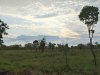
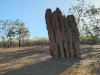
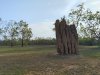
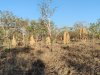
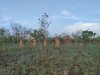
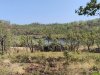
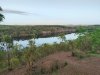
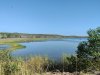
Some comparison photos of the first time I was at Pine Creek when everything was brown and this visit when it's green. The first termite mound is in the cemetery so the grass is always kept shorn.

IMG20250926073503.jpg IMG20251107073716.jpg IMG20250926071245.jpg IMG20251107065159.jpg
 

Attachments

  • IMG20250926073503.jpg
    IMG20250926073503.jpg
    262.4 KB · Views: 33
  • IMG20251107073716.jpg
    IMG20251107073716.jpg
    222.3 KB · Views: 32
  • IMG20250926071245.jpg
    IMG20250926071245.jpg
    313.8 KB · Views: 31
  • IMG20251107065159.jpg
    IMG20251107065159.jpg
    210 KB · Views: 30
Pine Creek


Same as yesterday, this morning I left the hotel at dawn and headed to the sewage ponds. Coming from town, there is the main dirt road which leads to the sewage ponds and then the cemetery is just past that. To the left of the cemetery gate is another dirt track, and this leads on a winding route through the woodlands, joining onto various other tracks so you can spend quite a bit of time just wandering.

Now that I knew the screeching flocks overhead were definitely Varied Lorikeets it was amazing how common they were. Each flock had twenty or thirty birds, and they were going past regularly. I probably saw hundreds of them today. All of them were flying south. I’m guessing they were going to the big mango orchard which lay in that direction.

It was still frustrating that I was only getting flight views, but after a few hours I finally came across a flock in a tree beyond the cemetery. I had heard Red-collared Lorikeets calling but when they flew away there were still birds screeching in the tree, and these turned out to be Varied Lorikeets. They are a lot more flighty than their larger cousins so I couldn’t get very close. A couple of the photos were acceptable once cropped.

They are beautiful little birds. It’s like they couldn’t decide which colours they wanted on their heads so they just used all of them.

full


full


Back in town as I was walking through the Water Garden a trio of finches flew up into the branches of a dead tree. Long-tailed Finches, I instantly thought as I put up my binoculars. It was odd that they were in exactly the same tree as I had seen Masked Finches in last time I was at Pine Creek, but I had Long-tailed Finches in my head. I took some photos and of course they were Masked Finches.

full


A male Hooded Parrot then flew into the same tree and I took some shots of him as well.

full


Then my camera froze up.

I don’t know what happened to it. It just stopped working. I had taken the photos of the parrot above, then two minutes later went to take a photo of a different parrot and when I tried to turn on the camera nothing happened. It just wouldn’t work. I thought there might be something wrong with the battery, so I took it out, put it back in, and then the camera turned on as normal. Fixed.

Back in the hotel I turned the camera on again to see the photos of the finches, to double-check they were Masked, and nothing. Same as before. It was just dead. This time taking the battery out didn’t fix it.

The battery had been displaying as being fully charged as well, so that wasn’t the problem.

I had a Google and discovered that Canon DSLRs freezing like this is, apparently, a common problem, even though I had never come across it before.

The most cited quick-fix for the issue was to take out the battery and memory card, close the battery compartment, turn on the camera and set it to P mode, then hold the shutter button down for 20 seconds. This is supposed to discharge excess electricity because the camera is still “trying” to take a picture even with no battery. Then you insert the battery and card back in, and it should work. It didn’t work. I tried again, just in case, but it still didn’t work. So I moved on to the second most common fix.

For this one you take out the battery and card, take off the lens, and then leave the camera body sitting for a few hours (or overnight) with the battery compartment and the lens socket both open. You also fully charge the battery again. When you reassemble the camera it should then work.

I did this and left it sitting for the rest of the day. In the evening I put it all back together – and it worked! I immediately transferred the day’s photos onto my laptop in case it happened again. Which it did! The next morning before I went out I turned on the camera to check, and it was again non-functioning.

There may not be many more photos in this thread’s future...


I saw 50 species of birds today:

Australian Little Grebe, Radjah Shelduck, Wandering Whistling Duck, Little Black Cormorant, Black-necked Stork, Great Egret, Plumed Egret, White-necked (Pacific) Heron, Black-fronted Dotterel, Spur-winged Plover, Sharp-tailed Sandpiper, Pied Stilt, Australian White Ibis, Straw-necked Ibis, Black Kite, Bar-shouldered Dove, Peaceful Dove, Red-tailed Black Cockatoo, Greater Sulphur-crested Cockatoo, Little Corella, Red-collared Lorikeet, Varied Lorikeet, Red-winged Parrot, Hooded Parrot, Australian Koel, Dollarbird, Blue-winged Kookaburra, Sacred Kingfisher, Rainbow Bee-eater, White-bellied Cuckoo-Shrike, Golden-headed Cisticola, Grey-crowned Babbler, Magpie-Lark, Willy Wagtail, Weebill, Striated Pardalote, White-gaped Honeyeater, White-throated Honeyeater, Blue-faced Honeyeater, Little Friarbird, Silver-crowned Friarbird, White-breasted Woodswallow, Double-barred (Owl) Finch, Masked Finch, Australian Figbird, Olive-backed Oriole, Yellow Oriole, Great Bowerbird, Pied Butcherbird, Torresian Crow.
 
Pine Creek


Last time I was in Pine Creek I had noticed on Google maps that there were what looked like reservoirs on the west side of the town. I hadn’t gone to check them out because I was concentrating on the sewage ponds and the Water Garden, and then after I left town I forgot about them.

Now I saw them on the map again, and with a bit more time at my disposal I decided to use a morning to see if they might be worth visiting – even though I also noted that they didn’t have any eBird pins. I also saw that there was another water body further to the west called Copperfield Dam which did have an eBird pin, but it looked like it might be too far to walk in the heat here.

As discussed in the previous post I didn’t have a camera today, so no bird photos.

Pine Creek was a mining town, initially for gold but later for other minerals. The “reservoirs” I was visiting today turned out to be old mining pits which have filled with water. The first one has a tourist viewing-tower and is very close to town, only five or ten minutes walk. I expected there to be at least a few ducks but no, there was nothing. It was just a big empty lake. Not even any vegetation in or on the water.

I knew from the map that there were tracks running south from this lake to the next one. One of these tracks was an actual dirt road, but there were also foot-trails through the woodland on the hills. I wasn’t in any rush to get anywhere so I meandered along these trails which sometimes disappeared entirely, but under the trees it is mostly bare stony ground and a trail isn’t even needed.

The forest was much quieter here than along the road to the sewage ponds. I did find one good patch which had birds coming and going, with Weebills (which I’d been seeing everywhere the last two days), a male Leaden Flycatcher, Mistletoebirds, and a selection of honeyeaters including Bar-breasted.

Eventually I made it to the second lake, which was totally different to the first one. This lake was shallow, with reed-beds and mud fringing the shores. It looked perfect for waterbirds but, again, it was basically empty. A pair of Radjah Shelducks flew away when I arrived, and down the far end there was a pair of Australian Little Grebes and a Little Pied Cormorant, but that was it.

It seemed so strange that a nice weedy lake like this was abandoned but the sewage ponds which are just three small bare concrete pools have permanent bird residents.

I was halfway to Copperfield Dam by now, so I decided to just keep going. The dam was better-looking than the other lakes. It was quite small, tucked inside forest, and half of the water surface was covered in floating plants. The only waterbird there was an Australian Darter.

I think if anyone were to be going to Pine Creek for birds, then you’re quite safe in ignoring these lakes.


I saw 33 species of birds today:

Australian Little Grebe, Radjah Shelduck, Australian Darter, Little Pied Cormorant, Australian White Ibis, Black Kite, Bar-shouldered Dove, Peaceful Dove, Red-tailed Black Cockatoo, Little Corella, Varied Lorikeet, Red-winged Parrot, Hooded Parrot, Pheasant Coucal, Dollarbird, Blue-winged Kookaburra, Rainbow Bee-eater, Black-faced Cuckoo-Shrike, Leaden Flycatcher, Magpie-Lark, Weebill, Mistletoebird, Bar-breasted Honeyeater, White-throated Honeyeater, Blue-faced Honeyeater, Dusky Myzomela, Silver-crowned Friarbird, White-breasted Woodswallow, Australian Figbird, Yellow Oriole, Great Bowerbird, Pied Butcherbird, Torresian Crow.
 
Pine Creek to Tennant Creek


I was leaving Pine Creek today on my way to Mount Isa which is an outback town in northwest Queensland known for just two things – Kalkadoon Grasswrens and Purple-necked Rock Wallabies. Maybe there are other things people know the town for, but I can’t imagine what they might be.

Getting there from Pine Creek requires taking two buses – first for eleven hours to the town of Tennant Creek on a bus bound for Alice Springs, and then a second bus bound for Townsville in coastal Queensland. The first of those buses left Pine Creek at 1pm and arrived at Tennant Creek at midnight, while the connecting bus left at 3am and took about seven hours to reach Mount Isa. When trying to book I had discovered that the Queensland buses run on an irregular schedule, every second or third or fourth day, and they also run at different times on different days. The bus I arrived in Mount Isa on got me there at 10.30am. The bus I would be leaving on several days later was at 7pm. I thought that must mean they are leaving Tennant Creek at different times as well, but when it came time to catch that bus I learned that this particular bus was actually starting at Mount Isa.


Because my bus wasn’t until 1pm I had plenty of time to go back to the Pine Creek sewage ponds in the morning. I still had a list of birds to see here and I’d only got one of them so far (the Varied Lorikeet, which I had seen abundantly every day, although only once were they birds in a tree as opposed to flying rapidly past overhead). It wasn’t a long list, but they were all birds I hadn’t seen before. Today didn’t go any better and I left Pine Creek having seen just the single addition to my life list. Although, as luck would have it, I did see two of the birds on that list in the next few days at Mount Isa (the Black-tailed Treecreeper and Rufous Songlark).

At the hotel they let me stay in my room after check-out time until my bus arrived, which was appreciated. I managed to get my camera working again as well. We’ll see how long that lasts. I’m wondering if it has just been overheating in the sun while I’m carrying it around with me outside.


Not many birds were seen from the bus south to Tennant Creek. Even Katherine, which had been heaving with birds when the bus had stopped here on my way north a month ago, was quiet. It was extremely hot there though. An unexpected bird was an Apostlebird bathing in a water bowl outside the Katherine Information Centre.


There was a three hour wait in Tennant Creek from midnight to 3am, but the BP station here was open so we could all wait inside. Most of the passengers on that bus had got off here and would be continuing on all the way to Townsville (basically a two day trip from Darwin). At least I only had a seven hour bus ride from Tennant Creek – going all the way to Townsville is nineteen or twenty hours.


I saw 36 species of birds today (mostly at Pine Creek):

Australian Little Grebe, Radjah Shelduck, Little Black Cormorant, Black-necked Stork, Plumed Egret, White-faced Heron, Black-fronted Dotterel, Spur-winged Plover, Sharp-tailed Sandpiper, Pied Stilt, Straw-necked Ibis, Black Kite, Whistling Kite, Bar-shouldered Dove, Peaceful Dove, Little Corella, Red-collared Lorikeet, Varied Lorikeet, Red-winged Parrot, Hooded Parrot, Australian Koel, Pheasant Coucal, Rainbow Bee-eater, Black-faced Cuckoo-Shrike, Grey-crowned Babbler, Magpie-Lark, Apostlebird, Willy Wagtail, White-gaped Honeyeater, Blue-faced Honeyeater, Little Friarbird, White-breasted Woodswallow, Australian Figbird, Great Bowerbird, Pied Butcherbird, Torresian Crow.
 
Back
Top