CMP Travels Asia (Part 1?)

@CMP, zootierliste lists the Rainforest Complex as housing rarities such as the Emerald Toucanet and Ivory-billed Aracari. May I ask if these were signed, or if any of these were indeed found anywhere else in the zoo?
Unfortunately, I did not see signage for either on my visit in the free-flight area of the Rainforest Complex. Perhaps a member more familiar with the park would be able to provide more information.
 
@CMP, zootierliste lists the Rainforest Complex as housing rarities such as the Emerald Toucanet and Ivory-billed Aracari. May I ask if these were signed, or if any of these were indeed found anywhere else in the zoo?
Hi

I went there in March, so this will not be the latest information.
When I went there, I saw signs of macaws and parrots in the Rainforest Expedidtion Trail aviary. However, I couldn;t find any birds in there. Giding place is a bit limited there, so probably there weren't any birds there when I visited.

I saw the Hyacinth macaw at the birds showing/photo event along with owl and vulture species.

Emerald Toucanet and Ivory-billed Aracari were nowhere to be seen.
 
Hi

I went there in March, so this will not be the latest information.
When I went there, I saw signs of macaws and parrots in the Rainforest Expedidtion Trail aviary. However, I couldn;t find any birds in there. Giding place is a bit limited there, so probably there weren't any birds there when I visited.

I saw the Hyacinth macaw at the birds showing/photo event along with owl and vulture species.

Emerald Toucanet and Ivory-billed Aracari were nowhere to be seen.
I had the same experience, although I assumed the macaws and parrots that were signed may have been moved off-show for the evening already since I went to the aviary quite late.

If the birds are still in the collection somewhere on-show, I wonder if they might have been moved to the Emerald Trail? As I mentioned in my post, it was closed when I visited but perhaps if it has reopened and someone had visited since they may be able to provide an update.

@Toki, were you able to find the Pale-capped Pigeons in the Asian Small-clawed Otter enclosure?
 
I had the same experience, although I assumed the macaws and parrots that were signed may have been moved off-show for the evening already since I went to the aviary quite late.

If the birds are still in the collection somewhere on-show, I wonder if they might have been moved to the Emerald Trail? As I mentioned in my post, it was closed when I visited but perhaps if it has reopened and someone had visited since they may be able to provide an update.

@Toki, were you able to find the Pale-capped Pigeons in the Asian Small-clawed Otter enclosure?
Hi

I didn't see that species in the Asian Small Clawed Otter exhibit, but it was signed.

I went there right after the baby pandas were on exhibit, and the area was really crowded and couldn't stop for a long time. I might have missed them.
 
Hong Kong Day 1 (Trip day 6) Part 3: Hong Kong Ocean Park

Tickets for Hong Kong Ocean Park are around 500 HKD, nearly 70 USD to get in, which is quite steep. Similar to the Sea World parks in the states, a portion of this goes to the amusement park rides and other non-animal attractions. Upon entry from the Ocean Park MTR station, you are first greeted with Croco Land, a newer outdoor crocodilian exhibit. Giving a quick glance, all I saw in the enclosure were some odonates.


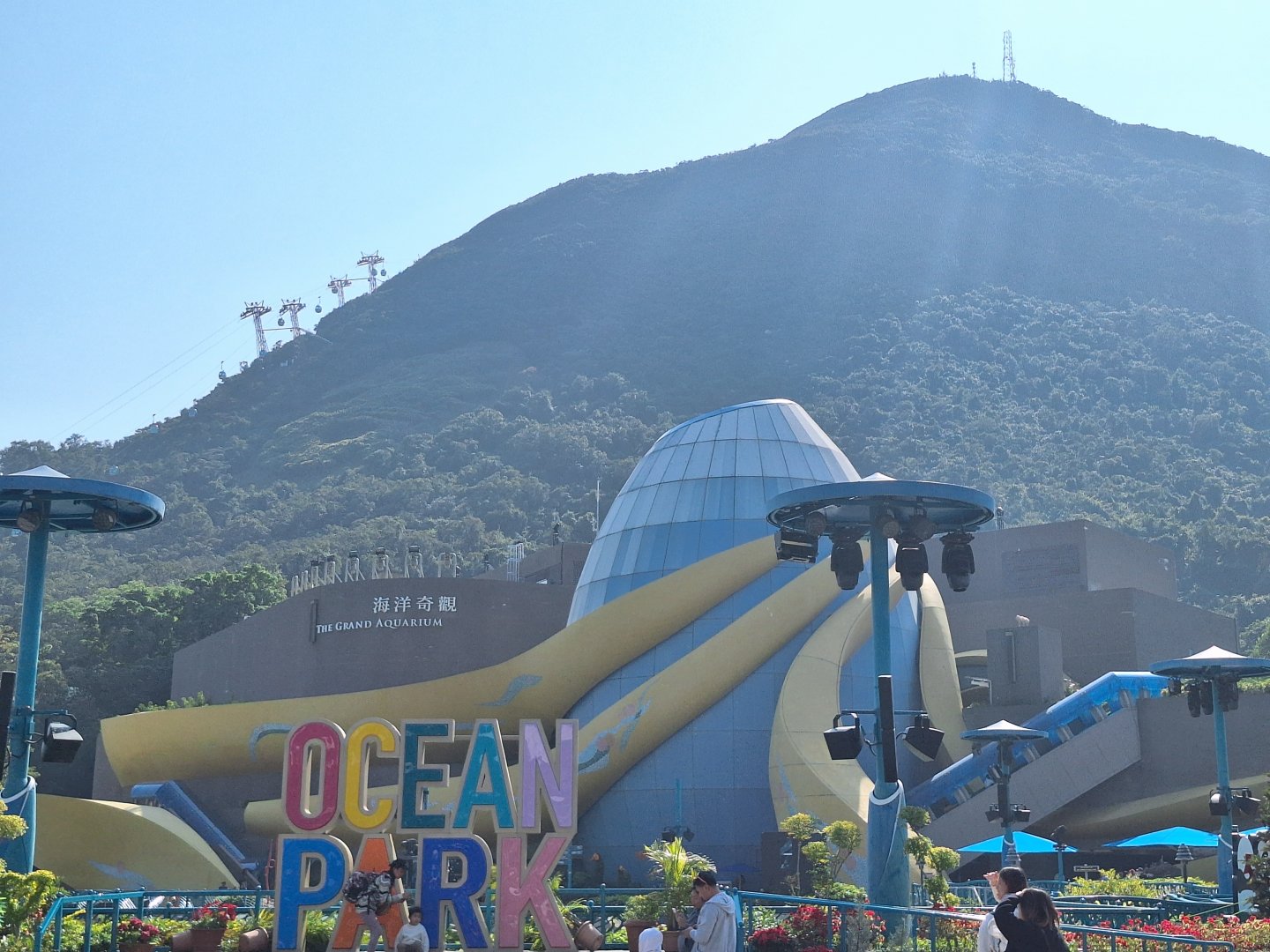
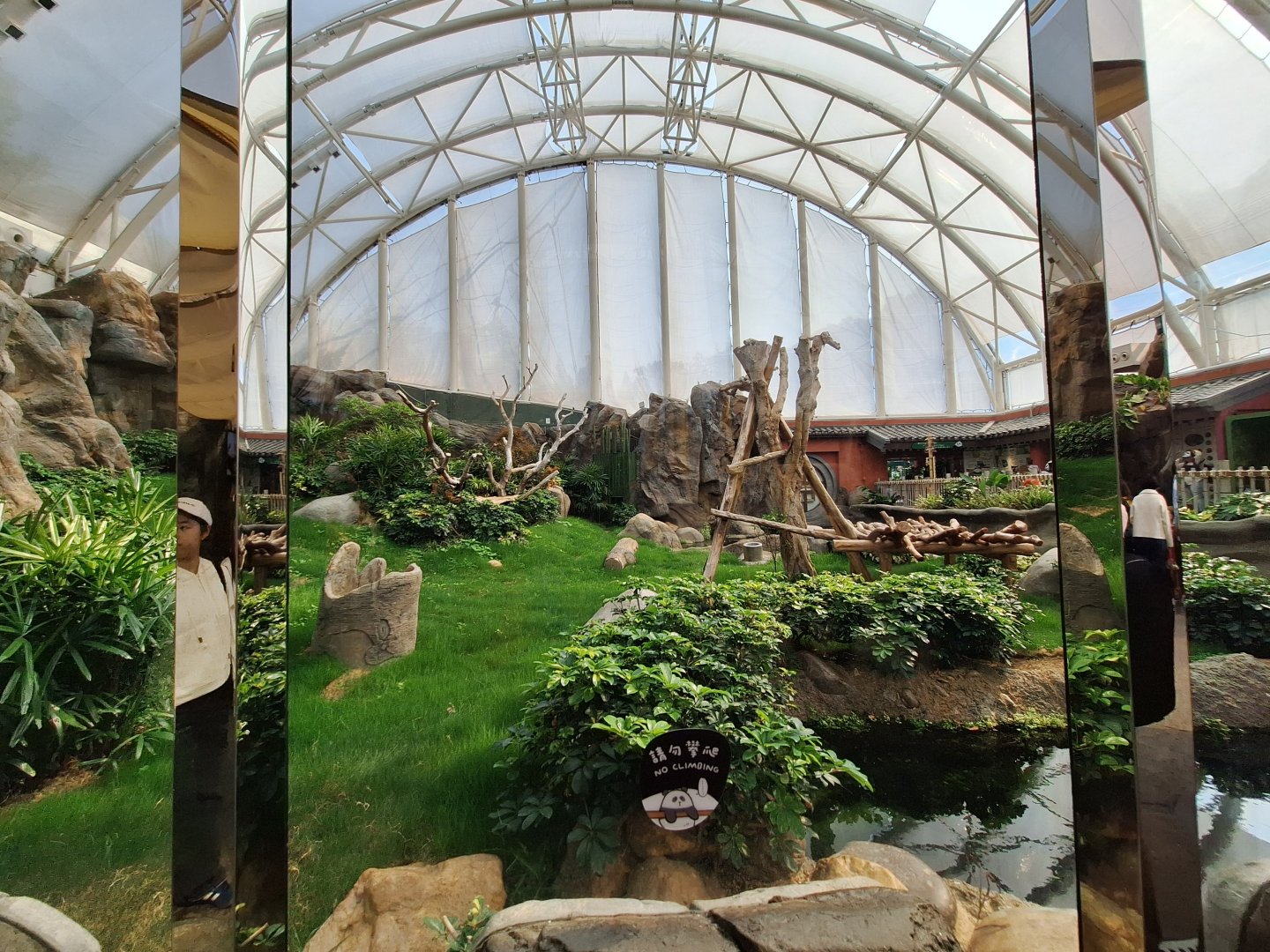
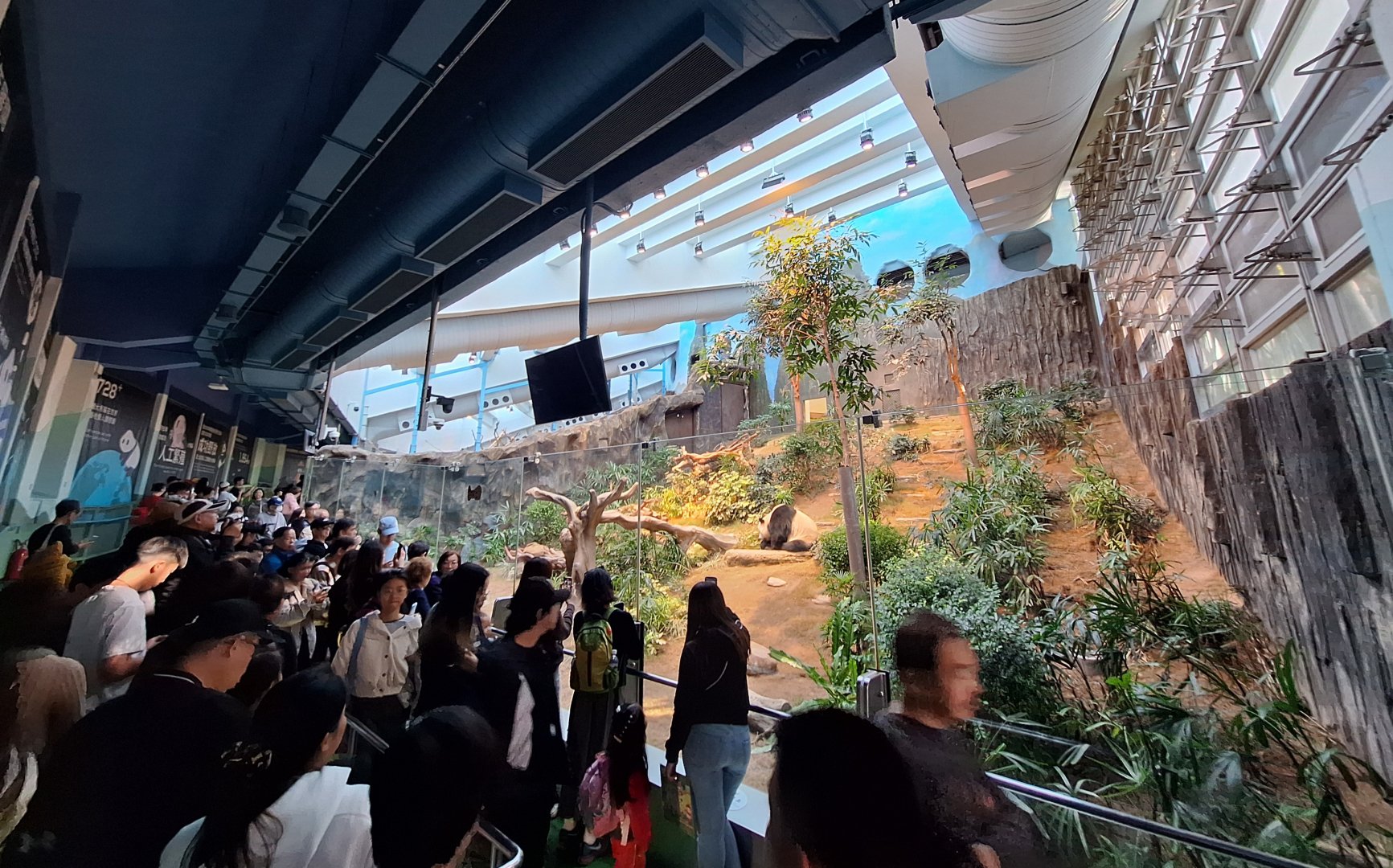
I headed straight for the native species section, passing the Aqua City Lagoon with the picturesque Grand Aquarium in the background. The Amazing Asian Animals zone lives up to its name. The main section here is the Giant Panda Village and attached Dive Into Local Diversity exhibits. The spaces for Giant Pandas here are very impressive, and it is clear no expense was spared for the large and lush greenhouse. Definitely the best I've seen for the species yet, and there were some active bears entertaining the crowds.

Look at all that lush grass!


Although Red Pandas, Giant Pandas, and Giant Salamanders are all fun enough species in their own right, I didn’t linger too long with the large crowds that had already formed in the area. The path exits outside into a plaza with a small pond for turtles and fish, and an enclosure with a large pane of glass for the ever active Asian Small-clawed Otters. I wish I paid more than a passing glance of attention at the rather spacious netted area above the otters, as this is apparently where the rare Pale-capped Pigeons are kept, unsigned.

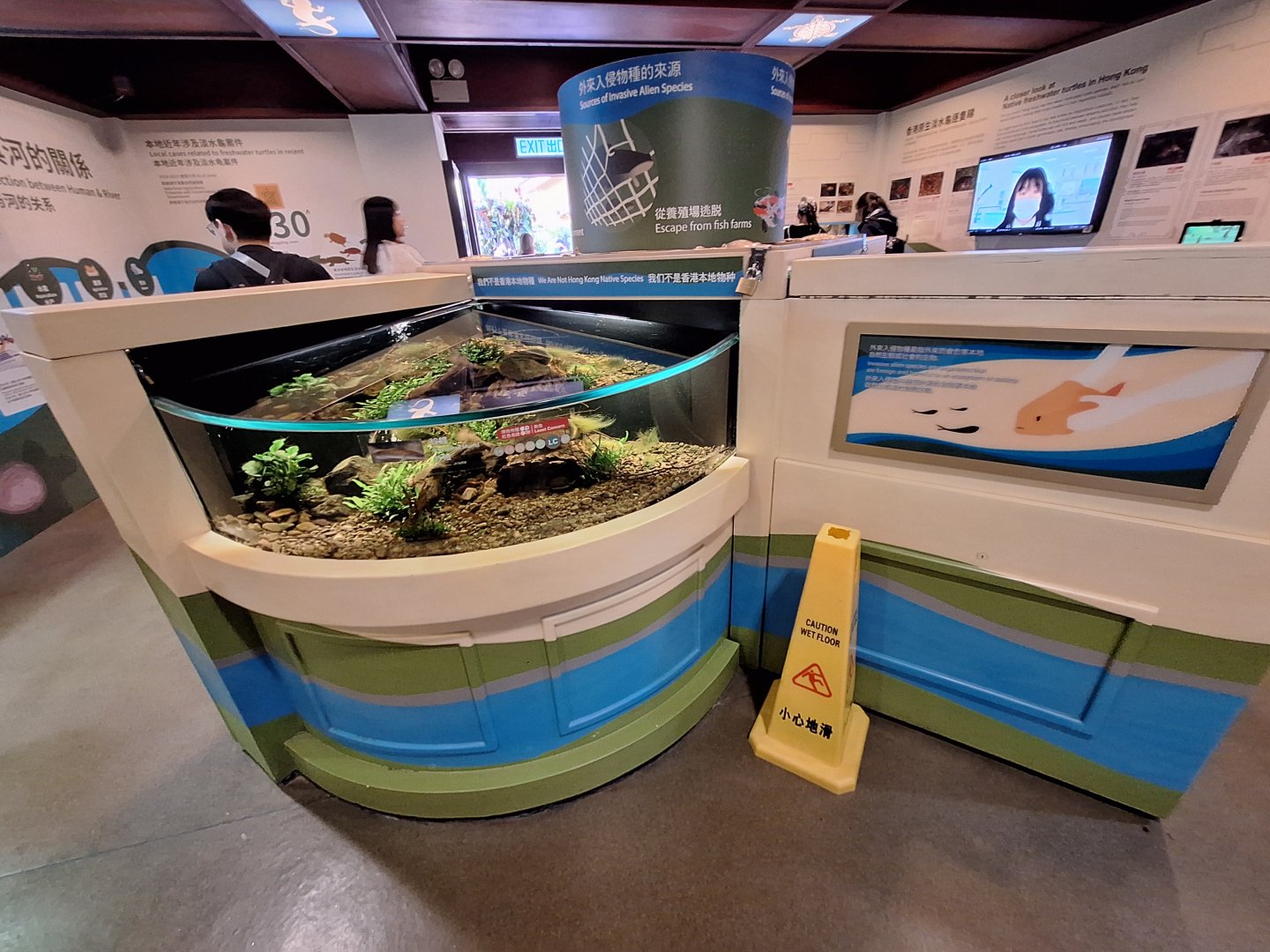
The next section unsurprisingly was perhaps my favorite of the whole park, Dive into Local Diversity. The exhibit began with a few very nicely patterned and furnished small tanks for local fish and herp species in an outdoor covered walkway, before heading indoors to a room with a series of tanks in a circular pattern in the center with additional ones filling out the perimeter walls.


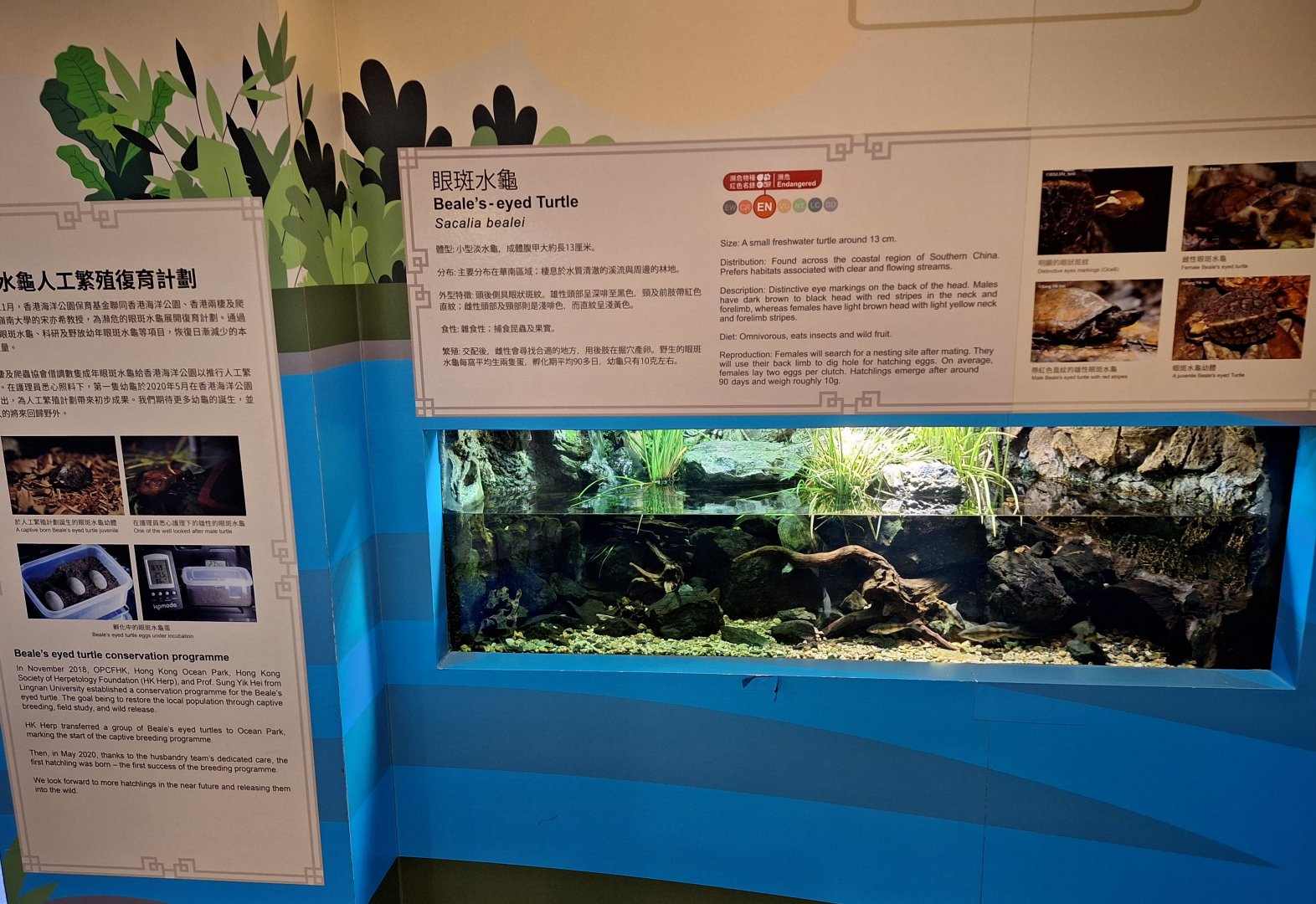
These assorted terrariums and aquariums housed such fun inhabitants as Mountain Crabs, Beale’s Eyed Turtle, Hong Kong Newt, and Amur Goby, among others. This was combined with a wealth of informational signage about local conservation issues, work with specific species on display, and the potential issues caused by the species, such as Striped Snakehead, that are housed in the center aquariums - those introduced to HK by humans.

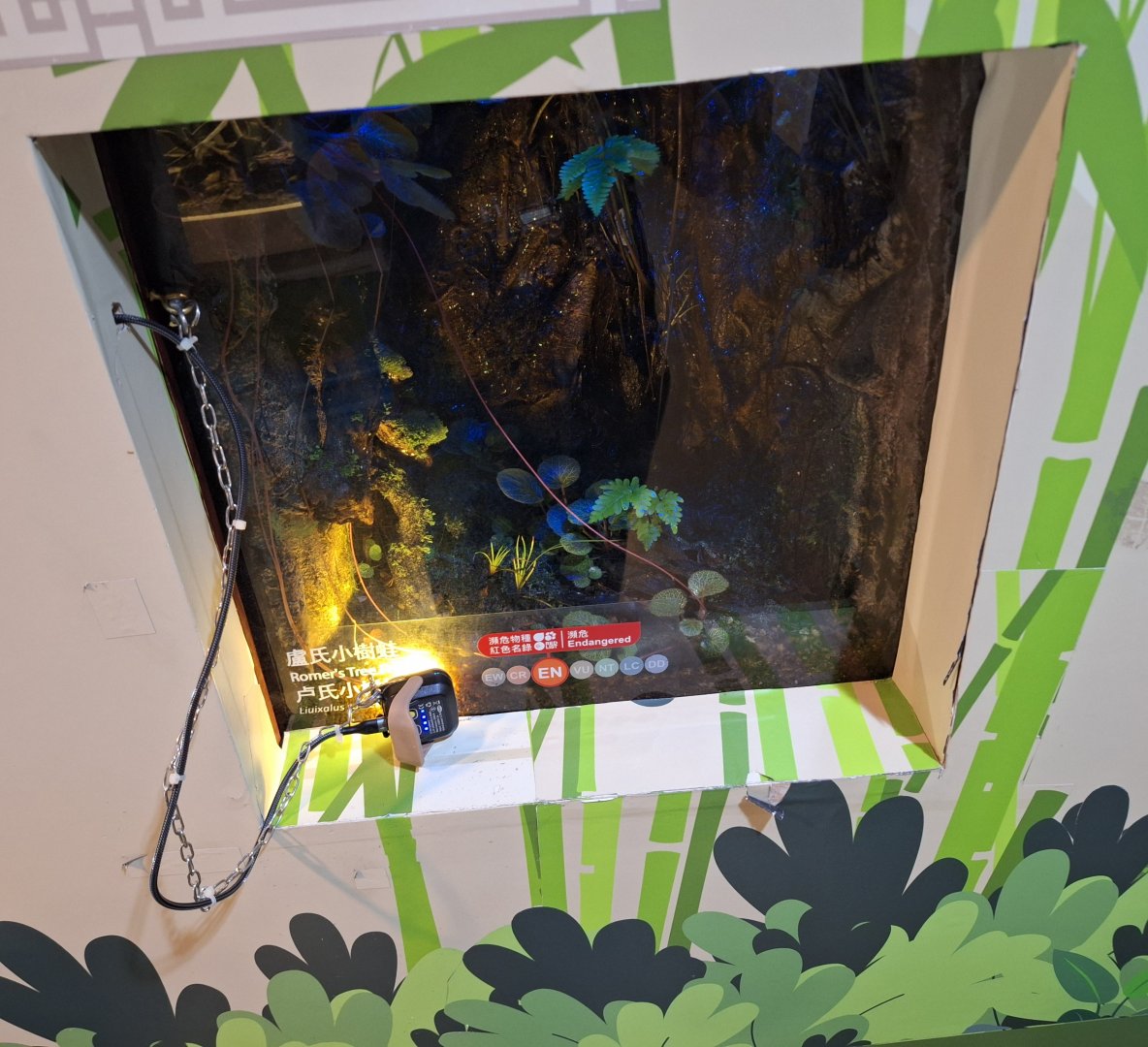
Interesting enclosure with light visitors can use to look for the miniscule Romer's Tree Frog


Yes, the complex houses the (much derided here on ZC, though not without reason) Giant Panda, but my impression, especially of the last section, was that it is one of the strongest for native species I have seen, complete with excellent signage and local conservation work to boot. Many of the displays were simple, yet effective, and I could hear visitors excitedly reading off signs and expressing surprise at different facts about this collection and the conservation of amazing native animals.

Excellent and informative signage

Next, I headed towards the ‘emerald trail’, which is where I assumed the Sichuan Treasures exhibit also was. As I walked over, a sense of dread and despair dawned upon me. There was a closed gate just a bit down the trail. The emerald trail is a series of bird enclosures in green mesh cages, and I assumed further down the trail was where Sichuan Treasures, and the Golden Snub Nosed Monkeys it housed, was. After looking at the birds visible from the start of the trail before the closure, I realized I had read the map wrong and the Hong Kong Jockey Club Sichuan Treasures was in fact another nearby building. I felt quite relieved and thus didn’t mind the wait while queuing at all.

Hong Kong Jockey Club Sichuan Treasures

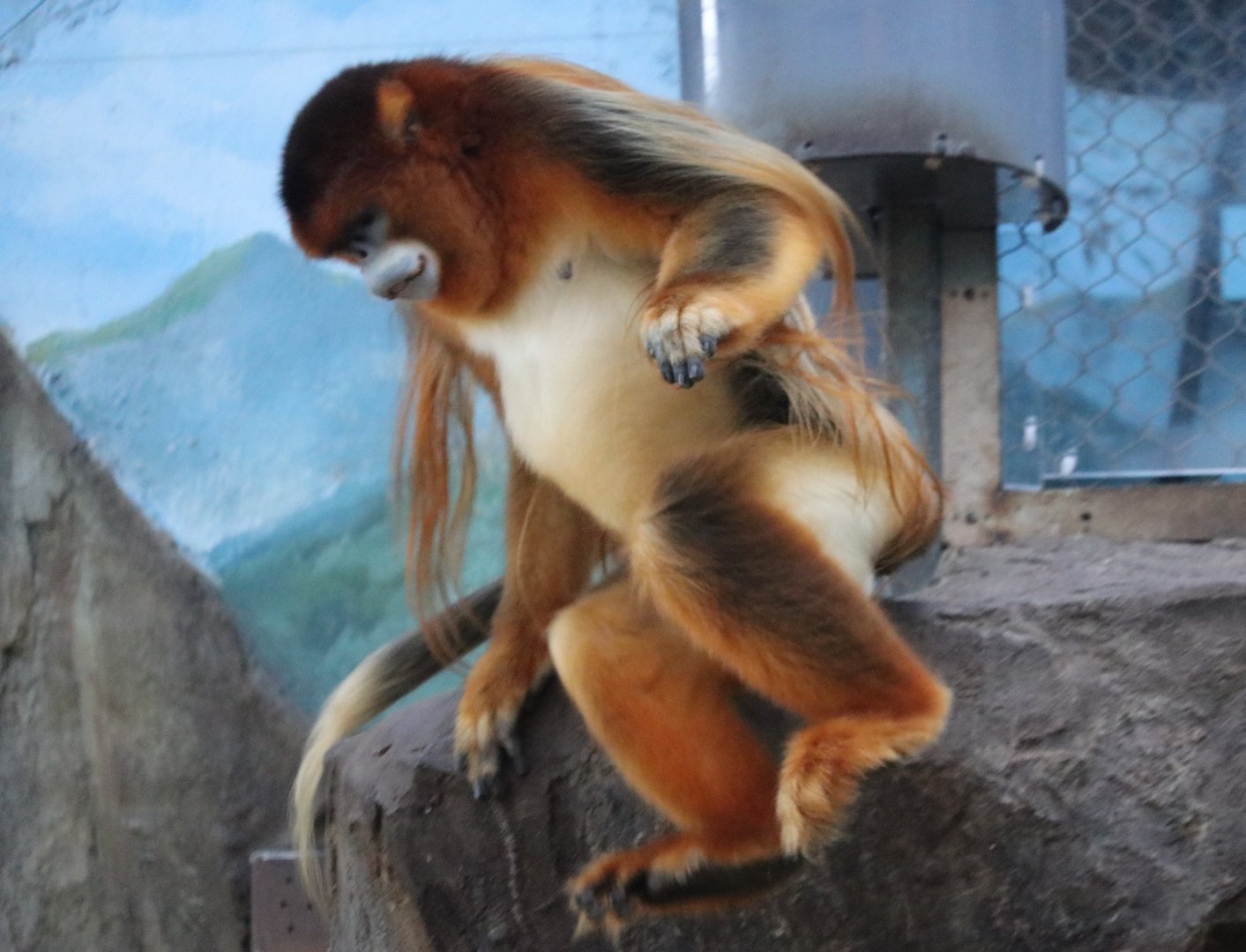
Apart from the legendary Snub nosed monkeys (or snubbies as I like to refer to them) Sichuan Treasures also houses an apparently necessary second series of Giant Panda enclosures, which likely hugely inflate the wait times, as much as I’d like to think it is the draw of the snubbies to the general public that lengthens the queue to the exhibit. For crowd control, the building has timed entry and a split path for one way traffic in each direction along the series of enclosures. Past the pandas, I was delighted to see the pair of unexpectedly large snubbies in their enclosure at the end of the hall. I was surprised to be even more impressed by their fabulous and long golden coats than their pale blue faces. What spectacular primates!


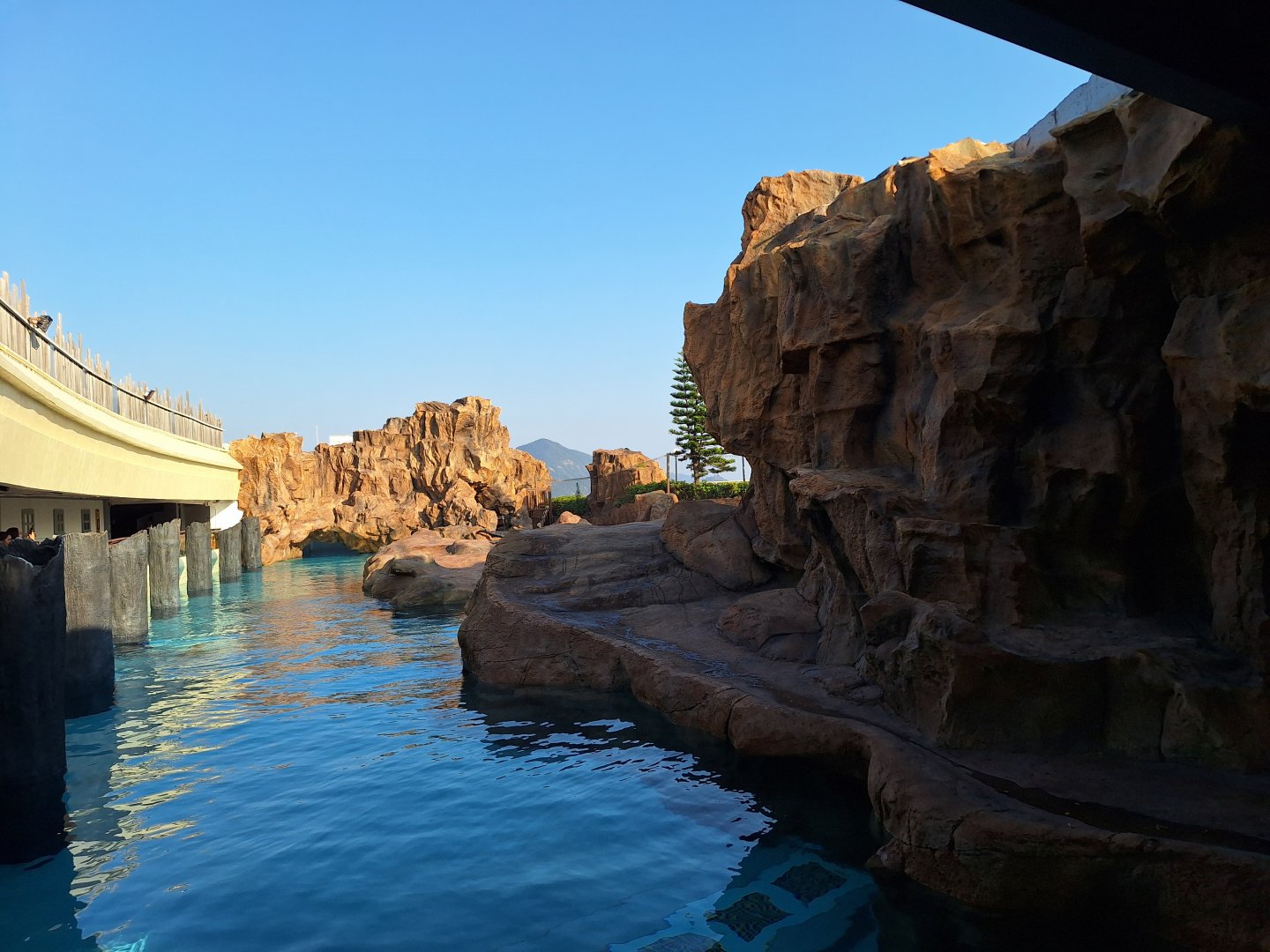
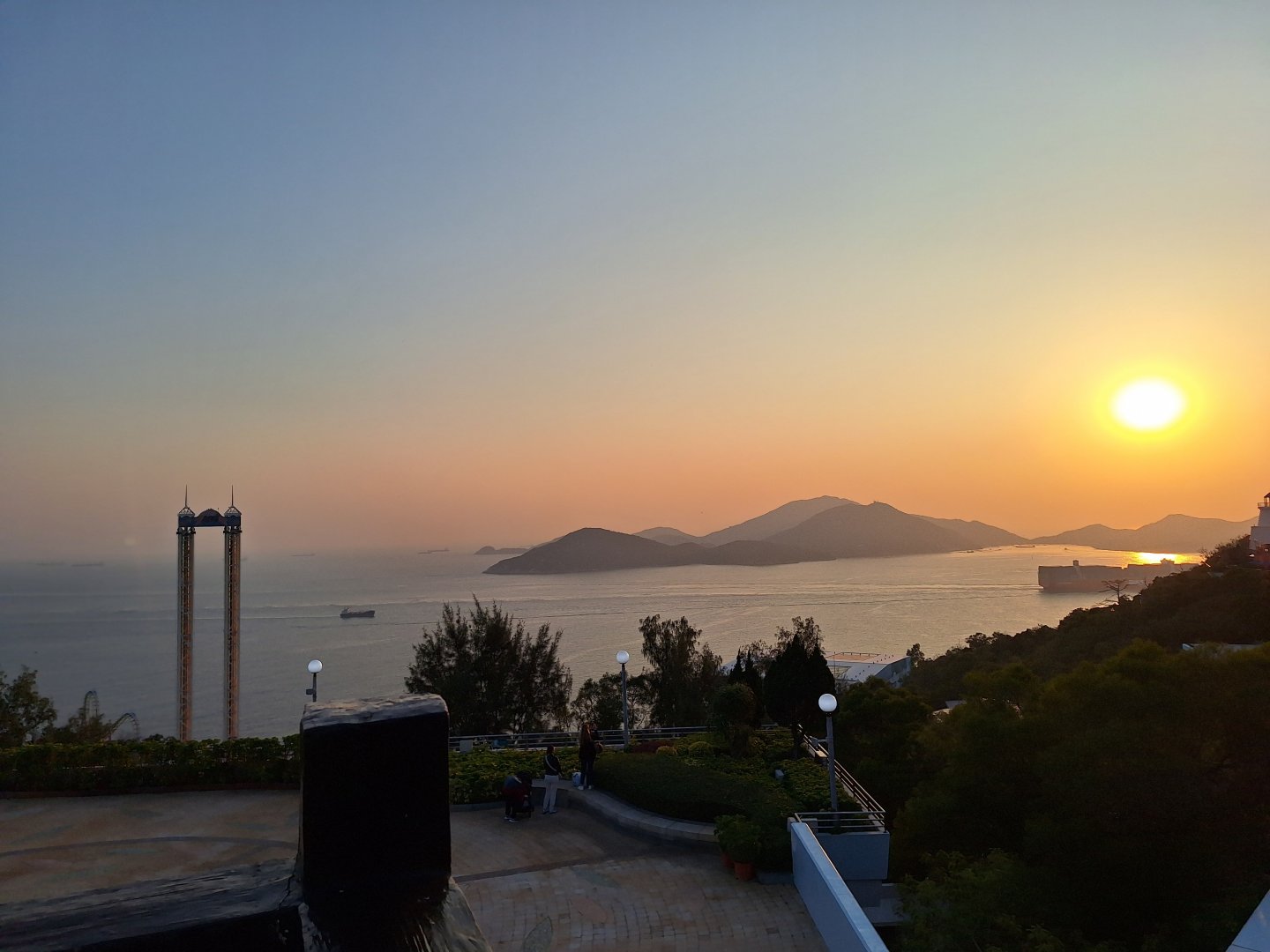
After enjoying some time watching the snubbies, I headed out and towards the Ocean Express, a tram that heads through a tunnel up the hill to ‘the summit’, the second half of HK Ocean Park that has most of the thrill rides and scenic views. The trails are rather convoluted up here and I found myself backtracking along the steep pathways a number of times. While the Pacific Pier Pinniped exhibit is fairly standard, the surrounding vistas were anything but.


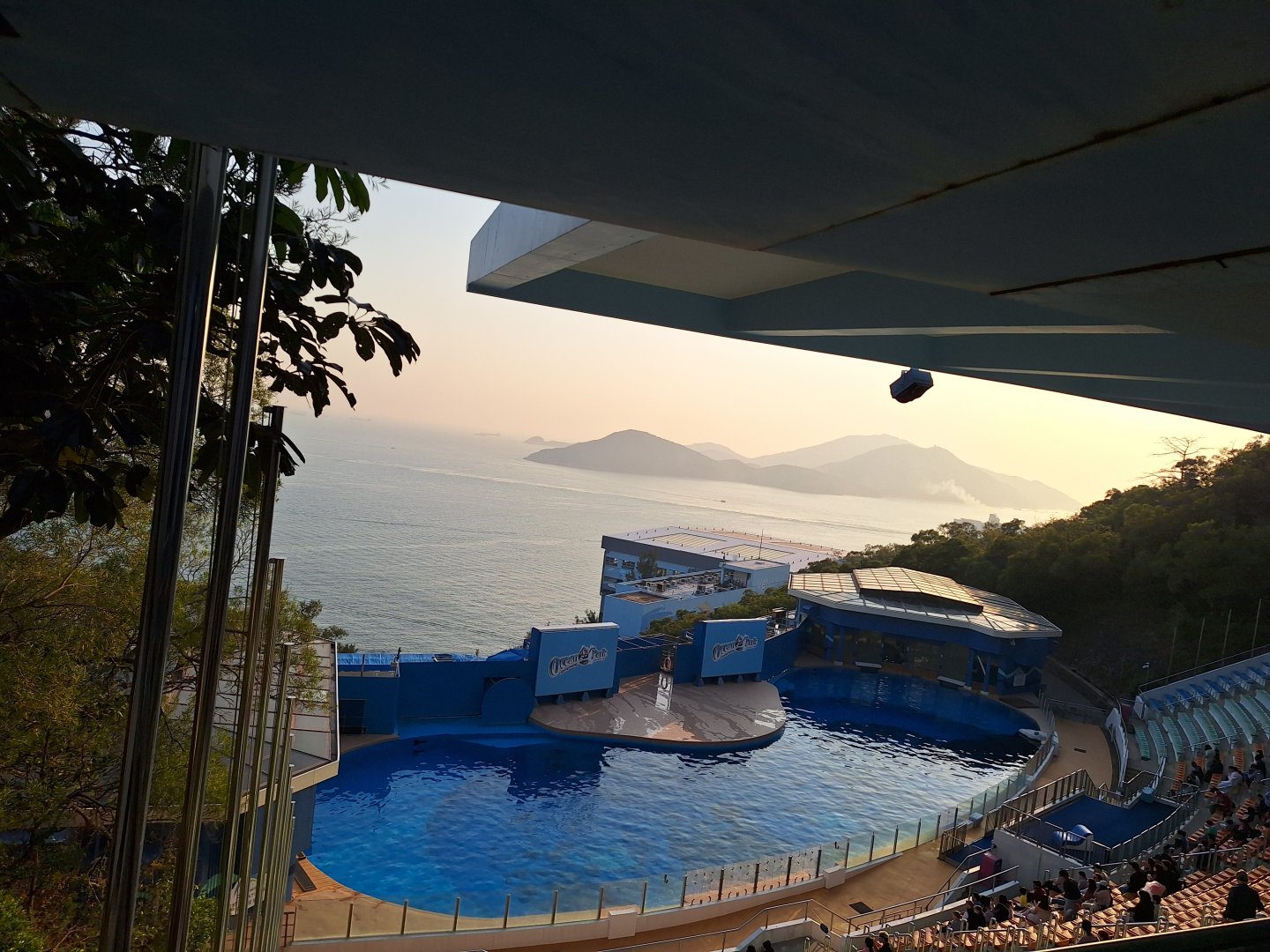
Amazing backdrop for the dolphin stadium with Indo-Pacific bottlenose dolphin (Tursiops aduncus), and here I thought Shedd Aquarium had a cool backdrop for their dolphins...

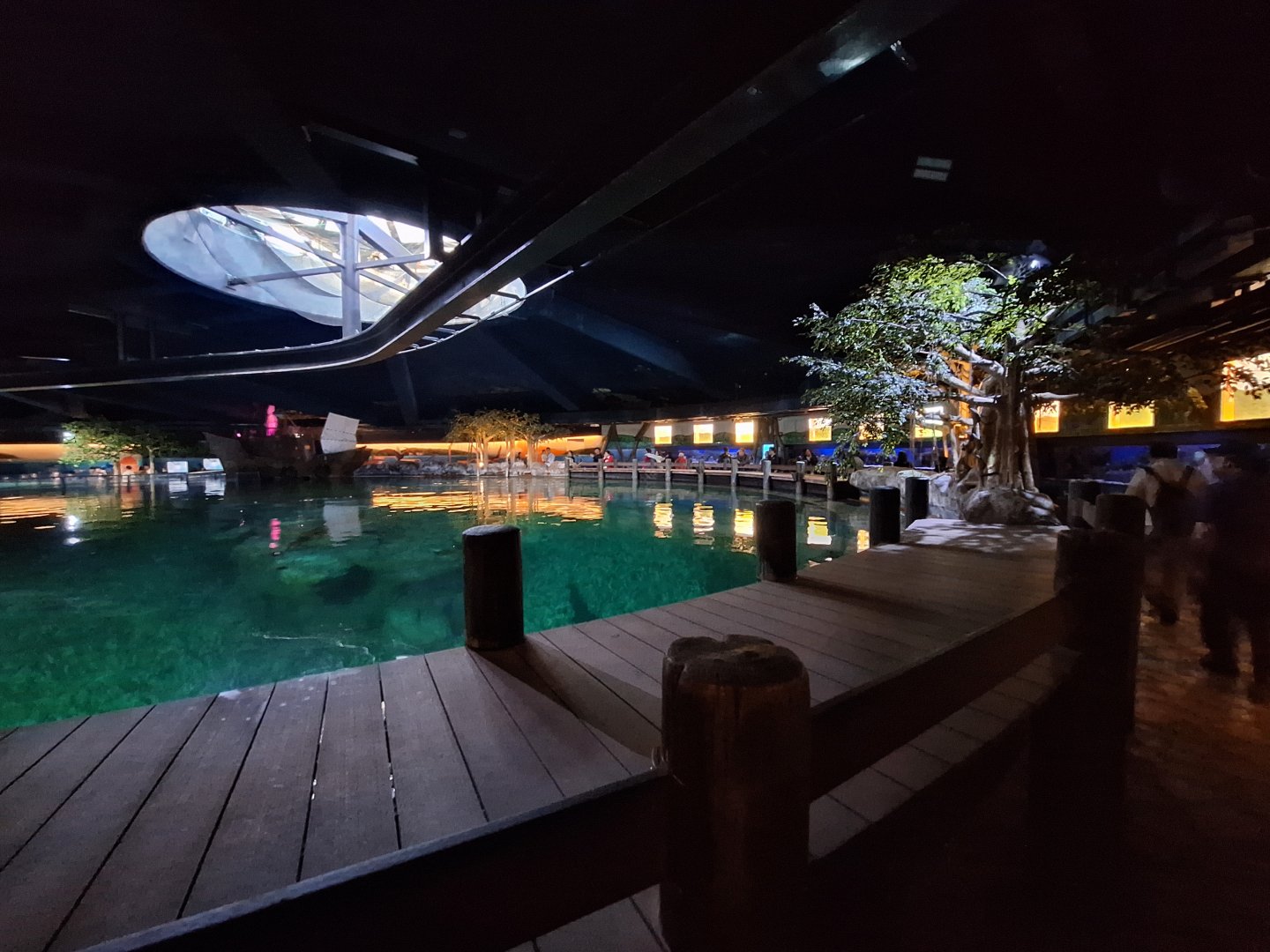
With the Yangtze River Chinese Sturgeon Aquarium unfortunately being closed, the ‘Shark Mystique’ Aquarium was the main draw on the summit side of the park. Despite being quite dark and difficult for photography inside, I did quite enjoy this area, although the lacking signage was very annoying. Upon entry, you are greeted with a view down into a pair of large open-topped main tanks, with a few small tanks for smaller fish on the surrounding walls. After making your way along the tanks, you descend into a pair of lower levels for underwater views. A somewhat standard aquarium setup, but one I found done quite effectively here. There were even a few signs urging against the consumption of shark fin soup


The midday strawberry Hello Panda pack I bought from one of the gift stores apparently were not sufficiently filling, so I grabbed some spicy hake fish balls from a vendor, which I enjoyed before entering the rather standard tropics building, the rainforest expedition trail.

View attachment 844233
Spicy Fish Balls- not really that spicy to me but a nice snack


After a generic greenhouse room with some macaws were a series of terrariums and tanks for mostly common South American species, and the Ranitomeya ventrimaculata in one of the last enclosures was a fun lifer.

I had to backtrack a bit to actually find the Sea Jelly Spectacular exhibit, which was fairly small but had a couple nice species. The jelly exhibit was right next to the cable car back to the entrance portion of the park, and being nearly sunset, a huge line had formed. I just took the much faster Ocean Express tram back through the tunnel down the hill instead, giving myself enough time for the Grand Aquarium before closing.


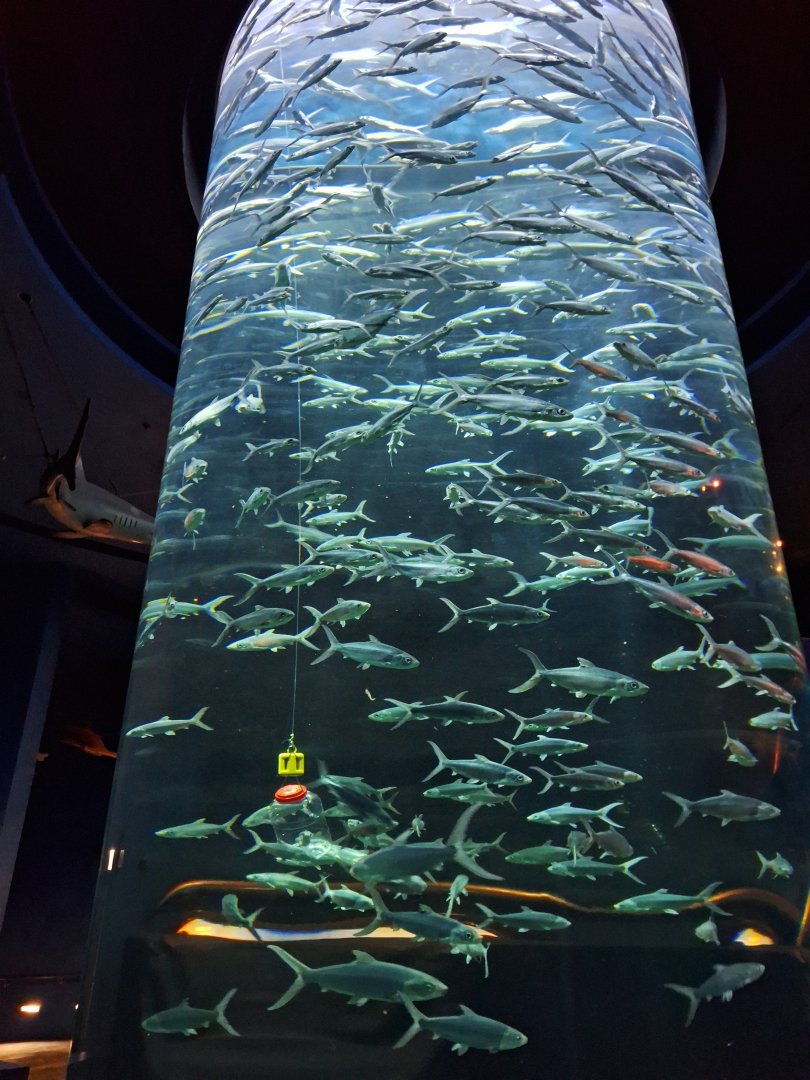
I thought the Grand Aquarium was pretty good, if not a bit small to truly be stand alone, though in the context of the park ‘Grand’ is a fine adjective. My biggest gripe with the Grand Aquarium is that the lack of signage here was by far the worst in the park. I saw a number of rare fish not known to be displayed anywhere else in captivity unsigned. The tanks here ranged from medium sized with live coral to large open-topped ones for rescued sea turtles and less large ones for smaller fish, before culminating with a large tank for Reef Manta rays and assorted schooling fish, full with a walkthrough tunnel. The presentation and entry for the Grand Aquarium are quite dramatic, and the collection is pretty good, while the exhibitry is mostly fairly standard.


Overall, Hong Kong Ocean Park is a pretty great and somewhat unique facility, albeit with a steep ticket price. The Seaworld Parks are the closest comparison I can make, and though they do share many similarities, HK Ocean Park really does feel unique for a (mostly) aquarium type facility, which is refreshing given the homogeneity that aquariums sometimes can face. Despite the frustrating lack of signage in some of the aquarium buildings, the park’s strengths, namely the excellent native-species exhibits and Sichuan Treasures are true highlights. Between the lush panda enclosures and spectacular golden snub-nosed monkeys, the educational Dive Into Local Diversity section, and the various aquariums and solid shark exhibit, and the fantastic summit views to round things out, the park does have a lot to offer.

I watched the evening fountain and lights display in the Aqua Lagoon as I headed out, taking the MTR back to my hotel in Kowloon.

Hong Kong Day 2 (Trip day 7)
The next day I woke a bit after dawn, meaning by the time I got to the hotspot the sun had already been up. I had debated whether to go to Tai Po Kau or the lesser-known Tai Lam country park. I ended up opting for the latter as it seemed slightly easier to get to (one less transfer from Tsim Sha Tsui where I was staying in Kowloon), and the bar charts seemed similar if not better than Tai Po Kau, although Tai Po Kau seemed to have a number of specialties not at Tai Lam and vice versa. I hoped to get some morning birding done at Tai Lam then head to Tai Po Kau for the evening. I guess it ended up working out, although most preferentially I would have added an extra day to do Tai Po Kau another morning and combine with Long Valley or a number of other things I ended up skipping in my short stay in Hong Kong.

Getting to Tai Lam was simple, I just took the Tsuen Wan line to its terminus. I grabbed a banana cake loaf from a bakery in the station (Bakeries really are popular in HK, picked up from the British, I suppose), and after some searching, found the bus stop on the freeway above the station and took the 51 line to the ‘Tai Mo Shan Country Park’. There are a number of names for the parks and it’s all a large, connected area of hilly forest, so I’ll just continue referring to it by the eBird hotspot name. That hotspot location is quite vague, so I relied on what I’d read from an online birding forum, which suggested taking the Kap Lung forest trail from that bus stop and continuing down along a trail besides a stream that was supposed to be quite good for birding. I arrived a tad before 9am, evidently quite late even for a January morning. Still, my stomach was growling so I sat down and pulled out the banana bread loaf.

upload_2025-11-28_22-12-10.jpeg
Banana Bread at trail start

upload_2025-11-28_22-13-17.jpeg
Ho Pui trail


I was greeted with leaf warblers, tits, and a European biker who was curious of what I was looking at, saying that he also birded sometimes. But today he was biking- although apparently on the wrong path as we soon reached the top of a long series of stairs. I said I was just looking at some Phylloscopus (a two-barred warbler), which didn’t seem to terribly interest him. He said goodbye and went to the adjacent dedicated bike trail that weaved through the forest parallel to the footpath.

upload_2025-11-28_22-14-8.jpeg
Forest trail

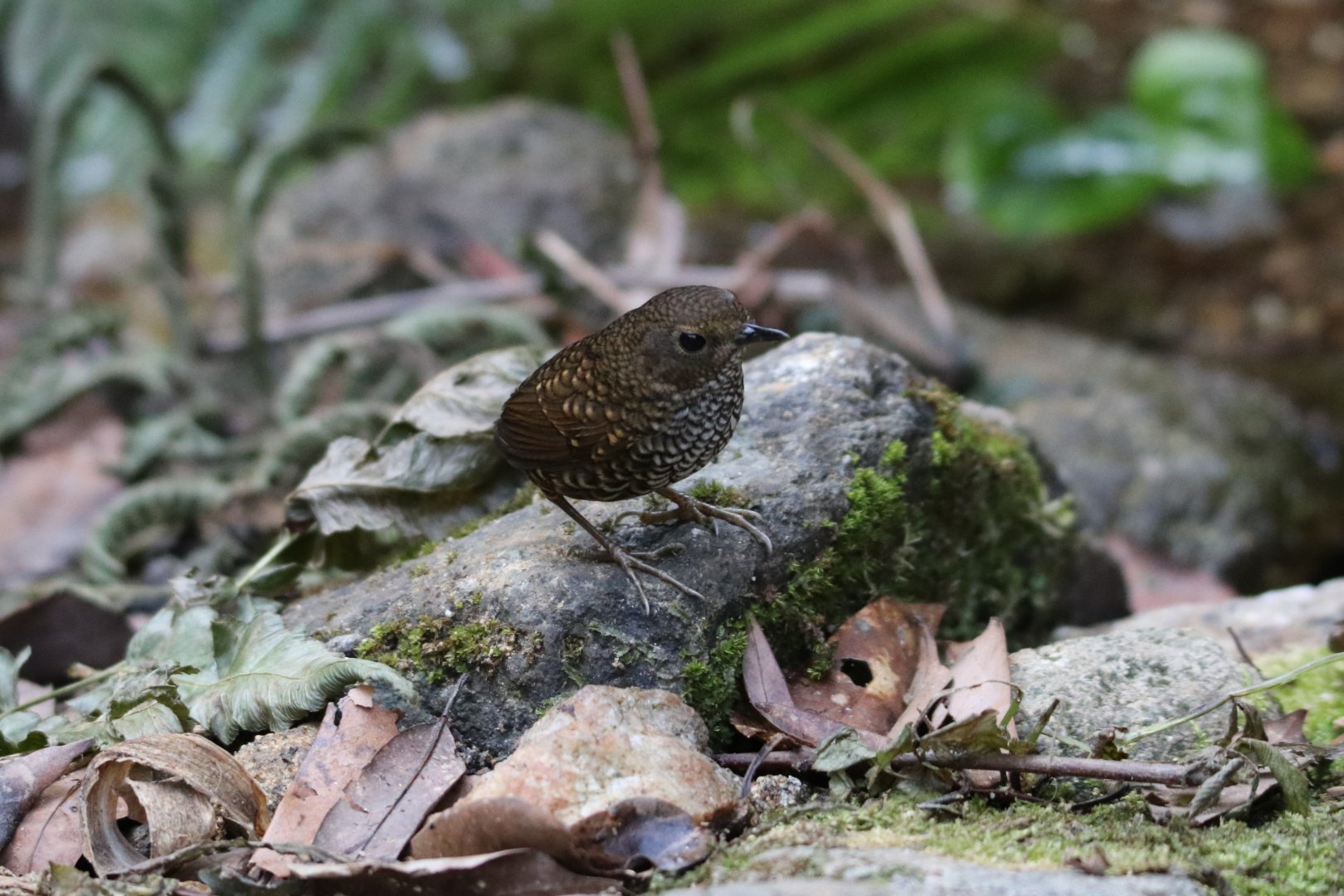
Past the stairs and into the forest, I saw a small brown bird darting around the undergrowth. I caught the briefest of glimpses of what I was quite certain was a Pygmy Cupwing. Awesome! That was a top target of the trip. Rather annoyingly, a group of older men came by at that same moment, rather loudly conversing in Cantonese, so it wasn’t much of a surprise when I wasn’t able to refind the cupwing, and gave up to continue further down the path.

upload_2025-11-28_22-18-4.jpeg
View from trail

There were additional skulky little birds that kept me preoccupied along the first main bend of the path, those being lifer Rufous-tailed Robin and Asian Stubtail. From there, it was rather quiet for a while, and even though I hardly knew the bird calls of the area, I still was listening out for the local barbet and picculet species which would have been a real treat to see. No success on that end, but I got great views of the beautiful male fork-tailed sunbird at the clearing where a number of trails joined up, and the hiking trail and mountain bike trails joined to share a path. I saw a number of joggers coming from up the trail in the direction of the recommended birding area. I didn’t think much of it, although from my days of running track and cross country, I should’ve recognized that something was up when I saw a steady stream of joggers with numbered race bibs. I continued down the trail nonetheless, eager to see new Asian birds.

upload_2025-11-28_22-19-21.jpeg
View from trail

As I continued on, however, the number of racers steadily increased and increased, until it became clear there was a full mountain cross country racing event of some sort going on, with many people of all ages. And go on it did, for around 800 meters (About ½ a mile for my fellow Americans). The path was narrow, with only really enough space for one person comfortably one way, and birding while avoiding going over the edge of the mountain or pushing the racers off with the race going on was not really going to be possible.

upload_2025-11-28_22-15-42.jpeg
An idea of the trail I went down- rocky and narrow, but other portions had even steeper slopes on either side

To make things even more precarious, I was soon joined against the flow of the race traffic by the European mountain biker and some of his fellow biker buddies on this very narrow and rocky dirt path on the side of a steep hillside forest slope. It was enough to balance my camera and tuck out of the way while trying not to slip off the side of the slope every 15 seconds when another racer would come past. The balancing act between me, the racers, and the cyclists when they tried to pass through was really something. I kept on, hoping the last racers would soon jog past. I did end up with some fortune; there eventually was a fork in the trail where the racers were coming from that diverged from the trail I was taking.

It paid off in the end though, because after the fork in the trail, all the bikers and racers and hikers cleared out. By this point, I had descended into a valley, where I could spot Chestnut Bulbul and a perched Crested Serpent-eagle on the other side. I found myself alone at a small babbling crick at a bend in the trail. Well, I wasn’t fully alone, I had a very cooperative Pygmy Cupwing to keep me company. I spent a little while watching this ‘tiny brown tennis ball supported by tiny chopsticks’ (One of my favorite eBird descriptions ever) dart around the stream.


Now that I had for sure seen and gotten great views and pictures of a Pygmy Cupwing, I started to feel better about the whole ordeal I had just subjugated myself to. After all that time to go past the racers I was quite excited to spot a wild Flat-headed Loach (Oreonectes platycephalus) in the larger stream at the bottom of the valley, where I crossed it to get to the other side of the valley further ahead. I kept on a bit further, and it had started to get rather late, around 12:30, so I thought there wouldn't be much to see in the midday sun. I saw a very colorful bird jumping around the trees quite fast. I couldn’t get a good view but thought it may have just been another Fork-tailed Sunbird. After reviewing my photos, it turned out there was a Mountain Tailorbird flitting about. I retraced my steps and backtracked all the way past where the race had been earlier, although thankfully it seemed the last stragglers had since passed.

upload_2025-11-28_22-22-24.jpeg
Forest stream where I found the Loach

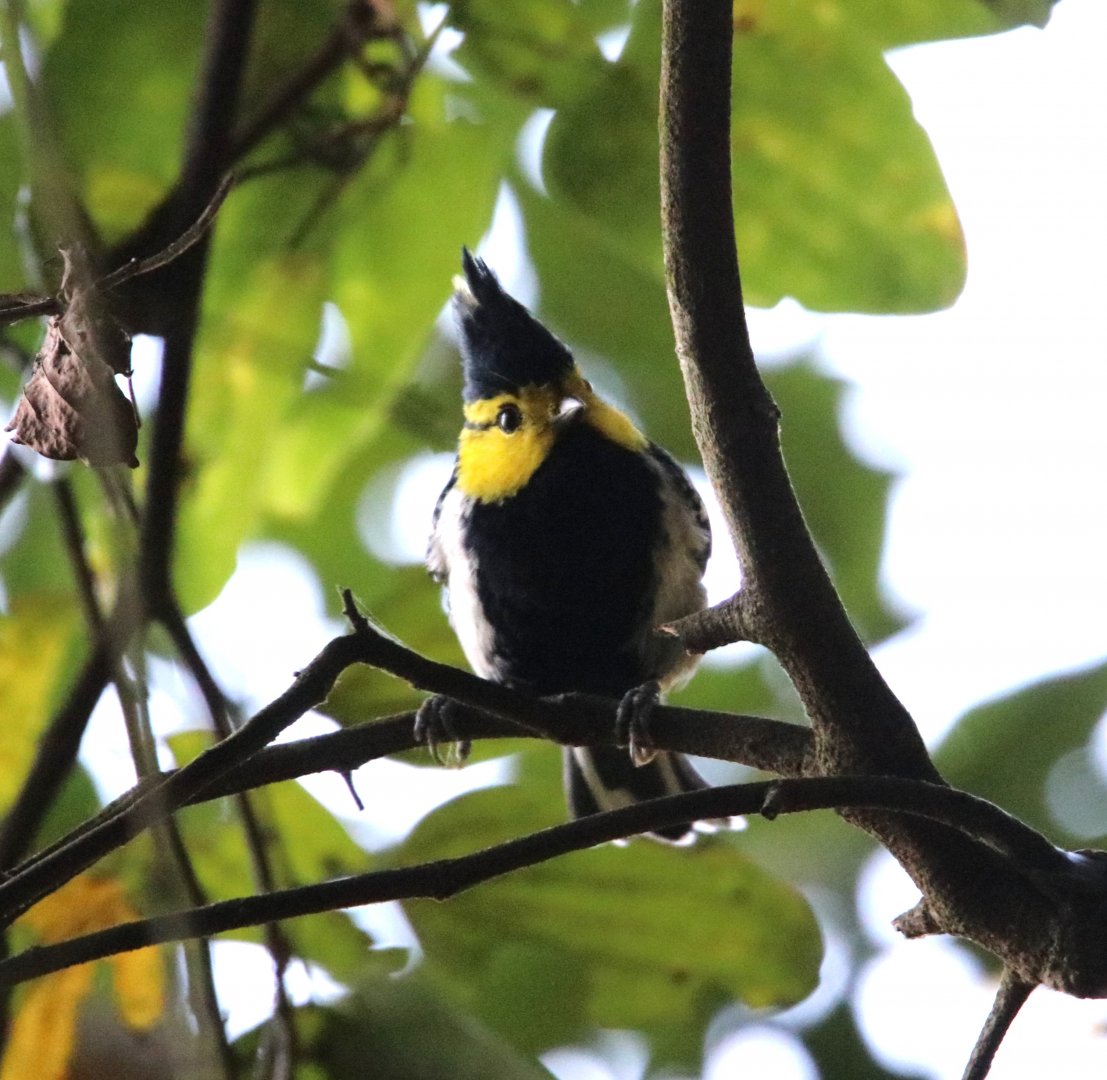
Even more fortunate was that, finally, I had stumbled upon a bird wave! I really hadn’t seen huge numbers of birds up until that point, and there was still a large list of targets I was eager for. The Blue-winged Minla, and a number of other birds I'd see, are considered on eBird to be introduced in Hong Kong, yet still I was quite happy to see them, as some of the birds are in fact in the process of reclaiming their historic ranges. In this delightful flock, I saw a Yellow-cheeked Tit, Rufous-capped Babbler, then a quick Silver-eared Mesia as it darted past upslope. With the flock were Gray-chinned Minivets and White-bellied Erpornis I had seen in the hills of Taiwan. A skulky Streak-breasted Scimitar-babbler was a treat. I heard, then saw a bird that had been near the top of my list, a Velvet-fronted Nuthatch climbing up the side of a tree in that characteristic nuthatch fashion.


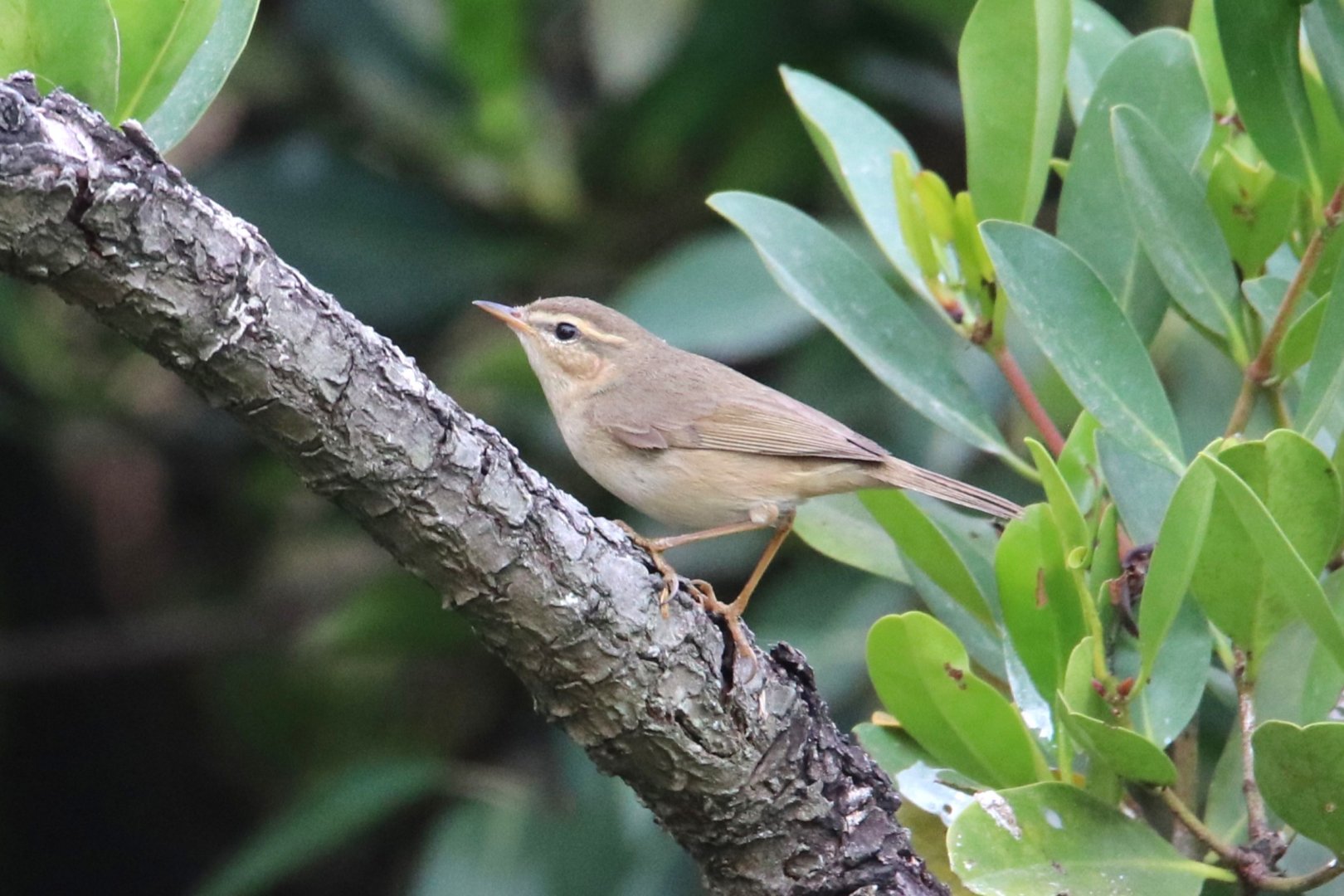
Above was a Black-winged Cuckooshrike, and deeper into the forest I saw a beautiful turquoise gem in the forest, a Verditer Flycatcher! A Pallas’s Leaf, Yellow-browed, and Eastern Crowned Warbler rounded out the nice bird flock. I ended up spending about 5 and a half hours out there, but the majority of birds and a lot of lifers all came within a short span of a few minutes, and a lifer Rhesus Macaque in the forest on the way out was neat too. I thought to myself, this must just be how birding in the Asian subtropics is, spend enough time and eventually a large bird wave may pop up.

I still wanted the Orange-bellied Leafbird, Mountain Bulbul, and other goodies like the Fulvettas I’d missed at Tai Lam, so I decided to take an Uber to save time and get to Tai Po Kau quickly, before the light faded. Descending the mountain on the other side and going through a valley to get to Tai Po Kau was quite neat. I dropped off at the entry parking lot and started up the steep slope of the entry road. There were nice flowering plants and great views, but immediately I could tell it wasn’t going to be a terribly birdy afternoon. I only managed a measly 12 bird species in the 2 and a half hours I spent there until dusk, with my only lifer bird being the Mountain Bulbuls at the entry to the forest trail, which were still very nice to see.

upload_2025-11-28_22-24-42.jpeg
Beautiful view at Tai Po Kau

I tried peeking around the pools of the ‘outdoor study center’ and adjacent river, supposedly good for photography of butterflies and leafbirds, but apparently not on that day. There were, however, some nice fish in the stream that I IDed as Chinese Barb and Predaceous Chub, which kept me happy enough. I then headed into the proper forest, taking the Red Walk trail which supposedly good for birding.

The stroll through the forest was nice, although I could certainly tell that it was more crowded with visitors here. A family from up a trail were calling out to me, clearly asking me something in Canto. I tried replying in Canto ‘I dont speak Canto’, which is a good phrase to learn in any language, because it gets the message across whether or not the words you try to utter are actually understood. I think this group probably got the message, as they switched to pretty clear English when they came close. They asked the way out of the forest, and I gave my best directions. I saw them catch a bus on my way out, so I guess I didn’t do too bad, giving what I assume to be locals directions and all.

upload_2025-11-28_22-25-54.jpeg
Crazy vines in the forest at Tai Po Kau

While at Tai Po Kau I didn't really see any other birdwatchers, while at Tai Lam there were a couple I saw headed back as I was going down the trail, another sign that I definitely started too late, and perhaps I should've swapped the order of the parks. I still sat happy, satisfied with the day, waiting on the curb by the side of the road for the bus, as I watched some large bats pass through the streetlamps that flickered on as the sun set and darkness settled. In hindsight I should’ve tried harder to ID those bats- I ended up missing Greater Short-nosed Fruit Bat. D’oh!
 

Attachments

  • upload_2025-11-28_22-12-10.jpeg
    upload_2025-11-28_22-12-10.jpeg
    289.9 KB · Views: 40
  • upload_2025-11-28_22-13-17.jpeg
    upload_2025-11-28_22-13-17.jpeg
    352 KB · Views: 41
  • upload_2025-11-28_22-14-8.jpeg
    upload_2025-11-28_22-14-8.jpeg
    379.4 KB · Views: 41
  • upload_2025-11-28_22-15-42.jpeg
    upload_2025-11-28_22-15-42.jpeg
    212.8 KB · Views: 40
  • upload_2025-11-28_22-18-4.jpeg
    upload_2025-11-28_22-18-4.jpeg
    220.1 KB · Views: 34
  • upload_2025-11-28_22-19-21.jpeg
    upload_2025-11-28_22-19-21.jpeg
    133.9 KB · Views: 41
  • upload_2025-11-28_22-22-24.jpeg
    upload_2025-11-28_22-22-24.jpeg
    191.8 KB · Views: 40
  • upload_2025-11-28_22-24-42.jpeg
    upload_2025-11-28_22-24-42.jpeg
    148.6 KB · Views: 34
  • upload_2025-11-28_22-25-54.jpeg
    upload_2025-11-28_22-25-54.jpeg
    206.1 KB · Views: 40
Last edited:
Hong Kong Day 3 (Trip day 8)

Considering that Mai Po wasn’t supposed to open until 9am, my wakeup time wasn’t too bad for once. Unfortunately, I spent quite a while on the entry road to Mai Po, so it would’ve still have been better to get out there quicker. Taking the Tuen Ma Line to Yuen Long was easy enough, but in typical HK fashion it took a little while for me to find the right bus to Mai Po; the bus stop ended up being beneath the mall containing the MTR stop. I took the 76k bus and got off at the Mai Po village stop, before walking the 1.6 km down Tam Kon Chau road. This road was lined with gei wai (traditional shrimp farming) ponds, and actually proved to be rather nice for birding.

upload_2025-12-5_0-57-43.jpeg
Tam Kon Chau road

I was quite excited by the soaring Great Cormorants, Amur stonechats, and a Long-tailed Shrike early on. At one of the earlier ponds, I had a very brief view of a very small, light-colored Y-shaped twig of a bird in flight- in Hong Kong, that meant a Yellow Bittern. It disappeared into some foliage along the bank of one of the agricultural ponds. After scanning the numerous mynas, doves, and herons, I spotted a Red-billed Starling perched atop a tree.

The whole area had a wonderful view of the Shenzhen skyline, a very impressive city with perhaps my favorite building I’ve ever seen. The Ping An Finance center is truly an architectural and engineering marvel, and seeing it in the background of the wetlands throughout the day was quite evocative. It also spoke to the rapid development and importance of conserving the area. I saw a great egret far out over the river, clearly in mainland China, and got to fill in the mainland on my ebird map.

upload_2025-12-5_1-13-4.jpeg
View of Shenzhen (mainland China) behind gei wai ponds

Carefully inspecting all the little brown jobs along the way, the vast majority of which were prinias, I did hear and see a Dusky Warbler, which turned out to be rather common in the open wetland habitats. A little further on I saw a spoonbill fly across but it dipped past the treeline before I could make out the species. It was probably the endangered Black-faced Spoonbill, a major reason I came out to Mai Po, which boasts some of the largest wintering populations of the species in the world.


Because of the importance of the wetland, and its proximity to the border with the mainland, Mai Po is a restricted entry reserve. However, they do provide a special one day permit for visiting naturalists from overseas. To fill out the form, you need to provide evidence of membership of a conservation organization or the like, pay the 300 HKD fee, and a deposit of 200 HKD. That’s pretty steep! I had applied for this a few months back and thus was able to freely roam the massive preserve, after signing in at the visitors center, which I’d need to be back at by 5pm to get back my deposit. When I pulled out the 250 HKD that was the fee listed from when I had applied, the attendant at the desk sheepishly informed me of the price increase, effective the new year.

At the pond in the back of the visitors center I saw a Greater Coucal fly across and into the bushes, a very impressively large cuckoo. Also in the back, I was delighted to see the Azure-winged Magpies, known to hang around the area. In the visitor center was a large display with the tide charts for the day at the different mudflat hides out on the deep bay. This was very helpful for targeting the best time to be out there, which looked to be at the end of the day near the 5pm closing time, if I wanted to get my deposit back.

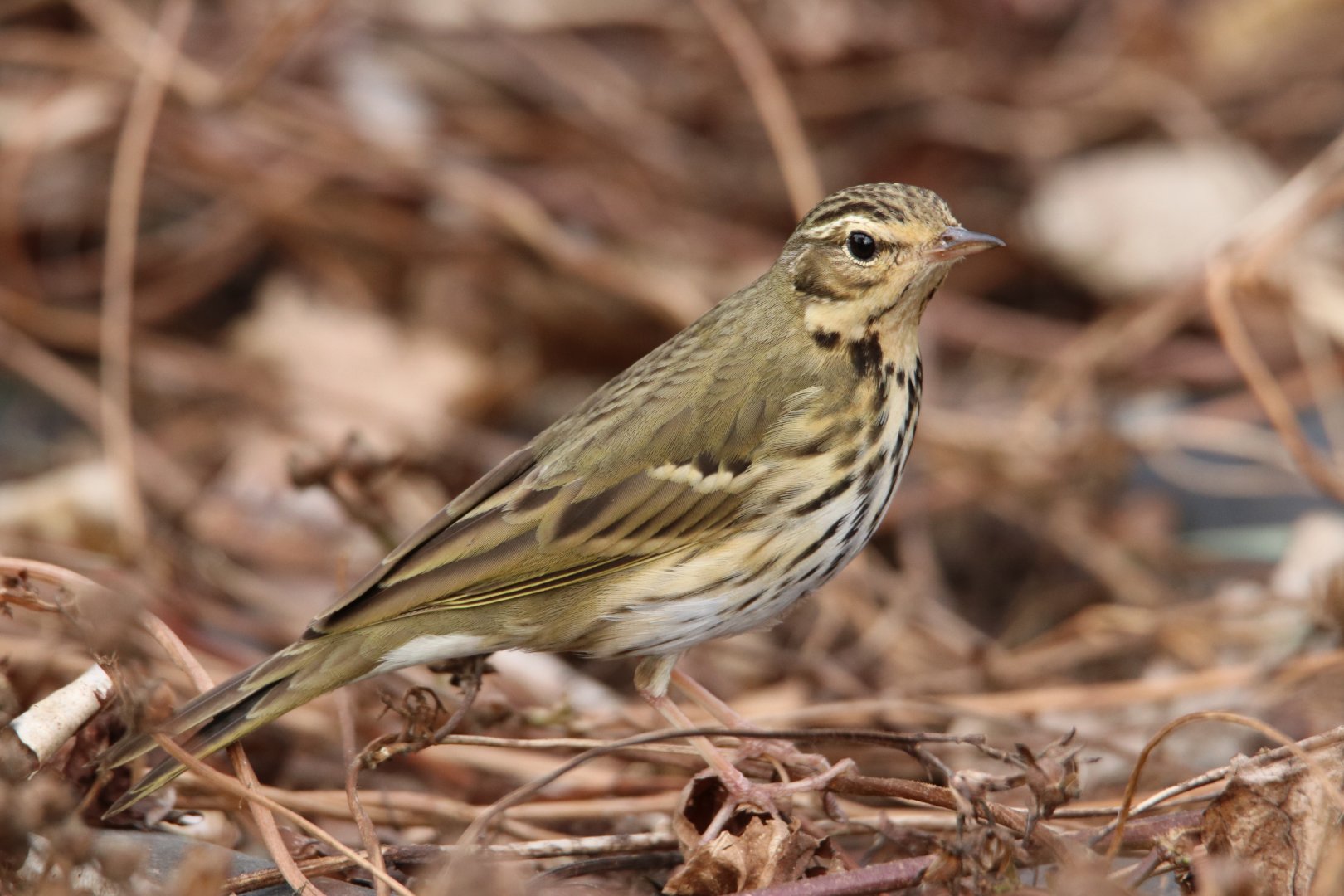
The path between the permit gate and the visitor center was quite birdy, with some Masked Laughingthrushes rummaging around the leaves by the toilet block. There is a palm tree here that is supposed to be a reliable Greater Short-nosed Fruit Bat roost, but try as I might I didn’t see any underneath the leaves. I later asked a regular on iNaturalist about this roost, and they said the bats sometimes come and go but almost always will be at that roost in the day. I had excellent views of an Olive-backed Pipit, and definitive ones of Black-faced Spoonbills walking past more of the cultivated gei wai pools on the path to the second entry gate. I handed a sheet in exchange for a permit to a pair of disembodied hands that popped out of a gap in the wall at a small booth where the attendant was. Without ever seeing his face, he told me to hold onto the laminated sheet of paper in case any officials asked, given the proximity to the border and the sensitive nature of the species at the reserve. I don’t think there’s anything like this in the states, such a forward-facing job without seeing face-to-face.


The main portion of Mai Po is a series of ponds, at varying water levels, most very low on my visit. The first area I went to was a tall and very serious looking bird blind, sponsored by the ‘Hong Kong Jockey Club’, the same ones kind enough to sponsor the Snub-nosed Monkey exhibit at HK Ocean Park. I went to the top to see what I could, and was surprised by a pair of Oriental White Storks off on the exposed mud flat, another large white endangered Asian bird. Another one flew in and gave spectacular views from my elevated position at the top of the hide.

20250105_114804.jpg

upload_2025-12-5_1-30-26.jpeg
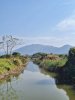
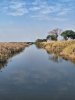
Canals in Mai Po

Continuing down the path I saw Black-faced Bunting, Daurian Redstarts, and Amur Stonechat. A Collared Crow soared past, a really neat corvid of eastern China. I foolheartedly scanned the Tufted Ducks for other Aythya species (perhaps of the baeri persuasion, there have actually been records here before). I saw some more storks soaring overhead as I walked the trails, passing over boardwalks and past more ponds, and even a paddock for Domestic Water Buffalo as I headed along the south east end of the reserve. I walked past a shaded reedy area, investigating every prinia, when out erupted a Eurasian Bittern, which flew before I could get a photo! I was sitting at 0/2 for Asian bittern species, but it was still really neat to see one. Up above, a huge kettle of Black Kites were soaring, and among them a Greater Spotted Eagle! It was noticeably larger and was bickering with some of the unruly kites. I stopped briefly at the south bird hide, another impressive, enclosed tower, where I saw many more shovelers, cormorants, wigeons, and spoonbills.

upload_2025-12-5_1-5-32.jpeg
Boardwalk over flooded field

In some mangrove trees growing along the side of a canal, I saw my first White-throated Kingfisher, a spectacular bird. At ‘The Scrape’ hide, there was not much other than greenshanks and grey herons and the like, which I’d been seeing throughout the reserve. Some other birders were around, and I walked with one towards the deep bay. Given the timing, the tides should be coming in and viewing conditions should be improving.

upload_2025-12-5_1-4-27.jpeg
View from the hide of 'the scrape'

Just as we started walking along the paved sidewalk, I noticed some movement right off the path and the other birder let out a yelp- we had flushed a Chinese Water Cobra! It hurried from the small patch of cut grass just to the right of the sidewalk and slithered deep into a clump of bamboo. I was so shocked that I didn’t even manage to get a photo, mostly out of self-preservation! In that split second, I got a clear look: a huge, mostly black snake with white markings near its head and a slightly flared hood. Shockingly, this would be the only snake I would see my entire trip. Considering the number of venomous snake species I was within the range of, I’m not too upset about that- although I shudder to think of how many were in striking distance that I didn't see. I still have no clue what to make of it, the only snake I saw was one of the deadliest in the world, in terms of kill count- and I only saw it by flushing it!


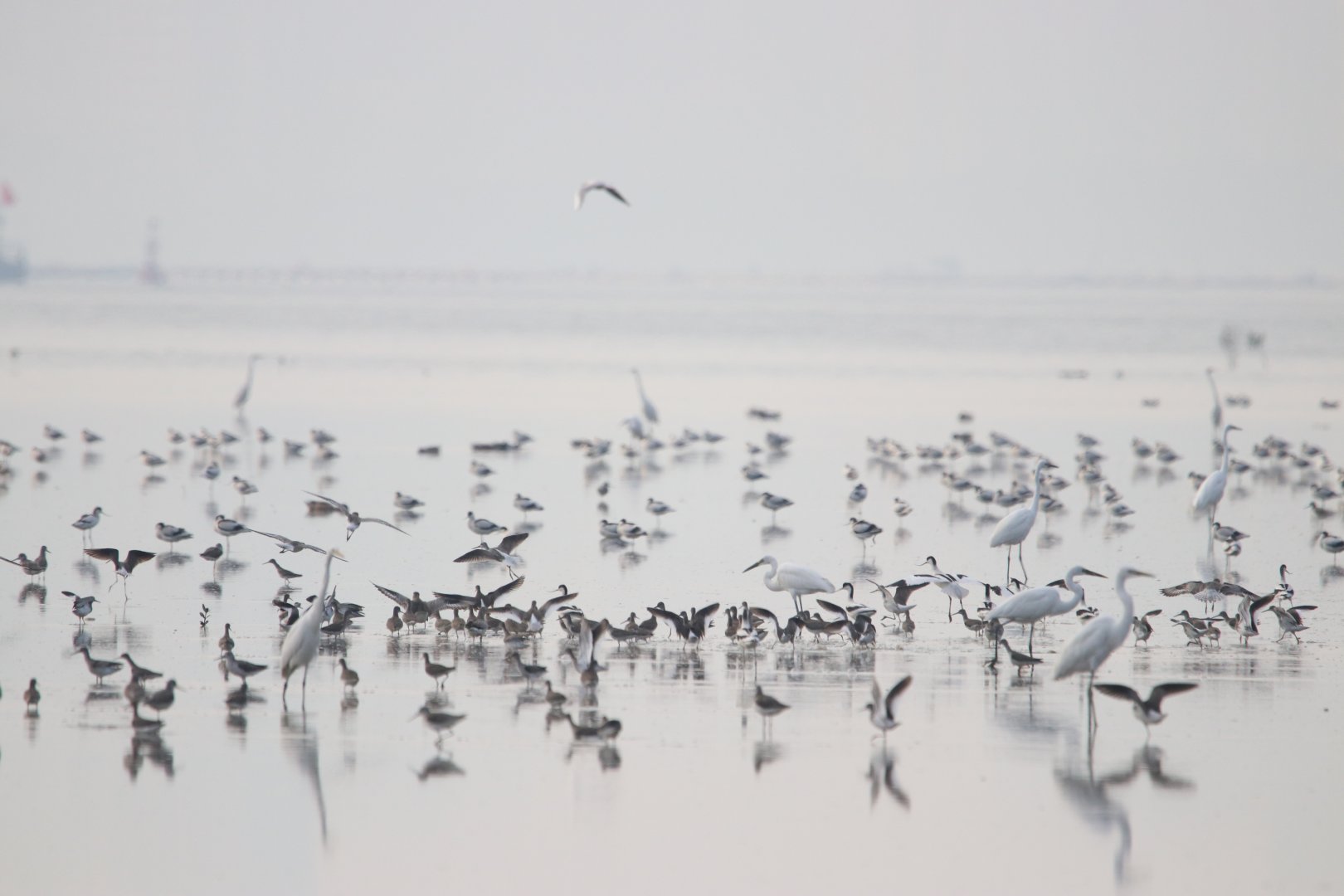
At the end of this path, there is an extensive fenced off portion along the Northwest portion of the reserve where the mangrove area is. Walking along the fence, I passed additional pools and mudflats, which held some shorebirds including my first Pied Avocets. Past here, there was an unlocked gate, quite a serious looking thing. Because of the permits I had acquired I was allowed to proceed through the gates. What followed was maybe the sketchiest ‘trail’ I've ever taken, but it was pretty fun. Most of the path was essentially a pair of planks placed on floating barrels. It went straight through the heart of the mangroves, mostly over water, but sometimes right over higher mounds of mud, which were handy if you passed someone going the other direction. There were plenty of crabs around, but I found the mangroves were pretty devoid of obvious bird life. I rushed out to the flats to make the most of the time out there, I knew I’d need a long time scanning, especially without a scope and just my camera.

upload_2025-12-5_1-9-34.jpeg
Floating mangrove boardwalk- it bounced around a ton when walking down it

My excitement rose as I neared a hide. On the side of a boardwalk, I saw a mudskipper, my second since Taiwan but the same species, Shuttle’s Hoppfish. So cool! The tide at the first mudflat hide was, as expected from the tables, way too low. This meant many more mudskippers were visible, however, the species out on the more exposed flats being the impressive Great Spotted Mudskippers! I saw an Osprey perched on a stick far out on the flats, and could somewhat make out whimbrels and curlews, but decided to head to the north hide where the water level should be right for much better views of the birds.

upload_2025-12-5_1-11-40.jpeg
Boardwalk between hides

There were huge numbers of birds over at the north hide, as predicted, they were much closer. Most individuals out here were Great Cormorants, but I was most excited by the large flock of large gulls. There were also many of the smaller Black-headed Gulls, which are like our North American Bonaparte’s gulls. Much to my delight, among the larger gulls were some of the rarer Pallas’s Gulls, imposing birds with black heads. The large flock of Larus looked rather daunting, considering the number of very similar species possible. I took as many photos as I could, hoping I could separate Lesser Black-backed, Mongolian, and possibly Vega Gull, and any others, if they were present. It did seem like more than one larus was here. I was quite happy, when, after corresponding with one of the top gull experts in North America, I received confirmation on all three of the mentioned Larus species being present. Once I learned some of the key ID features the differences became fairly clear from my photos.

upload_2025-12-5_1-16-9.jpeg
North Hide- flocks on deep bay and Shenzhen out in the distance

Slightly less esoteric was a close feeding Black-faced Spoonbill, and a ‘Common’ trio of Greenshanks, Redshanks, and Sandpipers. Also present were Pied Avocet, Black-Bellied Plovers, Eurasian Curlews and Eurasian Whimbrels (an armchair tick for me), Northern Pintail, Green-winged Teal, Eurasian Wigeon, and a lifer Common Pochard.


It was nearing 5pm, and I did prefer to get my 200 HKD ($25.5 USD) deposit back. I rushed through the mangroves, back down to the second south hide. The tide had come in a bit more, so some birds were closer, yet there were still massive flocks far out, with many Great Egrets, Grey Heron, and more Pied Avocets and Black-bellied Plovers. Even further back, there were many Black-headed gulls, whimbrels and curlews, and I even picked out a few Saunders Gulls among them.

I love gulls and was very happy with the species here, even if not all of the shorebirds I was hoping to see were present. Watching the mudskippers and mass of birdlife out on the Deep Bay was pretty special as well. As I made my way out of the mangroves, and back towards the visitor center, I saw more of the many wonderful birds I had been seeing throughout that day. I’m glad I stopped for some very pretty wigeon/teal like ducks that seemed a bit different- they were a pair of lifer Falcated Duck, though no male in breeding plumage, still very nice.

upload_2025-12-5_1-17-2.jpeg
Boardwalk on way out

I walked quickly on my way out to make sure I got back in time to return my permit and collect my deposit, watching the ground carefully for any more cobras this time. I was down to the wire, and really rushed back, arriving with less than a minute to spare, although it was obvious nobody was watching the seconds. I just didn’t want any issues. It was clear the attendants were getting ready to leave for the day soon anyway.

I walked all the way back along Tom Chow road in the evening light, and took the bus back to Yoho Mall in Yuen Long and took the Tuen Ma line back to Tsim Sha Tsui.
 

Attachments

  • upload_2025-12-5_0-57-43.jpeg
    upload_2025-12-5_0-57-43.jpeg
    109.4 KB · Views: 19
  • upload_2025-12-5_1-4-27.jpeg
    upload_2025-12-5_1-4-27.jpeg
    64.5 KB · Views: 18
  • upload_2025-12-5_1-5-32.jpeg
    upload_2025-12-5_1-5-32.jpeg
    258.2 KB · Views: 19
  • upload_2025-12-5_1-6-31.jpeg
    upload_2025-12-5_1-6-31.jpeg
    85.1 KB · Views: 1
  • upload_2025-12-5_1-9-34.jpeg
    upload_2025-12-5_1-9-34.jpeg
    284.9 KB · Views: 18
  • upload_2025-12-5_1-11-40.jpeg
    upload_2025-12-5_1-11-40.jpeg
    306 KB · Views: 19
  • upload_2025-12-5_1-13-4.jpeg
    upload_2025-12-5_1-13-4.jpeg
    121.4 KB · Views: 18
  • upload_2025-12-5_1-16-9.jpeg
    upload_2025-12-5_1-16-9.jpeg
    125.3 KB · Views: 19
  • upload_2025-12-5_1-17-2.jpeg
    upload_2025-12-5_1-17-2.jpeg
    108.4 KB · Views: 19
  • upload_2025-12-5_1-30-26.jpeg
    upload_2025-12-5_1-30-26.jpeg
    79.7 KB · Views: 16
Last edited:
Some interesting photos from Mai Po:

upload_2025-12-5_1-27-12.jpeg
Map and tide charts from the visitor center

upload_2025-12-5_1-28-16.jpeg
upload_2025-12-5_1-28-3.jpeg
Interior and view from the HK Jockey Club bird hide

upload_2025-12-5_1-31-40.jpeg
Informational signage about tree that produces interesting seeds

upload_2025-12-5_1-33-6.jpeg
View from bird hide

upload_2025-12-5_1-33-55.jpeg
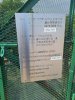
Sign posted on gate to mangroves


upload_2025-12-5_1-32-55.jpeg
Walk through mangrove forest

upload_2025-12-5_1-34-11.jpeg
View from mudflat hide
 

Attachments

  • upload_2025-12-5_1-27-12.jpeg
    upload_2025-12-5_1-27-12.jpeg
    137.7 KB · Views: 17
  • upload_2025-12-5_1-28-3.jpeg
    upload_2025-12-5_1-28-3.jpeg
    192.6 KB · Views: 16
  • upload_2025-12-5_1-28-16.jpeg
    upload_2025-12-5_1-28-16.jpeg
    179.5 KB · Views: 17
  • upload_2025-12-5_1-28-59.jpeg
    upload_2025-12-5_1-28-59.jpeg
    79.7 KB · Views: 1
  • upload_2025-12-5_1-31-40.jpeg
    upload_2025-12-5_1-31-40.jpeg
    135.8 KB · Views: 16
  • upload_2025-12-5_1-32-55.jpeg
    upload_2025-12-5_1-32-55.jpeg
    365.3 KB · Views: 16
  • upload_2025-12-5_1-33-6.jpeg
    upload_2025-12-5_1-33-6.jpeg
    128.9 KB · Views: 16
  • upload_2025-12-5_1-33-50.jpeg
    upload_2025-12-5_1-33-50.jpeg
    166.9 KB · Views: 1
  • upload_2025-12-5_1-33-55.jpeg
    upload_2025-12-5_1-33-55.jpeg
    166.9 KB · Views: 17
  • upload_2025-12-5_1-34-11.jpeg
    upload_2025-12-5_1-34-11.jpeg
    199.3 KB · Views: 17
Back
Top