Colchester Zoo Colchester Zoo - past, present and future

DesertRhino150

Well-Known Member
15+ year member
With the 60th anniversary of Colchester Zoo now over, and the changing to Colchester Zoological Society coming in 2025, I figured that this was an ideal time to create a thread that looks back over the history of the zoo. Despite being a fairly large zoo, there are still a lot of missing pieces about what was kept and where – this thread should hopefully help collate this information into a single, more accessible source.

I will be doing two major sections within this historical review. First, and perhaps more important, I will be making a full species list of both historical and current animals. This will look at what has been kept and, if the information is readily available, when and where it was kept. In total, 46 different groups will be covered – from elephants, apes and feliforms through to fish and invertebrates. Domestic animals will also be included, for sake of completeness. I will also discuss, in the openings to each animal group, some more information about the history of that group in the zoo – including both planned species that never materialised and what the current masterplan says about them.

The second section will be exploring how the zoo’s layout has changed. For ease and brevity, I will be using the seven zones the zoo divided itself up into until the late 2010s (Beginning, Aquatic, Valley, Kids, African, Lakelands and Heights zones). These sections will then be subdivided into the different areas – whether exhibit or visitor facility – within them. Using old maps, I will then try and do a brief and likely incomplete history about what was formerly in each of these spaces. I will also make brief notes about what would change in these areas, should the zoo’s masterplan come to fruition.

Sources
In the creation of this thread, a variety of different sources have been used. I cannot name all of them individually, but some notable sources include:
  • ZooChat itself: Several of the historical forums and comment threads here on Zoochat contain information about animals kept at the zoo and where they were kept.
  • Zootierliste: A good starting place, but the list is by no means complete for Colchester – many species are missing and others lack any further information.
  • Old maps: This is particularly important for determining how the different areas within the zoo have changed, but can offer some insights of what animals were kept. The maps have been sourced either from online images or from material the zoo had released itself for historical display.
  • The Story of Colchester Zoo, by S.C. Kershaw: This book provides a good amount of information about the arrivals of some animals, especially in the earlier history of the zoo.
  • Flickr and other photographic libraries: Flickr can be a surprisingly good source of species information, with photographs showing roughly when different species were kept at Colchester. A few other libraries have also been used, but tend to have much less in the way of information.
  • Guidebooks: For the most part, this is where I am a bit less well-informed. I have copies of a 1972 and approximately 1998 guidebook, and have used this to add some species to the list. However, the 1972 guidebook in particular may not be fully accurate when it comes to species actually kept at the zoo and the 1998 guidebook makes it clear that many species have been left out, which makes things more challenging.
  • Postcards: A surprising number of species – four at my counting – I have identified solely from the presence of a species on an official zoo postcard.
  • Other sources: All sorts of other sources have been used information, probably too many to list individually. They include specialist zoo news websites, news articles and books.
I will give sources wherever possible for each species.

Of course, if anyone has additional information, I would be delighted if it could be shared here. The more that can be included on this thread, the better.
 
Hasn’t someone else done this recently?

Someone started a basic species list last year, but seemed to give up on it incredibly quickly. Other than one fish species, which I will check if it is still present on Monday, I think I have completed the main species list element.
 
GLIDERS

For the purposes of this thread, this group made up of two different families of gliding marsupial. Colchester has kept one species each from both the Acrobatidae (the feathertail gliders) and Petauridae (the ‘true’ gliders). Both were kept in the past, with no modern-day representatives kept at Colchester.

Past holdings:

Narrow-toed feathertail glider, Acrobates pygmaeus

I do not know exactly when this species arrived at Colchester Zoo, but it was probably sometime around 2006. The species bred several times, but left the collection in 2012. They were the last members of this species to be kept in a British zoo, and Colchester were also at the time the only holders. They lived in a tiny nocturnal alcove in the Familiar Friends barn throughout the time they lived at the zoo.

Sugar glider, Petaurus breviceps

This species first arrived at Colchester Zoo in 2013, before departing sometime soon after 2014. It is perhaps unsurprising that they quickly left, as they were kept in a fully diurnal exhibit in the indoor house for the domestic pigs and so were completely invisible throughout their time at the zoo.

full

The feathertail gliders, which arrived from Poznan Zoo in Poland, were for a time one of the zoo's greatest mammalian treasures.
 
MACROPODS

Throughout the history of Colchester Zoo, there has often been at least one species of kangaroo or wallaby kept – at least one species was present at the 1963 opening. There was a lull, between the mid-1990s all the way to 2009, when none of these mammals were kept at the zoo. As well as the single species kept today, there were another three kept in the past. The list may not be exhaustive – older zoo maps, including the one in the 1972 guidebook, mention ‘wallabies’ without mentioning which exact species.

Past holdings:

Common wallaroo, Osphranter robustus

I am not certain exactly when this species first arrived in the collection, with the earliest record I can find being from the map for 1984 to 1985. By 1992, there were two males remaining and it seems, from maps of the time, that the species remained at the zoo at least until 1994. Throughout the time they lived at Colchester Zoo they occupied the same enclosure – a paddock along the left-hand side of the lowermost lake, where the Kingdom of the Wild house now stands.

Red kangaroo, Osphranter rufus

A male red kangaroo by the name of Joey moved down from Southport Zoo to be present at Colchester Zoo when it opened in 1963. This animal remained at the zoo at least until 1972, where it is mentioned and pictured in a guidebook from the time. At the zoo’s opening the kangaroo enclosure was located next to the original entrance, roughly where the sea lion enclosure is now located. In 1972, the kangaroo appears to have lived on the hillside roughly where the spider monkeys are now kept.

Dusky pademelon, Thylogale brunii

I am not certain when this New Guinean wallaby species arrived at or departed from Colchester Zoo, but online photographs show one as being present in 1973. It is also not clear where they were kept, but some maps from the 1970s show ‘wallabies’ being kept in the same general location as the kangaroos, on the hillside, while others suggest they lived in the former Big Game Park – a walkthrough area to large herbivore paddocks that ran roughly from the mangabeys to where the lorikeet walkthrough is located.

Present holdings:

Red-necked wallaby, Notamacropus rufogriseus

This species has arrived and departed from the zoo before, with the last holding prior to the present day probably ending around 1994. These wallabies lived in a paddock along the left-side of the lower lake, next to the wallaroos. The species returned in 2009 as an all-male group and occupied the former mountain goat enclosure in Familiar Friends. They remain there to this day.

upload_2024-2-9_20-46-4.png
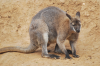
Today, the red-necked wallaby is the sole representative of the diverse marsupial infraclass remaining at Colchester Zoo.
 

Attachments

  • upload_2024-2-9_20-46-4.png
    upload_2024-2-9_20-46-4.png
    1.3 MB · Views: 227
TENRECS

The one group of Afrotherians that has now completely vanished from Colchester Zoo, these mostly Madagascan mammals make for biologically interesting albeit not very active displays. Being fairly small mammals, there was little fanfare surrounding the arrival or departure from the zoo of either of the tenrec species kept here in the past.

Past holdings:

Greater hedgehog-tenrec, Setifer setosus

While I do not know how long they remained at the zoo, an annual report notes that a pair of this species arrived at Colchester from Jersey Zoo in 1976.

Tailless tenrec, Tenrec ecaudatus

A group of four tailless tenrecs arrived at Colchester from the Rare Species Conservation Centre in 2010. They lived in a diurnally-lit enclosure in the Familiar Friends barn, now the Koi Niwa building, and remained at the zoo until 2012.

upload_2024-2-9_21-50-12.png
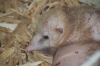
Unlike tenrecs in their native Madagascar, which have been waddling around since the Eocene, those at Colchester Zoo have not stood the test of time.
 

Attachments

  • upload_2024-2-9_21-50-12.png
    upload_2024-2-9_21-50-12.png
    1.1 MB · Views: 226
AARDVARK

This unique mammal, part of its own family, has now become one of Colchester Zoo’s greatest success stories. They arrived with the construction of the African zone and have remained at the zoo ever since – in that time they have had a very successful breeding group, with at least eleven born, and were also home to Europe’s oldest aardvark until his death in June 2023.

Present holdings:

Aardvark, Orycteropus afer

Aardvarks first arrived at Colchester Zoo in around 2002 to 2003, and have remained in the collection ever since. As well as breeding quite regularly, they have remained in the same enclosure throughout their time at the zoo – the specially-designed Aardvark Burrow display. Prior to its expansion, which allowed the separation of individuals, each birth prompted the movement of all the aardvarks save the mother and new baby into the separation enclosure behind the Island Dwellers deer paddock.

upload_2024-2-10_8-7-2.png
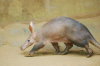
Although you may only see them active once in a blue moon, there is no doubt that Colchester’s aardvarks have been very successful.
 

Attachments

  • upload_2024-2-10_8-7-2.png
    upload_2024-2-10_8-7-2.png
    888.1 KB · Views: 229
Last edited:
HYRAXES

Perhaps not surprisingly, considering the recent arrival of most hyrax species on the European zoo scene, Colchester has only kept the most common type of hyrax. They have been kept successfully on a couple of occasions, interspersed by times of absence. Now the large group of hyraxes, split across multiple enclosures, has reduced back down to a single pair – whether these ‘little brothers of the elephant’ persist at Colchester Zoo in the future will depend on the plans for this pair.

Present holdings:

Rock hyrax, Procavia capensis

It is unknown when the first rock hyraxes arrived or if there were gaps in their holdings, but the initial group of common rock hyraxes that inhabited the old Small Mammal House left in 2008. In 2012, a bachelor group of Syrian rock hyrax arrived at the zoo, mixed with the L’Hoest’s guenons. I am not certain if this subspecies was retained or hybridised with another, but the hyraxes have bred multiple times and moved through several enclosures, including Out of Africa and Aardvark Burrow. Now, a single pair remain in the former scarlet ibis aviary along the Inca Trail.

upload_2024-2-10_12-20-9.png
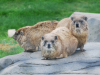
These furry potatoes have gone through periods where they were abundant in the zoo, but have recently reduced in number again.
 

Attachments

  • upload_2024-2-10_12-20-9.png
    upload_2024-2-10_12-20-9.png
    1.2 MB · Views: 223
ELEPHANTS

Elephants have long been a feature at Colchester Zoo, with the first animal arriving in the year after opening. Both of the commonly-kept species have lived at Colchester; one was only held in the early years of the zoo’s operation while the other persists to the present day. This is one of the few species at Colchester Zoo confirmed as part of the expansion masterplan, so hopefully elephants will be persisting at Colchester Zoo into the future.

Past holdings:

Asian elephant, Elephas maximus

The zoo’s first elephant was a four-year-old Asian elephant cow named Caroline, who arrived at Colchester Zoo on Friday 10th April 1964. She was kept for two months, before being moved on due to her aggression. The other Asian elephants kept at Colchester arrived between January and March 1965. They were named Moto and Toto and left the collection in the late 1960s.

Present holdings:

African bush elephant, Loxodonta africana

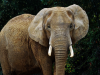
The first African elephant at Colchester Zoo was a calf that arrived on 22nd June 1964, confusingly named Caroline just as the previous Asian elephant had. This calf died within ten days of arriving at the zoo. In 1969, a pair of young African elephants arrived – much like before, they were named Moto and Toto after the previous Asian elephants. Moto died in 1985 and Toto departed to Longleat that year, and was later replaced by two new African elephants, named Tanya and Zola, later in that same year. In 1998, with the opening of Elephant Kingdom, they were joined by another two elephant cows, Opal and Rosa (who passed away in 2007) and a bull named Tembo. Two male calves have been born since their arrival, in 2002 and 2004.

upload_2024-2-10_20-49-16.png
@Daubentoniidae If the planned expansion goes ahead, the elephants of Colchester Zoo potentially have a bright future ahead of them.
 

Attachments

  • upload_2024-2-10_20-49-16.png
    upload_2024-2-10_20-49-16.png
    1.4 MB · Views: 218
Loving this thread! Might I ask where the elephants were kept in the zoo prior to the construction of Elephant Kingdom?

The elephants had a very small enclosure in the area that is now the sea lion enclosure. Until the mid-1990s, the two female elephants they had would also be walked out to a display area outside the main zoo restaurant next to the Worlds Apart building.

It was definitely a very different time back then.
 
Loving this thread! Might I ask where the elephants were kept in the zoo prior to the construction of Elephant Kingdom?
Almost exactly where Playa Patagonia (sealion pool) now stands in a much smaller and old fashioned enclosure constructed in I would have thought the '60s or '70s. A quick search on ZooChat or a search engine should show you some more information and/or photos of it. Before Elephant Kingdom Tanya and Zola were often taken out into the zoo near Stanway Hall for training and being washed, as well as for walks up and down the main road.
Edit: Here are some media items demonstrating what @DesertRhino150 and I have stated.
Elephants outside the cafe area (1986) - ZooChat
 
Last edited:
ANTEATERS AND SLOTHS

These very different looking but closely-related mammals have often been kept at Colchester Zoo throughout the years, including some mysterious references to very unusual species that are now rare or entirely absent in European zoos. Only in more recent times has real success been achieved with some of the species, although the breeding pair of giant anteaters have now become too old to reproduce and are currently living in retirement.

Past holdings:

Three toed sloth, Bradypus sp. (?)

Without much detail, The Story of Colchester Zoo suggests that a three-toed sloth arrived at the zoo in 1965. If this is accurate, it is likely the animal did not last long considering the poor survival prospects that continue to dog these sloths into the present day.

Hoffman’s two-toed sloth, Choloepus hoffmanni (?)

A sloth mentioned in the 1972 guidebook is referred to as this species. It is not certain when this species arrived or departed, or even if the identification is correct. The sloth is not mentioned on the zoo map, with one likely place for it to live being the former Nocturnal House, now on the site of the Worlds Apart walkthrough.

Present holdings:

Giant anteater, Myrmecophaga tridactyla

A male giant anteater arrived at Colchester Zoo for the first time in 2005, before being joined by a female in 2007. The pair have bred three times but are now considered too old to safely breed. Since arriving, they have lived in the Anteater Savannah enclosure, now considered part of the broader Rivers Edge section. There have been times when the well-grown offspring lived in different enclosures, including the former snow leopard display that is now part of the sun bear house.

Southern tamandua, Tamandua tetradactyla

The Story of Colchester Zoo records a tamandua, possibly of this species, arriving at Colchester Zoo in 1970. It is not certain how long it was at the zoo for or where it was held. In 2006, a pair of long-tailed tamanduas came to Colchester. At first, they lived in an enclosure in the Rivers Edge house that was notoriously awkward to view, with a large fish tank between the enclosure and the viewing area. Later, they moved to the new Worlds Apart walkthrough where they remained until 2016. In 2017 a new pair of Southern tamanduas arrived in the walkthrough, where they have since bred on three occasions.

Linnaeus’ two-toed sloth, Choloepus didactylus

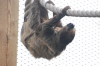
The earliest reference of this species of sloth that I can find is mentioning the arrival of a male in January 2007, with a female arriving in the May of that year. Although there has been no successful breeding, there are currently two pairs of sloths in two separate enclosures – one pair live in the Rainforest Walkthrough near the entrance, while the other pair live in Worlds Apart. For a while after they arrived, the original sloths were quarantined in a small enclosure roughly between where the chimpanzees and the associated small reptile building are now located.

upload_2024-2-11_10-54-23.png
Although two-toed sloths do much better in captivity than their three-toed cousins, breeding success remains elusive among the Colchester Zoo individuals.
 

Attachments

  • upload_2024-2-11_10-54-23.png
    upload_2024-2-11_10-54-23.png
    873.4 KB · Views: 210
ARMADILLOS

This group of American mammals has been kept at Colchester Zoo several times throughout its history, although the identity of those earlier species is not easy – a 1986 map mentions ‘armadillos’ without mentioning the species, while the 1972 guidebook also mentions an armadillo without giving a scientific name. It is described as being native to Argentina and able to curl into a ball, which could suggest a three-banded armadillo, but it is just as likely that the curling behaviour is a general armadillo description and doesn’t relate to the animal actually kept in the zoo.

Present holdings:

Large hairy armadillo, Chaetophractus villosus

This species has almost certainly been held at the zoo in the past, as former maps (including from 1986) mention nondescript armadillos and when the current male large hairy armadillo arrived in January 2020 it was described as a returning species. In the November of 2020, a female arrived. The two live off-show and only come out for animal encounters in the Sensation Station.
 
LAGOMORPHS

Many wild lagomorphs are surprisingly difficult to keep in captivity, so there is perhaps little surprise that only the one domesticated species is the single lagomorph to have been displayed at Colchester Zoo. This family of mammals has now disappeared from the collection.

Past holdings:

Domestic rabbit, Oryctolagus cuniculus

Because rabbits get very little attention in a zoo setting, determining exactly when they were kept in the past is challenging. The earliest record I can find is from The Story of Colchester Zoo, which mentions rabbits as being part of the petting zoo that opened sometime between 1966 and 1968. The last record I can find of rabbits being kept permanently on-display were continental giant rabbits that left the collection in 2012 – they lived in an enclosure now occupied by one of the ponds outside the Koi Niwa building. Domestic rabbits have remained at the zoo at least until 2019, where they were one of the encounter animals at the Sensation Station. They are now no longer signed as being one of the encounter animals.
 
LAGOMORPHS

Many wild lagomorphs are surprisingly difficult to keep in captivity, so there is perhaps little surprise that only the one domesticated species is the single lagomorph to have been displayed at Colchester Zoo. This family of mammals has now disappeared from the collection.

Past holdings:

Domestic rabbit, Oryctolagus cuniculus

Because rabbits get very little attention in a zoo setting, determining exactly when they were kept in the past is challenging. The earliest record I can find is from The Story of Colchester Zoo, which mentions rabbits as being part of the petting zoo that opened sometime between 1966 and 1968. The last record I can find of rabbits being kept permanently on-display were continental giant rabbits that left the collection in 2012 – they lived in an enclosure now occupied by one of the ponds outside the Koi Niwa building. Domestic rabbits have remained at the zoo at least until 2019, where they were one of the encounter animals at the Sensation Station. They are now no longer signed as being one of the encounter animals.


An interesting species to cover as so few people would bother with the 'humble' rabbit. Look forward to the Primates.
 
RODENTS

It could be easily, and perhaps rightfully, argued that rodents are among the key missing mammals at Colchester Zoo. Despite being the most species-rich group of mammals on the planet, and many species being fairly easy to display, there are currently only two domestic species kept here. In the past, no fewer than eighteen species of rodent have been displayed at Colchester, with the number likely to be higher. For example, a map from 1986 lists ‘squirrels’ as present, without any further details on the exact species.

Past holdings:

Malabar giant squirrel, Ratufa indica

Malabar giant squirrels were recorded arriving at Colchester Zoo sometime between 1966 and 1968 in The Story of Colchester Zoo. It is not known how long they lived at the zoo, or whereabouts they were housed.

Black-tailed prairie dog, Cynomys ludovicianus

What was most likely this species inhabited the petting zoo that opened sometime between 1966 and 1968. Prairie dogs are also mentioned in the 1972 guidebook. While only referred to as ‘prairie dogs’, the abundance of this species at the time in comparison to the other prairie dog species makes the identification fairly simple. The petting zoo at the time was located on the site of Rajang’s Forest.

South African springhare, Pedetes capensis

A single individual of this species arrived at Colchester in July 1963, according to The Story of Colchester Zoo. It is not known how long it was at the zoo, or where it was kept.

African and Cape crested porcupines, Hystrix cristata and Hystrix africaeaustralis

It is not certain when porcupines first arrived at Colchester, but they have been kept several times during its history. One was recorded escaping from the zoo 1964, while a guidebook and map from 1972 and a map from 1986 also mentions them. The last porcupines left the zoo in 2008-2009; they had lived in an enclosure adjacent to the former Small Mammal House, on the site of the Worlds Apart walkthrough. Zootierliste suggests that both North African and Cape crested porcupines have been kept, but with no further information – telling which species was most recently kept would be highly challenging, owing to the similarities between these animals.

Indian porcupine, Hystrix indica or Hystrix brachyura *

An undated postcard from Colchester Zoo shows an adult and a baby of a porcupine said to be native to India – because of the angle the adult animal is photographed at, it is challenging to tell which species it is – either of the Indian porcupines would be a newly-recorded species for Colchester’s list.

Red-rumped agouti, Dasyprocta leporina

This species is mentioned on Zootierliste as having been kept in 1990, with the first mention on a zoo map coming from 1999 to 2000. The species seems to have left the collection in 2008. They may have been kept earlier, but these sources do not mention the exact species of agouti. For example, The Story of Colchester Zoo mentions that there was successful breeding of unidentified agoutis as far back as 1964. In their more recent keeping, they always lived opposite the current sea lions – either in their own enclosure or mixed with the squirrel monkeys.

Lowland paca, Cuniculus paca

The paca is mentioned as one of the species present at Colchester Zoo when it opened in 1963. It is not known how long they lived at the zoo, or where they were kept.

Desmarest’s hutia, Capromys pilorides

It is not clear when this species arrived at Colchester Zoo, but the earliest reference I can find is from a map in 2003. The latest reference is from photographs taken in 2009. During the relatively short time they were at the zoo, the hutias were kept in a number of enclosures – they lived in the small Rainforest Life exhibit in the Beginning Zone, in the Small Mammal House and later in an enclosure on the site of the small reptile building near the chimpanzees.

Patagonian mara, Dolichotis patagonum

These South American rodents had a fairly long history at Colchester Zoo. The 1972 map lists ‘cavies’ that could well refer to this species, but the earliest unequivocal mention of maras from a zoo map comes from 1984 to 1985. They appear on several maps from the 1990s but continued to persist in the zoo until well after this time, with the last record I can find being a photograph taken in 2013. They originally lived in a paddock on the site of the Kingdom of the Wild house, and their last home was in a paddock in the Familiar Friends area where the Sensation Station now stands. In between those times, they were briefly mixed with the tapirs in the Heights Zone, on the site of the Dragons of Komodo house.

Capybara, Hydrochoerus hydrochaeris

A map of Colchester Zoo from 1986 mentions this species in the legend. A small image of the welcome guide from that year, in the 60th anniversary booklet, shows what seems to be a capybara living in an enclosure just down the hill from the wolves, which is currently a garden and goldfish pond. The exact years of arrival and departure are not known.

Long-tailed chinchilla, Chinchilla lanigera

It is not certain exactly when this species arrived at or departed from the collection, but two young were born at Colchester Zoo sometime between May and August 1986. Much later on, they lived in the diurnal enclosure next to the feathertail glider’s alcove in the Familiar Friends barn, and were definitely there in 2010.

Common degu, Octodon degus

It is not certain exactly when this species arrived at or left the zoo, but they did live in a mixed enclosure with the chinchillas. By 2010, the degus had their own enclosure in the Familiar Friends building.

Lesser Egyptian gerbil, Gerbillus gerbillus

Zootierliste mentions this species as being formerly held at Colchester Zoo, but there are no details about its years of arrival or departure.

African grass rat, Arvicanthis niloticus

A colony of these rats lived in the diurnally-lit enclosure near the entrance to the Familiar Friends barn that was later used for the tenrecs. While it is not certain when the species arrived or left the collection, a photograph shows that they were definitely present in 2007.

Asia Minor spiny mouse, Acomys cilicicus

It is not entirely certain when this species arrived at the zoo, but was not long after the arrival of the feathertail gliders and grass mice – probably around 2009-2010. They lived in a small tank in one of the indoor viewing areas for Lion Rock. When Lion Rock was renovated in 2018, the mice moved to a private collection. They were the last wild rodent species kept at Colchester Zoo.

Barbary striped grass mouse, Lemniscomys barbarus

It is not certain when these mice arrived at the zoo, but they arrived at the same time as the feathertail gliders. A photograph exists showing one from 2006. They lived in a diurnal enclosure directly next to the glider’s nocturnal alcove in the Familiar Friends barn, but left the zoo within a few years of their arrival and were replaced by the chinchillas and degus.

Present holdings:

Domestic guinea pig, Cavia porcellus

While I am sure they have been kept earlier, the first record I can find of the domestic guinea pig is a photograph I took of one in 2012, living in what is currently the rat enclosure in the pig housing. They went off-show the following year when the sugar gliders moved into their enclosure. I have a record from 2018 of the species being used as an encounter animal. In 2022, a new group arrived and went on-show in a guinea pig village in the renovated stable in Familiar Friends; they are also still used as an encounter animal in the Sensation Station.

Domestic brown rat, Rattus norvegicus

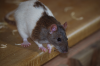
Again, I am certain that this species has been around previously, but the first actual record I can find of them being on-show is from 2014, when they replaced the sugar gliders in the indoor display in the pig barn. Other than a brief period in 2018, when the enclosure was used to prepare a spur-thighed tortoise for hibernation, they have remained in this enclosure ever since.

upload_2024-2-12_13-32-43.png
Despite their enormous variety and some being quite well-known animals, wild rodents no longer have a place in Colchester Zoo. Instead only a couple of domestic species remain, including the fancy rat.

* If anyone wants to try identifying the porcupine species, this is the postcard in question: Porcupines at Colchester Zoo Postcard Essex on eBid United Kingdom | 177961790
 

Attachments

  • upload_2024-2-12_13-32-43.png
    upload_2024-2-12_13-32-43.png
    890 KB · Views: 208
RODENTS

Asia Minor spiny mouse, Acomys cilicicus

It is not entirely certain when this species arrived at the zoo, but was not long after the arrival of the feathertail gliders and grass mice – probably around 2009-2010. They lived in a small tank in one of the indoor viewing areas for Lion Rock. When Lion Rock was renovated in 2018, the mice moved to a private collection. They were the last wild rodent species kept at Colchester Zoo.
I can't believe I had almost forgotten the mice that used to be at Lion Rock!
The rodent situation does seem a bit concerning with domestic rats the only fully on show species, surely it wouldn't take too much effort to transform one or two of the plant displays in the top floor of Kingdom of The Wild that were previously small animal enclosures previously back into enclosures for African rodents?
 
I can't believe I had almost forgotten the mice that used to be at Lion Rock!
The rodent situation does seem a bit concerning with domestic rats the only fully on show species, surely it wouldn't take too much effort to transform one or two of the plant displays in the top floor of Kingdom of The Wild that were previously small animal enclosures previously back into enclosures for African rodents?

I've thought for a while that the rightmost of those upper large tanks (now a cactus display, which doesn't make much sense in a mostly African section) would be a good cross-section display, with a colony of naked mole-rats below and above a more standard display for, say, the pancake tortoises and plated lizards. Then use their display down by the rock pythons for something like striped grass mice - having a big group of mice that can be seen from multiple points would be great, in my opinion.
 
Back
Top