mstickmanp
Well-Known Member
@mstickmanp- Thanks for the ZooBorns link, but I already posted about the duiker calf a week ago!
Oops...I didn't see it.
@mstickmanp- Thanks for the ZooBorns link, but I already posted about the duiker calf a week ago!


10TV.comOrphaned Alaskan Moose Calves Now On Display At Columbus Zoo
POWELL, Ohio - Three orphaned Alaskan moose calves are now on display at the Columbus Zoo and Aquarium, the zoo announced on Tuesday.
The animals were rescued in Alaska and transported to Columbus in July. They completed a quarantine period and can be seen in the zoo’s North America area, 10TV News reported.
The calves are being fed by bottle and will join other moose at the zoo in the future.
ORANGUTAN MOURNED BY ZOO FAMILY
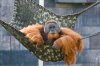
Powell, OH – Columbus Zoo and Aquarium staff and volunteers are mourning the loss of Willie, a male Sumatran orangutan; he was 20 years of age.
Willie battled chronic bronchiectasis for most of his life which is a disease defined by localized, irreversible dilation of part of the bronchial tree. As in humans with the same condition, Willie suffered from periodic infections and pneumonia. He was under veterinary care for many years and was even trained to take an inhaler. Willie underwent a bronchoscopy, lung washing and cultures yesterday after staff had noted his condition had gotten worse. He came out of the procedure and was in recovery but passed away overnight.
“Willie was an impressive animal who will be missed by many“ said Dale Schmidt, President and CEO of the Columbus Zoo and Aquarium. “He will live on in our memories.”
Willie was born at Gladys Porter Zoo in Brownsville, TX on April 6, 1991 and came to the Columbus Zoo on a breeding recommendation on April 21, 2002.
There are now two Sumatran orangutans at the Columbus Zoo, Sally, who was paired to breed with Willie, and Tara. The Zoo is part of a cooperative breeding program for North American zoos and will work with them to identify a new male for the future.
Sumatran orangutans have coarse, long, reddish-brown hair and an arm span of up to 7.5 feet. Both males and females have long beards, however, male orangutans also develop cheek pads, which give appearance of facial disks. They have puffy checks and a hanging throat pouch that contains air sacks that will produce a groaning, bubbling call that can be heard at least a half mile away. The median life expectancy for a male orangutan is 21 years.
Since 1998 the Columbus Zoo has given over $115,000 to orangutan conservation. The Zoo is committed to protecting this endangered species and educating people about them.
Zoo staff are requesting memories of Willie be posted on the Zoo’s Facebook page at The Columbus Zoo and Aquarium - Non-Profit Organization - Powell, OH | Facebook.


 Willie was always a favorite of mine while he was at the zoo, and I will miss him dearly. The zoo has lost three of its most iconic animals within the last year. First Fluffy, then Coco, and now Willie. Rest in peace Willie! You will be missed
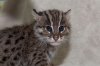
THIS JUST IN...the fishing cat kittens have been named! Because Rybar (dad) is from Czechoslovakia, one of the males was given a Czech name, Broucek, meaning "little sweetie." The other male, who was the first to venture out of the box, was named Tegus which is a Thai word meaning assertive. Last but not least, the female has been named Tallulah by one our keepers. The three little ones continue to gain weight every day and mom Parvatti is taking excellent care of them!


Actually, I think Siku went to Louisville's Glacier Run.
Milwaukee Man you absolutely right about Siku as soon as I saw your reply I recalled him going to Louisville.The volunteer who informed us of this move obviously misspoke or was simply not very well informed.But its also on me for not following up with further research before posting on this,thanks for clearing it up.
Team Tapir
You're welcome. Speaking of which, are there any plans of bringing in a male to start breeding with the two females?
The zoo has installed two large viewings windows along the front side of the pheasant aviary and have put a huge mesh roof over the markhor yard.Also according to zoo sources preliminary work on the African Savannah has begun,however no details on the finalized project plans are available.Hopefully by springtime these plans might become public.I was also wondering what was going on with the Pheasant's exhibit. Any ideas anyone?
I drove to the parking lot of that church on the northeast side of the zoo to see if I could see anything going on construction wise but there was nothing noticeable.
It's amazing how much the zoo has changed since I first visit. Anyone know where I can find pictures from the late 80s/early 90s for comparison sake?
And if you're interested, I posted a few photos from Zoombezi Bay here: Zoombezi Bay’s Two New Waterslides | Coaster101
According to a zoo member I spoke to today, the official name of the savannah expansion is now "Africa Safari" ( or "African Safari"). The existing African Forest area will be renamed "Congo Expedition" to avoid confusion.
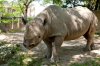
POWELL, Ohio - Kijito, an 18-year-old African black rhinoceros (Diceros bicornis) died early this morning at the Columbus Zoo and Aquarium after a two-day illness that resulted in lethargy and loss of appetite and fluid intake.
Recently Kijito had been under treatment for a little understood and often fatal disease that is commonly found in this species. Kijito had reoccurring bouts with the disease, often referred to as Black Rhino Syndrome, which causes ulcerative and oral skin lesions. His most recent episodes started around Thanksgiving. His health recently declined when he was unable to eat or drink.
A necropsy (animal autopsy) is being performed to try and determine the cause of his death. Black rhinos suffer from a variety of disorders of unknown etiology. Although Kijito was displaying some indicators of Black Rhino Syndrome, an autoimmune disorder, the symptoms were not acute and may not be the primary cause of death. Lack of appetite is not usually associated with this disease.
“Black Rhino Syndrome appears to have a multi-faceted etiology and clinical indications manifest themselves in multiple ways” said Assistant Curator Harry Peachey. “The Columbus Zoo has been actively involved in practical applications of research into this serious disease.”
Kijito was born in 1993 at the Brookfield Zoo and came to the Columbus Zoo and Aquarium in 1999. He sired one calf, Klyde, who was born on Jan. 2, 2002. Klyde was moved to the Cincinnati Zoo & Botanical Garden in 2009. Two female rhinos, Kulinda and Rosie, still reside at the Columbus Zoo.
The black rhino has suffered the greatest rate of decline in total numbers of all rhino species and the population dropped by 96% in just a few decades. In 1970 it was estimated there were approximately 65,000 black rhinos in Africa and by1993 there were only 2,300 surviving in the wild. Since 1996 the number has steadily increased as a result of intensive anti-poaching and conservation efforts and today there are approximately 4,200 black rhinos.
The Columbus Zoo is a long-time supporter of the International Rhino Foundation and also provides grants to individual projects through its Conservation Fund. Annually the Columbus Zoo’s Conservation Fund provides $1 million of privately raised revenue in support for more than 70 field projects and conservation organizations in 30 countries.