Hello.
After a few weeks (I have been very busy lately), I am back to cover my trip to Jardin des Plantes.
We woke up early and took the subway to the Gare d'Austerlitz, which took around half an hour. After going up a few rows of stairs, we were finally right by the Jardin.
We entered through a gate nearby a McDonald's and the four of us went straight to the Menagèrie.
The Menagèrie is the world's third oldest still operating zoo, dating back to the early nineteenth century. The collection was greatly reduced during the Paris Commune, when many of its herbivorous residents were eaten by the angry peasants and voracious elites. Eating roast kangaroo or zebra wasn't unheard in 1871 Paris.
The gates are not as outstanding as I thought, but they still looked nice. The ticket prices were rather cheap in comparison to what I had seen in Ireland: thirteen euro and two free maps!
Surprisingly, a few minutes after my father and I entered the zoo, my mother and grandmother followed suit, instead of waiting outside and staring at the flowers (which granny is very fond of).
We took the left path and, as the two of us walked to the binturong and red panda exhibits, we saw our first animals: a small herd of gigantic gaur! They were actually one of the main reasons why I picked the Menagèrie instead of the zoo in Vincennes. Their two paddocks are rather small so I think phasing them out and giving their space to smaller bovids would be a great idea. I was pleased to see them anyway and even my dad was astonished by their sheer size.
Next were the two previously mentioned exhibits for binturong and red panda. The enclosures are interesting because instead of being lowered to ground level, you are very close to the "tree tops", where I saw sleeping binturongs (which were lifers for me) and active red pandas (which I had already seen in Dublin and at Fota Wildlife, but I still enjoyed seeing them because they granted me great pictures). Pretty cool.
The next two enclosures housed Australian animals: a big grassy paddock for Eastern gray kangaroos and a much smaller one for emus. Since emus are present at one of my locals, I didn't really care that much about said ratites, so we headed to the nearby walkthrough aviary (thought not before seeing the pygmy goats in the paddock next door, which definitely housed something bigger than its current inhabitants).

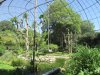
The walkthrough aviary is old-fashioned but still big enough. It is also very aesthetically pleasing.
Species list:
1.
Aix galericulata
2.
Anas castanea
3.
Anthropoides virgo
4.
Asacornis scutulata (didn't see)
5.
Burhinus oedicnemus
6.
Ducula bicolor
7.
Mergellus albellus (didn't see)
8.
Nycticorax nycticorax (with chicks!)
Of the nine species signed, I saw seven, mostly because we ran low on time.
After leaving the aviary, we went to the close by West caucasian tur exhibit. This was my first ever wild goat species (if you don't count Barbary sheep) and, to my surprise, they looked a lot more like ibexes than I expected. Like their African cousins, they were also highly photogenic.
Their pen (as with many other ungulates at the Menagèrie) is on the smaller side and the rocky hills, despite being commonplace, were also a bit small to me. I won't extend my complaints any further, however, as the exhibit for Barbary sheep at my local zoo is horrid when it comes to climbing opportunities.
Further ahead is a very small moated exhibit for European sousliks, which were a surprise to me! Their enclosure is highly vegetated, so I thought seeing one would be challenging. However, I was proven wrong when one popped out as I came closer to the exhibit.
Next were the flamingos. I had seen a bunch before so I took a few pictures and entered the vivarium.

Species list:
1.
Ambystoma dumerilii
2.
Brachypelma smithii
3.
Lasyodora parahybana
4.
Theloderma corticale
5.
Elaphe schrenckii
6.
Phillobates terribilis (empty terrarium)
7.
Rhynchophis boulengeri
8.
Ctenotus marmoratus (didn't see)
9.
Egernia striolata
10.
Pseudopus apodus
11.
Dendrobates leucomelas
12.
Heteropteryx dilatata
13.
Extatosoma tiaratum
14.
Dendrobates azureus
15.
Litoria caerulea (didn't see)
16.
Lissachatina fulica
17.
Spirostreptidae sp. ("iule géant")
18.
Epipedobates tricolor
19.
Lygodactylus williamsi
20.
Scolopendridae sp.
21.
Pandinus imperator
22.
Daman variegatus
23.
Broadleysaurus major
24.
Corallus hortulanus
25.
Bitis rhinoceros
26.
Rhacodactylus leachianus
27.
Homoeogryllus xanthopus
28.
Pachnoda sinuata
29.
Heloderma suspectum
30.
Trachycephalus resinifictrix
31.
Gonyosoma oxycephalum
32.
Chalcides ocellatus
33.
Morelia viridis
After adding plenty of new species to my life list, I left and went to the Tasmanian devil enclosures next door. Both exhibits were well-planted, but their inhabitants were asleep (almost no-shows, but thankfully one of the devils was visible in its den).
Then, the messy area full of cages for smaller animals (mostly birds and small primates).
Species list:
1.
Goura sclateri
2.
Leontopithecus rosalia
3.
Pyrrhura cruentata
4.
Saimiri boliviensis
5.
Saguinus imperator
6.
Callimico goeldi
7.
Argusianus argus
8.
Pyconotus jocosus (didn't see)
Lophura edwardsii
9.
Tetrax tetrax (didn't see)
10.
Psophia crepitans
Leucopsar rothschildi
Plus a few enclosures for Azara's agouti, Cuban hutia, Indian crested porcupine (didn't see) and yellow mongoose.
A few meters ahead, another new species awaited for me: the Central Chinese goral. They live in a rather large enclosure, especially when compared to their next-door neighbors: the somewhat larger markhor, which were also lifers.
Instead of going ahead, I turned right and saw blue cranes, a sleeping Visayan warty pig and, most important of all, dusky pademelons! I was almost forty years too late to see one in São Paulo, but lucky enough to watch a few in their grassy paddock in Paris.
After walking back to the markhor pen, the next animals we saw were blue sheep, which I had first heard of when playing
Far Cry 4. Then, opposite to the bharal paddock was a small old-fashioned aviary for kea, another novelty to me. The cage looked worn down and it looked horrid, honestly.
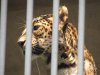
Near the keas was the carnivore house, where we encountered my mother for a second time inside the Menagèrie. They were looking at a sleeping North Chinese leopard, as were the kids on one of the many school field trips we saw while inside.
Instead of walking around the Carnivore house, we turned left to see some birds. First was the cassowary, a species somewhat common in medium-sized and large Brazilian zoos, followed by a number of aviaries containing a diverse array of parrots opposite to a number of vultures.
My first ever Egyptian vulture was a nice surprise I didn't really expect to come across. The other raptors were king and palm-nut vultures. The last cage to the right contained Visayan tarictic hornbills.
To the left, red-crowned amazons, blue-and-yellow and great green macaws and palm cockatoos (didn't see) all in smaller aviaries. The birds here surely need better aviaries.
We walked back and saw another aviary, this time for three species: Asian houbara bustard (which was also photogenic), bush stone curlew and European turtle dove.
Then, we entered an indoor enclosure which housed my first ever tree-kangaroos! If any of you have seen my posts on the Australian and Brazilian forums, you definitely know my history researching the presence of the
Dendrolagus genus in Brazil, so seeing one (actually two!) in person for the first time was a major delight of the trip. In the enclosure next door there were two large hairy armadillos, another new species.

We left the tree-kangaroo enclosure and entered the cat pavillion, where visitors in the past saw large felines. However, as times progressed and zoos became aware of the special needs many larger animals have, these cages are now home to smaller carnivores. I mean, they still need major expansions and improvements, but knowing lions no longer live there is a relief to me.

Inside the pavillion, there were four species, one of which (the yellow-throated marten, which I almost missed because it was asleep) was a lifer and two of which I had last seen on my trip to Portugal. All carnivores (marten, caracals, clouded leopard) but one (the North Chinese leopard, a new subspecies to me) was indoors. My photographs were not that great because the inside was a bit too dark for my camera to handle.
We left the Carnivore house and went to the large Malayan tapir exhibit nearby. This one has my seal of approval and it's definitely one of the best enclosures in the Menagèrie. The tapir, however, wasn't very polite, as it had its butt turned to the visitors.
Next was a small cage for a Cuban hutia and then a mixed forested exhibit for a Chinese muntjac and a demoiselle crane. They were followed by my first ever lowland anoas, which were both near their enclosure's wall, which was shared with Kirk's dik-diks. I thought the latter would be hard to see, but no, despite hiding in the grass, both were easily visible.
Then, my first ever Arabian oryx, which were another reason for me to pick the Menagèrie. The paddock was on the larger side when compared to the other enclosure and therefore felt way less crowded than the other ungulate paddocks.
Opposite to the oryx were the common rheas and vicuñas (another first to me), which shared a medium-sized paddock. We turned right and, despite seeing no Corsac foxes, I was amused with the L'Hoest's monkeys playing in an outside enclosure of the Primate House, which, fortunately, is being revamped into a much larger Bornean orangutan enclosure.
Inside the house, I saw white-naped mangabeys, the aforementioned Bornean orangutans and, another first, black-crested mangabeys. This means I was blessed with seeing the two species of
Lophocebus mangabey present in captivity in a single trip!

We left the Monkey house and went back to the Cat Pavillions, passing through an empty paddock for takhi. As we approached the carnivore exhibits, my dad and I were impressed to see the leopard looking at the horizon from the highest spot in its enclosure.

One of our final stops was a row of six enclosures opposite to the oryx and vicugnas. The first one was home to Pallas' cats and the other five were aviaries (housing tawny frogmouths, snowy, spectacled, tawny and Ural owls). We then turned right and saw an emtpy (or so I thought) exhibit for red river hogs and a Sichuan takin. The last animals we saw before meeting up with my mother and grandmother were white-naped cranes and Aldabra giant tortoises.
We met up and at the kiosk right by the entrance. While I ate a crepe with nutella (which I had ordered in French!!!), my parents and my grandmother ate sandwiches. Since I finished my meal earlier than them, I used the spare time I had left to take a final look at some animals. I called my mother, who had finished her chicken sandwich, and we took a last glance of the Pallas' cat, which showed up. While on our way back to the gates, another takin and the red river hog both popped up.
Before we left for good, we decided to try seeing the Tasmanian devils for a second time. My parents stayed for a few minutes there, but they still failed because the marsupials were still asleep. I used the time they spent with the devils by reentering the vivarium, where thanks to a nice French guy, I was able to spot the New Caledonian giant gecko, which was camouflaged on a trunk right in front the glass window.
Heading to the gates, I entered the small-sized gift shop, where I bought a hyena (which I regret purchasing) and an okapi from Papo.
Outside, we headed to the Natural History Museum, though not before seeing the red-necked wallabies, which could only be seen from outside. Unfortunately, the NHM closes on Tuesdays and so, we left for the Sacred Heart Basilica.