Assuming from the fact that people include the pangolins that all of the islands Indonesia, the Philippines, Taiwan and others count for this category, as opposed to Asia? Running with that assumption, here is a photographic overview of Prague's offerings in this category, having visited myself and being very fond of the place.
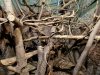
@MagpieGoose - the first room in the Indonesian Jungle which contains several, very large and nicely designed paludariums. On my visit, 13 species of fish and 7 species of turtle were signed, and although not all are actually island taxa, the bulk are.
@Kalaw - half of the Komodo Dragon enclosure, very large but a little sparse. Prague's extensive breeding record with the species has already been discussed upthread. Several more are kept behind-the-scenes and two brothers live in a somewhat undersized display in the Giant Tortoise Pavilion.
@Kalaw - all-indoor Sunda Pig-tailed Macaque enclosure. Quite spacious and enriching, with some large fish and turtles inhabiting the moat.
Frustratingly, no photos on the gallery depict what is one of the largest Binturong enclosures I have ever seen, with a wonderful array of climbing structures, shared with Asian Short-clawed Otters.
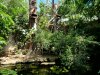
@Kalaw - the Spotted Green Pufferfish pool, Prague's best hidden gem, in my opinion; a large and well-landscaped mangrove pool hidden against the boardwalk with a very interesting small species.
@Kalaw - the Sunda Slow Loris enclosure; most likely the only representatives of their species in European zoos. The light is off for most of the day, but this image was taken in the first hour.
Both Northern and Southern Luzon Giant Cloud Rats, the latter a major rarity, share a similar-sized enclosure nearby, but there are no photos of it in diurnal lighting. There are also New Guinea Ground Cuscus and Sugar Glider in similar enclosures. But the highlight of the nocturnal corridor in terms of both species and exhibitry is certainly the Formosan Pangolins! Three, interconnected onshow enclosures, all large and with natural substrate, a series of offshow ones, and seven, glass-fronted dens for sheltering. Of course, with Šiška and Connie, Prague is the only European zoo to have bred pangolins, and has done so twice! Strangely, there are no photos of their enclosure.
@vogelcommando - outdoor Sumatran Orangutan enclosure.
@Robaque - indoor Sumatran Orangutan enclosure. Overall, a somewhat mediocre enclosure, in all fairness, but I wouldn't call it poor by any stretch of the imagination (although I know some who would).
@Eagle - the Parrot Trail, a series of sizable and nicely done aviaries for a really interesting selection of category-relevant small parrots, such as Purple-naped Lory, Large Fig-parrot or Mindanao Lorikeet to name just a few. The finale is a walkthrough with Australian birds, of which Scaly-breasted Lorikeets, held in large numbers, and Bush Thick-knee are probably the most interesting. The whole area is enhanced by the outstanding views of the lower half of the zoo, the River Vltava, and the distant city centre to the left.
Eastern Wallaroo, a major rarity, have an excellent, grassy enclosure nearby which is not depicted in the gallery.
@Robaque - one of two Southern Cassowary enclosures, both perhaps just a little undersized, but quite nice and with an onshow indoor area in between.
@Robaque - a portion of the nice, but quite average, Swamp Wallaby enclosure. Common Emus and Red Kangaroos have near-identical ones next door. Yet again, as you can just about tell, the cliff has been taken full advantage of and the result is some great views.
Sadly there are no photographs, but one of the strangest-looking birds at the zoo, and a rarity, the Oriental Bay-owl, is kept in a decent aviary within 'Northern Forest.'
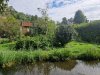
@Kalaw - the Stork Walkthrough Aviary, another hidden gem in my opinion, that contains several relevant species such as Rufous Night-heron and Spot-billed Pelican. The birds are in large abundance which offers great joy searching for them amongst the trees, but it is big enough so as to never feel overstocked. The mature weeping willows in the centre are a particular highlight.
@Maguari - outdoor Sumatran Tiger enclosure, very good in my opinion (often hear it criticised but can't understand why). This is quite an old photo - of course it looks very different when the moat isn't drained. The indoors is very unattractive, but I believe it is just about good enough for the animals.
@FunkyGibbon - the Palawan Leopard Cat enclosure in the Feline and Reptile Pavilion. The only enclosure in this category which I would consider genuinely poor, being somewhat on the small side and all-indoors.
@Kalaw - the Fishing Cat enclosure, which I think is another hidden gem. Large, well-planted, a fair amount of climbing and a deep pool. The indoors is a little unattractive, but it sufficient.
@JigerofLemuria - the centrepiece of the Pavilion. To quote how I described it in the previous thread: "a very interesting hall within the Feline and Reptile Pavilion, which houses breeding groups of Cuban Ground Iguanas and Green Iguanas in different subsections, one of which mixed with North Antillean Sliders, whilst House Finches, Ruddy Doves and Cuban Grassquits free-fly between the lot of them."
Nearby is a very good Black-and-white Ruffed Lemur enclosure that proved particularly lively on my visit, but is sadly not represented by any photographs in the gallery.
@vogelcommando - outdoor enclosure for Aldabra Giant Tortoise and two (pure, I believe) subspecies of Galápagos.
@vogelcommando - the indoor enclosure for the giant tortoises.
@lintworm - showing roughly half of the Kea aviary in the Rakos' Pavilion, probably the largest I have seen for the species.
@lintworm - the Philippine aviary in the Rakos' Pavilion, a wire-fronted delight housing Blue-naped Parrot, Spotted Imperial Pigeon and White-naped Fruit-dove.
(to be continued in next post due to 20 image limit)




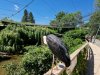

 if an indoor exhibit is "unattractive but sufficent" for the species which reaches weights of up to 17kg it is hardly fair to say that a similar exhibit is "genuinely poor" for the species which doesn't even hit 4kg.... especially when you consider the fact that (from memory) the Palawan exhibit contains rather more height and climbing opportunities than does the Fishing.