European (Tea)Cup - League C - Zoo Berlin vs London/Whipsnade

Zoo Berlin vs London/Whipsnade - CARNIVORES


  • Total voters
    38
  • Poll closed .
Small Indian Mongoose:

The rarity of this species in captivity alone deserves praise, as no other zoo in the world holds the taxa!

full


Credit: @Maguari - showing roughly half of the enclosure, and doing well to show how dense it s. The metal railing on the bottom right is a continuation of the fake train track in the adjacent lion enclosure.

Dwarf Mongoose:

full


Credit: @Dr. Loxodonta - a fairly standard enclosure.

Asian Short-clawed Otter:

full


Credit: @gulogulogulo - I have always thought this was one of the more attractive enclosures I have seen for the species, and certainly one of the larger ones. Don't let how common this particular species of otter is distract from the brilliant landscaping of the so-called 'Otter Holt.'

Bizarrely, there are no photos of the meerkat enclosure on the gallery, but it is fairly standard, and due to the reflectiveness of the glass until recently (thankfully it has now been amended) there are no photos of the boky enclosure that show the whole thing that well, but thankfully the latter enclosure has already been described in great detail upthread.


Allow me to correct you here :)

At least one more zoo in the World holds the Small Indian Mongoose.
 
I haven't been to London or Berlin for a few years now, but I did visit Whipsnade last year. Their carnivore enclosures are certainly impressive in size, although I wouldn't strictly say any really "stand-out". The most visually appealing one for me is the Cheetah enclosure and it's a set-up I've seen similarly done before. I kinda like the old-school aesthetic of the bear and wolverine enclosures, though.

From what I remember of my most recent visits of London and Berlin, their enclosures are pretty solid, although at the time I went, a few of them were showing their ages... that said, I have seen they've been given a facelift of sorts. It's honestly really close... but even though it was a little smaller when I last went compared to when I first went, I have to give a slight edge to Berlin, as I've always been impressed with their carnivore collection if nothing else.

I've been trying my best to NOT bring up Berlin's panda enclosure, because I kinda feel that would just have given it an automatic win... but it IS a brilliant enclosure, it has to be said.
 
Still time for feedback and opinions from the three silent outliers, @Veno , @Neil chace and @ZH5199 - but we're now well into the final 24 hours remaining for the first two to attempt to convince others, and the latter to establish that their very bold vote can stand!
 
Alright, @Kalaw has provided excellent descriptions and imagery for the two ZSL collections, but a lot less has been posted for Berlin. So, using the species list provided by @Green_mamba earlier in thread (which I stole to use as my foundation for this list), I went through and pulled exhibit photographs I could find from the gallery for Berlin. I will not be providing descriptions because I have never been to Berlin and can't speak to the exhibits from my personal experience, but will give my overall impression based on the images. I'm just providing links to exhibit photos I found in the gallery as I'm not sure how to embed them nicely in the post and don't have enough time to figure it out right now and for convenience I did the same for London. (I probably went overboard with links, but wanted to provide as many as possible and the best overview possible.)

Overall, I think this one is very close. Berlin clearly wins in terms of species with not only a longer list, but also more rarities. While ZSL has the consistently superior exhibits. None of Berlin's are bad, they just don't reach the standards of ZSL in all but a few cases.

I am sticking with my original vote of ZSL 3/2 Berlin for now, but still could possibly be convinced. While Berlin's species list is a draw for me, it is not enough to get over the difference in quality of exhibitry. I have never been one to place a huge emphasis on species numbers when visiting zoos anyways as I'd rather see fewer species in well done exhibits. Don't get me wrong, the more species the better, but I don't think it is enough of a difference here to sway my vote. Land of the Lions at ZSL London is also another huge factor going in their favor here for me, because they have gone beyond the more typical enclosures we see in zoos (which I feel Berlin is mostly full of from the pictures) and presents the animals in a very unique set of exhibits that I believe is well done for both the visitors and the animals in question.

Big cats - I don't think the extra species at Berlin is enough to elevate them over the ZSL zoos here, especially with them both being common enough in Europe. While Berlin's enclosures appear to be average to good, ZSL's look consistently above average to bordering on great.

Berlin - All of these exhibits seem to have a pretty common theme to me, average to good outdoor enclosures, with indoor areas that appear to be a bit sterile, dominated by rock work, and small.
  1. Lion
  2. Tiger
  3. Jaguar
  4. Persian Leopard
ZSL - Overall good enclosure at London and despite the overlap in Whipsnade (which doesn't hurt ZSL in my opinion), those enclosures appear to further elevate ZSL over Berlin in terms of exhibitry for the big cats. Tigers fair even better at the ZSL zoos than lions do in my opinion.
  1. Lion x 2
  2. Tiger x 2
Small cats - Berlin and ZSL both appear to have great enclosures in this category so it then comes down to species list. Berlin obviously has one more and their species are definitely a lot more "choice" and attractive to ZooChatters. For Berlin, they are one of 19 European holders for Sand Cat, one of 3 for Southern Oncilla and 4 for Oncilla overall, and one of 24 for the Yucatan Margay according to Zootierliste. Meanwhile, the majority of Cheetah's in Europe are from the South African subspecies, but Whipsnade's are the Sudan subspecies, which makes them one of 18 holders in Europe for this particular type of Cheetah. I'd give the edge to Berlin here.

Berlin - Not much to go off on in the galleries exhibit wise, but the outdoor enclosure for Sand Cat's looks excellent, while the indoor are for Margay looks very nicely done.
  1. Arabian Sand cat
  2. Southern oncilla - Zero good exhibit photographs for these guys in the gallery other than animal photos. Can be seen here and here in what appears to be the indoor area.
  3. Yucatan Margay
    1. Indoor Exhibit by twilighter
ZSL - Both exhibits look excellent.
  1. Lynx
    1. Lynx enclosure by gulogulogulo
    2. Lynx Exhibit by gulogulogulo
    3. Lynx Enclosure by MagpieGoose
  2. Cheetah
Mongooses and Malagasy carnivores - This is likely largely going to come down to if you prefer Vontsira or Small Indian Mongoose. Berlin is one of 12 in Europe and 14 world wide to hold Vontsira, while London is the only holder of Small Indian Mongoose in Europe and one of 2 in the world. Berlin's indoor areas may give it the slight edge here in terms of exhibitry, but the Meerkat enclosure at Whipsnade blows everything else away here.

Berlin - The outdoor exhibits here look great, while the indoor exhibits are nice.
  1. Dwarf mongoose
  2. Meerkat
  3. Ring-tailed vontsira
    1. Vontsira Outdoor Exhibit by twilighter
  4. Narrow-striped boky
ZSL - The Dwarf Mongoose enclosure was the weakest at ZSL, but this appears to have possibly been remedied with them moving into the meerkat enclosure. This is where Land of the Lions gets a little over the top for me as well with the theming as I don't like that the indoor dens for the mongooses is an "office".
  1. Dwarf mongoose - These guys may have moved as the more recent photos look very different than the older ones. Or there are now two exhibits for them.
  2. Meerkat x 2
  3. Small Indian mongoose
  4. Narrow-striped boky
Canids - Berlin again has more species, but with the extra species both being common in zoos this isn't a huge deal for me. The one exhibit here for ZSL looks great. I would say this category is pretty much a draw.

Berlin -
  1. African wild dog - The wild dog exhibit photos for Berlin in the gallery are quite old, so someone is going to needs to less us know if this is no longer the exhibit for these guys.
  2. Eurasian wolf
    1. Wolf Enclosure by twilighter
    2. Wolf enclosure by twilighter
    3. Wolf enclosure by Patrick87
  3. Fennec fox
ZSL-
  1. African wild dog
Bears - Berlin wins here. The rarity of both Giant Pandas and Sloth Bears is enough to overcome the excellent Brown Bear habitat at Whipsnade, but then Berlin may have the best Giant Panda complex I have ever seen on top of it.

Berlin -
  1. Brown bear
  2. Giant Panda
  3. Sloth Bear
ZSL -
  1. Brown bear
Pinnipeds - Hard to not give this one to Berlin for obvious reasons, but these enclosure are probably some of Berlins weakest (along with the Fennec Fox).

Berlin -
  1. California sea lion
  2. Harbour seal
ZSL - None

Others - Again, very similar species lists with ZSL having the superior enclosures. Do you prefer kinkajous or wolverines?

Berlin -
  1. Asian small-clawed otter - photos are quite old so again, someone let us know if this is not a good representation.
  2. Kinkajou
  3. Red panda
  4. White-nosed coati
ZSL -
  1. Asian small-clawed otter x 2
  2. South American coati - No images in gallery
  3. Red panda
  4. Wolverine
 

Here's a larger-scale photograph of two out of the three linked indoor exhibits for the species:

P1360745.JPG

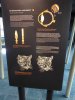
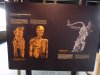
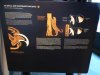
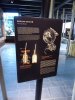
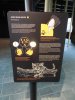
Whilst I was rooting around my photographs of the carnivore house at Berlin from my 2023 visit to see if I had any better shots of some of the things you've mentioned, I realised that I haven't seen many photos in the gallery showing the new style of signage within the house; I'll upload them properly at some point, but for now here are a selection:

P1360670.JPG

P1360675.JPG

P1360681.JPG

P1360676.JPG

P1360680.JPG
 

Attachments

  • P1360745.JPG
    P1360745.JPG
    129 KB · Views: 66
  • P1360681.JPG
    P1360681.JPG
    89.5 KB · Views: 68
  • P1360670.JPG
    P1360670.JPG
    107.3 KB · Views: 72
  • P1360675.JPG
    P1360675.JPG
    117.1 KB · Views: 68
  • P1360676.JPG
    P1360676.JPG
    98.8 KB · Views: 71
  • P1360680.JPG
    P1360680.JPG
    94.5 KB · Views: 67
South American coati - No images in gallery
full
]
@Fresco3 - showing the larger coati enclosure, opposite Blackburn Pavilion.

full

@MagpieGoose - the smaller enclosure, a former owl and cockatoo aviary, in the Children's Zoo.

I believe each enclosure house a pair. Although the cage is a little small, and probably ZSL's weakest exhibit in this category, I am still quite fond of both enclosures, feeling as though they provide ample climbing, plenty of privacy, and with a nice natural feel to them without ever giving the impression that they are overgrown.

Thank you very much, @NSU42 , for taking the time to provide this comprehensive overview of Berlin's exhibits.

I am really fond of the excellent small cat and vontsira enclosures at Berlin in particular, certainly deserving of two points at least. Less convinced by the Jaguar and Fennec enclosures that appear to be some of the zoo's weakest in this category - neither are truly awful, although neither are that good either, and are certainly far below ZSL's weakest enclosures in this category. I also have my reservations about the Persian Leopard enclosure; while the outdoor area is very attractive, and appears to be a big upgrade on the former accommodation, from photos online I am somewhat concerned about the lack of climbing, which is vital for leopards. Barring a few, relatively short and unconnected trees, there isn't really anything of note here. No extended climbing apparatus, mature trees, and a relatively low-cast netting that restricts any future instalments. Again, having not visited Berlin, this is less a criticism, and more a query for anyone who has visited and is fond of the leopard enclosure - is there a larger climbing area that I am not seeing, or is the sense of scale in the photo undermining those defoliated trees?

As a side-note that for some voters could be very significant, how many in situ conservation projects does Berlin financially support, or directly participate in, for carnivores? Have already linked a few of the most well-advertised ones for ZSL upthread, would be interested to know if Berlin has anything to answer with.
 
full
]
@Fresco3 - showing the larger coati enclosure, opposite Blackburn Pavilion.

full

@MagpieGoose - the smaller enclosure, a former owl and cockatoo aviary, in the Children's Zoo.

I believe each enclosure house a pair. Although the cage is a little small, and probably ZSL's weakest exhibit in this category, I am still quite fond of both enclosures, feeling as though they provide ample climbing, plenty of privacy, and with a nice natural feel to them without ever giving the impression that they are overgrown.

Thank you very much, @NSU42 , for taking the time to provide this comprehensive overview of Berlin's exhibits.

I am really fond of the excellent small cat and vontsira enclosures at Berlin in particular, certainly deserving of two points at least. Less convinced by the Jaguar and Fennec enclosures that appear to be some of the zoo's weakest in this category - neither are truly awful, although neither are that good either, and are certainly far below ZSL's weakest enclosures in this category. I also have my reservations about the Persian Leopard enclosure; while the outdoor area is very attractive, and appears to be a big upgrade on the former accommodation, from photos online I am somewhat concerned about the lack of climbing, which is vital for leopards. Barring a few, relatively short and unconnected trees, there isn't really anything of note here. No extended climbing apparatus, mature trees, and a relatively low-cast netting that restricts any future instalments. Again, having not visited Berlin, this is less a criticism, and more a query for anyone who has visited and is fond of the leopard enclosure - is there a larger climbing area that I am not seeing, or is the sense of scale in the photo undermining those defoliated trees?

As a side-note that for some voters could be very significant, how many in situ conservation projects does Berlin financially support, or directly participate in, for carnivores? Have already linked a few of the most well-advertised ones for ZSL upthread, would be interested to know if Berlin has anything to answer with.

Thank you for the pics! I for whatever reason only searched for coati in the Whipsnade gallery. Now that I see them I had to face palm as I remember these enclosures from ZSL London very clearly.

I had the same concerns as you for the leopard enclosure. It looks very nice, but other than perhaps the wall towards the back not a lot of climbing. It also all looks a little to clean without a lot of hiding areas for the leopards, other than perhaps under the pine trees.
 
Just a few points and questions:
with indoor areas that appear to be a bit sterile, dominated by rock work, and small.
While most likely not filled with rockwork, ZSL's indoor areas could look the same or even more functional since they are not put on-show. A sterile appearance is not necessarily bad since indoor areas tend to be more of a resting place and aren't meant to be where the animals always are. I don't know the situation in Berlin, but do the animals also have off-show dens?
The zoo doesn't hold Amur tiger anymore and the Sumatrans live in their former enclosure.
Dwarf mongoose - These guys may have moved as the more recent photos look very different than the older ones. Or there are now two exhibits for them.
The last three photos for them show the enclosure where the Small Indian mongooses now live.
London - are we sure London still holds Meerkats?
From memory, they share the enclosure with the dwarf mongooses and another one with porcupines. There doesn't seem to be any photo showing them with porcupines so hopefully a local can confirm if that's true or not.
Narrow-striped boky
They also have an enclosure in the Lemur House which is the old gentle lemur enclosure (this is the best picture I could find of the enclosure):
Lac Alatora gentle lemur enclosure - ZooChat

Just a question, but when they breed their carnivores or during times of injury or aggression, how do Whipsnade and Berlin separate some of their carnivores?
 
Just a question, but when they breed their carnivores or during times of injury or aggression, how do Whipsnade and Berlin separate some of their carnivores?
I don't know for all animals at Whipsnade, but the Cheetahs as mentioned in this thread elsewhere have multiple on show as well as off show enclosures to be split up in.
For the Amur tigers, I believe there is just a small separation section attached to the house, which is something that makes me rate the enclosure less highly than I would do otherwise (if they had a secondary outdoor enclosure half the size or more like is the case at London). However I imagine it is not the moment anyway as there is just one male tiger.
The European brown bears have a small secondary outdoor enclosure on the other side of the house.

As I said I'm not sure what the situation is for the other larger carnivores at Whipsnade, but lack of carnivore separation options shouldn't cause many problems at the moment as most or all are housed in one grouping currently.
I have no idea what the situation is at Berlin for separation options, but I don't get the impression it will be an improvement on ZSL.
 
As a side-note that for some voters could be very significant, how many in situ conservation projects does Berlin financially support, or directly participate in, for carnivores? Have already linked a few of the most well-advertised ones for ZSL upthread, would be interested to know if Berlin has anything to answer with.

Looking at the Zoo Berlin website, in-situ carnivore projects which the zoo is involved with include:

Manul

The Pallas’s cat International Conservation Alliance (PICA) educates local people about the manul and the threat posed by humans. PICA is the only conservation project in the world that is dedicated to this species. Field research plays an important role in gathering new knowledge. A recent study into the increase of domestic dogs in manul territory and the associated decline of the cat’s population in those areas should provide impetus for concrete, long-term conservation measures. In the future, PICA would like to work together with local villagers to implement such measures and stop the manul’s population decline.

Polar bear

Scientists working for non-profit organisation Polar Bears International are, for example, placing cameras in the birthing dens of polar bears to find out when the mother leaves the den with her young, and how many cubs survive to this stage. Zoos are helping to save the polar bear by providing these fundamental research efforts with financial support and human resources. Currently, Zoo Berlin is assisting Polar Bears International with its research into altered breeding and hunting behaviour, as well as into the bears’ preferred retreats and migration routes in the wild. The aim is to establish protected zones where the animals can find enough food and raise their young without being disturbed. The particular research project we are funding uses the latest camera technology to allow scientists to observe the inside of polar bear birthing dens completely undetected. Zoo and Tierpark Berlin were named an Arctic Ambassador Center in 2023 by the leading polar bear experts at Polar Bears International.

Red panda

To combat the decline in red panda numbers through loss of habitat, project workers from the Red Panda Network are developing alternative sources of income for local people in an attempt to ease the strain on the remaining woodland. Another important task is to reconnect remaining habitats by restoring lost forest. Also, promoting the use of energy-efficient stoves and fuel sources ensures that fewer trees are cut down for firewood. Local communities are also being educated about the importance of protecting the red panda and being encouraged to get involved in conservation initiatives. The hope is that this will result in less poaching for fur. The team’s hard work seems to be paying off: according to a recent study conducted by the Red Panda Network, the population of red pandas in the Panchthar, Ilam and Taplejung districts of eastern Nepal is finally growing for the first time.

Snow leopard

NABU has been working to protect the snow leopard and its habitat in Kyrgyzstan since 1999. The anti-poaching unit Gruppa Bars is active in the north of the country, working to prevent poaching, educate local people about nature and environmental protection in their region, and monitor the snow leopards that live there. And Gruppa Bars’ efforts are paying off: to date, it has assisted in the arrest of 340 poachers and traders, and in the confiscation of significant numbers of pelts, traps and weapons. Today, far fewer injured or killed animals are found in the country and fur sales have declined. Gruppa Bars is also in close contact with the local people and has been able to promote greater acceptance of the snow leopard. Zoo and Tierpark Berlin are supporting the creation of a second Gruppa Bars unit in the south of Kyrgyzstan. Soon, camera traps will also be set up in this part of the country to establish a nationwide snow leopard monitoring programme. In the long term, these efforts should result in a decline in poaching and illegal wildlife trafficking.

Sumatran Tiger

To curb the illegal hunting of these tigers and their prey, the WWF trains national rangers and provides metal detectors to help them quickly locate dangerous snare traps. The WWF is also intensifying its cooperation with the police and other authorities to try to put a permanent stop to poaching and the organized crime behind it.

Our insatiable hunger for land to produce palm oil, rubber and paper shows no signs of abating. The WWF is therefore working to ensure that protected areas are better managed and are creating “green corridors” to connect them. One of its top priorities at the moment is to save one of the last remaining rainforests in central Sumatra. The Rimbang Baling landscape forms an important link between existing protected areas and is therefore essential for ensuring the genetic diversity of tiger populations.

African Lion

Since 2022, Zoo and Tierpark Berlin have been working together with the Leibniz Institute for Zoo and Wildlife Research to study the behavior of lions in Etosha National Park in Namibia. New artificial intelligence (AI)-based software is being used to study certain lion behavioral patterns - from feeding to roaring. This research provides valuable insights into their role in the ecosystem and can also provide important information on how to avoid human-animal conflicts.

In order for the AI to interpret the behavioral patterns correctly, it must first “learn” which movements correspond to which behaviors. With the help of transmitter collars, the lions at Zoo Berlin collected data that was compared with camera images. This made it possible to identify specific movement patterns that reflect different activities such as eating or resting.

Thanks to this collaboration, a comprehensive picture of the lion population in Etosha National Park can be created for the first time in many years. The researchers receive detailed information about the composition of the prides, their territories and their behavior. This data can contribute significantly to the protection of lions in the national park and support the work of rangers and local authorities.
 
London - are we sure London still holds Meerkats? The Loxodonta photo above from July 2024 says Dwarf Mongooses moved into the previous Meerkat enclosure and the images for Meerkats in the gallery look to be the same exhibit
From memory, they share the enclosure with the dwarf mongooses and another one with porcupines. There doesn't seem to be any photo showing them with porcupines so hopefully a local can confirm if that's true or not.
London definitely still have meerkats. They used to have two enclosures, one near the otters and another in the Children's Zoo, which as Rohin says is shared with Cape Porcupines. Shortly before the Small Indian Mongooses arrived, the Dwarfs moved into the enclosure by the otters (so yes, you are quite correct that they are the same), and the meerkats moved to join the other group in the Children's Zoo. There are indeed no photos of this enclosure in the gallery, but it is fairly nondescript.
 
Looking at the Zoo Berlin website, in-situ carnivore projects which the zoo is involved with include:

Manul


Polar bear


Red panda


Snow leopard


Sumatran Tiger


African Lion

The problem is that unless one knows how much money (and time) a zoo invests in these projects, these lists are meaningless. That goes for ZSL and Berlin alike. A zoo like the Wilhelma spends 1 million euros on 40 different projects, whereas Burgers' Zoo spends 800.000 euros on just 2.

That said, the ZSL is the leading zoo in Europe when it comes to in situ conservation support and Zoo Berlin is also top 10 in Europe when it comes to raising money (but millions behind ZSL).
 
The problem is that unless one knows how much money (and time) a zoo invests in these projects, these lists are meaningless. That goes for ZSL and Berlin alike. A zoo like the Wilhelma spends 1 million euros on 40 different projects, whereas Burgers' Zoo spends 800.000 euros on just 2.

That said, the ZSL is the leading zoo in Europe when it comes to in situ conservation support and Zoo Berlin is also top 10 in Europe when it comes to raising money (but millions behind ZSL).
I tried searching the 23/24 annual report for some individual figures by conservation project, but had no success. However, as you rightly note, ZSL is Europe's leading zoo for in situ support - the report linked above claims £12,154,000 (€14,658,000) went to in situ programmes from May 31 2023 to May 30 2024, with a further £8,088,000 (€9,755,000) going to 'science and research.' The closest thing I could find to this was a brief remark saying that £212,000 (€256,000) was raised in 22/23 for the leopard and tiger project in the Amur, with nothing saying how much was raised in 23/24 for the same project, sadly

For fear of throwing out false figures, I am not going even to attempt to guess what proportion of that money goes to the category-relevant projects mentioned upthread. However, judging by how much the Society discusses their work in Kenya, restoring habitats for cheetahs and hunting dogs (and also supporting a zoonotic disease management programme for the latter), as well as directly working with the former - see page 13 of the report linked above for details on this - and the work in Sumatra and the Amur for leopards and tigers, I think it is safe to assume that a rather considerable sum of it is category-relevant.

And I would also argue that money doesn't always correlate with impact of a project (although of course it usually does) - smaller projects can still have prove very relevant in the long-term, I believe; the badger TB vaccination project in Cornwall that I linked to in an earlier post likely isn't too expensive (could be wrong), but in terms of the research it facilitates and the impact on the survival of the species that this research could have, it is very profound. Although of course money is a great demonstration of a zoo's commitment.
 
This one came right down to the wire, to the point that in the past 12 hours it flip-flopped between a solid ZSL win, to a solid Zoo Berlin win, with a brief point in time where a draw seemed to be on the cards!

Ultimately - with the 5/0 vote disregarded due to the complete and utter lack of any acknowledgement from the individual responsible - the match came down to a single point:

Zoo Berlin - 93/185 points - 50.270%
London / Whipsnade - 92/185 points - 49.729%
 
This one came right down to the wire, to the point that in the past 12 hours it flip-flopped between a solid ZSL win, to a solid Zoo Berlin win, with a brief point in time where a draw seemed to be on the cards!

Ultimately - with the 5/0 vote disregarded due to the complete and utter lack of any acknowledgement from the individual responsible - the match came down to a single point:

Zoo Berlin - 93/185 points - 50.270%
London / Whipsnade - 92/185 points - 49.729%

While ZSL still edges it for me, I think the result is a very fair reflection of two pretty strong collections. It's been a great thread to follow.
 
While I didn’t vote for Berlin to win and don’t agree that that single zoo is better or indeed equal to the other two in the carnivore area, the close vote reflects good quality across the board.

It certainly was an interesting and informative discussion.
 
While I didn’t vote for Berlin to win and don’t agree that that single zoo is better or indeed equal to the other two in the carnivore area, the close vote reflects good quality across the board.

It certainly was an interesting and informative discussion.

While ZSL still edges it for me, I think the result is a very fair reflection of two pretty strong collections. It's been a great thread to follow.

I look forward to the thoughts and opinions of both of you in the new pair of matches :) this thread has been precisely what I've been hoping for from the revived Cup project as a whole!
 
Back
Top