Exploring What’s on my Doorstep: WhistlingKite24 does South-east Queensland

Cyclone still hasn't hit just yet so we really will just have to wait and see. Hoping for some insane seabirds from it although haha.
Grey Ternlet, Brown Noddy and Wedge-tailed Shearwater around Brighton have been recorded this morning. The cyclone hit the coast as a low and winds have greatly reduced with thankfully no damage in my area. A quarter of a million homes in south-east Queensland are currently without power however.
 
Grey Ternlet, Brown Noddy and Wedge-tailed Shearwater around Brighton have been recorded this morning. The cyclone hit the coast as a low and winds have greatly reduced with thankfully no damage in my area. A quarter of a million homes in south-east Queensland are currently without power however.
Also one definitive, possibly 2 Leach's Storm-Petrels!!!!! Was able to tick one for 2 LGAs/counties :D , the seabirds within Hay's Inlet were beyond insane today haha.

[Not to mention Lesser Frigatebird, Gould's Petrel, White Tern and Black Noddy!!!]
 
Cyclonic Gems – Hornibrook Pier, Moreton Bay – 9th March 2025:

Target Species: Leach’s Storm-Petrel, Grey Ternlet, frigatebirds

Last night, the results of the ex-tropical cyclone continued strongly. Copious amounts of rain coupled with widespread wind gusts created choppy conditions and flash flooding across south-east Queensland and into northern New South Wales. The cyclonic winds have been bringing an incredible range of pelagic birds close to the shore creating an irresistible opportunity at seeing these birds within Brisbane/Moreton Bay without the need for a boat or lots of money to pay for said boat. The jewel in the crown for these birds recorded so far is Leach’s Storm-Petrel; a vagrant that mainly lives in the Northern Hemisphere breeding on islands in the North Pacific and North Atlantic Ocean. It’s an incredible, once-in-a-lifetime, event to have this northern species off the coast of Queensland. So after a sleepless night with lots of wind and checking road closures, I headed over to the sites where it was all happening. I started in trying conditions at Brighton Park on the Brisbane side of the bridge with limited success in heavy rain; the group of birders there were observing some Arctic Jaegers at a distance but the clear highlight here was a single White Tern circulating the waves for about a minute. It kept disappearing and reappearing. Magic start but I was getting soaked and saw picture of perching noddies across the bridge at the Hornibrook Pier near Redcliffe, traditionally a popular fishing spot.

full

White Tern

I reached the pier with a blustery walk towards the edge looking across the ocean where there were several other keen birders including @WalkingAgnatha, searching actively for birds. While we searched, a small flock of Common Noddies were perched on the edge of the pier on the railing and didn’t budge the whole time I was there. We could be moving around, yelling in excitement, anything, but those noddies wouldn’t budge a bit. Clearly exhausted after harsh windy conditions at sea. There were another couple of noddies with some Great Crested Terns resting along some concrete stumps as well. Sooty Terns were another interesting tern that I’d never seen locally before from land, only up north or out to sea.

full

Common Noddies

Someone spotted the Leach’s Storm-Petrel but I unfortunately didn’t see it the first time as it ducked under the bridge. The wait continued. One of the birders then spotted a grey figure heading straight towards us. It was a Grey Ternlet; a real personal favourite of mine and after missing it around New Zealand I was stoked to see it around and it was recorded yesterday as well. To our amazement, the ternlet came towards us and landed right next to us among the crested terns and noddies. It reminded me of a dusky white tern with its bulging eyes.

full

Grey Ternlet

The call went out for “leachie, leachie, leachie” and we all scrambled for a quick view of this incredible vagrant as it zipped past the platform area. It was a largish storm petrel and clearly seen by all as it was much closer this time around. A thrilling find and amazing to have this bird around in trying conditions. Two were later seen after I left along with a tropicbird. Later on a White Tern appeared on this side of the bridge and was being chased by jaegers aggressively. The White Tern headed straight over to the houses afterwards. I only stayed for just under an hour due to worsening conditions but was rewarded with some very memorable sightings. Incredible snapshot of the power of these weather systems to be bringing in such regionally rare birds.

full

Leach’s Storm-Petrel - vagrant
 
Last edited:
Update: The Grey Ternlet was taken in care with a potential wing fracture but is still alive. Tropicbirds, White Terns and Grey-faced Petrels among others have also been rescued across today. Post from Australia Zoo:
View attachment 775380
Petrel in that post is very likely to be the Black-Winged Petrel people saw flying straight into suburbia off Hornibrook Pier yesterday morning [very early so basically everyone missed that!], plus a juvenile White-Tailed Tropicbird that I don't think anyone's seen [although there was a Red-Tailed off Hornibrook around midday that most likely got taken into care].
 
Cyclonic Gems (PART 2) – Brighton Park, Brisbane – 10th March 2025:

Target Species: frigatebirds, Black Noddy, jaegers, Little Tern

On Monday my work continued being closed for an extra day so I made the most of the clearing conditions and made my way back to Brighton and was met with a glorious sight that I had desired to see the day prior; three large frigatebirds glided across the suburban coastal park, casting shadows almost as they let the wind take them across. The local Noisy Miners and Torresian Crows didn’t know what to make of them and largely left them alone. There were initially three but eventually I was looking at four in total. There was definitely a single male Great Frigatebird which was excellent to see and even better as it was easy to identify being an all-black adult male with red throat pouch. When I saw dozens of frigatebirds on Michaelmas Cay off the coast of Cairns last year, I didn’t see any adult male Greater (only females/juveniles) so this was a nice treat. There were definitely at least two Lesser Frigatebirds; a white-collared female and an adult male with white ‘armpits’. Common Terns and a Sooty Tern were additional highlights out towards the coast. There was a dark noddy that came from behind us that none of the birders couldn’t quickly pinpoint fast enough; it could have been a Black Noddy but it was not able to be confirmed concretely.

full

Greater Frigatebird

The frigatebirds were carefully watching something below which led me to locate a single Pomarine Jaeger which most there had already seen as I joined the search for the albatross that was found the evening prior. I have since learnt that the White-capped Albatross took off from Brighton and landed in Banyo, a nearby coastal suburb and was taken into care, exhausted near someone’s house. The jaeger didn’t look great either but got up from roosting near the sea wall and wandered across the footpath, dodging shocked joggers as they trotted past exclaiming what strange bird was that. It was a heavy-set bird with a thick bill and interesting blend of plumage. Considering they breed in the Arctic tundra; just imagine the things this bird has seen! The jaeger later took off strongly towards the other side of the park and then later disappeared, only staying the morning.

full

Pomarine Jaeger on footpath

I then went to the Hornibrook Pier where they wasn’t anything of note this time – lots of Tree Martins and a Little Wattlebird in the banksias so I made my way up to Redcliffe and encountered three more magical frigatebirds at the little wooden bridge that descends into the red cliffs at Scarborough. There were Grey-tailed Tattlers, Sooty Oystercatcher, Pied Oystercatchers and Bar-tailed Godwits while I searched for Little Terns; a delightful little dainty tern that I have yet to see. I checked the tern roost site north of these red cliffs near the boat harbour but it was high tide; instead, a Wedge-tailed Shearwater was a neat find masterfully manoeuvring itself against the fluctuating winds. The trio of frigatebirds – seemingly all Lesser - continued soaring towards the edge of land into the open ocean. I returned to Brighton when all the action was happening. Towards the mangroves on the far side I finally spotted some interesting terns. There were about four of them and they were dwarfed by the Great Crested Terns. One had an orange-bill and the other three in non-breeding plumage with dark black bills. All were Little Terns. Excellent. There were a few more traditional favourites like Australian Pelican soaring over the carpark and a Brahminy Kite hunting. Definitely some of the best birding I’ve had locally; many of these species I doubt I will ever see again in the near future.

full

Australian Pelican
 
Location 105: Toorbul Shorebird Roost, Moreton Bay – 15th March 2025

Target Species: Common Greenshank

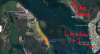
Situated on the western side of Pumicestone Passage, with Bribie Island to the east, the four roost sites along the Esplanade at Toorbul are home to large numbers of waders that feed on the vast intertidal mudflats in the passage. These roost sites are conveniently located near the road, offering excellent views with binoculars and good photographic opportunities. The quiet road sits along the coast with a few old houses. No new developments or many commercial developments so it was a very quiet morning which is a rarity along the coast during a weekend. It is best to visit during a high tide of two meters or less, as higher tides force the waders to roost in less accessible areas of the passage where views aren’t as good. The Esplanade provides an excellent vantage point for observing waders feeding during both the incoming and outgoing tides. The first roost site, known as Pelican Point, is located 1.1 km south of the Toorbul general store. Information boards highlight the various species regularly seen at this site, including Bar-tailed Godwit, Common Greenshank and Great Knot etc. Further south, about a kilometre from Pelican Point, lies Sandfly Bay, a small bay with mangroves at either end. Waders tend to roost here when other sites are disturbed. Another 200 meters south of Sandfly Bay is the main Toorbul roost site which is a dead end with a small barrier to ensure people don’t get too close; a popular spot for wader watching, offering close views of a variety of species which was the main area I visited.

upload_2025-4-1_19-26-37.png
Yellow section most productive

full

Common Greenshank

Waders were everywhere when I visited; easily still thousands of birds before they head back to the Northern Hemisphere. Large noisy flocks of Whimbrels and Bar-tailed Godwits were the bulk of birds. I rarely see more than a handful of stocky Whimbrels so to see hundreds was incredible and they were very vocal. Smaller birds were just pinpointed among them; there were a couple dozen of Grey-tailed Tattlers roosting with the godwits. The best of the lot was a pair of Common Greenshanks which was sitting completely away from the other waders. Greenshanks are a lovely wader lifer and I have tried for them on several occasions in marshier areas but this coastal mangrove-filled area seems to have regular records of them. There were large monochromatic flocks of Pied Stilts and a few Pied Oystercatchers with one pair courting which involves a head-bobbing strut and some shrill calling. A White-faced Heron was hunting while Striated Pardalotes hopped in and out of the mangroves. On the opposite side was the occasional paddock among houses which were home to large flocks of Royal Spoonbills; a nice treat to see so many across the grassy plains. The spoonbills were feeding while there were also Eastern Grey Kangaroos bounding around along the pathways and Sacred Kingfishers perched on powerlines.

full

Royal Spoonbills and Australian White Ibis

full

Eastern Grey Kangaroo

I bumped into a birder at the end of Toorbul that was feeling a bit overwhelmed at so many waders as it was his first time with shorebirds so I talked him through the easy ones, showed him the greenshanks and in the process spotted a Great Knot as well among the noisy flocks added with all the swans and pelicans as well. It was a really lovely sight to see so much life on this sandy bank. Afterwards, I crossed the bridge to Bribie Island which is where the shorebirds move to as well depending on the tides. There were a good little flock of Siberian Sand-Plovers and a Red-capped Plover. I didn’t see any Double-banded Plover and I am on the look out for Lesser Crested Tern as well during the cooler months. I then headed to Buckley’s Hole to check a tern roost site which is a neat little combo of wetlands and protected beach habitat. Here I enjoyed several Caspian Terns feeding regularly and little Black-fronted Dotterels as well bobbing around. There are a very reliable pair of Whistling Kites here as well along with Comb-crested Jacanas within sight of the beach. Some solid coastal sites around the region. I should be visiting at least two new sites across next week before another inter-state trip. Stay tuned.

full

Caspian Tern
 

Attachments

  • upload_2025-4-1_19-26-37.png
    upload_2025-4-1_19-26-37.png
    1,021.5 KB · Views: 118
Location 105: Toorbul Shorebird Roost, Moreton Bay – 15th March 2025

Target Species: Common Greenshank

Situated on the western side of Pumicestone Passage, with Bribie Island to the east, the four roost sites along the Esplanade at Toorbul are home to large numbers of waders that feed on the vast intertidal mudflats in the passage. These roost sites are conveniently located near the road, offering excellent views with binoculars and good photographic opportunities. The quiet road sits along the coast with a few old houses. No new developments or many commercial developments so it was a very quiet morning which is a rarity along the coast during a weekend. It is best to visit during a high tide of two meters or less, as higher tides force the waders to roost in less accessible areas of the passage where views aren’t as good. The Esplanade provides an excellent vantage point for observing waders feeding during both the incoming and outgoing tides. The first roost site, known as Pelican Point, is located 1.1 km south of the Toorbul general store. Information boards highlight the various species regularly seen at this site, including Bar-tailed Godwit, Common Greenshank and Great Knot etc. Further south, about a kilometre from Pelican Point, lies Sandfly Bay, a small bay with mangroves at either end. Waders tend to roost here when other sites are disturbed. Another 200 meters south of Sandfly Bay is the main Toorbul roost site which is a dead end with a small barrier to ensure people don’t get too close; a popular spot for wader watching, offering close views of a variety of species which was the main area I visited.

View attachment 781020
Yellow section most productive

full

Common Greenshank

Waders were everywhere when I visited; easily still thousands of birds before they head back to the Northern Hemisphere. Large noisy flocks of Whimbrels and Bar-tailed Godwits were the bulk of birds. I rarely see more than a handful of stocky Whimbrels so to see hundreds was incredible and they were very vocal. Smaller birds were just pinpointed among them; there were a couple dozen of Grey-tailed Tattlers roosting with the godwits. The best of the lot was a pair of Common Greenshanks which was sitting completely away from the other waders. Greenshanks are a lovely wader lifer and I have tried for them on several occasions in marshier areas but this coastal mangrove-filled area seems to have regular records of them. There were large monochromatic flocks of Pied Stilts and a few Pied Oystercatchers with one pair courting which involves a head-bobbing strut and some shrill calling. A White-faced Heron was hunting while Striated Pardalotes hopped in and out of the mangroves. On the opposite side was the occasional paddock among houses which were home to large flocks of Royal Spoonbills; a nice treat to see so many across the grassy plains. The spoonbills were feeding while there were also Eastern Grey Kangaroos bounding around along the pathways and Sacred Kingfishers perched on powerlines.

full

Royal Spoonbills and Australian White Ibis

full

Eastern Grey Kangaroo

I bumped into a birder at the end of Toorbul that was feeling a bit overwhelmed at so many waders as it was his first time with shorebirds so I talked him through the easy ones, showed him the greenshanks and in the process spotted a Great Knot as well among the noisy flocks added with all the swans and pelicans as well. It was a really lovely sight to see so much life on this sandy bank. Afterwards, I crossed the bridge to Bribie Island which is where the shorebirds move to as well depending on the tides. There were a good little flock of Siberian Sand-Plovers and a Red-capped Plover. I didn’t see any Double-banded Plover and I am on the look out for Lesser Crested Tern as well during the cooler months. I then headed to Buckley’s Hole to check a tern roost site which is a neat little combo of wetlands and protected beach habitat. Here I enjoyed several Caspian Terns feeding regularly and little Black-fronted Dotterels as well bobbing around. There are a very reliable pair of Whistling Kites here as well along with Comb-crested Jacanas within sight of the beach. Some solid coastal sites around the region. I should be visiting at least two new sites across next week before another inter-state trip. Stay tuned.

full

Caspian Tern

Lovely sightings you’ve had lately and hopefully all the birds have recovered from the storms and made it safely back to their usual grounds. What an opportunity.

Some great pictures too - those spoonbills are fantastic!
 
Squirreling in the Forest – Raven Street Reserve, Brisbane – 3rd April 2025:

I have been making a habit of doing a quick loop of Raven Street Reserve daily after work as the winter bush birds are arriving with lots of Grey Fantails, Golden Whistlers and Rufous Whistlers making their presence known in the thicker parts of the forest. I have enjoyed this walk approaching dusk each day and have noted lots of movement especially with the Swamp Wallabies and their feeding habits. During the day they often shelter behind the statuesque grass trees and occasionally pop out behind them but approach nightfall they emerge onto the grassier, more open areas and feed. I spotted at least three of them one afternoon and always have heard them bounding in the hillier parts of this tiny reserve. These urban wallabies face constant perils with road strikes unfortunately being common; unleashed dogs are another problem as well here so close to suburbia. But somehow, they persist with a small corridor connecting to the greater Chermside Hills Reserve where is there is more suitable habitat.

full

Swamp Wallaby

Today it was drizzly and a bit wet (fortunately it will clear for the start of holidays in a day or so). I did my usual loop enjoying a few whistlers but not much else. The flying foxes – both Black and Grey-headed – were very active heading out to feed across Brisbane’s suburbs and gardens. As I made my way around to the exit there was a very noisy scuffle with three Grey Butcherbirds swooping something. I initially thought a python as it seemed to hug the tree trunk. Looked too small for a python though. Bearded dragon or smaller monitor. Through the camera, I realised it was furry. It was a Squirrel Glider that had emerged just before night and was licking the trunk of the tree. I immediately noted how thick its tail base was in the field compared to Sugar and their overall larger size. The glider was quite comfortable in the light and moved towards another tree to escape the butcherbirds nimbly. This is the first glider recorded at this reserve notably and an excellent mammalian lifer following my first Sugar and Greater Gliders last year.

full

Squirrel Glider
 
Location 106, 107 + 108: Mosquito Creek Road, Durikai State Forest and Warwick, Goondiwindi/Southern Downs:

Target Species: Emu, Greater Bluebonnet, Australian Ringneck, Jacky Winter, White-eared Honeyeater, Yellow-tufted Honeyeater, Inland Thornbill, Squatter Pigeon

Yesterday I embarked on a trip around some of the locations that sit south-west of Brisbane, past Toowoomba towards semi-arid habitat closer to the New South Wales border which includes several species that reach their eastern and northerly limits. Three hours west of Brisbane, lies Mosquito Creek Road a long, often narrow dusty road that is home to one of my favourite species of Australian bird; the Greater Bluebonnet. A striking arid-loving species of parrot with a brilliant scope of colours with an olive body, blue face, deep blue wing flashes and a mix of red and yellow as if a painter had splashed these colours onto the bird. Bluebonnets are very flighty birds and will take off quickly but they can be found in the shade of trees during the hottest parts of the day, resting quietly. Within minutes of beginning some roadside birding, a pair of Greater Bluebonnets were perched along a casuarina tree that was bearing seed pods; another bluebonnet flew past with a Pale-headed Rosella and another pair were seen later on. Incredibly happy to see all these bluebonnets and they seemed to be locally common in this area. There were a few Red-rumped Parrots as well which are very clearly sexually dimorphic with the bright green males and the subtle olive-coloured females. It was interesting to witness how Scaly-breasted Lorikeets were very territorial of the seeding casuarina as a food source, not letting the red-rumps or bluebonnets perch for long in the trees as they fed. Beyond parrots, there were flocks of Yellow-throated Miners among the small patches of trees along the fence line while there were Great Cormorants heading towards the dam. The fields are home to Emus but I didn’t see a single bird around here. Instead, Eastern Grey Kangaroos and a single Red-necked Wallaby were seen. The amount of roadkill for such a quiet farm road was staggering; along with these two macropod species, Black-striped and Swamp Wallaby carcasses were not uncommon.

full

Greater Bluebonnet

The road reached a turn off into open farmland with Black-shouldered Kites hovering, observing any potential prey items. The road was filled with Superb Fairywrens in all forms of breeding and eclipse plumage hopping around the fence line in the weedy shrubs. Males in full display flitted about, occasionally chasing rivals with sharp, buzzing calls, while drabber females and juveniles kept low in the undergrowth. There were very few birds around during my visit but as the road traverses along the state forest this attracted Common Bronzewings and Peaceful Doves along the road (no Squatter Pigeons among them). There were more birds calling now but the only one that emerged was a single Yellow-faced Honeyeater while I was watching a sunbathing skink yet to be identified. A family of Grey-crowned Babblers chattered noisily as the main highlight as I finished this stretch of road. Overall, it can be a productive area but there weren’t too many birds around. Best visited over several days. I was thrilled with the bluebonnets and would have been happy if they’d been the only birds I’d seen here so I was eager to move on to the next site.

full

Superb Fairywren

Durikai State Forest is situated along the Cunningham Highway and is not well-signed at all. There are a few side stopping bays on the side of the forest and this is how you can access the trails. In particular, there is a waterhole along the side of the road where you can view birds coming in to drink. There are additional tracks along the forest further up the road but my main attention was around the water. There were lots of dragonflies around the water and I even observed a wolf spider hunting and successfully capturing one. I suspect there were one or two new species for me but will have to get them confirmed. The first bird actually seen was a Rufous Whistler with it approaching the waterhole while a large chirpy flock of nice little thornbills approached the trees around the water. I went through the potential options and settled with Yellow Thornbill with the orangey wash on the throat. Excellent little birds and I’d never seen them in Queensland before, only interstate. I saw the shape of a woodswallow zip overhead as well but I wasn’t quick enough to confirm. There are some very interesting species of woodswallow here but none were seen besides this fleeting glimpse. I wandered around a few of the paths spotting Grey Fantail, Silvereye, Scarlet Honeyeater and Yellow-faced Honeyeater. The Yellow-faced Honeyeaters later came down to the waterhole to drink. I suddenly spotted a big bright olive honeyeater with a contrasting black head and white ‘ear’ patch, meaning it was a White-eared Honeyeater. A really nice find after an hour of rather fruitless birding. Continuing around the waterhole a Wedge-tailed Eagle passed overhead while Weebills were another interesting was species sighted. A Yellow Admiral – my favourite Australian butterfly – zipped by quickly as well with it being the first one of the year for the list. And that was about it for Durikai. Can’t say either site was particularly productive but I enjoyed the different range of species at both locations. Nearby, a fence line revealed glimpses of Apostlebirds before they disappeared, a single bird for both Zebra and Double-barred Finch and my first ever Jacky Winter. One of the plainer species of Australasian robin but this was a quintessential setting seeing one perched on a fence post as they so often are observed.

full

White-eared Honeyeater

full

Jacky Winter

I then headed to the town of Warwick for a little wander around the Condamine River and the parkland in the middle of town to gauge local wildlife. I was mainly seeking to find an Eastern Rosella or two as they are more restricted in range than Pale-headed Rosella, only being found in this region within Queensland. This is also the region where Pale-headed Rosella interbreeds with Eastern Rosellas as well and there are a few sites north of Warwick where hybrid rosellas can be seen before entering back into Pale-headed territory. The walk along revealed that there had been recent flooding with muddy trails and water-sodden grass. There was an incredible number of Little Corellas and Australian Wood Ducks using the large eucalypt trees as roosting and nesting hollows. The corellas were fearless. There were a few White-faced Herons, Galahs and Dusky Moorhens. A single Eastern Rosella was suddenly spotted across in a sporting field so I tracked its movements for a little while and then a second one popped into view. Any day I see a rosella is a good one.

full

Eastern Rosella – first seen in Queensland

full

Little Corella

The final destination was Gatton on the way home. I popped into Lake Galletly at the University of Queensland’s campus. Not a single Pink-eared or Blue-billed Duck in sight today but instead an incredible number of turtles. The majority were Eastern Short-necked Turtles including some very large ones. However, what was even more exciting was the fact that I had spotted a very large round shell with them all sunning in the afternoon sun. Its head popped up and its neck came around in full view extending beyond the length of any of the other necks. A large Broad-shelled Turtle. Finally. After years of searching this was an excellent sighting to see one out in the open in full view. These are Australia’s largest freshwater turtle with their shells reaching lengths of 50 centimetres but they spend most of their time quietly concealed in debris on the bottom or among root mats in water bodies across the Murray-Darling River systems extending north to south-east Queensland (where I have tried many times) up to Rockhampton. I find their necks incredibly impressive with a longer length than the popular Eastern Long-necked Turtles with a flatter head. Overall, yesterday made for difficult wildlife watching with a warm conditions earlier on the day but three bird lifers and a new turtle as well were all very rewarding to see out west.

full

Broad-shelled Turtle with Eastern Short-necked Turtles
 
Location 109: North Stradbroke Island, Redland – 8th April 2025:

Target Species: Indo-Pacific Humpback Dolphin, any ray species

Yesterday I went on a day tour around North Stradbroke Island/Minjerribah. The island is the world’s second largest sand island following Fraser Island/K’gari and is located within the Redland region, south of Brisbane. Many Brisbane locals escape to “Straddie” for a little wilderness with some facilities and comforts however I’d never visited but it’s definitely an area I am seeking to explore further. Despite extensive sand mining, the island still has dune vegetation, swamps, rainforest, eucalypts, mangroves and tannin-rich lakes. Apart from the rocky outcrops at Point Lookout, sand dune systems dominate the island with incredibly impressive stretches of coastal vegetation. It certainly felt a lot wilder than what I was expecting. The day tour was part of a gift I received as a pre-paid trip so I went along but a tour is not something I would recommend if you want to really spend time looking for wildlife here. North Stradbroke Island is relatively well-connected with public transport and all the important parts like Amity Point and Point Lookout are connected via the #880 bus costing 50 cents (like all public transport in south-east Queensland now) for a single trip. From the mainland there is a passenger ferry that costs $20 for a round trip from Cleveland to Dunwich, the main town on the western side of the island and the gateway to the rest of the island. The ferry across to the island was relatively productive with birds. I doubt many dugongs nor dolphins are seen from here as the ferry is noisy and fast. Australian Pelicans and three species of cormorant were common across the passage while I enjoyed a single White-bellied Sea-Eagle perched on a buoy. There was some nesting activity on some of these buoys interestingly. The ferry passes a mangrove island which had roosting waders; large flocks of Grey-tailed Tattlers, Ruddy Turnstones and Pied Oystercatchers with some perched in the lower branches. Upon reaching the town of Dunwich, Welcome Swallows, White-breasted Woodswallows and a single Pacific Reef-Heron were seen around the passenger ferry terminal. With a closer look, a few Rainbow Bee-eaters were perched in the casuarinas as well. I watched an Eastern Osprey hunt for fish and it grabbed a long needlefish and took to a wooden tower close to the ferry. There were schools of little anchovies that were leaping out of the water in a tight ball. There must have been a dolphin hunting in the shallows.

full

White-bellied Sea-Eagle with Stradbroke Island behind

The most visible bird on the island was by far the Bush Stone-Curlews. If there was a sports field, camping group or really any patch of grass there was a pair of stone-curlews and their young. They were much bolder than the mainland birds and would approach any person especially if they had food. I think I easily saw over fifty stone-curlews during the couple of hours while I was on the island at all the locations. They are pretty common in Brisbane, even in city centres attracted by the artificial light that attracts house geckoes and insects, but I was impressed with such densities on the island especially with a known fox population. The other common island bird was Masked Lapwing that weren’t far from the curlews often. The tour started at Brown Lake for literally ten minutes which I was disappointed by as I didn’t have sufficient time to find Brownwater Skimmer; a threatened species of dragonfly that is endemic to these bay islands. What I did see in a few minutes included a pair of Tawny Frogmouths, Scarlet Honeyeaters, Noisy Friarbirds (they seem to be the dominant passerine in the trees here) and a Torresian Crow consuming a Cane Toad by flipping it upside down and consuming the innards. One of the growing number of Australian species that has now learnt to eat these toads safely.

full

Bush Stone-Curlew

The next spot was Point Lookout with the 1.2 kilometre North Gorge walk; the most scenic coastal walk I have done to date. The walk is easy to complete and the coastal trail traverses in and out of the rock gorges overlooking the ocean from a great height. At two points of the walks, you can walk out to the rocky cliffs carefully to look down at the ocean. Sea-watching at its finest occurs here especially around winter when Humpback Whales regularly pass daily but there are other charismatic marine species seen including sea turtles, dolphins and rays. I was on the hunt for humpback dolphins but instead had a pod of about twenty Indo-Pacific Bottlenose Dolphins pass from the second lookout. A single Pacific Reef-Heron further glided past while I enjoyed a family of four Eastern Ospreys as they hunted for fish and were perched on exposed branches that sat along the cliff edge. It was epic to see them soar across the open ocean and return to their perches.

full

Indo-Pacific Bottlenose Dolphins

full

Eastern Osprey

There were a few sea turtles as well; no Loggerheads and they all seemed to be Green Turtles. The best find was a White-spotted Eagle Ray; a large species of ray that glided across the water’s surface. I later saw it jump out of the water with a great surge of power and it flopped back into the water with a smack. That was an incredible thing to see! I later saw another ray but I wasn’t able to photograph it clearly. Reef Mantas and Australian Cownose Rays have also been seen here at the gorge but I didn’t see any additional species. I felt that if you really put the time here, you’d be rewarded with some fantastic sightings.

full

Green Turtle

full

White-spotted Eagle Ray

We finished up around Amity Point where three Koalas were spotted; one was within the campground opposite the jetty where the unsuccessful search for humpback dolphins continued. Another two koalas were seen closer to some of the houses near the beach that looks towards Moreton Island. The island population of koalas can be found near all three townships and are most common in swamps with their food trees. There were lots of Smooth-handed Ghost Crabs here along with an assortment of common dragonfly species as well. Overall, it was a quick snapshot of North Stradbroke Island but it seems to be a worthwhile destination to extend the coastal opportunities for wildlife watching on a grander scale.

full

Koala
 
Location 110: Daisy Hill Conservation Park, Brisbane – 24th April 2025:

Target Species: Great Barred Frog, Scarlet-sided Banjo Frog

Frogs have always been a bit of a struggle to add to my list. So far, I have seen Green Tree Frogs very occasionally, Eastern Dwarf Frogs at a few botanic gardens, a smattering of daytime tadpoles and that is pretty much it when it comes to native amphibians. Recently I was thrilled to see a single Dainty Tree Frog at Kedron Brook Wetlands Reserve which despite being one of the most common Brisbane frogs I’d never seen one. It was resting out in the open, in full yet camouflaged view among some mangroves near the water line. It was a delightful little species that inspired me to start exploring amphibians, especially local ones. I needed to go out at night to get more species and I recently came across a few frog nights that are run by the Logan City Council allowing people to sign up for free to join small groups to spotlight together. There was an event planned for February for Daisy Hill; one of Brisbane’s largest nature reserves that merges into Logan. It had to be rescheduled at least twice due to poor weather but finally now in late April, towards the quieter time for frogs, we were able to have the go-ahead. Rain was scheduled but fortunately it cleared for a few hours.

full

Dainty Tree Frog – source of inspiration to explore more amphibians

I arrived early and did some quick birding; four Little Lorikeets were travelling overhead in the car park and four Pale-headed Rosellas were also seen feeding but daintily flew up to the canopy among the Pied Butcherbirds. As it darkened and the sun set among the gloomy weather, people started arriving and in particular there were two frog experts that led the groups. We were targeting the “big three” of Brisbane’s ground frogs; Great Barred Frog, Green-thighed Frog and Scarlet-sided Banjo Frog. All three species are uncommon outside this reserve in Brisbane and are specialities to see here. They are some of the biggest ground frogs we get locally. As we congregated and scrubbed our boots with a special disinfectant to reduce the spread of chytrid fungus, a Common Brushtail Possum was hanging just above our heads as it fed. It was among the first creatures out and about in the reserve as we started our walk in two groups with one person in charge of mixing in both groups to track important finds to let the other group know quickly and efficiently. The ground was sodden after recent rain with frequent puddles but the clearing night sky proved excellent for amphibians.

full

Common Brushtail Possum

The most common species seen here was fortunately the Great Barred Frogs. In total we all counted 39 of them across two hours and they ranged from tiny individuals that would have been tadpoles two weeks ago to large impressive adults that held their own among the abundant Cane Toads. They are a beautiful wet forest frog that have an eye-catching striped leg patterning with yellowish thighs that contrasts the stripes. They proved to be particularly common in the hillier section of the reserve and they were heard once or twice near the creek. While we were counting frogs, a Greater Glider was a nice find as well. I have to say I wasn’t really looking up often as but it was nice to find this impressive species peering from the canopy.

full

Great Barred Frog – easily mistaken for abundant Cane Toads

full

Greater Glider

One of the guides suddenly spotted a medium-sized frog resting in the grass; it was a female Green-thighed Frog. Amazing sighting. This is an endemic species that is recorded here but still overall an elusive frog to see here. We saw a total of three individuals with another female and a well-marked male in a natural pose showcasing those yellowish-green thighs with black mottling. The heavy rain had fortunately brought them out of their shelters as they are treefrogs that spend much of their time hidden in low shrubbery and leaf litter. This is a species that features in one of the popular Wildlife of Greater Brisbane books which have been some of my favourite books to flick through and I always thought how cool it would be to see this striking species.

full

Green-thighed Frog

Up into a hillier section, the search continued for the final of the big three and eventually a small juvenile Scarlet-sided Banjo Frog was found and even better, an adult male was sighted nearby. Up until recently this species was grouped with the Northern Banjo Frog but it has been split as its own distinct species. Another species that is confused with the toads due to their impressive size. The adults were beautifully patterned; much more vivid than I was expecting. We later saw a resident female that was enormous for her species and had maintained a territory here for a few years. Overall, a very successful night with fun, fast-paced herping that was rewarding and really satisfying with a like-minded group of people passionate about amphibians. I highly recommend those who are interested to look up these events through Eventbrite [Eco Logan] especially for those seeking to explore local nocturnal life.

full

Scarlet-sided Banjo Frog
 
Recent Highlights – April/May 2025:

I thought I’d come back here and share with you all my recent bitty highlights around a few sites around south-east Queensland. It has been raining most weekends, limiting options for wildlife but the rain is seemingly starting to clear for next week hopefully. To begin with, after returning from Melbourne in late April, I spent the morning at the ever-reliable Mary Cairncross Scenic Reserve on the Sunshine Coast. On this day, it was pretty quiet and most of the birdsong was heard from deep in the forest, on the outskirts. I enjoyed a glimpse of a Crimson Rosella; which I hadn’t seen before on the Sunshine Coast before being higher-altitude birds here. There were a few Large-billed Scrubwrens hopping among the leaf litter with a few of the commoner fantails and a Golden Whistler or two. The highlight was right at the exit in a palm tree. It was a female Paradise Riflebird; our region’s only bird-of-paradise. It was out in the open feeding among the tree, digging around for caterpillars that were hiding around the top of the tree. It stayed out and about feeding for about twenty minutes and I was able to appreciate how it can use its almost exaggeratedly-long bill to feed carefully and probe around. Riflebirds are regularly heard at this site but I actually find seeing one to be a challenge. This is only my second sighting of one after about a dozen visits across the seasons. Afterwards, I made my way to the rockpools and I had some unfinished business at Caloundra. I was searching for White-speckled Sea Hare and finally tracked down several in a different part of the rockpools. They were both in and out of the water, munching away like little cows grazing among the rock pools.

full

Paradise Riflebird

full

White-speckled Sea Hare

7th Brigade Park has been productive with an influx of wintering birds including good numbers of Striated Pardalotes, Rufous Whistlers, Golden Whistlers, Grey Fantails and the odd Spangled Drongo passing through. The numbers of Variegated Fairywrens and White-browed Scrubwrens also tend to increase around this time of year as well, adding lots of activity among the scrubby corners of the park. A recent dazzling invert that has been spotted on two occasions of note are Green Jewel Bugs. This species of shield bug is metallic dark green in colour, with an orange mark on its back. Its legs are orange-brown and dark green. Under its large shield, we can see the orange edges of abdomen. They can congregate in large numbers but I’ve only seen two on both occasions, shimmering in the full sun.

full

Green Jewel Bug

full

Variegated Fairywren

Another fun invert has been a pair of Pied Lacewings; a species I hadn’t heard of until I saw it in the field. They are really pretty not like other transparent-winged lacewings with striking wings like a monochromatic stained-glass window, tied in with an orange head. Very elegant almost abstract looking creatures. A single pair of them sat out in the open quietly yesterday. I later went to the same area and they were gone. They seem to be highly seasonal with most sightings occurring around this late May period. Amorbus bug nymphs have also been another incredible pop of colour as always contrasting the drab brown adults they turn into for the summer.

full

Pied Lacewings

full

Amorbus atomarius

I have been trying hard to see Rakali without success as well into the late afternoon as the sun dims. They are delightfully large otter-like rodents and have adapted relatively well to Brisbane’s urban centres even venturing into the heart of Brisbane’s South Bank in the city and can be seen at the odd ferry terminal along the main river. They have continually been reported here at this park with their characteristic white tail being an immediate identification for them by everyone but me…While waiting at one of the bridges at their hotspots I did manage to see a Keelback. Like the Rakali, they have also managed to add Cane Toads to their diet.

full

Keelback – the only reward as the Rakali search continues

Finally, Burnie Brae Park, a tiny little park I have mentioned in passing has been host to dozens of different species of butterflies feeding on blooming paperbark trees. I’ve spent a few afternoons documenting all the different butterflies that are travelling through and feeding on their abundant blooms. They are just reaching their peak of their blooms with the following species seen across the past week or so with most seen today - Indigo Flash, Glistening Line-Blue, Glistening Pencil-Blue, Purple Line-Blue, Hairy Line-Blue, Cycad Blue, Speckled Line-Blue, Short-tailed Line-Blue, Small-banded Green-Blue, Common Crow, Common Eggfly and Black Jezebel. Chrome Awl was seen up until a week or so ago as well.

full

Bright Cornelian

full

Small-banded Green-Blue

Best of all, this humble little park with no real bushland hosted a great sighting of a Square-tailed Kite yesterday soaring over through the park as the resident Australian Magpies and Torresian Crows chased it out as it completed a lap of the park. Square-tailed Kites are very uncommon raptors in south-east Queensland outside of a few known nesting sites; I’ve only seen a single passing bird at Mount Tambourine and that has been it. However, Birds Queensland does state this species appears to be tolerating some bushland remnants with riparian corridors on the edges of urban centres. Up close with this sighting, I could appreciate what incredible birds they are. A pale narrow head with a wonderful wash of rufous, white and dark black edging under wing was noted as it soared effortlessly over the park. I also saw one this morning as well assuming it is the same bird. A quick confession…I think I like them more than Whistling Kites…

full

Square-tailed Kite in the suburbs of Brisbane
 
Cooler Waters – Wynnum to Bribie Island – 7th and 8th June 2025:

Target Species: Lesser Crested Tern, Double-banded Plover

I can’t remember the last time Brisbane had a weekend without a single drop of rain so I made the most of the wonderfully clear skies and cool temperatures and headed towards the coast for a few targets that visit the region in the winter period, contrasting the widespread wader migration in the warmer months. I have been evaluating the tern list recently and as I have ticked off Little and White-winged Black Tern this year in the summer months and I seek to continue seeing more terns as they are among my favourite bird groups currently. I will have opportunities for some additional species in northern and southern Australia including Fairy Tern later in the year but for now, there was one species I needed. The Lesser Crested Tern, Thalasseus bengalensis is a winter migrant to south-east Queensland and looks very similar to the abundant Greater Crested Tern but is a slightly smaller bird, has paler upper parts and a diagnostic orange bill. The traditionally yellow-billed Greater Crested Terns can have an orangey bill as well so careful attention is required to distinguish them in the field especially if they are viewed from a distant. There are two major sites that were producing recent records – King Island in Redland and along the Wynnum foreshore at Penfold Parade. Both are accessible via public transport but I opted for the latter sight as I’d only visited this site at high tide and it was closer. Penfold Parade is a known location for Terek Sandpiper which will be a summer wader at the top of my list in a couple of months so I wanted to get more familiar with the area. I coincided my visit with low tide and walked along the busy pathway towards a small park with a few sparse mangroves and waited. There were initially lots of waders coming in; all overwintering Bar-tailed Godwits with a handful of Pied Oystercatchers and a quartet of Pied Stilts. An Eastern Osprey soared overhead as well.

full

Bar-tailed Godwits

Then there was a jetty-type structure out towards the shoreline past the waders feeding in the mud and this had three terns along with Silver Gulls; two definite Greater Crested Terns with their ‘fuller’ body and yellow beak and a suspiciously unusual-looking third one. It was roosting so I waited and finally a bright orange beak was flashed around as it preened. A confirmed Lesser Crested Tern for sure. Excellent. I got a few comparison shots with both species side by side. It definitely seems to be the type of species that I have probably overlooked at a few coastal sites.

full

Lesser Crested Tern and Greater Crested Tern comparison

full

Lesser Crested Tern

Afterwards, there wasn’t much else to see here so I walked down to Wynnum station and caught the train to the city. I headed to the City Botanic Gardens as a Noisy Pitta has been recorded here for a few days but the search was unsuccessful. I suspect the sprinkler system sent the pitta into hiding. Buff-banded Rail numbers seem to be doing brilliantly here and they were seen throughout the gardens now, expanding beyond the remnant mangroves. A pair of Sacred Kingfishers were easily seen perched on some cabling along the river shoreline in full view. One hunted for some crabs regularly along the shoreline. Some decent species to be seeing in the heart of Brisbane city with orange Bordered Rustic butterflies also being seen while I explored the wetter forest parts of the gardens.

full

Buff-banded Rail in the heart of Brisbane city

Today I ventured to Bribie Island. I started at Buckley’s Hole at low tide where there is a known tern roost and also recent records of Double-banded Plover; a migrant from New Zealand. There were a few nice freshwater birds around in the nearby lake including Comb-crested Jacana, Great Cormorant and Australasian Grebe. None of the recent Wandering Whistling-Ducks recorded there were seen this morning. Towards the open beach there were large numbers of Australian Pelicans, Great Crested Terns, Caspian Terns, Silver Gulls and Pied Oystercatchers. Raptors were represented by a single Brown Goshawk surveying the nearby woodland before a quick look around the beach area and a more traditional coastal raptor being a large adult White-bellied Sea-Eagle.

full

Pied Oystercatcher

full

Australian Pelican

Searching for Beach Stone-Curlews as well, I walked along the shore but only spotted a single Red-capped Plover which was very confiding. There were a few bush birds calling and I did spy a Mangrove Gerygone and a male Red-backed Fairywren hopping on the sand momentarily. Afterwards, I went to Kakadu Beach where none of my target species were seen however there was a single Sacred Kingfisher hunting on the sand, a smattering of terns including Australian Tern this time around, a pair of Pale-headed Rosella feeding on the fringes of the mangroves behind the bird hide and an Eastern Osprey that had caught a rabbitfish. Overall, some nice finds along the coast.

full

Red-capped Plover

full

Eastern Osprey with rabbitfish
 
West Again - Toowoomba Region – 14th June 2025:

Target Species: Plum-headed Finch, Black Falcon, Australian Boobook

Yesterday I went around the Toowoomba region mainly ticking off various species I sought to find out west. The main species I wanted to see around Oakey, two hours west of Brisbane, was the Plum-headed Finch, Emblema modesta, a striking little species that is very nomadic and moves through dry grasslands which includes farmland of which there is plenty of in this region. It can be a difficult species to track and access its habitat as it’s largely restricted to western Queensland and New South Wales. Cory Street Park in Oakey is currently recording flocks of 100+ finches so I knew it was time to pursue these records before the finches moved elsewhere, most likely, private farmland away from this accessible park. There had also been a few good records of Black Falcon around Oakey; a species I needed as well so I kept a keen eye on all of the raptors circling ahead. I started at the park in Oakey around 8am and it was a chilly 1 degree. It’s not often I bird in such cold conditions in Queensland but I found a sunny patch initially and waited to see what was around before I went to the area among the denser trees where the smaller birds tend to frequent near the water. The first highlight was a single Australian Hobby perched on an exposed tree stump. A beautiful little falcon to start the day with its rufous markings. The hobby was already gone by the time I had returned to this tree to find Galahs and Cockatiels had moved in and were perched there in its place. Good parrot diversity at Oakey is almost expected, and along with Galahs, Cockatiels and Little Corellas, I was surrounded with dozens and dozens of Red-rumped Parrots that were feeding among the frosted grasses alongside Crested Pigeon which are the staple pigeon here. Once the parrots realised I wasn’t going to eat them, they were pretty confiding if you don’t move and would wander past my shoes to get to the next patch of grass. Eventually a pair of timid Pale-headed Rosellas joined them as well making for a colourful display as they all fed in the morning light. A pair of flashy Crimson-winged Parrots even zipped past and while the male didn’t stick around, the female parrot perched in a nearby tree for a few seconds. Scaly-breasted Lorikeets were another species that were present in the trees as well despite no flowering blooms to be seen.

full

Australian Hobby

full

Red-rumped Parrots

The trees were filled with song and the first species I have never missed here – Weebills were hopping around the branches including some at eye view allowing me to appreciate them up close which was fantastic to see. There were also some Yellow-rumped Thornbills as always interchanging between the ground and the trees. The development of parks and gardens, roadside verges, farming country and the like have all been advantageous to Yellow-rumped Thornbills. The thornbills were close to large flocks of Double-barred Finches which are a close relative of the Zebra Finches. I didn’t spot any zebs among them this time but their calls are pretty similar I must admit. A pair of Striped Honeyeaters were an excellent find as well. Their calls are pretty recognisable but seeing them can sometimes be more difficult. They are medium-sized honeyeaters with streaky markings that are the sole members of their genus.

full

Weebill

full

Striped Honeyeater

Towards the centre of the park was a congregation of about a dozen Apostlebirds. Although I had seen this species on a few occasions in both northern and southern Queensland this was my best view yet of them. They were pretty fearless and walked around feeding and a few went down to drink at a small pool of water. Among the apostlebirds I saw a large flock of sparrow-sounding birds. They swarmed into a tree with the Double-barred Finches. These were quickly confirmed as Plum-headed Finches with the males deep purply-maroon cap that is slightly iridescent with a little glint, contrasting their barred-brown body plumage. The large flock of about 200 birds were chattering away all morning and left them to it after I got a few photos. An excellent start to the day.

full

Apostlebird

full

Plum-headed Finch - lifer

I then headed to Arthur Shooter Memorial Park which is nearby. I later realised that you can start at Cory Street Park and walk to this park as it’s all connected via a trail into the town centre. This park is good for commoner species but can often have a few surprises. There were some visiting waterbirds including a single Royal Spoonbill that did laps of the town and returned every so often, an Australian Pelican which whilst can be an inland bird felt out of place and a White-faced Heron chasing several Great Egrets. The parrot hotel tree; a gnarly looking gum tree that would have been chopped down years ago if it was in a Brisbane park was home to large flocks of Rainbow and Scaly-breasted Lorikeets along with Galahs and Little Corellas. When in flower it’s a magnet for Musk Lorikeets which can be more challenging to find reliably in Queensland. There was also a flock of Apostlebirds which were everywhere in Oakey and an Australasian Darter was seen as well.

full

Little Corellas

full

Australian Pelican


Peacehaven Botanic Gardens was the next spot on my way back east and it’s a lovely little site to the north of Toowoomba. I was visiting to see the local habituated population of Common Bronzewing which are residents and live in the native garden. Today I spotted a pair that eventually went out into the open and were sunning themselves on the cool winter day. They are among my favourite pigeons. As common as they are down south, I don’t tire of seeing them. A neat surprise was a Square-tailed Kite that soared over the grounds. It was being mobbed by Australian Magpie as it headed towards open country.

full

Common Bronzewing

full

Square-tailed Kite


Now at Gatton, Lake Apex was quiet with the only highlight here being a Great Crested Grebe among 20+ Australasian Grebes and lots of Plumed Whistling Ducks to keep things interesting at least. At Lake Galetty (UQ Gatton) the activity was better with large flocks of Magpie Geese, Straw-necked Ibis and Red-rumped Parrots in the open pastures. While I didn’t track down the recent Yellow-billed Spoonbill nor Australasian Shoveler sightings seen here, I was pleased with great views of a pair of Pink-eared Ducks out of the water preening in the afternoon sun. A Grey Fantail and Restless Flycatcher darted among the thicket along the water.

full

Pink-eared Ducks

Finally, after a surprisingly traffic-free commute back to Brisbane, I finished my day at Mount Gravatt Lookout which technically connects to Toohey Forest, forming a green island in the heart of Brisbane’s southern suburbs. The lookout is impressive with a winding bushland road with suburbia always in view. I only completed a single 20-minute track to track down an owl. Along my way I spotted a single Koala as this is very reliable territory for this species. There were a few bushbirds including Variegated Fairywren, Rufous Whistler and Grey Fantail until I reached a known roost site for a single Australian Boobook; one of the more common owl species in south-east Queensland. I’d never manage to track one down and was thrilled to finally get a decent look at this species as it slept among a trunk that matched its reddish plumage. All in all, an exhausting yet successful day.

full

Australian Boobook – joining only Powerful and Lesser Sooty on the wild owl list
 
From Coast to City – Moreton Bay and Brisbane – 21st June 2025

Target Species: Brolga, Black-necked Stork, Lewin’s Rail, Noisy Pitta

Today’s birding plan was to start around Pumicestone Passage in Moreton Bay to search for a Black-necked Stork and/or Brolga that have been hanging around a farmland dam towards the coast near Bribie Island. Named ‘Bishops Marsh’, the dam is one of the few places in south-east Queensland that has Brolga. Although I have seen a single Brolga before, it’s a very habituated bird that lives on a suburban street. It didn’t feel as satisfying. I was seeking to see at least some wilder Brolgas and this seemed like a good option. The weather was immediately overcast so I was wary of plans to then continue onwards to Bribie Island for year ticks of Wandering Whistling-Duck, Beach Stone-Curlew (starting to get annoying), and Double-banded Plover. Along the quieter farmland roads were occasional raptors including a Black Kite that swooped down in front of the car and a Black-shouldered Kite or two as well. As the dam was approached along the quiet road, there were two black unmistakable cranes flying in the rain. A pair of Brolgas in flight! They headed past the dam and towards a field on the opposite side. An excellent sighting.

full

Brolga

I then headed to Toorbul Shorebird Roost where I spotted a pair of boxing Eastern Grey Kangaroos right near all the waders. There was a nearby female kangaroo with a joey, and the males were kicking each other and rearing up using their tails as a counterbalance. This match went on and off for about five minutes with the males taking a few breaks in between. There were also a few kangaroos out with the waders on the sand, munching on small clumps of seaside vegetation, as high tide began receding past the mangroves. There were lots of overwintering waders around including decent numbers of Far Eastern Curlew, Bar-tailed Godwit, and Whimbrels. None of the smaller tattlers, knots, or greenshanks this time. Pied Stilts, Chestnut Teals, and Royal Spoonbills were a constant throughout the morning here along with Caspian Terns and Australian Terns. The Caspian Terns had a fledgling begging for food constantly, which was interesting to observe.

full

full

Boxing Eastern Grey Kangaroos

Seeing that records of a Lewin’s Rail right in the heart of Brisbane city were continuing to regularly pop up, and the rain was continuing here along the coast, I decided to head back to Brisbane as it was still quite early to allow enough time to factor in waiting time for what I assumed was a very secretive and skulking rail. Then I’d squeeze in a walk to try for pitta again in the Botanic Gardens on the other side of the river. I headed straight to South Bank Parklands, which is right on the Brisbane River with a tiny rainforest garden that sits along a popular walking path that leads to the cultural centre of the city with the museum and art galleries nearby. The rail was being spotted in the front little stream in the rainforest boardwalk, so it was easy to find the crowd of birders and join them. The rail was incredibly showy immediately, contradicting all the traditionally cryptic habits this species is particularly known for. It fed out in the open for a couple of minutes and then retreated into the papyrus (but still easily seen), and walked around the rocky parts for a while later on as well. An Australian Brush-turkey roosting above it sent it into hiding a few times, but it emerged several times with ease. A few non-birders joined the crowd to see what the fuss was all about.

full

Lewin’s Rail

Quite a distinctive bird I must say. Lewin’s Rails are smaller than the commoner Buff-banded Rail, are quite compact, lacking a prominent tail and possess a longer pink bill. What really stuck out for me was the fine white barring along the flanks; that was very eye-catching as the rail moved around the small pond. As the rail looked up at the canopy watching the Australasian Figbirds, I further noted the very light greyish throat as well. It was an outstanding sighting and record. I then walked along the pathway and located some known roost trees for Australian Boobook. They are near the fake beach area, but I didn’t see any trace of owls today, so I headed towards the maritime museum and crossed the Goodwill Bridge over to the Botanic Gardens, noting only a few Australian Pelicans and Great Crested Terns.

full

Lewin’s Rail

I reached the mangroves along the Botanic Gardens and spotted at least five Buff-banded Rails feeding along the shoreline, while the Sacred Kingfisher, Australasian Darter and Striated Heron were both nearby in the mangrove fringes. I searched for the pitta initially along these shores but found no signs of any. I then walked along the central pathway and underneath the breeding colony of Australian White Ibis. Among more rails, Dusky Moorhen, and Bush Stone-Curlew, a single Noisy Pitta hopped into view under bamboo for a few wonderful minutes. Brisbane’s city greenspaces can really deliver some great finds at the right opportunity.

full

Australasian Darter

full

Noisy Pitta
 
From Coast to City – Moreton Bay and Brisbane – 21st June 2025

Target Species: Brolga, Black-necked Stork, Lewin’s Rail, Noisy Pitta

Today’s birding plan was to start around Pumicestone Passage in Moreton Bay to search for a Black-necked Stork and/or Brolga that have been hanging around a farmland dam towards the coast near Bribie Island. Named ‘Bishops Marsh’, the dam is one of the few places in south-east Queensland that has Brolga. Although I have seen a single Brolga before, it’s a very habituated bird that lives on a suburban street. It didn’t feel as satisfying. I was seeking to see at least some wilder Brolgas and this seemed like a good option. The weather was immediately overcast so I was wary of plans to then continue onwards to Bribie Island for year ticks of Wandering Whistling-Duck, Beach Stone-Curlew (starting to get annoying), and Double-banded Plover. Along the quieter farmland roads were occasional raptors including a Black Kite that swooped down in front of the car and a Black-shouldered Kite or two as well. As the dam was approached along the quiet road, there were two black unmistakable cranes flying in the rain. A pair of Brolgas in flight! They headed past the dam and towards a field on the opposite side. An excellent sighting.

full

Brolga

I then headed to Toorbul Shorebird Roost where I spotted a pair of boxing Eastern Grey Kangaroos right near all the waders. There was a nearby female kangaroo with a joey, and the males were kicking each other and rearing up using their tails as a counterbalance. This match went on and off for about five minutes with the males taking a few breaks in between. There were also a few kangaroos out with the waders on the sand, munching on small clumps of seaside vegetation, as high tide began receding past the mangroves. There were lots of overwintering waders around including decent numbers of Far Eastern Curlew, Bar-tailed Godwit, and Whimbrels. None of the smaller tattlers, knots, or greenshanks this time. Pied Stilts, Chestnut Teals, and Royal Spoonbills were a constant throughout the morning here along with Caspian Terns and Australian Terns. The Caspian Terns had a fledgling begging for food constantly, which was interesting to observe.

full

full

Boxing Eastern Grey Kangaroos

Seeing that records of a Lewin’s Rail right in the heart of Brisbane city were continuing to regularly pop up, and the rain was continuing here along the coast, I decided to head back to Brisbane as it was still quite early to allow enough time to factor in waiting time for what I assumed was a very secretive and skulking rail. Then I’d squeeze in a walk to try for pitta again in the Botanic Gardens on the other side of the river. I headed straight to South Bank Parklands, which is right on the Brisbane River with a tiny rainforest garden that sits along a popular walking path that leads to the cultural centre of the city with the museum and art galleries nearby. The rail was being spotted in the front little stream in the rainforest boardwalk, so it was easy to find the crowd of birders and join them. The rail was incredibly showy immediately, contradicting all the traditionally cryptic habits this species is particularly known for. It fed out in the open for a couple of minutes and then retreated into the papyrus (but still easily seen), and walked around the rocky parts for a while later on as well. An Australian Brush-turkey roosting above it sent it into hiding a few times, but it emerged several times with ease. A few non-birders joined the crowd to see what the fuss was all about.

full

Lewin’s Rail

Quite a distinctive bird I must say. Lewin’s Rails are smaller than the commoner Buff-banded Rail, are quite compact, lacking a prominent tail and possess a longer pink bill. What really stuck out for me was the fine white barring along the flanks; that was very eye-catching as the rail moved around the small pond. As the rail looked up at the canopy watching the Australasian Figbirds, I further noted the very light greyish throat as well. It was an outstanding sighting and record. I then walked along the pathway and located some known roost trees for Australian Boobook. They are near the fake beach area, but I didn’t see any trace of owls today, so I headed towards the maritime museum and crossed the Goodwill Bridge over to the Botanic Gardens, noting only a few Australian Pelicans and Great Crested Terns.

full

Lewin’s Rail

I reached the mangroves along the Botanic Gardens and spotted at least five Buff-banded Rails feeding along the shoreline, while the Sacred Kingfisher, Australasian Darter and Striated Heron were both nearby in the mangrove fringes. I searched for the pitta initially along these shores but found no signs of any. I then walked along the central pathway and underneath the breeding colony of Australian White Ibis. Among more rails, Dusky Moorhen, and Bush Stone-Curlew, a single Noisy Pitta hopped into view under bamboo for a few wonderful minutes. Brisbane’s city greenspaces can really deliver some great finds at the right opportunity.

full

Australasian Darter

full

Noisy Pitta

Some lovely encounters there. The Brolga are such regal looking birds and the Rail is pretty. The boxing kangaroos are amazing, particularly for someone who hasn't travelled 'down under', thanks for sharing that great day out.
 
Fruit-Doves - Sandy Camp Wetlands Reserve, Brisbane - 22nd June 2025:

Target Species: Rose-crowned Fruit-Dove, Superb Fruit-Dove

Today I had some errands to attend to but saw records of Superb Fruit-Dove coming in for Sandy Camp Wetlands Reserve which is one of the closest reserves along coastal Brisbane. Superb Fruit-Doves are very rare in Brisbane lowlands but a flock of at least three fruit-doves in addition to sightings of Rose-crowned Fruit-Dove as well was far too tempting to miss. The doves were hanging around the back corners of the reserve along the fence line near the industrial area. A group of birders were watching a dumpy subadult bird perched in the corner of a tree. Success. There is a short little pathway that leads to the water and there the birds were congregating to feed on berries. I then spotted with others a green-coloured juvenile bird and we also had a third sighting as well. No Rose-crowned Fruit-Doves (which are a species I’ve seen but never photographed in the wild) but to see have three Superb Fruit-Doves sightings in Brisbane is exceptional. Absolutely thrilling.

full

full

Superb Fruit-Doves
 
Shame I didn't see you this morning but yes they were simply superb.
(I did also photograph and get onto the Rose-Crowned [a lifer for me : ) ] but only thing you can make out in the photos is the yellow underparts really haha).
 
I’ve revisited a few of locations and had improved viewing of the Noisy Pitta at the City Botanic Gardens recently. I watched it carefully on a recent cold morning and it waited in the cover of bamboo for the leaf blower to pass through by the council workers who moved all the leaf litter around which allowed the pitta an easy meal as it fed out in the open on snails and worms exposed by the movement. Across the river, the Lewin’s Rail is still showing well surprisingly. A second Noisy Pitta was also seen at Wynnum Boardwalk among mangroves and the salty sea air which was novel. I don’t usually associate this species of wet forest bird with the coast but there you go. At Wynnum, Torresian Kingfisher and Nankeen Night-Heron were additional nice finds along with overwintering Bar-tailed Godwit and a small flock of Lewin’s and Mangrove Honeyeaters feeding on small mangrove flowers.

At Sandy Camp, three different Superb Fruit-Doves were seen again with better viewing opportunities this time in the earlier light. I showed a birder from Cooktown who was in the area and a birder from China as well where to look. They are gaining plenty of attention. There was no sign of the Rose-crowned Fruit-Dove despite a thorough search. Starting to think this species is actively avoiding me. Elsewhere at this site 53 other species were seen including Australian Reed-Warblers, the closest I’ve been to Comb-crested Jacana and a pair of showy Varied Trillers among feeding fruit-doves and Australasian Figbirds. Additionally, a few waterfowl species have been relatively successfully seen elsewhere; a flock of 15 Cotton Pygmy-Goose at Dawn Andrews Park north of Brisbane and 20+ Wandering Whistling-Ducks at Dowse Lagoon at Sandgate. Radjah Shelduck I finally got around to seeing within Brisbane at their range expansion continues with a well-settled flock at a golf course easily seen from the fence line. White ducks don’t exactly blend in well. I’ve been trying to find Australasian Shoveler at Kedron Brook being a species I’ve seen in Tasmania and South Australia but not in Queensland. No success yet but I will try again soon. Finally, yesterday at Australia Zoo I enjoyed an incredibly showy Azure Kingfisher at an alligator enclosure. It was perched in full-view and fished for little invasive mosquitofish inches away from a resting alligator. It was seen throughout the day in full glorious winter sun.

full

Noisy Pitta along the coast

full

Azure Kingfisher

full

Cotton Pygmy-Goose

full

Superb Fruit-Dove
 
Back
Top