Its a shame Aussie zoos did not keep with the Siberians it appears that Tigers are a lot less common in our zoos these days apart from Australia zoo and Dreamworld!

Siberians weren't entirely unsuited to Wellington's climate either. It is indeed a shame we can't have two subspecies of tiger managed within the region's zoos.

Re. Sumatran tiger - there are currently thirteen holders in Australia (Adelaide Zoo, Australia Zoo, Ballarat Wildlife Park, Darling Downs Zoo, Dreamworld, Melbourne Zoo, Mogo Zoo, National Zoo, Perth Zoo, Sydney Zoo, Taronga Zoo; Tasmania Zoo, Taronga Western Plains Zoo); and two in New Zealand (Hamilton Zoo and Wellington Zoo).

Since 2010, we have lost three holders (Symbio Wildlife Park, Auckland Zoo and Orana Wildlife Park). In contrast, we have gained three holders - Darling Downs Zoo (2012), Ballarat Wildlife Park (2018) and Sydney Zoo (2019). Bearing in mind that the loss of Sumatran tigers at Auckland Zoo and Orana Wildlife Park is only temporary (so doesn't count), this amounts to a net gain of two facilities over the last decade.

Eight of the fifteen holders listed above have viable breeding pairs - and of these facilities, two have bred in the last year (Taronga Zoo and Australia Zoo); and another two are actively trying (Adelaide Zoo and Wellington Zoo).
 
Wellington Zoo

Wellington Zoo imported their first Siberian tigers in 1976:

1.0 Brutus

Born at Marwell Zoo 10/10/1975
Arrived at Wellington Zoo 28/12/1976
Sent to Adelaide Zoo 24/12/1992 (died 1994)

0.1 Baboeska

Born at Rotterdam Zoo 30/12/1975
Arrived at Wellington Zoo 02/11/1976
Died at Wellington Zoo 18/12/1987
I used to have a photo of Brutus in the gallery, but it disappeared during The Great Purge along with most of the other older photos.
 
I used to have a photo of Brutus in the gallery, but it disappeared during The Great Purge along with most of the other older photos.

That’s strange. It was definitely there earlier this week (next to the Arctic wolf photos). I remember because I was specifically looking for photos of the Siberian tigers; and because of the data from @Nisha, I was able to identify the unnamed tiger in the photo as Brutus based on the dates. Let us know if you find it again.
 
That’s strange. It was definitely there earlier this week (next to the Arctic wolf photos). I remember because I was specifically looking for photos of the Siberian tigers; and because of the data from @Nisha, I was able to identify the unnamed tiger in the photo as Brutus based on the dates. Let us know if you find it again.
I had a look at the older photo pages because I thought maybe it just hadn't shown up using the search function for some reason, but it isn't there. There are more of the older photos still present than I had remembered (basically, anything with a comment had automatically been saved from deletion during The Great Purge), but the tiger isn't amongst them so I don't know what you were looking at.
 
Darling Downs Zoo - Jaguar History

In researching Jaguar in Australasian zoos, I was sent a link to this account of Darling Downs Zoo's last Jaguar:
Jaguar

You like jaguars Patrick?:rolleyes: Me too!

We are in the privileged position of having one of only five jaguars in Australia here at our zoo. But not for much longer. Our girl, Kera, is very old indeed and will not be with us for much longer. She is starting to become ataxic and that is the beginning of the end.

She started life in Adelaide Zoo 25+ years ago. How many is +? We really don't know. Peter Stroud told us that Adelaide Zoo records only go back for 25 years and she was born before then. In the mid 1980s my wife cut out a clipping from a newspaper about Kera and she was said to be 4 years old in the article. Unfortunately the clipping is not dated. Little did my wife know then that one day we would own this beautiful girl.

From Adelaide Kera went to a little private zoo at Bulla - out behind the Melbourne Airport. The slightly eccentric lady who owned this zoo had an amazing collection of animals including several (!) jaguars, binturongs etc. All kept in converted chicken sheds! True. I saw her on several occasions when she lived there and she interacted very well with the old lady.

When the old lady got too old to look after her animals some of them went to the Monbulk Animal Kingdom out past Dandenong. [I often wonder what happened to all the others]. Kera lived at Monbulk until 1996 when she started to go blind. Her then owners decide that the best possible treatment for her condition would be to turn her in to a floor mat. Fortunately, we heard about their plans and persuaded them to sell her to us for the value of the mat. I hadn't realised until then just how much exotic cat skins are worth in this country.

Since she has come to live with us she has progressively become completely blind. Her blindness can not be reversed - it is due to age related deterioration of her retinas. Although blind she has enjoyed a good quality of life for at least twelve years longer than would otherwise have been the case. And, for the first time in her long life, she has been kept on grass. She eats well, has a wonderful coat, enjoys a smooch with her "Mum and Dad" [ who are unashamedly anthropromorphic about the relationship ] and seems to have a pretty good mental map of her enclosure as she rarely bumps in to anything. Her impending euthanasia will be one of the saddest events in our lives to date.

After that, as you are only too well aware, when the two jags at Mogo and the two at Melbourne are gone, we won't see these wonderful animals in this country again.

Her name was "Kera" and she was one of the last in the region, when she was euthanised in July 2008:

full

Photo courtesy of @MARK

I've tried to research her origin; but as mentioned, Adelaide Zoo have no record of her. Adelaide Zoo's last breeding pair were named Branco and Jasmin (both born 1978) and the only offspring they have on record is a stillborn cub in 1989 (see Post #394). Their ages (born 1978) do fit the timeline of Kera's estimated DOB of the early 1980's however.

What is interesting is the reference to the private zoo by Melbourne Airport. From what I can tell, this was the Ponderosa Zoo Fauna And Wildlife Park that Taronga Zoo sent a male Jaguar (Quito) to in 1985 (see Post #393). While Quito's fate is unknown, it's interesting to know he was provided with a mate.
 
I remember Kera well from her years at Monbulk Animal Kingdom, where the owner used do go in and hand feed her and freely touch her all over. I remember being told Kera had been introduced to a black male but thar could have been at the previous park....
 
I remember Kera well from her years at Monbulk Animal Kingdom, where the owner used do go in and hand feed her and freely touch her all over. I remember being told Kera had been introduced to a black male but thar could have been at the previous park....

That must have been the melanistic male, Quito (born 1984 at Taronga Zoo). He was sent to Ponderosa Fauna Park, but I’m not sure if he was sold on to Monbulk Animal Kingdom with Kera; or whether he died at Ponderosa Fauna Park. Either way, it appears he wasn’t alive by 1996 when Kera was sold to Darling Downs Zoo.

If Kera was indeed born to Adelaide Zoo’s pair, it would be interesting indeed as their male was a melanistic Jaguar. That meant he would have to have been a heterozygous carrier for the recessive melanism allele to have sired a golden cub. I know nothing of his background, other than that he was born at Rotterdam Zoo in 1978; and that he had a littermate (Ali), who was also melanistic. Ali’s offspring were both melanistic, which isn’t a wide enough sample size to draw concrete conclusions - but suggest Ali could have been homozygous for the melanism gene (and therefore only able to sire melanistic cubs).
 
I dont believe Mombulk Animal Kingdom ever had 2 jags... Keras cage was about the size of my lounge room with a very simple concrete roofed shelter that also formed a shelf for her to lie on. Other than Kera, they also had 2 pumas (that went to Buxton zoo) a pair of lions that breed several times (the last 2 males went on to the Lakes entrance wildlife park and then to Mansfield Zoo where they died) and a tiger that shared the enclosure with the lions.
 
I dont believe Mombulk Animal Kingdom ever had 2 jags... Keras cage was about the size of my lounge room with a very simple concrete roofed shelter that also formed a shelf for her to lie on. Other than Kera, they also had 2 pumas (that went to Buxton zoo) a pair of lions that breed several times (the last 2 males went on to the Lakes entrance wildlife park and then to Mansfield Zoo where they died) and a tiger that shared the enclosure with the lions.
They also had a liger/tigon they bred as well. No idea what happened to that.
 
Melbourne Zoo - Jaguar History

Melbourne Zoo’s last breeding pair of Jaguar were:

Dora - born 09/03/1970 at Melbourne Zoo
Lunoc - born 15/03/1972 at Melbourne Zoo

Their last two litters were:

1979:

1.0 Brian
Born at Melbourne Zoo 27/09/1979
Died at Melbourne Zoo 30/06/1983

1.0 Errol
Born at Melbourne Zoo 27/09/1979
Died at Melbourne Zoo 28/03/1995

1981:

0.1 Jacunda
Born at Melbourne Zoo 24/01/1981
Sent to Taronga Zoo 01/12/1988

0.0.1 Unnamed
Born at Melbourne Zoo 24/01/1981
Died at Melbourne Zoo 24/01/1981

0.0.1 Unnamed
Born at Melbourne Zoo 24/01/1981
Died at Melbourne Zoo 24/01/1981

0.0.1 Unnamed
Born at Melbourne Zoo 24/01/1981
Died at Melbourne Zoo 24/01/1981

Dora and Lunoc died at Melbourne Zoo in 1988.

Melbourne Zoo’s last pair of Jaguar were:

1.0 Maya
Born at Taronga Zoo 28/09/1987
Arrived at Melbourne Zoo 01/03/1989
Died at Melbourne Zoo 24/11/2008

0.1 Muana
Born at Budapest Zoo 27/07/1990
Arrived at Melbourne Zoo 11/09/1997
Died at Melbourne Zoo 31/07/2008

Maya and Muana never produced any cubs at Melbourne Zoo.

Additional notes/info:

Dora and Lunoc were also the parents of Jasmin (born 1978), who was sent to Adelaide Zoo in 1979.

Melbourne Zoo - Jaguar History

In trying to research Adelaide Zoo’s Jaguar, I came across some more information on the history of Melbourne Zoo’s Jaguar:

Melbourne Zoo first successfully bred Jaguar in 1938. The male cub was born to a pair of wild born Jaguar, who arrived in 1936 via the Johannesburg Zoo. They also produced single female cubs in 1940 and 1941; and triplets in 1945.

Dora (1970-1988) was a twin and was born at Melbourne Zoo to a pair named One and Lola. Dora and her twin sister were the fourth litter to this pair - who had previously produced single male cubs (named Mark I, Mark II and Mark III) in 1966, 1967 and 1968. This pair were presumably the parents of Dora’s mate, Lunoc, who was born at Melbourne Zoo in 1972.

There’s a photo of Mark I here: Animal superintendent, 1967 - Melbourne Zoo and You: 150 years - Culture Victoria

There’s a photo of Dora here: For cubs, it s a puzzling old world - SO THE JAGUARS STAY CLOSE - The Australian Women's Weekly (1933 - 1982) - 8 Jul 1970
 
Melbourne Zoo - Jaguar History

In trying to research Adelaide Zoo’s Jaguar, I came across some more information on the history of Melbourne Zoo’s Jaguar:

Melbourne Zoo first successfully bred Jaguar in 1938. The male cub was born to a pair of wild born Jaguar, who arrived in 1936 via the Johannesburg Zoo. They also produced single female cubs in 1940 and 1941; and triplets in 1945.

Dora (1970-1988) was a twin and was born at Melbourne Zoo to a pair named One and Lola. Dora and her twin sister were the fourth litter to this pair - who had previously produced single male cubs (named Mark I, Mark II and Mark III) in 1966, 1967 and 1968. This pair were presumably the parents of Dora’s mate, Lunoc, who was born at Melbourne Zoo in 1972.

There’s a photo of Mark I here: Animal superintendent, 1967 - Melbourne Zoo and You: 150 years - Culture Victoria

There’s a photo of Dora here: For cubs, it s a puzzling old world - SO THE JAGUARS STAY CLOSE - The Australian Women's Weekly (1933 - 1982) - 8 Jul 1970

Was Dora descended from the pair that produced the first cub in 1938?
 
Was Dora descended from the pair that produced the first cub in 1938?

It's hard to say but it's entirely possible that either one or both of Dora's parents (One and Lola) were born at Melbourne Zoo and did indeed descend from the pair imported 1936. It would be cool if that was the case as Dora's line remained at the zoo until the death of her son, Errol, in 1995. This means he could have been the last in a line which had been at Melbourne Zoo for almost 60 years!

Adelaide Zoo had been breeding Jaguar well before Melbourne Zoo; and Auckland Zoo successfully reared their first cubs in 1938, so there were multiple exchanges between the zoos around this time however.
 
Hamilton Zoo have just announced that they have euthanised Oz, their 15-year-old male Sumatran tiger due to renal issues. He was originally imported from Israel, and of course, made a significant contribution to the regional breeding programme both at Auckland and Hamilton.

Full article: Zoo bids farewell to Sumatran tiger

Hamilton Zoo has sadly said farewell to Sumatran tiger Oz.

Zoo Director Dr Baird Fleming said 15-year-old Oz became unwell over the past week and tests on Monday (28 September) indicated serious renal issues. The decision was made on Wednesday to humanly euthanise.

“Unfortunately, renal complications are quite common in older tigers and treatment is extremely difficult,” said Dr Fleming.

Tests were carried out on Oz following a recent change in his behaviour and a noticeable increase in his water intake that raised concern with his keepers.

“The carnivore team did an amazing job over just a couple of days working with Oz to take the necessary bloods voluntarily for testing without causing him any distress. But the results confirmed that things were not good,” said Dr Fleming.

“The team continued to monitor him closely, spent lots of time with him and – as hard as it is – animals let you know when it is time.”

Dr Fleming said the team were feeling the loss deeply as the passing of an animal was always tough, but their main priority for animals in their care was to ensure they did not suffer.

“Caring for these wild animals is an absolute privilege, so while we are definitely feeling it right now we also take solace in the fact that we were able to step in and make Oz comfortable before he became really unwell.”

While Oz would be remembered as fussy with his food, the carnivore keepers who cared for him said that if “he chuffed at you, you could go home happy – job done”. Chuffing is the sound a tiger makes when happy and relaxed. Oz will be greatly missed.

He was especially courteous in the way he interacted with the female tigers, giving Mencari and Sali their space but chuffing close by so they knew he was there.

While Oz was paired with Sali, it was Mencari with whom he had a special friendship. The two spent most of their time together, which is rare for typically solitary animals but testament to his gentle manner.

Oz was born in November 2004 at Tel Aviv Zoo in Israel and transferred to Auckland Zoo in 2006. An important part of the international breeding programme, Oz fathered Auckland Zoo’s first Sumatran tiger cubs with Molek in 2008.

He transferred to Hamilton Zoo in 2013 where he joined Sali and fathered cubs Kirana and Kembali. Kirana remains at Hamilton Zoo with Sali and Mencari, while Kembali transferred to Adelaide Zoo in 2018 for breeding.

Sumatran tigers are critically endangered with less than 400 remaining in the wild on the Indonesian island of Sumatra. Numbers are declining due to habitat loss from palm-oil deforestation and poaching.

Dr Fleming said the team was committed to the international breeding programme for this significant species.
 
Hamilton Zoo have just announced that they have euthanised Oz, their 15-year-old male Sumatran tiger due to renal issues. He was originally imported from Israel, and of course, made a significant contribution to the regional breeding programme both at Auckland and Hamilton.

Full article: Zoo bids farewell to Sumatran tiger

Oz was a popular tiger, who will be much missed. He came to Auckland Zoo with much fanfare as the long awaited mate of Nisha, who sadly died shortly before he arrived.

This note about Oz was interesting:

He was especially courteous in the way he interacted with the female tigers, giving Mencari and Sali their space but chuffing close by so they knew he was there.

While Oz was paired with Sali, it was Mencari with whom he had a special friendship. The two spent most of their time together, which is rare for typically solitary animals but testament to his gentle manner.

After Sali arrived from Dreamworld, Mencari was speyed so she could be housed with her brother, Jaka. Keeping the three tigers in two groups (instead of separately) meant none of them had to be confined to the cages, while the others were on exhibit. Jaka and Mencari fought and had to be separated after Mencari sustained an injury to her leg. It was nice that in her old age, she could be successfully integrated with Oz.

Oz sired 3.2 cubs (2.2 surviving):

1.0 Jalur (12/06/2008) Tasmania Zoo
1.0 Berani (12/06/2008) Died 2019
0.1 Cinta (12/06/2008) Tasmania Zoo

1.0 Kembali (16/11/2014) Adelaide Zoo
0.1 Kirana (16/11/2014) Hamilton Zoo
 
Hamilton Zoo have just announced that they have euthanised Oz, their 15-year-old male Sumatran tiger due to renal issues. He was originally imported from Israel, and of course, made a significant contribution to the regional breeding programme both at Auckland and Hamilton.

Full article: Zoo bids farewell to Sumatran tiger

Oz was a popular tiger, who will be much missed. He came to Auckland Zoo with much fanfare as the long awaited mate of Nisha, who sadly died shortly before he arrived.

This note about Oz was interesting:

He was especially courteous in the way he interacted with the female tigers, giving Mencari and Sali their space but chuffing close by so they knew he was there.

While Oz was paired with Sali, it was Mencari with whom he had a special friendship. The two spent most of their time together, which is rare for typically solitary animals but testament to his gentle manner.

After Sali arrived from Dreamworld, Mencari was speyed so she could be housed with her brother, Jaka. Keeping the three tigers in two groups (instead of separately) meant none of them had to be confined to the cages, while the others were on exhibit. Jaka and Mencari fought and had to be separated after Mencari sustained an injury to her leg. It was nice that in her old age, she could be successfully integrated with Oz.

Oz sired 3.2 cubs (2.2 surviving):

1.0 Jalur (12/06/2008) Tasmania Zoo
1.0 Berani (12/06/2008) Died 2019
0.1 Cinta (12/06/2008) Tasmania Zoo

1.0 Kembali (16/11/2014) Adelaide Zoo
0.1 Kirana (16/11/2014) Hamilton Zoo

The death of Oz leaves Hamilton Zoo without a male Sumatran tiger:

0.1 Mencari (2000)
0.1 Sali (2008)
0.1 Kirana (2008)

I would be surprised if they import a male tiger in the next few years however. Mencari still needs to be housed separately from mother and daughter, Sali and Kirana, and could easily live for another two or three years.

By that time, Hamilton Zoo will be looking to redevelop their tiger exhibits, which includes the plan to construct a new exhibit where the larger African wild dog exhibit is; and install an overhead walkway connecting this new exhibit to the two current tiger exhibits. With all the disruption, the zoo may be glad to have a mother/daughter pair that can easily be shifted between the two existing exhibits as construction work dictates.

Then they can look at options, whether that's to import a new breeding pair; or a mate for Kirana, who will be around 10-12 years old by the time the redevelopment is complete.

In the meantime, Auckland Zoo will have the opportunity to breed; and Wellington may finally experience success with their pair.
 
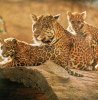
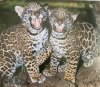
Don't know how interested anyone is, but I found these pictures of a mature jaguar and two cubs in two Melbourne Zoo Guide Book's published in 1980 and 1983 respectively. I'm going to make the assumption that the cubs are the twins born in 1979, Brian and Errol, and that the mature Jag is either Dora or Lunoc. I also previously owned a book containing a great picture of Melbourne Zoo's last melanistic Jaguar, Maya, that passed away in 2008, however I cannot currently locate it. I have many memories of seeing both Maya and Muana as a kid. Also, I think Melborune must have had a Melanistic Jaguar in it's collection prior to the arrival of Maya, as I remember seeing one in the TV show Zoo family that was shot at the Zoo and aired in 1985, two years before Maya was born.

Species of big/small cat also depicted in the guide books include: Sumatran Tiger, Puma, Caracal, Asiatic Golden Cat, Leopard Cat, a Lynx of an unspecified subspecies, Serval, Ocelot, Snow Leopard and of course, Lions. Futhermore, I also recall owning a magazine that had an article on Melbourne's last Clouded Leopard. As a kid I also remember seeing a bobcat, fishing cat and Persian Leopard at Melbourne.

Sorry if I'm repeating any information another member has given.
 

Attachments

  • IMG_3617.jpg
    IMG_3617.jpg
    214.5 KB · Views: 5
  • IMG_3619.jpg
    IMG_3619.jpg
    231 KB · Views: 3
Don't know how interested anyone is, but I found these pictures of a mature jaguar and two cubs in two Melbourne Zoo Guide Book's published in 1980 and 1983 respectively. I'm going to make the assumption that the cubs are the twins born in 1979, Brian and Errol, and that the mature Jag is either Dora or Lunoc. I also previously owned a book containing a great picture of Melbourne Zoo's last melanistic Jaguar, Maya, that passed away in 2008, however I cannot currently locate it. I have many memories of seeing both Maya and Muana as a kid. Also, I think Melborune must have had a Melanistic Jaguar in it's collection prior to the arrival of Maya, as I remember seeing one in the TV show Zoo family that was shot at the Zoo and aired in 1985, two years before Maya was born.

Species of big/small cat also depicted in the guide books include: Sumatran Tiger, Puma, Caracal, Asiatic Golden Cat, Leopard Cat, a Lynx of an unspecified subspecies, Serval, Ocelot, Snow Leopard and of course, Lions. Futhermore, I also recall owning a magazine that had an article on Melbourne's last Clouded Leopard. As a kid I also remember seeing a bobcat, fishing cat and Persian Leopard at Melbourne.

Sorry if I'm repeating any information another member has given.
Thank you for the info and pics Bill any info relating to Big cats would be welcome :)
 
Don't know how interested anyone is, but I found these pictures of a mature jaguar and two cubs in two Melbourne Zoo Guide Book's published in 1980 and 1983 respectively. I'm going to make the assumption that the cubs are the twins born in 1979, Brian and Errol, and that the mature Jag is either Dora or Lunoc. I also previously owned a book containing a great picture of Melbourne Zoo's last melanistic Jaguar, Maya, that passed away in 2008, however I cannot currently locate it. I have many memories of seeing both Maya and Muana as a kid. Also, I think Melborune must have had a Melanistic Jaguar in it's collection prior to the arrival of Maya, as I remember seeing one in the TV show Zoo family that was shot at the Zoo and aired in 1985, two years before Maya was born.

Species of big/small cat also depicted in the guide books include: Sumatran Tiger, Puma, Caracal, Asiatic Golden Cat, Leopard Cat, a Lynx of an unspecified subspecies, Serval, Ocelot, Snow Leopard and of course, Lions. Futhermore, I also recall owning a magazine that had an article on Melbourne's last Clouded Leopard. As a kid I also remember seeing a bobcat, fishing cat and Persian Leopard at Melbourne.

Sorry if I'm repeating any information another member has given.

Wow, what a find! The adult Jaguar is Dora (1970-1988). I compared it to the photo I posted in Post #410 of Dora and her littermate; and the markings on the adult in your photo matches the cub on the right in mine. I’d agree it’s likely the two cubs are her 1979 litter. Her last litter (quadruplets) was born 1981 and only one cub (Jacunda) survived infancy.

Yes, I believe there was a melanistic Jaguar at Melbourne Zoo prior to Maya’s arrival. I found a 1992 Melbourne Zoo guidebook recently that contained a photo of a melanistic-golden pair. While Maya was at the zoo by 1992, I believe the only other Jaguar at the zoo at this time was Errol (a male). They wouldn’t have been housed together.

The melanistic Jaguar must have been an import since Dora, Lunoc and their offspring were golden Jaguar. He/she must have been a mate of Errol/Jacunda.
 
Back
Top