Burgers' Zoo free-ranging species in Burgers Bush, Desert and Mangrove

Saw both the paradise tanagers (which I can confirm are the nominate subspecies) and the bay-headed tanagers today. The paradise tanagers were near the hanging bridge in the Bush near the feeding cage that is hidden at the end of the bridge. They probably hang out there quite a lot as they were likely introduced in the Bush from that cage.

The bay-headed tanager I saw on both occasions in the area in the Mangrove just after crossing the small stream on the small path. There are 2 feeders there that are worth checking out and I also saw one foraging on fruits together with a violaceous euphonia (which were everywhere today). It was a great area for birds anyway today with an indigo bunting, blue ground doves and plenty of crested bobwhites (including 3 chicks).
 
Saw both the paradise tanagers (which I can confirm are the nominate subspecies) and the bay-headed tanagers today. The paradise tanagers were near the hanging bridge in the Bush near the feeding cage that is hidden at the end of the bridge. They probably hang out there quite a lot as they were likely introduced in the Bush from that cage.

The bay-headed tanager I saw on both occasions in the area in the Mangrove just after crossing the small stream on the small path. There are 2 feeders there that are worth checking out and I also saw one foraging on fruits together with a violaceous euphonia (which were everywhere today). It was a great area for birds anyway today with an indigo bunting, blue ground doves and plenty of crested bobwhites (including 3 chicks).

I also saw them both today, in both the same spots ;)
 
Visited the zoo yesterday. Around noon very few birds could be spot in the Bush but around 17.00 h. the birds showed themself much better but had no luck with the Paradise tanagers. Noticed that they are still not on the sign of few-living animals in the Bush. Also the Antilean whistling frogs are not sign. Didn't see this latter species but around 17.00 h. they started to call and a keeper told me that later in the evening the species can be heared everywhere.
In the Mangroves I was lucky to see several Violaceous euphonia's ( among them a female feeding one of her recently fledged chick, 2 Bay-headed tanagers feeding eachother ( pair-bonding ? ) and a nice group of Crested bobwhites.
In the Desert part of the former Thick-horned sheep is now home to a small group of 5 Collared pecaries.
 
Also the Antilean whistling frogs are not signed. Didn't see this latter species, but around 17.00 they started to call and a keeper told me that later in the evening the species can be heard everywhere.

There's a short period of time right before the time changes where the zoo is open during the dark. This is when you can best find the whistling frogs (though they're still practically invisible). This is also when the bats are most visible.

The Bush animals sign hasn't been updated in a little while. As the Chaco Chacalaca is still signed, despite having died a little while back. On the other side of the Bush, near the exit of Ocean, a large group of smaller signs can be found, where the Paradise tanagers and frogs are signed
 
It's probably not news anymore that the Great Curassows were added to the Bush. But seeing the new signage, I think we can say that the Orange-fronted fruit doves are no longer free-roaming
 
@Platypusboy asked for a list of reptiles and amphibians that were kept in the Bush in the 90s. Back then diversity was a lot higher than today. Not all these species were kept simultaneously and this list is most likely not exhaustive:

Surinam toad
Clawed frog
Square-marked toad
White-lipped tree frog
Green tree frog (Hyla cinerea)
Three-lined poison-arrow frog
Rio Madeira poison-arrow frog

Red-footed tortoise
Star tortoise
Asian leaf turtle
Yellow-spotted amazon river turtle

Green iguana
Flying dragon (Draco spec.)
Oriental garden lizard
Plumed basilisk
Rainbow agama

Flat-tailed day gecko
Madagascar giant day gecko
Kuhl's gecko
Tokay
Asian leaf-toed gecko

Martinique anole
Marmorated anole
Emerald skink
Five-lined skink
Jackson's chameleon
Hoehnel's chameleon
 
@Platypusboy asked for a list of reptiles and amphibians that were kept in the Bush in the 90s. Back then diversity was a lot higher than today. Not all these species were kept simultaneously and this list is most likely not exhaustive:

Surinam toad
Clawed frog
Square-marked toad
White-lipped tree frog
Green tree frog (Hyla cinerea)
Three-lined poison-arrow frog
Rio Madeira poison-arrow frog

Red-footed tortoise
Star tortoise
Asian leaf turtle
Yellow-spotted amazon river turtle

Green iguana
Flying dragon (Draco spec.)
Oriental garden lizard
Plumed basilisk
Rainbow agama

Flat-tailed day gecko
Madagascar giant day gecko
Kuhl's gecko
Tokay
Asian leaf-toed gecko

Martinique anole
Marmorated anole
Emerald skink
Five-lined skink
Jackson's chameleon
Hoehnel's chameleon
Wow, the Bush has definitely changed a lot since then. I've always wanted to visit Burger's zoo and especially the Bush but now I wish I could visit it thirty years ago. Finding something small like a reptile or an amphibian in a tropical house always feels more exiting to me than finding a larger bird or mammals, since you have to work so hard for it.
 
After a few years it is time for an update on the free-ranging species again. Since January 2020 the following mutations happened:

Burgers' Bush

I
N:
Great curassow
Vietnam pheasant
White-winged duck
Crested quail dove
Superb fruit dove
American black vulture
Turquoise tanager
Paradise tanager
Violaceous euphonia
Spangled cotinga

OUT:
Chaco chacalaca
Great curassow
Orange-fronted fruit dove
Speckled mousebird
Golden-fronted leafbird
Rose-bellied bunting (?)
White-faced whistling-duck


MAMMALS

1. Rodriquez fruit bat
2. Lyles' fruit bat (unsigned)
3. Seba's short-tailed bat

BIRDS

1. Crested wood partridge
2. Vietnam pheasant

3. White-winged duck

4. Madagascar crested ibis
5. Scarlet ibis

6. Sun bittern

7. Victoria crowned pigeon
8. Green naped pheasant pigeon
9. Pinon imperial pigeon**
10. Green imperial pigeon
11. Luzon bleeding heart pigeon
12. Grey-capped emerald dove
13. Nicobar pigeon
14. Superb fruit dove
15. Crested quail dove

16. American black vulture

17. Wrinkled hornbill

18. Red-crested turaco

19. White-eared catbird*
20. White rumped shama
21. Snowy-crowned robin chat
22. Chestnut-backed ground trush
23. Fairy bluebird

24. Red-rumped cacique*
25. Montserrat trupial

26. Screaming piha**
27. Spangled cotinga

28. Purple honeycreeper
29. Madagascar red fody
30. Brazilian tanager
31. Paradise tanager*
32. Turquoise tanager
33. Violaceous euphonia
34. Chestnut-bellied seedfinch**
35. Red-whiskered bulbul
36. Blue-backed grassquit
37. Rose-bellied bunting** (?)


REPTILES AND AMPHIBIANS

1. Green iguana
2. Guadeloupe anole*
3. Plumed basilisk
4. Common house gecko
5. Montserrat whistling frog


Burgers' Desert

IN:
Montezuma quail
Common ground dove
American goldfinch
Blue-winged teal

OUT:
Scaled quail
Lawrence's siskin
Northern cardinal

BIRDS

1. Turkey vulture

2. Gambells quail*
3. Montezuma quail*

4. Blue-winged teal

5. White-winged dove*
6. Socorro dove
7. Common ground dove

8. Painted bunting*
9. Rose-bellied bunting**
10. Yellow grosbeak**
11. Ultramarine grosbeak
12. American goldfinch**
13. Housefinch

Burgers' Mangrove

IN:
Crested bobwhite
Blue ground dove
Bay-headed tanager

OUT:
Northern cardinal

BIRDS:

1. Crested bobwhite*

2. White-winged dove*
3. Blue ground dove

4. Red-legged honeycreeper
5. Blue-backed grassquit
6. Indigo bunting*
7. Violaceous euphonia
8. Bay-headed tanager*

REPTILES:

1. Striped basilisk
2. Allison's anole
3. White-throated gecko

** Only European zoo with this species
* Species kept in 5 European zoos or less

So that makes for a combined 54 bird species (of which 3-4 kept in multiple halls), 7 reptiles, 1 amphibian and 3 mammal species that are free-ranging
 
Seeing Lintworm's recent update I decided now would be the perfect time to update my old "maps" of where to find the free-roamers. I, myself, won't be able to visit Burgers' Zoo for the next few weeks, so I won't be able to make these maps with my own observations.

That's why I'm making this post! I've subdivided the ecodomes into subsections so we can cross off which species we've seen and where. I'm hoping to make a public excel document on which people can fill these things in, anyone willing to participate feel free to send me a PM and hopefully I can figure out how to share an excel document before I get the first message :confused:

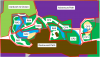
Desert regions:
Burgers' Desert.png

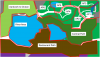
Mangrove regions:
Burgers' Mangrove.png

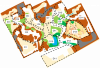
Because of the sheer size of the Bush I've subdivided it into five "routes":
- Adventure Path (AP)
- Aardvark to Ocean (AO)
- River Area (RA)
- Restaurant Path (RP)
- Central Path (CP)

Bush regions:
Burgers' Bush 1.png Burgers' Bush 2.png Burgers' Bush 3.png
 

Attachments

  • Burgers' Desert.png
    Burgers' Desert.png
    498.7 KB · Views: 57
  • Burgers' Mangrove.png
    Burgers' Mangrove.png
    523.4 KB · Views: 54
  • Burgers' Bush 1.png
    Burgers' Bush 1.png
    165.1 KB · Views: 193
  • Burgers' Bush 2.png
    Burgers' Bush 2.png
    185.4 KB · Views: 55
  • Burgers' Bush 3.png
    Burgers' Bush 3.png
    184.5 KB · Views: 53
Anyone willing to participate feel free to send me a PM and hopefully I can figure out how to share an excel document before I get the first message :confused:

The file is now ready to share. I am keeping it to to people who send PM's though, as posting it here would mean anyone could edit it. This way the data should hopefully be more accurate
 
Which (rare) birds were formerly kept in the Bush or the Desert?

That is a short question with a very long answer. I have started compiling a list with which species where kept in these halls at what point, but it is far from finished. But my guesstimate is that there are at least 60-70 bird species that were kept there at some point, but not now anymore.

Some of the more recent rarer birds that have now disappeared are African darter, golden-fronted leafbird, black-capped babbler and Timor sparrow for the Bush and Lawrence siskin and scaled quail for the Desert. In the past species like paradise flycatchers, hummingbirds, vermillion flycatchers, pyrrhuloxia and short-billed minivets have also been kept
 
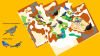
From my last few visits to Burgers' Zoo I managed to remake my observation page for the Bush.
#.png

In general, I've noticed a lot of birds are a lot less visible than they were a few years ago.

The amount of birds I put in the "rarely seen" category has grown a lot, and the amount of birds in the "Common everywhere" has shrunk. A lot of birds can no longer (reliably) be found in their regular spots. Either I've been very unlucky lately or the Bush could really use some extra stocking.

If anyone has any additional observations or spotting tips, that'd be appreciated, as I'm planning on updating my Dutch Zoo Guides for Burgers' Zoo, as the update is really necessary.

Observation maps for Desert and Mangrove:
#.png

#.png
 

Attachments

  • #.png
    #.png
    488.5 KB · Views: 147
  • #.png
    #.png
    482.2 KB · Views: 151
  • #.png
    #.png
    633 KB · Views: 145
Last edited:
Emarald doves and pheasant-pigeons have become 'rarely seen'? They used to be everywhere! The bleeding-heart, turaco and crested ibis also never gave me much trouble.

I did notice the Madagascar fody being incredibly hard to find during my latest visit, despite them being super common in the years before that. I think I remember reading something about a lot of them being removed from the bush because they were hybridizing with house sparrows?
 
Emarald doves and pheasant-pigeons have become 'rarely seen'? They used to be everywhere! The bleeding-heart, turaco and crested ibis also never gave me much trouble.

I did notice the Madagascar fody being incredibly hard to find during my latest visit, despite them being super common in the years before that. I think I remember reading something about a lot of them being removed from the bush because they were hybridizing with house sparrows?

Exactly! Compare this to my observation card from 2 years back:

View attachment 575561
 
Emarald doves and pheasant-pigeons have become 'rarely seen'? They used to be everywhere! The bleeding-heart, turaco and crested ibis also never gave me much trouble.

I did notice the Madagascar fody being incredibly hard to find during my latest visit, despite them being super common in the years before that. I think I remember reading something about a lot of them being removed from the bush because they were hybridizing with house sparrows?

Emerald doves are still everywhere in my expetience, the pheasant doves are also quite commonly seen. Bleeding-hearts are also still around in good numbers and quite easy to find. The turaco and crested ibis are around in smaller numbers, but still more easily seen then e.g. some of the tanagers or the cotinga.

The fody are a male only group (all house sparrows seem removed), they bred far too fast.... They are still easily seen, especially when they are in breeding plumage. There are usually some around the rice paddy.

Pinon imperial pigeons and euphonia are also easy when you know where to look.
 
Quite a lot has changed since September, so here is an updated list of the free-ranging species in the 3 ecodisplays:

Burgers' Bush

IN
Variable sunbird*
Scissor-billed starling


OUT
White-eared catbird**
Wrinkled hornbill


MAMMALS

1. Rodriquez fruit bat
2. Lyles' fruit bat (unsigned)
3. Seba's short-tailed bat

BIRDS

1. Crested wood partridge
2. Vietnam pheasant

3. White-winged duck

4. Madagascar crested ibis
5. Scarlet ibis

6. Sun bittern

7. Victoria crowned pigeon
8. Green naped pheasant pigeon
9. Pinon imperial pigeon**
10. Green imperial pigeon
11. Luzon bleeding heart pigeon
12. Grey-capped emerald dove
13. Nicobar pigeon
14. Superb fruit dove
15. Crested quail dove

16. American black vulture

17. Red-crested turaco

18. White rumped shama
19. Snowy-crowned robin chat
20. Chestnut-backed ground trush
21. Fairy bluebird
22. Scissor-billed starling

23. Red-rumped cacique*
24. Montserrat oriole

25. Screaming piha**
26. Spangled cotinga

27. Purple honeycreeper
28. Variable sunbird*
29. Madagascar red fody
30. Brazilian tanager
31. Paradise tanager*
32. Turquoise tanager
33. Violaceous euphonia
34. Chestnut-bellied seedfinch*
35. Red-whiskered bulbul
36. Blue-backed grassquit
37. Rose-bellied bunting**


REPTILES AND AMPHIBIANS

1. Green iguana
2. Guadeloupe anole*
3. Plumed basilisk
4. Common house gecko
5. Montserrat whistling frog


Burgers' Desert

IN:
Grey cardinal**
Black-breasted grosbeak*

OUT:
Mexican housefinch (still in a side aviary)

BIRDS

1. Turkey vulture

2. Gambells quail*
3. Montezuma quail*

4. Blue-winged teal

5. White-winged dove*
6. Socorro dove
7. Common ground dove

8. Painted bunting*
9. Rose-bellied bunting**
10. Yellow grosbeak**
11. Ultramarine grosbeak
12. American goldfinch**
13. Grey cardinal**
14. Black-breasted grosbeak*

Burgers' Mangrove

IN:
Ruddy-breasted seedeater

OUT:
-

BIRDS:

1. Crested bobwhite*

2. White-winged dove*
3. Blue ground dove

4. Red-legged honeycreeper
5. Blue-backed grassquit
6. Indigo bunting*
7. Ruddy-breasted seedeater*
8. Violaceous euphonia
9. Bay-headed tanager*

REPTILES:

1. Striped basilisk
2. Allison's anole
3. White-throated gecko

** Only European zoo with this species
* Species kept in 5 European zoos or less

Which means there are now 56 free-flying bird species, of which 6 are only kept in Burgers' Zoo and another 12 in a maximum of 5 European collections.
 
Back
Top