Each of the exhibit areas evolved differently.
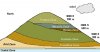
For the Galapagos, its flora and fauna are distributed among several fairly well-defined climate zones (see attachment). I wanted to try to recreate the sensation of visiting the islands and physically moving from zone to zone, which is how I came up with the basic design for the ramp that takes the visitor up while passing through the various zones just as if you were climbing the hill or mountain on one of the islands themselves. It's actually my favorite of all the designs with which I've come up so far.
For the TSA, I knew that the overall area was going to have sort of a crescent shape to fit up against the concourses that define the northwest side of the Antarctic bioregion, so that began to dictate how to arrange the various parts. I actually designed each of the parts separately, then played around with various arrangements of them until I got a good fit for all of them. The exhibits for the large mammals and birds of prey ended up being the last designed so they would fit into the spot where you see them. I put the flamingos at one of the main entrances to the area because they make such a dramatic exhibit--I wanted to use them to send a message--come see Temperate South America! This is an area not well known to those who don't live there, and I wanted to make it attractive to pique people's interest in seeing the rest of it. It was something of a challenge including all the various species of tuco-tucos and lizards since there are so many which don't vary much from each other, so I tried to provide arrangements based on microhabitats to provide some learning experience, hence also the division into lowlands and highlands to try to help you see the variety of landscapes in the dryer areas of the Southern Cone. My favorite parts of TSA are the aquarium, centered on penguins of course, with a fantastic array of birds, and the Austral Forests, which I found fascinating to learn about and, if you start with the Austral Forests and then go to to the Matorral exhibits, the idea is to take you on a trip as if you were walking from the southern tip of Chile north until you reach the southern edge of the Atacama Desert.
The tundra areas both began with the yards for the various subspecies of caribou/reindeer (and Snow Sheep for the Palearctic Tundra), which need the most area, and everything else was fit in around them including an effort to show predator-prey relationships with wolves and wolverines. There's only one subspecies of wolf to work with in each area, so I designed the wolf exhibits each to be visible from several of the ruminant exhibits, which has the added benefit of giving the wolves that much more room to roam. I knew I wanted a real "mountain" for the Snow Sheep, and that led to the idea of using the space underneath for interior exhibits and other facilities.
As you can see from several of the exhibit areas, I like to use a big (usually multi-species) bird exhibit at a main entrance because birds are usually diurnal, active, often noisy and usually brightly colored, so they make for a great invitation to come into the area to see more.
As for Madagascar, I'm still waiting for inspiration to strike me, hehe. There will probably be at least some exhibits to show the unique fauna combinations of a number of the national parks and reserves, modeled to some extent on the Masoala exhibit at the Zuerich Zoo.
I do have one idea for a large "Madagascar at Night" exhibit to show the many species of native bats (with both caves and forest areas, since some are cave roosters and others are tree roosters), probably combined with a few of the nocturnal lemur species, through which the visitors would walk in tunnels with bats flying in front of you and over you (sort of a nocturnal mammal version of the aquarium exhibits in which you walk through a tunnel with fish swimming next to and over you), with smaller exhibits in the same building for tenrecs.