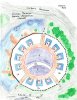
Galápagos Building Visitor Experience
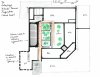
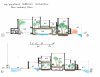
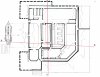
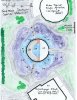
(Attached are a complete set of the building drawings and the visitor experience version with pictures of the animals and plants.)
You enter the zoo from the Galápagos South entrance. There are the sounds of sea lions and fur seals barking along with the smell of salt water in the air from the dolphin complex in the near distance. But what catches your attention is looming In front of you: a full scale replica of the H.M.S. Beagle, complete with a main mast that rises roughly thirty meters/one hundred feet above the deck. The Beagle, of course, was the ship that brought Charles Darwin to the Galápagos Islands, a trip that played a key role in revealing the facts of evolution. (Here, however, the ship flies the flag of Ecuador, the nation that is home to the Galápagos.)
You climb a set of ramps to the deck, and you look out at a scene much like that Darwin must have seen when he first arrived there: salt water waves lapping on the shores of a set of volcanic mountains, towering above the surrounding water. On the left, the shore is rocky, and a set of Galápagos Fur Seals shares the rocks with Flightless Cormorants and Marine Iguanas. On the right, the shore is sandy, and a family of Galápagos Sea Lions is sun bathing.
You can even descend below the deck to view a replica of the cabin that Darwin shared while on his epic voyage. (A picture of a recreation of the cabin can be seen here:
The Beagle Project Blog: The 21st Century Naturalist (Or What the HMS Beagle Project Means to Me).)
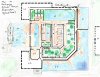
You go back down the ramps and stroll along the length of the Beagle, admiring the authenticity. You continue along the fur seals’ pool. It is summer, and the seals are napping in the shade from the rocks, while the cormorants and iguanas move in and out of the cooling water, alternating with sun bathing. You enter the building: The Galápagos: Darwin’s Inspiration. The rocky shore continues to the right on the other side of the doors, but behind the glass are Galápagos Penguins along with more Marine Iguanas, some Flightless Cormorants and Española Lava Lizards (with their very different coloration by sex). (If it were winter, the iguanas and cormorants would all be inside.) The water level is raised about a half meter above the floor so you can watch the penguins and iguanas forage in their cooled salt water pool. A pair of Lava Herons perch high on the rocks, surveying the activity below.
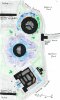
As the exhibit extends, the rocks become sand. If you were to follow the exhibit around, you would exit again and realize that the sand continues on the other side of the wall in the sea lion exhibit. You look up and realize that what looks like oval volcano cones from the outside of the building are actually skylights for the exhibits. (A sign explains that, while the skylights let in natural light, a system of shades and artificial lights are used to keep the exhibits on the same light cycle as the animals would experience if they were still on the islands in nature. In addition, in each of the exhibits, the HVAC system and rain- and mist-making machines maintain a Galápagos climate cycle, calibrated to each habitat zone’s altitude.)
You turn around, and go through an arch opposite the penguin exhibit to learn about the Galápagos’s “little brothers/sisters” and their endemic animals: Cocos Island; Clipperton Island; and the Revillagigedo Islands, Mexico’s “mini-Galápagos”, including Socorro and Clarión Islands. There are one large aviary, three smaller ones, and a set of reptile exhibits. The last displays Townsend’s Anole and the Pacific Least Gecko [no picture] from Cocos Island; the Clipperton Lizard, a skink; the Socorro Blue or Soccoro Island Tree Lizard; the Clarión Island Whipsnake [no picture];Clarión Nightsnake; and the Clarión Island Tree Lizard.
The large aviary contains the endemic land avian fauna of Socorro (it has no native mammals or amphibians), the largest of the Revillagigedo Islands: the Socorro Parakeet ; the Socorro Yellow-crowned Night Heron; the Socorro Common Ground Dove [no picture]; the Socorro Mockingbird; the Socorro Tropical Parula; the Socorro Towhee [no picture]; the Socorro Wren; and the Socorro Dove.
Next to the large aviary is a smaller aviary with the endemic birds of Clarión Island; the Clarión Mourning Dove and the Clarión Wren [no pcitures]. The second of the smaller aviaries displays the Clarión Burrowing Owl, and the Cocos Island aviary displays the Cocos Cuckoo, the Cocos Flycatcher, and the Cocos Finch, closely enough related to Darwin’s Finches to be considered part of the group.
As you leave this group of exhibits, a sign lets you know not to miss the sea birds, fish and invertebrates from these islands displayed at the Eastern Tropical Pacific Aquarium.
Marveling at learning of a set of islands and unique, evolutionarily significant faunas of which you had never heard, you stroll along the penguin exhibit and, at the other end opposite the mini-Galápagos hall, just past the exit out to the sea lions, you enter a small theater, where you can experience a multi-media introduction to Charles Darwin, his Galápagos visit, and how it helped him explain evolution to the world—now a well-proven theory, not a hypothesis as some would try to claim.
The presentation over, you exit, turn right and follow the visitor flow through a set of double doors leading you to Galápagos by Night. After giving your eyes a moment to adjust to the dim light simulating moonlight, you are staring through an aviary’s glass wall into the eyes of a Galápagos Barn Owl, whose mate is softly hooting from another perch. Breaking your gaze, you turn around. Along your left is a comprehensive collection of the six species of geckos endemic to the archipelago and the four species of rice rats that are the islands’ total rodent fauna, indeed, the only native mammal fauna besides the fur seals, sea lions and bats that are on the other side of the walkway. The geckos and rice rats are arranged by islands, the Large Fernandina, Small Fernandina and Santiago Rice Rats each with Galápagos Leaf-toed Geckos in each exhibit) as cage mates, and the Santa Fé Leaf-toed Geckos paired with the Santa Fé Rice Rats, while the Baur’s, Gilbert’s and San Cristóbal Leaf-toed Geckos are each on their own, the introduced Norway Rat having wiped out the other kinds of rice rats.
[Santa Fe and Gilbert’s Leaf-toed Geckos can be seen here:
]Visual Escapes Images Photo Keywords: gecko
Along your right is another aviary, a large pool with volcanic rocks on the right and mangroves on the left. The rocks provide the home for a small colony of Swallow-tailed Gulls, the only nocturnal gull in the world. The mangroves are the nesting place for a small colony of Yellow-crowned Night Herons, and flitting about throughout the exhibit are a dozen each of Hoary Bats and Galápagos Red Bats. A sign explains that the exhibit, like the others, is kept on the same equatorial light cycle as the Galápagos Islands, although night and day are reversed so that the animals of the Galápagos night are active for the visitors by day.
Through another set of double doors and you are back in daylight, in a large, open exhibit landscaped as a Mangrove Lagoon. (For those wishing to avoid an exhibit with bats, you can enter the Mangrove Lagoon directly from the penguin exhibit walkway.) Like the penguin exhibit, the lagoon water level is raised, and you have a view of a pair of Galápagos Green Sea Turtles swimming in the brackish water. You learn that they earned their name not from their outer color but because their algae-rich diet turns their body fat green.
A flock of American Flamingos, a pair of Lava Herons and another of Common Gallinules are wading as they will while White-cheeked Pintails swim by. Small birds vocalize and fly; the signs explain that they are Galápagos Martins, San Cristóbal Mockingbirds, Yellow Warblers, Dark-billed Cuckoos and the rare and endangered Mangrove Finch, introducing the first of Darwin’s finches on your tour.
You turn and head down a ramp lined on each side with museum exhibits explaining the geology of the Galápagos and their relationship with ocean currents, including the impact of El Niño and La Niña. Building on these, the next exhibit shows how dispersal populated the islands with the animals you are seeing and then how humans have wiped out so many of the forms that nature created, along with those that remain vulnerable, threatened or endangered.
At the bottom of the ramp, you start through a series of terrarium exhibits that contain the Galápagos’s five native snakes (a pair each of the Galápagos Racer, the Galápagos Snake, the Hood Island Snake, the Banded Galápagos or Slevin’s Snake, and the Striped Galápagos or Steindachner’s Snake) and eight kinds of lava lizards (a pair each of the Galápagos, San Cristóbal, Pinzón, Floreana, Marchena, Santa Cruz, Santiago and Española Lava Lizards), showing the marked differences in coloration between male and female of each species (the usually more brightly colored females are pictured first here).
[Hood Island Snake can be seen here:
]Galapagos Snakes - Visual Escapes Images
The next set of exhibits show a selection of the island’s endemic terrestrial invertebrate fauna, such as beetles, ants, bees, wasps, grass insects (the Painted Locust, a pale brown mantis, grasshoppers, katydids and crickets), butterflies and moths, scorpions, spiders, crabs and an endemic centipede that can reach thirty centimeters/one foot in length.
A ramp at the end of these exhibits leads you back up into the Mangrove Lagoon.
The next exhibit continues your introduction to Darwin’s Finches, a smaller aviary showing the relatively unique fauna of Darwin and Wolf Islands, including the Pink Land Iguana, the Galápagos Mockingbird, the Large Cactus Finch, the Green Warbler Finch and the unusual Vampire Finch, whose diet includes the blood of much larger sea birds. Gilbert’s Leaf-toed Gecko is part of the same small islands’ fauna, but would pose a threat to any nesting birds and is nocturnal.
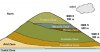
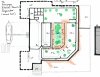
A sign explains that you will now be taking a journey through the six different land habitats of the Galápagos, from the lowlands to the highlands, traveling up through the building as if you were climbing through the different altitudes of the islands themselves, although for every twenty-five meters you would climb in nature, you will be going up only a foot here.
The first of these exhibits is another large, open skylit aviary, showing you the Arid Lowlands of the Galápagos. There are assortments of drought-tolerant evergreens, such as Manzanillo and Palo Santo (or Incense) trees and the Chala tree, and of cactuses (Prickly Pear, Lava and Candelabra). Matplant appears in patches, and the Passionflower and Lava Morning Glory vines creep over the dark volcanic soil and the trees.
You take the time to find the many small land birds that produce near ubiquitous movement in among the plants: the Small Cactus Finch; the Large and Medium Ground Finches; the Woodpecker Finch; the Gray Warbler Finch; the Vegetarian Finch; the Yellow Warbler; the Floreana Mockingbird; the Galapagos and Vermilion Flycatchers; the Dark-billed Cuckoo; and the Galápagos Dove. The last, as is true of many doves, can sometimes be found on the ground, a level shared with the Santa Fé Land Iguana and a much larger and heavier cousin, the Galápagos Giant Tortoise. In this exhibit you meet one of the saddle-backed subspecies, a shell shape adapted for the arid conditions of this habitat, enabling the tortoises to extend their foraging reach in the effort to survive in landscape not so well endowed with forage. There is a low fence dividing the exhibit in half, and a sign explains that the two male and two female tortoises are kept in single sex groups except in the breeding season, similar to their association habits in the wild.
You look to the right and realize that, behind netting, are two of the islands’ leading predators with a view of the prey in the aviary with you: a pair each of the Galápagos Hawk and the Galápagos Short-eared Owl, which, unlike the cousin you already saw, is often diurnal. You walk a little farther, and you have a direct view into their aviary.
You keep going, and you enter the Transition Zone, another open and skylit aviary. In the islands, rainfall is higher and the soils are deeper here than in the lowlands. The landscaping consists of trees typical of this zone, the Pega Pega, Guayabillo and Matazarno trees, laden with epiphytes (lichens).
Your climb starts here, as a series of ramps around the outside of the aviary take you up a total of twelve and a half feet, almost four meters. In the trees are a group of Española Mockingbirds, the Galápagos and Vermilion Flycatchers and the Medium Tree, Small Tree, Medium Ground, Small Ground, Woodpecker and Vegetarian Finches. On the ground are the Galápagos Land Iguana and another set of Giant Tortoises, this time a subspecies with the shell shape intermediate between the saddleback of the arid lowlands and the dome of the humid highlands.
The walkway takes you back into the Arid Lowlands, where you now have a view of the trees from one story up. The birds here, as is the case in the Galápagos, have little fear of humans and, unlike in similar aviaries, do not particularly avoid the visitor space. They perch on the railing and eye you as you saunter by.
The walkway continues on into the Mangrove Lagoon, and you have a view of that exhibit’s second story as well as the upper level of the Darwin and Wolf Islands aviary, and then you enter the Scalesia Zone. The reptile and invertebrate area was sunken to provide extra space for the soil in this exhibit, and the skylight is high above you to provide plenty of room for the sizeable trees that take advantage of the higher humidity and rainfall as you ascend the slopes of the archipelago’s volcanos. This is a cloud forest, and machines provide occasional mists to keep the humidity high, dominated by several species of the Scalesia tree, whose trunks and branches are covered with a variety of epiphytes: mosses; liverworts; orchids; Peperomia; and bromeliads. The understory is heavy with ferns and lycopods, and there is the flowering Pisonia as well.
Here is a domed subspecies of the Giant Tortoise; there is no need for a long reach in a forest this lush. White-cheeked Pintails swim in the pond from which the tortoises drink. The trees house a variegated assemblage of small land birds: the Large, Medium and Small Tree Finches; the Small Ground, Sharp-beaked Ground, Woodpecker and Green Warbler Finches; the Galápagos Dove; the Galápagos and Vermilion Flycatchers; the Yellow Warbler; and the Galápagos Martin. As with the Transition Zone, a walkway ramps up as it guides you around the outside of the exhibit, and by the end you are eight meters/twenty-five feet above the level of the Arid Lowlands.
You exit the Scalesia forest onto a balcony with third-story view of the Mangrove Lagoon, you go around a corner and enter the last of the skylit areas. You are now standing on the roof of the nocturnal exhibits, and the ramps continue to take you up to view the last three habitat zones. The first of these is the Brown Zone, so called because that is the color the epiphytes turn during the dry season.
Vegetation is scrubbier here, an open forest dominated by shrubs/short trees such as Lime Prickly-Ash or Cat’s Claw, White-haired Tournefortia, and Acnistus ellipticus. In those trees live the Woodpecker Finch, the Large and Small Tree Finches, and the Galapagos Martin.
Next, as you ascend again, comes the Miconia Zone, named for its dominant plant, a purple-flowered shrub with larger, leathery, veined leaves that can grow to four meters tall.
It provides shelter for the Woodpecker and Large Tree Finches and a pair of Paint-billed Crakes, and the fresh water pond is home to Common Gallinules and White-cheeked Pintails. The zone is so wet that few other landbirds live there.
The same is true for the last zone on your visit, the Pampa Zone. It is the highest and wettest zone, dominated by grasses, sedges, ferns and mosses, and the aviary belongs to the endemic Galápagos Rail.
As you leave the Pampa Zone, you exit the building and you are over thirty-two feet, or about ten meters above the ground. A series of ramps leads you down, and you realize you are descending along one side of a large outdoor aviary. Signs explain that it displays colonies of the sea birds of the Galápagos: the Blue-footed, Red-footed and Nazca Boobies; the Brown Noddy; the Galápagos Shearwater; the Red-billed Tropicbird; the Galápagos and Wedge-rumped Petrels; and Elliot’s/White-vented Storm Petrel. As you descend, you have a nice view directly onto the nest bearing cliffs in the exhibit, watching the birds court, squabble, rest, take off, land, and, if you’re lucky, feed chicks.
You stroll along the full length of the outdoor aviary, and there is a second, smaller, housing a pair of Lava Gulls, the rarest gull in the world. You are sharing your view of the aviaries with the diners at the Galápagos Café across the walkway.