Hello, dear followers of Grand Zoo Parc de Dion…
Finally! Here it is… the moment you’ve been all been waiting for! The summer is over, and we (Mr. Gharial and I) already got a several worlds ready to present.
Here’s part 2 of ‘Wonders of Europe’, the Hunter’s Forest. The next European section of animals can’t wait to meet all of you! Enjoy!
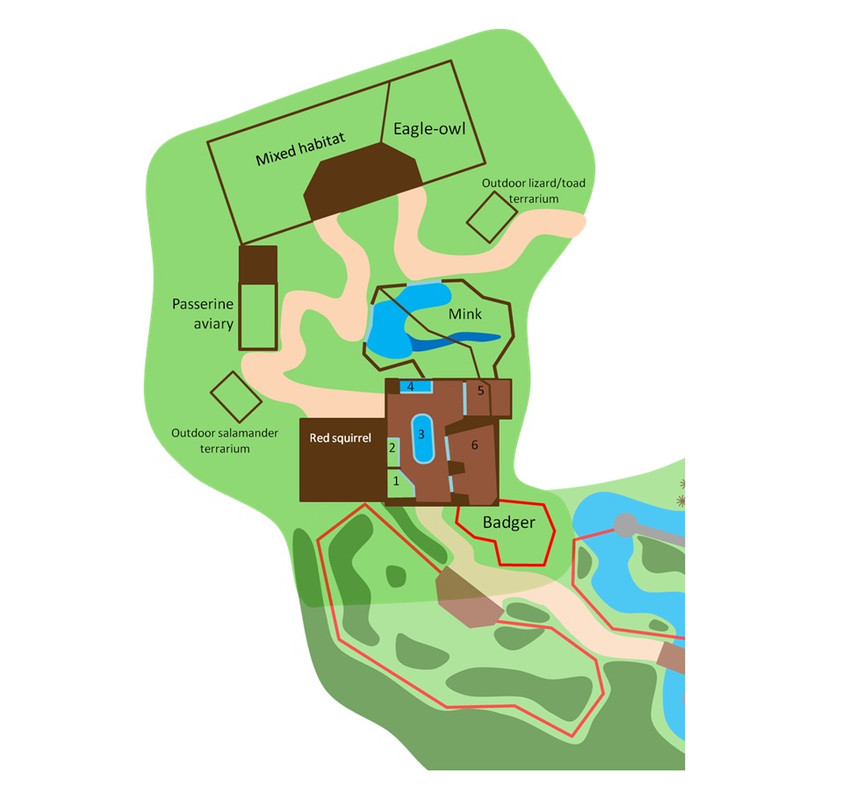
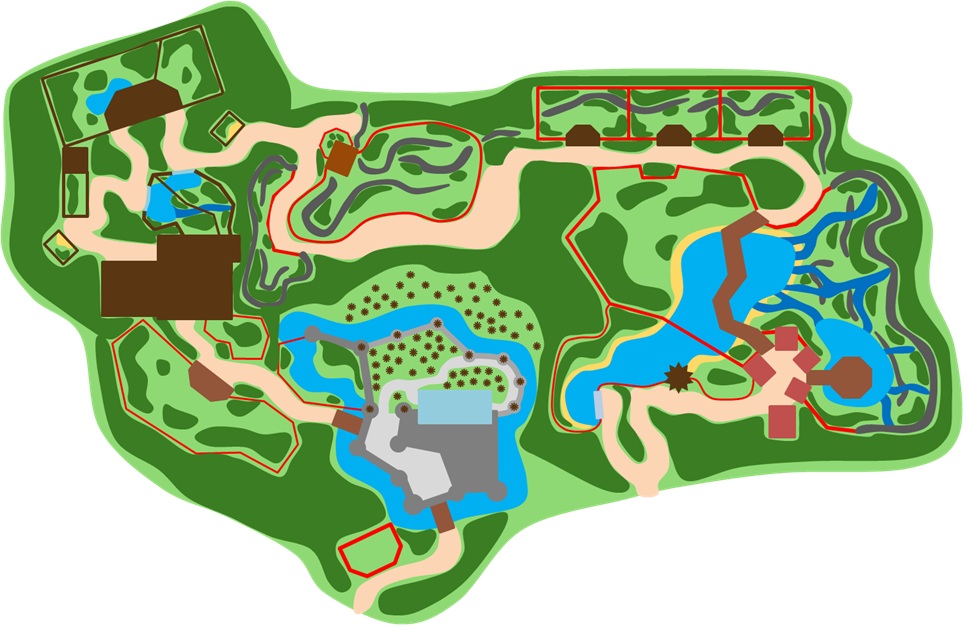
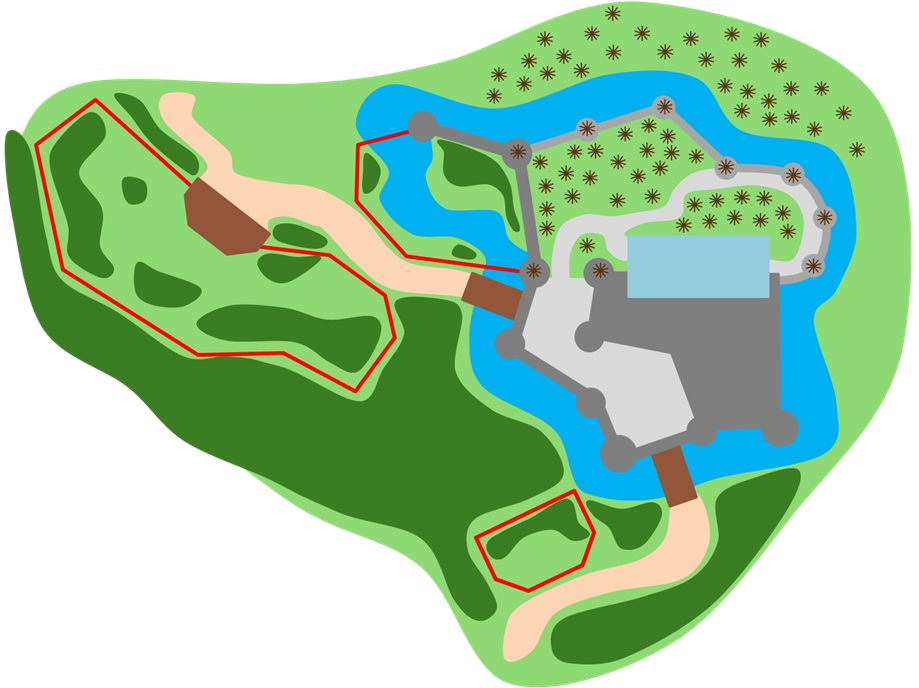
First I'll show you the standard version.
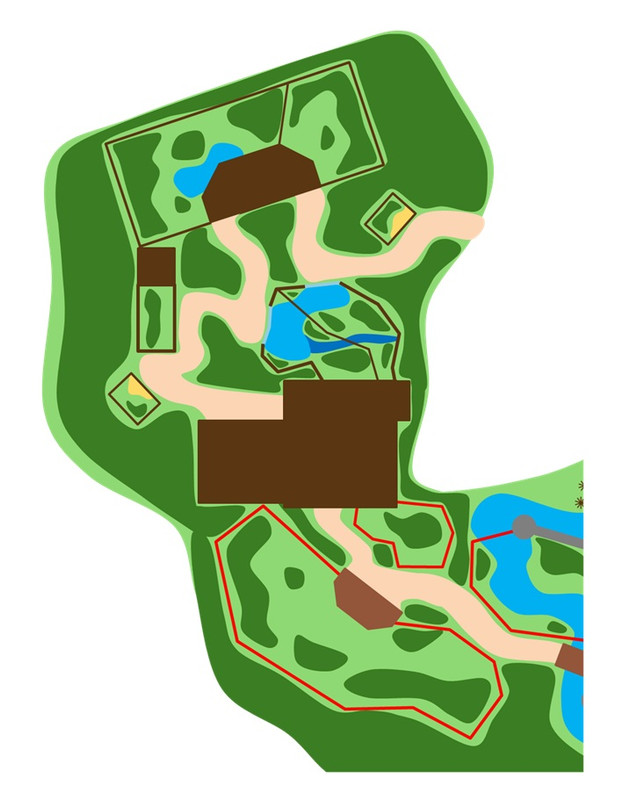
Here is the decorated version.
Last time we ended on our trip through ‘Wonders of Europe’, we had the enclosure of the wild boars. If we follow the path a little bit further we encounter a hut. A ‘chalet’ like we call it at the Ardennes Forest (a region of forests, rough terrain and hills in Belgium, Luxemburg, France). And this house is home to Roger the hunter, or in French: Roger le chasseur. The house is decorated with antlers, pelt, animal skulls, ... There are also hanging some guns (a shotgun and a nightvision scope for example, ...) and other hunting tools at the wall, like bear traps and rabbit cages for education.
The house of the hunter is home to several species of animals. Some of them also have an outdoor space. To start, if you look go from the wild boars to the other side of the path, here is the
European badger. Grand Zoo Parc de Dion has two female badgers living in an outdoor exhibit, with the option to go in their inner shed inside the house.
Next is another special carnivoran mammal, that is also found a lot at the water’s edge. It’s the
European mink. European mink are critically endangered now and in Dion we are also supporting the breeding program of EAZA, so we have a couple. In the mink’s moat there are also some fish, which also provides some extra life in the water. We got a group of
European bitterlings.
If we enter the house, the atsmophere of the Ardennes is taking over. If we look to the right we can ser the indoor enclosure of the badgers after a glass barrier. There are two viewing points to see this carnivoran mammal inside.
Left to the badgers’s indoor box, there’s a middle sized aquarium. It’s time to meet the
European crayfish and
ninespine sticklebacks. For the crayfish we have a couple. In case of the sticklebacks we have 0.0.10 fish.
Go more to the left and to the beginning of the house to follow the row of the left indoor habitats and you’ll see the first terrarium in the hunter’s house. It’s the one that houses
sand lizards (1.1) and
natterjack toads (1.1). A good thing to know is during the spring and summer season these animals have an outside living space in a terrarium.
Just next to the sand lizards and natterjack toads, there’s a terrarium for a group of 4.4
banded fire salamanders. Just like the lizards and toads, we can bring our salamanders to an outside terrarium.
Next on our list, we have the indoor living space of the
European red squirrel. We have 1.1 of these cute, arboreal animals. The squirrels got both a outdoor cage and a inner shed. So when you leave the house, it is possible to see them in a well planted aviary.
After seeing the red squirrels, if we go to the right again, we got a little tank for
great diving beetles (1.1). These predatory, aquatic beetles are certainly a nice addition for the chalet.
Last but not least in the hunter’s house, we have on of the inner sheds of the critically endangered
European mink (1.1). Later on, we will see their outdoor enclosure, which is a really nice one. When they are inside, you can see the mink after a glass barrier. The animal that can be seen inside by the visitors, is the male mink.
Now it’s time we leave the house and go looking for the next animals in this European forest. If you follow the route there is the aviary of the European red squirrels as mentioned before.
Next up, following the route, you see the outdoor terrarium of the banded fire salamanders. Like mentionned the animals are only present outside during the warmer periods of the year. Otherwise, you can just see them in their original exhibit in the hunter’s house.
If we go on with the path, we have a medium sized aviary for the
northern bullfinch (1.1) and the
European quail (1.3). The aviary of these two bird species is well plantedso, so they can hide and nest if they want to.
After encountering the second birds aviary at Dion we have seen, we encounter the exhibit of the male European mink. Later on it is also possible to see the female mink. The two enclosures can be made into one for breeding purposes. In the water you can see
European bitterlings for some extra life in the water, where they love to take a swim (and maybe like to snatch a little fish snack?)..
Next, we see two bigger aviaries. The first one, the biggest one of the two, is a mixed woods aviary with two species of birds of prey and two species of owls. We got the
long-eared owl, the
western barn owl, the
common black kite and the
European kestrel - all 1.1. On the ground lives a couple of
western capercaillie. The second aviary, which also is pretty spacious, is inhabited with a couple of the
Eurasian eagle owl, one of the biggest owl species in the world. The aviary is provided with a lot of green (trees, shrubs, grass, …) and also with a shelter hut for the owls.
Two exhibits to go... After seeing the raptors and birds, we take a look into the female European mink exhibit, which doesn't look to different from the male's exhibit. Both living areas give a swamp impression. Just like in the first mink exhibit, you can see the European bitterlings too.
And last but not least, the outdoor terrarium for the sand lizards and natterjack toads. Is it the right season? Then you can see the animals. Is it not? Make sure you have seen them at the hunter's house. And with that, we made a nice trip through the forest.
Looks like we’re through section 2 of the ‘Wonders of Europe’ theme. I hope you enjoyed this part of Grand Zoo Parc de Dion. Here’s an overview of the animals we saw again.
Mammals:
European red squirrel (Sciurus vulgaris)
European badger (Meles meles meles)
European mink (Mustela lutreola)
Birds:
Northern bullfinch (Pyrrhula pyrrhula pyrrhula)
European quail (Coturnix coturnix)
Long-eared owl (Asio otus)
Western barn owl (Tyto alba)
Common black kite (Milvus migrans migrans)
European kestrel (Falco tinnunculus)
Western capercaillie caillie (Tetrao urugallus)
Eurasian eagle-owl (Bubo bubo)
Reptiles:
Sand lizard (Lacerta agilis)
Amphibians:
Natterjack toad (Epidalea calamita)
Banded fire salamander (Salamandra salamandra terrestris)
Fish:
Ninespine stickleback (Pungitius pungitius)
European bitterling (Rhodeus amarus)
Invertebrates:
European crayfish (Astacus astacus)
Great diving beetle (Dysticus marginalis)
Next up will be section 3 of ‘Wonders of Europe’, the Alpine.
P.S. I'll also post some inspiration images later this weekend. And so will Mr. Gharial, also with the species list picture, like he has done with section 1.



 )
)