Henry Vilas Zoo Henry Vilas Zoo News 2024

The construction of the new giraffe exhibit extends right to the side of the current giraffe building. Though the camels would need to be close to a construction area, their exhibit should not be affected for quite some time. The 2nd or 3rd phase of Heart of the Zoo master plan documents show that camel space becoming a rhino exhibit and building. That could easily be 5-6+ years before impacting the camels. What other animals are being acquired for spaces that are under construction? This camel has been managed alone for a couple of years so I am personally glad to see that they have gotten a companion for this herd animal.
 
I talked to someone very knowledgeable about the hiring and termination policies of the City of Madison and Dane County. They have no direct knowledge of or involvement with the zoo but said that agency directors are high ranking enough to usually be fired terminated without cause. This next piece is my own deduction, but it would seem that the very controversial Director of the Vilas Zoo, who I won't name here, is likely being protected by somebody very high up in the county government.
 
Almost one year after my last tour of Henry Vilas, I returned a few days ago. I don't have a whole lot to share, but here's a few notable highlights:

*Nothing seems to have been done yet to neither the penguin nor giraffe areas, although I only saw the former from a distance so can't 100% confirm.

*Since when did the Zoo get guineafowl and wild turkey? I'll be honest that I don't remember ever seeing any signage for them until this last visit. The signs for them were up, but the birds themselves were nowhere to be seen with a Bactrian camel (presumably the new one) in their place.

*Next to the Rainforest Aviary, a sensory garden and a trio of small connected cages have been added for the Zoo's macaws; the garden looks to be completed, but the cages seem to still be getting work done on them. It would've been nice to have a larger, more naturalistic enclosure, maybe even with space for some other larger tropical species, but at least the birds can have fresh air now. Inside, however, the macaws' space has been extended. They used to have just the cliff area, but now there's a vine that goes over the guests towards one of the trees just before exiting. I found this to be a decent improvement and a good immersive touch. :)

*No sign of the greater galagos unfortunately; they occupy the former indoor exhibit for the Indian crested porcupine, with some climbing props added. I did see the door to behind-the-scenes was open, so perhaps they're still getting settled in. The outdoor enclosure remains empty at the moment.

*Menjadi the baby orangutan provided some great entertainment as she was hiding and occasionally peeked out from underneath a blanket, before she proceeded to bother her mom, who was resting on the platform below her.

HIGHLIGHT OF THE DAY: This was probably the most active I've seen red pandas on any zoo visit. The male Bandit was outside moving all over the habitat, sometimes stopping to scent mark a branch, wooden walkway, etc. It wasn't until a little while later that Betty, the Zoo's new female, awoke from her slumber inside and came outside for a while. Both kept a distance from one another (my guess is this is one of their first times in the same space), but were walking and climbing around so much they barely sat still, I could barely get any photos! It really was a treat to the fuzzy mammals in this state of activity, as red pandas are typically snoozing the day away on a branch, off-display due to heat, or only briefly moving from one location to another.
 
Almost one year after my last tour of Henry Vilas, I returned a few days ago. I don't have a whole lot to share, but here's a few notable highlights:

*Since when did the Zoo get guineafowl and wild turkey? I'll be honest that I don't remember ever seeing any signage for them until this last visit. The signs for them were up, but the birds themselves were nowhere to be seen with a Bactrian camel (presumably the new one) in their place.

They have been there for quite a while but despite regular visits so I am yet to actually see them. They always seem to be off exhibit for one reason or another.

*No sign of the greater galagos unfortunately; they occupy the former indoor exhibit for the Indian crested porcupine, with some climbing props added. I did see the door to behind-the-scenes was open, so perhaps they're still getting settled in. The outdoor enclosure remains empty at the moment.

It has been in roughly that state since mid may at least. I wonder if they are even intending to keep them in there full time or just use it as an enrichment area.

Even with the awning, I think it may be too bright in there for them to be active (viewable) during the day anyways. They would probably do better in a darkroom, like the bats in the aviary.
 
According to the Henry Vilas Zoo Facebook page, four female meerkats joined the collection earlier this year and were introduced to their existing meerkats. From all of my visits this year, I have only seen the two males that they have kept for some time now. Has anyone seen the new meerkats?

Their name are Dahlia, Clover, Violet, and Poppy.
 
Vilas Visit 7-9-24 Part 1
  • I spent a few hours at Vilas on July 9th but only now have had time to go through my photos and write this up.
  • It was an unusual day; so, this will be a multi-part post.
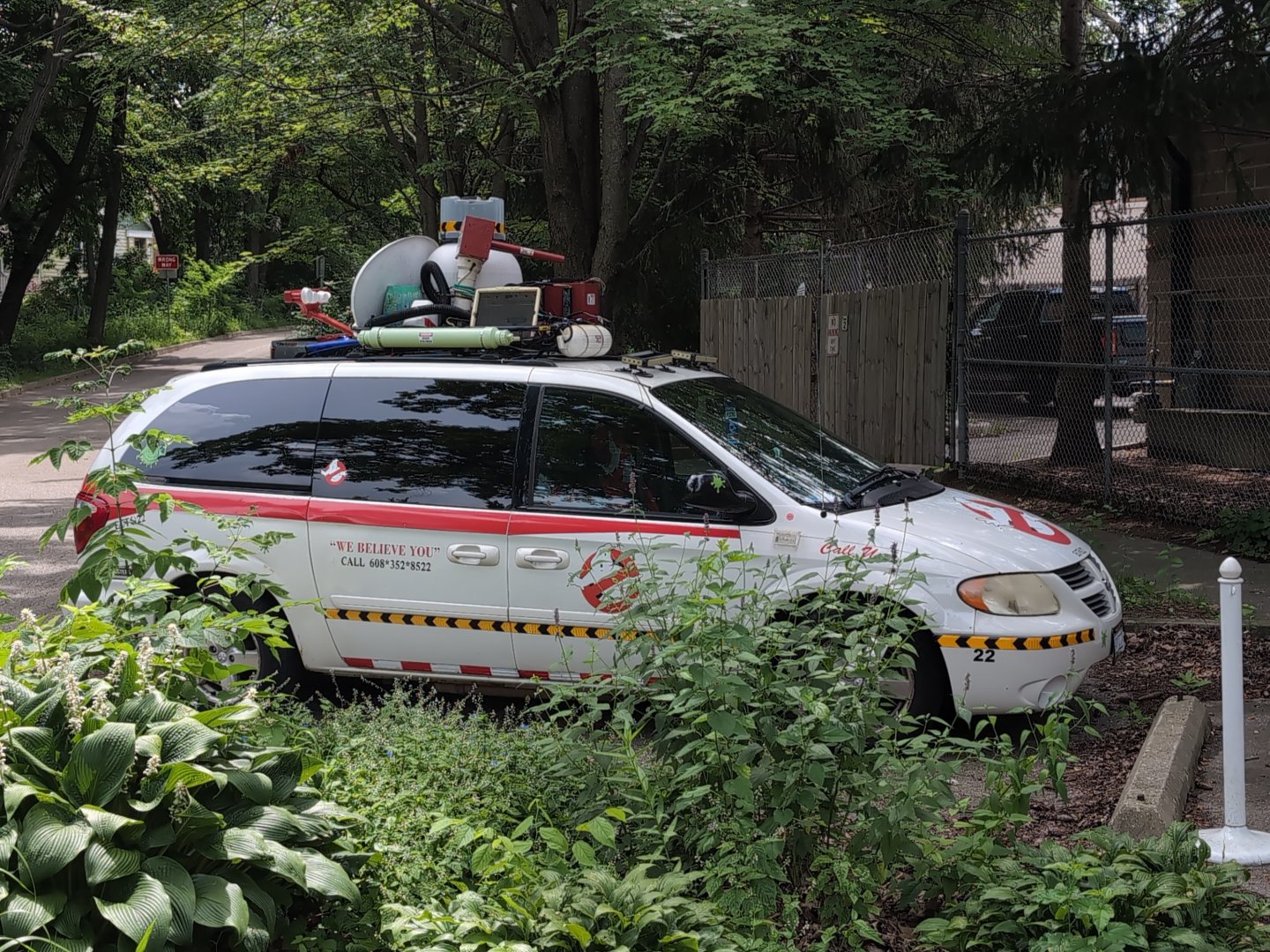
  • I noticed something strange in the neighborhood as soon as I arrived. This vehicle was parked at the zoo’s main gate. They must have a serious infestation if they are calling in specialists like that.
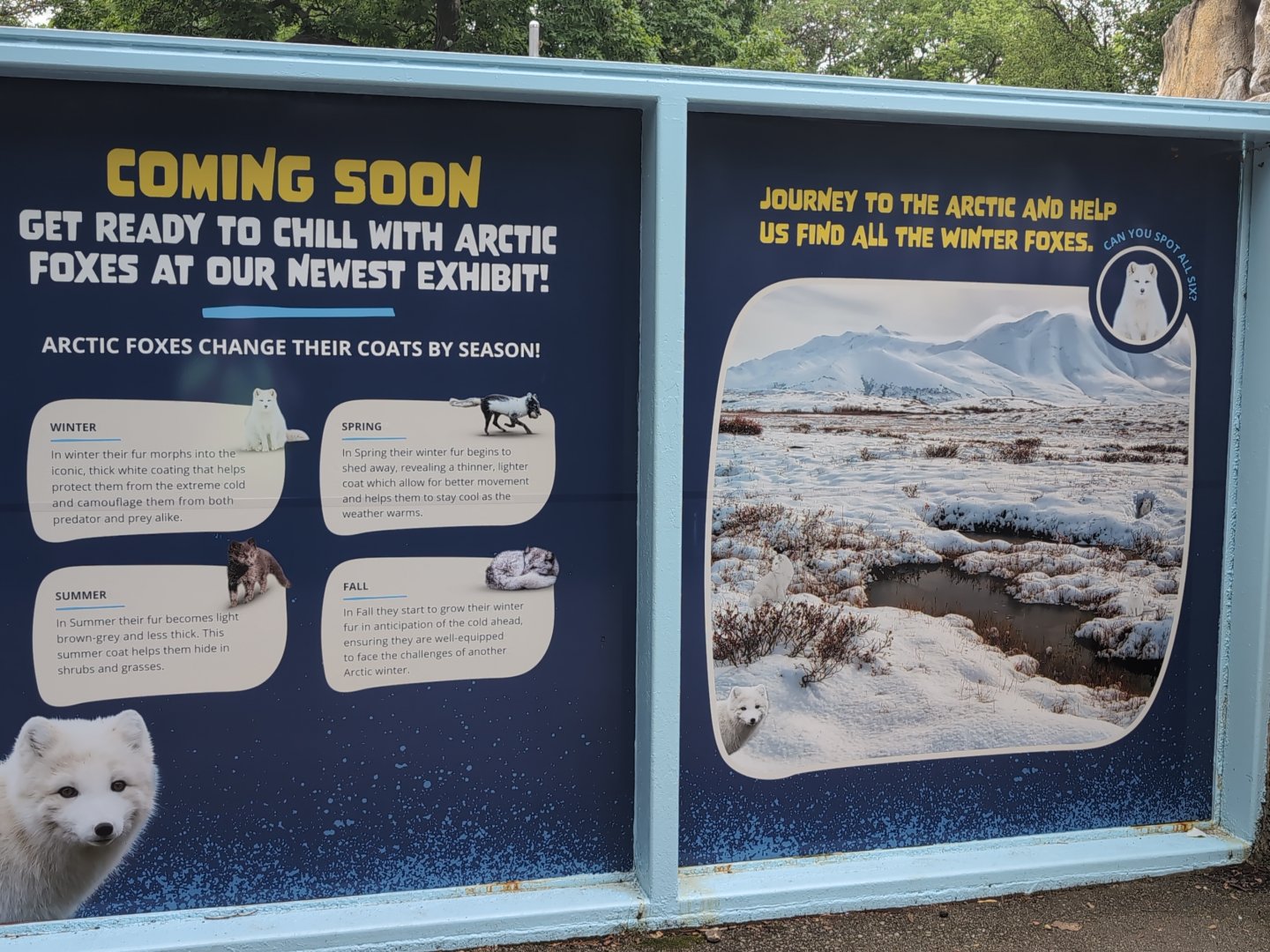
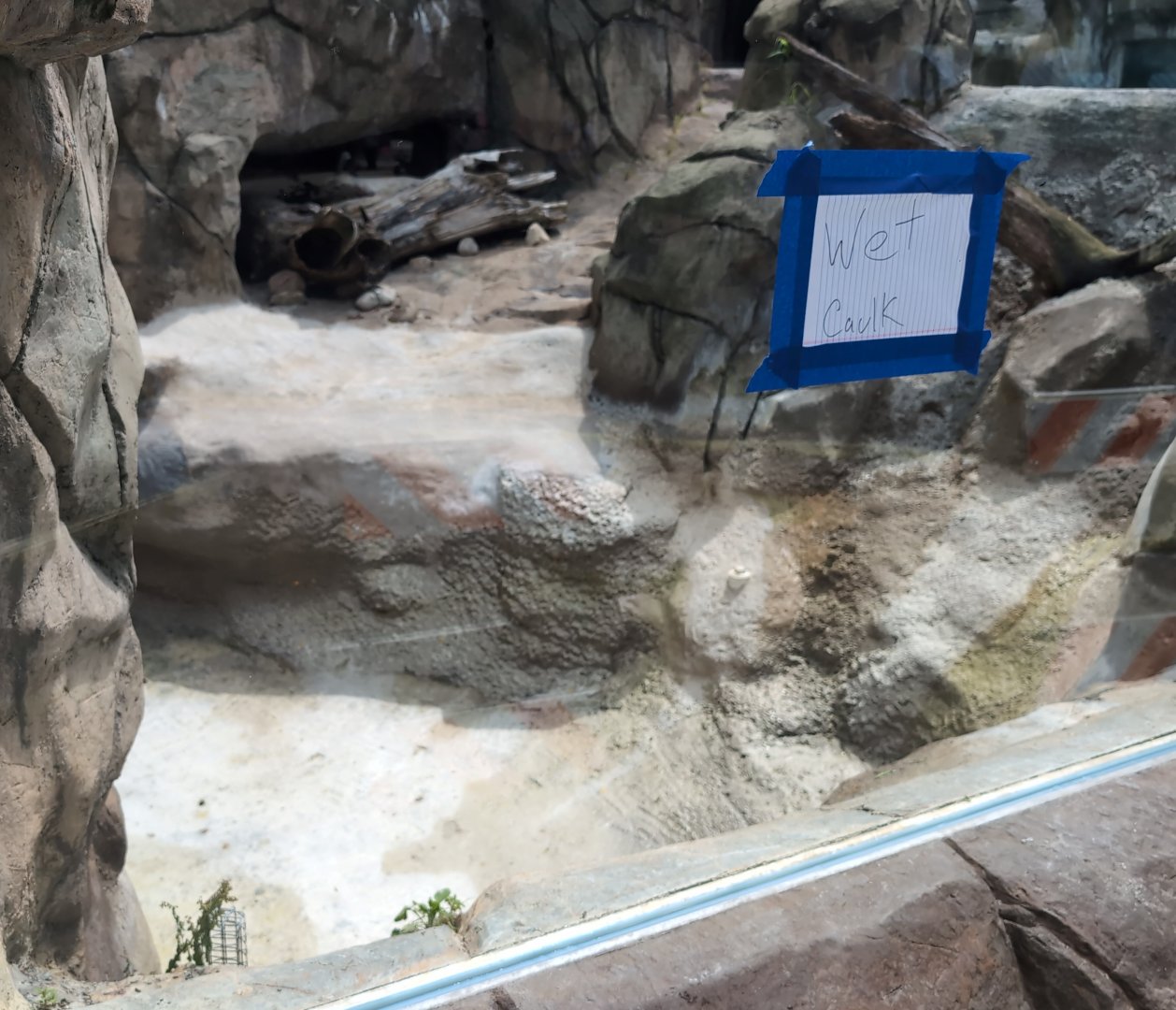
  • Some interesting news, I discovered that they are planning to convert the old penguin exhibit to use for Arctic Foxes (Vulpes lagopus).
  • I haven’t seen a wider announcement but there are giant decals on the old underwater viewing windows and smaller signs scattered around.
  • Construction / renovation does not seem to have begun yet though.
  • The foxes are not present on the masterplan; so, either it has changed already or this will be a temporary exhibit.
  • Many smaller construction / renovation projects are active throughout the zoo however.
  • The lower pool of the otter habitat was drained for resealing.
  • It is much deeper than it appears when it is full. Probably five or six feet at the deepest point.
  • The wooden railings in the children’s zoo are being sequentially restained.
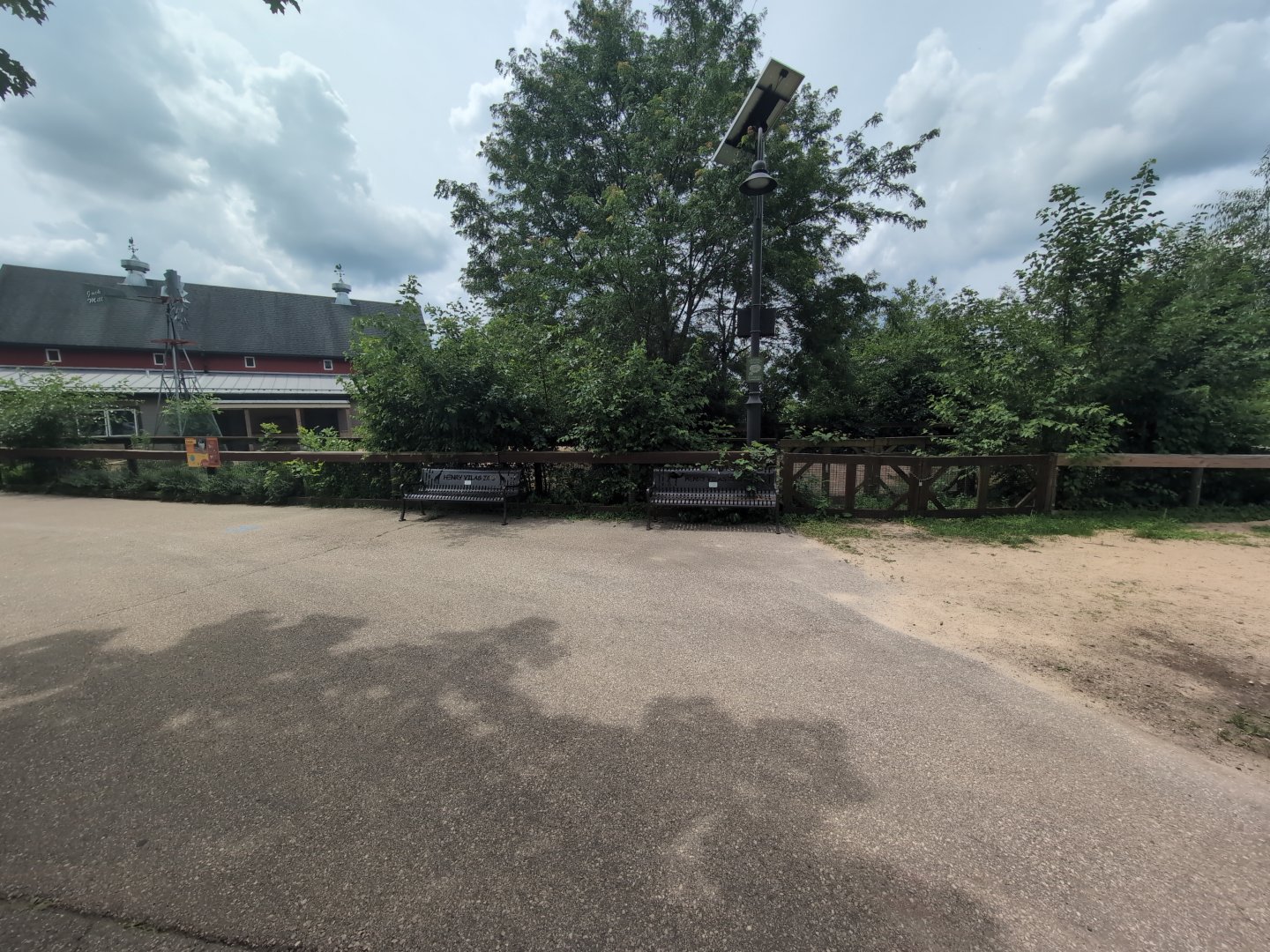
  • They are significantly increasing the size of the alpaca yard. Everything from the benches rightward is new.
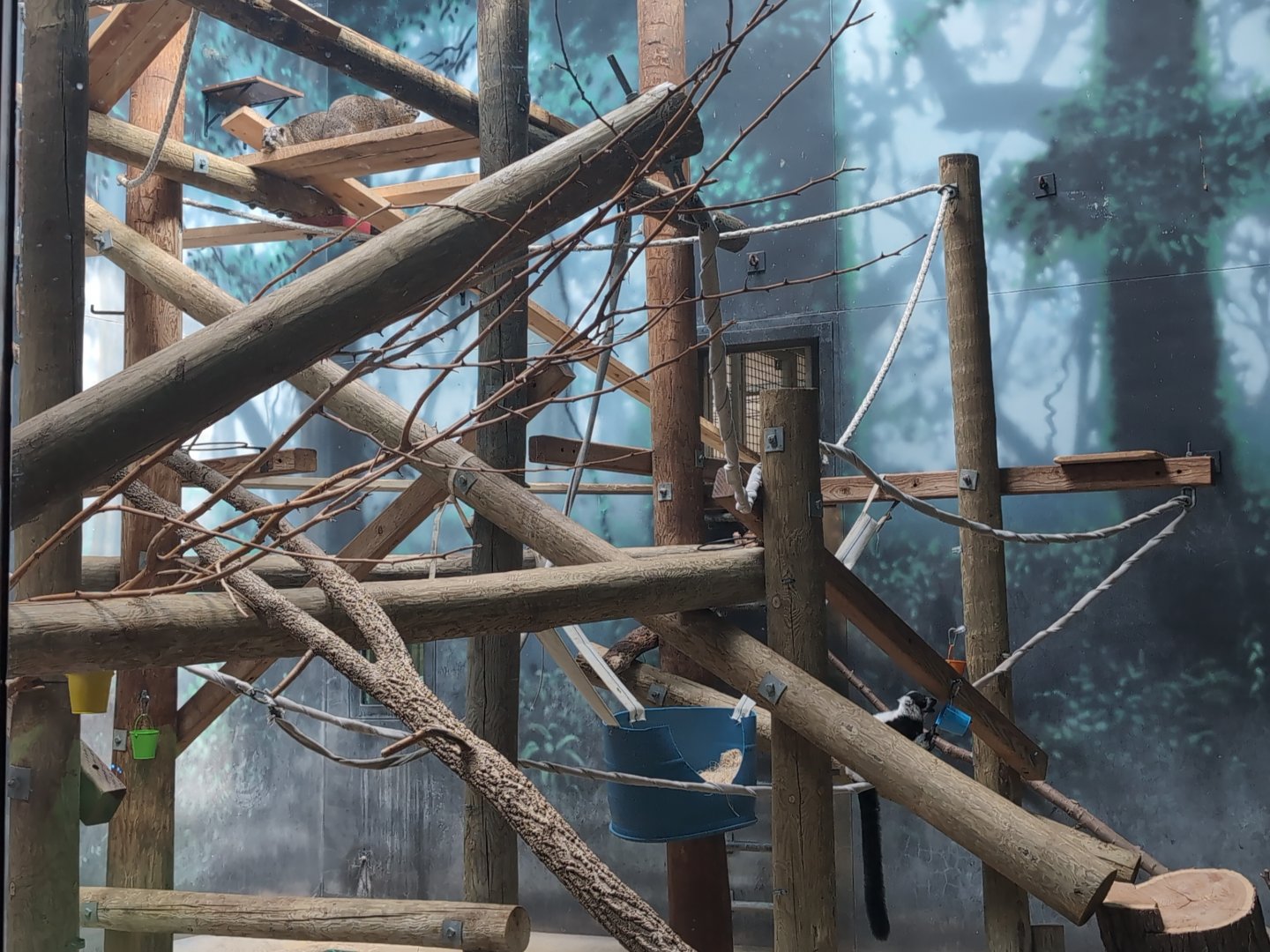
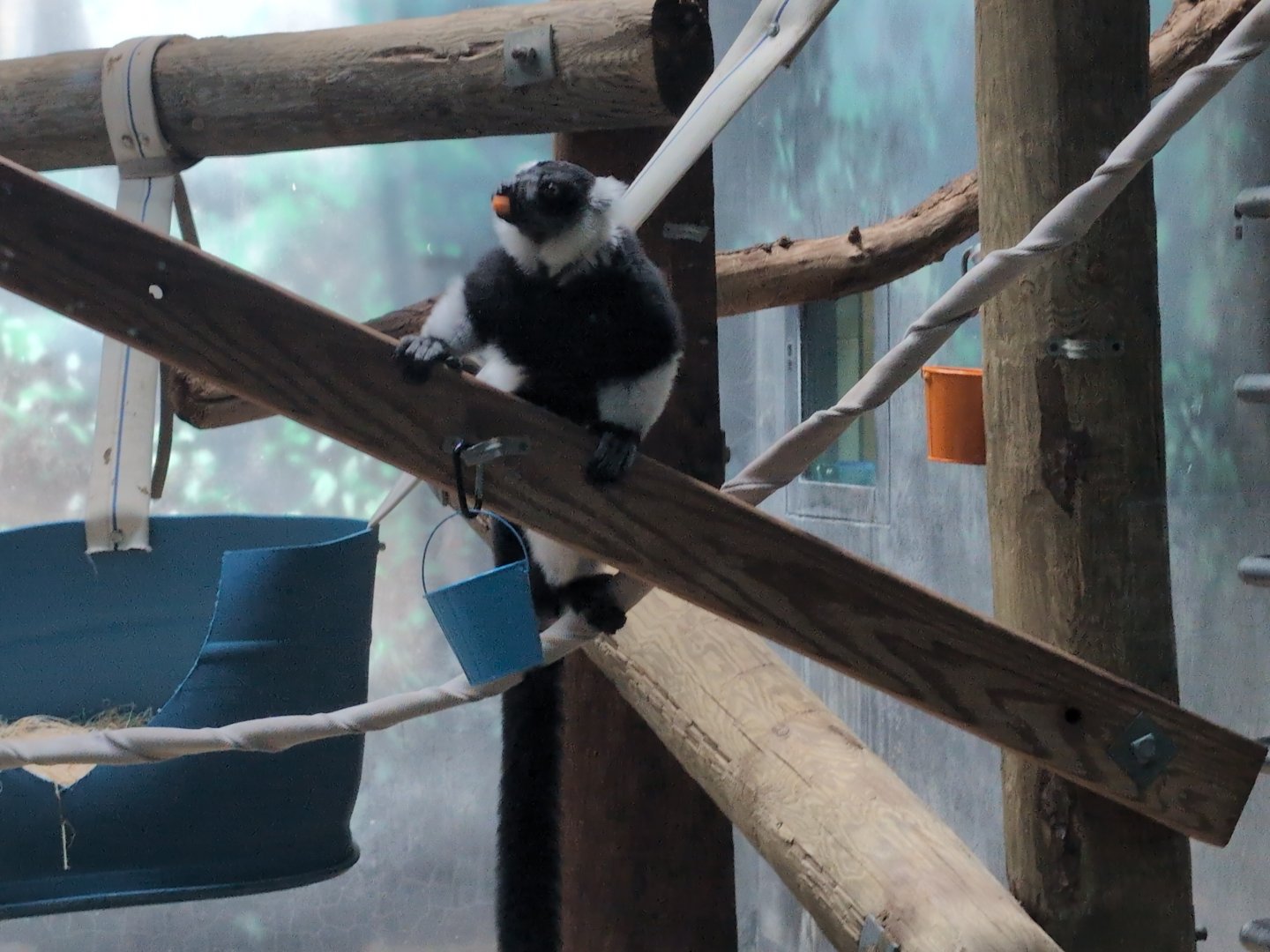
  • I can confirm three of the Rock Hyraxes were actively sharing space with several of the Black-Ruffed Lemurs. The Ring-Tails were nowhere to be seen and the outdoor exhibits for both the Lemurs and the Orangutans seemed to be sealed off.
  • The Lemurs had just been given cup of softer food (a fruit / nectar puree maybe). It’s really funny the way they use their tongue almost like an Anteater.
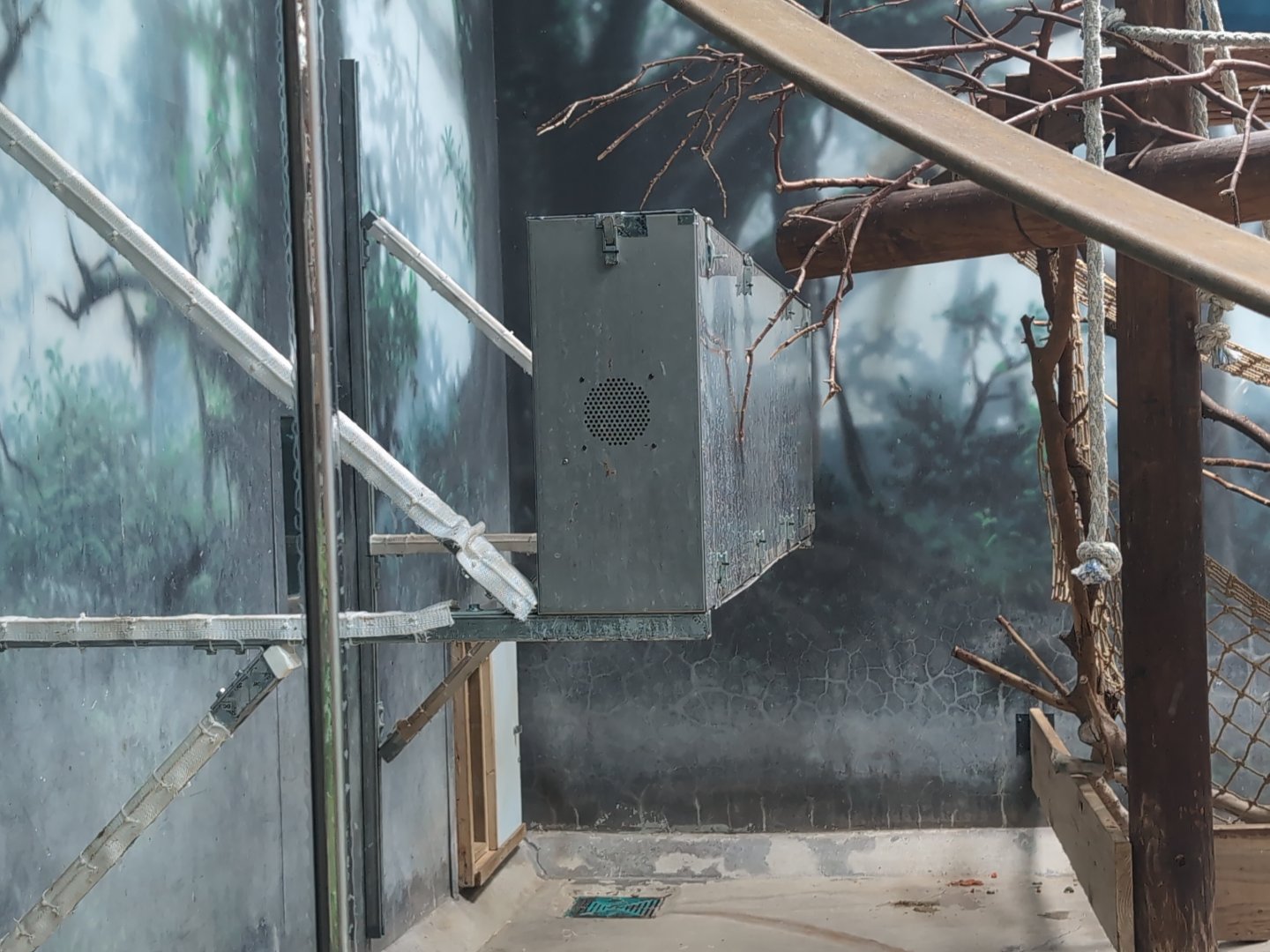
  • Does anyone have any idea what this steel box is. It seems to be machinery of some sort.
 
Does anyone have any idea what this steel box is. It seems to be machinery of some sort.

It was a basking area for the tortoises when they were in there.

The Arctic Foxes being added to the former African Penguin exhibit is interesting. They are a species that is kept by at least two other zoos in the area (Racine and Ochsner Park), but it will be interesting to see how they will construct the exhibit. It is a shame they are not closer to the bear exhibits, but we can pretend they're in the same area if we just ignore the giant South American aviary :p
 
Vilas Visit 7-9-24 Part 2
  • With the resigning of the entire zoo now mostly complete, Vilas can be added to the list of facilities that does not use Latin / Binomial names on the majority of their signs.
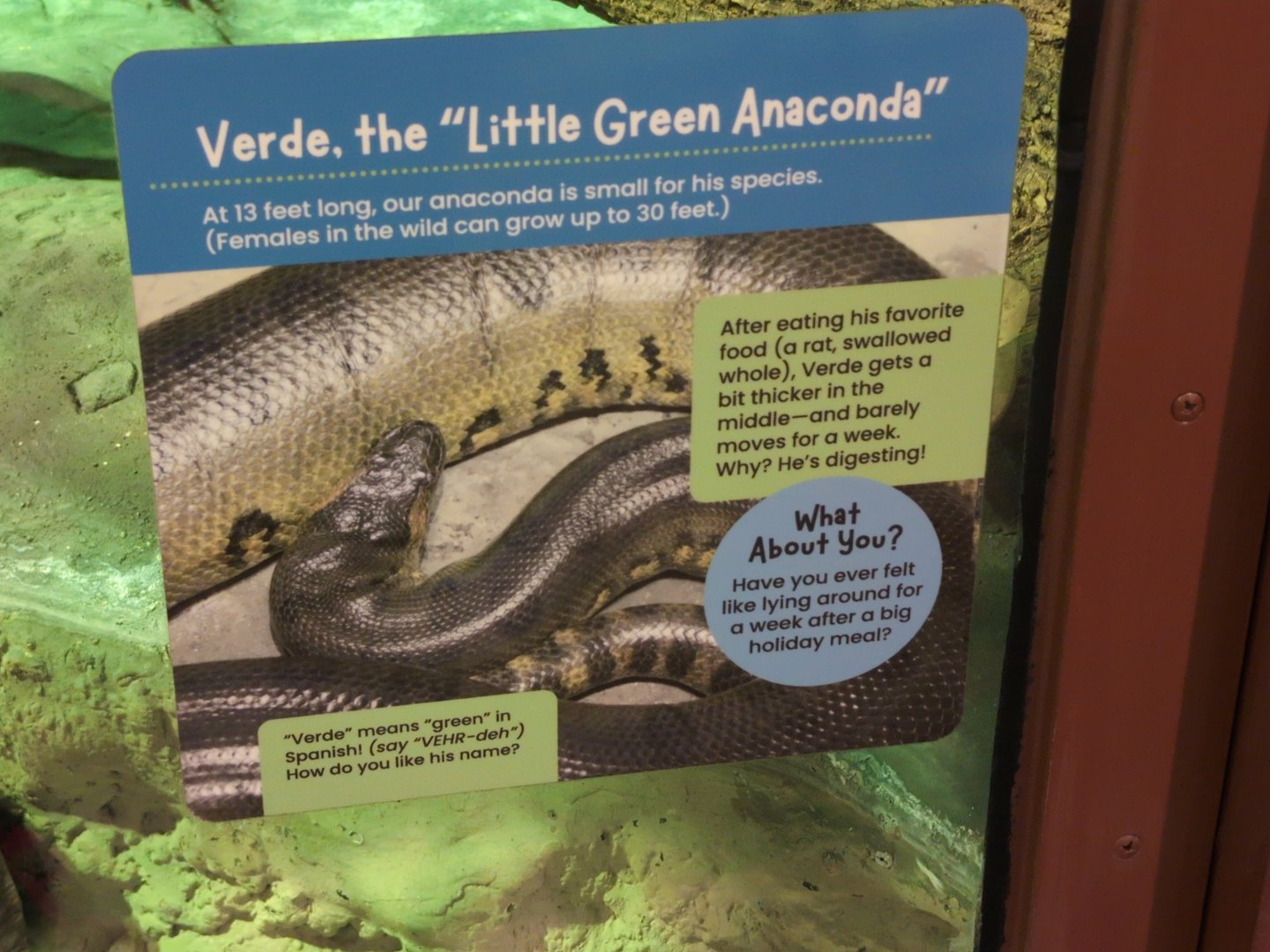
  • These signs, while decent in appearance and mostly accurate it would seem that the factoids on them were not written by any sort of experts. Take this Green Anaconda (Eunectes murinus) sign that claims female anacondas grow to 30 feet in the wild. No extant snake that long of any species has ever been reliably recorded.
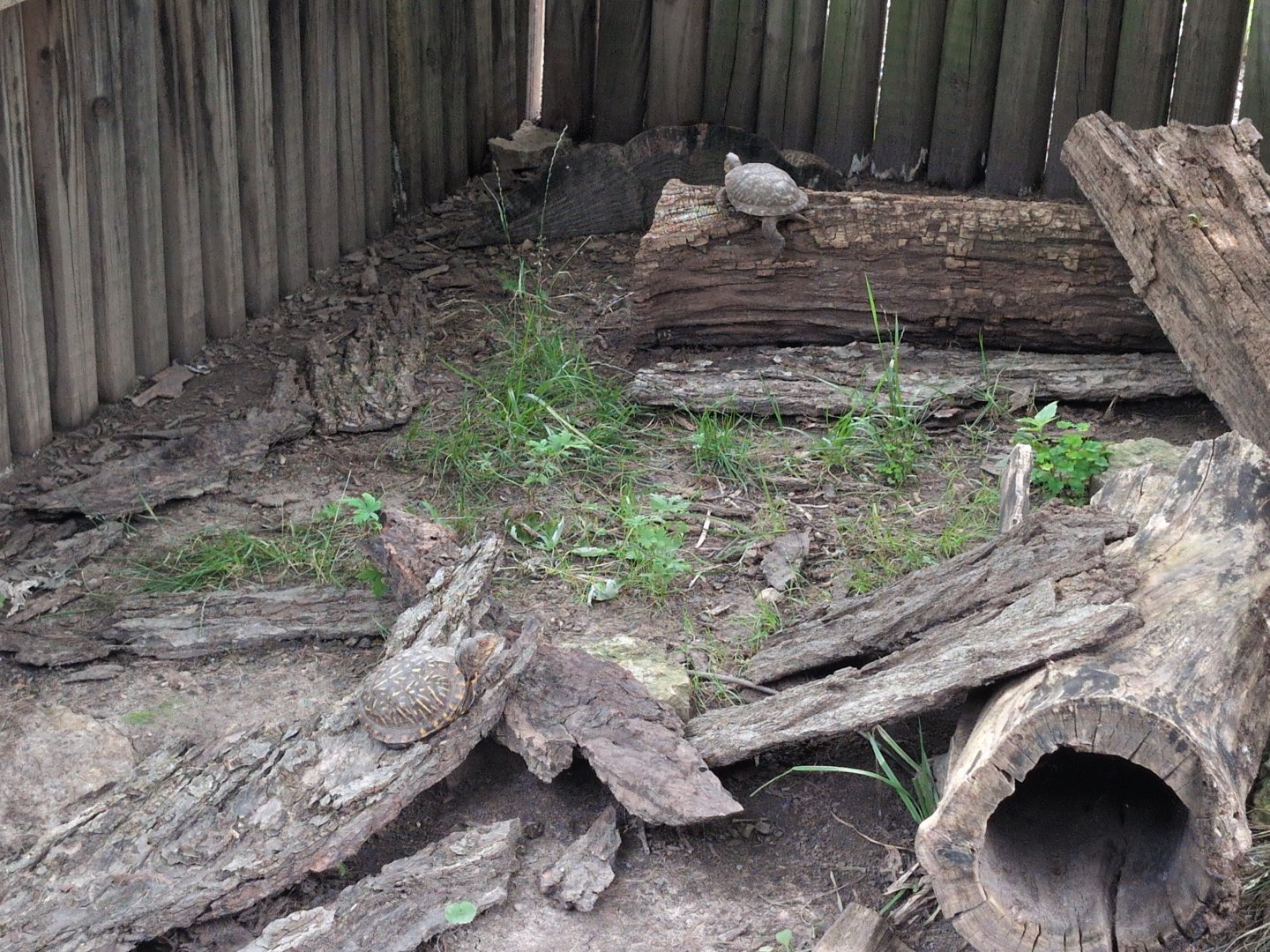
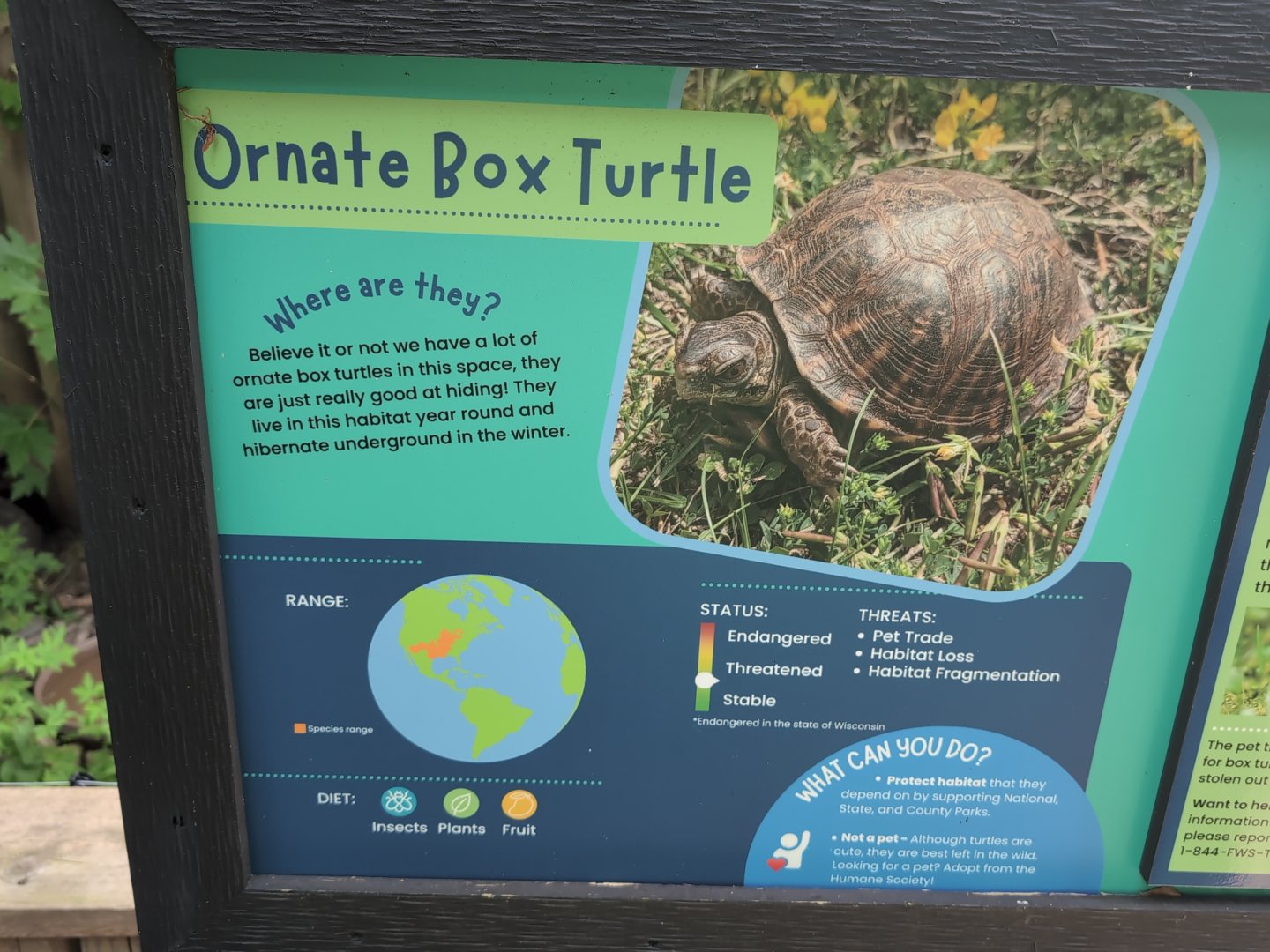
  • I was able to count 5 Ornate Box Turtles (Terrapene ornata ornata) in the outdoor pen. While I have seen any claims of this, I have to assume this is intended as a breeding colony. While not listed as endangered IUCN or USFWS they are considered locally endangered under Wisconsin law.

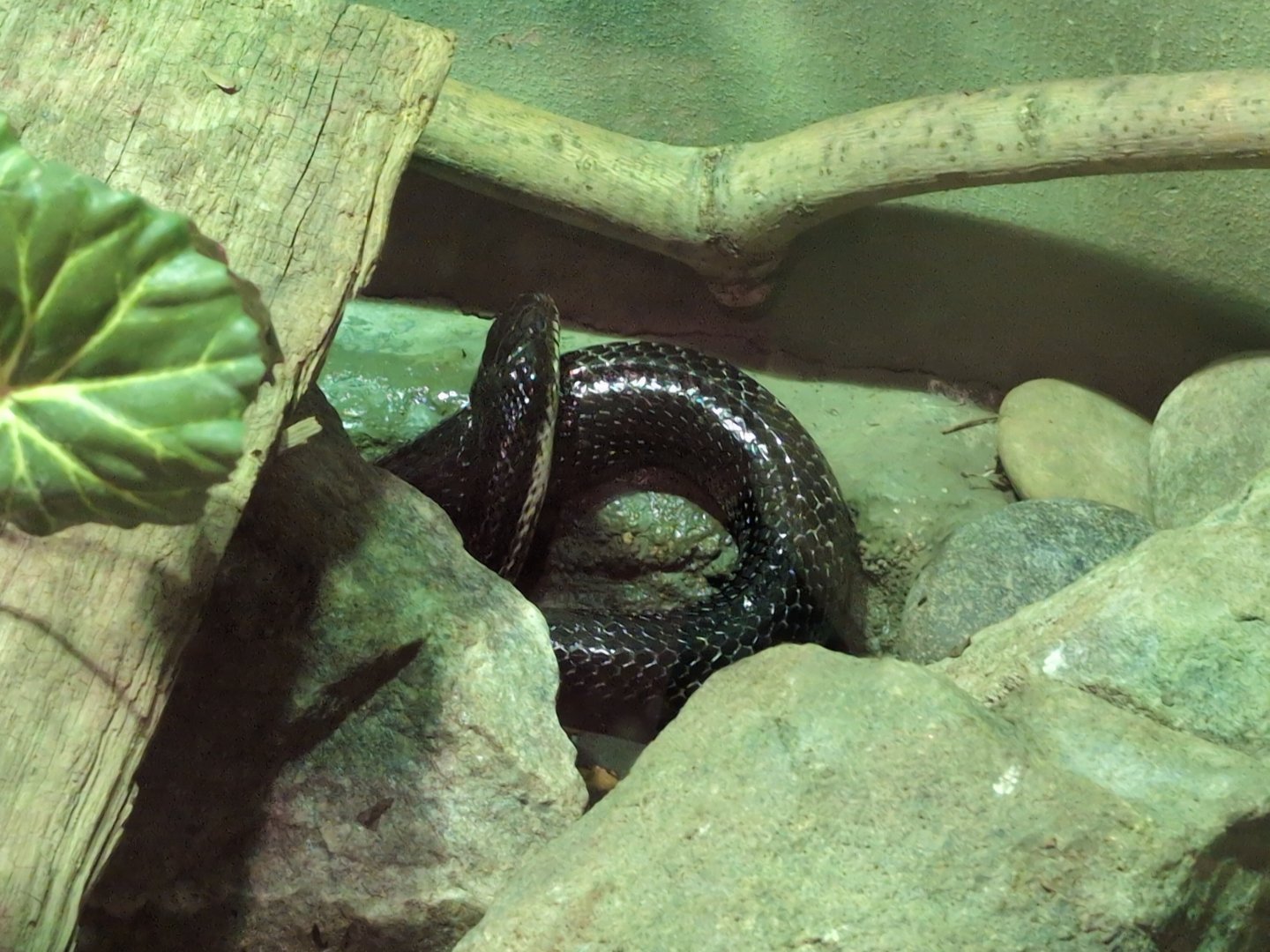
  • The also have a Black / Grey Rat Snake now. My guess is that this is a Pantherophis spiloides, another local species but as mentioned before, the signage lacks the Latin names and multiple outwardly similar colubrids use these common names. In fact, Pantherophis spiloides was only recently recognized as a distinct species from Pantherophis obsoletus. While mostly stable, these larger than average for the area snakes are often subjected to malicious attacks by humans and for that reason are legally listed as a “Protected Wild Animal” making killing, capturing, or keeping the species generally illegal without providing the habitat protections that legally endangered or threatened species have. This is the same status that Mountain Lions (Puma concolor) and Timber Rattlesnakes (Crotalus horridus) have.
  • These two species will be the ones Vilas is the most likely to lose if they fail their AZA reaccreditation; as Wisconsin law directly gives a carte blanche exception to endangered species possession laws to any facility accredited by the AZA. Therefore, if they lose their accreditation, they will have to go through the standard licensing process. That could take a long time to approve. AZA Facilities are also exempted from several other state licensing requirements so, their general administrative cost will likely balloon as well.
 
It was a basking area for the tortoises when they were in there.

The Arctic Foxes being added to the former African Penguin exhibit is interesting. They are a species that is kept by at least two other zoos in the area (Racine and Ochsner Park), but it will be interesting to see how they will construct the exhibit.

I'm guessing that the foxes are intended to be a temporary species until the master-plan progresses further. Perhaps one of the other local holders is planning a renovation and needs to temporarily rehome theirs.
It is a shame they are not closer to the bear exhibits, but we can pretend they're in the same area if we just ignore the giant South American aviary :p

I would love to see a South American Rainforest exhibit that includes both exotic species as well as local ones that occur naturally there as well like Mountain Lions, White-Tailed Deer, and various migratory birds.
 
These two species will be the ones Vilas is the most likely to lose if they fail their AZA reaccreditation; as Wisconsin law directly gives a carte blanche exception to endangered species possession laws to any facility accredited by the AZA. Therefore, if they lose their accreditation, they will have to go through the standard licensing process. That could take a long time to approve. AZA Facilities are also exempted from several other state licensing requirements so, their general administrative cost will likely balloon as well.​
What makes you think they don't have this licensing already?
 
What makes you think they don't have this licensing already?
It's possible they do, but they have never needed it before and Vilas is always short on resources. They would almost certainly be able to obtain a standard endangered license if necessary, but I would expect it to take at least a few months. They might be able to get a temporary waiver too, but that would be up to the DNR.
Removing the litany of regulatory exceptions for AZA members has been debated recently by the state legislature; so, that could factor in to decision making as well.
 
I don't agree that "short on resources" means not possessing required permits. It is literally the first AZA Accreditation Standard:
1.1 Local, State, Provincial, and Federal Laws 1.1.1. The institution must comply with all relevant local, state/provincial, and federal laws and/or regulations, including those specific to wildlife. It is understood that, in some cases, AZA accreditation standards are more stringent than existing laws and/or regulations. In these cases the AZA standard must be met.

You can review standards for yourself here.

https://assets.speakcdn.com/assets/2332/aza-accreditation-standards.pdf
 
I don't agree that "short on resources" means not possessing required permits. It is literally the first AZA Accreditation Standard:
1.1 Local, State, Provincial, and Federal Laws 1.1.1. The institution must comply with all relevant local, state/provincial, and federal laws and/or regulations, including those specific to wildlife. It is understood that, in some cases, AZA accreditation standards are more stringent than existing laws and/or regulations. In these cases the AZA standard must be met.

You can review standards for yourself here.

https://assets.speakcdn.com/assets/2332/aza-accreditation-standards.pdf

But if AZA accreditation means those permits are not required, as is the case in Wisconsin, then possessing those permits would not be required.
 
  • These two species will be the ones Vilas is the most likely to lose if they fail their AZA reaccreditation; as Wisconsin law directly gives a carte blanche exception to endangered species possession laws to any facility accredited by the AZA. Therefore, if they lose their accreditation, they will have to go through the standard licensing process. That could take a long time to approve. AZA Facilities are also exempted from several other state licensing requirements so, their general administrative cost will likely balloon as well.
Apologies if I'm missing something, but what two species are you referring to here?
 
Apologies if I'm missing something, but what two species are you referring to here?
Eastern Massasauga and Ornate Box Turtle.
But if AZA accreditation means those permits are not required, as is the case in Wisconsin, then possessing those permits would not be required.
Yes, but Henry Vilas is likely to lose their AZA-accreditation soon.
 
I just spent a few hours going over the statutes and administrative codes. As one might expect, they are long, dull, jargon riddled, and self-contradictory. I don’t have time to look through these further or the money to hire an environmental lawyer. So, I once again find myself relying on what has always been my primary source for Wisconsin herptile law.

The WI DNR has long maintained this document summarizing the laws regarding Wisconsin’s native herptiles. It has changed little over the years except for the conservation status of a few species.

https://p.widencdn.net/xj9s5p/ER0102

My read on it was always that AZA facilities were receiving a “carte blanche”, a “do whatever you want and get away with it badge”.
5c2c3d7a-a845-4bc2-9b3e-10f6a3b1e393_text.gif


This news article from August 2023 basically confirmed my conclusion.

Wisconsin Republicans consider bill to weaken oversight of roadside zoos

For a small underfunded facility that has benefited from this for so long (I think as long as the WI endangered species act has existed). If they lose their AZA accreditation, it will be a culture shock and a half to have to play by the normal rules. They will be drowning in paperwork and administrative costs.

These are the species with state level protections that Vilas either currently has or has had recently. * is definitely still present. ** is species ID unclear.

Threatened​
  • Yellow-Crowned Night-Heron - Nyctanassa violacea*
Endangered​
  • Ornate Box Turtle - Terrapene ornate ornate*
  • Eastern Massasauga - Sistrurus catenatus catenatus
Protected Wild Animal​
  • Gophersnake - Pituophis catenifer
  • Gray Ratsnake - Pantherophis spiloides**
  • Timber Rattlesnake - Crotalus horridus
  • Blanding's Turtle - Emydoidea blandingii
For the record, Vilas is my local zoo and I will be devastated if they lose their accreditation, but I think that it is likely to happen.
 
Back
Top