
I'm aware of the study suggesting there are four species of giraffe (Masai, northern, reticulated and southern) but I've also heard of followup studies that deny this claim and state that there are indeed only oneI make it five
I'm aware of the study suggesting there are four species of giraffe (Masai, northern, reticulated and southern) but I've also heard of followup studies that deny this claim and state that there are indeed only oneI make it five

I'm aware of the study suggesting there are four species of giraffe (Masai, northern, reticulated and southern) but I've also heard of followup studies that deny this claim and state that there are indeed only one


Thanks, and I plan on it!Just wanted to say I've really enjoyed reading through this thread, I was always one of those kids that enjoyed the little known prehistoric creatures far more than a T.Rex, so it's been a blast to read through this thread. Keep up the good work!
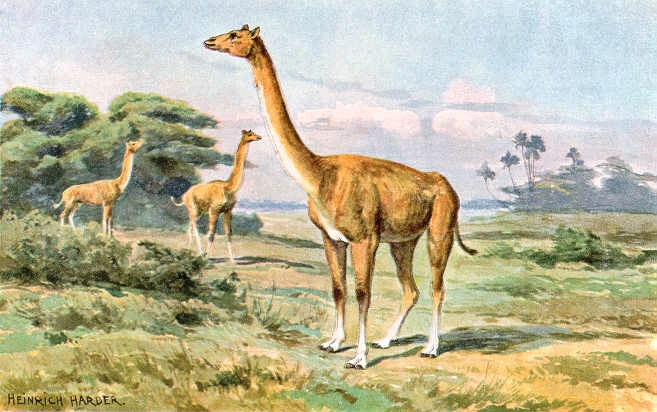


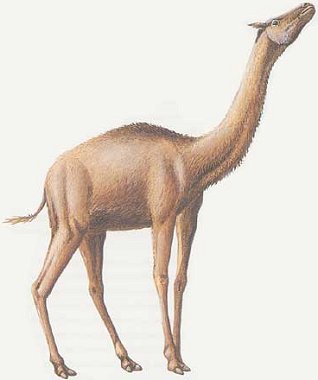
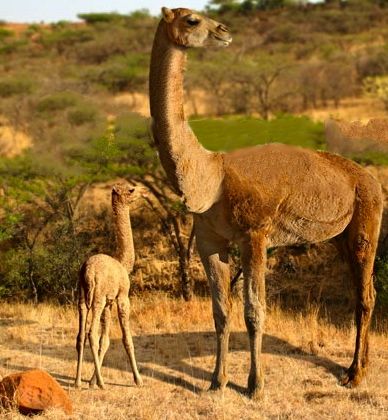
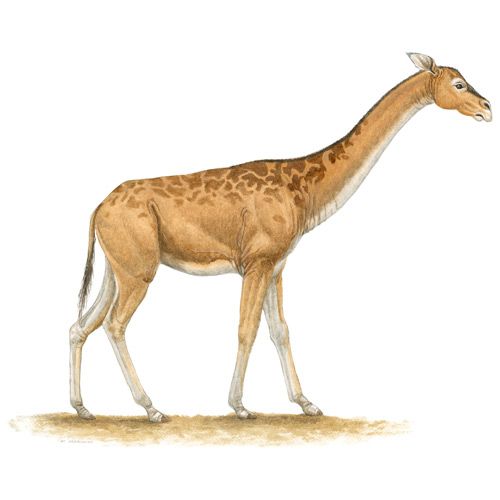
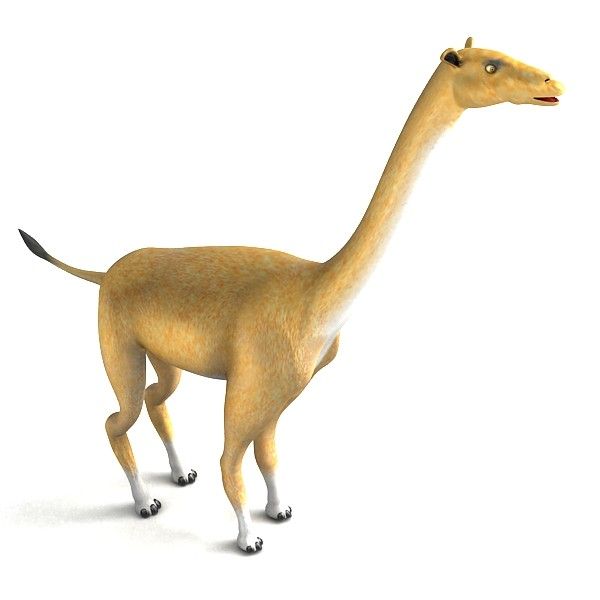

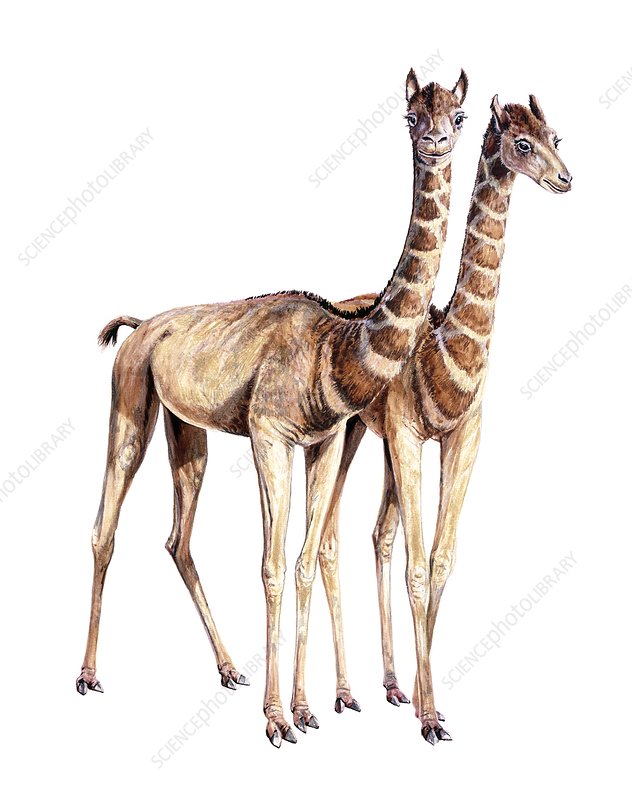
They may call it the Giraffe Camel, but I'm calling it the Gerenuk Llama!NUMBER THIRTY: This hump-less camel looked more like an giraffe than a camelid
The giraffe camel was a highly specialized animal. Its head was relatively small compared to the rest of its body, its neck was long, as a result of giraffe-like lengthening of the neck vertebrae, and its legs were long and stilt-like, with the elbow and knee joints on the same level. The top of its head would have been 9.8 feet (2.99 meters) above the ground. Its strange body structure gives information on its mode of life and habits. The giraffe camel inhabited dry grasslands with groups of trees. It is presumed to have moved about singly or in small groups, like today's giraffes, and like them, browsed high up in the trees. In this respect, it had no competitors. The giraffe camel walked on its toes only. Unlike earlier species of camelids, they possessed cushioned pads like those of modern camels. It survived a relatively long time, through most of the Miocene epoch, and died out prior to the start of the Pliocene epoch, possibly due to climate changes.
- Animal: Giraffe camel (Aepycamelus)
- Pronunciation: ay-pee-camm-ee-lus
- Name Meaning: "High camel"
- Named By: J. Reid MacDonald - 1956
- Classification: Life, Eukaryota, Animalia, Chordata, Vertebrata, Gnathostomata, Osteichthyes, Sarcopterygii, Tetrapodomorpha, Tetrapoda, Reptiliomorpha, Amniota, Synapsida, Therapsida, Mammalia, Placentilia, Boreoeutheria, Ungulata, Artiodactyla, Camelidae, Camelini
- When: ~ 20,600,000 B.C.E. to 4,900,000 B.C.E. (Miocene epoch)
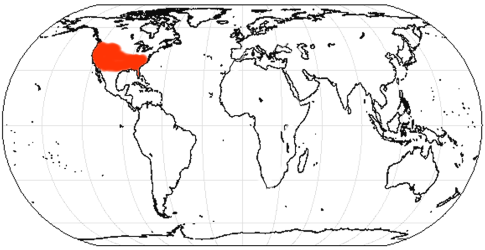
- Where: North America (throughout the United States, from the west to east coast)
- Size: *see below*
- Diet: Herbivore
(Below: known range based upon fossil finds)
Picture and Information Sources:
- My brain
- Aepycamelus giraffinus
- Aepycamelus - Wikipedia
- Giraffe Camel - Aepycamelus giraffinus
- Alticamelus | 3d aepycamelus alticamelus - Aepycamelus... by put3d | Fossil Mammals | Pinterest | Animals, Mammals and Dinosaur stuffed animal
- Aepycamelus prehistoric camels, illustration - Stock Image - C011/2190
In actuality, "giraffe camel" isn't an official common name but I figured it would be appropriate to use. Also I know you were making a joke, but I shall be using this as an education opportunity: although Aepycamelus looked more like a long-necked llama than a camel, it was indeed more closely related to camels than llamas, hence its placement in the tribe Camelini, rather than the tribe LaminiThey may call it the Giraffe Camel, but I'm calling it the Gerenuk Llama!

I'm really enjoying your series, but as an American I must say
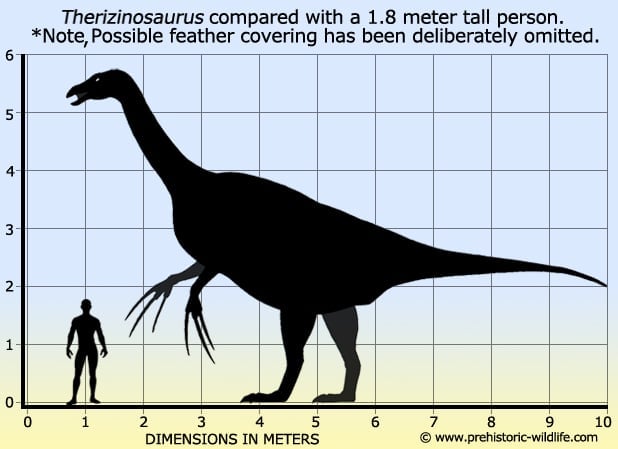
1.8 m humans weighing 83 kg barely compute. haha
He is referring to the size comparisons I've been using. Such as...What was this in reference to?



"Thank you"On another thread @ZooBinh talked of his "fondness" ants, so here you go Mr. ZooBinh...
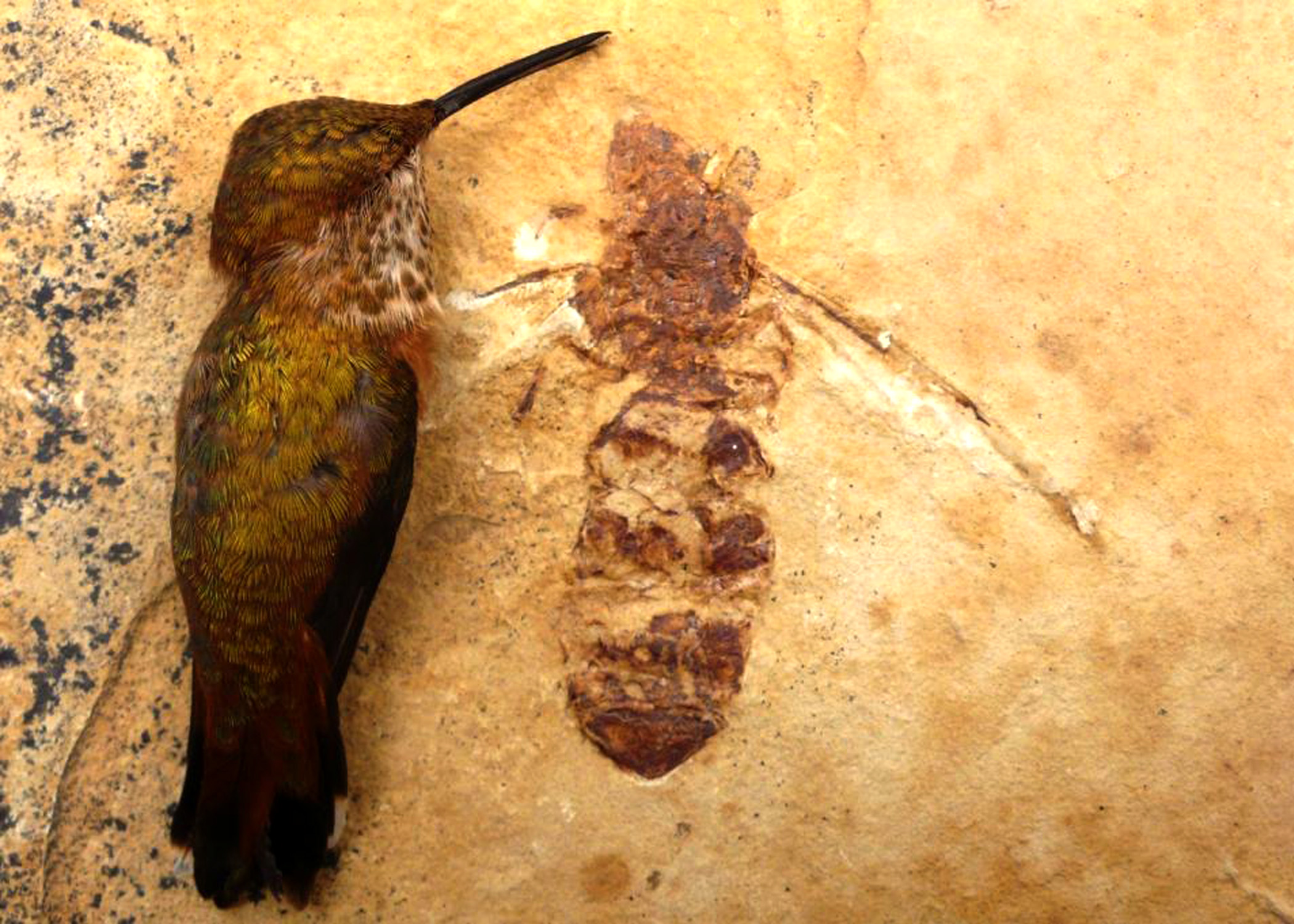
NUMBER THIRTY-ONE: It wasn't a bird, or a plane, but if it was carnivorous, it would of been a massive fricking pain.
(above: relative size compared to a hummingbird)
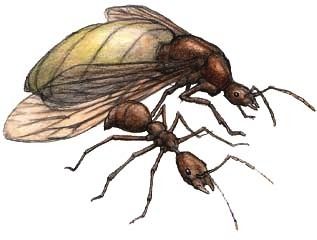
I don't know how many of you seen the BBC mini-documentary series, Walking With Beasts, but if you have you may recall a scene where a colony of massive ants strips a baby Gastornis of its flesh. Let me tell you, as a kid that scene can mess you up. Although it was never named in the show itself, Titanomyrma is the genus this was meant to be. (For those of you that have seen it, this clip is waht I was talking about)
- Animal: Titanomyrma lubei
- Name Pronunciation: Tie-tan-oh-my-r-muh lube-ee
- Name Meaning: "Lube's titanic ant;" Titano refers to the Titans of Greek Mythology; myrma comes from myrmex, which is Latin for "ant," gender feminine; lubei honors Louis Lube, the collector of the holotype specimen
- Named By: Archibald et al. - 2011
- Classification: Life, Eukaryota, Animalia, Arthropoda, Insecta, Hymenoptera, Formicidae, Formiciinae
- When: ~ 49,500,000 B.C.E. (Ypresian stage of the Eocene epoch)
- Where: North America (Tennessee and Wyoming, U.S.A.)
- Size: *see below*
- Diet: Unknown
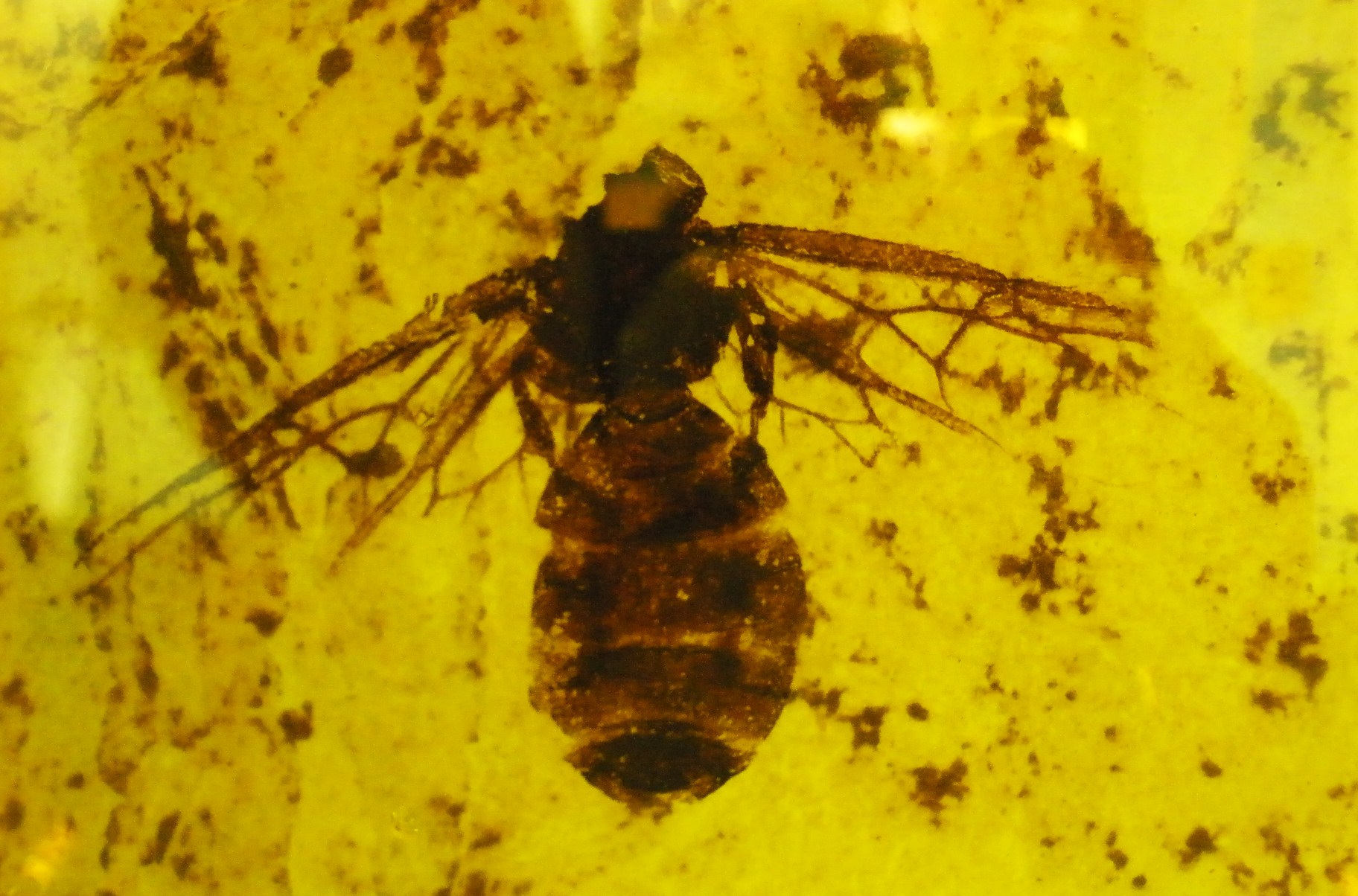
Contrary to what is said in the clip, this was not the largest ant ever, but it is tied for the title. Queen Titanomyrma ants measured as long as modern queen driver ants (genus Dorylus): up to 2 inches (5.08 centimeters). We don't actually know this diet of this bugger, but if it was carnivorous, it would of been the bane of every contemporary insect. Species in the genus Titanomyrma have been found in Europe (Germany). So how did this ant end up of both sides of the Atlantic? Well, during the Eocene, Earth's climate was warmer than it is today and Europe and North America were closer together. There was also land bridges. So, as Archibald put it, "You could have walked from Vancouver to London." You know that kids song "the ants go marching one by one hurrah hurrah...?" Well in this case the ants were marching across prehistoric land bridges...hurrah hurrah.
Picture and Information Sources:

You just wouldn't want these in your kitchen"Thank you"
Or anywhere, for that matter.You just wouldn't want these in your kitchen
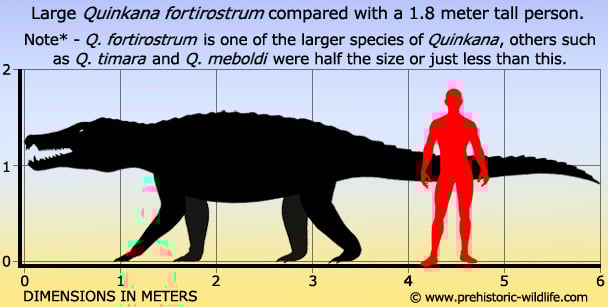


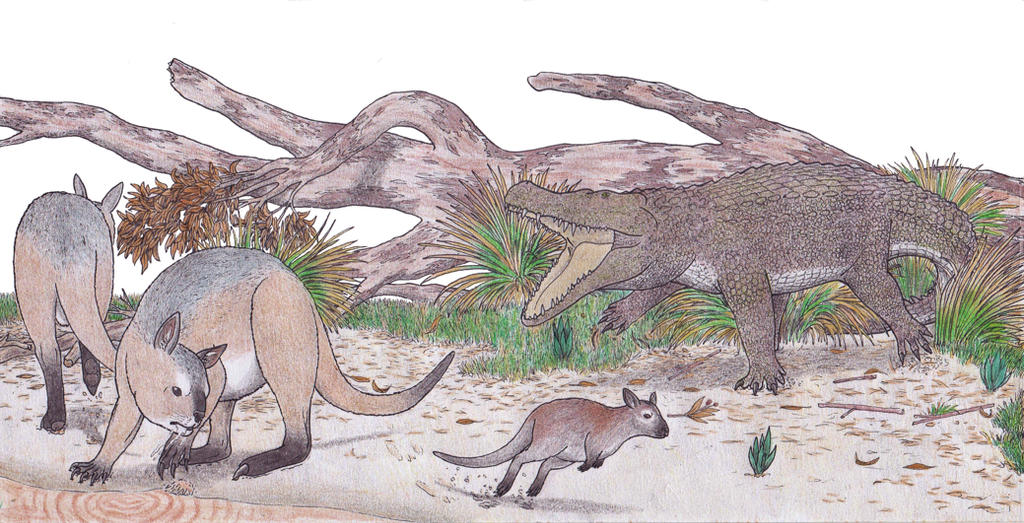
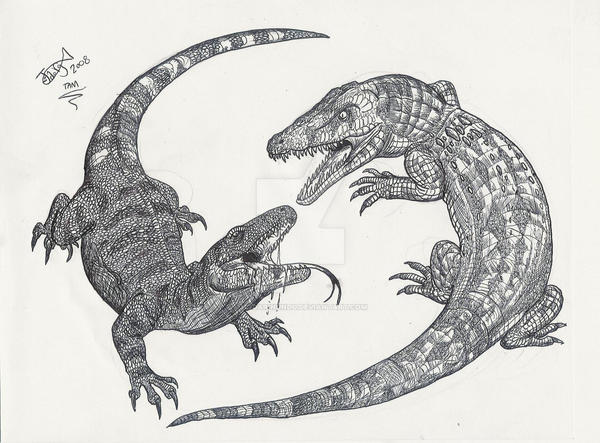


There were still terrestrial crocodiles in (at least) New Caledonia, Fiji, and Vanuatu when humans arrived on those islands around 3000 or 4000 years ago.Quinkana was one of the last, if not the last, terrestrial crocodilians.
I was unaware of that, thanks. Hey I thought someone said he didn't know a lot about dead things.There were still terrestrial crocodiles in (at least) New Caledonia, Fiji, and Vanuatu when humans arrived on those islands around 3000 or 4000 years ago.


