Hipporex's Guide to Interesting and Unique Prehistoric Fauna

I'm aware of the study suggesting there are four species of giraffe (Masai, northern, reticulated and southern) but I've also heard of followup studies that deny this claim and state that there are indeed only one

I think @DavidBrown would be the one to call in for a good giraffe discussion/opinion :)

~Thylo
 
Just wanted to say I've really enjoyed reading through this thread, I was always one of those kids that enjoyed the little known prehistoric creatures far more than a T.Rex, so it's been a blast to read through this thread. Keep up the good work!:)
 
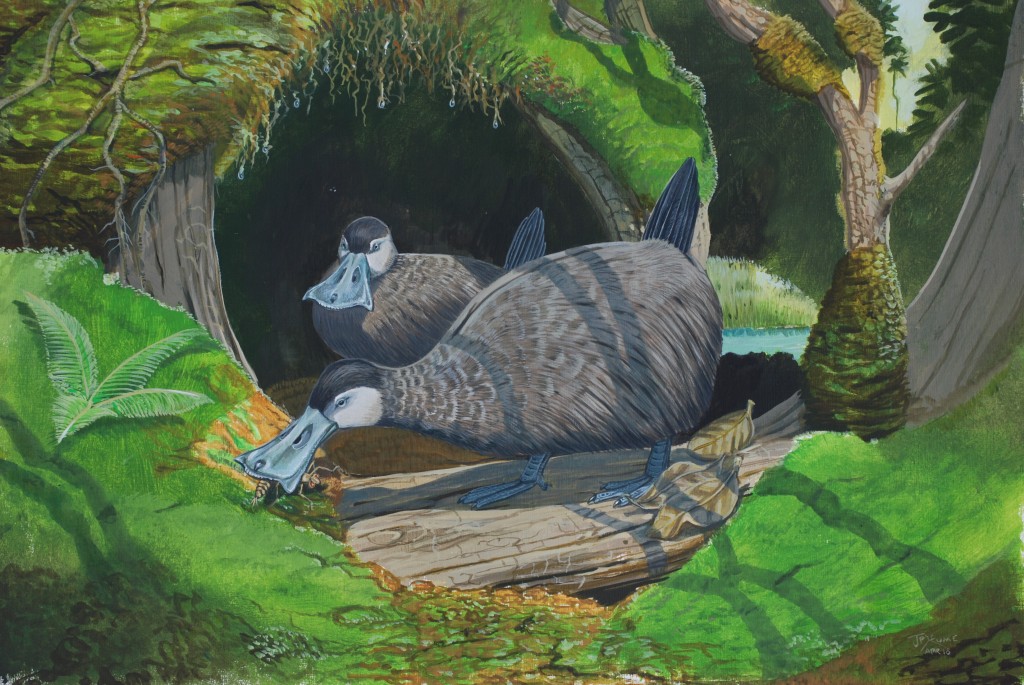
TWENTY-NINE: Hawaii: the land of sand, surf, and ... apparently blind, flightless ducks

tumblr_inline_pfn3h0Ppop1uc16jr_500.png

  • Animal: Kauai mole duck (Talpanas lippa)
  • Name Pronunciation: Tal-pan-as lip-uh
  • Name Meaning: "Mole duck that's nearly blind;" from Latin word talpa, meaning "mole;" the Greek word anas, meaning "duck;" the Latin word lippus, meaning "nearly blind"
  • Named By: Andrew Iwaniuk, Storrs Olson, and Helen James - 2009
  • Classification: Life, Eukaryota, Animalia, Chordata, Vertebrata, Gnathostomata, Osteichthyes, Sarcopterygii, Tetrapodomorpha, Tetrapoda, Reptiliomorpha, Amniota, Sauropsida, Eureptilia, Sauria, Archosauromorpha, Archosauriformes, Archosauria, Dinosauria,‭ ‬Saurischia,‭ ‬Theropoda,‭ Paraves, Avialae, Aves, Neognathae, Anseriformes, Anatidae
The Kauai mole duck was endemic to the Hawaiian island of Kauai and lived about 6,000 years ago. It is currently unknown what caused this species to go extinct. Post-cranial remains of this animal suggest, unlike most anatids, it was probably unable to fly and was predominately terrestrial. The skull had very small orbital openings,‭ ‬meaning that Kauai mole duck was nearly if not actually blind.‭ So how did this animal sense its environment? Perhaps smell? Probably not as its nasal passages were greatly reduced too. However the bill of this bird had a remarkable somatosensory (touch) system, perhaps the best of any bird, leading the discoverers to conclude that the Kauai mole duck may have felt its way about while looking for small invertebrates to eat. Speaking of this bird's bill, it was flat and rectangular in shape with a little claw or hook like protrusion coming out of the top. It is considered probable this was a nocturnal species. This species's probably lifestyle has been compared to that of the modern kiwi (the bird, not the fruit). According to
Helen James, "I am sure this species would be iconic of the Hawaiian Islands had it survived, as much as kiwi are for New Zealand and koalas and kangaroos for Australia."

d6zlbes-66dc8888-ae23-45e0-8a43-6987d635c52a.jpg

Talpanas-lippa-JP-Hume-1024x685.jpg


Picture and Information Sources:
 
Just wanted to say I've really enjoyed reading through this thread, I was always one of those kids that enjoyed the little known prehistoric creatures far more than a T.Rex, so it's been a blast to read through this thread. Keep up the good work!:)
Thanks, and I plan on it!
 
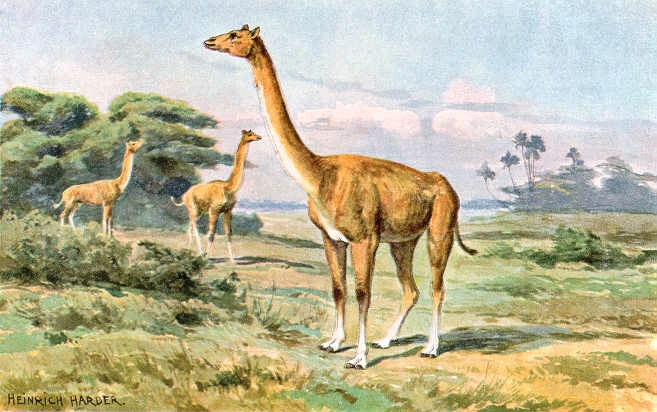
NUMBER THIRTY: This hump-less camel looked more like an giraffe than a camelid

Aepycamelus_Alticamelus_hharder.jpg

  • Animal: Giraffe camel (Aepycamelus)
  • Pronunciation: ay-pee-camm-ee-lus
  • Name Meaning: "High camel"
  • Named By: J. Reid MacDonald - 1956
  • Classification: Life, Eukaryota, Animalia, Chordata, Vertebrata, Gnathostomata, Osteichthyes, Sarcopterygii, Tetrapodomorpha, Tetrapoda, Reptiliomorpha, Amniota, Synapsida, Therapsida, Mammalia, Placentilia, Boreoeutheria, ‬Ungulata, Artiodactyla, Camelidae, Camelini
  • When: ~ 20,600,000 B.C.E. to 4,900,000 B.C.E. (Miocene epoch)
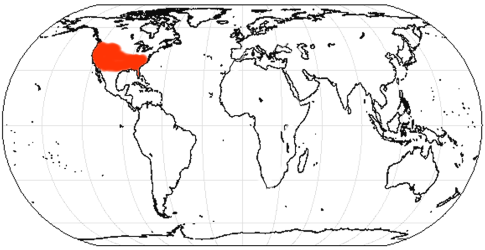
  • Where: North America (throughout the United States, from the west to east coast)
  • Size: *see below*
  • Diet: Herbivore
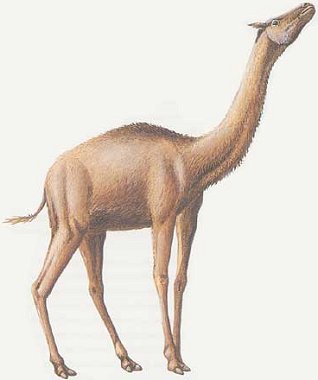
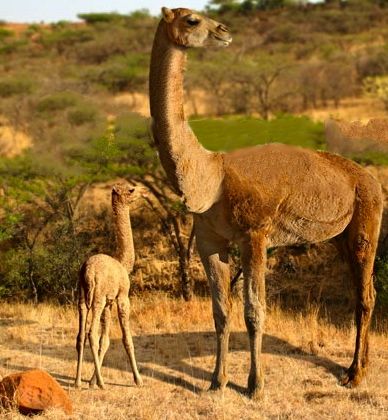
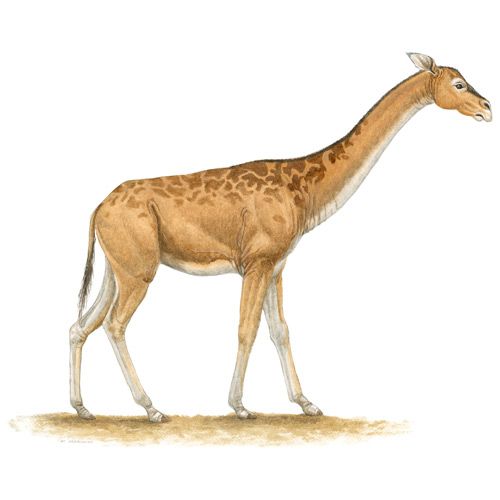
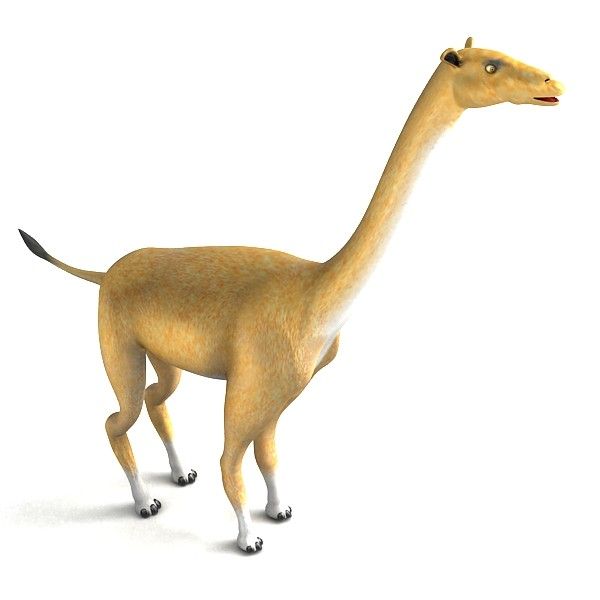
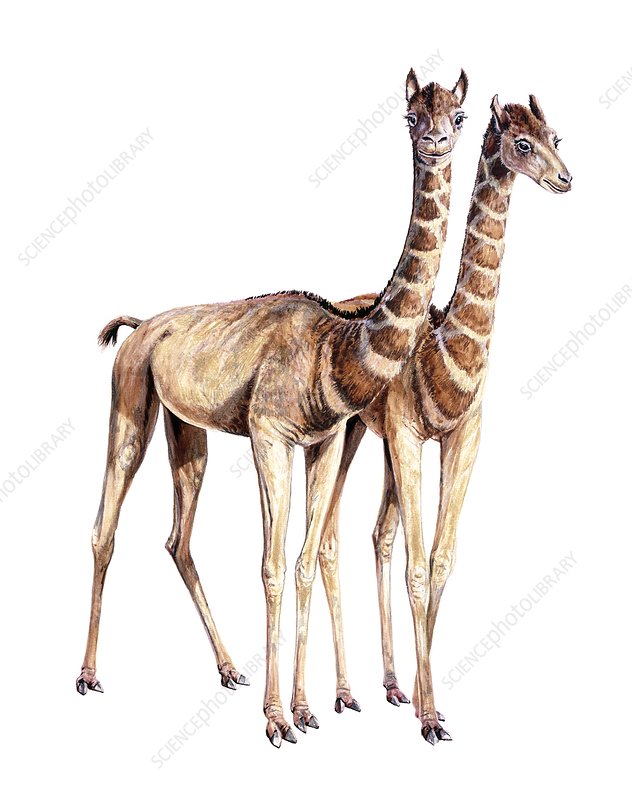
The giraffe camel was a highly specialized animal. Its head was relatively small compared to the rest of its body, its neck was long, as a result of giraffe-like lengthening of the neck vertebrae, and its legs were long and stilt-like, with the elbow and knee joints on the same level. The top of its head would have been 9.8 feet (2.99 meters) above the ground. Its strange body structure gives information on its mode of life and habits. The giraffe camel inhabited dry grasslands with groups of trees. It is presumed to have moved about singly or in small groups, like today's giraffes, and like them, browsed high up in the trees. In this respect, it had no competitors. The giraffe camel walked on its toes only. Unlike earlier species of camelids, they possessed cushioned pads like those of modern camels. It survived a relatively long time, through most of the Miocene epoch, and died out prior to the start of the Pliocene epoch, possibly due to climate changes.

220px-Aepycamelus_NT_small.jpg

220px-Procamelus_elrodi.jpg

aepycamelus.jpg

cfb323907fa08982563cad4751a707d2.jpg

1b477df8b6ff023ebaa00c2a017d37c5.jpg

800wm

bcf7d3cd1899e45572650740e19302c0.jpg

(Below: known range based upon fossil finds)
Aepcamelus_range.png


Picture and Information Sources:
 
NUMBER THIRTY: This hump-less camel looked more like an giraffe than a camelid

Aepycamelus_Alticamelus_hharder.jpg

  • Animal: Giraffe camel (Aepycamelus)
  • Pronunciation: ay-pee-camm-ee-lus
  • Name Meaning: "High camel"
  • Named By: J. Reid MacDonald - 1956
  • Classification: Life, Eukaryota, Animalia, Chordata, Vertebrata, Gnathostomata, Osteichthyes, Sarcopterygii, Tetrapodomorpha, Tetrapoda, Reptiliomorpha, Amniota, Synapsida, Therapsida, Mammalia, Placentilia, Boreoeutheria, ‬Ungulata, Artiodactyla, Camelidae, Camelini
  • When: ~ 20,600,000 B.C.E. to 4,900,000 B.C.E. (Miocene epoch)
  • Where: North America (throughout the United States, from the west to east coast)
  • Size: *see below*
  • Diet: Herbivore
The giraffe camel was a highly specialized animal. Its head was relatively small compared to the rest of its body, its neck was long, as a result of giraffe-like lengthening of the neck vertebrae, and its legs were long and stilt-like, with the elbow and knee joints on the same level. The top of its head would have been 9.8 feet (2.99 meters) above the ground. Its strange body structure gives information on its mode of life and habits. The giraffe camel inhabited dry grasslands with groups of trees. It is presumed to have moved about singly or in small groups, like today's giraffes, and like them, browsed high up in the trees. In this respect, it had no competitors. The giraffe camel walked on its toes only. Unlike earlier species of camelids, they possessed cushioned pads like those of modern camels. It survived a relatively long time, through most of the Miocene epoch, and died out prior to the start of the Pliocene epoch, possibly due to climate changes.

220px-Aepycamelus_NT_small.jpg

220px-Procamelus_elrodi.jpg

aepycamelus.jpg

cfb323907fa08982563cad4751a707d2.jpg

1b477df8b6ff023ebaa00c2a017d37c5.jpg

800wm

bcf7d3cd1899e45572650740e19302c0.jpg

(Below: known range based upon fossil finds)
Aepcamelus_range.png


Picture and Information Sources:
They may call it the Giraffe Camel, but I'm calling it the Gerenuk Llama!
 
They may call it the Giraffe Camel, but I'm calling it the Gerenuk Llama!
In actuality, "giraffe camel" isn't an official common name but I figured it would be appropriate to use. Also I know you were making a joke, but I shall be using this as an education opportunity: although Aepycamelus looked more like a long-necked llama than a camel, it was indeed more closely related to camels than llamas, hence its placement in the tribe Camelini, rather than the tribe Lamini
 
On another thread @ZooBinh talked of his "fondness" ants, so here you go Mr. ZooBinh...

NUMBER THIRTY-ONE:
It wasn't a bird, or a plane, but if it was carnivorous, it would of been a massive fricking pain.

Titanomyrma_lubei_02.jpg

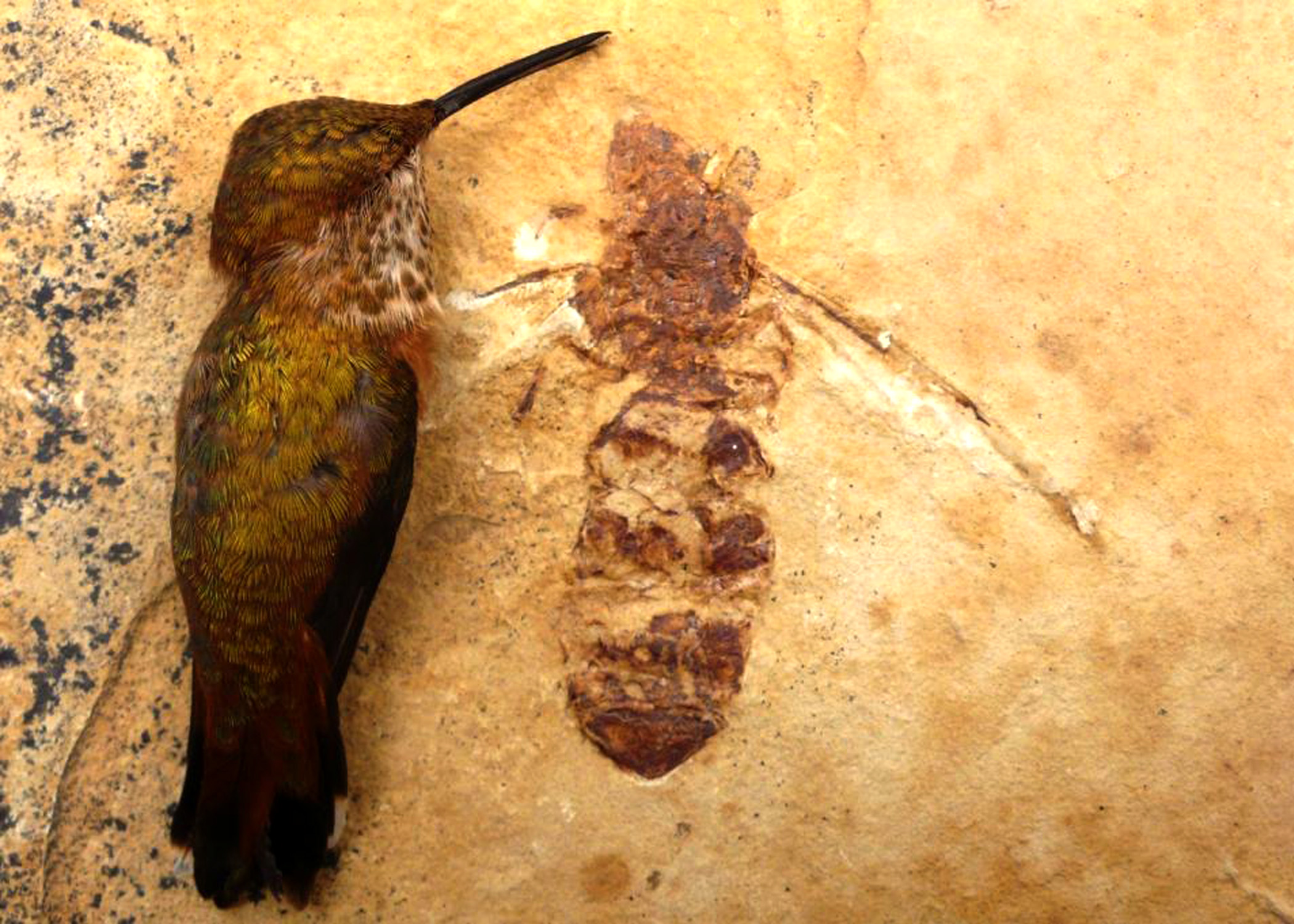
(above: relative size compared to a hummingbird)
  • Animal: Titanomyrma lubei
  • Name Pronunciation: Tie-tan-oh-my-r-muh lube-ee
  • Name Meaning: "Lube's titanic ant;" Titano refers to the Titans of Greek Mythology; myrma comes from myrmex, which is Latin for "ant," gender feminine; lubei honors Louis Lube, the collector of the holotype specimen
  • Named By: Archibald et al. - 2011
  • Classification: Life, Eukaryota, Animalia, Arthropoda, Insecta, Hymenoptera, Formicidae, Formiciinae
  • When: ~ 49,500,000 B.C.E. (Ypresian stage of the Eocene epoch)
  • Where: North America (Tennessee and Wyoming, U.S.A.)
  • Size: *see below*
  • Diet: Unknown
I don't know how many of you seen the BBC mini-documentary series, Walking With Beasts, but if you have you may recall a scene where a colony of massive ants strips a baby Gastornis of its flesh. Let me tell you, as a kid that scene can mess you up. Although it was never named in the show itself, Titanomyrma is the genus this was meant to be. (For those of you that have seen it, this clip is waht I was talking about)
Contrary to what is said in the clip, this was not the largest ant ever, but it is tied for the title. Queen Titanomyrma ants measured as long as modern queen driver ants (genus Dorylus): up to 2 inches (5.08 centimeters). We don't actually know this diet of this bugger, but if it was carnivorous, it would of been the bane of every contemporary insect. Species in the genus Titanomyrma have been found in Europe (Germany). So how did this ant end up of both sides of the Atlantic? Well, during the Eocene, Earth's climate was warmer than it is today and Europe and North America were closer together. There was also land bridges. So, as Archibald put it, "You could have walked from Vancouver to London." You know that kids song "the ants go marching one by one hurrah hurrah...?" Well in this case the ants were marching across prehistoric land bridges...hurrah hurrah.

6e193aa919e2e20cf932024f86dbb2b4.jpg

latest

Titanomyrma_gigantea_01.jpg


Picture and Information Sources:
 
On another thread @ZooBinh talked of his "fondness" ants, so here you go Mr. ZooBinh...

NUMBER THIRTY-ONE:
It wasn't a bird, or a plane, but if it was carnivorous, it would of been a massive fricking pain.

Titanomyrma_lubei_02.jpg

(above: relative size compared to a hummingbird)
  • Animal: Titanomyrma lubei
  • Name Pronunciation: Tie-tan-oh-my-r-muh lube-ee
  • Name Meaning: "Lube's titanic ant;" Titano refers to the Titans of Greek Mythology; myrma comes from myrmex, which is Latin for "ant," gender feminine; lubei honors Louis Lube, the collector of the holotype specimen
  • Named By: Archibald et al. - 2011
  • Classification: Life, Eukaryota, Animalia, Arthropoda, Insecta, Hymenoptera, Formicidae, Formiciinae
  • When: ~ 49,500,000 B.C.E. (Ypresian stage of the Eocene epoch)
  • Where: North America (Tennessee and Wyoming, U.S.A.)
  • Size: *see below*
  • Diet: Unknown
I don't know how many of you seen the BBC mini-documentary series, Walking With Beasts, but if you have you may recall a scene where a colony of massive ants strips a baby Gastornis of its flesh. Let me tell you, as a kid that scene can mess you up. Although it was never named in the show itself, Titanomyrma is the genus this was meant to be. (For those of you that have seen it, this clip is waht I was talking about)
Contrary to what is said in the clip, this was not the largest ant ever, but it is tied for the title. Queen Titanomyrma ants measured as long as modern queen driver ants (genus Dorylus): up to 2 inches (5.08 centimeters). We don't actually know this diet of this bugger, but if it was carnivorous, it would of been the bane of every contemporary insect. Species in the genus Titanomyrma have been found in Europe (Germany). So how did this ant end up of both sides of the Atlantic? Well, during the Eocene, Earth's climate was warmer than it is today and Europe and North America were closer together. There was also land bridges. So, as Archibald put it, "You could have walked from Vancouver to London." You know that kids song "the ants go marching one by one hurrah hurrah...?" Well in this case the ants were marching across prehistoric land bridges...hurrah hurrah.

6e193aa919e2e20cf932024f86dbb2b4.jpg

latest

Titanomyrma_gigantea_01.jpg


Picture and Information Sources:
"Thank you"
 
NUMBER THIRTY-TWO: Legendary Australian Steve Irwin wrangled some dangerous crocs in his day. But this next reptile would of been a challenge for even him

q09bxzohnnh11.jpg

  • Animal: Quinkana
  • Name Pronunciation: Quin-kahn-ah
  • Name Meaning: "Native spirit;" named after Quinkans of Aboriginal mythology
  • Species: Q. fortirostrum (type), Q. babarra, Q. meboldi, and Q. timara
  • Named By: Molnar - 1981
  • Classification: Life, Eukaryota, Animalia, Chordata, Vertebrata, Gnathostomata, Osteichthyes, Sarcopterygii, Tetrapodomorpha, Tetrapoda, Reptiliomorpha, Amniota, Sauropsida, Eureptilia, Sauria, Archosauromorpha, Archosauriformes, Archosauria, Pseudosuchia, Paracrocodylomorpha, Loricata, Crocodylomorpha, Crocodyliformes, Mesoeucrocodylia, Metasuchia, Eusuchia, Crocodilia, Crocodylidae, Mekosuchinae
  • When: ~ 24,000,000 B.C.E. to 38,000 B.C.E.
  • Where: Oceania (Australia)
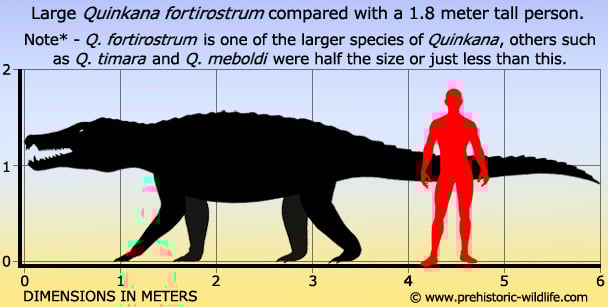
  • Size: 10 to 20 feet (3.05 to 6.10 meters)
  • Diet: Carnivore
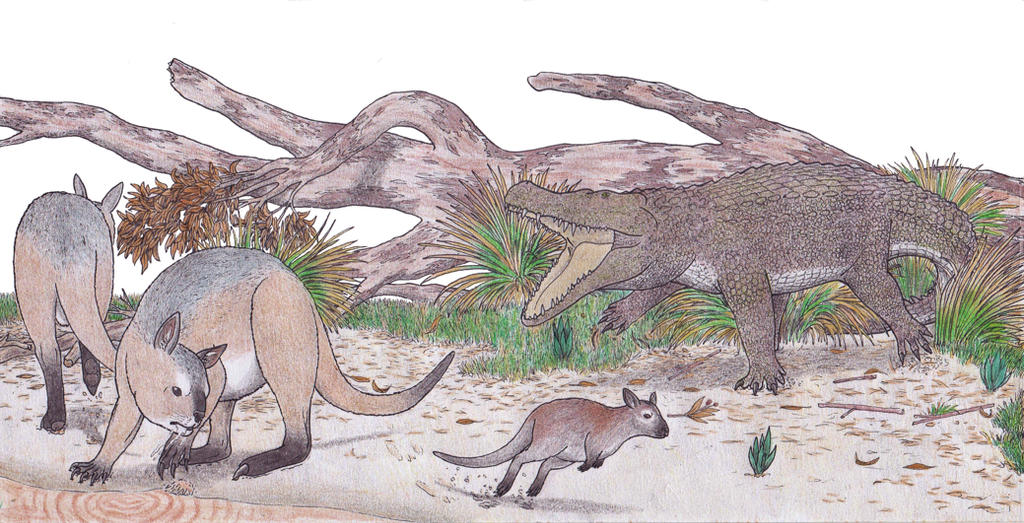
Quinkana was one of the last, if not the last, terrestrial crocodilians. Modern crocodilians, when on land, usually walk with their bellies dragging along the ground but are also capable of doing what is called the "high walk," with the limbs held almost vertically. Quinkana moved around in a constant high walk. When chasing prey, it would of galloped like modern freshwater crocodiles have been documented doing. Aquatic crocodiles typically have conical teeth that are very good for holding onto struggling prey as they drown it underwater. However, because it lived on the land, Quinkana could not use water to drown its prey, so conical teeth would be of limited use. Instead the teeth were more like knives, compressed laterally and with serrated edges. This means that a bite from Quinkana would do a lot of damage to a softer bodied prey item like a mammal. Even if the prey survived the initial attack and escaped it would probably succumb to shock and blood loss in a short space of time, meaning Quinkana would just have to bide its time until the prey was too weak to escape. Modern Australia is a weird place (no offense Aussies), but prehistoric Australia was 10 times weirder. Quinkana is one example but here are couple of this guy's equally as weird contemporaries: Procoptodon goliah (largest kangaroo ever; so big it couldn't hop, instead it walked bipedally like a human), Diprotodon optatum (largest wombat ever; as big as a cow), Dromornis stirtoni (possibly the second largest bird ever), Varanus priscus (largest non-mosasaur lizard ever and largest venomous animal ever), and Thylacoleo carnifex (leopard-sized carnivorous marsupial and the largest carnivorous marsupial ever).

quinkana-size.jpg

52607745_261707931423128_1246262659106468895_n.jpg

Quinkana-fortirostrum-(WB)-738x591.jpg

landcroc_by_dontknowwhattodraw94-d93f6el.jpg

(Below: Quinkana vs. Procoptodon goliah)
7d72f6877ec357032e68b7af08f94ac0.jpg

(Below: Quinkana vs. Thylacoleo carnifex)
mt5n59e9lsg21.jpg

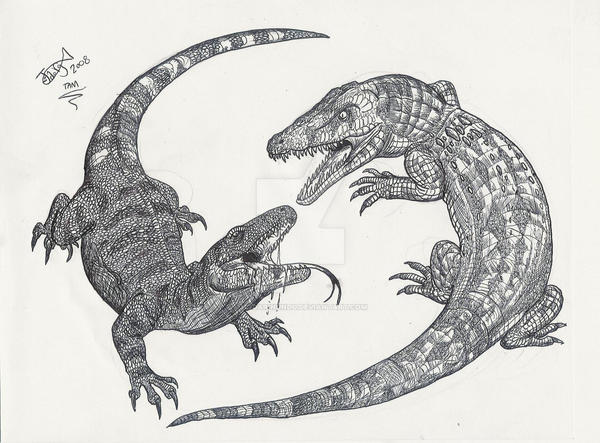
(Below: Quinkana vs. Varanus priscus)
megalania_vs_quinkana_by_hodarinundu-d1fgawk.jpg

(Below: Diprotodon optatum)
6196390a-f9c6-4ba0-a172-d5a1debf3169_1.b21ba66ed324a9597e1cf2dd21307730.jpeg

(Below: Dromornis stirtoni)
2016-06-10_Dromornis_640.jpg


Picture and Information Sources:
 
I'd suggest Oncorhynchus rastrosus, as it clearly lives up to the cartoon image of prehistoric ancestors of modern animals (= gigantic & saber-toothed) spread by Gary Larson et al.
 
Back
Top