Hipporex's Guide to Interesting and Unique Prehistoric Fauna

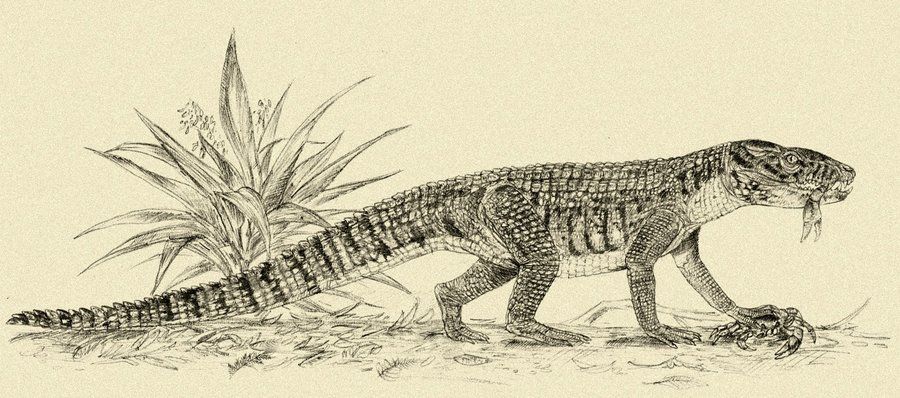
After @Chlidonias pointed out my error I looked it up and found that last terrestrial crocodile was indeed not Quinkana but Mekosuchus. The genus lived on South Pacific islands from 25,000,000 B.C.E. to 3,000 years ago.
2c5bfa42889de879501cc6d6569cdf50.jpg
 
I'd suggest Oncorhynchus rastrosus, as it clearly lives up to the cartoon image of prehistoric ancestors of modern animals (= gigantic & saber-toothed) spread by Gary Larson et al.

giphy.gif


NUMBER THIRTY-THREE: One Fish, Two Fish, Red Fish, Bigaft Monster Fish

oncorhynchus-rastrosus_lucas-lima.jpg

  • Animal: Super salmon (Oncorhynchus rastrosus)
  • Name Pronunciation: On-ko-rin-kus ras-tro-sus
  • Name Meaning: Oncorhynchus means "hook nose"
  • Named By: Cavender and Miller - 1972
  • Classification: Life, Eukaryota, Animalia, Chordata, Vertebrata, Gnathostomata, Osteichthyes, Actinopterygii, Salmoniformes, Salmonidae
  • When: ~ 12,000,000 B.C.E. to 5,000,000 B.C.E. (Late Miocene through to the Pleistocene)
  • Where: North America (United States (California, Oregon, and Washington))
  • Size: *see below*
  • Diet: *see below*
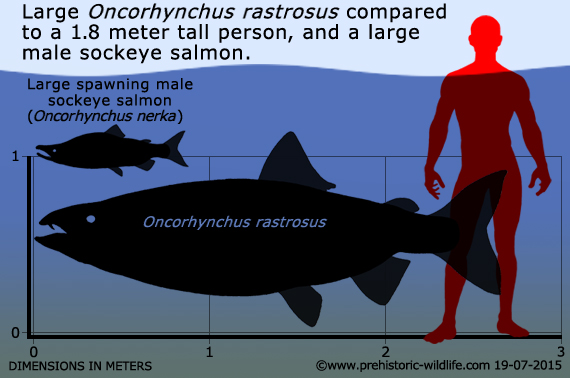
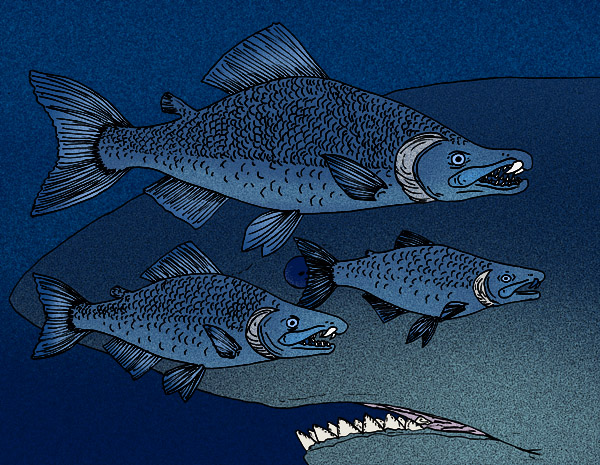
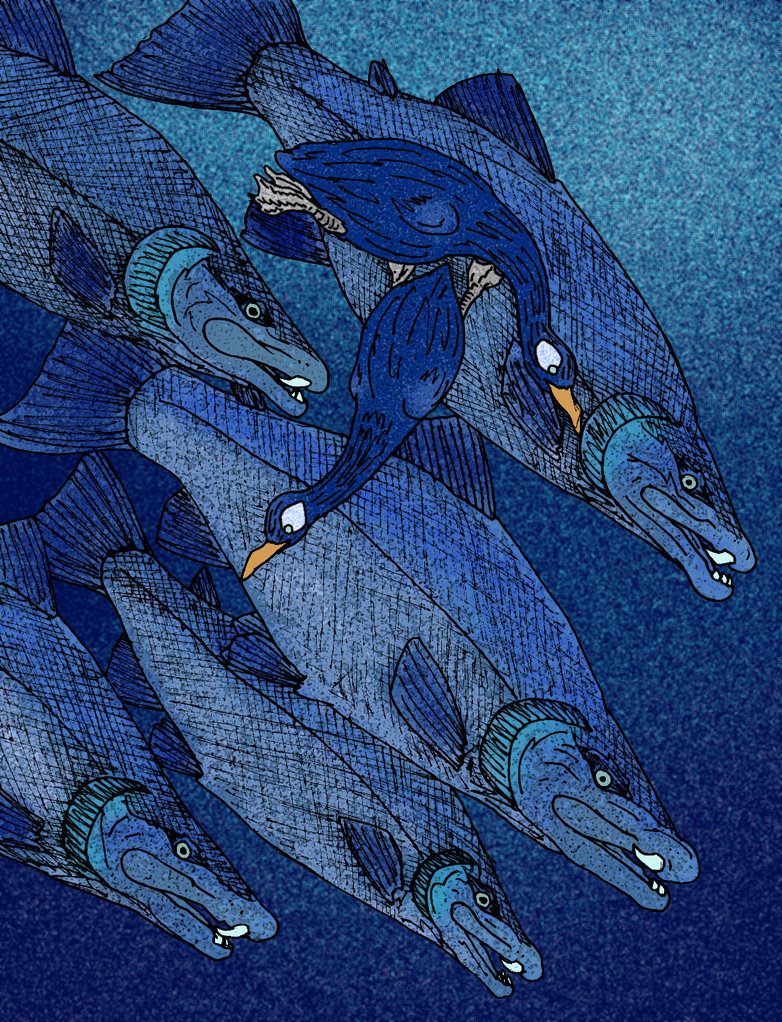
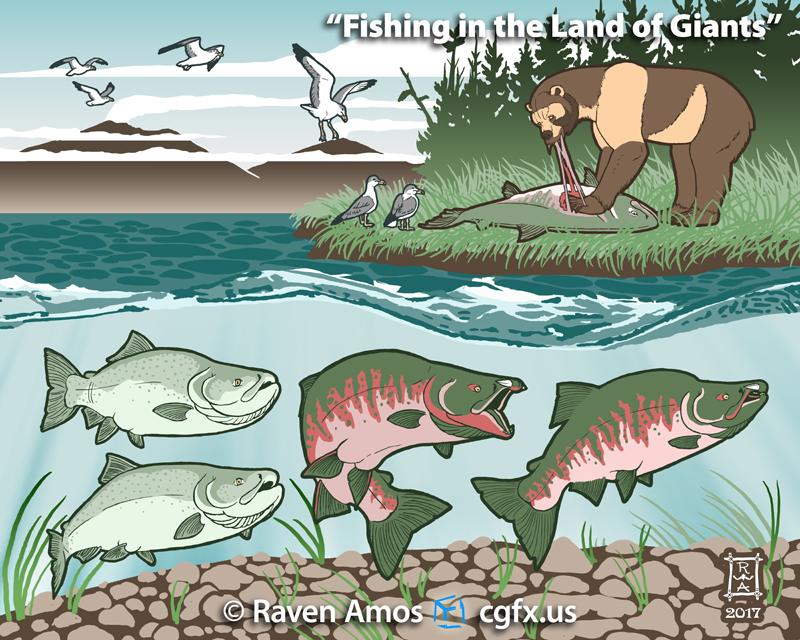
The genus Oncorhynchus is still alive today but none of the living species get quite this big. Adult super salmon measured 9 feet (2.74 meters) long and may have measured up to 400 pounds (181.43 kilograms). Like modern salmon, this species probably lived life in the ocean but swan up river to spawn. Large gill-rakes and fossilized teeth suggest this species was planktivorous. Exceptionally high levels of plankton have also been recorded in Miocene aged marine deposits,‭ ‬which reveals that super salmon probably grew so big as a result of both a greater abundance of food,‭ ‬as well as a slower lifestyle which would not require calories for fast pursuit swimming,‭ ‬meaning that more could go to growth. The super salmon had two, large 0.8 to 1.2 inch (2 to 3 centimeter) long upper tusk-shaped teeth. It's worth noting I don't think the exact position of the tusks in a living fish is known as reconstructions seem to depict them in varying positions. To see if the tusk-shaped teeth played an important role in breeding of this species, researchers compared 51 different fossils from ancient deposits of both freshwater and saltwater environments. Teeth from freshwater deposits are not only larger, but they are also more recurved, and the tooth tips more worn and blunt. In addition, their bony tooth bases are considerably larger. Teeth from coastal marine deposits are smaller, straighter, their tooth tips sharper, and their tooth bases smaller. This supports our hypothesis that the super salmon did developmentally change between the marine and freshwater stages of their lives, as modern salmon do today. The paleontologists think it is likely super salmon were using their tusk-shaped teeth for fighting and display against each other during the spawning season. One can imagine prehistoric bears catching these goliath salmon and pulling them up on the bank.

oncorhynchus-rastrosus-size.jpg

Oncorhynchus_rastrosus.JPG

onchorhynchus_rastrosus_by_avancna-2.jpg

fishinglandgiants_cgfx.jpg

CRldiXrUYAEvtWx.png

news_efix-image-20120922sabertooth_salmon-1jpg.jpg


Picture and Information Sources:
 
Last edited:
giphy.gif


NUMBER THIRTY-THREE: One Fish, Two Fish, Red Fish, Bigaft Monster Fish

oncorhynchus-rastrosus_lucas-lima.jpg

  • Animal: Super salmon (Oncorhynchus rastrosus)
  • Name Pronunciation: On-ko-rin-kus ras-tro-sus
  • Name Meaning: Oncorhynchus means "hook nose"
  • Named By: Cavender and Miller - 1972
  • Classification: Life, Eukaryota, Animalia, Chordata, Vertebrata, Gnathostomata, Osteichthyes, Actinopterygii, Salmoniformes, Salmonidae
  • When: ~ 12,000,000 B.C.E. to 5,000,000 B.C.E. (Late Miocene through to the Pleistocene)
  • Where: North America (United States (California, Oregon, and Washington))
  • Size: *see below*
  • Diet: *see below*
The genus Oncorhynchus is still alive today but none of the living species get quite this big. Adult super salmon measured 9 feet (2.74 meters) long and may have measured up to 400 pounds (181.43 kilograms). Like modern salmon, this species probably lived life in the ocean but swan up river to spawn. Large gill-rakes and fossilized teeth suggest this species was planktivorous. Exceptionally high levels of plankton have also been recorded in Miocene aged marine deposits,‭ ‬which reveals that super salmon probably grew so big as a result of both a greater abundance of food,‭ ‬as well as a slower lifestyle which would not require calories for fast pursuit swimming,‭ ‬meaning that more could go to growth. The super salmon had two, large 0.8 to 1.2 inch (2 to 3 centimeter) long upper tusk-shaped teeth. It's worth noting I don't think the exact position of the tusks in a living fish is known as reconstructions seem to depict them in varying positions. To see if the tusk-shaped teeth played an important role in breeding of this species, researchers compared 51 different fossils from ancient deposits of both freshwater and saltwater environments. Teeth from freshwater deposits are not only larger, but they are also more recurved, and the tooth tips more worn and blunt. In addition, their bony tooth bases are considerably larger. Teeth from coastal marine deposits are smaller, straighter, their tooth tips sharper, and their tooth bases smaller. This supports our hypothesis that the super salmon did developmentally change between the marine and freshwater stages of their lives, as modern salmon do today. The paleontologists think it is likely super salmon were using their tusk-shaped teeth for fighting and display against each other during the spawning season. One can imagine prehistoric bears catching these goliath salmon and pulling them up on the bank.

oncorhynchus-rastrosus-size.jpg

Oncorhynchus_rastrosus.JPG

onchorhynchus_rastrosus_by_avancna-2.jpg

fishinglandgiants_cgfx.jpg

CRldiXrUYAEvtWx.png

news_efix-image-20120922sabertooth_salmon-1jpg.jpg


Picture and Information Sources:
Nice mustache.
 
giphy.gif


NUMBER THIRTY-THREE: One Fish, Two Fish, Red Fish, Bigaft Monster Fish

oncorhynchus-rastrosus_lucas-lima.jpg

  • Animal: Super salmon (Oncorhynchus rastrosus)
  • Name Pronunciation: On-ko-rin-kus ras-tro-sus
  • Name Meaning: Oncorhynchus means "hook nose"
  • Named By: Cavender and Miller - 1972
  • Classification: Life, Eukaryota, Animalia, Chordata, Vertebrata, Gnathostomata, Osteichthyes, Actinopterygii, Salmoniformes, Salmonidae
  • When: ~ 12,000,000 B.C.E. to 5,000,000 B.C.E. (Late Miocene through to the Pleistocene)
  • Where: North America (United States (California, Oregon, and Washington))
  • Size: *see below*
  • Diet: *see below*
The genus Oncorhynchus is still alive today but none of the living species get quite this big. Adult super salmon measured 9 feet (2.74 meters) long and may have measured up to 400 pounds (181.43 kilograms). Like modern salmon, this species probably lived life in the ocean but swan up river to spawn. Large gill-rakes and fossilized teeth suggest this species was planktivorous. Exceptionally high levels of plankton have also been recorded in Miocene aged marine deposits,‭ ‬which reveals that super salmon probably grew so big as a result of both a greater abundance of food,‭ ‬as well as a slower lifestyle which would not require calories for fast pursuit swimming,‭ ‬meaning that more could go to growth. The super salmon had two, large 0.8 to 1.2 inch (2 to 3 centimeter) long upper tusk-shaped teeth. It's worth noting I don't think the exact position of the tusks in a living fish is known as reconstructions seem to depict them in varying positions. To see if the tusk-shaped teeth played an important role in breeding of this species, researchers compared 51 different fossils from ancient deposits of both freshwater and saltwater environments. Teeth from freshwater deposits are not only larger, but they are also more recurved, and the tooth tips more worn and blunt. In addition, their bony tooth bases are considerably larger. Teeth from coastal marine deposits are smaller, straighter, their tooth tips sharper, and their tooth bases smaller. This supports our hypothesis that the super salmon did developmentally change between the marine and freshwater stages of their lives, as modern salmon do today. The paleontologists think it is likely super salmon were using their tusk-shaped teeth for fighting and display against each other during the spawning season. One can imagine prehistoric bears catching these goliath salmon and pulling them up on the bank.

oncorhynchus-rastrosus-size.jpg

Oncorhynchus_rastrosus.JPG

onchorhynchus_rastrosus_by_avancna-2.jpg

fishinglandgiants_cgfx.jpg

CRldiXrUYAEvtWx.png

news_efix-image-20120922sabertooth_salmon-1jpg.jpg


Picture and Information Sources:
Honestly, I would eat it, it looks good...
 
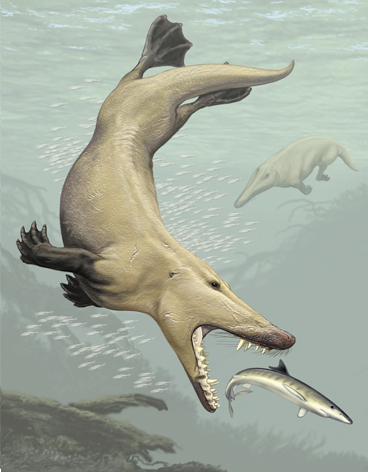
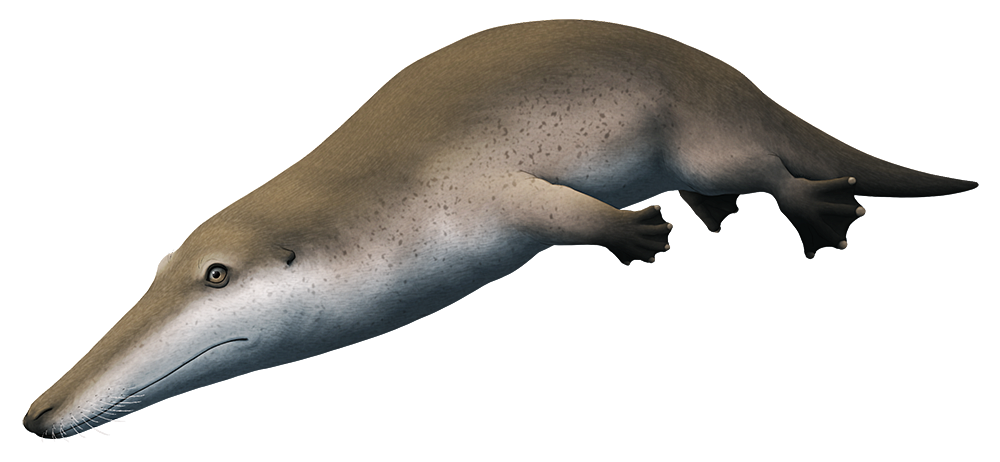
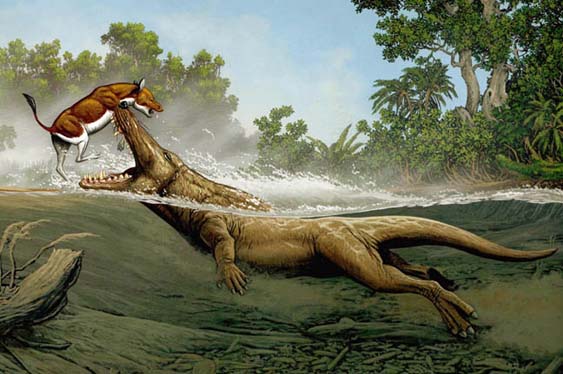
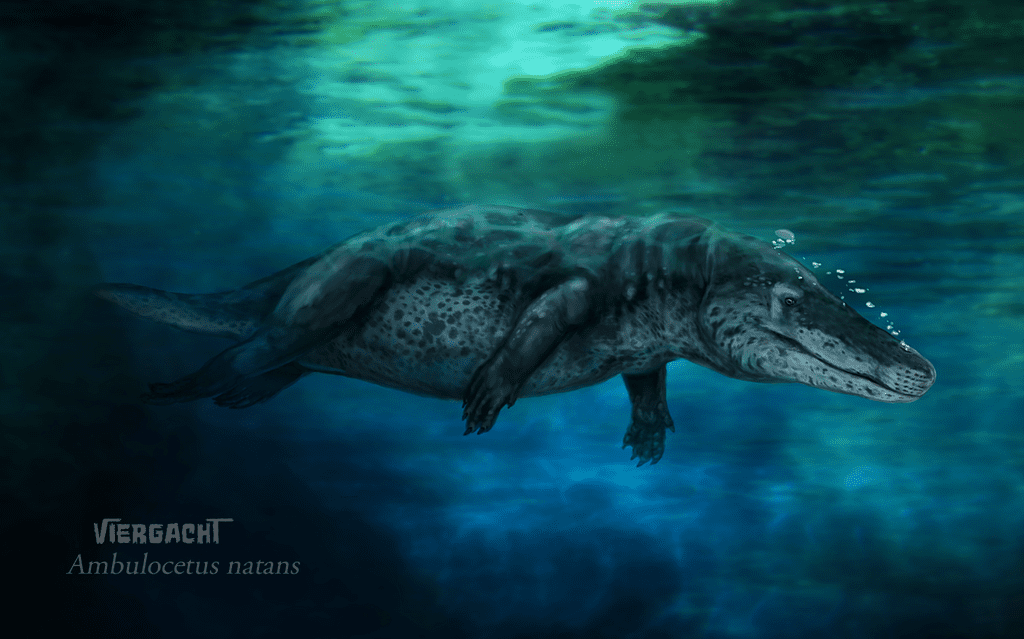
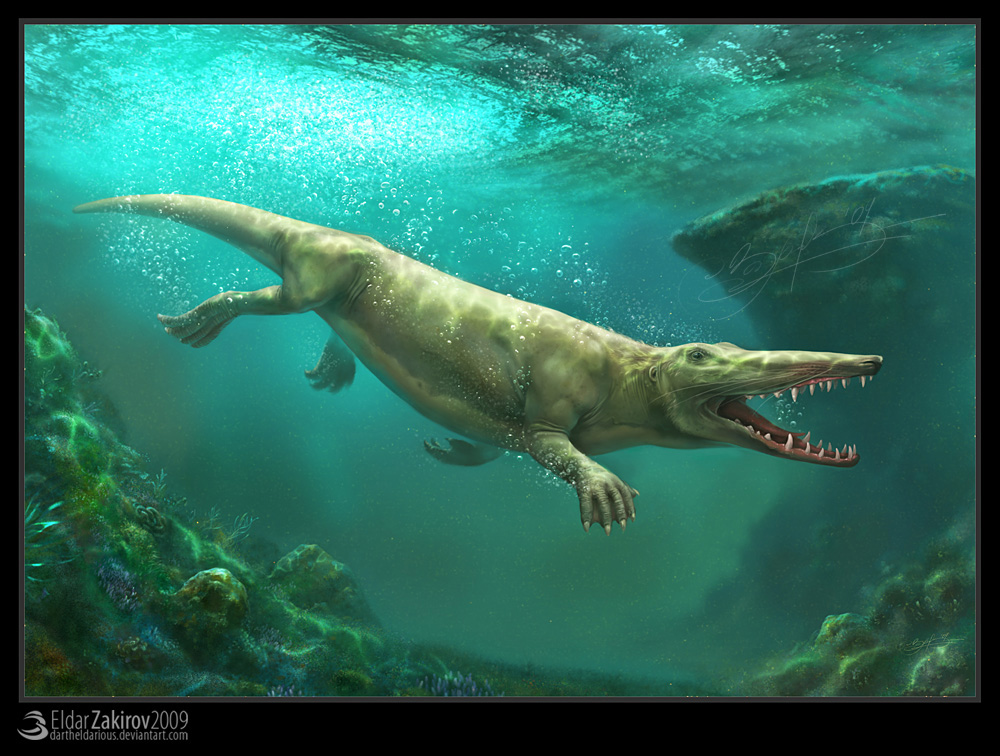
NUMBER THIRTY-FOUR: It may be a cetacean but it would of looked more like a hairy crocodile

fH4inHe.jpg

  • Animal: Ambulocetus natans
  • Name Pronunciation: Am-bu-loh-cee-tuss nay-tans
  • Name Meaning: "Whale that walks and swims"
  • Named By: Hans Thewissen et al. - 1994
  • Classification: Life, Eukaryota, Animalia, hordata, Vertebrata, Gnathostomata, Osteichthyes, Sarcopterygii, Tetrapodomorpha, Tetrapoda, Reptiliomorpha, Amniota, Synapsida, Therapsida, Mammalia, Placentilia, Boreoeutheria, Ungulata, Artiodactyla, Whippomorpha, Cetacea, Archaeoceti,‭ ‬Ambulocetidae
  • When: ~ 47,800,000 B.C.E. to 41,300,000 B.C.E. (Eocene epoch)
  • Where: Asia (Pakistan)
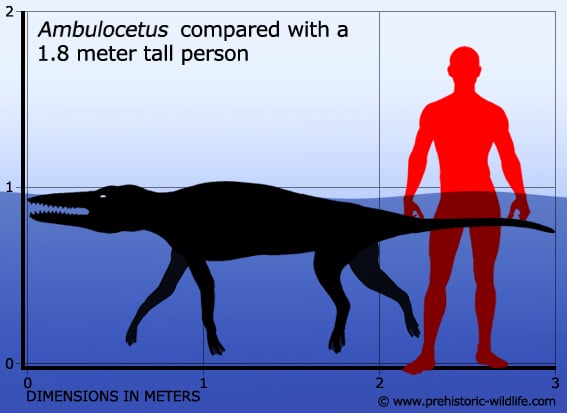
  • Size: 9.84 feet (3 meters)
  • Diet: Carnivore
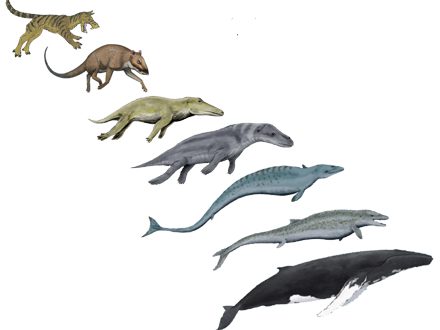
Along with other ambulocetids, A. natans was a transitional species that shows us that whales evolved from land-living ungulates. However, despite what its name translates to, the most recent research suggests this species was entirely aquatic. This animal swam by undulating its back vertically. Chemical analysis of its teeth shows that it could move between salt and fresh water. It also lacked external ears. Its skull had a long snout and eyes facing sideways, located high on the skull like in modern hippos. Ambulocetus had a feeding morphology similar to that of crocodiles: a long snout, pointed teeth, and strong jaw adductor muscles. Like crocodilians, Ambulocetus probably killed its prey by holding it in its jaw and either drowning it or thrashing it with violent motions. Similar to larger crocodilians, adult Ambulocetus probably were ambush predators that fed on larger fish, aquatic tetrapods and possibly terrestrial animals near the water. In contrast to crocodilians, it may have chewed its prey but probably did minimal food processing with its teeth.

ambulocetus-size.jpg

1200px-Ambulocetus_natans.jpg

f45fbc997750cdc7f89f9c6e57747460.png

Ambulocetus.jpeg

1471296530788
1173_ambulocetus_viergacht.png

latest

rushelle-kucala-2ambulocetusrestored.jpg

latest

nicholas-litvinenko-ambulotsetys.jpg

71yU4A0azUL._SY679_.jpg

43915419_296685847609555_3311988152897235133_n.jpg

ambulocetus_by_dartheldarious.jpg

ambulocetus-natans_lucas-lima.jpg

(Below: A. natans is third down)
whale-evolution.jpg


Picture and Information Sources:
 
NUMBER THIRTY-FIVE: From one intersting aquatic to another

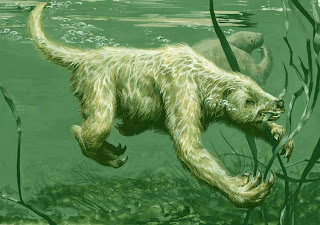
header-sloths-in-the-water.jpg

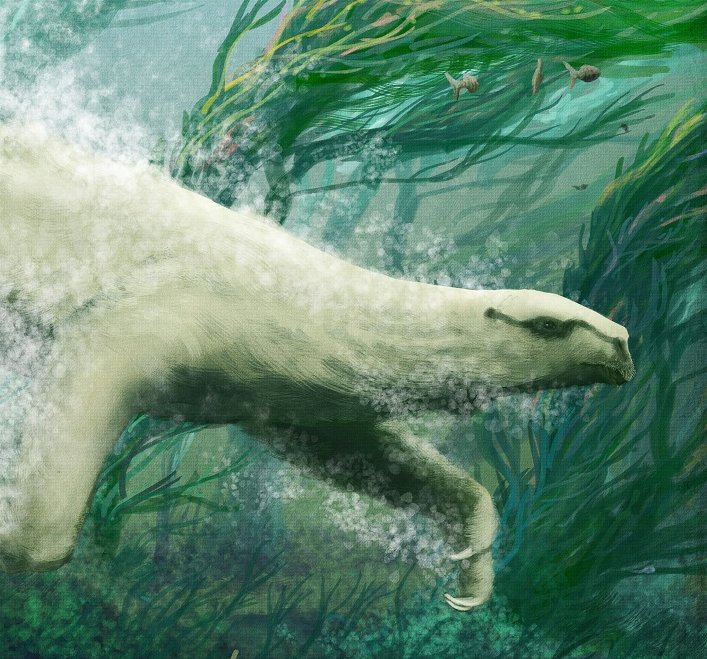
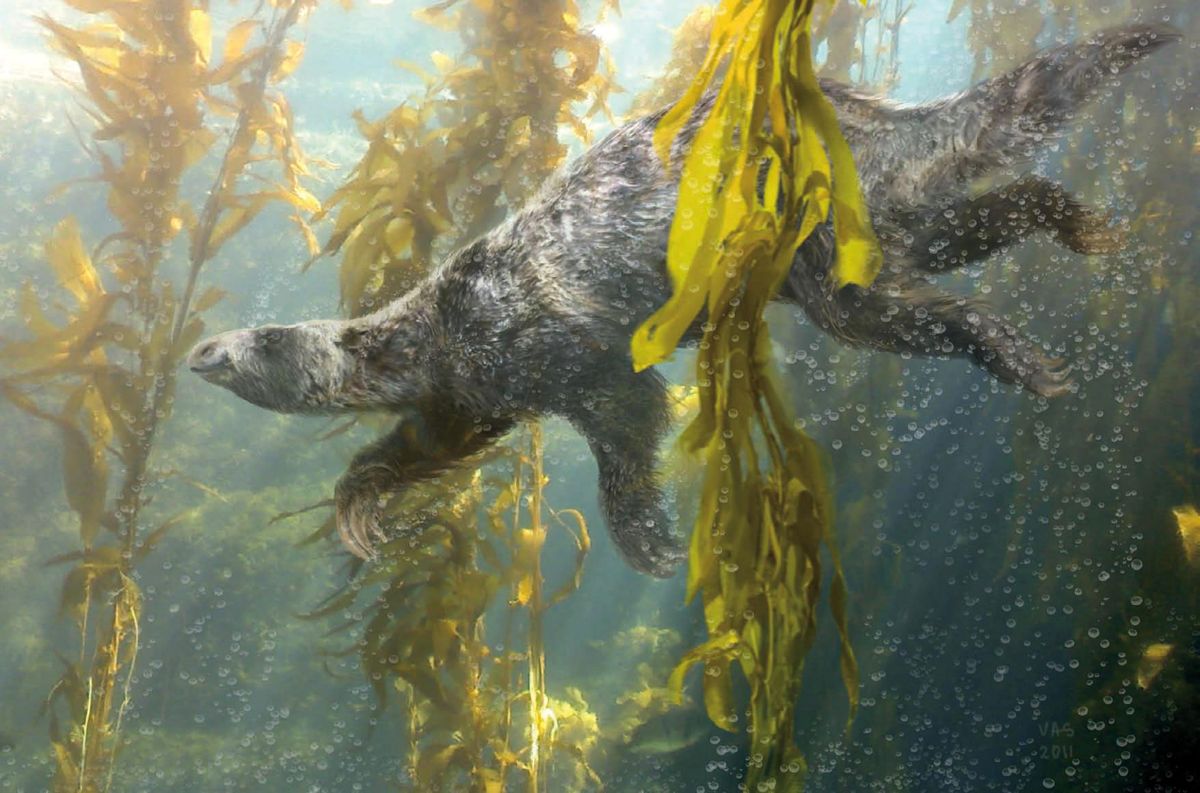
  • Animal: Marine sloth (Thalassocnus)
  • Species: T. antiquus, T. carolomartini, T. littoralis, T. natans (type species), and T. yuacensis
  • Name Pronunciation: Thalassocnus means "sea sloth;" antiquus means "ancient;" carolomartini honors honor of Carlos Martin, the man how found the holotype bones for this species; littoralis means "seashore;" natans means "swimming;" yuacensis means "from Yuaca," the village near where the species was found
  • Named By: Christian de Muizon and H. Gregory McDonald - 1995
  • Classification: Life, Eukaryota, Animalia, Chordata, Vertebrata, Gnathostomata, Osteichthyes, Sarcopterygii, Tetrapodomorpha, Tetrapoda, Reptiliomorpha, Amniota, Synapsida, Therapsida, Mammalia, Placentilia, Xenarthra, Pilosa, Folivora, Megatheriidae, Thalassocninae
  • When: ~ 7,000,000 B.C.E. to 3,000,000 B.C.E.
  • Where: South America (Chile and Peru)
  • Size: Up to 11 feet (3.35 meters) long
  • Diet: Herbivore
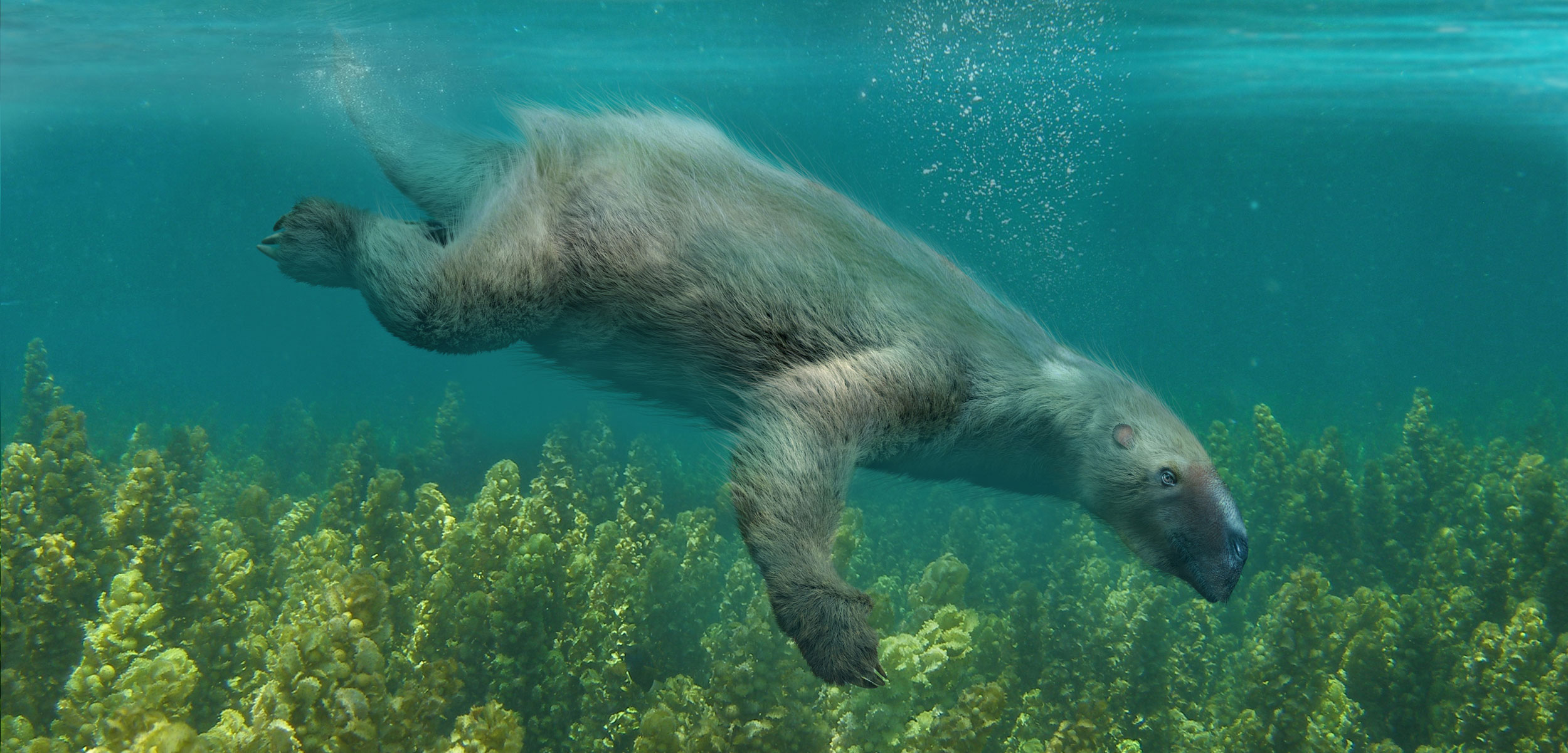
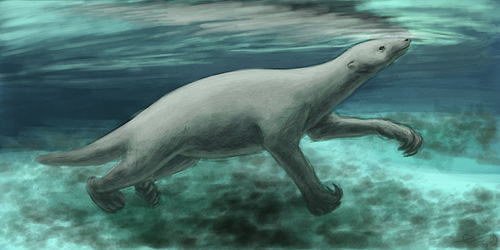
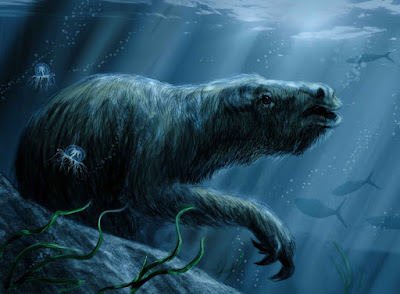
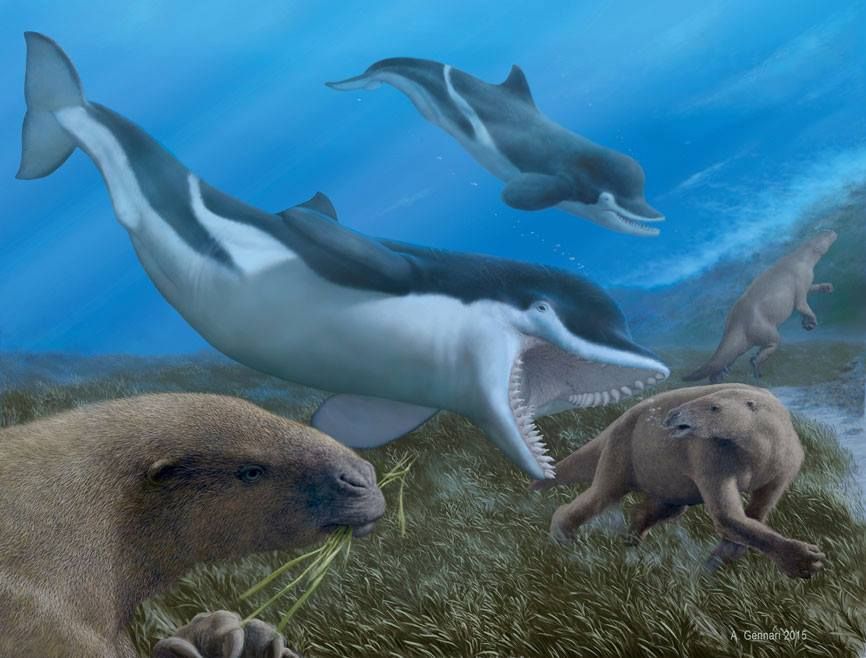
The marine sloth was a genus of semiaquatic (for older species) or fully aquatic (for younger species) mammal. The marine sloth evolved several marine adaptations over the course of 4 million years, such as dense and heavy bones to counteract buoyancy, the internal nostrils migrating farther into the head to help with breathing while completely submerged, the snout becoming more elongated and wide to better consume aquatic plants, and the head angling farther and farther downwards to aid in bottom tail. The long tail was probably used for diving and balance similarly to the modern day beaver or platypus. It probably walked across the seafloor and dug up food with its claws. They probably could not do high-powered swimming, relying on paddling if necessary. Early species were probably generalist grazers eating seaweed and seagrasses close to shore, whereas later species specialized on seagrasses farther off the coast. Marine sloths lived alongside and where probably hunted by giant predatory toothed cetaceans and giant sharks (including megalodon). Marine sloths went extinct about 3 million years ago, around the time the Isthmus of Panama closed and the Pacific Ocean became cut off from what is now the Caribbean Sea. This transition caused the waters off South America to become much colder than they had been, killing off the sea grasses the sloths fed on. Researchers think the sloths went extinct either due to the loss of their main food source, or simply because they were unable to tolerate the cold water.

1024px-Thalassocnus_size.svg.png

large_Sid_1.jpg

807d488c4fbd21e88cc4ba5ba549b0db.png

Thalassocnus-1-738x591.jpg

thalassocnus%2B4.jpg

Thalassocnus.jpg

DFufka2W0AACXIB.jpg

thalassocnus.%E3%82%BF%E3%83%A9%E3%83%83%E3%82%BD%E3%82%AF%E3%83%8C%E3%82%B9.%E5%8D%8A%E6%B0%B4%E6%A3%B2%E3%83%8A%E3%83%9E%E3%82%B1%E3%83%A2%E3%83%8E.jpg

thalassocnus_natans_by_wsnyder_d702syz-pre.jpg

Thalassocnus.jpg

811cff6d86980f6f70bfac32539edb1f.jpg

(Below: Marine sloth vs. shark)
44862944_534551243675780_1225238818692101739_n.jpg

(Below: predatory toothed cetaceans hunting marine sloths)
3df754454c3d1eef255e5e1b323fc11a.jpg


Picture and Information Sources:
 
Last edited:
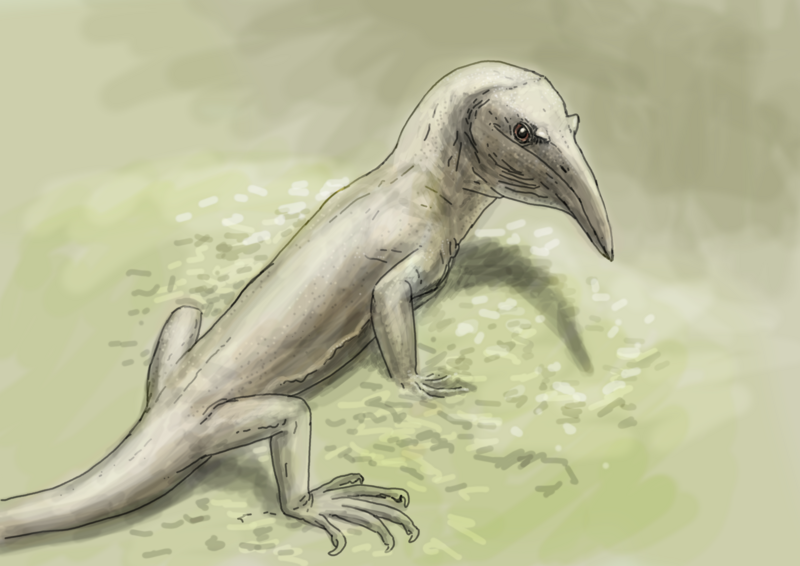
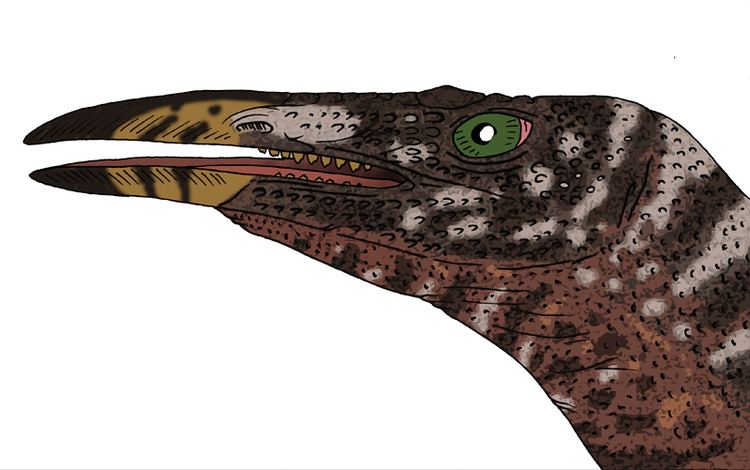
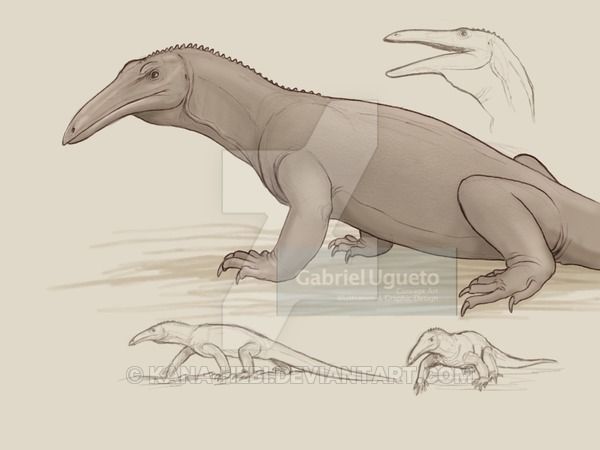
NUMBER THIRTY-SIX: The nose nose all

teraterpeton_portrait_by_prehistorybyliam_dd1vehf-pre.jpg

  • Animal: Schnoz lizard (Teraterpeton hrynewichorum)
  • Name Pronunciation: Te-rat-er-pe-ton
  • Named By: Teraterpeton means "Wonderful creeping thing"
  • Classification: Life, Eukaryota, Animalia, Chordata, Vertebrata, Gnathostomata, Osteichthyes, Sarcopterygii, Tetrapodomorpha, Tetrapoda, Reptiliomorpha, Amniota, Sauropsida, Eureptilia, Sauria, Archosauromorpha, Allokotosauria, Trilophosauria, Trilophosauridae
  • When: ~ 230,000,000 B.C.E. (Carnian stage of the Late Triassic epoch)
  • Where: North American (Canada (Nova Scotia (Wolfville Formation)))
  • Size: Approximately 3.93 feet (120.09 centimeters) long
  • Diet: Unknown (*see below*)
Despite its common name, the schnoz lizard sat no where near lizards of the vertebrate family tree. Instead it belonged to a unique clade of archosaurs, Allokotosauria (Allokotosauria literally means "strange reptiles"). This is the same group that Shringasaurus indicus, a species we've already seen on here. This group is usually characterized by having proportionally small skulls, but as you can clearly see, this wasn't the case for the schnoz lizard. This little fellar had an elongated a rather skull. Over each eye socket was a bony projection. The front ‬half of the jaws were toothless.‭ ‬Half way back and extended to below the eye socket ‬small sharp teeth grew.‭ ‬The teeth in the upper and lower jaws interlocked with one another,‭ ‬with the cusps of upper teeth fitting into the pits of the lower teeth,‭ ‬and cusps of the lower teeth fitting into the pits of the upper teeth.‭ ‬At the time of writing there is no clear indication as to what the schnoz lizard ate. I would like to propose a theory, perhaps it was a insectivore? I suggest this because its elongated skull reminds me of the skulls of modern pangolins and anteaters. The only problem with this theory it, unlike those two extant mammals, this guy had teeth (pangolins and anteaters don't) and this guy din't appear to have specialized claws. Perhaps we won't know what this guy/girl (I don't assume) ate until we discover a cropolite (aka fossilized "brownies") or discover a fossil with undigested food in its rib cage.

teraterpeton_by_prehistorybyliam_dd1r6gp-pre.jpg

800px-Teraterpeton.png

45890731_264200547609623_8048829810348147001_n.jpg

teraterpeton-4419eed5-ea50-4968-961d-35f5385f45d-resize-750.jpeg

a7b43b5b3c038e0b93d37feedee29c4c--prehistoric-animals-prehistory.jpg

15827e58b370f5c2bf5b901ec31f07dd.jpg
\

Picture and Information Sources:
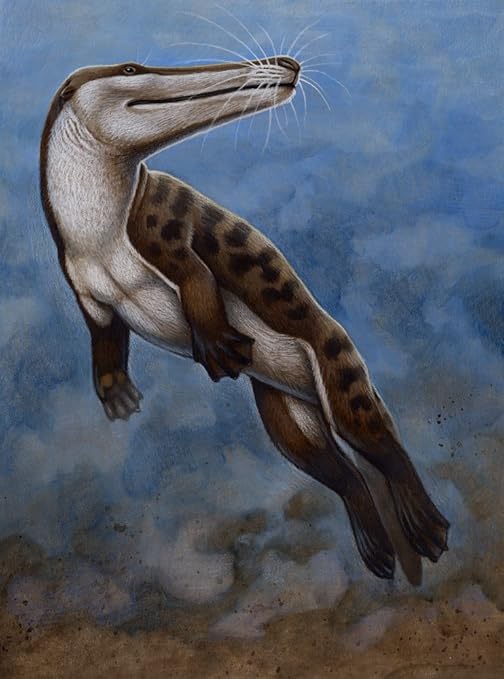
(Please note "schnoz lizard" is in no way this species English name but I found it fitting for this animal's physical appearance)
 
Last edited:
NUMBER THIRTY-SIX: Happy World Frog Day!

amazon-devil-frog-PHOTO.jpg

  • Animal: Beelzebufo ampinga
  • Name Pronunciation: Bee-zell-boo-foh am-ping-uh
  • Name Meaning: "Shielded devil toad"
  • Named By: Evans, Jones, & Krause, 2008
  • Classification: Life, Eukaryota, Animalia, Chordata, Vertebrata, Gnathostomata, Osteichthyes, Sarcopterygii, Tetrapodomorpha, Tetrapoda, Amphibia,‭ ‬Lissamphibia, Batrachia, Salientia, Anura, Ceratophryidae
  • When: ~ 70,000,000 B.C.E. to 65,500,000 B.C.E. (Maastrichtian stage of the Late Cretaceous epoch)
  • Where: Africa (Madagascar (Maevarano Formation))
  • Size: Big for a frog
  • Diet: Carnivore
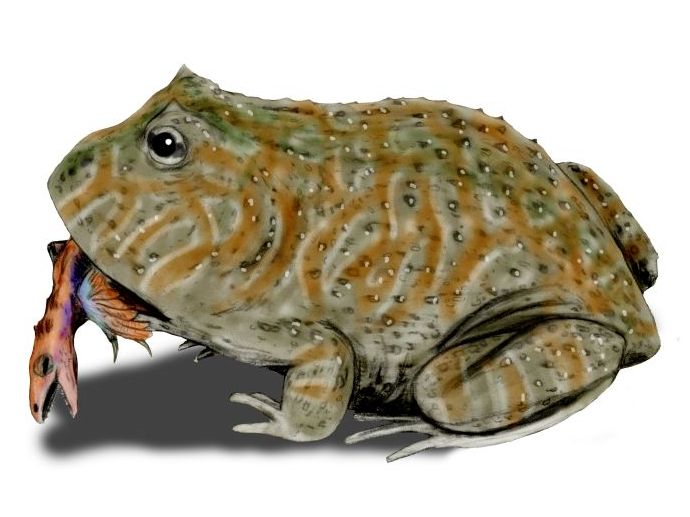
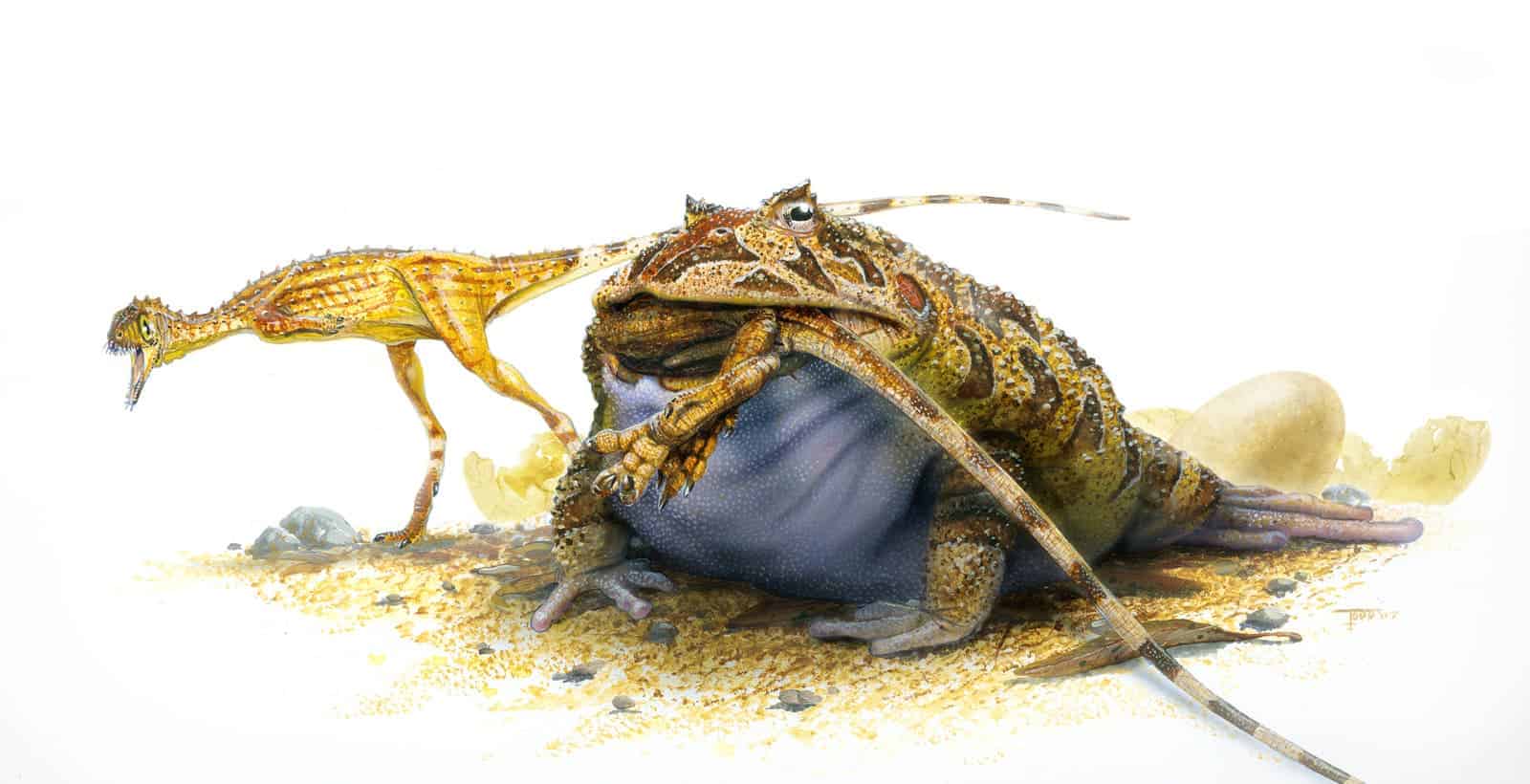
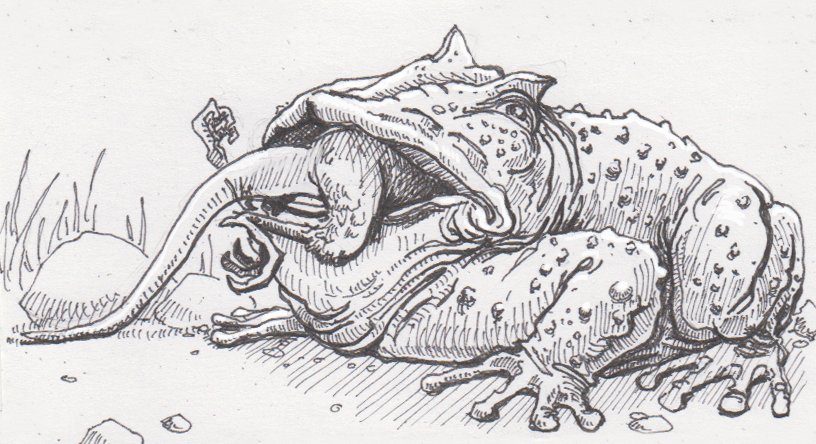
I no what you're thinking: "Hey?! Isn't that a picture of an a Surinam horned frog (Ceratophrys cornuta)?" You are correct, I chose that picture however as, as it was a member of Ceratophryidae, Beelzebufo looked a lot like this species. However, it was bigger, a lot bigger. The largest Argentine horned frogs measure 7.9 inches (20 centimeters) long, but the largest Beelzebufo measured up to an estimate 15.7 inches (39.88 centimeters) long, making it the biggest frog ever. The head of Beelzebufo was very big, and bones of the skull roof show a rugous external surface, indicating at least parts of the head may have borne bony scales. A 2014 study found armored plates embedded in the skin of its back. A 2017 study on the study found that ceratophryids, with head width of about 1.8 inches (4.5 cm), can bite with a force of 30 newtons. A scaling experiment, comparing bite force with head and body size, calculated that if Beelzebufo had similar jaw muscles, it may have had a bite up to 2,200 newtons. It is believed this animal feed on other amphibians, small mammals, and perhaps even baby dinosaurs.

devil-frog-illustration.jpg

the_devil_frog__beelzebufo_ampinga_by_rhysdylan01_dcm035q-350t.jpg

Beelzebufo_BW.jpg

giantpaleofrog_finalb-web1.jpg

a-large-beelzebufo-frog-eating-a-small-masiakasaurus_a-G-10807644-9436090.jpg

10-02-17-Beelzebufo-ampinga.png

51Gfnvw4pSL._SL1000_.jpg

279D40966D16AFFFB42037B13CC4841F4ECFB8DA

latest


The scariest depiction of Beelzebufo the internet has to offer...


maxresdefault.jpg


Picture and Information Sources:
 
I no what you're thinking: "Hey?! Isn't that a picture of an a Surinam horned frog (Ceratophrys cornuta)?"
I meant "know"
The largest Argentine horned frogs measure 7.9 inches (20 centimeters) long, but the largest Beelzebufo measured up to an estimate 15.7 inches (39.88 centimeters) long, making it the biggest frog ever.
I meant Surinam horned frog, I didn't mean Argentine horned frog.
A 2017 study on the study found
I have no idea what happened here

I figured I might as well correct my own spelling mistakes before someone else does. I apologize for my many spelling errors, writing has never been my strong suit. Although perhaps I should stop making excuses, and just proofread my dang posts before I hit "Post Reply."
 
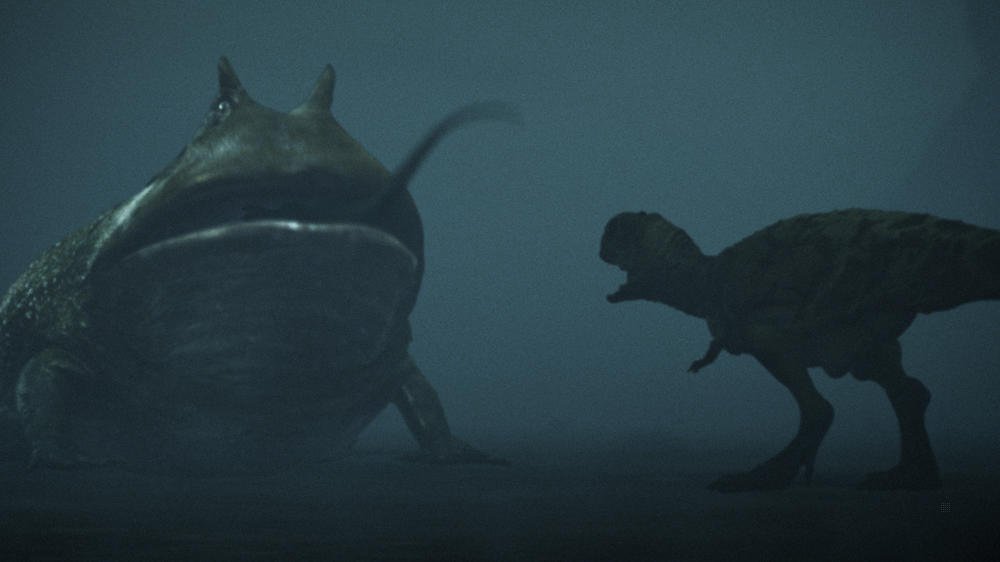
Ah yes, Beelzebufo, the thing that caused the second most amount of nightmares related to prehistoric life back when I was younger. After the ants ripping apart a Diatryma chick of course. Just like you said, that really messed me up as a kid. And the worst thing is, I haven't seen Walking with Beasts in years and I can still recall the scene with perfect detail. Anyway, Beelzebufo! When I was younger, I saw a documentary about dinosaurs, and I don't remember much about it, just that there was a Microraptor-esce dinosaur that led two baby let me think....I think they were Rugops? No, that's not it...Mapusaurus maybe? I don't remember. The point is, this Microraptor like dinosaur led two baby theropods into a area full of fog, so you couldn't see a freaking thing, then watched from a tree branch as the two babies, who were chasing it earlier, were devoured by the hungry froggo. The narrator then talked about how that type of dinosaur was exceptionally smart. Anyway, both the Beelzebufo and the other dino were eaten by the mother dino, but I was still in shock about the fact that a dinosaur just commited first-degree murder!
 
Ah yes, Beelzebufo, the thing that caused the second most amount of nightmares related to prehistoric life back when I was younger. After the ants ripping apart a Diatryma chick of course. Just like you said, that really messed me up as a kid. And the worst thing is, I haven't seen Walking with Beasts in years and I can still recall the scene with perfect detail. Anyway, Beelzebufo! When I was younger, I saw a documentary about dinosaurs, and I don't remember much about it, just that there was a Microraptor-esce dinosaur that led two baby let me think....I think they were Rugops? No, that's not it...Mapusaurus maybe? I don't remember. The point is, this Microraptor like dinosaur led two baby theropods into a area full of fog, so you couldn't see a freaking thing, then watched from a tree branch as the two babies, who were chasing it earlier, were devoured by the hungry froggo. The narrator then talked about how that type of dinosaur was exceptionally smart. Anyway, both the Beelzebufo and the other dino were eaten by the mother dino, but I was still in shock about the fact that a dinosaur just commited first-degree murder!
Although it doesn't fit you're description exactly I'm 99% sure you talking about Dinosaur Revolution. Watch this video from 9:22 to 14:56. The "Microraptor-esce dinosaur" is Rahonavis. The "Mapusaurus" are Majungasaurus. The giant frogs are obviously Beelzebufo. And the "long-necked dinosaur" is Rapetosaurus.
Also, if you want to see something both ridiculous and funny (a dinosaur (Shunosaurus) getting high of some mushrooms) watch from 16:10 to 22:31. (Fyi the carnivores it gets chased by are Sinraptor, which actually are not related to Velociaptor.)
 
Last edited:
  • Animal: Beelzebufo ampinga
  • Name Pronunciation: Bee-zell-boo-foh am-ping-uh
Where are you getting your pronunciations from? This one in particular is way off. Beelzebub, from which the frog gets its name, is pronounced "bee-el-ze-bub" - it isn't spelled "bee-zel-bub".
 
Where are you getting your pronunciations from? This one in particular is way off. Beelzebub, from which the frog gets its name, is pronounced "bee-el-ze-bub" - it isn't spelled "bee-zel-bub".
Yeah I don't know, I usually source my pronunciations but I just put that for this one because that's how I've always said it, although after looking at the name again, I don't know why I've been saying it like that considering it isn't spelled that way.
 
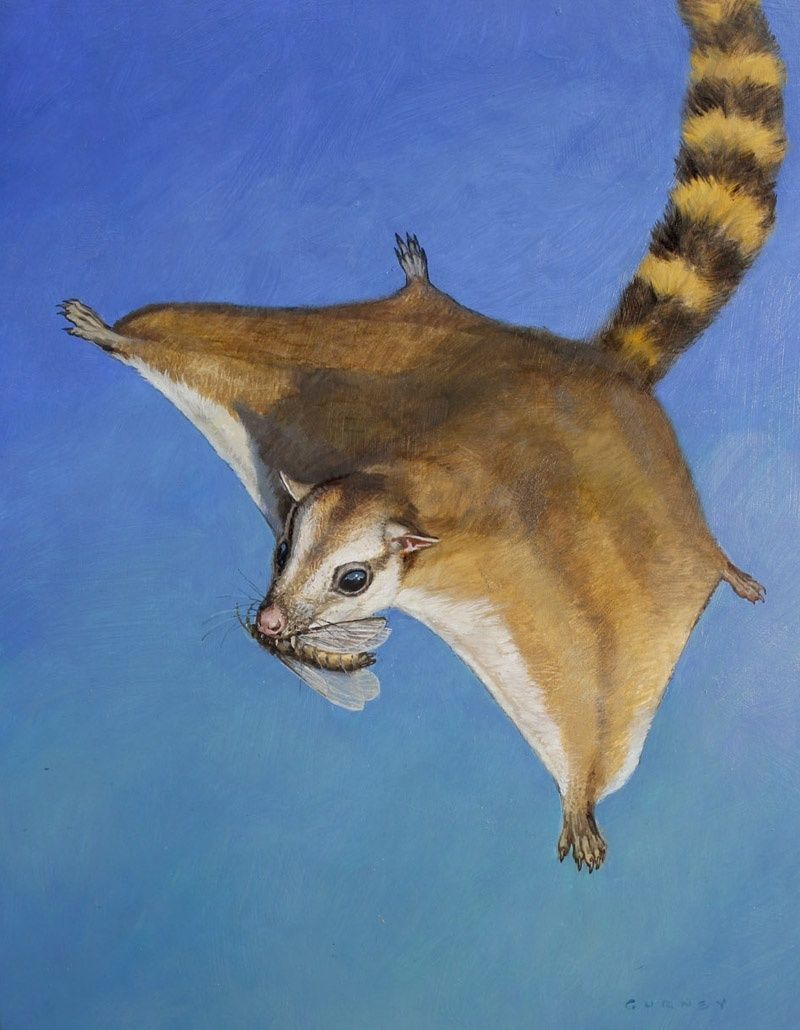
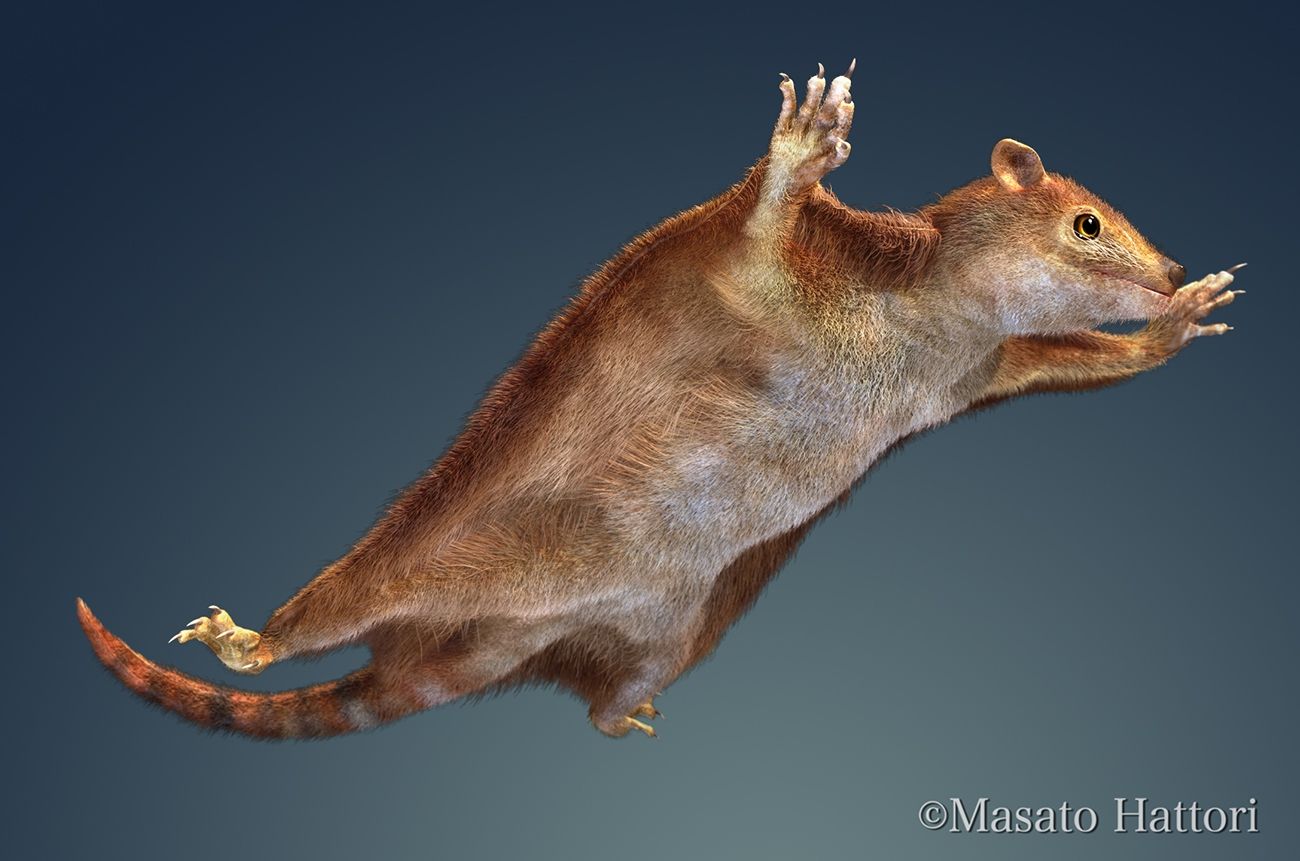
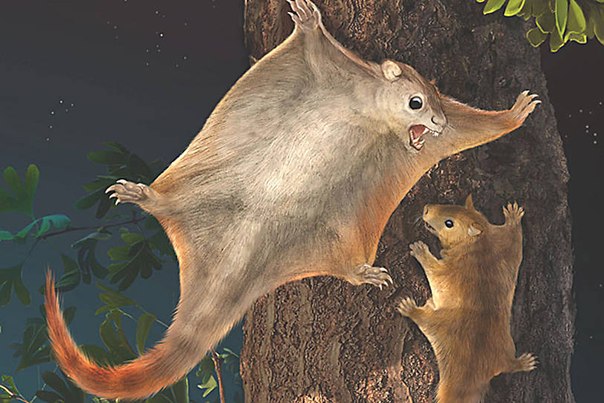
NUMBER THIRTY-EIGHT: I believe I can fly! Oh wait...I can only glide *insert sad face*

volaticotherium_by_paleoaeolos-d5y8s1u.jpg

  • Animal: Volaticotherium antiquum
  • Name Pronunciation: Vole-at-ie-ko-thee-ree-um an-tick-um
  • Name Meaning: "Ancient gliding beast"
  • Named By: Meng et al. - 2006
  • Classification: Life, Eukaryota, Animalia, Chordata, Vertebrata, Gnathostomata, Osteichthyes, Sarcopterygii, Tetrapodomorpha, Tetrapoda, Reptiliomorpha, Amniota, Synapsida, Therapsida, Mammalia, Eutriconodonta, Volaticotherini
  • When: ~ 164,000,000 B.C.E. (Callovian stage of the Middle Jurassic epoch)
  • Where: Asia (China (Inner Mongolia (Tiaojishan Formation)))
  • Size: About the same size as a large flying squirrel
  • Diet: Insectivore
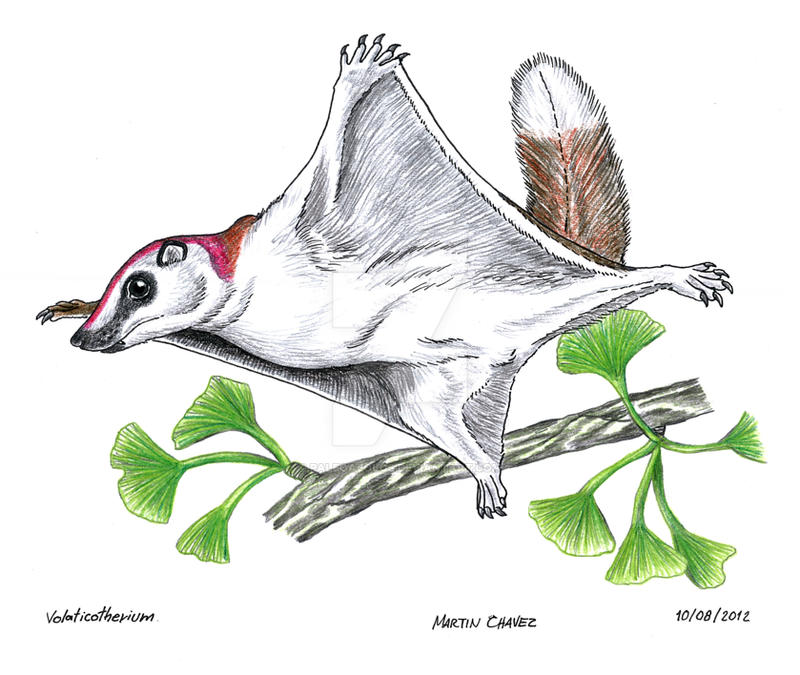
Volaticotherium was a flying squirrel 144 million years before there were flying squirrels. (By that I mean it looked and behaved like a flying squirrel, but was taxonomically unrelated.) This species was a glider not a flyer. Volaticotherium was densely covered by fur. The tail was flat, increasing the aerodynamics, and the limbs were proportionally long, comparable to those of modern flying and gliding mammals. The toes were built for grasping, as is expected for an arboreal mammal. Volaticotherium teeth were highly unusual, possessing long, curved, backwards-pointing cusps, possibly used for shearing; this, combined with the long canines, this indicates a carnivorous diet, which, given its small size, probably composed of insects. (Most gliding mammals are predominately herbivorous.)

731a7f4f2380b03f782cef4ee77e1703.jpg

volaticotherium_by_hyrotrioskjan_db7kjn6-fullview.jpg

bfeffba0eaecc6157173022a55fbe7e7.jpg

Q2cIu4hvgoM.jpg

hqdefault.jpg

aHR0cDovL3d3dy5saXZlc2NpZW5jZS5jb20vaW1hZ2VzL2kvMDAwLzA4Ny83MTUvb3JpZ2luYWwvZmllbGQtZ3VpZGUtcHJlaGlzdG9yaWMtbWFtbWFscy1nYWxsZXJ5LTEzLXZvbGF0aWNvdGhlcml1bS5qcGc=


Picture and Information Sources:
 
Last edited:
Can you do my favorite prehistoric species, Basilosaurus? It is an incredibly l o n g e boi.
 
Can you do my favorite prehistoric species, Basilosaurus? It is an incredibly l o n g e boi.

You say that, but I can think of at least a dozen extant cetacean species which are longer than, or of a size with, the species of which you speak :p
 
1166_basilosaurus_sameerprehistorica.jpg
Tell me this lad isn't an absolute unit.
 

Attachments

  • 1166_basilosaurus_sameerprehistorica.jpg
    1166_basilosaurus_sameerprehistorica.jpg
    101.6 KB · Views: 61
Back
Top