Hipporex's Guide to Interesting and Unique Prehistoric Fauna

NUMBER FORTY: Were @TeaLovingDave is today once swam...
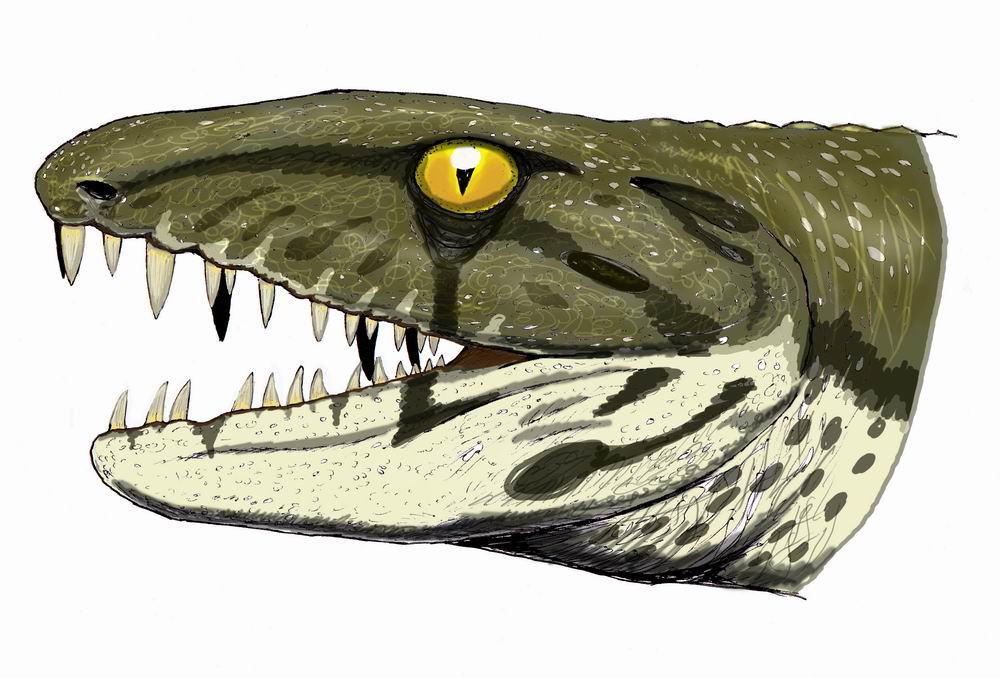
Anthracosaurus_russeli12DB.jpg

  • Animal: Anthracosaurus russelli
  • Name Pronunciation: An-fra-coe-sore-us rus-el-ee
  • Name Meaning: "Russell's coal lizard"
  • Named By: Thomas Henry Huxley - 1863
  • Classification: Life, Eukaryota, Animalia, Chordata, Vertebrata, Gnathostomata, Osteichthyes, Sarcopterygii, Tetrapodomorpha, Tetrapoda, Reptiliomorpha, Embolomeri, ‬Anthracosauridae
  • When: ~ 310,000,000 B.C.E. (Moscovian stage of the Carboniferous Period)
  • Where: Europe (England and Scotland)
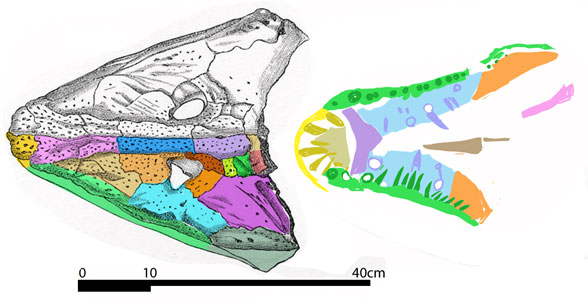
Thomas Henry Huxley named this species the "coal lizard" after the fact that it was uncovered in a coal mine. The species name, russelli, honors the mining surveyor, James Russell, who sent Huxley the first specimens. So far only cranial material is known but if we assume Anthracosaurus's body was built similar to that of its relatives, then it likely measured up to 10 feet (3 .05 meters) long. The presumed body and tail of Anthracosaurus would have been long and slender and have been called "eel-like." This body plan would of been ideal for a Carboniferous vertebrate since it allowed for easy navigation through clogged swamps and water systems that were quite prevalent at this time.‭ Anthracosaurus had two sets of teeth: a "normal" set of teeth in the front of the mouth and a second set a little more back on the roof of its mouth. ‬These would have been used to spear and trap soft bodied prey such as fishes and even other reptiliomorphs,‭ ‬which then would probably be swallowed whole.

anthracosaurus-russeli.jpeg

anthracosaurus588.jpg


Picture and Information Sources:
If anyone else wants to see what once lived were they currently live comment below.

So far on the itinerary we have: Ontario for @TheGerenuk, Connecticut for @ThylacineAlive, and Souss-Massa for @Zoo Tycooner FR
 
Last edited:
How about some prehistoric critters from Illinois, or more specifically, the Cook County area? I'm pretty sure I know all 4-5 different species that have been discovered here but who knows, you may surprise me. ;)
 
I have seen three species of flying squirrel and I think you're going to need to be a little more specific because "large flying squirrel" can imply quite a size range.

~Thylo
I forgot to respond to this reply. The reason I said "large flying squirrel" is because I was unable to find exact size measurements for this species. The only thing I could find eluding to this Volaticotherium's relative size was this picture: (it is number 25)

gravity_dinosaurs_size_part1_by_artapon_dctc2rc-400t.jpg

Source: Gravity Dinosaurs size part1
 
May I suggest Dormaalocyon latouri, an early ancestor of modern carnivores, fossils of which were found in Flanders?
 
NUMBER FORTY: Were @TeaLovingDave is today once swam...
Anthracosaurus_russeli12DB.jpg

  • Animal: Anthracosaurus russelli
  • Name Pronunciation: An-fra-coe-sore-us rus-el-ee
  • Name Meaning: "Russell's coal lizard"
  • Named By: Thomas Henry Huxley - 1863
  • Classification: Life, Eukaryota, Animalia, Chordata, Vertebrata, Gnathostomata, Osteichthyes, Sarcopterygii, Tetrapodomorpha, Tetrapoda, Reptiliomorpha, Embolomeri, ‬Anthracosauridae
  • When: ~ 310,000,000 B.C.E. (Moscovian stage of the Carboniferous Period)
  • Where: Europe (England and Scotland)
Thomas Henry Huxley named this species the "coal lizard" after the fact that it was uncovered in a coal mine. The species name, russelli, honors the mining surveyor, James Russell, who sent Huxley the first specimens. So far only cranial material is known but if we assume Anthracosaurus's body was built similar to that of its relatives, then it likely measured up to 10 feet (3 .05 meters) long. The presumed body and tail of Anthracosaurus would have been long and slender and have been called "eel-like." This body plan would of been ideal for a Carboniferous vertebrate since it allowed for easy navigation through clogged swamps and water systems that were quite prevalent at this time.‭ Anthracosaurus had two sets of teeth: a "normal" set of teeth in the front of the mouth and a second set a little more back on the roof of its mouth. ‬These would have been used to spear and trap soft bodied prey such as fishes and even other reptiliomorphs,‭ ‬which then would probably be swallowed whole.

anthracosaurus-russeli.jpeg

anthracosaurus588.jpg


Picture and Information Sources:
If anyone else wants to see what once lived were they currently live comment below.

So far on the itinerary we have: Ontario for @TheGerenuk, Connecticut for @ThylacineAlive, and Souss-Massa for @Zoo Tycooner FR
Oh for crying out loud. Now I'm just annoying myself with my spelling errors.
 
Southern Ontario (Canada, North America) 467 million years ago...

NUMBER FORTY-ONE:
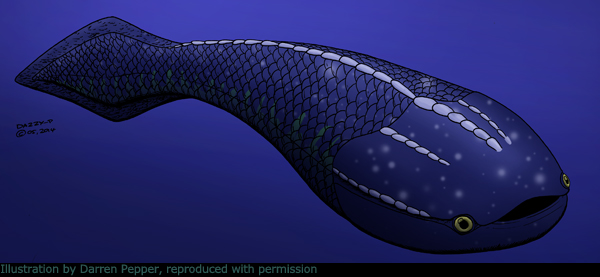
Where @TheGerenuk now lives, this fish once swam.

astraspis.jpg

  • Animal: Astraspis
  • Species: A.‭ ‬desiderata‭ (‬type‭)‬ and‭ ‬A.‭ ‬splendens
  • Name Pronunciation: As-tra-as-piss
  • Name Meaning: "Star shield"
  • Named By: Charles Doolittle Walcott‭ ‬-‭ ‬1892
  • Classification: Life, Eukaryota, Animalia, Chordata, Vertebrata, Agnatha, Pteraspidomorphi, Astraspida, Astraspidiformes
  • When: ~ 467,000,000 B.C.E. to 443,000,000 B.C.E. (Middle to Late Ordovician epoch)
  • Where: A.‭ ‬desiderata fossils have been found in Canada (Ontario) and the United States (Colorado and Wyoming); A.‭ ‬splendens fossils have found in Bolivia
Astraspis was named for the tiny star-shaped denticles that covered its body. It was a marine fish and lived near to the shore, in lagoons and deltas. It was almost certainly a bottom-dweller, as shown by traces of abrasion of the ventral surfaces of its headshield. Astraspis had relatively large, laterally-poistioned eyes and a series of eight tiny gill openings on each side. Nearly complete fossils suggest a living animal was about 7.9 inches (200 millimeters) long. We don't know for sure what this fishey ate but it probably was a filter-feeder.

dckrj38-1d6f4392-8028-4534-bc75-08c2e1e4e641.jpg

latest

350

astraspida.gif


Picture and Information Soucres:

If anyone else wants to see what once lived were they currently live comment below.

So far on the itinerary we have: Connecticut for @ThylacineAlive, and Souss-Massa for @Zoo Tycooner FR, Chicago for @SpinyLiving, Wisconsin for @birdsandbats, and Flanders for @KevinB
 
Connecticut (United States, North America) 200 million years ago...

NUMBER FORTY-TWO:
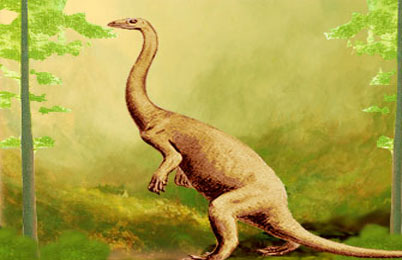
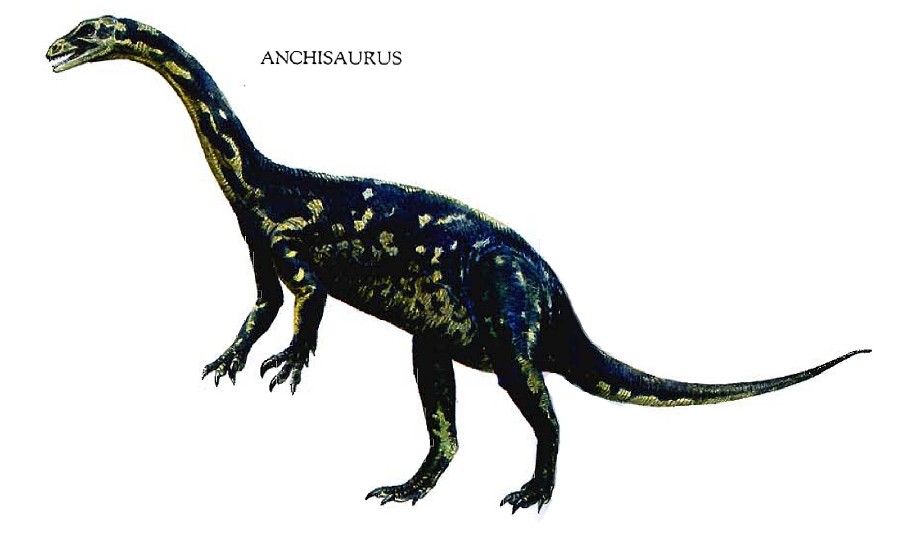
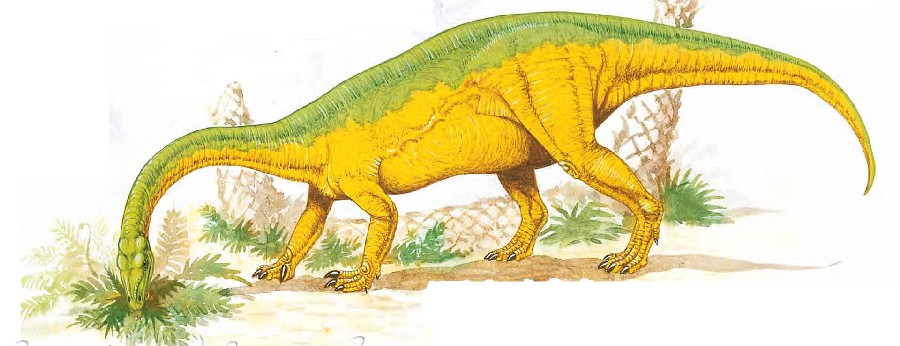
Where @ThylacineAlive now lives, this dinosaur once walked.

latest

  • Animal: Anchisaurus polyzelus
  • Name Pronunciation: An-chee-sore-us poly-zell-us
  • Name Meaning: "Near lizard that is much coveted"
  • Named By: Edward Hitchcock Jr. - 1865
  • Classification: Life, Eukaryota, Animalia, Chordata, Vertebrata, Gnathostomata, Osteichthyes, Sarcopterygii, Tetrapodomorpha, Tetrapoda, Reptiliomorpha, Amniota, Sauropsida, Eureptilia, Sauria, Archosauromorpha, Archosauriformes, Archosauria,‭ ‬Dinosauria, Saurischia, Sauropodomorpha, Sauropodiformes, Anchisauria
  • When: ~ 200,000,000 B.C.E. to 195,000,000 B.C.E. (Early Jurassic Epoch)
  • Where: North America (United States (Connecticut (Portland Formation)))
  • Size: 13 feet (3.96 meters) long
  • Diet: Herbivore
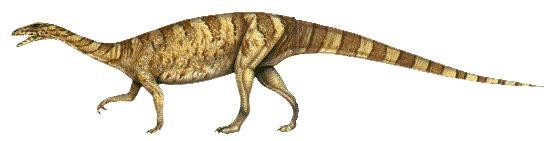
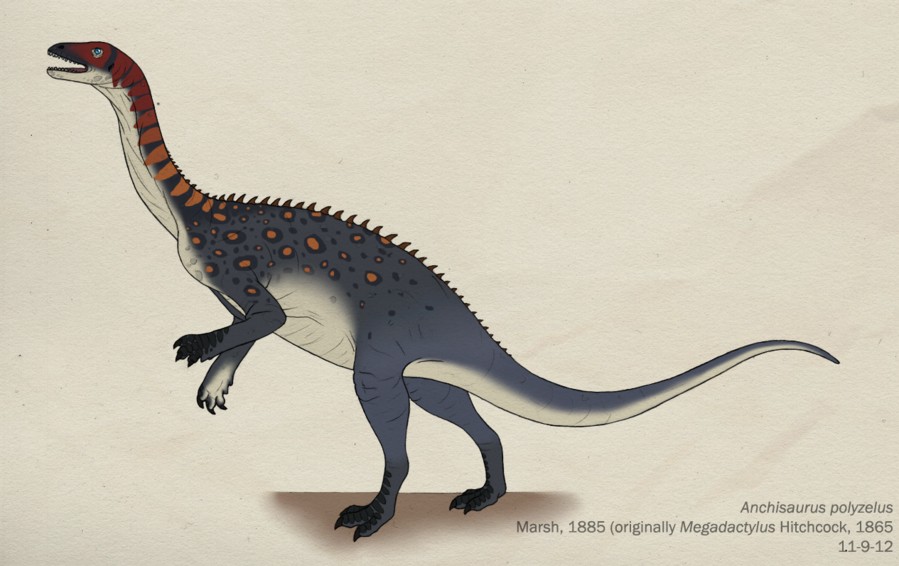
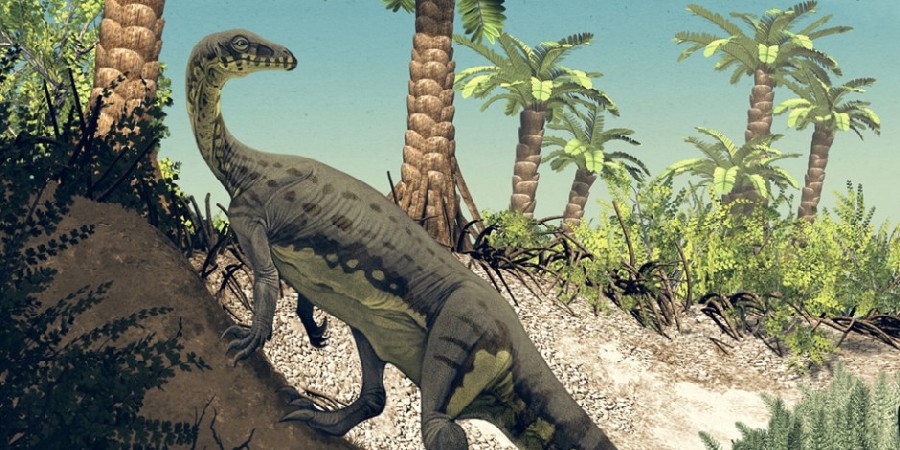
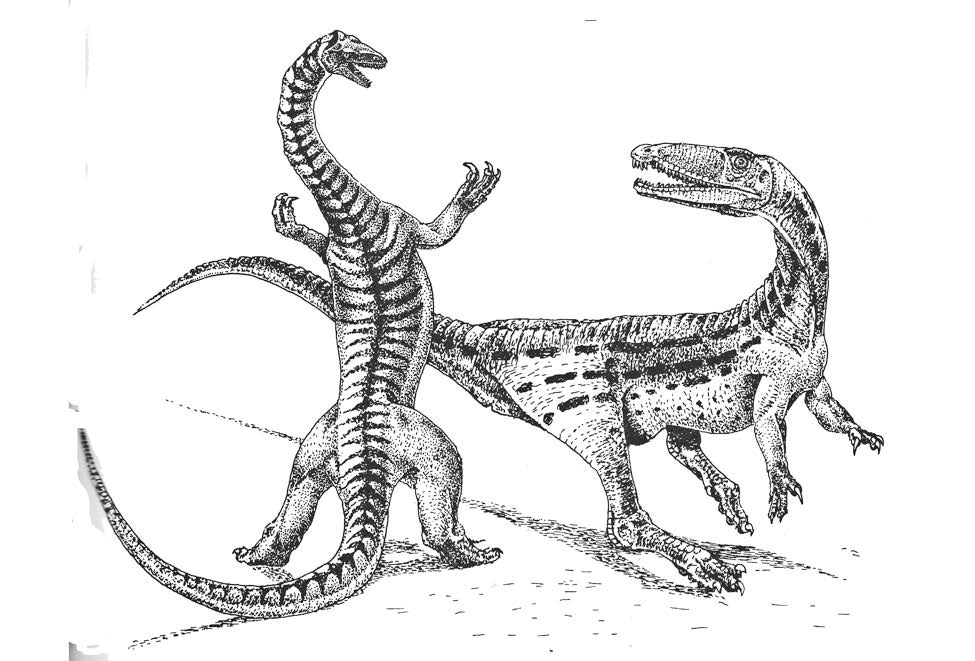
Anchisaurus polyzelus had to be given a name not once, not twice, but three times. The first North American sauropodomorph remains were first documented in 1818, when some bones were uncovered by Mr. Solomon Ellsworth Jr. while excavating a well with gunpowder in East Windsor, Connecticut. Initially it was thought that the bones might be those of a human, but the presence of tail vertebrae falsified that idea. They were then recognized as those of an indeterminate sauropodomorph. In 1865, Edward Hitchcock Jr. named the species Megadactylus (Mega-dack-till-us) polyzelus. In 1877, Professor Othniel Charles Marsh had noted that the name Megadactylus had been preoccupied by Megadactylus (Fitzinger - 1843), a subgenus of the lizard genus Stellio. In 1882, he replaced the name with Amphisaurus (Am-fee-sore-us). However in 1885, Marsh had discovered that this name also had also been preoccupied, by the anthracosaurian amphibian Amphisaurus (Barkas - 1870), and again replaced it, finally giving us Anchisaurus. It is currently believed Anchisaurus could of freely switched between being a biped and a quadruped, likely running bipedally when evading threats but normally walking quadrupedally. The blunt teeth and design of the jaws have been interpreted as clear signs that Anchisaurus was a plant-eating dinosaur.‭ ‬Additionally the body is shaped to allow for an increased gut area for the digestion of plant matter.‭ However, some paleontologists have speculated that Anchisaurus may have eaten meat since the eyes still face partially forward rather than to the sides like most plant-eating animals.‭ ‬Plus its claws were rather large for a herbivore of its size. However, as we know that dinosaurs like Anchisaurus were descended from meat-eating ancestors,‭ it is reasonable to speculate that the partially carnivorous/predatory features present in Anchisaurus may simply be relict features that had yet to evolve out. Anchisaurus is one of two dinosaurs known from Connecticut's Portland Formation. The other species was the small meat-eating theropod Podokesaurus holyokensis (Poe-doe-key-sore-us holy-yok-en-sis), which may have preyed on baby Anchisaurus.

dinosaur-images-034-resize.jpg

Anchisaurus-dinosaur.jpg

anchisaurus_04f1.jpg

latest

illustration-of-an-anchisaurus-early-jurassic-period-illustration-id102115998

anchisaurus-eating-vegetation_9ac5.jpg

anchisaurus_3cfa.jpg

087__anchisaurus_polyzelus_by_green_mamba-d5kluwj_1ddf.jpg

Anchisaurus_polyzelus_FI_pano-940x470_3590.jpg

(Below: Podokesaurus vs. a baby Anchisaurus)
Bakker-Dino-Geek-JP-5.jpg


Picture and Information Sources:

If anyone else wants to see what once lived where they currently live comment below.

So far on the itinerary we have: Souss-Massa for @Zoo Tycooner FR, Chicago for @SpinyLiving, Wisconsin for @birdsandbats, and Flanders for @KevinB
 
Last edited:
Souss-Massa (Morocco, Africa) 110,000,000 million years ago...

NUMBER FORTY-TWO:
Where @Zoo Tycooner FR now lives, this massive fish once swam.

114528132-3d-rendering-of-a-mawsonia-an-extinct-genus-of-prehistoric-coelacanth-fish-isolated-on-white-backgro.jpg

  • Animal: Mawsonia
  • Species:‭ ‬M.‭ ‬brasiliensis,‭ M.‭ ‬gigas‭ (‬type‭)‬,‭ ‬M.‭ minor,‭ ‬M.‭ ‬lavocati,‭ ‬M.‭ ‬libyca, M. soba,‭ ‬M.‭ ‬tegamensis, and‭ ‬M.‭ ‬ubangiana
  • Name Pronunciation: Maw-so-ne-ah
  • Name Meaning: Named after J. Mawson, one of the fish's describers
  • Named By: J. Mawson and A. S. Woodward - 1907
  • Classification: Life, Eukaryota, Animalia, Chordata, Vertebrata, Gnathostomata, Osteichthyes, Sarcopterygii, Actinistia, Coelacanthiformes, Latimerioidei, Mawsoniidae
  • When: ~ 110,000,000 to 95,000,000 B.C.E. (Creatceous Period)
  • Where: This genus is known from Brazil and North Africa. (The species that know from Morocco is M.‭ ‬lavocati. However it is worth noting that this species was not discovered in Souss-Massa but rather the neighboring province of Errachidia. I consider it probable though this fish also lived in Souss-Massa.)
  • Size: *see below*
  • Diet: Carnivore
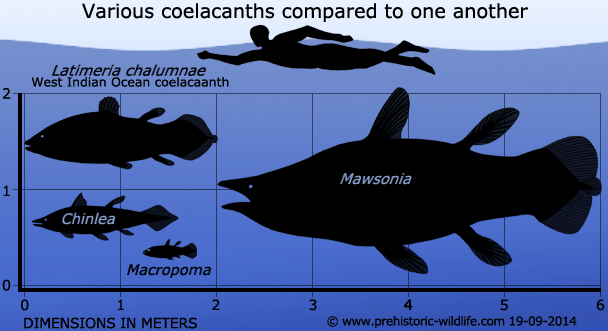
Today Coelacanthiformes is restricted to two extant species deep-sea species found in the Indian Ocean: the African coelacanth (Latimeria chalumnae) and Indonesian coelacanth (L. menadoensis). ‬The largest examples measure up to 6.56 feet (2 meters) long. Compared to the ‬largest coelacanth ever, this is small. Mawsonia measured up to 13.12 feet (4 meteters) long, though isolated fossils suggest that rare individuals may have grown slightly larger than this. Unlike modern coelacanths, Mawsonia appears to have lived predominately or entirely in estuarine and mangrove habitats. Mawsonia like other coelacanths were probably predatory fish that would cruise over the floor snatching up fishes and larger invertebrates. Given its size it's even possible it ate small reptiles, perhaps even swimming dinosaurs.‭ ‬We do not know for certain however if Mawsonia was nocturnal like modern Latimeria coelacanths.‭ When fully grown to such a large size,‭ ‬Mawsonia had few predators. However, as it lived alongside sharks, pliosaurs, massive crocodylomorphs, and even piscivorous spinosaurid dinosaurs, even adults weren't fully safe.

coelacanth-size-comparison.jpg

latest

DkNEPMlUUAAWCWx.jpg

mawsonia__by_abelov2014_d9fipxz-pre.jpg

DkNEN8oUUAAsk2o.jpg

(Below: Mawsonia and two of its contemporaries)
spinosaurus__mawsonia__and_onchopristis_by_herschel_hoffmeyer_dcgv9j8-350t.png


Picture and Information Sources:

If anyone else wants to see what once lived where they currently live comment below.

So far on the itinerary we have: Chicago for @SpinyLiving, Wisconsin for @birdsandbats, and Flanders for @KevinB
 
Chicago (Illinois, United States, North America) 307 million years ago...

NUMBER FORTY-FOUR:
Where @SpinyLiving now lives, once swam this oddity.

tullimonstrum-gregarium_julio-lacerda.jpg

  • Animal: Tullimonstrum gregarium
  • Name Pronunciation: Tully-mon-strum greh-gar-ee-um
  • Name Meaning: "Tully's common monster"
  • Named By: Eugene Richardson - 1966
  • Classification: Life, Eukaryota, Animalia
  • When: ~ 307,000,000 B.C.E. to 300,000,000 B.C.E. (Pennsylvanian subperiod of the Carboniferous period)
  • Where: North America (United States (Illinois (Mazon Creek fossil beds)))
  • Size: Up to 14 inches (35.56 centimeters) long
  • Diet: Carnivore and/or detritivore
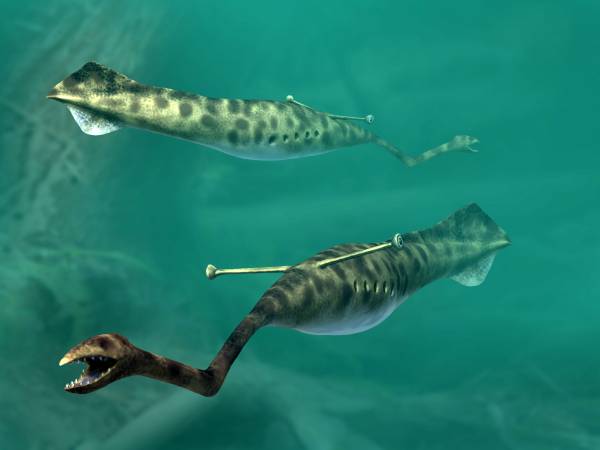
Amateur collector Francis Tully found the first fossil. He took the strange creature to the Field Museum of Natural History, but paleontologists were stumped as to which phylum Tullimonstrum belonged. To this day, we still have no idea what this animal was. It has been postulated it could have been an annelid, a mollusk, an arthropod, a conodont, or even a vertebrate. Tullimonstrum, colloquially known as the Tully Monster, lived in shallow tropical coastal waters of muddy estuaries in what is now Illinois. Tullimonstrum had a long proboscis with up to eight small sharp teeth on each "jaw," with which it may have used to actively probe for small creatures and edible detritus in the muddy bottom. It would then take its food a place it in a feeding cavity on its ventral side. It had 5 holes on each side of its body, their use is unknown. Its eyes sat atop stalks protruding from the head. The Tully Monsters is the state fossil of Illinois.

image_3708_1e-Tully-Monster.jpg

4.jpg

Tullimonstrum_NT_small.jpg

tullimonstrum-gregarium-known-stocktrek-images.jpg


Picture and Information Sources:
If you want to learn more about what once lived in Chicago, I recommend this documentary:
Although please not this documentary is not 100% accurate (for example they depict the Tully Monster as having the back fins on the side of its body, rather then on the top and bottom like they really were).

If anyone else wants to see what once lived where they currently live comment below.

So far on the itinerary we have: Wisconsin for @birdsandbats and Flanders for @KevinB
 
Interesting side-note on Tullimonstrum. In the 1960s the Loch Ness Monster phenomenon was in full swing, with the most popular idea being that there was a population of plesiosaurs somehow hanging on in a flooded glacial valley in Scotland. But Ted Holiday came up with his own theory and published a book on it, named "The Great Orm of Loch Ness". His notion was that the Loch Ness Monster was actually Tullimonstrum. It's a good theory, if one chooses to overlook the geographic location, the size difference, and the 300 million years since they became extinct...
 
Wisconsin (United States, North America) 428 million years ago...

NUMBER FORTY-FIVE:
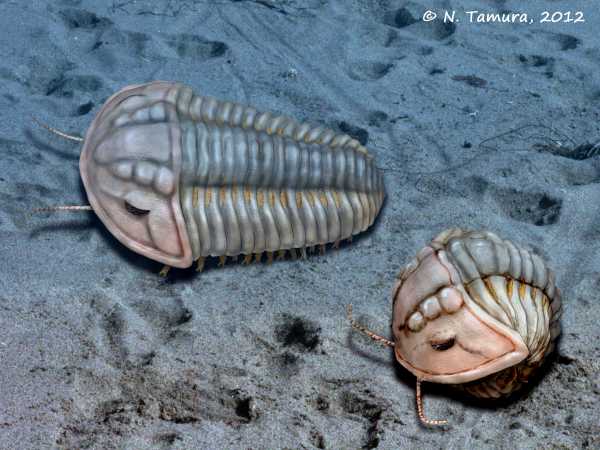
Where @birdsandbats now lives, once crawled/swam this marine arthropod.

calymene-blumenbachii-trilobite-model-DTF0BB.jpg

  • Animal: Calymene celebra
  • Name Pronunciation: Kul-limb-uh-knee see-lee-bruh
  • Name Meaning: "Frequent beautiful crescent"
  • Named By: P. E. Raymond - 1916
  • Classification: Life, Eukaryota, Animalia, Arthropoda, Trilobita, Phacopida, Calymenidae
  • When: ~ 428,000,000 B.C.E. to 418,000,000 B.C.E. (Late Silurian period to Early Devonian period)
  • Where: North America (United States (Illinois, Indiana, and Wisconsin))
  • Size: 0.79 to 1.57 inches (2 to 4 centimeters) long
  • Diet: Carnivore
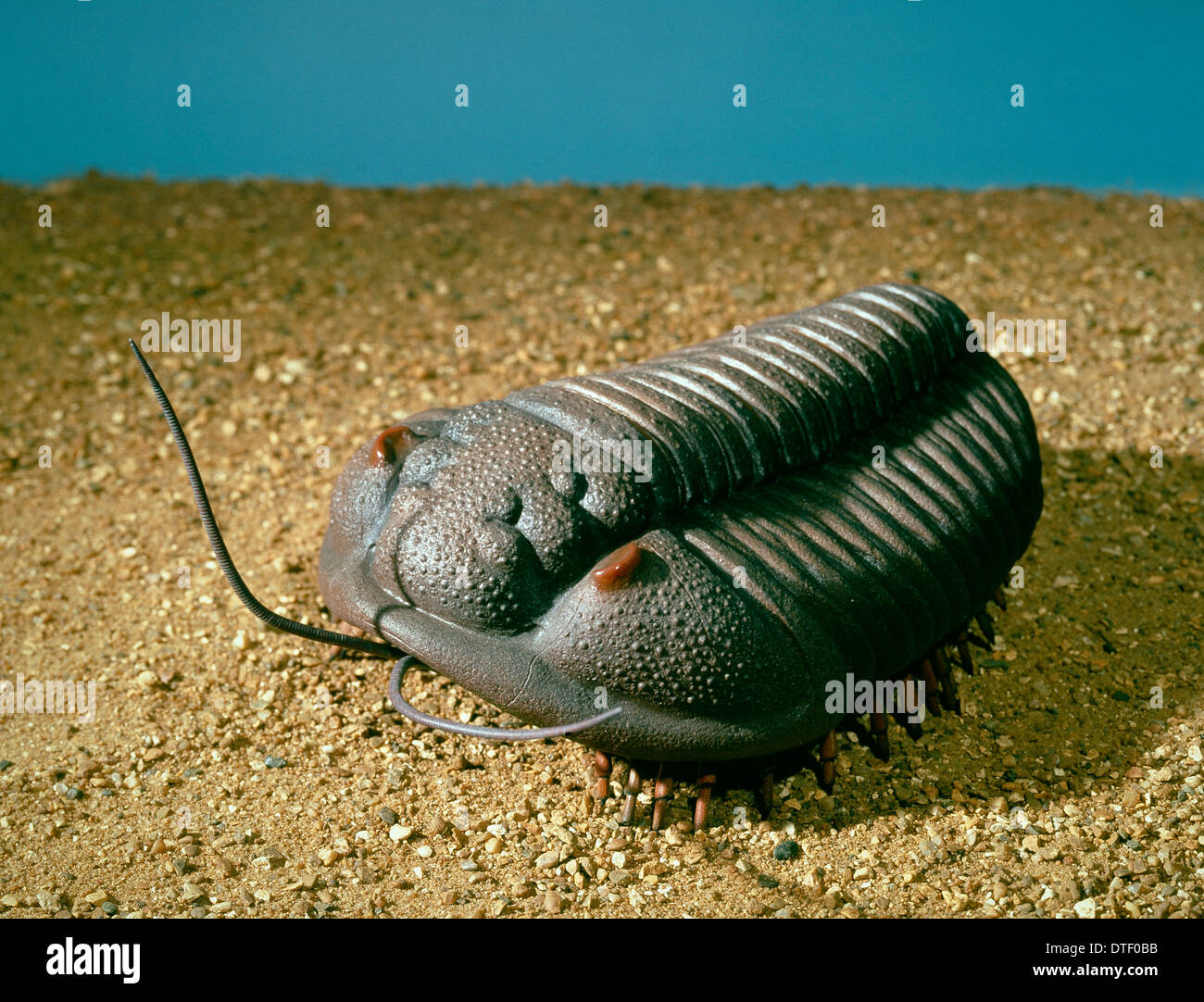
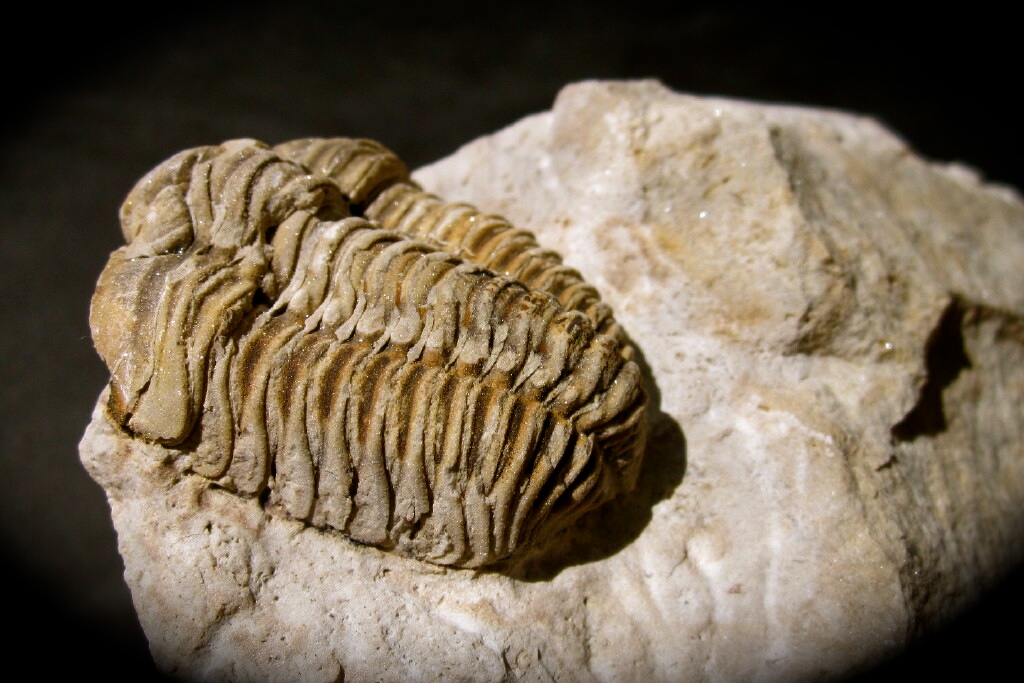
Trilobites were an extremely successful group of arthropods that lived for nearly 300 million years (from 521,000,000 B.C.E. to 251,900,000 B.C.E.). As of the writing of this comment, scientists have named over 50,000 species. One of the reasons this group was so successful was that it was one of the first to take advantage of a new evolutionary adaptation: eyes. Even the earliest trilobites had complex, compound eyes with lenses made of calcite (a characteristic of all trilobite eyes). Calymene celebra used its eyes to search from dead organisms as it crawled or swam over the sea floor. Calymene and its close relative Flexicalymene are frequently preserved is tight balls. It is believed that either a death position or that these two genera curled themselves into balls like some modern armadillos to protect their soft, vulnerable underbellies. Calymene celebra is the state fossil of Wisconsin. You know you state sucks when it comes to fossils when your state fossil is a trilobite. (Yeah that's right, come at me Wisconsin!)

Calymene_NT.jpg

calymene-celebra.JPG


Picture and Information Sources:
If anyone else wants to see what once lived where they currently live comment below.

On the itinerary we have one last person: Flanders for @KevinB
 
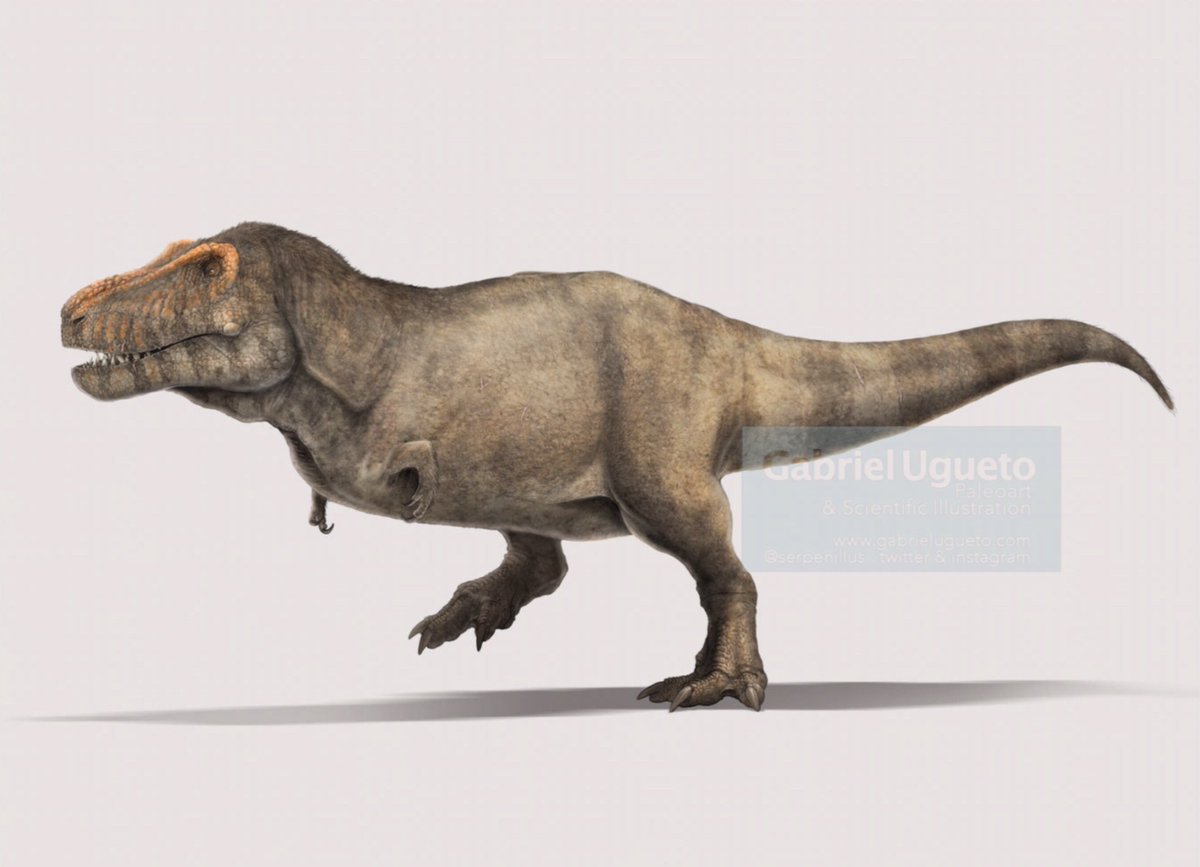
Sue: I am the biggest T. rex ever
Scotty: Hold my beer
Canadian scientists have discovered Scotty. At 42.65 feet (13 meters) long, Scotty is the largest T. rex ever (as far as current science is aware).
D1uBfAMXcAAJMWD.jpg

(above: Scientifically probable T. rex; picture by paleoartist Gabriel N. U.‏)

not exactly an unknown obscure species but figured this was the spot for it anyway
World's biggest T. rex discovered
*cough*cough* I already mentioned this on the previous page *cough*cough* ;)
 
May I suggest some birds for a change, such as Sylviornis neocaledoniae, Xenicibis xympithecus, Ornimegalonyx sp., Lophopsittacus mauritianus or Cygnus falconeri?
Or chelonians, such as Stupendemys geographicus, Megalochelys atlas, Meiolania sp. or Cylindraspis vosmaeri.
And since I have a soft spot for bats and snakes, I'd like to nominate Desmodus draculae and Laophis crotaloides.
 
May I suggest some birds for a change, such as Sylviornis neocaledoniae, Xenicibis xympithecus, Ornimegalonyx sp., Lophopsittacus mauritianus or Cygnus falconeri?
Or chelonians, such as Stupendemys geographicus, Megalochelys atlas, Meiolania sp. or Cylindraspis vosmaeri.
And since I have a soft spot for bats and snakes, I'd like to nominate Desmodus draculae and Laophis crotaloides.
I'll take some of those into consideration but just so you know, if you look towards the beginning of this thread you'll see I've already done several interesting birds. For example, I've already done Ornimegalonyx oteroi‭ (pg. 4). I've also done Pelagornis sandersi (pg. 2), Palaeeudyptes klekowskii (pg. 3), Leptoptilos robustus (pg. 3), Kelenken guillermoi (pg. 4), Vorombe titan (pg. 4), and Talpanas lippa (pg. 5). I've also done one snake: Sanajeh indicus (pg. 4).
 
Back
Top