I just read through this whole thread. I like it best when you do recent species (from the latter part of the Pleistocene, and the Holocene) because I like to imagine what should still be here. Even though that is sad because I will never see them.

I just read through this whole thread. I like it best when you do recent species (from the latter part of the Pleistocene, and the Holocene) because I like to imagine what should still be here. Even though that is sad because I will never see them.







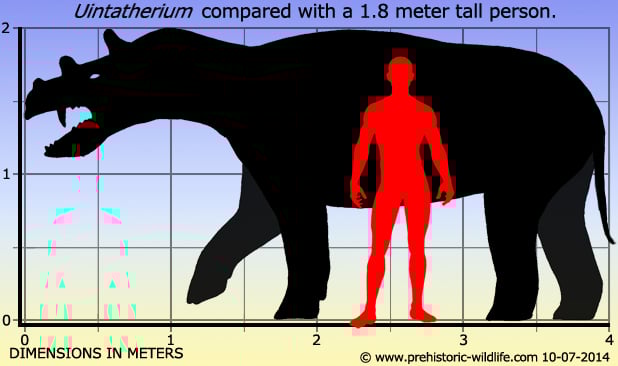


Somehow, while reading this bit, my "Kopfkino" envisioned two sophisticated Uinthatherium reacting to it: "Mortimer, old sport?" "Yes, Winston?" "This young fellow here is depicting us as brutish, thick-headed simpletons. Most uncivilised, isn't it? " "I concur. Bad form, I'd say." "Bad form, indeed. I decree that we shall challenge that cheeky lout to a duel, to remind him of his manners. Let us hope his three horns are up to the task!" "Splendid idea, old sport!"Combined with the thick walls of the skull, this would have reduced the cranial cavity that resulted in a smaller brain size. By today’s standards of mammalian intelligence, Uintatherium didn’t even come close, and was probably restricted to certain set patterns of behavior.
"Uintatherium is coming" was right there to be used!! You should hand in your pun badge.NUMBER ONE HUNDRED FIFTEEN: @UngulateNerd92 should like this one
- Animal: Uintatherium
- Name Pronunciation: Win-tah-thee-ree-um
NUMBER THIRTY-FOUR: It may be a cetacean but it would of looked more like a hairy crocodile
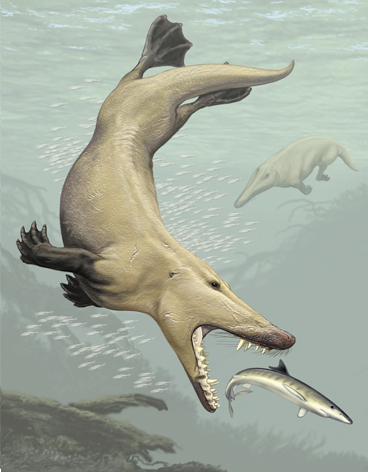
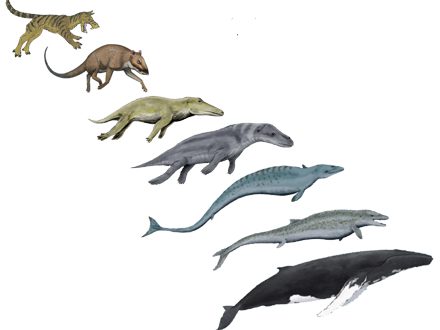
Along with other ambulocetids, A. natans was a transitional species that shows us that whales evolved from land-living ungulates. However, despite what its name translates to, the most recent research suggests this species was entirely aquatic. This animal swam by undulating its back vertically. Chemical analysis of its teeth shows that it could move between salt and fresh water. It also lacked external ears. Its skull had a long snout and eyes facing sideways, located high on the skull like in modern hippos. Ambulocetus had a feeding morphology similar to that of crocodiles: a long snout, pointed teeth, and strong jaw adductor muscles. Like crocodilians, Ambulocetus probably killed its prey by holding it in its jaw and either drowning it or thrashing it with violent motions. Similar to larger crocodilians, adult Ambulocetus probably were ambush predators that fed on larger fish, aquatic tetrapods and possibly terrestrial animals near the water. In contrast to crocodilians, it may have chewed its prey but probably did minimal food processing with its teeth.
- Animal: Ambulocetus natans
- Name Pronunciation: Am-bu-loh-cee-tuss nay-tans
- Name Meaning: "Whale that walks and swims"
- Named By: Hans Thewissen et al. - 1994
- Classification: Life, Eukaryota, Animalia, hordata, Vertebrata, Gnathostomata, Osteichthyes, Sarcopterygii, Tetrapodomorpha, Tetrapoda, Reptiliomorpha, Amniota, Synapsida, Therapsida, Mammalia, Placentilia, Boreoeutheria, Ungulata, Artiodactyla, Whippomorpha, Cetacea, Archaeoceti, Ambulocetidae
- When: ~ 47,800,000 B.C.E. to 41,300,000 B.C.E. (Eocene epoch)
- Where: Asia (Pakistan)
- Size: 9.84 feet (3 meters)
- Diet: Carnivore
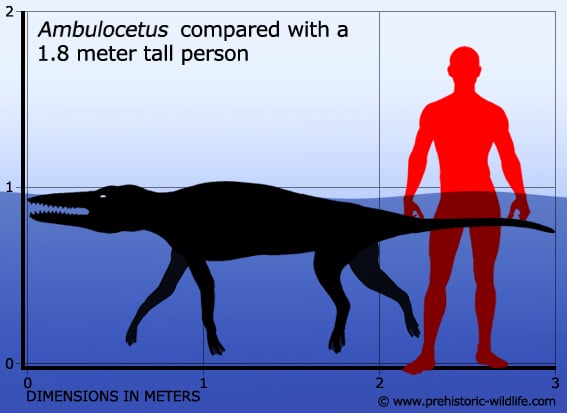

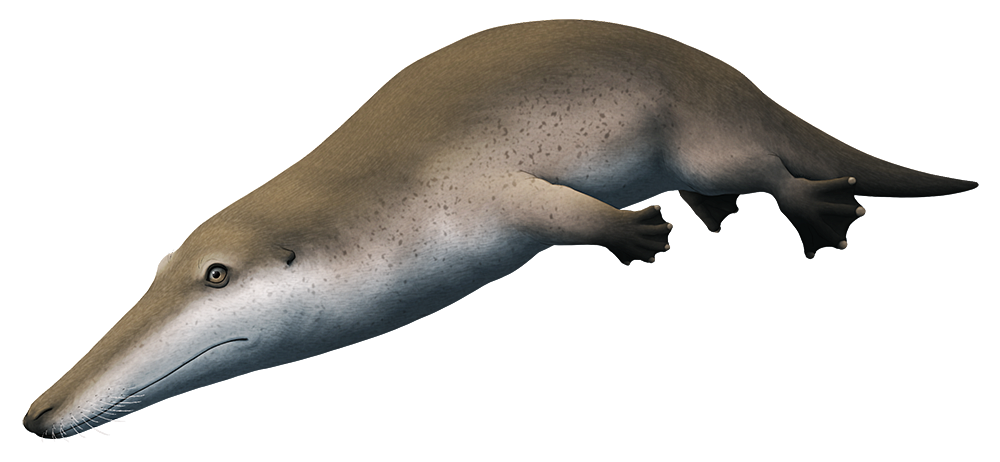
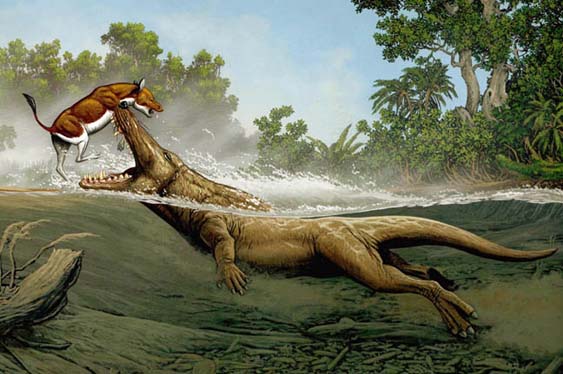

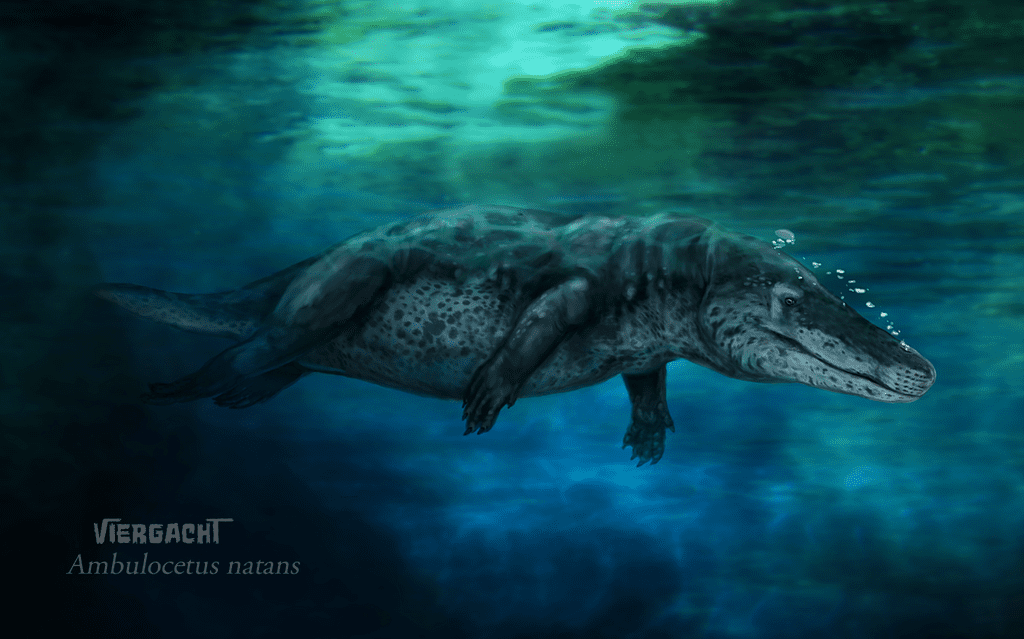


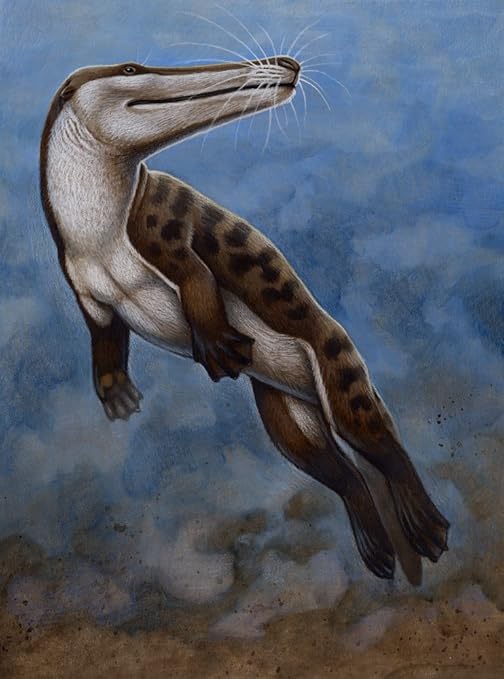

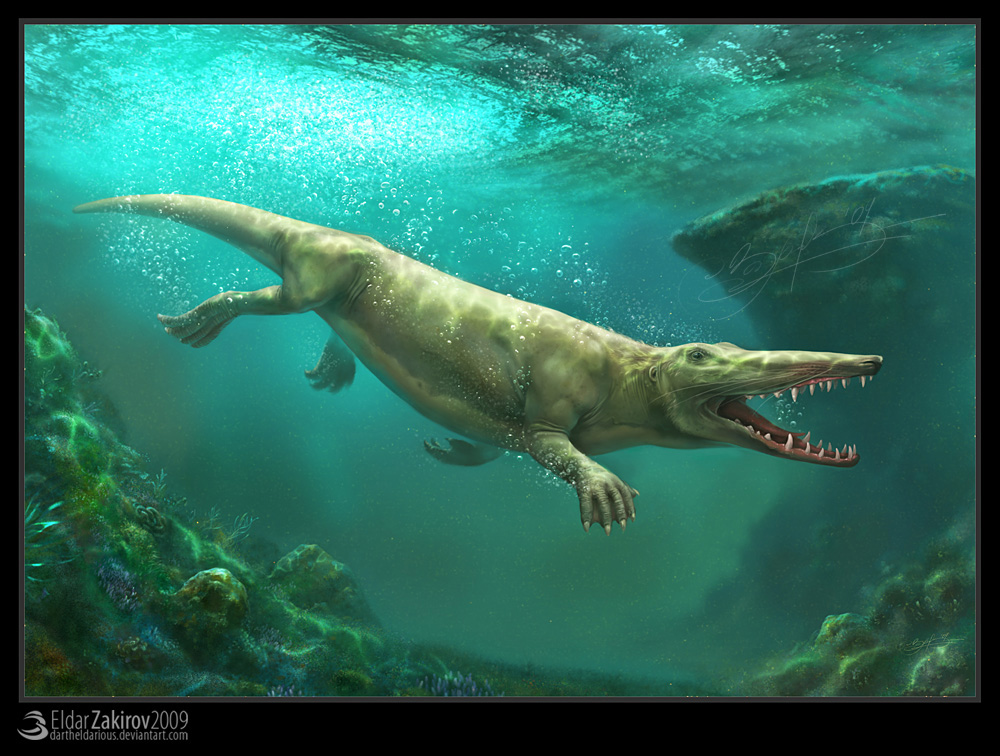

(Below: A. natans is third down)
Picture and Information Sources:
- My brain
- Ambulocetus
- Ambulocetus - Wikipedia
- Ambulocetus natans
- Ambulocetus - Facts and Pictures
- Prehistoric Monsters, what's your favorites?
- Ambulocetus
- Ambulocetus natans, the Eocene “walking whale” – who might not actually have been able to walk at all! A study published in 2016… | Prehistoric animals | Pinterest | Prehistoric animals, Prehistoric creatures and Extinct animals

I've decided it's time to take this thread off of the extinct species list. However I want to know, as readers of this thread, what would you like to see? I'm not just talking about genera/species you've like to see highlighted but instead I'm looking for ways I can make this thread the best it can be. New format? Shorter profiles? More well known species analyzed? What do you think? Or are you happy the way things are? (which is fine if that's the case) Regardless I hope you all are doing well and expect to see new profiles soon!


I second that, I would love to see these if you don’t mind.I'd like to see an Antarctic species post-Mesozoic.
~Thylo


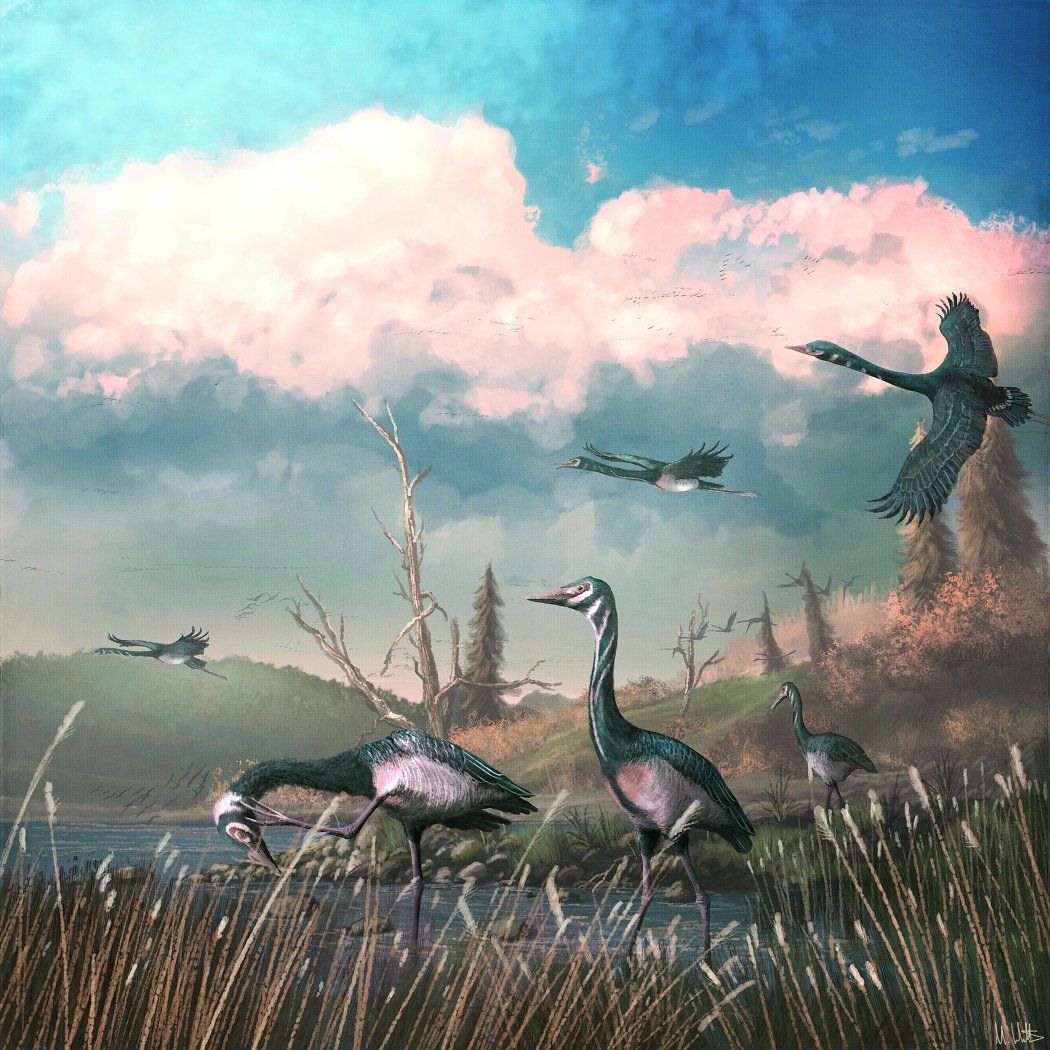
NUMBER ONE HUNDRED SIXTEEN: It's showtime
Conflicto antarcticus had a slender body, long legs, a long neck, and a narrow goose-like beak. It also had an unusual pair of bony bumps on its skull which may have supported some sort of small crest superficially similar to the knob on the head of the modern magpie goose (Anseranas semipalmata). The forelimb and pectoral girdle bones suggest that it was a flying bird. Temperatures in Antarctica at the time were much warmer than today, and the area where its fossils were found would have been a temperate estuary or river delta. It was probably an omnivorous wading bird, feeding on vegetation, small fishes, and invertebrates in shallow freshwater. Conflicto was a likely a stem anseriform, equally related to the current extant clades. But the phylogenetic classification remains uncertain and the generic name is in reference to the controversial systematic placement of this genus. According to the study that described this bird, "Conflicto antarcticus represents one (and possibly the most) substantial record of a non-marine Palaeocene bird from the Southern Hemisphere and supports the hypothesis that Neognathae had already diversified in the earliest Palaeocene." Conflicto’s closest known relative might be the similarly-aged Anatalavis from North America and Europe, suggesting that its lineage was quite widespread and already taking advantage of vacant niches in the immediate wake of the Cretaceous-Paleogene mass extinction.
- Animal: Conflicto antarcticus
- Name Pronunciation: Con-flick-toe ant-are-tuh-kus
- Name Meaning: "Controdiction from Antarctica"
- Named By: Claudia Tambussi et al. - 2019
- Classification: Life, Eukaryota, Animalia, Chordata, Vertebrata, Gnathostomata, Osteichthyes, Sarcopterygii, Tetrapodomorpha, Tetrapoda, Reptiliomorpha, Amniota, Sauropsida, Eureptilia, Diapsida, Sauria, Archosauromorpha, Archosauriformes, Archosauria, Dinosauria, Saurischia, Theropoda, Paraves, Avialae, Aves, Neognathae, Anseriformes
- When: ~ 65,000,000 B.C.E. to 64,000,000 B.C.E. (Danian stage of the Paleocene epoch)
- Where: Lopez de Bertodano Formation (James Ross Island, Antarctica)
- Size: 4.4 pounds (2 kg), 14.2 inches (36 cm) long, and 19.6 inches (50 cm) tall
- Diet: Omnivore
Picture and Information Resources:
- My brain (as always)
- Conflicto – Nix Illustration
- Conflicto
- Conflicto antarcticus - Wikipedia
- Species New to Science: [PaleoOrnithology • 2019] Conflicto antarcticus • A Stem Anseriform from the early Palaeocene of Antarctica provides New Key Evidence in the Early Evolution of Waterfowl
- stem anseriform from the early Palaeocene of Antarctica provides new key evidence in the early evolution of waterfowl
- Conflicto antarcticus. By Mark Witton. Conflicto, an Antarctic Palaeocene waterfowl, tells us a lot a… | Prehistoric animals, Prehistoric creatures, Extinct animals