Hipporex's Guide to Interesting and Unique Prehistoric Fauna

I just read through this whole thread. I like it best when you do recent species (from the latter part of the Pleistocene, and the Holocene) because I like to imagine what should still be here. Even though that is sad because I will never see them.
 
I just read through this whole thread. I like it best when you do recent species (from the latter part of the Pleistocene, and the Holocene) because I like to imagine what should still be here. Even though that is sad because I will never see them.

I second this, although I do enjoy learning more about lesser-known dinosaur species and quirks of the prehistoric world :)
 
NUMBER ONE HUNDRED THIRTEEN: Small but mighty

Mammuthus-exilis-and-fox-738x591.jpg


  • Animal: Mammuthus exilis
  • Name Pronunciation: Mam-mu-fus ex-i-lis
  • Name Meaning: "Slender mammoth"
  • Named By: Stock and Furlong - 1928
  • Classification: Life, Eukaryota, Animalia, Chordata, Vertebrata, Gnathostomata, Osteichthyes, Sarcopterygii, Tetrapodomorpha, Tetrapoda, Reptiliomorpha, Amniota, Synapsida, Therapsida, Mammalia, Placentilia, Afrotheria, Paenungulata, Proboscidea, Elephantoidea, Elephantidae, Elephantinae, Elephantini
  • When: ~ 80,000 to 13,000 years ago (Late Pleistocene to early Holocene)
  • Where: Channel Islands of Southern California
  • Size: *see below*
  • Diet: Herbivore
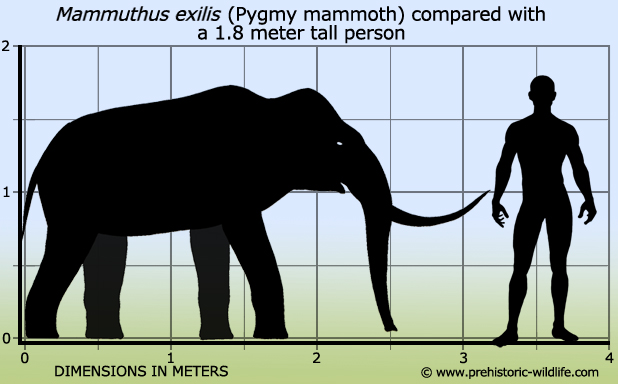
Mammuthus exilis, commonly known as the pygmy mammoth or Channel Islands mammoth, was a dwarf mammoth that stood a mere 5.6 feet (1.72 m) tall at the shoulders and weighed 1,680 pounds (760 kg). Compare that to its 14 foot (4.3 m) tall, 20,000 pound (9,070 kg) mainland ancestor, Mammuthus columbi (the Columbian mammoth). During the Pleistocene there was an island called Santa Rosae off the southern coast of California between the areas that are today known as Point Conception and Ventura.‭ ‬At some point,‭ ‬perhaps when the sea levels were particularly low,‭ ‬M.‭ ‬columbi‭ ‬crossed over from the mainland to colonize Santa Rosae.‭ ‬Although large and heavy animals,‭ ‬it's quite possible that mammoths like their elephant cousins were actually capable swimmers. Towards the end of the Pleistocene the climate became warmer which caused a rise in sea levels from the melting of the ice sheets that had previously covered much of the northern hemisphere.‭ ‬As a low lying ‬island,‭ ‬Santa Rosae began to disappear beneath the waves ‬which saw a reduction in the available space for the mammoths to live upon.‭ ‬By growing smaller over each generation,‭ ‬the mammoths would not need so much food to fuel their bodies and so could make do with the limited food resources as Santa‭ ‬Rosae grew smaller and smaller.‭ ‬This progression towards smaller sizes was also helped by the fact that mainland predators such as Canis dirus (the dire wolves),‭ ‬Smilodon fatalis (the saber-toothed cat), and Panthera atrox (the American lion) all seem to have been absent from Santa Rosae.‭ In fact the largest Channel Islands predator alive during the time of M. exilis was the largest modern Channel Islands predator: the Urocyon littoralis (the island fox). ‬M. exilis was able to thrive in all of the many different ecosystems found on Santa Rosae, such as high elevation plateaus, to dune, grassland, riparian and steppe-tundra ecosystems. Today all that remains of Santa Rosae are the four northernmost Channel Islands which are named Anacapa,‭ ‬Santa Cruz,‭ ‬San Miguel and Santa Rosa, and, with the exception of Anacapa,‭ ‬pygmy mammoth remains have been found on all of these islands.‭ The disappearance of M. exilis from the fossil record coincides with the arrival of the first people on the Channel Islands which has led to the suggestion that M. exilis were hunted to extinction.‭ ‬Although plausible,‭ ‬especially for a small population on a limited and isolated land mass,‭ ‬this period also has a marked change in overall climate conditions,‭ ‬and on the mainland at least,‭ ‬it seems that a combination of events was most likely for the disappearance of the North American megafauna as opposed to a single root cause.

mammuthus-exilis-pygmy-mammoth-size.jpg


Picture and Information Resources:
 
NUMBER ONE HUNDRED FOURTEEN: Happy National Dinosaur Day!

1920px-Austroraptor_Restoration.png


  • Animal: Austroraptor cabazai
  • Name Pronunciation: Aw-strow-rap-tor caw-bawz-ah-e
  • Name Meaning: "Cabaza's southern thief"
  • Named By: Fernando Novas et al. - 2008
  • Classification: Life, Eukaryota, Animalia, Chordata, Vertebrata, Gnathostomata, Osteichthyes, Sarcopterygii, Tetrapodomorpha, Tetrapoda, Reptiliomorpha, Amniota, Sauropsida, Eureptilia, Sauria, Archosauromorpha, Archosauriformes, Archosauria,‭ ‬Dinosauria,‭ ‬Saurischia,‭ ‬Theropoda, Paraves, Dromaeosauridae, Unenlagiinae
  • When: ~ 78,000,000 B.C.E. to 66,000,000 B.C.E. (Late Cretaceous epoch)
  • Where: Allen Formation (Río Negro, Argentina)
  • Size: *see below*
  • Diet: Carnivore
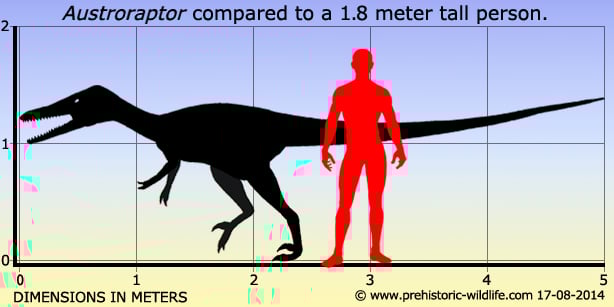
Austroraptor was the largest dromaeosaur currently known from the Southern Hemisphere. Novas et al. estimated that the genus may have measured 16 feet (5 m) from head to tail. However Gregory S. Paul later estimated a maximum length of 20 feet (6 m). It has been suggested that unenlagiines had better capacities for running and pursuit predation than other dromaeosaurids. While dromaeosaurids in the north were more stocky and had shorter legs, unenlagiines could likely maintain higher speeds for longer amounts of time because they were more gracile. Unenlagiines had modified metatarsals that resemble those of microraptorines: they are relatively thin and lengthened. Based on these adaptations, it is likely that unenlagiines preyed on small, fast animals, although the exact animals are unknown. The teeth of Austroraptor were conical and lacking denticles, similarly to those of spinosaurids, which are widely considered to of been fish-eaters. This has lead some to speculate Austroraptor may have been piscivorous too. It also had proportionately small forearms,‭ ‬limbs that are usually well developed in other dromaeosaurids. The type specimen of Austroraptor cabazai, MML-195, was collected in 2002. The holotype consists of fragmentary skeleton including parts of the skull, lower jaw, a few neck and torso vertebrae, some ribs, a humerus, and assorted bones from both legs. The specific name cabazai was chosen in honor of Héctor "Tito" Cabaza, who founded the Museo Municipal de Lamarque where the specimen was studied. In 2012, Phil Currie and Ariana Paulina-Carabajal referred a second specimen to A. cabazai, MML-220, which was found in 2008. This specimen, a partial skeleton with the skull of an adult individual slightly smaller than the holotype, is also housed in the collection of the Museo Municipal de Lamarque in Argentina. It complements the holotype in several elements, mainly the lower arm, hand, and foot.

austroraptor-size.jpg

1024px-Austroraptor_Reconstruction.jpg

dino_austroraptor_bc7e-jpg.129164

AUSTRORAPTOR_CABAZAI_by_IRIRIV_78a0.jpg

latest

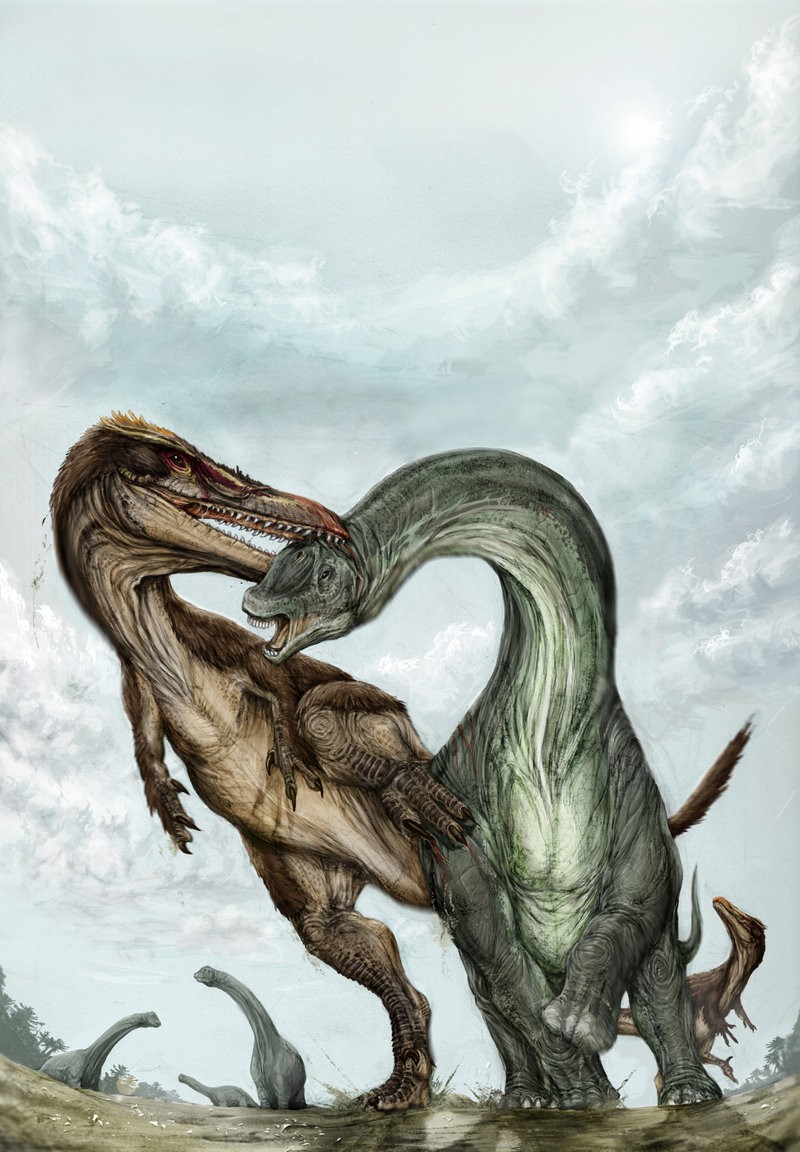
Below: Austroraptor and several of its contemporaries.
1920px-Allen_Formation_Fauna.png


Picture and Information Resources:
 
NUMBER ONE HUNDRED FIFTEEN: @UngulateNerd92 should like this one

340

  • Animal: Uintatherium
  • Name Pronunciation: Win-tah-thee-ree-um
  • Name Meaning: "Uinta beast"
  • Named By: Joseph Leidy‭ ‬-‭ ‬1872
  • Classification: Life, Eukaryota, Animalia, Chordata, Vertebrata, Gnathostomata, Osteichthyes, Sarcopterygii, Tetrapodomorpha, Tetrapoda, Reptiliomorpha, Amniota, Synapsida, Therapsida, Mammalia, Placentilia, Dinocerata, Uintatheriidae, Uintatheriinae
  • When: ~ 45,000,000 B.C.E. to 37,000,000 B.C.E. (Eocene epoch)
  • Where: China and United States
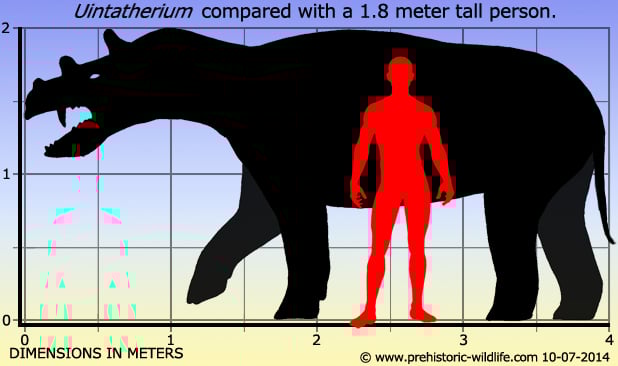
  • Size: 13 feet (4 m) long; 6.5 feet (2 m) tall; 2 short tons (2,000 kg )
  • Diet: Herbivore
The most instantly recognizable features of Uintatherium are the three pairs of horns that project upwards from on top of its head.‭ ‬The first pair were on the tip of the snout,‭ ‬the second between the eyes and the nostrils,‭ ‬and the third almost on the back of the skull.‭ ‬Paleontologists are confident in ascertaining that these horns were for display in attracting mates as they are only present on the males.‭ ‬A further suggestion has been made that the horns may have been used in contests between two males in ‬a ‬similar manner to how male deer use their antlers.‭ ‬It is certainly feasible since a larger number of smaller horns would be more capable of locking with an opposing animal,‭ ‬and a mature and proven individual with possibly slightly larger horns would have an advantage over a younger and less well developed individual. A further sign of sexual dimorphism are the enlarged upper canine teeth which appear to have been larger in the males,‭ ‬something that has led some to the conclusion that Uintatherium males may have bitten each other in dominance contests,‭ ‬although it’s possible that it could have been additional display.‭ ‬In life these enlarged teeth are thought to have been used in feeding,‭ ‬either for rooting up buried plant parts,‭ ‬or perhaps even for pulling out large amounts of aquatic plants.‭ ‬The other teeth in the mouth were relatively small and not suited for processing tough vegetation,‭ ‬something which implies that Uintatherium had to specialize in eating soft vegetation that could have been eaten without extensive processing in the mouth. One interesting feature about Uintatherium is that it had a concave skull,‭ ‬which means that it dipped inwards instead of outwards like in most other animals.‭ ‬Combined with the thick walls of the skull,‭ ‬this would have reduced the cranial cavity that resulted in a smaller brain size.‭ ‬By today’s standards of mammalian intelligence,‭ ‬Uintatherium didn’t even come close,‭ ‬and was probably restricted to certain set patterns of behavior.‭ However Uintatherium like other animals would only need to be intelligent enough to adapt to its environment,‭ ‬and with a temporal range of approximately fifteen million years,‭ ‬it was more successful than many other animals in this.‭ ‬Although first named by Joseph Leidy in ‬1872,‭ ‬Uintatherium would become involved in the ‬Bone Wars‭‬,‭ ‬a well-publicized feud between the paleontologists Othniel Charles Marsh and Edward Drinker Cope.‭ ‬These two paleontologists were constantly trying to outdo one another in terms of discoveries and the naming of new prehistoric animals,‭ ‬but often each would end up with the remains of the same type of animal,‭ ‬but each would give it their own name of choice and refuse to acknowledge the validity of the others name.‭ As far as Uintatherium is concerned Leidy was the first to name it,‭ ‬but both Marsh and Cope came into possession of further remains and subsequently provided their own names.‭ ‬Because both Marsh and Cope were both blinded by their desire to outdo one another,‭ ‬neither recognized the reality that they had described a creature that had already been named.‭ ‬As time progressed however,‭ ‬the true realization of this mess was found by the wider paleontological community,‭ ‬and Marsh’s and Cope’s names today exist only as synonyms to Uintatherium.‭ ‬One further element of confusion however is that a lot of species have been assigned to the Uintatherium genus in the past,‭ ‬partly because of this.‭ ‬Even further study has since found these species only represent a single species and while some of these are still very occasionally mentioned as recently as the early twenty-first century,‭ ‬only the type species of U.‭ ‬anceps is universally recognized by all.

uintatherium-size.jpg

latest

Uintatherium-2016-738x591.jpg

latest


Picture and Information Resources:
 
‬Combined with the thick walls of the skull,‭ ‬this would have reduced the cranial cavity that resulted in a smaller brain size.‭ ‬By today’s standards of mammalian intelligence,‭ ‬Uintatherium didn’t even come close,‭ ‬and was probably restricted to certain set patterns of behavior.‭
Somehow, while reading this bit, my "Kopfkino" envisioned two sophisticated Uinthatherium reacting to it: "Mortimer, old sport?" "Yes, Winston?" "This young fellow here is depicting us as brutish, thick-headed simpletons. Most uncivilised, isn't it? " "I concur. Bad form, I'd say." "Bad form, indeed. I decree that we shall challenge that cheeky lout to a duel, to remind him of his manners. Let us hope his three horns are up to the task!" "Splendid idea, old sport!"
 
NUMBER THIRTY-FOUR: It may be a cetacean but it would of looked more like a hairy crocodile
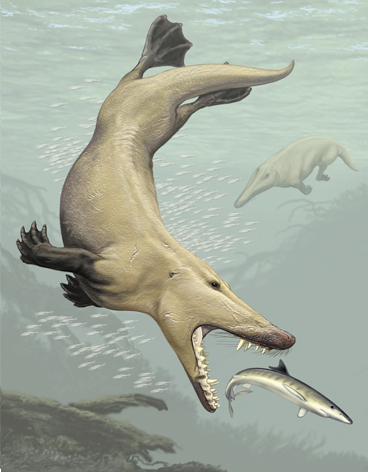
fH4inHe.jpg

  • Animal: Ambulocetus natans
  • Name Pronunciation: Am-bu-loh-cee-tuss nay-tans
  • Name Meaning: "Whale that walks and swims"
  • Named By: Hans Thewissen et al. - 1994
  • Classification: Life, Eukaryota, Animalia, hordata, Vertebrata, Gnathostomata, Osteichthyes, Sarcopterygii, Tetrapodomorpha, Tetrapoda, Reptiliomorpha, Amniota, Synapsida, Therapsida, Mammalia, Placentilia, Boreoeutheria, Ungulata, Artiodactyla, Whippomorpha, Cetacea, Archaeoceti,‭ ‬Ambulocetidae
  • When: ~ 47,800,000 B.C.E. to 41,300,000 B.C.E. (Eocene epoch)
  • Where: Asia (Pakistan)
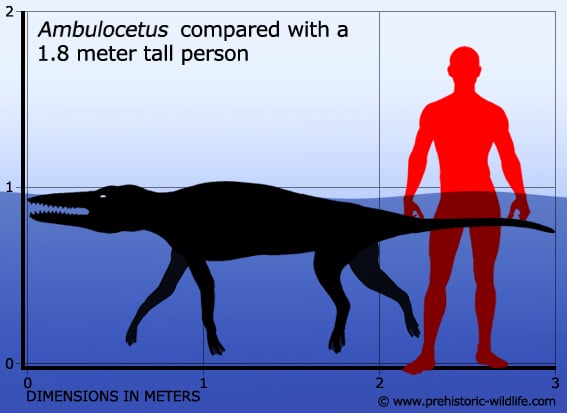
  • Size: 9.84 feet (3 meters)
  • Diet: Carnivore
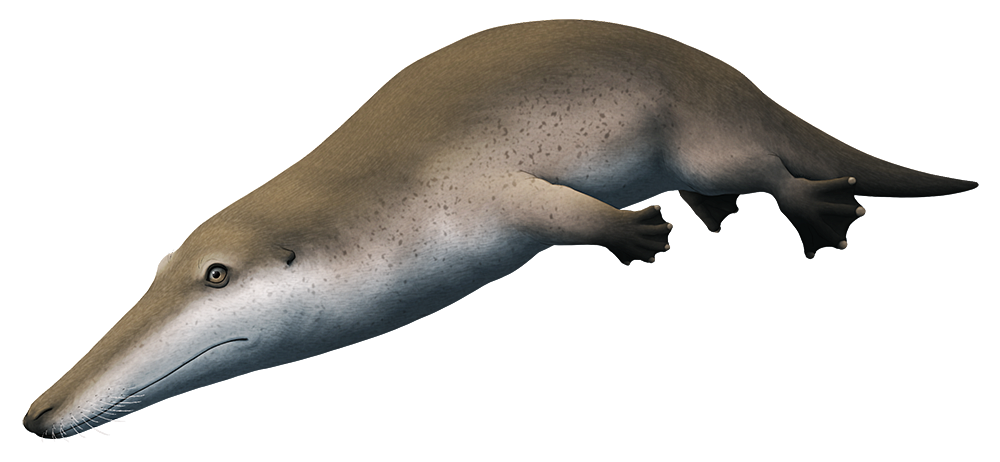
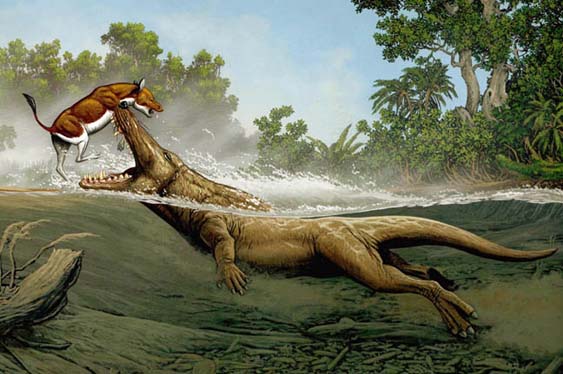
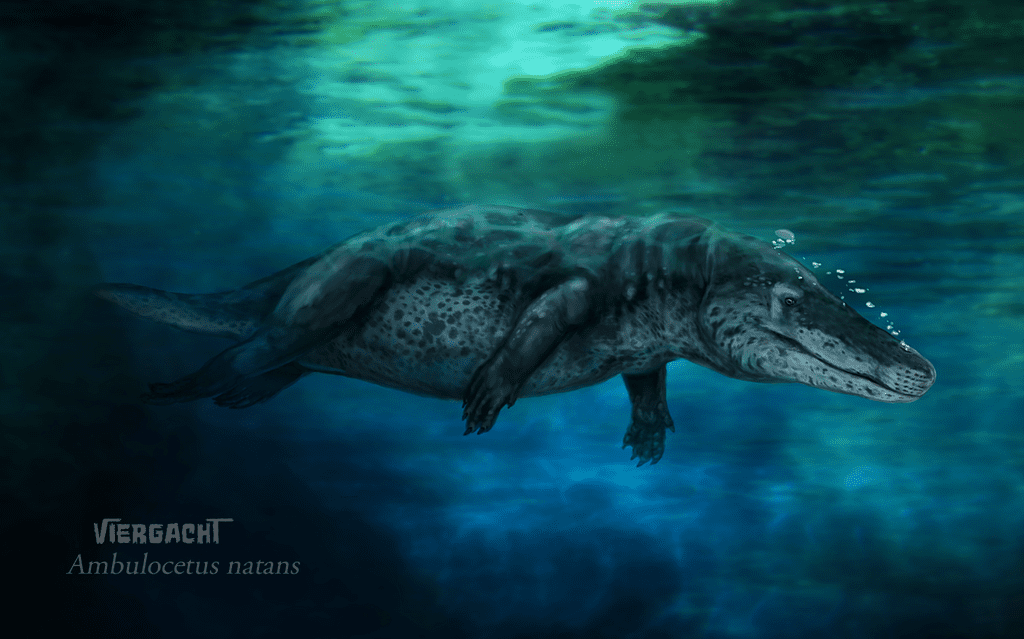
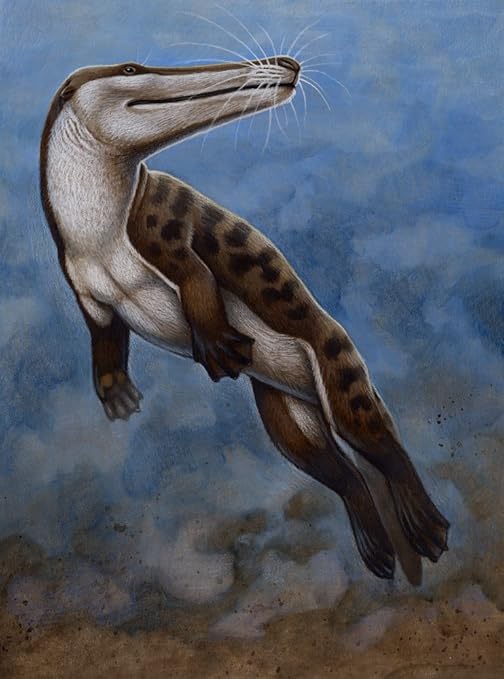
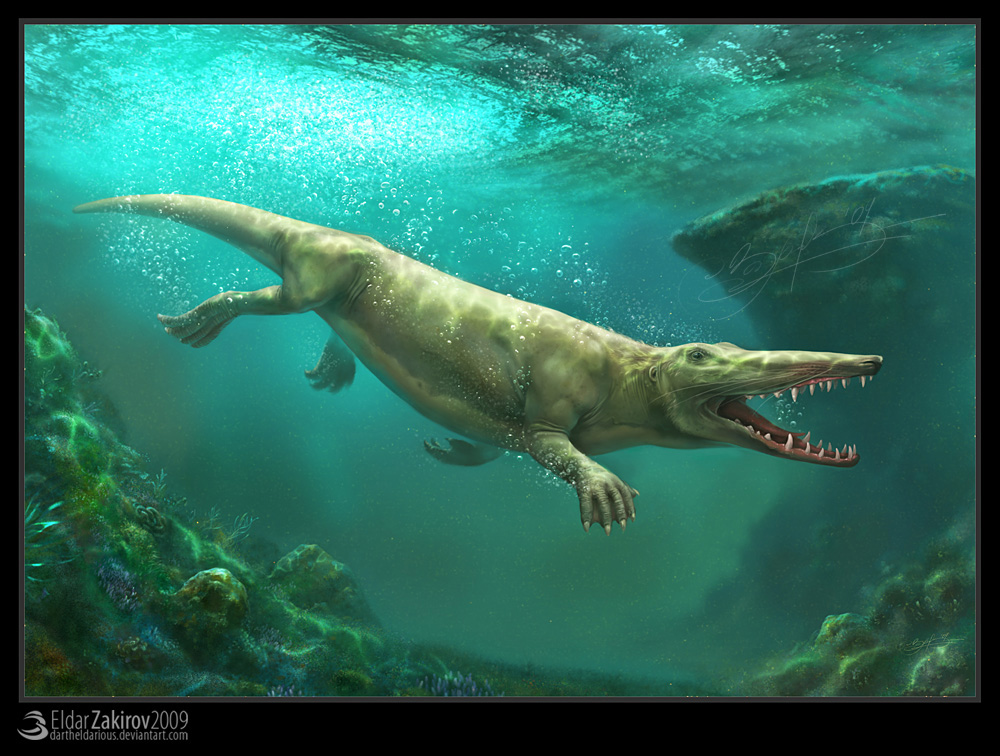
Along with other ambulocetids, A. natans was a transitional species that shows us that whales evolved from land-living ungulates. However, despite what its name translates to, the most recent research suggests this species was entirely aquatic. This animal swam by undulating its back vertically. Chemical analysis of its teeth shows that it could move between salt and fresh water. It also lacked external ears. Its skull had a long snout and eyes facing sideways, located high on the skull like in modern hippos. Ambulocetus had a feeding morphology similar to that of crocodiles: a long snout, pointed teeth, and strong jaw adductor muscles. Like crocodilians, Ambulocetus probably killed its prey by holding it in its jaw and either drowning it or thrashing it with violent motions. Similar to larger crocodilians, adult Ambulocetus probably were ambush predators that fed on larger fish, aquatic tetrapods and possibly terrestrial animals near the water. In contrast to crocodilians, it may have chewed its prey but probably did minimal food processing with its teeth.

ambulocetus-size.jpg

1200px-Ambulocetus_natans.jpg

f45fbc997750cdc7f89f9c6e57747460.png

Ambulocetus.jpeg

1471296530788
1173_ambulocetus_viergacht.png

latest

rushelle-kucala-2ambulocetusrestored.jpg

latest

nicholas-litvinenko-ambulotsetys.jpg

71yU4A0azUL._SY679_.jpg

43915419_296685847609555_3311988152897235133_n.jpg

ambulocetus_by_dartheldarious.jpg

ambulocetus-natans_lucas-lima.jpg

(Below: A. natans is third down)
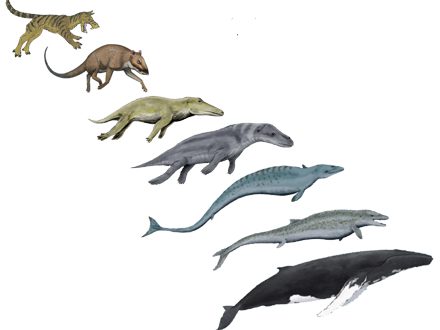
whale-evolution.jpg


Picture and Information Sources:

I have read the study that claims Ambulocetus could not walk. And I must say I am unconvinced. Largely due to the limitations of the study. Namely the omission of the 'false ribs' and the lack of info regarding the mass and center of gravity. Plus there are animals alive today that have similar body designs to Ambulocetus but are not fully aquatic, like otters and seals and sea lions. Now if there were to be the discovery of an Ambulocetus fetus that showed the manner in which it was born then I would be convinced. But the thoracic strength argument does not seem to be enough. Plus there is the question of how it would defend itself against a larger predator in its usual environment if it was a poor swimmer like scientists think.
 
Last edited:
I've decided it's time to take this thread off of the extinct species list. However I want to know, as readers of this thread, what would you like to see? I'm not just talking about genera/species you've like to see highlighted but instead I'm looking for ways I can make this thread the best it can be. New format? Shorter profiles? More well known species analyzed? What do you think? Or are you happy the way things are? (which is fine if that's the case) Regardless I hope you all are doing well and expect to see new profiles soon!
 
I've decided it's time to take this thread off of the extinct species list. However I want to know, as readers of this thread, what would you like to see? I'm not just talking about genera/species you've like to see highlighted but instead I'm looking for ways I can make this thread the best it can be. New format? Shorter profiles? More well known species analyzed? What do you think? Or are you happy the way things are? (which is fine if that's the case) Regardless I hope you all are doing well and expect to see new profiles soon!

Personally I love it as it is. Some of these prehistoric creatures are fascinating and I'd like to see more. I would definitely like to see more animals from before the Mesozoic era as well.
 
@Hipporex if we could request species or genera for you to write about in this thread which seems like some others here are wanting to do, I would like to join in on that. My first request would be a Pumilovis richwhitei, a Blancan (Early-mid Pliocene Epoch to early Pleistocene) caprine. I actually know the person this taxon was named after.
 
NUMBER ONE HUNDRED SIXTEEN: It's showtime

340

  • Animal: Conflicto antarcticus
  • Name Pronunciation: Con-flick-toe ant-are-tuh-kus
  • Name Meaning: "Controdiction from Antarctica"
  • Named By: Claudia Tambussi et al. - 2019
  • Classification: Life, Eukaryota, Animalia, Chordata, Vertebrata, Gnathostomata, Osteichthyes, Sarcopterygii, Tetrapodomorpha, Tetrapoda, Reptiliomorpha, Amniota, Sauropsida, Eureptilia, Diapsida, Sauria, Archosauromorpha, Archosauriformes, Archosauria, Dinosauria,‭ ‬Saurischia,‭ ‬Theropoda,‭ Paraves, Avialae, Aves, Neognathae, Anseriformes
  • When: ~ 65,000,000 B.C.E. to 64,000,000 B.C.E. (Danian stage of the Paleocene epoch)
  • Where: Lopez de Bertodano Formation (James Ross Island, Antarctica)
  • Size: 4.4 pounds (2 kg), 14.2 inches (36 cm) long, and 19.6 inches (50 cm) tall
  • Diet: Omnivore
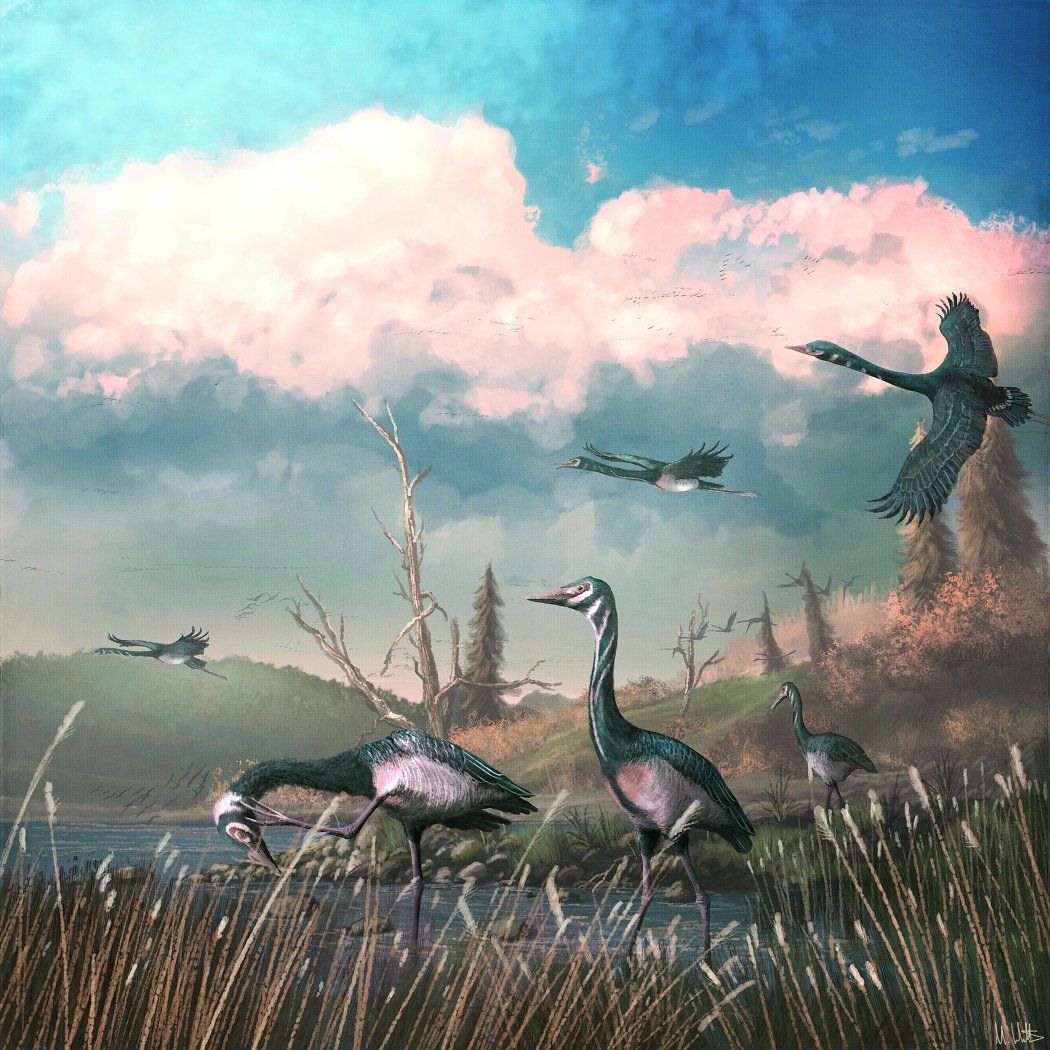
Conflicto antarcticus had a slender body, long legs, a long neck, and a narrow goose-like beak. It also had an unusual pair of bony bumps on its skull which may have supported some sort of small crest superficially similar to the knob on the head of the modern magpie goose (Anseranas semipalmata). The forelimb and pectoral girdle bones suggest that it was a flying bird. Temperatures in Antarctica at the time were much warmer than today, and the area where its fossils were found would have been a temperate estuary or river delta. It was probably an omnivorous wading bird, feeding on vegetation, small fishes, and invertebrates in shallow freshwater. Conflicto was a likely a stem anseriform, equally related to the current extant clades. But the phylogenetic classification remains uncertain and the generic name is in reference to the controversial systematic placement of this genus. According to the study that described this bird, "Conflicto antarcticus represents one (and possibly the most) substantial record of a non-marine Palaeocene bird from the Southern Hemisphere and supports the hypothesis that Neognathae had already diversified in the earliest Palaeocene." Conflicto’s closest known relative might be the similarly-aged Anatalavis from North America and Europe, suggesting that its lineage was quite widespread and already taking advantage of vacant niches in the immediate wake of the Cretaceous-Paleogene mass extinction.

tumblr_ppne1ohXO91s5f2yxo1_500.png

Conflicto_antarcticus-novataxa_2019-Tambussi_Degrange_Mendoza--%2540ZoolJLinnSoc.jpg

052798b86170401f484ed75c17edd340.jpg


Picture and Information Resources:
 
Last edited:
NUMBER ONE HUNDRED SIXTEEN: It's showtime

340

  • Animal: Conflicto antarcticus
  • Name Pronunciation: Con-flick-toe ant-are-tuh-kus
  • Name Meaning: "Controdiction from Antarctica"
  • Named By: Claudia Tambussi et al. - 2019
  • Classification: Life, Eukaryota, Animalia, Chordata, Vertebrata, Gnathostomata, Osteichthyes, Sarcopterygii, Tetrapodomorpha, Tetrapoda, Reptiliomorpha, Amniota, Sauropsida, Eureptilia, Diapsida, Sauria, Archosauromorpha, Archosauriformes, Archosauria, Dinosauria,‭ ‬Saurischia,‭ ‬Theropoda,‭ Paraves, Avialae, Aves, Neognathae, Anseriformes
  • When: ~ 65,000,000 B.C.E. to 64,000,000 B.C.E. (Danian stage of the Paleocene epoch)
  • Where: Lopez de Bertodano Formation (James Ross Island, Antarctica)
  • Size: 4.4 pounds (2 kg), 14.2 inches (36 cm) long, and 19.6 inches (50 cm) tall
  • Diet: Omnivore
Conflicto antarcticus had a slender body, long legs, a long neck, and a narrow goose-like beak. It also had an unusual pair of bony bumps on its skull which may have supported some sort of small crest superficially similar to the knob on the head of the modern magpie goose (Anseranas semipalmata). The forelimb and pectoral girdle bones suggest that it was a flying bird. Temperatures in Antarctica at the time were much warmer than today, and the area where its fossils were found would have been a temperate estuary or river delta. It was probably an omnivorous wading bird, feeding on vegetation, small fishes, and invertebrates in shallow freshwater. Conflicto was a likely a stem anseriform, equally related to the current extant clades. But the phylogenetic classification remains uncertain and the generic name is in reference to the controversial systematic placement of this genus. According to the study that described this bird, "Conflicto antarcticus represents one (and possibly the most) substantial record of a non-marine Palaeocene bird from the Southern Hemisphere and supports the hypothesis that Neognathae had already diversified in the earliest Palaeocene." Conflicto’s closest known relative might be the similarly-aged Anatalavis from North America and Europe, suggesting that its lineage was quite widespread and already taking advantage of vacant niches in the immediate wake of the Cretaceous-Paleogene mass extinction.

tumblr_ppne1ohXO91s5f2yxo1_500.png

Conflicto_antarcticus-novataxa_2019-Tambussi_Degrange_Mendoza--%2540ZoolJLinnSoc.jpg

052798b86170401f484ed75c17edd340.jpg


Picture and Information Resources:

The knob really does look like one on a magpie goose!
 
NUMBER ONE HUNDRED SEVENTEEN: The woolly rhino, but cooler...

Elasmotherium-sibiricum-(traditional-version)1-738x591.jpg

  • Animal: Siberian unicorn (Elasmotherium sibiricum)
  • Named By: Gotthelf Fischer von Waldheim - 1808
  • Classification: Life, Eukaryota, Animalia, Chordata, Vertebrata, Gnathostomata, Osteichthyes, Sarcopterygii, Tetrapodomorpha, Tetrapoda, Reptiliomorpha, Amniota, Synapsida, Therapsida, Mammalia, Placentilia, Boreoeutheria, Ungulata, Perissodactyla, Rhinocerotidae, Elasmotheriinae
  • When: Went extinct about 39,000 years ago (Late Pleistocene)
  • Where: *see blue dots on distribution map*
  • Size: 14.8 feet (4.5 m) in length, with shoulder heights of over 6.6 feet (2 m)
  • Diet: Herbivore
1280px-Distribution_of_Elasmotherium.png


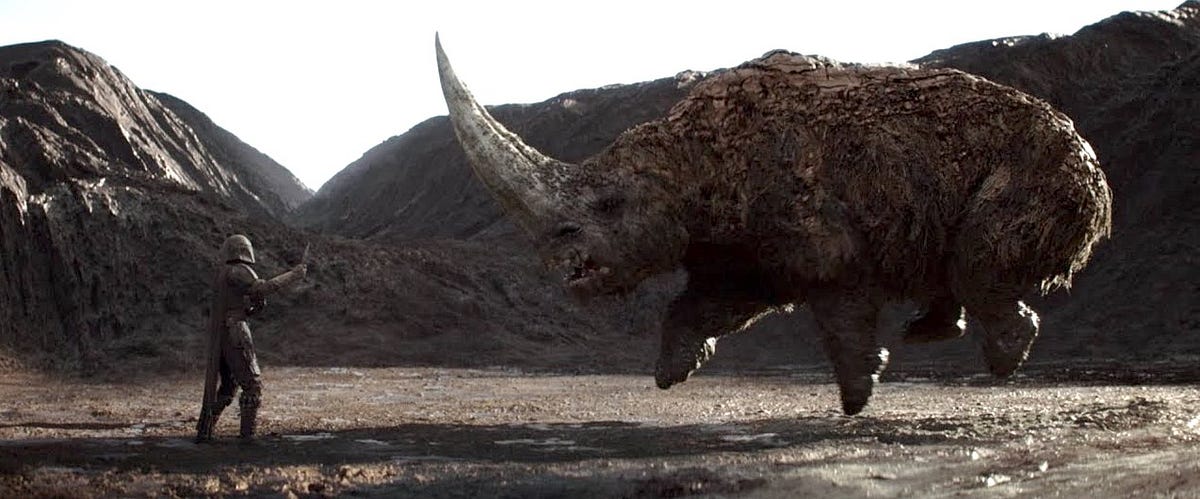
Who said unicorns weren't real? The Siberian unicorn (no seriously, that's its actual name, look it up) was a large species of rhinoceros. Rhinocerotidae can be divided into two subfamilies, the extant Rhinocerotinae and the extinct Elasmotheriinae, which split perhaps 47.3 million years ago, 35 million years ago at the latest. The Siberian unicorn was the last member of Elasmotheriinae. It ranged from southwestern Russia to western Siberia and southward into Ukraine and Moldova and went extinct about 39,000 years ago during the Late Pleistocene. The Siberian unicorn was the actually one of the smaller members of the genus Elasmotherium. The biggest, E. caucasicum, grew slightly bigger, up to 16.4 feet (5 m) long. Because no horn core is known to of been discovered despite multiple cranial remains, scientists aren't 100% is this beast had a horn, however it is considered likely by most that it did. ‬If Elasmotherium did have a horn‬ ‬then this horn would have been made out of keratin,‭ ‬the same material that your fingernails are made of.‭ ‬Unfortunately keratin does not preserve like bone,‭ ‬and in time decomposes like flesh,‭ ‬which means that even with a best guess by comparison to other similar animals,‭ ‬we still do not know what shape or size this horn could have been.‭ There was likely a large hump of muscle on the back, which is generally thought to have supported a large, heavy horn. Elasmotherium is generally reconstructed as a woolly creature, typically based on the woolliness exemplified in contemporary megafauna such as mammoths (Mammuthus) and the woolly rhinoceros (Coelodonta antiquitatis). However, it is sometimes depicted as bare-skinned like modern rhinos. Russian palaeontologist Valentin Teryaev suggested in 1948 that it was semi-aquatic with a dome-like horn, and resembled a hippopotamus (Hippopotamus) because the animal had 4 toes like a wetland tapir rather than the 3 toes in other rhinos, but Elasmotherium has since been shown to have had only 3 functional toes, and Teryaev's reconstruction has not garnered much scientific attention. Siberian unicorn dental wearing is similar to that of the grazing white rhinoceros (Ceratotherium), and both of their heads have a downward orientation, indicating a similar lifestyle and an ability to only reach low-lying plants. One last sidenote for any Star Wars fans out there, it is thought that the Siberian unicorn inspired the appearance of the Mudhorn in The Mandalorian (Season 1 Episode 2).

elasmotherium_sibiricum_by_sameerprehistorica_d8w39be-fullview.jpg

ilTvD9BQ5L-Qwy3DC2lh5Douzv0oFSaNTcleJwK24ZQhmoL7GbsvC2d-sdQHQLhcHujmELxwx-WyyWq9VieZSZSEP9jlgJbyxAIDIFpTjFb9IGCGnwYGzkPb9RTJaaxTkFu--8Sqsw

elasmotherium_sibiricum_by_kaek_d9yjx5b-fullview.jpg

Below: Mudhorn
1*8tnyoY5c-h3ZUAso62TIDw.jpeg

Picture and Information Resources:
 
Back
Top